- Clear the Space: Remove everything from countertops, including appliances, decorations, and small items. Disconnect and move any light switch or outlet covers.
- Protect Surfaces: Lay down a thick painter's tarp or old blankets on countertops and the floor directly beneath the backsplash area. Secure them with painter's tape to prevent movement and protect against dust, debris, and adhesive spills.
- Masking: Use painter's tape along the edges of cabinets, windowsills, and any adjacent walls to create clean lines and protect these surfaces from adhesive or grout.
General remodeling · Renovation planning
| Project category | General remodeling |
|---|---|
| Problem type | Renovation planning |
| Trade required | General contracting |
| Urgency | Planned project |
| Safety risk | Low safety risk |
| DIY suitability | Pro recommended |
| Cost category | Major investment |
| Typical timeline | Design and permitting often 2–4 months before work starts |
| Contractor type | General contractor |
Repair option
Phase the work and fix the building envelope first.
Replacement option
Full renovation with permits, design, and a general contractor.
Common causes
- Space no longer fits how the household lives
- Resale preparation
- Deferred maintenance stacking up
Relevant tools:project cost estimatorcompare quoteshome improvement material prices
Published May 2, 2026Last updated August 17, 2026
Tools & materials you'll need
Affiliate linksAs an Amazon Associate FixlyGuide earns from qualifying purchases — at no extra cost to you. Prices and availability are accurate as of publication and subject to change.
Quick Answer
Many DIYers rush into backsplash installation without adequately preparing the wall surface, leading to an unsightly and unstable finish. The key to a successful backsplash lies in meticulous cleaning, degreasing, and ensuring the wall is perfectly flat and sound. Addressing these preparation steps upfront prevents common problems like tiles not sticking, grout lines cracking, or an uneven, unprofessional appearance, saving you significant time and frustration later on.
The Problem
You've envisioned the perfect kitchen backsplash, spent hours picking out the ideal tiles, and dedicated a weekend to transforming your space. But shortly after installation, or perhaps even during the process, you notice issues: some tiles aren't adhering properly, grout lines look inconsistent, or there are noticeable bumps and dips. These frustrating problems almost always stem from a single, often overlooked cause: inadequate wall preparation. The enthusiasm to see the new tiles in place often leads homeowners to skip crucial steps like thoroughly cleaning, degreasing, and leveling the wall, which are foundational to a durable and attractive backsplash. This isn't just about aesthetics; a poorly prepared surface can compromise the structural integrity of your tile work, leading to premature cracking, loose tiles, or even water damage if moisture seeps behind compromised grout.
How It Works
Understanding why surface preparation is so critical involves a basic grasp of how tile adhesive (thin-set mortar or mastic) functions. These adhesives create a mechanical and chemical bond between the tile and the substrate (your wall). For this bond to be strong and lasting, the substrate must be clean, dry, sound, and relatively flat.
Cleanliness: Any grease, grime, dust, or old paint flakes act as a barrier, preventing the adhesive from directly contacting and bonding with the wall. Imagine trying to stick a sticker to a greasy pan – it simply won't hold. Similarly, residual cooking oils or dust particles will weaken the bond, causing tiles to slip or eventually pop off.
Dryness: Moisture in the wall can inhibit the adhesive from curing properly. It can also lead to mold growth behind the tiles, especially in kitchen environments. Ensure the surface is completely dry before applying any adhesive.
Soundness: The wall must be structurally sound. Loose plaster, crumbling drywall, or peeling paint will not provide a stable foundation. The adhesive will only bond to the weak top layer, which will eventually give way, taking your tiles with it. You need a substrate that can support the weight of the tiles and the adhesive without flexing or breaking.
Flatness: This is perhaps the most critical and often underestimated factor. Adhesives are designed to be applied in a relatively uniform thickness. If your wall has significant dips or humps, you'll end up with varying adhesive thickness. Thin spots will be weak and prone to cracking, while thick spots may take longer to cure or cause tiles to sit proud, creating an uneven surface. A flat surface ensures consistent adhesive coverage, allowing each tile to be installed level with its neighbors, resulting in straight grout lines and a professional finish. Ideal flatness typically means no more than 1/8 inch deviation over 10 feet for most ceramic or porcelain tiles. Larger format tiles require even tighter tolerances. Neglecting this crucial step is the root cause of many backsplash nightmares.
Step-by-Step Fix
1. Assess the Damage First – Determine if you can salvage the existing installation or if a full tear-out is needed.
- Minor Issues (a few loose tiles, inconsistent grout): You might be able to repair isolated areas. Gently tap on the tiles; a hollow sound indicates a lack of adhesion. Look for cracking grout that suggests movement. If the vast majority of tiles are well-adhered and the wall underneath seems generally flat, targeted repairs are possible.
- Widespread Issues (many loose tiles, significant unevenness, old installation): A complete tear-out is often the most efficient and effective long-term solution. Trying to fix a fundamentally flawed installation can lead to more frustration and a suboptimal result.
2. Prepare the Area for Work – Protect your countertops and surroundings.
- Clear the Space: Remove everything from countertops, including appliances, decorations, and small items. Disconnect and move any light switch or outlet covers.
- Protect Surfaces: Lay down a thick painter's tarp or old blankets on countertops and the floor directly beneath the backsplash area. Secure them with painter's tape to prevent movement and protect against dust, debris, and adhesive spills.
- Masking: Use painter's tape along the edges of cabinets, windowsills, and any adjacent walls to create clean lines and protect these surfaces from adhesive or grout.
3. Remove Existing Tiles and Grout (if necessary) – Carefully remove failed tiles and old adhesive.
- Safety First: Wear heavy-duty work gloves and safety glasses. Old tile can have sharp edges.
- Grout Removal: Use a grout saw or an oscillating tool with a grout removal blade to carefully cut away the grout around the tiles you intend to remove. Take your time to avoid damaging adjacent tiles or the wall behind.
- Tile Removal: For stubborn tiles, position a chisel or stiff putty knife at an angle behind the tile, near the grout line. Gently tap the chisel with a hammer to pry the tile away from the wall. Work slowly and methodically. If removing an entire old backsplash, start from an edge or corner.
- Adhesive Removal: After tiles are off, use a scrapers to remove as much old thin-set or mastic as possible. An oscillating multi-tool with a rigid scraper attachment can be very effective here. Aim for a relatively smooth surface, but don't worry about perfection yet.
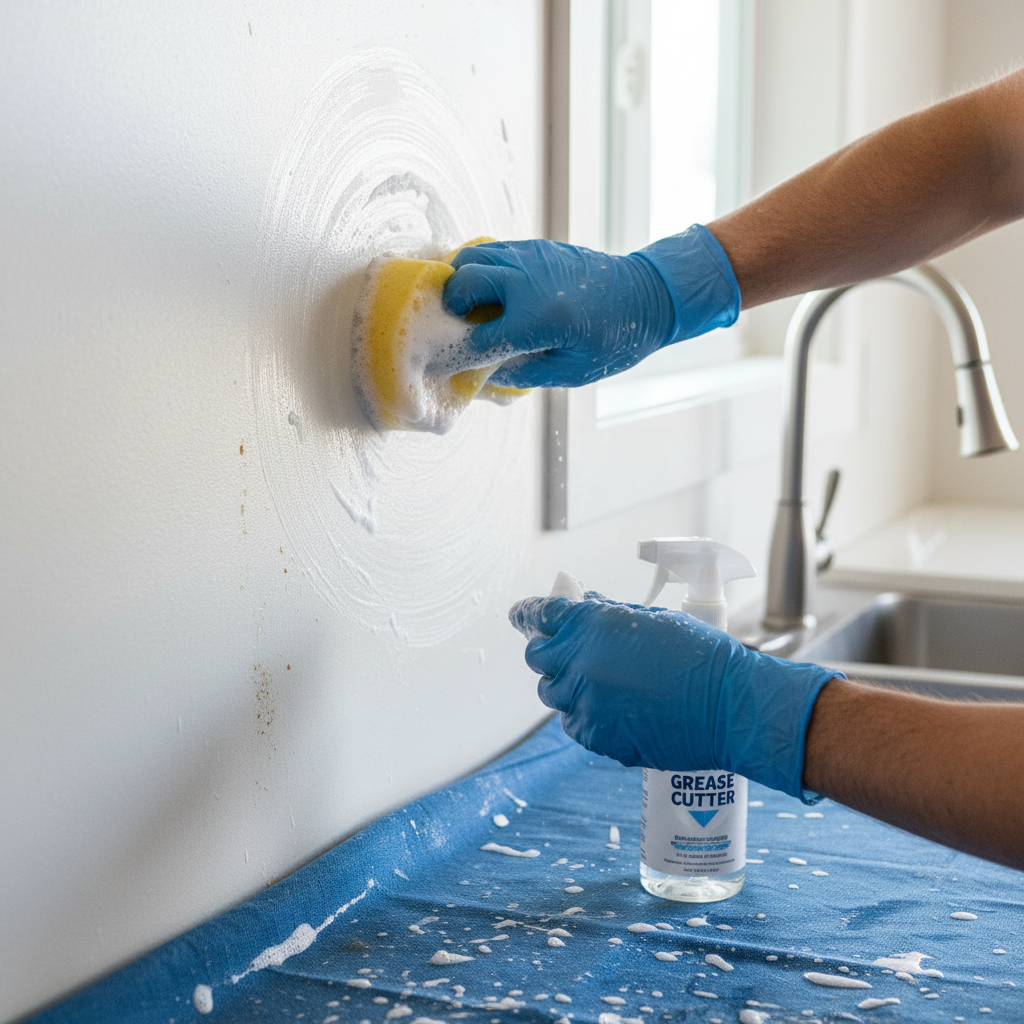
4. Clean and Degrease the Wall – The most crucial step for proper adhesion.
- Initial Wipe-Down: Use a shop vac to remove loose dust and debris. Then, wipe down the entire wall surface with a damp cloth to remove surface dirt.
- Degreasing: For kitchen environments, grease is a major enemy. Mix a strong solution of TSP (trisodium phosphate) cleaner or a heavy-duty household degreaser with warm water. Apply the solution liberally to the wall with a sponge, scrubbing gently to loosen grease and grime. Safety Note: TSP is an irritant; wear gloves and eye protection and ensure good ventilation.
- Rinse Thoroughly: After degreasing, rinse the wall multiple times with clean water and a clean sponge, ensuring all traces of the cleaner are removed. Any residue can interfere with adhesion. Allow the wall to dry completely – ideally for several hours or even overnight, depending on humidity.
- Inspect: Run your hand over the wall. It should feel smooth and squeaky clean, with no greasy residue. If not, repeat the cleaning process.
5. Repair and Level the Wall – Create a perfectly flat substrate.
- Inspect for Damage: Look for any holes from picture hangers, screws, or previous anchors. Fill these with drywall joint compound. Check for any loose drywall tape or crumbling plaster. Repair as needed.
- Minor Imperfections (small dents, shallow grooves): Use a pre-mixed drywall joint compound (lightweight spackle for very small areas) and a 6-inch drywall knife to skim coat any minor depressions or imperfections. Apply thin layers and allow each to dry completely between coats.
- Larger Dips/Humps (more than 1/8 inch deviation): This is where many DIYers fail. For significant unevenness, you may need a setting-type joint compound (also known as "hot mud" – it dries hard and fast) or a patching compound designed for wall repair. Apply a thin coat over the uneven area, feathering the edges outwards with a long, straight edge (like a 2-foot level) to ensure flatness. Allow to cure.
- Sanding: Once all repairs are dry, lightly sand the entire wall surface with fine-grit sandpaper (150-220 grit) to smooth out any bumps or ridges. This creates a uniform surface for the adhesive. Remove all sanding dust with a damp cloth or shop vac.
- Priming (Optional but Recommended): For inconsistent wall surfaces (e.g., exposed drywall, patched areas, old paint), apply a high-quality acrylic primer or a specific tile primer. This helps seal the surface, promotes consistent adhesion, and reduces the wall's absorbency, giving you more working time with the adhesive.
- Check Flatness Again: Use a long level (2-4 feet) or a straightedge to check the wall for flatness. Hold it against the wall in multiple directions (horizontal, vertical, diagonal). Look for gaps or rocking. If you still see significant unevenness, repeat patching and sanding specific areas until satisfactory.
6. Layout Your Tiles (Dry Run) – Plan your tile placement to avoid awkward cuts.
- Find Your Center: Measure the width of your backsplash area and mark the center. This helps ensure symmetrical cuts at the ends.
- Dry Lay: Starting from the center (or your most visible edge), lay out a row of tiles on your countertop or on the floor. Use tile spacers to mimic grout lines. This dry run helps you visualize the final look and determine where cuts will fall. Aim to avoid sliver cuts (pieces less than half a tile) at visible ends.
- Adjust if Needed: If your dry layout results in awkward small cuts, adjust your starting point slightly. It's better to have slightly larger cuts on both ends than one full tile and one tiny sliver.
- Mark Guidelines: Using your level and a pencil, draw horizontal and vertical guidelines on the wall based on your dry layout. This provides a visual reference for keeping rows straight.
7. Apply Adhesive and Set Tiles – The actual installation.
- Choose the Right Adhesive: For backsplashes, mastic (pre-mixed organic adhesive) is often suitable for ceramic/porcelain in dry areas, especially for beginners due to its longer open time. Thin-set mortar (cement-based, needs mixing) offers a stronger bond for heavier tiles, natural stone, or areas with potential moisture (like near a sink). Read the tile manufacturer's recommendation.
- Mix Thin-set (if applicable): If using thin-set, follow the manufacturer's instructions precisely for mixing. Consistency should be like peanut butter – not too runny, not too stiff. Let it "slake" for 5-10 minutes, then remix.
- Apply Adhesive: Use a notched trowel (size specified by tile manufacturer, commonly 1/8" or 3/16" square-notch for backsplashes) to spread adhesive onto the wall. Apply only enough for 1-2 square feet at a time to prevent it from skinning over. Hold the trowel at a 45-degree angle to create consistent ridges. Critical: "Back-butter" larger or natural stone tiles by applying a thin layer of adhesive to the back of the tile as well, to ensure 100% coverage.
- Set Tiles: Press each tile firmly into the adhesive with a slight twisting motion. Use tile spacers to ensure consistent grout lines. Use a level frequently (every few tiles) to check for plumb and level. Adjust tiles as needed immediately after setting. Remove any adhesive that squeezes through grout lines or gets on the face of the tiles with a damp sponge before it dries.
- Cut Tiles: Use a wet saw for straight cuts, a tile nipper for small chips or irregular cuts, and a hole saw for outlet cutouts. Always wear safety glasses when cutting tiles.
8. Grout the Backsplash – Fill the gaps for a finished look.
- Cure Time: Allow the adhesive to cure completely, usually 24-48 hours, according to the adhesive manufacturer's instructions, before grouting. This prevents tiles from shifting.
- Mix Grout: Mix your chosen grout (sanded for wider lines, unsanded for narrower lines or delicate tiles) according to the manufacturer's instructions. Aim for a toothpaste-like consistency.
- Apply Grout: Using a rubber grout float, spread the grout diagonally across the tiles, forcing it into the grout lines. Work in small sections.
- Clean Excess Grout: After waiting 10-20 minutes (or as recommended by the grout manufacturer), use a damp grout sponge to wipe away excess grout from the tile faces. Rinse the sponge frequently in clean water. Be careful not to pull grout out of the lines.
- Haze Removal: After the initial cleaning and when the grout has dried to a haze (usually a few hours), buff the tiles with a clean, dry cloth to remove any remaining grout haze.
9. Apply Caulk – Seal edges for a waterproof finish.
- Where to Caulk: Apply a bead of silicone caulk (color-matched to your grout or clear) wherever the backsplash meets a different surface – typically along the countertop, at inside corners, and where it meets cabinets or trim. Do not grout these transitions; they need flexibility.
- Application: Cut the tip of the caulk tube at a 45-degree angle. Apply a steady, even bead, then smooth it with a moistened finger or a caulk tool for a professional finish. Allow to cure per instructions.
Common Causes
- Grease and Grime on Walls: Kitchens accumulate layers of cooking grease and dust. If not thoroughly removed, this creates a slick barrier that prevents tile adhesive from bonding properly to the drywall or plaster.
- Uneven Wall Surfaces: Dips, humps, old paint drips, or poorly patched holes create an inconsistent substrate. This leads to varying adhesive thickness, causing some tiles to sit proud, while others have weak spots where the adhesive is too thin or doesn't make full contact.
- Loose or Damaged Drywall/Plaster: If the underlying wall material is soft, crumbling, or has peeling paint, the adhesive will only bond to this weak layer, resulting in tiles eventually detaching as the substrate fails.
- Insufficient Dry Time: Applying adhesive or grout to a wall that is still damp from cleaning or patching can compromise the cure and strength of the materials, leading to adhesion failure or mildew.
- Wrong Adhesive Choice or Improper Mixing: Using mastic in high-moisture areas (like behind a sink where thin-set is better), or improperly mixing thin-set mortar (too watery, too stiff, not slaked) directly impacts its bonding capabilities and workability.
- Not Back-Buttering Tiles: Especially with larger or natural stone tiles, applying adhesive only to the wall creates voids behind the tile. Back-buttering (spreading a thin layer of adhesive on the back of the tile) ensures 100% adhesive coverage and a solid bond.
Common Mistakes
- Skipping the Degreasing Step: Many homeowners wipe down walls but don't truly degrease. Kitchen walls, even seemingly clean ones, harbor invisible grease layers. Use a dedicated degreaser like TSP for a truly clean bonding surface.
- Ignoring Wall Imperfections: Trying to "mud out" significant wall deviations with tile adhesive or thin-set is a common error. Adhesives are not designed to level walls; they are for bonding tiles to an already flat surface. Use joint compound or patching plaster for leveling before tiling.
- Using the Wrong Notched Trowel: Too small a notch results in insufficient adhesive coverage, leading to weak bonds. Too large a notch creates thick beds that can cause tiles to sag or make it difficult to achieve a flat surface. Always follow the tile manufacturer's recommendation for trowel size.
- Applying Too Much Adhesive at Once: Mastic and thin-set have "open times." If you spread too much adhesive, it will begin to skin over before you can set all the tiles, severely reducing its ability to bond. Work in manageable sections (1-2 sq ft).
- Forgetting to Remove Spacers (or leaving them in): While most modern tile spacers are designed to be left in for thin-set, they often stick out if left in with mastic, causing issues later. Always double-check manufacturer instructions. Furthermore, failing to remove excess adhesive from grout lines before it dries makes grouting incredibly difficult and messy.
- Grouting Before Adhesive is Fully Cured: This mistake is a recipe for disaster. Grouting too early can dislodge tiles, push them out of alignment, or compromise the entire bond because the underlying adhesive hasn't hardened sufficiently.
Cost & Time Breakdown
| Task | DIY cost | Pro cost | Time |
|---|---|---|---|
| Wall Repair & Prep (Materials) | $10–$50 | Included in labor | 1–4 hours |
| Adhesive & Grout (Materials) | $30–$80 | Included in labor | 0 |
| Tile Removal (if needed) | $0 (DIY labor) | $100–$300 | 1–3 hours |
| Tile Installation (DIY Labor) | $0 | $300–$800+ | 6–12 hours |
| Total (DIY) | $40–$130 | N/A | 7–19 hours |
| Total (Pro) | N/A | $400–$1100+ | 1–2 days |
Note: Tile cost is not included as it varies widely. These costs are for materials and labor related to the actual installation and repair aspect.
Tips & Prevention
- Always Dry Fit: Before applying any adhesive, lay out your tiles on the countertop or floor to plan cuts and ensure a balanced layout. This prevents awkward cuts and allows you to adjust your starting point.
- Invest in a Good Level: A 2-foot or 4-foot carpenter's level is your best friend for ensuring straight lines and a flat surface. Check frequently during preparation and installation.
- Don't Skimp on Cleaning: Spend extra time on cleaning and degreasing. This single step prevents more problems than almost any other. A cheap bottle of TSP goes a long way.
- Use the Right Trowel and Technique: The size of the trowel notch matters, and holding it at a consistent 45-degree angle ensures proper adhesive ridges and coverage. Practice on a scrap board if you're unsure.
- Read All Instructions: Adhesives, grouts, and tiles all come with specific manufacturer guidelines for mixing, application, and cure times. Deviating can lead to failure.
- Seal Grout: Once the grout has fully cured (usually 48-72 hours after application), apply a grout sealer. This protects against stains and moisture intrusion, especially important in a kitchen.
When to Call a Professional
While addressing wall preparation issues can be a rewarding DIY project, there are clear instances when calling a professional tile setter is the wisest decision. If you discover significant structural damage to your walls, such as large holes, water-damaged drywall that compromises structural integrity, or widespread crumbling plaster, a professional will have the expertise to properly reinforce and repair the substrate. Similarly, if your wall has severe, inconsistent deviations greater than 1/4 inch over a few feet, achieving a perfectly flat surface for tiling can be extremely challenging for a beginner, leading to an unsightly finish. If working with intricate tile patterns, expensive natural stone, or very large format tiles, the margin for error is slim, and a professional can ensure precision and minimize material waste. Finally, if you're uncomfortable with the amount of demolition required, or if the sheer scope of the wall repair feels overwhelming, a licensed contractor can guarantee a durable, beautiful, and long-lasting backsplash without the stress and potential pitfalls of a complex DIY repair.
Related Articles
Keep troubleshooting with these hand-picked guides from FixlyGuide:
- The #1 Mistake Homeowners Make When Diagnosing Low Water Pressure (It's Not Your Pipes!) — Discover the most overlooked culprit behind low water pressure throughout your entire house and learn how to fix it with simple steps.
- The #1 Mistake Homeowners Make When Diagnosing Low Water Pressure (and What to Check First) — Before you call a plumber, learn the most common overlooked cause of low water pressure affecting your entire home and how to easily check…
- The #1 Mistake Homeowners Make When Diagnosing Low Water Pressure — Discover the most common oversight homeowners make when troubleshooting low water pressure throughout their house and how to fix it with si…
- The #1 Mistake Homeowners Make with Ice Dams (and How to Fix It SAFELY) — Most homeowners approach ice dam removal incorrectly, creating more damage or safety risks. Learn the right, safe methods to protect your r…
- The 7 Critical Home Inspection Mistakes Most Homeowners Make (and How to Spot Them) — Discover the crucial home inspection mistakes homeowners commonly overlook and learn how to identify potential problems before they become…
- The #1 Mistake Homeowners Make When a Gas Burner Won't Light (And the Easy Fix) — Before you call a technician, discover the most common, overlooked reason your gas stove burner isn't lighting and how to fix it yourself i…
Should you do this yourself?
Answer five quick questions before you start. Safety outranks savings every time.
Your experience with work like this
How high do you have to work?
Does the job involve any of these?
Will it need a permit?
Specialty tools
Free and instant. Educational guidance only — not a quote, inspection, or professional diagnosis.
What should this project cost?
Enter your project details for a realistic cost range before you call anyone.
Cosmetic refreshes start near $5,000; full remodels commonly $25,000–$45,000.
- Regional adjustment
- National average
- Labor share (typical)
- ~$8,550
- Quotes to collect
- 3 written estimates
Educational estimate based on national averages — not a binding quote. Always confirm with written local estimates.
Fixly Project Decision Box
- DIY difficulty
- Professional Recommended
- Estimated time
- Monitoring over 60–90 days · engineer visit 1–2 hours
- Cost level
- Major Project
Main tools / materials
- Crack monitor or pencil marks with dates
- Tape measure
- Marble or level for floor slope
When to stop and call a pro
- A crack wider than 1/4 inch or growing month over month
- Doors and windows that suddenly stick or will not latch
- Stair-step cracks in brick or block
- Separation between walls and ceilings or floors
Need professional help?
Get a Foundation EvaluationBefore you start
Check the difficulty, permits, and safety risk — then decide whether to call a pro.
- Estimate this projectGet a cost range for your scope and ZIP before you call anyone.Open
- Get local estimatesSend one request and compare written estimates from vetted pros.Open
Free, no signup required. Estimates are educational guidance, not a quote or an inspection.
Recommended for DIYers & woodworkers
Sponsored
The Top 20 Tools for Workshops of Any Budget
No stationary machines or power tools required — plus 3 fundamental tools that can't be bought at any price.
Get the free guide
Ted's Woodworking — The #1 Woodworking Resource
Detailed instructions, dimensioned drawings, materials & cutting lists, and 3D schematics for every skill level.
See the plansSponsored: links above are affiliate links. FixlyGuide may earn a commission on qualifying purchases — at no extra cost to you.
Frequently asked questions
How do I know if my wall is flat enough for a backsplash?+
Use a long, straight edge or a 2-4 foot level. Hold it against the wall in multiple spots, both horizontally and vertically. If you see gaps or rocking that are greater than 1/8 inch over 2 feet, your wall needs leveling before tiling.
What kind of cleaner should I use to degrease a kitchen wall before tiling?+
TSP (trisodium phosphate) is highly effective for degreasing kitchen walls. Follow package directions for mixing and wear gloves and eye protection. Rinse thoroughly with clean water afterward.
Can I tile over existing wallpaper or old paint?+
It is generally not recommended to tile over wallpaper. It must be removed. You can tile over well-bonded, clean, and scuff-sanded paint, but it's crucial to ensure the paint isn't peeling or chipping and the surface is absolutely clean and degreased. Priming is often a good idea.
Why are my newly installed backsplash tiles not sticking?+
The most common reasons are inadequate wall preparation (grease, dirt, or unevenness preventing adhesion), using the wrong type of adhesive for your tiles/environment, or applying the adhesive too thickly or thinly, or allowing it to skin over before setting tiles.
How long should I wait after tiling before I can grout?+
Always follow the adhesive manufacturer's recommendations, but typically you should wait at least 24-48 hours for the adhesive to fully cure. Grouting too early can cause tiles to shift and compromise the bond.


Discussion
Loading comments…