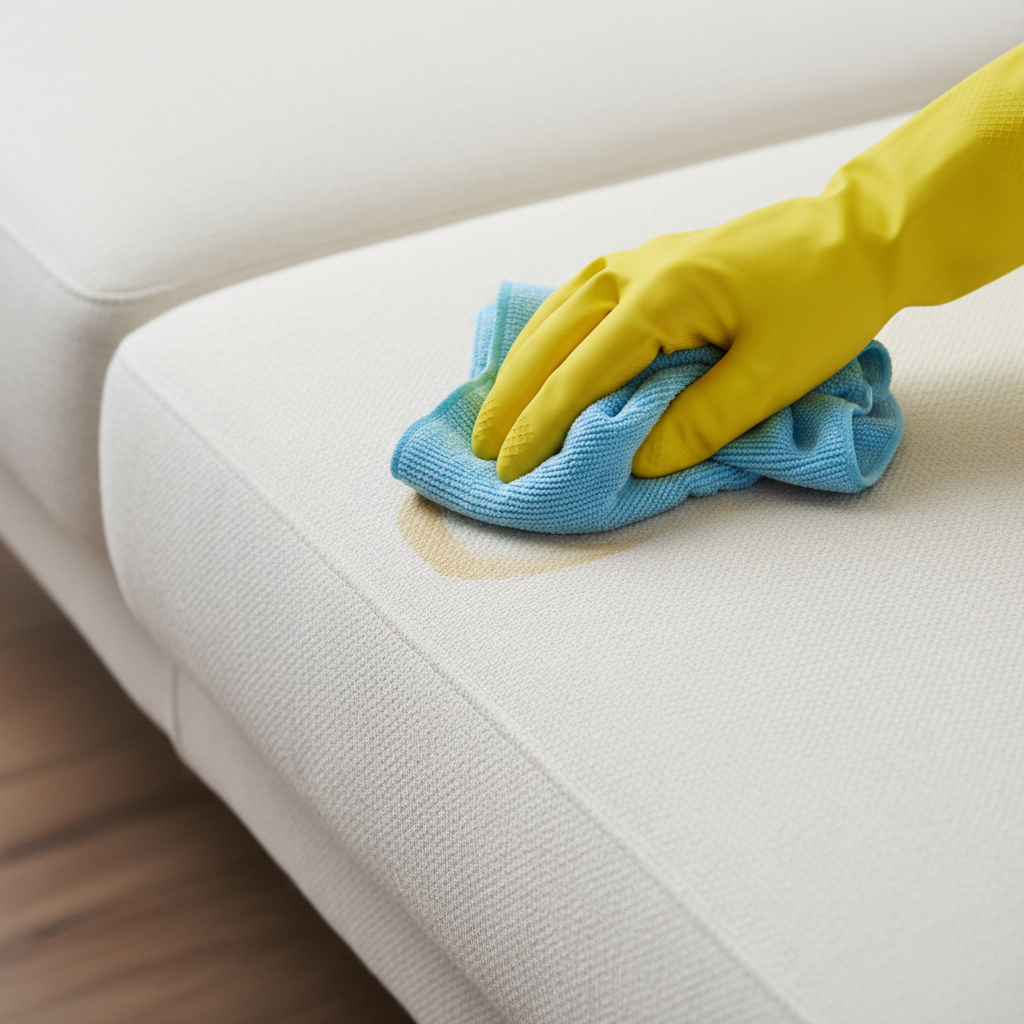
- White Microfiber Cloths (3-4): Essential for blotting. White cloths prevent any risk of dye transfer to your couch.
- Handheld Vacuum with Upholstery Attachment: For critical prep and finishing steps.
- Small Glass or Ceramic Bowl: For mixing the oxygen bleach paste. Avoid metal bowls, which can react with the bleach.
- Spoon or Spatula: For mixing and applying the paste.
- White Paper Towels: For the final absorption step.
Published May 7, 2026Last updated August 17, 2026
Tools & materials you'll need
Affiliate linksAs an Amazon Associate FixlyGuide earns from qualifying purchases — at no extra cost to you. Prices and availability are accurate as of publication and subject to change.
'''
Quick Answer
To remove a set-in stain from a white fabric couch, first dissolve oils with a solvent cleaner like Folex. Then, apply a paste of powdered oxygen bleach (like OxiClean) and cool water, let it dwell for up to 30 minutes, and blot—don't rub—with a damp microfiber cloth. This 'Triple Lift' method uses a solvent, an oxidizing agent, and finally mechanical removal to break down and lift even stubborn, old stains.
Why This Works
A set-in stain on a white fabric couch is one of the most dreaded household cleaning challenges. The reason it’s so tough is that it’s no longer just a simple spill; it’s a complex chemical bond between the staining agent and the fabric fibers. Time, heat, and previous failed cleaning attempts can "cook" the stain, making it even more stubborn. To defeat it, you need more than just soap and water—you need a sequential, chemistry-based attack.
This "Triple Lift" method works by tackling the different components of the stain in a specific order:
-
Solvent Action: Most stains, even if they don't look greasy, are held in place by an oily or waxy binder. It could be natural oils from food, soil from the floor, or even residue from your own skin. A pH-neutral solvent cleaner like Folex or Krud Kutter is designed to dissolve these oils without altering the fabric's color or texture. The solvent acts like a key, unlocking the greasy prison that holds the colored part of the stain captive. This is the critical first step that many people miss, which is why their efforts with general-purpose cleaners often fail.
-
Oxidizing Power: Once the oily binder is broken down, you can attack the "chromophore"—the part of the stain molecule that actually has color. This is where an alkaline cleaner like powdered oxygen bleach (its active ingredient is sodium percarbonate) comes in. When you mix a product like OxiClean with water, it releases thousands of tiny oxygen bubbles. These bubbles forcefully break apart the chemical bonds of the chromophore, effectively destroying the color itself. It’s a powerful bleaching action without the use of harsh chlorine bleach, which can cause permanent yellowing and fiber damage on most upholstery.
-
Surfactant & Mechanical Lift: The final phase is physically removing the now-dissolved, colorless remnants of the stain. Gently blotting with a damp microfiber cloth employs the power of surfactants (still present from the cleaners) and capillary action. The surfactants surround the dirt particles, and the highly absorbent microfiber wicks them up and away from the couch fibers. Using cool, distilled water for this step prevents mineral deposits (water rings) and is crucial for any unidentified stain, as hot water would permanently set any hidden protein elements (like blood, dairy, or egg).
By following this precise sequence, you’re not just cleaning a stain; you’re deconstructing it at a molecular level.
What You Need
Tools:
- White Microfiber Cloths (3-4): Essential for blotting. White cloths prevent any risk of dye transfer to your couch.
- Handheld Vacuum with Upholstery Attachment: For critical prep and finishing steps.
- Small Glass or Ceramic Bowl: For mixing the oxygen bleach paste. Avoid metal bowls, which can react with the bleach.
- Spoon or Spatula: For mixing and applying the paste.
- White Paper Towels: For the final absorption step.
- (Optional) Fan or Hairdryer: Must have a "cool" setting to speed up drying time.
Materials:
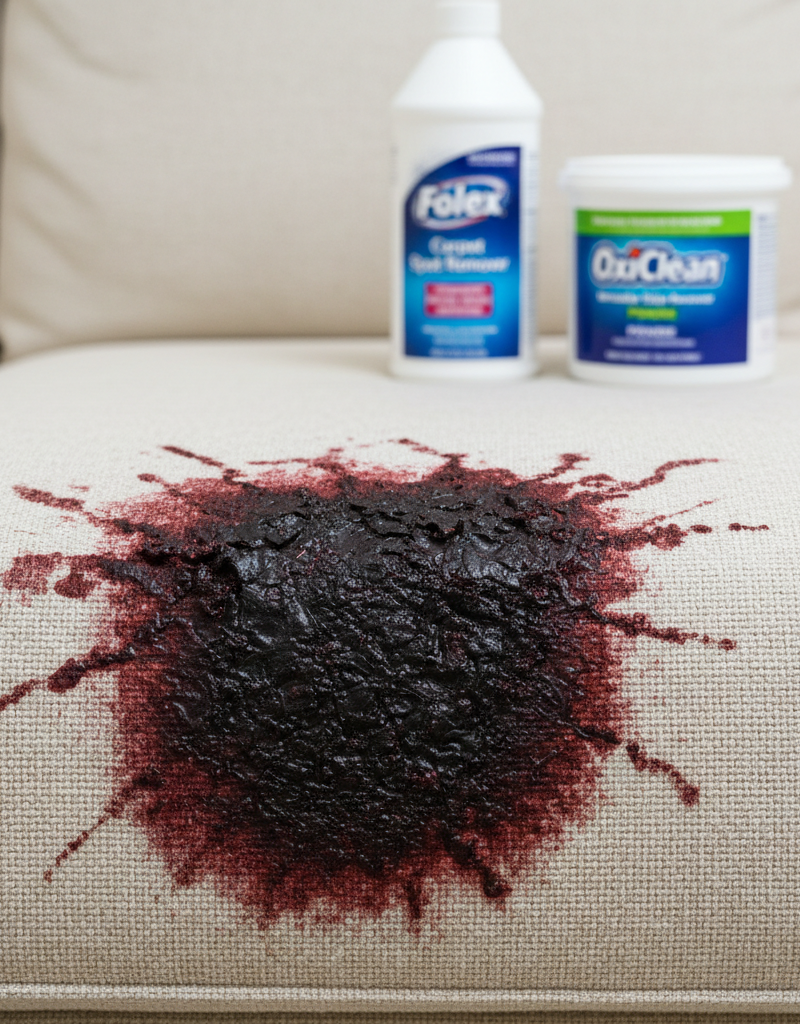
- Solvent-Based Spot Cleaner: We recommend Folex Instant Carpet Spot Remover or Krud Kutter Original Cleaner/Degreaser. Folex is particularly good as it's pH neutral and safe on most water-safe materials.
- Powdered Oxygen Bleach: OxiClean Versatile Stain Remover is the most common and effective brand. Avoid generic versions that may have added fragrances or dyes.
- Distilled Water: This is a non-negotiable secret weapon. Tap water contains minerals that can leave behind a "water ring" stain after the spot dries. Using distilled water for mixing your paste and for the final rinsing blot prevents this common problem.
Step-by-Step Method
SAFETY PREP: Before starting, open a window to ensure good ventilation. While these cleaners are generally safe, good airflow is always a smart practice. Crucially, perform a spot test. Apply a small amount of each cleaner to a hidden area of the couch (like the fabric underneath a cushion or on the frame's back) to ensure it doesn’t cause discoloration or damage. Wait for it to dry completely before proceeding.
1. Thoroughly Vacuum the Area — Use your vacuum’s upholstery attachment to go over the entire stained cushion. You must remove all loose dirt, dust, and crumbs. If you don’t, these particles can get wet during cleaning and turn into new mud-like stains, making your job harder.
2. Apply the Solvent Cleaner — Lightly spray the Folex or Krud Kutter directly onto the set-in stain. The goal is to dampen the stain, not to drench the cushion. Oversaturation can drive the stain deeper into the padding and create a larger water ring.
3. Agitate and Wait — Take a clean, dry microfiber cloth and gently blot or tamp the solvent into the stain. Work from the outside edges inward; this prevents the stain from spreading. Let the solvent dwell for 5-10 minutes to give it time to dissolve the oily binders.
4. First Blotting Lift — Firmly press a clean, dry section of your microfiber cloth onto the area. You should see stain and soil transferring from the couch to your cloth. This confirms the solvent is working. Repeat this blotting a few times.
5. Mix the Oxygen Bleach Paste — In your small bowl, combine one part powdered OxiClean with about three parts cool, distilled water. A good starting point is one tablespoon of OxiClean and three tablespoons of distilled water. Stir with your spoon until it forms a consistent, slightly translucent paste. It shouldn’t be watery or overly thick.
6. Apply the Oxygen Bleach Paste — Using the back of the spoon or a small spatula, apply a thin, even layer of the OxiClean paste over the remaining stain. Ensure the entire discolored area is covered.
7. Let the Paste Dwell — This is a critical waiting period. Let the paste sit on the stain for 15 to 30 minutes. You may see some gentle bubbling, which is the oxygen being released and actively breaking down the stain’s color. Do not allow the paste to dry completely on the fabric.
8. Scrape and Remove Paste — After the dwell time, use the edge of your spoon to gently scrape the majority of the paste off the fabric and into a paper towel for disposal.
9. The "Rinsing" Blot — Dampen a fresh microfiber cloth with cool, distilled water. Wring it out so it's damp, not dripping. Gently blot the area where the paste was. This step removes both the cleaning residue and the last of the broken-down stain. Continually rinse the cloth in clean distilled water and wring it out to avoid re-depositing grime.
10. Continue Blotting Until Clean — Keep blotting with the damp cloth until you no longer see any stain or suds transferring to the cloth. The fabric should feel clean and free of any slippery residue. This rinsing step is essential to prevent a stiff, crunchy, or yellowed patch once the sofa dries.
11. Absorb Excess Moisture — Take a thick stack of dry, white paper towels and press them firmly onto the damp area. Stand on them if you can. This will wick out a significant amount of the remaining moisture, dramatically speeding up drying time and preventing water stains.
12. Air Dry and Final Vacuum — Let the spot air dry completely. To speed this up, you can aim a fan at the area or use a hairdryer on its coolest setting (heat can damage fibers). Once the area is 100% bone dry (this may take several hours), use your vacuum's upholstery attachment to gently brush the fibers and restore their soft texture.
Common Mistakes
- Scrubbing Vigorously: The number one mistake. Scrubbing frays and breaks upholstery fibers, creating a permanent fuzzy patch that looks worse than the original stain. Always blot gently.
- Using Chlorine Bleach: Household chlorine bleach (like Clorox) is a disaster for upholstery. It will permanently yellow white synthetic fabrics and can even dissolve natural fibers like cotton. Oxygen bleach is the only safe bleach for this job.
- Applying Heat: Never use hot water, steam cleaners, or a hot hairdryer setting on a stain, especially if you don't know what it is. Heat instantly cooks protein stains (blood, milk, egg, pet messes), setting them like a dye.
- Skipping the Spot Test: Assuming "white" fabric is invincible is a costly error. Many white fabrics have special coatings or are blends that can react unpredictably. A five-minute spot test can save you from a multi-hundred-dollar reupholstery bill.
- Mixing Cleaning Chemicals: NEVER mix different cleaning products. Applying them sequentially (with rinsing in between) is fine, but mixing them in a bowl can create dangerous chemical reactions. In particular, never mix bleach and ammonia (creates toxic chloramine gas) or bleach and acid/vinegar (creates toxic chlorine gas).
- Oversaturating the Fabric: Using too much liquid cleaner can push the stain deeper into the padding, making it impossible to remove and creating a risk for mold and mildew growth inside the cushion.
Cost & Time Breakdown
| Task | DIY Cost | Pro Cost | Time |
|---|---|---|---|
| Spot Cleaning One Major Stain | $20-$30 (for all required supplies) | $100-$175 (minimum service call fee) | 45-60 mins + 4-8 hrs dry time |
| Renting a Machine for Full Cleaning | $40-$60 (machine rental + solution) | $200-$350 (for a standard sofa) | 3-5 hours + 8-12 hrs dry time |
| Professional Stain Guard Application | $20-$30 (for a DIY can) | $75-$150 (as an add-on service) | 30 minutes + cure time |
| Repairing Cleaner-Damaged Fabric | N/A | $300+ (for panel replacement/reupholstery) | Varies |
Prevention & Maintenance
- Scotchgard is Your Best Friend: After a deep clean (and once the couch is fully dry), apply a fabric protector like Scotchgard Fabric Water Shield. It creates an invisible barrier that causes spills to bead up instead of soaking in, giving you precious time to clean them up.
- Vacuum Weekly: Make vacuuming your cushions (and under them) a non-negotiable part of your weekly cleaning routine. It removes abrasive grit that wears down fibers and makes them look dull.
- Flip and Rotate: If your cushions are reversible, flip and rotate them every month. This distributes wear and tear evenly and prevents one side from becoming noticeably more soiled.
- Address Spills Instantly: The vast majority of set-in stains were once fresh spills. Blot fresh spills immediately with a dry cloth to absorb as much as possible before it has a chance to penetrate the fibers.
- Use Strategic Throws: For a family couch that sees a lot of traffic, pets, or kids, a stylish and easily washable throw blanket is the ultimate defense, protecting the most-used spots from daily grime.
When to Call a Professional
Sometimes, a DIY approach isn't the right answer. Calling a certified upholstery cleaning professional is the wise choice if you encounter any of the following situations. Their industrial-grade equipment and specialized knowledge can be worth every penny.
- The Fabric is Delicate: If your couch is silk, velvet, linen, wool, or any other natural fabric that is not water-safe, do not attempt this method. Check the manufacturer's tag for the cleaning code. This method is for "W" or "W/S" coded fabrics (after a spot test). If the code is "S" (Solvent only) or "X" (Vacuum only), you need a professional.
- The Stain is Massive or Deep: If the stain is very large or a spill soaked through the fabric and deep into the underlying foam cushion, a professional's hot water extraction machine is the only tool that can effectively flush the padding and powerfully vacuum it dry. DIY methods can leave moisture trapped inside, leading to mold.
- The Stain is from Ink, Paint, or Dye: Highly pigmented stains from permanent markers, ballpoint pens, paint, or clothing dye are incredibly difficult to remove and often require specialized solvents that are best left to a trained technician.
- Your DIY Attempt Failed: If you tried a different method and it left a large water ring or a new, yellowed stain, stop. You may have set the stain further. A professional can often correct these issues, but more aggressive attempts could make it irreversible. '''
What should this project cost?
Enter your project details for a realistic cost range before you call anyone.
Cost depends heavily on which system turns out to be the source.
- Regional adjustment
- National average
- Labor share (typical)
- ~$1,620
- Quotes to collect
- 3 written estimates
Educational estimate based on national averages — not a binding quote. Always confirm with written local estimates.
Frequently asked questions
Can I just use chlorine bleach on my white couch? It's white, after all.+
Absolutely not. Chlorine bleach is far too harsh for upholstery. It will react with synthetic fibers like polyester or nylon, causing them to turn a permanent, ugly yellow. On natural fibers like cotton, it can weaken and even dissolve the fabric. Always use a much safer, color-safe oxygen bleach like OxiClean.
What if I don't know my couch's fabric type or cleaning code?+
Look for a tag on the couch, usually under the main seat cushions or on the bottom of the sofa frame. It will have a code: 'W' (Water-based cleaners), 'S' (Solvent-based cleaners), 'W/S' (Water or Solvent), or 'X' (Vacuum only). If you cannot find a tag, you absolutely must test every cleaner on a small, completely hidden spot before proceeding.
Will this 'Triple Lift' method work on colored upholstery too?+
Potentially, yes, because oxygen bleach is considered 'color-safe.' However, the risk of fading or discoloration is much higher on a colored couch. You must perform a very thorough spot test in an inconspicuous area and let it dry completely to see the final result. If you see any color loss at all, stop and call a professional.
What's the best way to deal with a pet urine stain on a white couch?+
For pet urine, you need to add an extra step. Before using the solvent and oxygen bleach, first saturate the area with an 'enzymatic' cleaner (like Nature's Miracle or Rocco & Roxie). Enzymes are critical because they break down the uric acid crystals in urine, which are the source of the persistent odor. Let the enzyme cleaner dwell according to its directions, blot it up, then proceed with the solvent and oxygen bleach method to remove the remaining color.

Discussion
Loading comments…