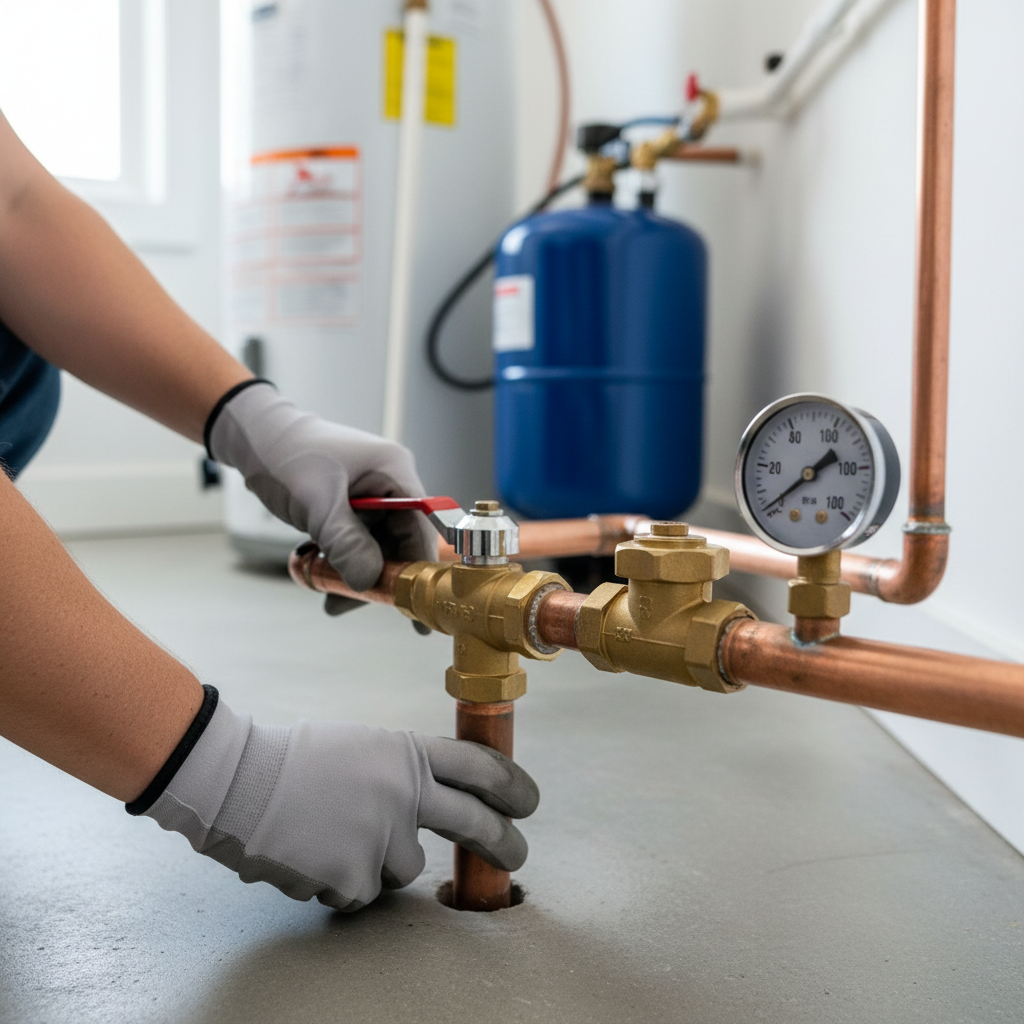
- Partially Closed Main Shut-Off Valve: The most straightforward cause; often accidentally nudged during other work or not fully re-opened after maintenance.
- Failing Water Pressure Regulator: Over time, the internal components of a pressure regulator can wear out, causing it to restrict pressure or fail to maintain a consistent setting.
- Sediment Buildup in Fixtures/Pipes: Mineral deposits (especially in hard water areas) and rust can accumulate in aerators, showerheads, and even inside older galvanized pipes, narrowing the pathway for water.
- Shared Water Main Issues: Sometimes, a problem isn't in your home but in the municipal water supply, such as work being done on the main line or an issue with a pressure reducing valve serving your neighborhood.
- Water Heater Issues: A partially closed shut-off valve near the water heater or sediment accumulation inside the water heater itself can restrict hot water flow.
Plumbing · Low water pressure
| Project category | Plumbing |
|---|---|
| Problem type | Low water pressure |
| Trade required | Plumbing |
| Urgency | Soon — within weeks |
| Safety risk | Low safety risk |
| DIY suitability | DIY friendly |
| Cost category | Low cost |
| Typical timeline | DIY checks in under an hour; PRV replacement a half day |
| Contractor type | Licensed plumber |
Repair option
Clean aerators, then test static pressure before replacing the PRV.
Replacement option
Repipe when scaling in galvanized lines is the cause.
Common causes
- Clogged aerators or fixture screens
- Failing pressure-reducing valve
- Partially closed main shutoff
- Galvanized pipe scaling in older homes
Relevant tools:diy difficulty
Published May 10, 2026Last updated August 17, 2026
Tools & materials you'll need
Affiliate linksAs an Amazon Associate FixlyGuide earns from qualifying purchases — at no extra cost to you. Prices and availability are accurate as of publication and subject to change.
Quick Answer
Whole-house low water pressure is a common yet vexing problem for homeowners, often leading to disappointing showers and inefficient appliance use. While many assume the issue lies with their municipal water supply, the culprit is frequently found within the home's plumbing system. Common causes range from a simple, partially closed main water shut-off valve to a failing pressure regulator or significant sediment buildup. Identifying the exact cause requires systematic investigation, starting with the most accessible and easiest-to-check components.
The Problem
Imagine stepping into your morning shower, expecting a refreshing cascade, only to be met with a weak dribble. Or trying to run your dishwasher and washing machine simultaneously, only to find neither has enough pressure to operate effectively. This frustrating scenario of low water pressure affecting every faucet and appliance in your home is more than an inconvenience; it can indicate underlying issues within your plumbing system that, if left unaddressed, could lead to larger, more costly repairs. Unlike low pressure in a single fixture, which often points to a localized problem, whole-house low pressure signals a systemic issue affecting the entire water supply entering your home.
How It Works
Your home's water pressure journey begins at the municipal water main, a large underground pipe that delivers water to your street. From there, a smaller service line branches off, connecting to your home. Before entering your house, this line typically passes through a main shut-off valve, which allows you to control the water supply to your entire home.
Immediately after the main shut-off valve, many homes have a water pressure regulator, especially if the municipal supply pressure is too high. This device, usually bell-shaped, is crucial for reducing and maintaining a consistent, safe water pressure throughout your plumbing system, typically around 50-70 PSI (pounds per square inch). Without a regulator, high incoming pressure could damage pipes, fixtures, and appliances. Inside the regulator, a spring-loaded diaphragm or piston responds to water pressure changes, adjusting to maintain a set output pressure.
After the regulator, water flows into your home's internal plumbing network, a system of branched pipes (usually copper, PEX, or PVC). This network distributes water to various fixtures and appliances – sinks, showers, toilets, water heaters, and washing machines. When you open a faucet, water travels through these pipes, passes through the fixture's internal mechanisms (like aerators or cartridges), and exits. Any obstruction or significant restriction at any point along this entire pathway, from the city main to the final faucet, can reduce flow and, consequently, pressure. Furthermore, problems at the initial entry point of your home's system, such as a partially closed main valve or a faulty pressure regulator, will naturally impact all fixtures downstream, leading to the widespread low pressure you experience.
Step-by-Step Fix
1. Check Your Main Shut-Off Valve — A partially closed main water shut-off valve is a common and easily remedied cause of low water pressure throughout the house.
Look for the main shut-off valve where your water line enters your home, typically in the basement, crawl space, near the water heater, or outside by the meter. It's often a gate valve with a circular handle. Ensure it is fully open by turning it counter-clockwise until it stops. If it's a ball valve (with a lever handle), the handle should be parallel to the pipe when open.
- Safety Note: Do not force a stubborn valve; older gate valves can sometimes seize or break if overtightened or forced. If it's stiff, try lubricating the stem with silicone spray or contact a plumber.
2. Inspect Your Water Pressure Regulator — A failing or improperly set water pressure regulator can significantly reduce incoming water pressure to your entire home.
Locate your pressure regulator, typically a bell-shaped device installed on the main water line after the shut-off valve. If you have a pressure gauge installed, check the reading. A healthy range is usually 50-70 PSI. If there's no gauge, you can test it with a portable water pressure gauge that screws onto an exterior spigot. If the pressure is consistently low (<40 PSI) or fluctuates wildly, the regulator might be failing.
- Tools: Water pressure gauge (available at hardware stores for $10-$20).
- If this doesn't work: Do not attempt to adjust or replace a pressure regulator without proper knowledge. Incorrect installation can lead to dangerously high pressure and damage. Call a licensed plumber if you suspect the regulator is the issue.
3. Check Your Water Meter Valve — Similar to your home's main shut-off, the valve at your water meter can also be partially closed.
Locate your water meter, usually outside your home near the street or sidewalk. You'll find a shut-off valve on each side of the meter. Ensure the homeowner's side valve (the one closest to your house) is fully open.
- Warning: The municipal side valve (closest to the street) is typically not for homeowner access. Tampering with it without permission can lead to fines.
4. Examine Your Water Heater Bypass Valve — If you recently had work done on your water heater, a bypass valve might have been left partially closed.
Find the hot and cold water lines leading to your water heater. Some systems have a bypass valve that allows water to circumvent the heater for maintenance. Ensure this valve, if present, is fully closed (not bypassing) for normal operation. Most commonly, there will be two shut off valves near the top of the water heater, one for hot and one for cold. Ensure both are fully open.
- Tip: Follow the pipes visually. The cold water inlet usually has a blue handle/tag, and the hot water outlet a red one.
5. Clean Aerators and Showerheads — Sediment and mineral buildup in aerators and showerheads can significantly restrict water flow, mimicking low pressure.
Unscrew aerators from sink faucets and remove showerheads. Inspect the screens and openings for mineral deposits (like white, crusty buildup) or debris. Clean them thoroughly using an old toothbrush and white vinegar. Soak stubborn components in vinegar overnight.
- Tools: Adjustable wrench (for showerheads), small brush, white vinegar.
- If this doesn't work: If cleaning only improves pressure at that specific fixture and not others, it indicates the problem isn't isolated to that fixture, but rather a systemic issue.
6. Consider Mineral Buildup (Older Pipes) — Galvanized steel pipes, common in older homes, are highly susceptible to internal mineral buildup and corrosion, which can severely restrict water flow over time.
If your home is older (pre-1970s) and has galvanized pipes, the inside diameter of these pipes can shrink dramatically due to rust and mineral deposits. This is a common cause of whole-house low pressure that worsens over decades. You might notice rust-colored water intermittently.
- Pro Callout: Diagnosing and remediating severe pipe corrosion requires professional assessment and often whole-house repiping. This is beyond DIY scope.
7. Check for Leaks — Even a small, unnoticed leak in your main water line can divert enough water to cause a noticeable drop in overall house pressure.
Check your water meter, note the reading, and then avoid using any water for 1-2 hours (don't run faucets, flush toilets, or use appliances). Check the meter again. If the reading has changed, you likely have a leak somewhere in your system. Look for damp spots in your yard, unusually green patches of grass, or listening for running water sounds when all fixtures are off.
- Pro Callout: Pinpointing and repairing underground or hidden leaks requires specialized equipment and expertise. Call a professional leak detection service or plumber.
Common Causes
- Partially Closed Main Shut-Off Valve: The most straightforward cause; often accidentally nudged during other work or not fully re-opened after maintenance.
- Failing Water Pressure Regulator: Over time, the internal components of a pressure regulator can wear out, causing it to restrict pressure or fail to maintain a consistent setting.
- Sediment Buildup in Fixtures/Pipes: Mineral deposits (especially in hard water areas) and rust can accumulate in aerators, showerheads, and even inside older galvanized pipes, narrowing the pathway for water.
- Shared Water Main Issues: Sometimes, a problem isn't in your home but in the municipal water supply, such as work being done on the main line or an issue with a pressure reducing valve serving your neighborhood.
- Water Heater Issues: A partially closed shut-off valve near the water heater or sediment accumulation inside the water heater itself can restrict hot water flow.
- Underground Leaks: A leak in the main service line between the meter and your house can significantly reduce the volume and pressure of water reaching your home.
Common Mistakes
- Assuming it's the City's Fault: Many homeowners immediately blame the municipal water supply without first checking their home's internal system. Most whole-house pressure issues originate on the homeowner's side of the meter.
- Ignoring a Failing Pressure Regulator: A common mistake is not recognizing the symptoms of a failing pressure regulator (e.g., fluctuating pressure, sudden drops, or constantly low readings), leading to misdiagnosis and unnecessary repairs.
- Over-tightening Valves: Forcing a stubborn or corroded main shut-off valve can damage it, leading to a complete water shut-off or a more complex repair.
- Failing to Check All Shut-Offs: Forgetting to check the water heater shut-off valves or the homeowner's side valve at the water meter can prolong the diagnostic process.
- Not Cleaning Aerators/Showerheads Systematically: Cleaning just one fixture might temporarily improve pressure there, but it won't solve a systemic whole-house problem, leading to frustration.
- Attempting Complex Plumbing without Expertise: Tackling issues like pressure regulator replacement or leak detection without the right tools or knowledge can lead to water damage, expensive mistakes, or even unsafe plumbing conditions.
Cost & Time Breakdown
| Task | DIY Cost | Pro Cost | Time |
|---|---|---|---|
| Check Main Shut-Off Valve | $0 | $0–$50 | 5–10 minutes |
| Test Pressure Regulator | $10–$20 | $50–$100 | 10–20 minutes |
| Clean Aerators/Showerheads | $0–$5 | $75–$150 | 15–30 minutes |
| Main Line Leak Detection | N/A | $200–$500 | 1–3 hours |
| Pressure Regulator Replacement | N/A | $300–$700 | 2–4 hours |
| Repiping (partial/whole house) | N/A | $2,000–$15,000+ | Days to weeks |
Tips & Prevention
- Regular Valve Checks: Periodically (e.g., once a year) fully open and close your main shut-off valve a few times. This helps prevent seizing and ensures it's fully operational when needed.
- Install a Pressure Gauge: Consider installing a permanent water pressure gauge on an outdoor spigot or near your pressure regulator. This allows for easy monitoring of your home's water pressure.
- Descaling: In hard water areas, regular descaling of showerheads and faucet aerators with white vinegar can prevent mineral buildup.
- Water Softener Maintenance: If you have a water softener, ensure it's properly maintained and functioning. A malfunctioning softener can sometimes restrict water flow.
- Know Your Plumbing System: Familiarize yourself with the location of all main shut-off valves (main house, water heater, water meter) so you can quickly react to issues.
- Monitor Water Bills: An unexplained spike in your water bill could be an early warning sign of a hidden leak, which can contribute to low pressure.
When to Call a Professional
While many initial checks for low water pressure are homeowner-friendly, several situations warrant calling a licensed plumbing professional. If you've systematically checked all accessible valves (main shut-off, water meter homeowner's side, water heater) and cleaned aerators/showerheads with no improvement, the issue is likely more complex. A failing water pressure regulator often requires professional replacement, as incorrect installation can lead to dangerously high pressure and damage to your plumbing system.
Persistent low pressure, especially if accompanied by signs of a leak (e.g., a constantly spinning water meter, damp spots in the yard, unexplained high water bills), demands immediate professional attention for leak detection and repair to prevent structural damage or mold growth. If your home has older galvanized pipes and you suspect internal corrosion is the cause, a plumber can assess the pipe condition and recommend repiping solutions. Any work involving the main water line, particularly if it's underground or requires excavation, falls squarely into the professional's domain. Don't hesitate to call if you feel uncomfortable or out of your depth; a plumber has the specialized tools and expertise to accurately diagnose and safely resolve complex water pressure issues.
Related Articles
Keep troubleshooting with these hand-picked guides from FixlyGuide:
- The 4 Hidden Reasons Your Entire Home Has Low Water Pressure — Low water pressure throughout your house can stem from several hidden issues, ranging from municipal supply problems to your home's main sh…
- The #1 Mistake Homeowners Make When Diagnosing Low Water Pressure (It's Not Your Pipes!) — Low water pressure throughout your house often points to a single, easily overlooked culprit: your main water shut-off valve.
- The 4 Hidden Reasons Your Entire Home Has Low Water Pressure (And the Easy Fixes) — Low water pressure throughout your entire home can be a frustrating and often misunderstood problem, with several common culprits. Learn to…
- The #1 Mistake Homeowners Make When Diagnosing Low Water Pressure (and What to Check First) — Before you call a plumber, learn the most common overlooked cause of low water pressure affecting your entire home and how to easily check…
- The 4 Hidden Reasons Your Shower Runs Cold – And How to Fix It FAST — Learn the surprising causes behind a cold shower and discover simple, effective DIY fixes to restore hot water quickly.
- The 4 Hidden Reasons Your Toilet Tank Fills Slowly (And How to Fix Them in Under an Hour) — A toilet tank that fills slowly is a common, annoying plumbing problem, often caused by easily fixable issues within the fill valve or wate…
What should this project cost?
Enter your project details for a realistic cost range before you call anyone.
Common repairs run $150–$650; repipes and water-heater replacements reach $1,500–$4,500.
- Regional adjustment
- National average
- Labor share (typical)
- ~$754
- Quotes to collect
- 3 written estimates
Educational estimate based on national averages — not a binding quote. Always confirm with written local estimates.
Fixly Project Decision Box
- DIY difficulty
- Moderate
- Estimated time
- 30 minutes – half a day
- Cost level
- Moderate
Main tools / materials
- Adjustable wrench
- Plunger or drain auger
- Bucket and towels
- Thread tape
When to stop and call a pro
- Water you cannot shut off at the fixture or main
- Sewage backing up into more than one fixture
- Water near electrical panels or outlets
- Gas water heater work beyond relighting a pilot
Need professional help?
Get a Licensed PlumberRecommended for DIYers & woodworkers
Sponsored
The Top 20 Tools for Workshops of Any Budget
No stationary machines or power tools required — plus 3 fundamental tools that can't be bought at any price.
Get the free guide
Ted's Woodworking — The #1 Woodworking Resource
Detailed instructions, dimensioned drawings, materials & cutting lists, and 3D schematics for every skill level.
See the plansSponsored: links above are affiliate links. FixlyGuide may earn a commission on qualifying purchases — at no extra cost to you.
Frequently asked questions
Why is my water pressure suddenly low throughout the house?+
A sudden drop in whole-house water pressure is frequently caused by a partially closed main water shut-off valve, a failing water pressure regulator, or ongoing municipal water work in your area. Check accessible valves first.
Can a bad water pressure regulator cause low water pressure?+
Yes, absolutely. A faulty water pressure regulator is a very common cause of whole-house low water pressure. Internally worn components can restrict water flow or fail to maintain the proper pressure setting for your home.
How can I test my home's water pressure?+
You can test your home's water pressure using an inexpensive water pressure gauge that screws onto any exterior spigot. Turn the spigot on fully and read the gauge. A healthy range is typically 50-70 PSI.
Does a water softener affect water pressure?+
While a properly functioning water softener shouldn't significantly impact pressure, an improperly installed, clogged, or malfunctioning softener can sometimes restrict water flow and contribute to low pressure throughout the house.
When should I call a plumber for low water pressure?+
You should call a plumber if you've checked the main shut-off valve, water meter valve, and cleaned aerators/showerheads without success. Also, call a pro if you suspect a faulty pressure regulator, an underground leak, or if you have old galvanized pipes you suspect are corroded.
Discussion
Loading comments…