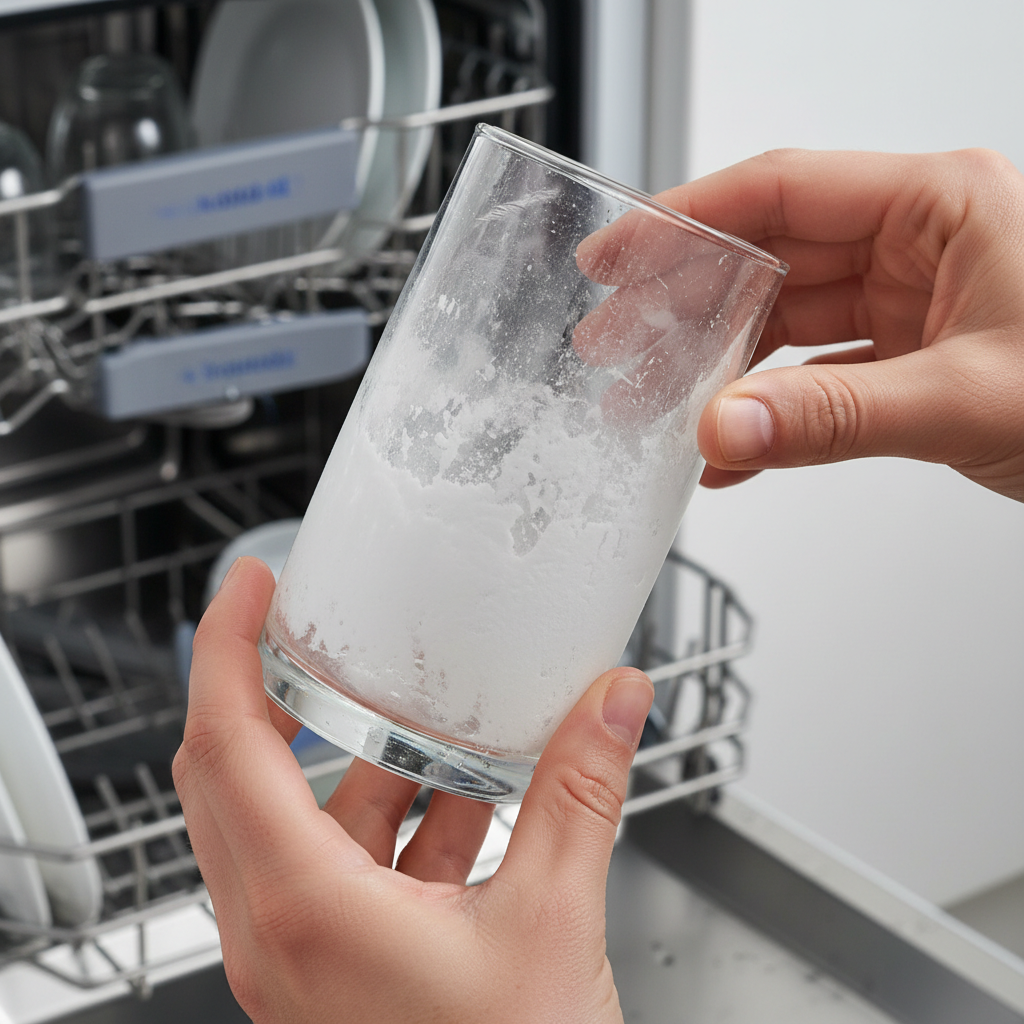
- Hard Water: This is the number one cause. Water with a high concentration of dissolved minerals (calcium and magnesium) leaves behind scale deposits when it evaporates, especially when heated.
- Low-Quality Detergent: Cheap gel or powder detergents often lack the necessary chemical agents (sequestering agents or phosphates) to neutralize hard water minerals.
- Insufficient Water Temperature: Water below 120°F is not hot enough to dissolve detergent effectively or keep minerals in solution, leading to redepositing.
- Empty Rinse Aid Dispenser: Without rinse aid, water forms into droplets on dishes, leaving concentrated mineral spots as they dry.
- Clogged Components: A dirty filter or blocked spray arm nozzles prevent proper water circulation and cleaning, leaving food and mineral soil on dishes.
HVAC · High energy usage
| Project category | HVAC |
|---|---|
| Problem type | High energy usage |
| Trade required | HVAC |
| Urgency | Planned project |
| Safety risk | Low safety risk |
| DIY suitability | DIY for experienced homeowners |
| Cost category | High cost |
| Typical timeline | Assessment within weeks; replacement planned off-season |
| Contractor type | Licensed HVAC technician |
Repair option
Duct sealing, insulation, and a tune-up before touching the equipment.
Replacement option
High-efficiency replacement sized by a load calculation, not a rule of thumb.
Common causes
- Aging, low-efficiency equipment
- Leaking ducts losing conditioned air
- Insufficient attic insulation
- Oversized system short-cycling
Relevant tools:project cost estimatorrepair or replace
Published April 24, 2026Last updated August 17, 2026
Tools & materials you'll need
Affiliate linksAs an Amazon Associate FixlyGuide earns from qualifying purchases — at no extra cost to you. Prices and availability are accurate as of publication and subject to change.
Quick Answer
The frustrating white residue clinging to your dishes after a wash cycle is almost always caused by one of two things: hard water mineral deposits or, less commonly, etching. Hard water, which is rich in dissolved minerals like calcium and magnesium, is the primary culprit. When heated, these minerals precipitate out of the water and bond to surfaces, leaving a cloudy, chalky film. The solution involves using a high-quality detergent formulated for hard water, ensuring your rinse aid dispenser is always full, and regularly cleaning your dishwasher's interior to prevent mineral buildup.
The Problem
You open the dishwasher expecting sparkling, clean dishes, but what you find is a collection of cloudy glasses, spotty silverware, and plates coated in a gritty, white film. They look almost dirtier than when they went in. This chalky residue is not just unsightly; it feels unpleasant to the touch and can make you question if your appliance is even working. You might re-wash the dishes by hand, only to find the film is stubborn and difficult to remove. It’s one of the most common and persistent dishwasher complaints, turning a time-saving appliance into a source of daily frustration. The good news is that in most cases, this is a solvable problem that doesn't require a new dishwasher, just a better understanding of what’s happening inside it.
How It Works
Your dishwasher is a powerful cleaning machine that orchestrates a precise sequence of water, heat, and chemistry. Understanding this process reveals why mineral deposits can become such a problem.
A cycle begins when the basin fills with a measured amount of water (typically 2-4 gallons). An internal heating element, often a visible metal coil at the bottom of the tub, raises the water temperature to a target, usually between 120°F and 150°F. This step is critical; hot water is exponentially better at dissolving detergent and loosening food soils. Herein lies the first challenge: if your home's water heater is set too low or the dishwasher's heating element is failing, the water won't get hot enough, leaving both detergent and minerals behind.
Once heated, a powerful pump forces the hot, soapy water up into the rotating spray arms. Tiny, precisely angled nozzles on these arms blast every corner of the dishwasher, creating the mechanical scrubbing action that dislodges food. The dirty water collects in the bottom, passes through a filtration system to trap large debris, and is recirculated. After the main wash, the machine drains the soapy water and performs one or more rinse cycles with fresh water to wash away lingering soap.
The final, crucial stage is the final rinse and drying. In this step, the dishwasher releases a small, specific amount of rinse aid from its dispenser. Rinse aid is a surfactant; it works by breaking the surface tension of the water. Instead of forming into distinct droplets that cling to surfaces and leave spots as they evaporate, the water "sheets" off the dishes. This allows them to dry much faster and virtually eliminates spotting. If your rinse aid dispenser is empty or set too low, water droplets will linger, and each one acts like a tiny magnifying glass for any minerals present in the water, leaving a concentrated white dot behind as it evaporates. The heated dry cycle that follows simply bakes these mineral deposits onto your glassware and dishes, creating that stubborn white film.
Step-by-Step Fix
Follow these steps in order to diagnose and eliminate white residue for good.
1. Identify The Residue — Before you begin, determine if you're dealing with hard water film or permanent etching. Soak a cloudy glass in a bowl of plain white vinegar for 5 minutes. If the film disappears, you have hard water mineral buildup, which is removable. If the film remains, the glass surface has been permanently scratched, or "etched," by a combination of overly soft water and harsh detergents. Etching is irreversible.
2. Deep Clean Your Dishwasher — Start with a clean slate. Place a glass or ceramic bowl containing two cups of distilled white vinegar on the top rack of your empty dishwasher. Run a full, heavy-duty cycle using the hottest water setting possible. The acetic acid in the vinegar will dissolve the scale and mineral buildup throughout the machine's interior, including the pump, hoses, and spray arms.
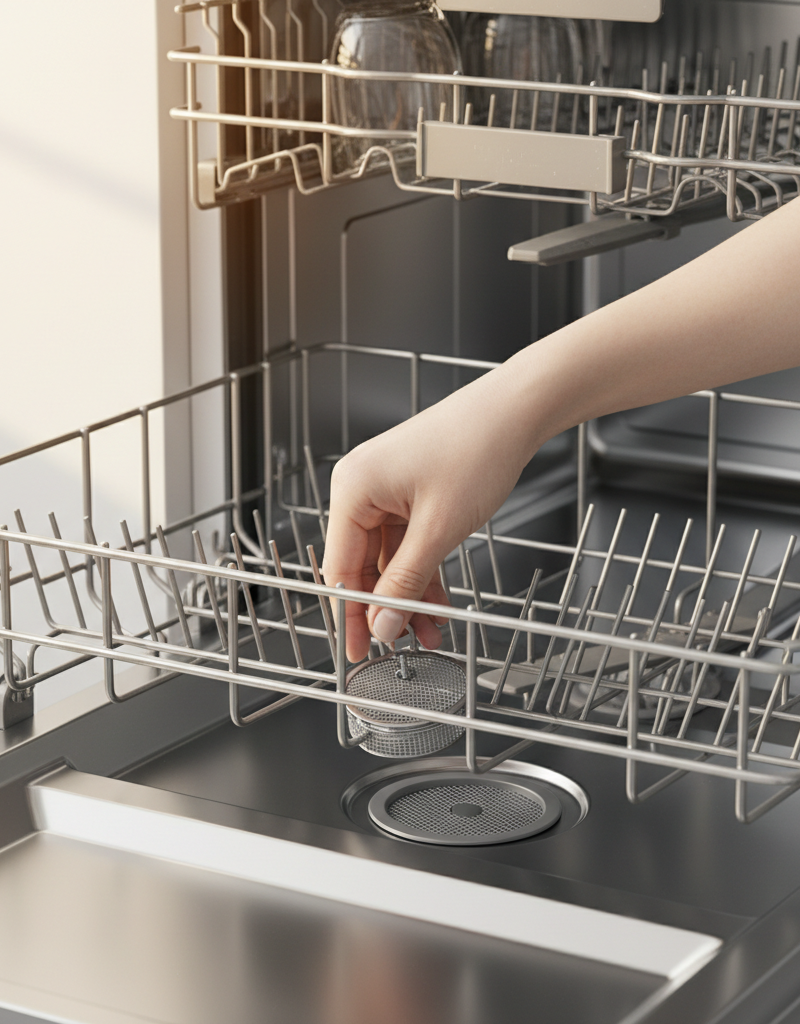
3. Clean the Filter Thoroughly — A clogged filter is a primary cause of poor cleaning. - Tools: Soft-bristled brush, dish soap. - Safety: Ensure the dishwasher is off. - Remove the bottom rack to access the filter assembly. Most modern dishwashers have a cylindrical filter that you can remove by twisting it (usually counter-clockwise). Some may have an additional flat mesh screen. Take both parts to the sink and wash them with hot water, a little dish soap, and a soft brush to remove all grease and trapped particles. Rinse completely and reinstall.
4. Inspect and Unclog Spray Arms — The spray arms must spin freely and have clear nozzles to work effectively. Check that they are not blocked by a utensil or dish. Then, inspect the small holes on the arms. If you see any debris, use a toothpick, pin, or a piece of wire to gently poke it out. You can typically remove the spray arms for easier cleaning (the bottom one often lifts right off, while the top one may have a retaining nut or clip).
5. Refill the Rinse Aid Dispenser — This is non-negotiable for spot-free dishes. Locate the rinse aid dispenser, usually a small, round cap next to the detergent compartment. Open it and fill it completely with a high-quality rinse aid until the indicator shows it’s full. If your dispenser has an adjustable setting (often a dial from 1 to 4 or 5), set it to 2 or 3. A setting that's too high can leave a purplish film on dishes.
6. Upgrade Your Detergent — Gel detergents are notoriously less effective against hard water. Switch to a high-quality powder or single-dose pod detergent. Look for brands that specifically mention "hard water performance" or contain phosphates or phosphate substitutes. These ingredients bind with calcium and magnesium ions, preventing them from depositing on your dishes.
7. Select High-Temperature Settings — Ditch the "eco" or "light" wash cycles for now. Always select a cycle that uses high heat, such as "Heavy," "Pots & Pans," or "Sanitize." These cycles ensure the water reaches the optimal temperature (140°F or higher) needed to fully activate the detergent and dissolve minerals.
8. Verify Your Water Heater Temperature — Dishwashers rely on the hot water feed from your home. For best results, your home’s water heater should be set to deliver water at 120°F to the dishwasher. You can test this by running the hot water tap at the kitchen sink and measuring the temperature with a meat or candy thermometer.
9. Don't Over-Pre-Rinse — Modern dishwasher detergents contain enzymes that are designed to attack food particles. If you pre-rinse your dishes until they are practically clean, the detergent has nothing to work on, which can sometimes lead to etching and cloudy film. Scrape off large food debris, but leave a little work for the machine to do.
10. Load Dishes Correctly — Overloading the dishwasher or blocking the spray arms prevents water and detergent from reaching every surface. Ensure water can circulate freely. Face dirtier surfaces toward the center spray, and don't allow bowls or utensils to nest together.
11. Test Your Water Hardness — If the problem persists, it's time to quantify the issue. Purchase a simple water hardness test kit online or from a home improvement store for about $10. These strips will tell you the hardness of your water in Grains Per Gallon (GPG). Any reading over 7 GPG is considered very hard and will likely require aggressive action to combat filming.
Common Causes
- Hard Water: This is the number one cause. Water with a high concentration of dissolved minerals (calcium and magnesium) leaves behind scale deposits when it evaporates, especially when heated.
- Low-Quality Detergent: Cheap gel or powder detergents often lack the necessary chemical agents (sequestering agents or phosphates) to neutralize hard water minerals.
- Insufficient Water Temperature: Water below 120°F is not hot enough to dissolve detergent effectively or keep minerals in solution, leading to redepositing.
- Empty Rinse Aid Dispenser: Without rinse aid, water forms into droplets on dishes, leaving concentrated mineral spots as they dry.
- Clogged Components: A dirty filter or blocked spray arm nozzles prevent proper water circulation and cleaning, leaving food and mineral soil on dishes.
- Improper Dishwasher Loading: Overcrowding dishes prevents water from reaching all surfaces, leading to incomplete cleaning and rinsing.
Common Mistakes
- Using the Wrong Type of Detergent: Opting for basic gel detergents in a hard water environment is a recipe for filming. Pods and high-quality powders are far superior.
- Skipping the Rinse Aid: Many homeowners view rinse aid as an optional "upsell" and ignore the dispenser. It is essential for preventing spots and film.
- Never Cleaning the Filter: Assuming the dishwasher is "self-cleaning" is a major error. The filter traps food that will otherwise recirculate and degrade wash performance.
- Too Much Pre-Rinsing: Modern detergents need some food soil to latch onto. Rinsing dishes spotless can make detergents less effective and can contribute to etching on glassware over time.
- Using "Eco" or Quick Wash Cycles: These cycles save energy by using lower water temperatures, which is a primary cause of mineral filming.
- Putting Too Much Detergent: Overdosing on detergent can create an excess of suds that inhibits the spray arms and can leave behind its own residue.
Cost & Time Breakdown
| Task | DIY Cost | Pro Cost | Time |
|---|---|---|---|
| Identify Film (Vinegar Test) | < $1 | N/A | 5 minutes |
| Run Full Cleaning Cycle | $3 - $8 | N/A | 2-3 hours (machine time) |
| Clean Filter & Spray Arms | $0 | $100 - $150 | 15 minutes |
| Water Hardness Test Kit | $5 - $15 | N/A | 5 minutes |
| Replace Lost/Broken Rinse Aid Cap | $10 - $25 | $100 - $150 | 5 minutes |
| Install Whole-Home Water Softener | N/A (Pro Recommended) | $800 - $3,000+ | 2-4 hours |
Tips & Prevention
- Monthly Cleaning Routine: Once a month, run an empty hot cycle with a commercial dishwasher cleaner (like Affresh) or two cups of vinegar to keep mineral scale at bay.
- Check the Filter Weekly: Make it a habit to pull out and rinse the dishwasher filter every few loads. It only takes a minute and dramatically improves performance.
- Always Use Rinse Aid: Keep the dispenser full. Consider buying it in bulk to save money and ensure you never run out.
- Run Hot Water First: Before starting the dishwasher, run the hot water at your kitchen sink until it's fully hot. This ensures the dishwasher fills with hot water from the very start of the cycle.
- Add a Water Softening Booster: For very hard water (above 8 GPG), add a hard water booster powder like Lemi Shine to the main wash receptacle along with your regular detergent.
- Upgrade Your Salt (If Applicable): Some high-end dishwasher models have a built-in water softener. If yours does, make sure you are keeping it filled with the appropriate dishwasher salt.
When to Call a Professional
If you have diligently followed all the cleaning steps, switched your detergent, used a rinse aid, and your dishes are still coming out filmy, it may be time to call a professional appliance technician. The problem could be a component failure that you can't easily fix yourself. For example, the dishwasher's heating element could be broken, meaning the water never reaches the temperature required for a proper clean. A failed thermostat could also cause this.
Another possibility is a malfunctioning rinse aid dispenser that isn't releasing the liquid, or a faulty water inlet valve that isn't letting in enough water for a proper wash and rinse. These repairs involve testing and replacing electrical components and water lines, which is best left to an expert.
SAFETY NOTE: Never attempt to diagnose or repair your dishwasher's heating element or other electrical components yourself. These systems carry high voltage and pose a significant risk of electric shock. Always disconnect the power to the appliance at the circuit breaker before performing any basic maintenance, and leave all electrical work to a qualified professional. Furthermore, if you determine your home has very hard water and requires a whole-home water softener, the installation should be performed by a licensed plumber.
Related Articles
Keep troubleshooting with these hand-picked guides from FixlyGuide:
- That Chalky Film on Your Dishes? It's Not Soap Scum — If your dishwasher is leaving a cloudy white film on your glassware and dishes, the culprit is likely hard water mineral deposits, not left…
- Your Dishwasher Dishes Come Out Cloudy? It's This, Not Soap — Tired of cloudy glasses and spotty plates? The unsightly white residue from your dishwasher is almost always caused by hard water mineral d…
- Why Your Dishwasher Leaves Dishes Wet (And How to Fix It) — If your dishwasher leaves dishes wet after a cycle, it's a common and frustrating problem often caused by issues with rinse aid, loading, o…
- Refrigerator Not Cooling but Freezer Works: 6 DIY Fixes — When the freezer is fine but the fridge is warm, the cause is almost always airflow — not refrigerant. Here are the 6 fixes, ordered from f…
- The #1 Mistake Wrecking Your Dishwasher's Cleaning Power (It's Not Soap!) — Your dishwasher isn't cleaning dishes because of a common, overlooked issue with its spray arms, leading to poor water distribution.
- That 5-Minute Shower? Your Water Heater's Secret Problem — Your hot water is likely running out quickly due to a broken internal dip tube, a massive buildup of mineral sediment, or a failing heating…
What should this project cost?
Enter your project details for a realistic cost range before you call anyone.
Cost depends heavily on which system turns out to be the source.
- Regional adjustment
- National average
- Labor share (typical)
- ~$1,620
- Quotes to collect
- 3 written estimates
Educational estimate based on national averages — not a binding quote. Always confirm with written local estimates.
Frequently asked questions
Can the white residue from the dishwasher make you sick?+
It's generally not harmful, as it's just mineral deposits (calcium and magnesium), but it's unappetizing and indicates your dishes aren't as clean as they could be.
Is it better to use dishwasher pods, powder, or gel?+
For homes with hard water, pods and powders are usually superior. They often contain water-softening agents like phosphates or their substitutes and enzymes that many gel detergents lack.
How often should I clean my dishwasher?+
For best results, clean the filter weekly or bi-weekly. You should run a full cleaning cycle using a commercial dishwasher cleaner or vinegar at least once a month to remove mineral buildup and keep it running efficiently.
Will vinegar harm my dishwasher?+
Occasional use of white vinegar for cleaning is safe for stainless steel dishwasher tubs and components. However, avoid using it in every wash, as consistent exposure to acid could potentially degrade rubber gaskets and seals over a long period of time.
Discussion
Loading comments…