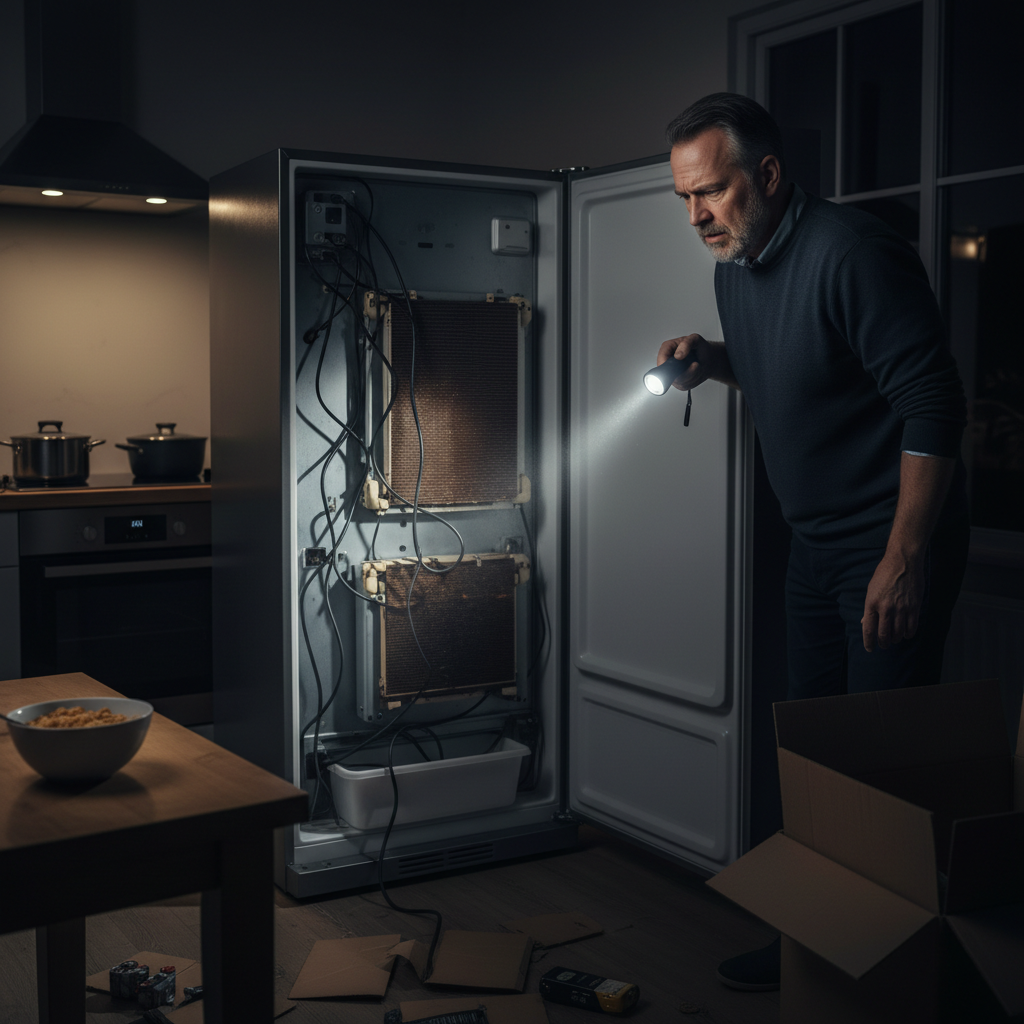
- Icemaker Water Inlet Valve: A short, loud buzz every hour or two is often the valve opening to fill the icemaker.
- Obstructed Fan Blade: Debris hitting either the condenser fan (at the back) or the evaporator fan (in the freezer) will cause a constant buzzing or ticking noise whenever the fan is running.
- Dirty Condenser Coils: Clogged coils trap heat, forcing the compressor and condenser fan to run almost constantly at full speed, creating more noise than usual.
- Failing Fan Motor: A worn-out motor for either the condenser or evaporator fan will buzz or drone loudly instead of spinning quietly.
- Vibrating Drain Pan: The plastic pan underneath the fridge can rattle against the compressor or frame.
HVAC · High energy usage
| Project category | HVAC |
|---|---|
| Problem type | High energy usage |
| Trade required | HVAC |
| Urgency | Planned project |
| Safety risk | Low safety risk |
| DIY suitability | DIY for experienced homeowners |
| Cost category | High cost |
| Typical timeline | Assessment within weeks; replacement planned off-season |
| Contractor type | Licensed HVAC technician |
Repair option
Duct sealing, insulation, and a tune-up before touching the equipment.
Replacement option
High-efficiency replacement sized by a load calculation, not a rule of thumb.
Common causes
- Aging, low-efficiency equipment
- Leaking ducts losing conditioned air
- Insufficient attic insulation
- Oversized system short-cycling
Relevant tools:project cost estimatorrepair or replace
Published April 24, 2026Last updated August 17, 2026
Tools & materials you'll need
Affiliate linksAs an Amazon Associate FixlyGuide earns from qualifying purchases — at no extra cost to you. Prices and availability are accurate as of publication and subject to change.
'''
Quick Answer
If your refrigerator starts buzzing loudly, especially at night, the most common causes are the icemaker attempting to fill with water, or a vibrating and obstructed condenser or evaporator fan. It can also be caused by dirty condenser coils forcing the system to work harder, or a simple issue like the drain pan rattling against the compressor.
The Problem
It’s a classic scenario: the house is finally quiet, you’re settling into bed, and a sudden, loud BUZZZZ cuts through the silence. It’s not the gentle, low hum of normal operation; this is an aggressive, sometimes rattling noise that sounds like something is wrong. You trace it to the kitchen, where the refrigerator, your usually silent appliance friend, is the noisy culprit. The sound might last for a few minutes and then stop, only to return later, often seeming to happen more frequently at night. This isn't just a minor annoyance; it’s a sign that a specific part of your refrigerator is either dirty, obstructed, or beginning to fail. Ignoring it can lead to bigger problems, like a spoiled batch of groceries or a much more expensive repair down the line.
How It Works
Your refrigerator feels like a simple cold box, but it’s a dynamic machine constantly managing heat and airflow. Understanding its basic systems is key to diagnosing that buzz. The core of the cooling action is the sealed refrigerant system. A compressor (usually a black, dome-shaped motor at the bottom rear) pressurizes a special gas called refrigerant, causing it to get hot. This hot gas flows into the condenser coils (the large, black, radiator-like coils on the back or bottom of your fridge), where a condenser fan blows ambient air over them. This process dissipates the heat and allows the refrigerant to cool down and turn back into a liquid.
This high-pressure liquid then travels to the freezer, passing through a tiny opening into the evaporator coils. As the pressure drops, the liquid "evaporates" back into a gas, a process that absorbs a massive amount of heat and makes the evaporator coils intensely cold. An evaporator fan, located inside the freezer behind a panel, circulates air over these cold coils to cool down the freezer and refrigerator compartments.
Two other systems often run independently: the icemaker and the defrost cycle. The icemaker has its own water inlet valve, often at the back of the fridge, which can buzz loudly when it opens to let water into the ice mold. The defrost system uses a heating element to melt frost off the evaporator coils periodically, which can cause its own set of clicks and hisses, and if the evaporator fan is iced over, it can buzz loudly when it tries to spin.
Step-by-Step Fix
Follow these steps in order to isolate and identify the source of the nighttime buzzing.
SAFETY NOTE: Before performing any inspection that involves removing panels or touching components, unplug the refrigerator from the wall outlet. Water and electricity are a dangerous combination.
-
Pinpoint the Sound's Origin — When the buzzing happens, try to locate where it’s loudest. Is it coming from the very bottom of the fridge? The back? Inside the freezer? This is your most important clue. A buzz from inside the freezer points to the evaporator fan, while a buzz from the bottom rear points to the compressor, drain pan, or condenser fan.
-
Test the Icemaker — The water inlet valve for the icemaker is a very common source of loud buzzing. It's an electro-mechanical valve that can vibrate loudly as it opens or if it's failing. To test it, simply lift the metal feeler arm on your icemaker to the "off" position. If your icemaker has a switch, turn it off. Wait to see if the noise disappears over the next day. If it does, the water inlet valve is likely your culprit.
-
Inspect the Condenser Fan and Coils — Carefully pull the refrigerator away from the wall. Unplug it. Most refrigerators have a thin cardboard or metal panel on the bottom quarter of the back, usually held on by a few quarter-inch hex-head screws. Remove this panel. You will see the compressor and, next to it, the condenser fan.
- Check for obstructions. Is a piece of insulation, a stray wire, or dust buildup hitting the fan blades? Carefully clear any debris.
- Gently spin the fan blade with your finger (with the power off!). Does it spin freely? If it feels stiff or gritty, the motor is likely failing and will need to be replaced.
-
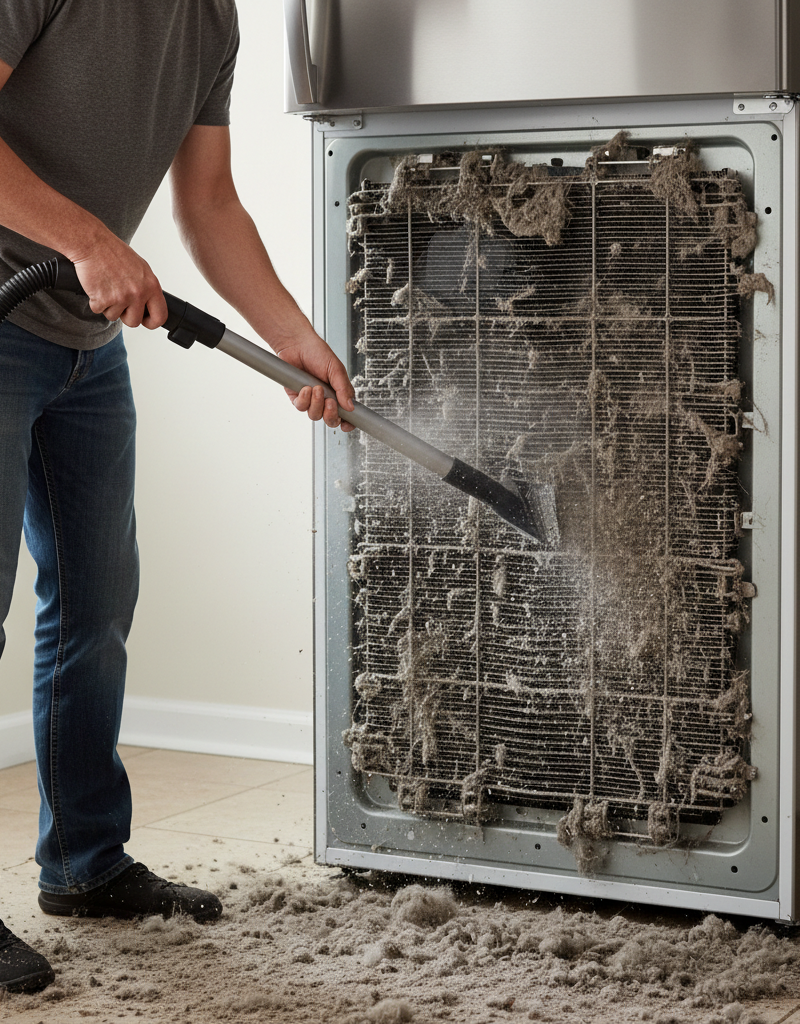
Clean the Condenser Coils — While you have the back panel off, inspect the condenser coils. If they are caked in dust, pet hair, and debris, the fridge cannot dissipate heat effectively. This forces the compressor and condenser fan to run longer and harder, which can cause excessive noise and stress on the components. Use a long, flexible coil brush and your vacuum's hose attachment to thoroughly clean the coils.
-
Examine the Evaporator Fan — If you suspect the noise is coming from inside the freezer, you'll need to check the evaporator fan. Unplug the fridge, empty the freezer compartment completely, and remove the interior back panel. This may involve removing shelves and unscrewing a few mounting screws. Behind it, you will find the evaporator coils and the fan.
- Look for ice buildup. If ice has encased the fan blades, they will buzz loudly when they try to spin. This indicates a problem with your defrost system.
- Check for obstructions, just like with the condenser fan. A loose food package clip or a zip tie could be the cause.
-
Secure the Drain Pan — Underneath the refrigerator, directly below the compressor, is a shallow plastic drain pan that catches water from the defrost cycle. Sometimes, this pan can shift and vibrate against the compressor or the refrigerator frame, creating a loud rattle or buzz. Ensure it is seated correctly in its clips and isn't making direct contact with other parts.
-
Level the Refrigerator — An unlevel fridge can cause vibrations to amplify through the frame and floor. Place a level on top of the refrigerator. Adjust the screw-in feet at the front bottom corners until the unit is level both side-to-side and front-to-back. Most refrigerators should have a slight tilt to the back to allow doors to swing shut.
-
Listen to the Compressor — Plug the fridge back in and listen to the compressor itself. It should produce a low, steady hum. If the compressor is the source of a loud buzz, or if it makes a sharp clicking sound every few minutes trying to start, it may be overheating or failing. This is a serious issue that requires a professional.
Common Causes
- Icemaker Water Inlet Valve: A short, loud buzz every hour or two is often the valve opening to fill the icemaker.
- Obstructed Fan Blade: Debris hitting either the condenser fan (at the back) or the evaporator fan (in the freezer) will cause a constant buzzing or ticking noise whenever the fan is running.
- Dirty Condenser Coils: Clogged coils trap heat, forcing the compressor and condenser fan to run almost constantly at full speed, creating more noise than usual.
- Failing Fan Motor: A worn-out motor for either the condenser or evaporator fan will buzz or drone loudly instead of spinning quietly.
- Vibrating Drain Pan: The plastic pan underneath the fridge can rattle against the compressor or frame.
- Compressor Overload: If the compressor itself is buzzing much louder than usual, it could be a sign it's struggling due to another issue (like dirty coils) or that it's nearing the end of its life.
Common Mistakes
- Forgetting to Unplug: The number one mistake. Always disconnect the power before removing panels or touching mechanical parts. Condenser fans can kick on unexpectedly.
- Ignoring the Noise: Homeowners often hope the sound will just go away. A buzzing fan motor is a warning sign before it fails completely, which can lead to the compressor overheating or the fridge not cooling at all.
- Improper Cleaning: Never spray liquid cleaners directly onto coils or fan motors. Use a brush and a vacuum to remove dust and debris dryly.
- Forcing Panels: When removing the evaporator fan cover in the freezer, be gentle. They are often held in with plastic clips that can become brittle when cold.
- Misdiagnosing the Sound: It's easy to assume the worst (a bad compressor) when the real issue is a simple, cheap fix like a piece of debris in a fan. Follow a logical diagnostic process.
- Not Pulling the Fridge Out: Trying to diagnose a noise just by listening from the front is ineffective. You must pull the unit out to access the critical components at the back and bottom.
Cost & Time Breakdown
| Task | DIY Cost | Pro Cost | Time |
|---|---|---|---|
| Cleaning Coils & Fans | $0 - $20 (for a brush) | $100 - $175 | 30-45 minutes |
| Replacing Condenser Fan Motor | $40 - $90 (part) | $175 - $275 | 1 hour |
| Replacing Evaporator Fan Motor | $50 - $100 (part) | $225 - $350 | 1-2 hours |
| Replacing Icemaker Water Inlet Valve | $30 - $75 (part) | $150 - $250 | 45 minutes |
| Replacing Compressor | N/A | $500 - $800+ | 2-4 hours |
Tips & Prevention
- Clean Condenser Coils Annually: Set a calendar reminder. This is the single best thing you can do to extend the life of your refrigerator and prevent noise issues.
- Ensure Proper Airflow: Do not store items on top of the refrigerator, and keep the sides and back at least one inch clear of walls or cabinets.
- Keep It Level: Check the refrigerator's levelness any time you move it for cleaning.
- Don't Block Freezer Vents: Avoid over-stuffing the freezer to the point where air cannot circulate. This strains the evaporator fan and can lead to ice buildup.
- Know Your Noises: Pay attention to the normal clicks, whirs, and hums your fridge makes. When a new, louder noise like a buzz appears, you'll recognize it as abnormal immediately.
When to Call a Professional
While many buzzing noises are simple fixes, certain situations absolutely require a licensed appliance technician. Do not attempt to DIY these repairs, as they involve high voltage and specialized systems.
Call a professional if:
- You have diagnosed the problem as a faulty compressor or hear loud clicking followed by buzzing from the compressor area. The compressor is part of a sealed refrigerant system that is not DIY-serviceable. It requires special equipment to replace and recharge.
- You suspect a refrigerant leak (often accompanied by an oily residue on the floor or a chemical smell).
- The buzzing is clearly electrical, you see scorch marks, or smell burning plastic.
- You have performed all the steps above—cleaned the coils, verified both fans are clear and spinning freely, and checked the drain pan—but the loud buzzing persists.
- The evaporator coils are completely encased in a solid block of ice, indicating a more complex defrost system failure that could involve a bad thermostat, heater, or control board.
Remember, your safety is paramount. When in doubt, call a pro. It's cheaper than a new refrigerator or a hospital visit. '''
Related Articles
Keep troubleshooting with these hand-picked guides from FixlyGuide:
- That Midnight Buzz: 5 Reasons Your Refrigerator Is So Loud — A refrigerator making a loud buzzing sound at night is often a sign of a struggling component, from a dirty condenser fan to an aging compr…
- Refrigerator Not Cooling but Freezer Works: 6 DIY Fixes — When the freezer is fine but the fridge is warm, the cause is almost always airflow — not refrigerant. Here are the 6 fixes, ordered from f…
- The #1 Mistake Homeowners Make When Their Dryer Isnt Drying (And How to Fix It Free) — Most homeowners assume a slow dryer means a broken dryer, but the most common culprit is a simple, often overlooked maintenance issue that'…
- Why Your Dishwasher Leaves Dishes Wet (And How to Fix It) — If your dishwasher leaves dishes wet after a cycle, it's a common and frustrating problem often caused by issues with rinse aid, loading, o…
- That Chalky Film on Your Dishes? It's Not Soap Scum — If your dishwasher is leaving a cloudy white film on your glassware and dishes, the culprit is likely hard water mineral deposits, not left…
- Refrigerator Leaking Water? Easy Fixes for Common Causes — A refrigerator leaking water on the floor is a common household problem often caused by a clogged defrost drain or a misaligned drain pan,…
What should this project cost?
Enter your project details for a realistic cost range before you call anyone.
Cost depends heavily on which system turns out to be the source.
- Regional adjustment
- National average
- Labor share (typical)
- ~$1,620
- Quotes to collect
- 3 written estimates
Educational estimate based on national averages — not a binding quote. Always confirm with written local estimates.
Get the print-ready PDF of this guide
A clean, ad-free, printable version you can keep on your phone or pin to the workshop wall. Free with a FixlyGuide account.
- Print-optimized layout
- Tools, materials & every step included
- Saved to your account
Frequently asked questions
Is a buzzing refrigerator dangerous?+
Usually, it is not immediately dangerous, as it's often a mechanical issue like a fan or a vibrating part. However, if the source is a failing electrical component or an overheating compressor, it could pose a fire hazard. It's best to investigate the cause promptly.
Why is the buzzing from my fridge louder at night?+
There are two main reasons. First, the ambient noise in your home is much lower at night, so the normal sounds of the refrigerator seem amplified. Second, cycles like the icemaker fill or the defrost heater may be more likely to run during long periods when the doors haven't been opened, which often happens overnight.
Can I fix a buzzing refrigerator myself?+
Yes, many causes of a buzzing fridge are well within a homeowner's ability to fix. Cleaning dirty condenser coils, clearing an obstruction from a fan blade, or leveling the unit are all simple DIY tasks. However, issues with the compressor or the sealed refrigerant system must be handled by a qualified professional.
How much does it cost to fix a buzzing refrigerator?+
The cost can range from $0 if it's just a matter of cleaning or adjusting a part, to over $800 if the compressor needs to be replaced. Most common repairs, like replacing a faulty fan motor or water inlet valve, typically cost between $150 and $350 for a professional repair.


Discussion
Loading comments…