- Grease Buildup: While not a direct jam, excessive grease poured down the drain can solidify over time, coating the grinding components and making them sticky, hindering free movement.
- Overloading: Trying to grind too much food at once can overwhelm the motor and cause a jam, especially with dense waste like a large quantity of vegetable scraps.
- Lack of Water: Running the disposal without sufficient cold water means food isn't flushed away properly, leading to accumulation and potential jams. Cold water hardens grease and food particles, making them easier to grind.
Plumbing · Leak
| Project category | Plumbing |
|---|---|
| Problem type | Leak |
| Trade required | Plumbing |
| Urgency | Emergency — act now |
| Safety risk | High safety risk |
| DIY suitability | DIY for experienced homeowners |
| Cost category | Low cost |
| Typical timeline | Shut water off now; repair usually same or next day |
| Contractor type | Licensed plumber |
Repair option
Isolate at the shutoff, replace the failed component, and dry the cavity fully.
Replacement option
Repipe the run or the branch when corrosion is widespread.
Common causes
- Failed supply line or shutoff valve
- Worn washers, cartridges, or P-trap connections
- Pinhole corrosion in older copper
Relevant tools:emergency checklistdiy or hire a pro
Published May 4, 2026Last updated August 17, 2026
Tools & materials you'll need
Affiliate linksNo materials required.
As an Amazon Associate FixlyGuide earns from qualifying purchases — at no extra cost to you. Prices and availability are accurate as of publication and subject to change.
Quick Answer
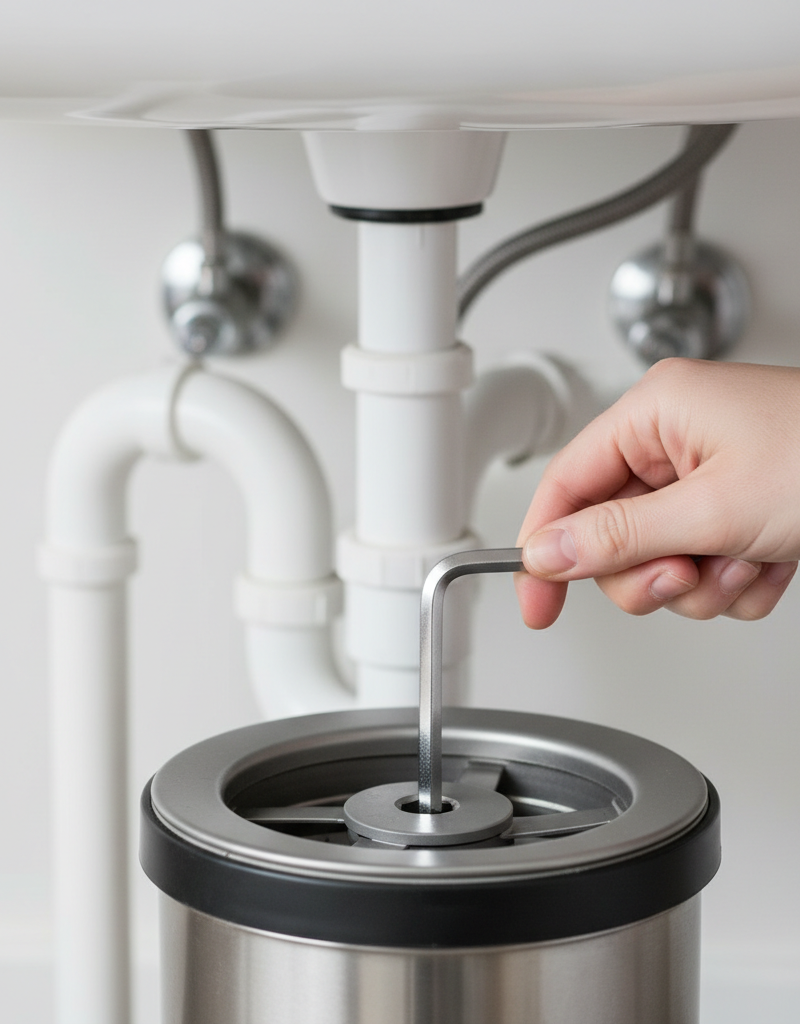
If your garbage disposal hums but fails to spin, the gears are almost certainly jammed by a foreign object or food waste. The good news is that this common issue is usually a quick, DIY fix. After ensuring the power is off at the breaker, you can often clear the jam by manually rotating the grinding plates using an Allen wrench inserted into the flywheel hole on the bottom of the disposal unit. If that doesn't work, pliers or tongs can help remove visible obstructions from the drain opening.
The Problem
You're washing dishes, eager to clear the last bits of food down the drain, and you flip the switch for the garbage disposal. Instead of the familiar whirring sound, you hear a low, persistent hum. The motor is clearly trying to work, but the grinding plates aren't moving. This is a classic symptom of a jammed garbage disposal, and it's one of the most common reasons homeowners think their unit is broken. The motor is receiving power, attempting to rotate the grinding mechanism, but something is physically stopping it. Continuing to run a humming disposal can strain the motor, potentially leading to overheating or a tripped circuit breaker, so it's best to address it immediately.
How It Works
Understanding how your garbage disposal operates helps diagnose the hum. A typical garbage disposal consists of a powerful electric motor connected to a 'flywheel' or 'grinding plate' at the bottom of the grinding chamber. This plate has 'impellers' (small, pivoted lugs) that use centrifugal force to push food waste against a stationary grinding ring. The grinding ring has small holes or teeth that shred the food into tiny particles, which are then flushed down the drain with water. There are no sharp blades in most disposals; instead, they pulverize food. When you flip the switch, the motor spins this flywheel at high RPMs. If a hard object, like a metal spoon, bone, or even a dense piece of produce like an avocado pit, falls into the grinding chamber, it can stop the flywheel from rotating. The motor still tries to turn, generating the humming sound, but the jam prevents movement. Many disposals have a thermal overload protector, a small red button on the bottom, which trips and cuts power to the motor if it overheats due to prolonged straining against a jam. This is a safety feature to prevent motor damage.
Step-by-Step Fix
Safety First—Always cut power to the disposal.
— Before you do anything else, go to your electrical panel and flip the circuit breaker that controls your kitchen outlet. This is usually labeled for the kitchen or disposal. Test the switch to ensure the unit is completely off. Working inside a disposal, even with your hands, is extremely dangerous if power is connected. Take an extra moment to ensure the power is cut and cannot be accidentally turned back on. If you're unsure which breaker it is, turn off the main breaker to your home.
Look for the Allen Wrench—Find the tool specific to your disposal.
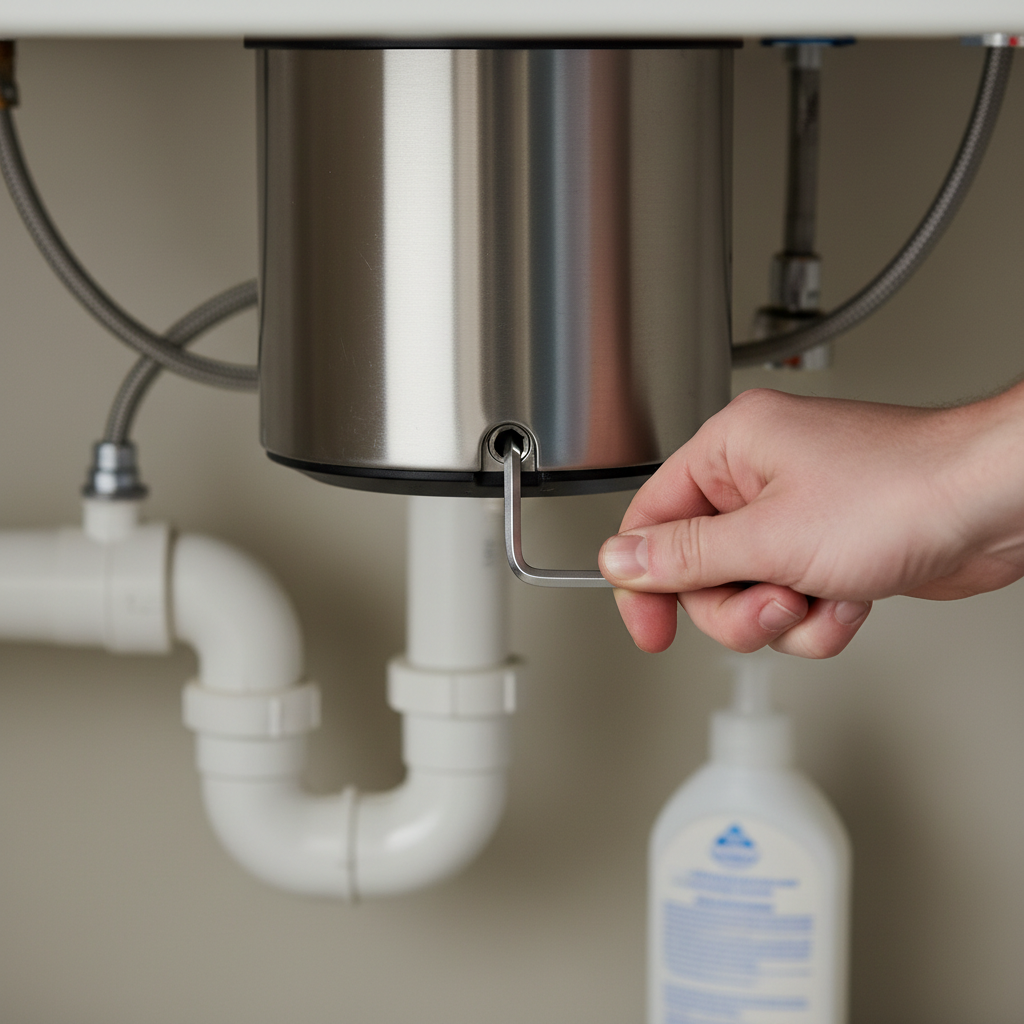
— Many disposals come with a specialized 1/4-inch hex (Allen) wrench. This tool is crucial for clearing jams. Check under your sink, often taped to the disposal unit itself, or in a nearby drawer. If you can't find it, a standard 1/4-inch Allen wrench set from a hardware store will work. This wrench fits into a small hexagonal hole located on the very bottom, center of the disposal unit. Don't skip this step; it's the most effective way to clear many jams.
Clear External Obstructions—Visually inspect the drain opening.
— Use a flashlight to peer down into the drain opening. Look for obvious objects like silverware, food scraps, or other foreign items. Never put your hand into the disposal! Use tongs, pliers, or needle-nose pliers to carefully retrieve anything you see. Even if an object isn't the primary jam, removing it now prevents future issues.
Insert the Allen Wrench—Locate the reset hole on the bottom.
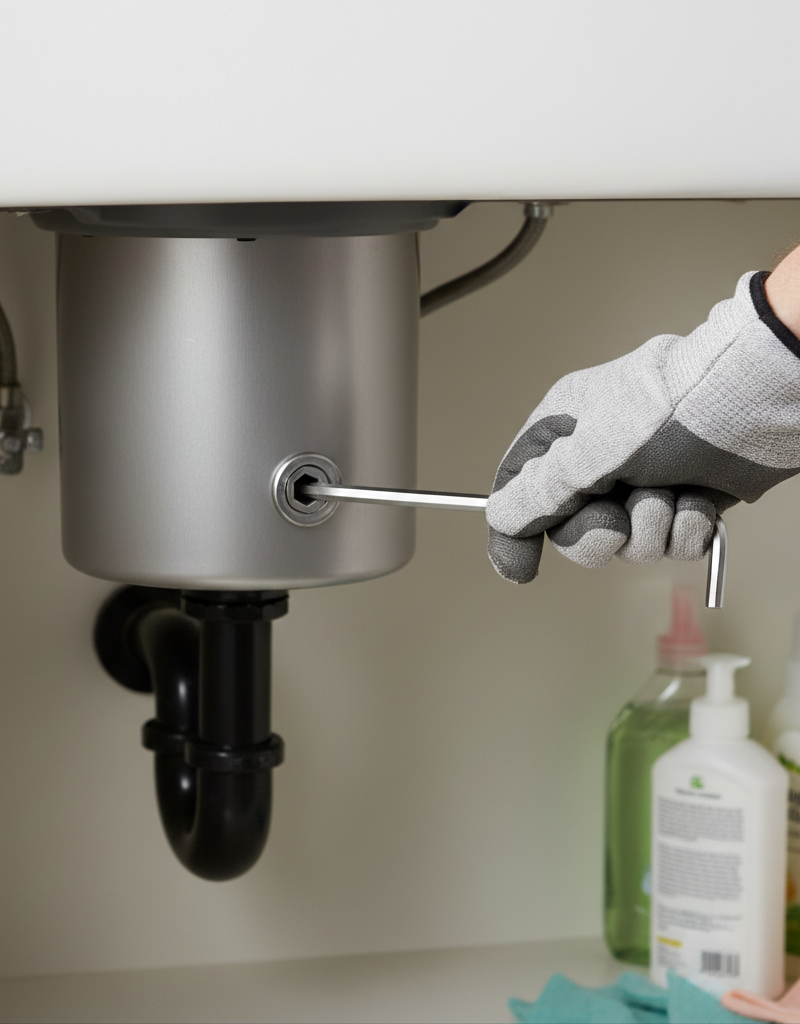
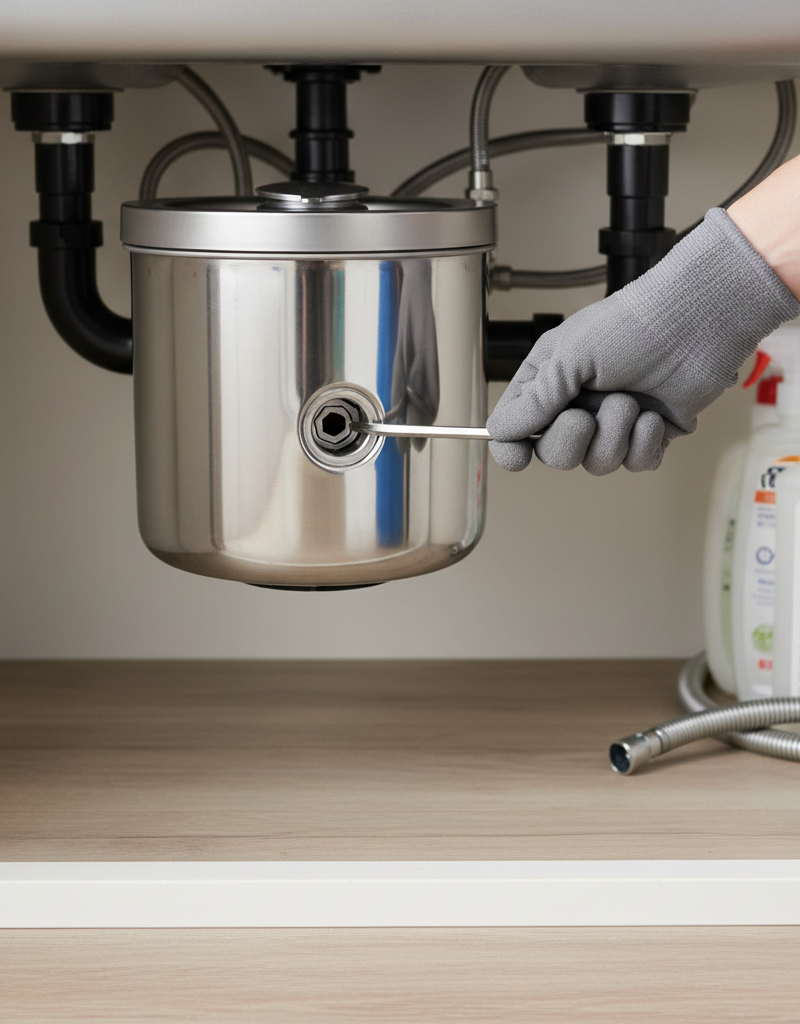
— On the underside of the disposal unit, locate the small, hexagonal hole in the very center. Insert the 1/4-inch Allen wrench fully into this hole. It might be challenging to see if your sink cabinet is dark or cluttered; use a flashlight. This hole directly engages the motor's flywheel.
Manually Rotate the Flywheel—Jiggle the wrench back and forth.
— Once the Allen wrench is firmly in place, turn it back and forth, clockwise and counter-clockwise. Apply moderate force. You should feel resistance initially, especially if the jam is significant. Keep working the wrench until the flywheel can spin a full 360 degrees without encountering resistance. This motion helps to break apart or dislodge whatever is causing the jam. You may hear or feel the obstruction being dislodged.
Remove the Wrench and Check Drain—Clear any dislodged debris.
— Once the flywheel spins freely, remove the Allen wrench. Look down the drain again with your flashlight. You might see the broken-up jam or foreign object. Use tongs or pliers to remove any remaining debris. Run water down the drain to help flush out smaller particles.
Reset the Overload Protector—Press the red button on the bottom.
— After manually clearing the jam, locate the small red reset button on the bottom of the disposal unit. This is typically near where the power cord plugs in. Press it firmly. You should hear a click. This button trips when the motor overheats, which happens frequently during a jam. If the button doesn't stay in, wait a few minutes for the motor to cool down, then try again.
Restore Power and Test—Turn on the breaker and run water.
— Go back to your electrical panel and turn the circuit breaker back ON. Return to the sink, turn on the cold water to a moderate stream, and then flip the disposal switch. It should now spin freely and quietly. If it still hums, immediately turn it off and repeat the steps, looking for a stubborn or missed obstruction.
If It Still Hums (or just clicks)—It might be stuck impellers or a motor issue.
— If the disposal still hums after following the steps, the impellers themselves might be seized. With the power off, use a wooden spoon or a stout dowel to try and manually pry the impellers (the small lugs on the grinding plate) free. Gently but firmly push them to see if they move. If they are stuck, a small amount of liquid dish soap can sometimes help lubricate them enough to move. If the unit only clicks and doesn't hum, the motor might be burned out, or there's a serious electrical issue. At this point, it's best to call a professional. Do not attempt to open the motor housing yourself.
Common Causes
- Hard Objects: Silverware (forks, spoons), small bones (chicken, pork chop), fruit pits (peach, avocado), bottle caps, or even small toys accidentally falling into the drain are the most frequent culprits. The impellers get wedged against these items and the grinding ring.
- Fibrous Foods: Foods like celery stalks, onion skins, corn husks, artichoke leaves, and potato peels can wrap around the impellers or get tangled, preventing rotation. While many modern disposals can handle these, an older or less powerful unit may struggle.
- Grease Buildup: While not a direct jam, excessive grease poured down the drain can solidify over time, coating the grinding components and making them sticky, hindering free movement.
- Overloading: Trying to grind too much food at once can overwhelm the motor and cause a jam, especially with dense waste like a large quantity of vegetable scraps.
- Lack of Water: Running the disposal without sufficient cold water means food isn't flushed away properly, leading to accumulation and potential jams. Cold water hardens grease and food particles, making them easier to grind.
Common Mistakes
- Putting Your Hand Down the Drain: This is the most dangerous mistake. Never, ever put your hand into the disposal, even if you think the power is off. Always use tongs or pliers to retrieve objects.
- Using A Wooden Spoon to Clear Jams: While useful for freeing impellers, a wooden spoon is often used incorrectly to try and rotate the flywheel from above. This is less effective and can splinter the spoon. Always use the Allen wrench for flywheel rotation.
- Ignoring the Reset Button: Many DIYers clear the visible jam but forget to press the thermal overload reset button on the bottom, leading them to believe the disposal is still broken.
- Not Cutting Power at the Breaker: Relying solely on the wall switch is risky. A faulty switch or accidental flip can lead to serious injury. Always go to the breaker.
- Pouring Hot Water or Chemicals: Hot water can melt grease, allowing it to move further into your pipes where it re-solidifies, causing worse clogs. Chemical drain cleaners are caustic and can damage disposal components and plumbing pipes.
- Running the Disposal Dry: Always run cold water before, during, and for at least 15-20 seconds after using the disposal. This helps flush food particles away and keeps the motor from overheating.
Cost & Time Breakdown
| Task | DIY cost | Pro cost | Time |
|---|---|---|---|
| Clearing simple jam (Allen wrench) | $0–$10 | $100–$250 | 15–30 min |
| Retrieving visible obstruction | $0–$10 | $100–$250 | 15–30 min |
| Diagnosing complex jam / motor issue | $0 | $150–$350 | 30–60 min |
| Replacing entire disposal unit | $100–$300 | $350–$600 | 1–2 hours |
Tips & Prevention
- Cold Water is Key: Always run strong cold water for 15-20 seconds before, during, and after grinding food. Cold water helps congeal grease so it can be ground and flushed, and helps prevent motor overheating.
- Grind in Batches: Don't overload the disposal. Feed food waste gradually, allowing the unit to clear each batch before adding more.
- Avoid Problem Foods: Never put stringy or fibrous foods (celery, corn husks, artichokes, asparagus), large bones, fruit pits, pasta, rice (they expand), coffee grounds (they accumulate), or grease/oil down the disposal.
- Regular Cleaning: To keep the disposal fresh and prevent minor buildup, grind a few ice cubes followed by half a lemon or orange. The ice helps dislodge minor buildup, and the citrus freshens the unit.
- Know Your Disposal's Limits: Understand if you have a continuous feed or batch feed unit and its horsepower. Higher horsepower units (3/4 HP or 1 HP) handle tougher waste better than lower horsepower (1/3 HP or 1/2 HP) models.
- Keep the Wrench Handy: Store the disposal's specialized Allen wrench (or a generic 1/4-inch hex wrench) in an easily accessible spot under the sink. You'll thank yourself when a jam occurs.
When to Call a Professional
While most humming disposal issues are straightforward DIY fixes, there are situations where calling a licensed plumber is the wisest choice. If you've followed all the steps—cutting power, inspecting for visible jams, using the Allen wrench to clear the flywheel, and pressing the reset button—and the disposal still only hums, clicks, or does nothing at all, it could indicate a more serious electrical problem with the motor, a seized motor bearing, or a completely burned-out motor. Do not attempt to dismantle the motor housing yourself, as this can be dangerous and void any warranty. Additionally, if you notice water leaking from the disposal unit, persistent foul odors despite cleaning, or if the unit is sparking or smoking, these are clear indicators to shut off the power immediately and contact a professional. A plumber can accurately diagnose motor failures, complex internal blockages, or electrical issues and recommend whether a repair or replacement is more cost-effective. Trying to force a deeply jammed or failing unit can lead to further damage to the disposal or your plumbing system.
Related Articles
Keep troubleshooting with these hand-picked guides from FixlyGuide:
- The 30-Second Fix for a Humming Garbage Disposal (Plumbers Don't Want You to Know) — Before you call a plumber, try these simple steps to unjam a humming garbage disposal in under a minute and save yourself a service call.
- The 90-Second Trick to Unclogging Any Shower Drain (No Chemicals Needed) — Learn how to quickly and safely clear a clogged shower drain using simple tools and household items, avoiding harsh chemicals.
- Clogged AC Drain Line? Clear It Yourself in 30 Minutes — Learn how to quickly and safely clear a clogged AC drain line to restore your air conditioner's efficiency and prevent water damage.
- How to Unclog a Shower Drain Without Chemicals: A Homeowner's Guide — Learn how to clear a clogged shower drain using simple tools and methods, avoiding harsh chemicals that can damage pipes.
- The 5-Minute Trick to Stop a Dripping Single-Handle Faucet (No Plumber Needed) — A persistent drip from your single-handle faucet is usually caused by a worn-out cartridge, a repair you can typically complete yourself in…
- The #1 Mistake Jamming Your Garbage Disposal for Good — Constantly resetting your humming, jammed garbage disposal? The culprit might be your daily routine. We'll reveal the common mistake that w…
Should you do this yourself?
Answer five quick questions before you start. Safety outranks savings every time.
Your experience with work like this
How high do you have to work?
Does the job involve any of these?
Will it need a permit?
Specialty tools
Free and instant. Educational guidance only — not a quote, inspection, or professional diagnosis.
What should this project cost?
Enter your project details for a realistic cost range before you call anyone.
Common repairs run $150–$650; repipes and water-heater replacements reach $1,500–$4,500.
- Regional adjustment
- National average
- Labor share (typical)
- ~$754
- Quotes to collect
- 3 written estimates
Educational estimate based on national averages — not a binding quote. Always confirm with written local estimates.
Fixly Project Decision Box
- DIY difficulty
- Moderate
- Estimated time
- 30 minutes – half a day
- Cost level
- Moderate
Main tools / materials
- Adjustable wrench
- Plunger or drain auger
- Bucket and towels
- Thread tape
When to stop and call a pro
- Water you cannot shut off at the fixture or main
- Sewage backing up into more than one fixture
- Water near electrical panels or outlets
- Gas water heater work beyond relighting a pilot
Need professional help?
Get a Licensed PlumberFrequently asked questions
Why is my garbage disposal humming but not spinning?+
A humming garbage disposal indicates that the motor is receiving power but cannot turn the grinding plate (flywheel) due to a jam. This is usually caused by a hard object or fibrous food material stuck between the impellers and the grinding ring.
Where is the reset button on a garbage disposal?+
The reset button is typically a small, red button located on the very bottom of the garbage disposal unit, usually near the power cord. It trips to protect the motor from overheating during a jam.
What kind of wrench do I use to fix a jammed garbage disposal?+
Most garbage disposals use a 1/4-inch hexagonal (Allen) wrench to manually turn the flywheel from the bottom. This wrench often comes with the disposal, but a standard 1/4-inch Allen wrench set will also work.
Can I put my hand in a garbage disposal to clear a jam?+
No, absolutely never put your hand into a garbage disposal, even if the power is off. Always use tongs, pliers, or needle-nose pliers to retrieve objects from the drain opening to avoid serious injury.
How do I prevent my garbage disposal from jamming again?+
Always run cold water before, during, and for 15-20 seconds after using the disposal. Avoid putting hard objects, fibrous foods, coffee grounds, pasta, rice, or excessive grease down the drain. Grind food in small batches.
Discussion
Loading comments…