- The $5 Secret to Fixing a Clogged AC Drain Line (and Avoiding a Costly Flood) — A clogged AC drain line can lead to water damage and mold, but a simple, inexpensive DIY fix can prevent costly repairs.
- The 1 Mistake Homeowners Make When Their AC Drain Clogs (And The $5 Fix) — Discover the most common error homeowners make when tackling a clogged AC drain line and learn a simple, inexpensive solution to prevent co…
- The 90-Second Trick to Unclogging Any Shower Drain (No Chemicals Needed) — Learn how to quickly and safely clear a clogged shower drain using simple tools and household items, avoiding harsh chemicals.
- How to Unclog a Shower Drain Without Chemicals: A Homeowner's Guide — Learn how to clear a clogged shower drain using simple tools and methods, avoiding harsh chemicals that can damage pipes.
- The 4-Step Secret to Thawing Frozen Pipes Without Causing a Flood — Safely thawing a frozen pipe is crucial to prevent bursting and costly water damage, requiring a careful approach to restore water flow.
Plumbing · Clog
| Project category | Plumbing |
|---|---|
| Problem type | Clog |
| Trade required | Plumbing |
| Urgency | Soon — within weeks |
| Safety risk | Low safety risk |
| DIY suitability | DIY friendly |
| Cost category | Low cost |
| Typical timeline | Same-day DIY attempt; pro visit within a day or two |
| Contractor type | Licensed plumber |
Repair option
Plunger, hand auger, or trap cleanout before chemicals.
Replacement option
Line replacement when clogs return in the same spot repeatedly.
Common causes
- Hair and soap buildup in the trap
- Grease cooling in the branch line
- Flushed wipes or foreign objects
Relevant tools:diy difficultydiy or hire a pro
Published April 24, 2026Last updated August 17, 2026
Tools & materials you'll need
Affiliate linksAs an Amazon Associate FixlyGuide earns from qualifying purchases — at no extra cost to you. Prices and availability are accurate as of publication and subject to change.
How it works
Your air conditioning system cools your home by removing heat and humidity from the indoor air. This process centers on the evaporator coil, a network of cold copper tubes located inside your air handler or furnace. As your system's blower fan pulls warm, humid air across this frigid coil, two things happen: the air's temperature drops, and the water vapor in it condenses into liquid, much like water droplets forming on a cold glass of iced tea.
This collected water, known as condensate, drips off the evaporator coil into a shallow primary drain pan situated directly beneath it. This pan is equipped with a small outlet port connected to the condensate drain line—a 3/4-inch or 1-inch diameter PVC pipe. In most installations, this pipe is angled slightly downward, allowing gravity to carry the condensate water out of the pan and transport it to a safe disposal point. This could be a floor drain in a basement, a utility sink, or a termination point outside your home's foundation.
Over time, the dark, damp environment inside the drain line becomes a breeding ground for algae, mold, and bacteria, which form a slimy biofilm. Combined with dust and airborne debris that bypasses the air filter, this can create a stubborn blockage. Many systems also include a P-trap in the drain line to prevent air from being sucked back into the air handler, and this U-shaped bend is a common location for clogs to form. As a safety measure, most modern AC units have a secondary drain pan or a float switch that will shut the system down if the primary line backs up, preventing a major water leak.
Step-by-Step Fix
Follow these steps to safely and effectively clear a blockage from your AC condensate drain line.
-
Disable All Power — Turn your thermostat's system switch to "Off." Then, locate the circuit breaker for your indoor air handler or furnace in your home's main electrical panel and switch it to the "Off" position. This crucial step prevents electrical shock and ensures the unit does not cycle on while you are working.
- Safety: The air handler contains high-voltage components. Never skip this step. If there is a separate power switch on or near the furnace/air handler unit, turn that off as well.
-
Locate the Condensate Drain Line — Find your indoor air handler, which may be in a basement, attic, or utility closet. Identify the condensate drain line, which is typically a white, grey, or black 3/4" or 1" diameter PVC pipe exiting the unit. Look for an access point near the air handler: a T-shaped fitting with a removable, unglued cap or a screw-on plug. This is where you will flush the line.
-
Inspect Drain Pans for Water — Carefully check the primary drain pan directly under the evaporator coil for standing water. If your system has a secondary (emergency) pan underneath the unit, check it as well. The presence of water in either pan is a clear indicator of a clog downstream in the drain line. A tripped float switch in the secondary pan is what typically shuts down your AC during a clog.
-
Remove Standing Water — Before proceeding, remove any water from the drain pans. Use the hose of a wet/dry vacuum to suction out the water. If a vacuum cannot reach, soak up the water with thick towels or sponges, wringing them out into a bucket. This prevents spills and potential water damage when you disconnect or flush the line.
-
Find the Drain Line Termination Point — Go outside and locate where the condensate line exits your house. It is often a simple PVC pipe stub sticking out of the wall near the foundation, typically close to the outdoor compressor unit. It may also terminate into a nearby floor drain, sump pump basin, or utility sink if the air handler is in a basement.
-
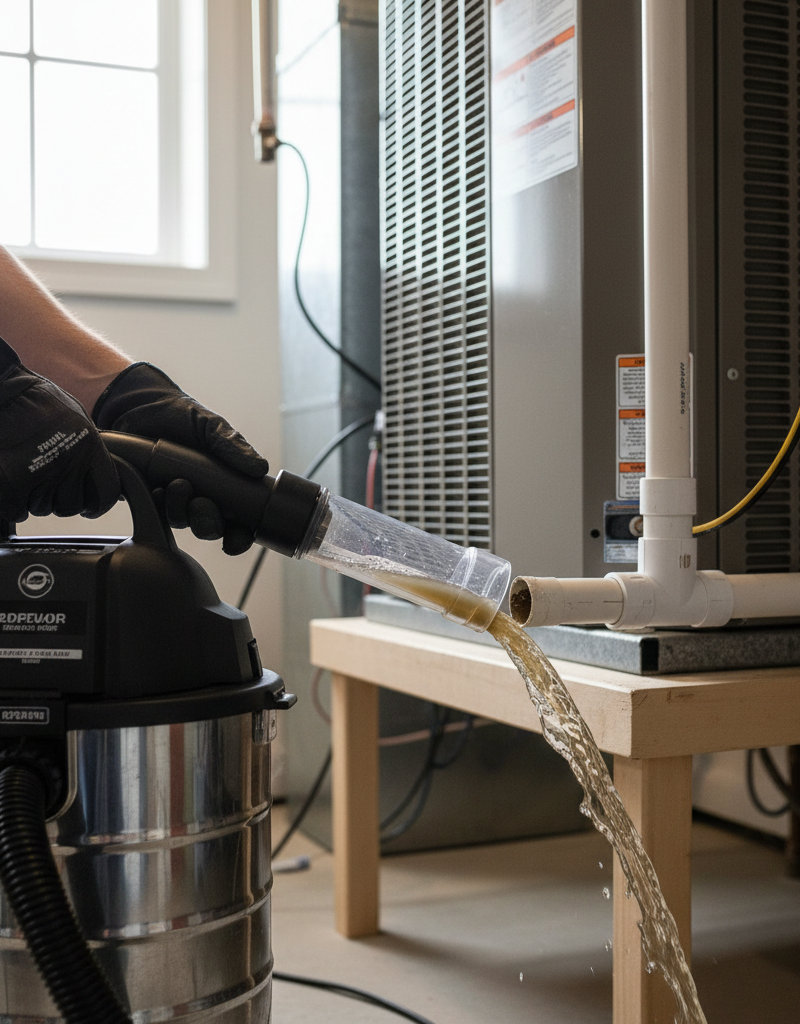
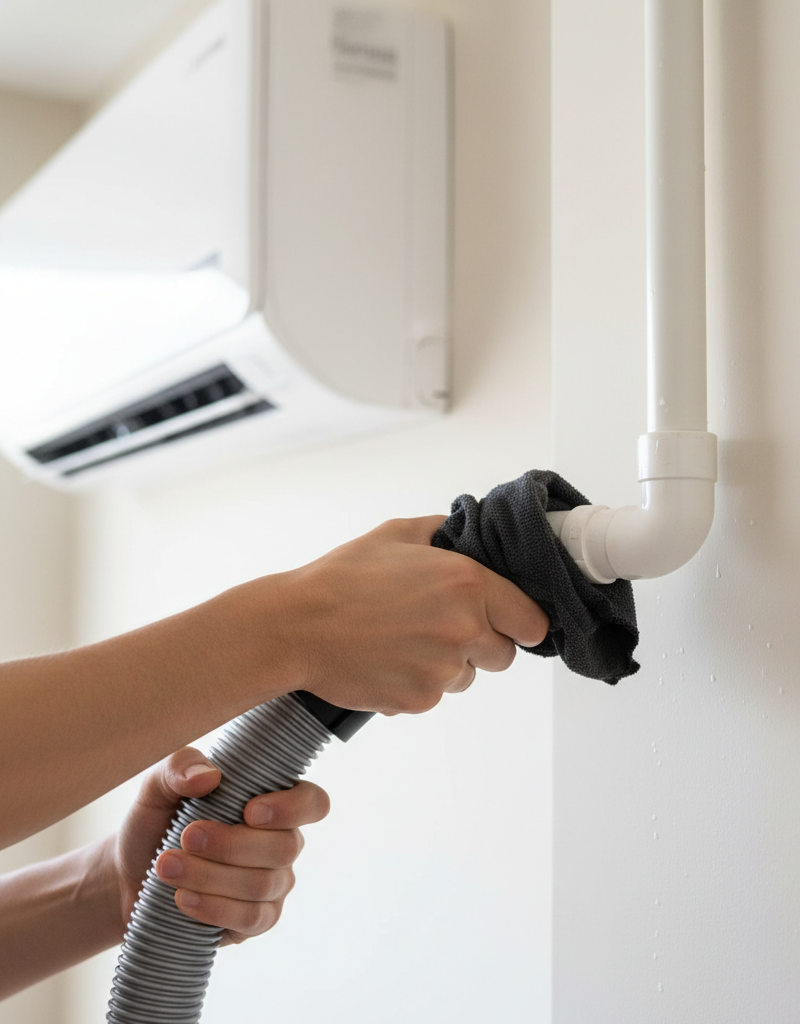
Suction the Clog with a Wet/Dry Vacuum — Take your wet/dry vacuum to the outdoor termination point of the drain line.
- Tool Prep: Remove the paper filter from inside your wet/dry vacuum to prevent it from being ruined by water and biological slime.
- Technique: Press the vacuum's hose firmly over the end of the PVC pipe. To create a tight seal for maximum suction, wrap a thick rag or duct tape around the connection point. Turn on the vacuum and let it run for 2-3 minutes. You may hear a distinct "thump" or gurgling sound as the clog is dislodged and pulled into the vacuum canister.
-
Check for Clog Debris — Turn off the vacuum and inspect its canister. You should see a mixture of water and, most likely, a gelatinous, slimy clump of algae and dirt. The presence of this material confirms you have successfully removed the main blockage.
-
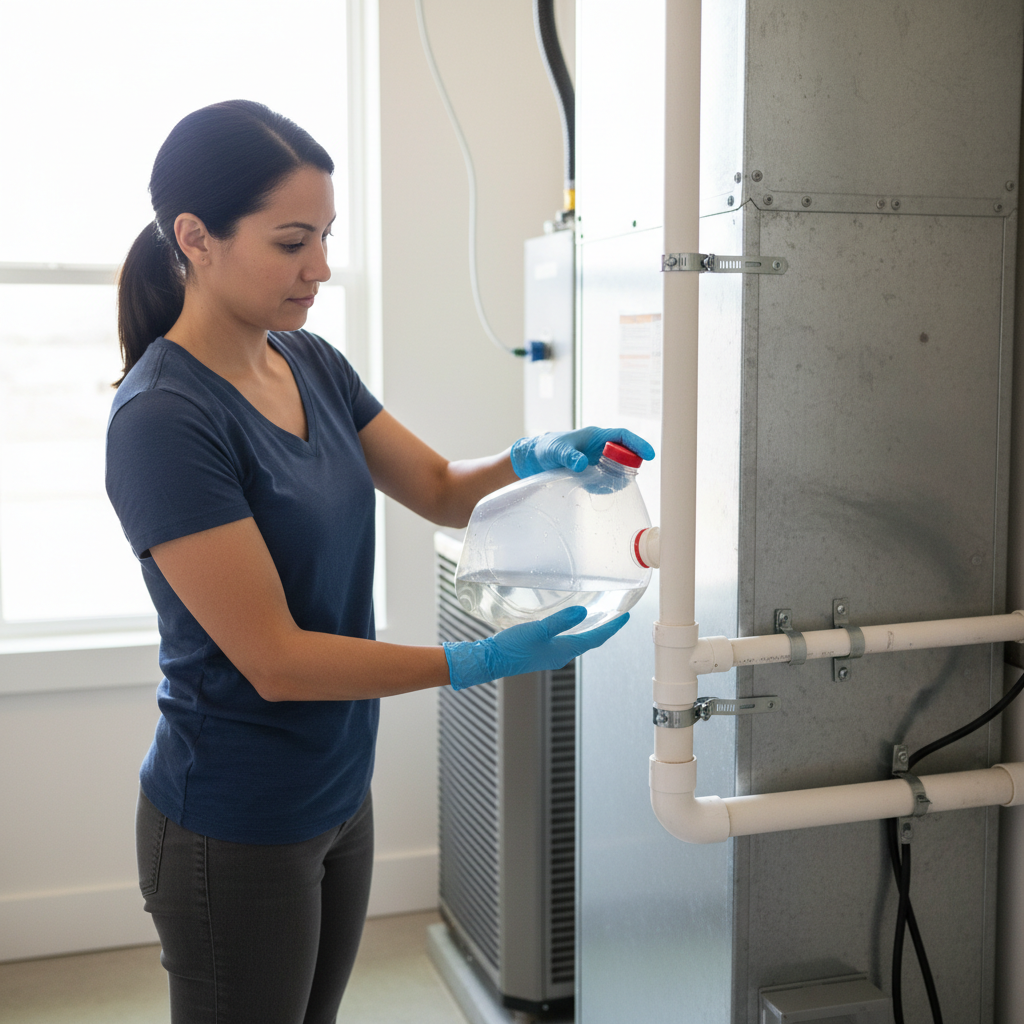
Prepare to Flush the Line — Return to the indoor air handler and remove the cap from the access tee you located earlier. To catch any potential backflow or spills, place a few old towels on the floor around the base of the unit.
-
Flush with Distilled White Vinegar — Slowly and carefully pour one cup of distilled white vinegar into the access port. Vinegar is a mild acid that is highly effective at dissolving biological buildup and scale without being harsh on your pipes or toxic to your lawn. Let the vinegar sit in the drain line and P-trap for at least 30-60 minutes to break down any remaining residue.
-
Rinse the Line with Water — After the vinegar has had time to work, flush the line by pouring 1-2 gallons of clean, warm water into the same access port. Pour steadily but not so fast that you overwhelm the drain. Have a helper watch the outdoor termination point to confirm that water is flowing freely. If the flow is strong and steady, the line is clear.
-
(Optional) Use a Condensate Drain Cleaner Tablet — For ongoing prevention, you can drop a specially formulated condensate pan tablet into the primary drain pan. These tablets dissolve slowly over time, releasing biocides that prevent the growth of algae and bacteria. Follow the product's instructions for placement and frequency.
-
Restore Power and Test the System — Securely replace the cap on the access tee. Go to your electrical panel and switch the air handler's breaker back to the "On" position. Return to your thermostat and set it to "Cool" at a temperature that will cause the system to run. Let the AC run for at least 30 minutes, then re-check the indoor drain pan to ensure it is empty and check the outdoor line for a consistent drip.
Common mistakes
- Using Pressurized Air or Water. Blasting a clog with a high-pressure air compressor or hose nozzle can easily blow apart glued PVC fittings inside your walls or ceiling. This turns a simple clog into a major leak and an expensive drywall repair. Stick to suction from a wet/dry vac or a gravity-fed water flush.
- Mixing Bleach and Vinegar. Never pour bleach into a line that has recently been treated with vinegar (or vice-versa) without thoroughly flushing with several gallons of water first. Mixing these two chemicals creates toxic chlorine gas, which is a severe respiratory irritant.
- Pouring Chemicals Too Quickly. Dumping a large volume of cleaner or water into the access tee at once can cause it to back up and overflow, especially if the clog is not fully cleared. Pour slowly and steadily to allow the liquid to flow down the pipe.
- Ignoring a Frozen Evaporator Coil. If you see ice on the copper lines or the coil itself, the primary problem is not the drain line. A frozen coil is caused by restricted airflow (e.g., a dirty filter) or a low refrigerant charge. Clearing the drain won't fix this; the underlying issue must be addressed by an HVAC professional.
- Forgetting to Remove the Vacuum's Filter. The slimy, wet gunk from a condensate line will instantly clog and ruin a standard paper dry filter in your wet/dry vac. Always remove it before using the vacuum for wet applications.
- Sealing the Access Tee Permanently. The access tee cap should be removable. Do not glue it shut. If your system lacks a proper access point, it is worth cutting the pipe and installing a simple, unglued T-fitting to make future maintenance easier.
Cost & time breakdown
This table outlines the typical costs and time commitment for clearing a condensate drain line. Pro costs can vary based on location and the complexity of the job.
| Task | DIY Cost | Pro Cost | Time |
|---|---|---|---|
| Basic Clog Clearing (Wet/Dry Vac) | $0 (if you own a vac) | $75 – $200 | 30 – 45 minutes |
| Vinegar/Water Flush | < $5 for vinegar | Included in service call | 45 – 75 minutes (includes wait time) |
| Installing a New PVC Access Tee | $5 – $15 (fittings, glue) | $100 – $250 | 30 – 60 minutes |
| Replacing a Failed Condensate Pump | $50 – $90 for pump | $250 – $450 | 1 – 2 hours |
| Professional Power Flush/Jetting | N/A | $150 – $300 | 1 hour |
| Installing a Safety Float Switch | $15 – $30 for switch kit | $125 – $275 | 30 minutes – 1 hour |
When to call a pro
While clearing a simple clog is a manageable DIY task, certain situations warrant a professional HVAC technician. Call a pro if you encounter any of the following:
- The Clog Won't Budge: If you have tried both suction and flushing multiple times and water still backs up, the blockage may be extremely hardened, located in an inaccessible part of the line, or the pipe itself may be improperly installed with incorrect slope (a "belly"). Technicians have specialized tools like flexible drain augers or pressurized nitrogen systems to clear stubborn clogs.
- Visible Ice on the AC Unit: If you see frost or ice buildup anywhere on the indoor evaporator coil or the copper refrigerant lines, your problem is more than a simple drain clog. This points to a deeper issue like low refrigerant or poor airflow, which requires professional diagnosis and repair.
- A Failed Condensate Pump: If your drain line runs to a small plastic reservoir box (a condensate pump) that then pumps the water away, the pump itself may have failed. If the pump's reservoir is full but the pump isn't running, or it runs constantly without emptying, it likely needs to be replaced.
- Inaccessible Air Handler: If your unit is in a tight crawlspace or a difficult-to-reach attic, safely performing the work can be challenging. A professional has the experience to work in these confined spaces.
- Significant Water Damage: If the clog has already led to a ceiling stain, warped flooring, or wet drywall, call a professional. An HVAC tech can fix the source of the leak, but you may also need a water damage restoration company to address the aftermath.
Prevention & maintenance
Consistent maintenance is the best way to avoid emergency shutdowns and water damage.
- Routine Flushing: During the cooling season, pour one cup of distilled white vinegar down the condensate line access port every 30-45 days. This simple act prevents the buildup of the algae and slime that cause most clogs.
- Change Air Filters Religiously: A dirty air filter restricts airflow across the evaporator coil. It also allows more dust and particulate matter to be pulled into the system, where it can be washed into the drain pan and contribute to clogs. Check your filter monthly and replace it as recommended (typically every 1-3 months, depending on the filter type).
- Install a Safety Float Switch: If your system doesn't already have one, installing a float switch is an inexpensive and highly effective safety measure. These switches ($15-$30) can be placed in the secondary drain pan or installed directly into the drain line. When rising water lifts the float, it triggers a switch that cuts power to the AC unit, preventing an overflow before it happens.
- Schedule Annual HVAC Tune-Ups: A professional tune-up should include a comprehensive cleaning of the system's components, including the evaporator coil, drain pan, and a full flush of the condensate line. This ensures the entire system is clean and operating efficiently.
- Keep the Exterior Drain Exit Clear: Periodically check the outdoor termination of your drain line. Ensure it is not blocked by mulch, soil, grass clippings, or insect nests. A trimmed area around the pipe prevents obstructions and makes it easy to inspect for proper flow.
Related Articles
Keep troubleshooting with these hand-picked guides from FixlyGuide:
- The $5 Secret to Fixing a Clogged AC Drain Line (and Avoiding a Costly Flood) — A clogged AC drain line can lead to water damage and mold, but a simple, inexpensive DIY fix can prevent costly repairs.
- The #1 Mistake Homeowners Make When Their AC Drain Clogs (And The $5 Fix) — Discover the most common error homeowners make when tackling a clogged AC drain line and learn a simple, inexpensive solution to prevent co…
- The 90-Second Trick to Unclogging Any Shower Drain (No Chemicals Needed) — Learn how to quickly and safely clear a clogged shower drain using simple tools and household items, avoiding harsh chemicals.
- How to Unclog a Shower Drain Without Chemicals: A Homeowner's Guide — Learn how to clear a clogged shower drain using simple tools and methods, avoiding harsh chemicals that can damage pipes.
- The 4-Step Secret to Thawing Frozen Pipes Without Causing a Flood — Safely thawing a frozen pipe is crucial to prevent bursting and costly water damage, requiring a careful approach to restore water flow.
- The Secret Culprit Behind Your Dead AC (And How to Revive It in 10 Minutes) — Discover how a common, easily replaceable part might be preventing your air conditioner from turning on, and learn to fix it yourself in un…
Should you do this yourself?
Answer five quick questions before you start. Safety outranks savings every time.
Your experience with work like this
How high do you have to work?
Does the job involve any of these?
Will it need a permit?
Specialty tools
Free and instant. Educational guidance only — not a quote, inspection, or professional diagnosis.
Estimate your own project cost
National averages are a starting point. Enter your details for a range that fits your house.
HVAC replacement cost
- Equipment$2,200 – $3,800
- Installation labor$1,200 – $2,500
Always insist on a Manual J load calculation — sq-ft sizing is only a rough check. Federal heat-pump rebates may reduce cost significantly.
Educational estimate only — always confirm with written local bids.
What should this project cost?
Enter your project details for a realistic cost range before you call anyone.
Common repairs run $150–$650; repipes and water-heater replacements reach $1,500–$4,500.
- Regional adjustment
- National average
- Labor share (typical)
- ~$754
- Quotes to collect
- 3 written estimates
Educational estimate based on national averages — not a binding quote. Always confirm with written local estimates.
Fixly Project Decision Box
- DIY difficulty
- Advanced
- Estimated time
- Homeowner checks 20–30 minutes
- Cost level
- Moderate
Main tools / materials
- Clean air filter
- Garden hose for condenser coils
- Shop vac for the condensate line
When to stop and call a pro
- Burning smell, smoke, or a tripping breaker
- Refrigerant lines iced over or hissing
- Any work inside the sealed refrigerant circuit (EPA-licensed only)
- Gas smell near a furnace — leave and call the utility
Need professional help?
Find an HVAC Pro Near YouBefore you start
Check the difficulty, permits, and safety risk — then decide whether to call a pro.
Free, no signup required. Estimates are educational guidance, not a quote or an inspection.
Get the print-ready PDF of this guide
A clean, ad-free, printable version you can keep on your phone or pin to the workshop wall. Free with a FixlyGuide account.
- Print-optimized layout
- Tools, materials & every step included
- Saved to your account
Frequently asked questions
What happens if an AC drain line is clogged?+
If an AC drain line is clogged, the condensate water will back up and overflow the drain pan. This can lead to water leaks and damage to your home, and may also cause your air conditioning system to shut down as a safety feature.
How often should I clean my AC drain line?+
It's recommended to flush your AC drain line with a cleaning solution every 1-3 months, especially during peak cooling season, to prevent algae and mold buildup.
Can I use a regular vacuum to clear an AC drain line?+
No, a regular household vacuum is not designed for wet applications and could be damaged or create a safety hazard. Always use a wet/dry vacuum (shop vac) for this task.
What if my AC drain line is clogged but not leaking?+
Even without an obvious leak, a clogged drain line can still limit your AC's efficiency and potentially cause future damage. Address the clog as soon as you identify it to prevent problems before they start.
Discussion
Loading comments…