- The Secret Culprit Behind Your Dishwasher Not Draining (It's Not Always a Clog) — Your dishwasher not draining can stem from simple fixes to more complex issues, often involving the air gap, drain hose, or filter.
- The Secret Culprit Behind Your Dishwasher's Standing Water (It's Not Always a Clog) — Don't assume a clog is the only reason your dishwasher isn't draining; often, the fix is simpler than you think.
- Refrigerator Leaking Water? Easy Fixes for Common Causes — A refrigerator leaking water on the floor is a common household problem often caused by a clogged defrost drain or a misaligned drain pan,…
- Washing Machine Won't Spin or Drain? Easy Fixes for Common Problems — If your washing machine isn’t spinning or draining, it’s usually due to a clogged pump filter, a kinked drain hose, or an overloaded machin…
- The 1 Mistake Homeowners Make with a Slow Kitchen Drain (And the Simple Fix) — A slow kitchen sink drain is frustrating, but often an easy fix if you avoid common mistakes and know where to look first.
Plumbing · Clog
| Project category | Plumbing |
|---|---|
| Problem type | Clog |
| Trade required | Plumbing |
| Urgency | Soon — within weeks |
| Safety risk | Low safety risk |
| DIY suitability | DIY friendly |
| Cost category | Low cost |
| Typical timeline | Same-day DIY attempt; pro visit within a day or two |
| Contractor type | Licensed plumber |
Repair option
Plunger, hand auger, or trap cleanout before chemicals.
Replacement option
Line replacement when clogs return in the same spot repeatedly.
Common causes
- Hair and soap buildup in the trap
- Grease cooling in the branch line
- Flushed wipes or foreign objects
Relevant tools:diy difficultydiy or hire a pro
Published April 18, 2026Last updated August 17, 2026
Tools & materials you'll need
Affiliate linksAs an Amazon Associate FixlyGuide earns from qualifying purchases — at no extra cost to you. Prices and availability are accurate as of publication and subject to change.
How it works
A dishwasher's drain system is a straightforward but critical sequence of components designed to expel used wash and rinse water. At the end of a cycle, all water collects in a basin at the bottom of the tub called the sump. Within the sump assembly is a drain filter system—typically a coarse mesh screen and a fine cylindrical filter—that catches large food particles to prevent them from entering the drain system. When the control board signals the drain phase, it activates a small electric motor called the drain pump.
The drain pump's impeller spins, creating pressure that forces water out of the sump, past a one-way check valve (a small rubber flap that prevents backflow), and into the flexible, corrugated drain hose. This hose runs from the dishwasher, typically behind cabinets, to the sink base cabinet. Here, it connects to one of two points: either a dedicated "air gap" fitting on the countertop or directly to a nipple on the garbage disposal or sink drain pipe. The air gap is a critical safety device that prevents contaminated sink water from siphoning back into the dishwasher. If no air gap is present, building codes require the drain hose to be looped and secured as high as possible inside the sink cabinet to achieve a similar anti-siphon effect.
Step-by-Step Fix
Follow these steps in order, from simplest to most involved. Do not proceed to the next step until you have confirmed the previous one is not the source of the problem.
- Tools: Bucket or shallow pan, old towels, screwdriver (Phillips and flat-head), pliers (channel-lock or adjustable), flashlight, stiff brush or old toothbrush, wire coat hanger (optional), multimeter (optional, for advanced steps).
- Safety: Before starting any work, disconnect the dishwasher from its power source. Unplug it from the wall outlet under the sink if accessible. If it is hardwired, turn off the corresponding breaker in your home's main electrical panel and confirm the power is off by trying to start a cycle.
-
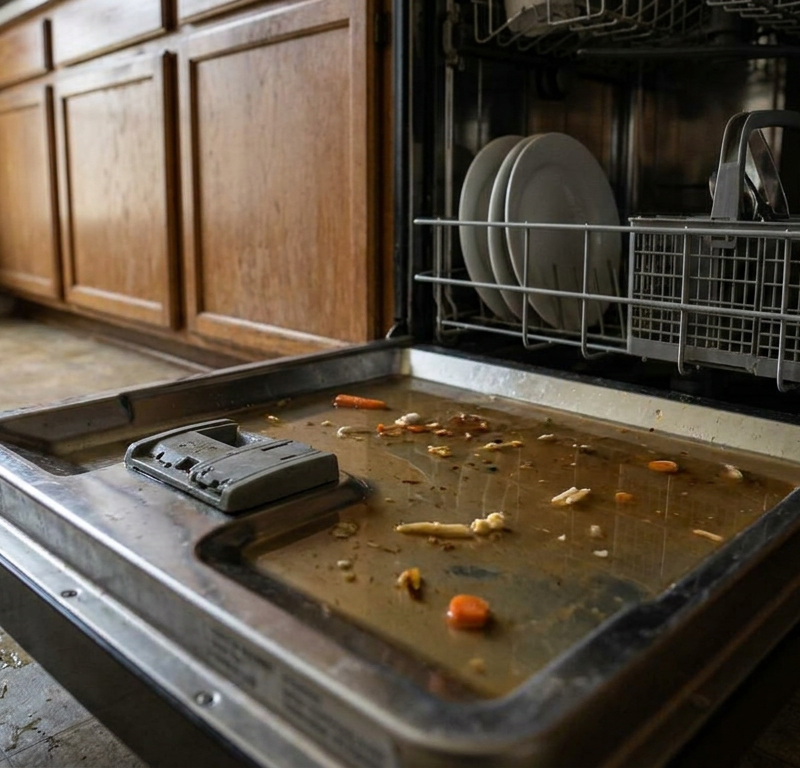
Bail Out Standing Water — You cannot effectively work on the drainage system with a pool of dirty water in the way. Use a cup to scoop out the majority of the water into a bucket, then use old towels to soak up the remaining liquid from the bottom of the tub and the sump area.
-
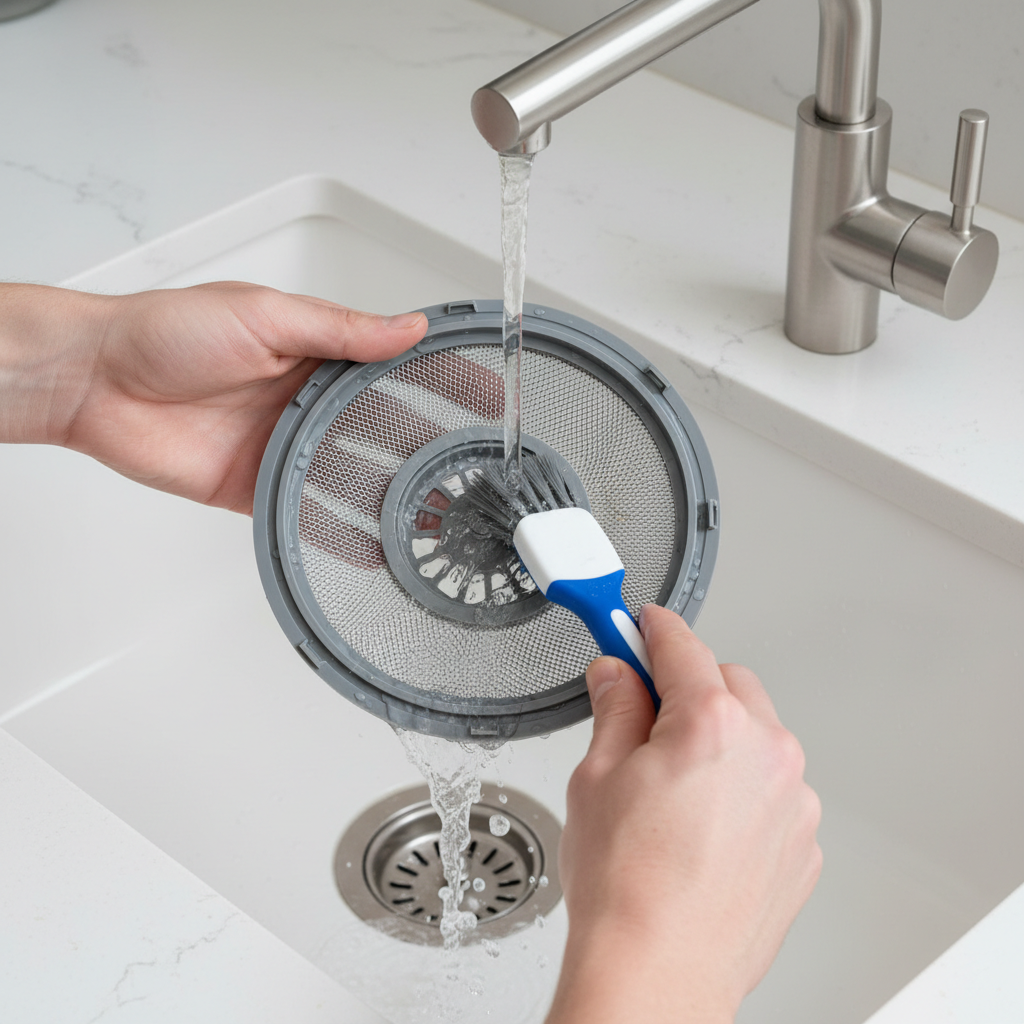
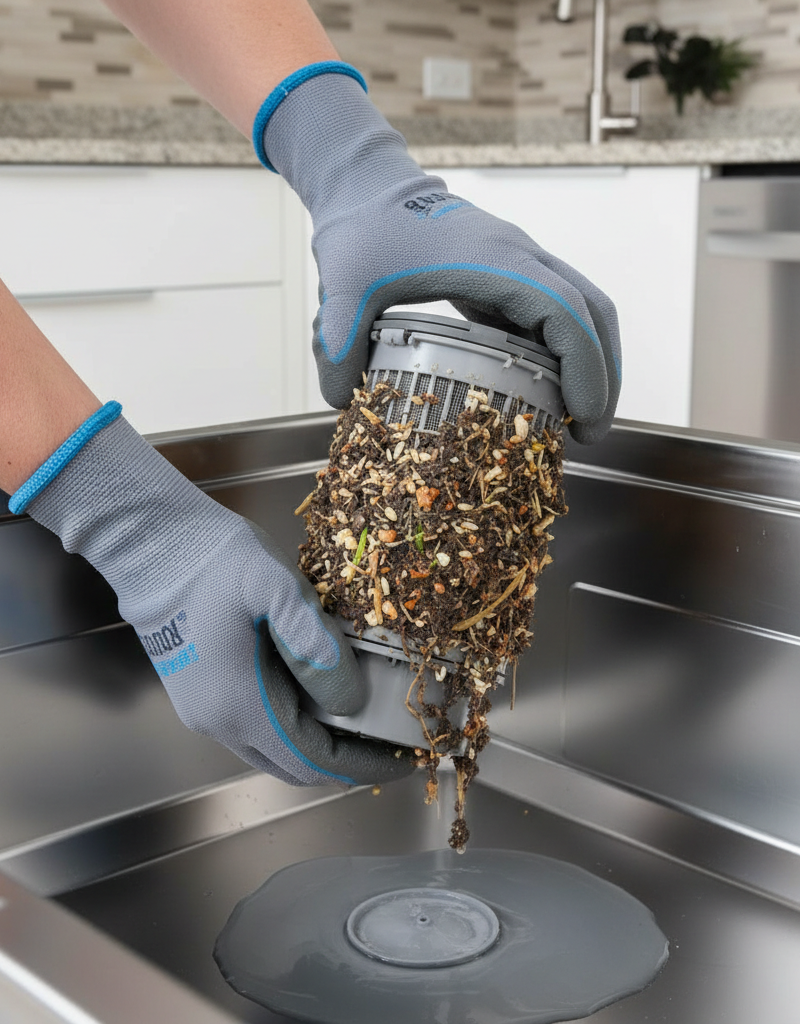
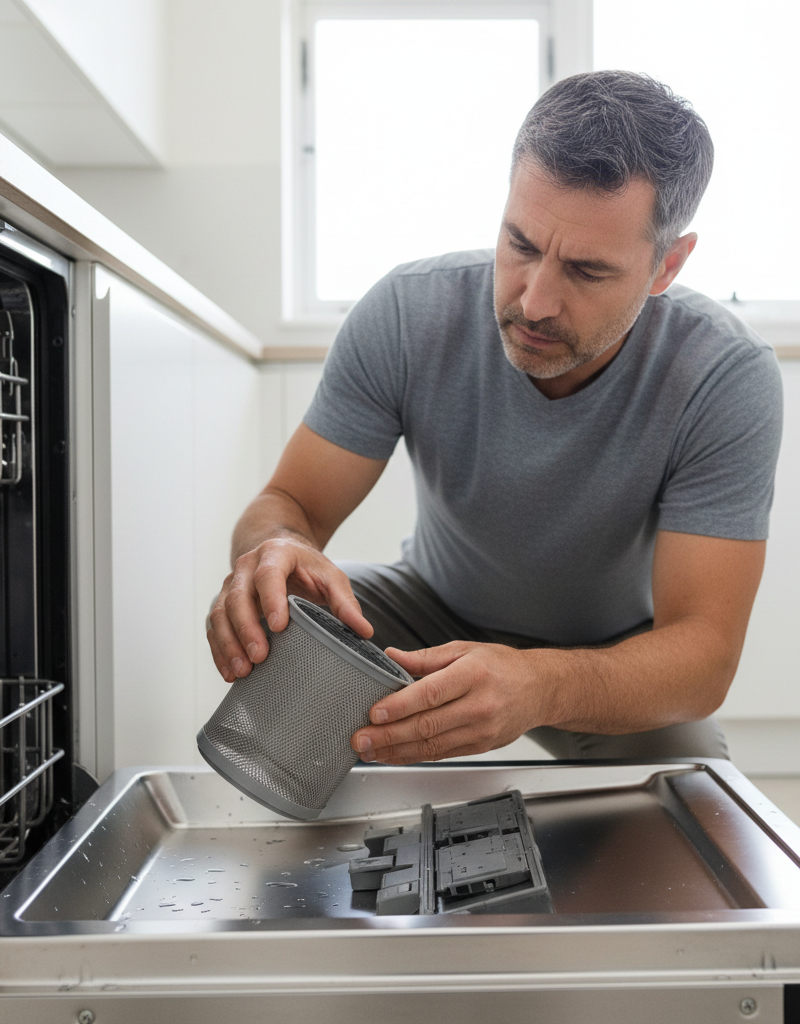
Clean the Primary Drain Filter — This is the most common clog point. Locate the filter assembly in the floor of the dishwasher, usually a circular component you can twist to unlock. Most models have a two-part system: a flat coarse filter and a cylindrical fine filter. Separate them and scrub both thoroughly under hot running water with a stiff brush to remove all food debris, grease, and grime.
-
Inspect the Sump Inlet — With the filter assembly removed, use a flashlight to inspect the sump opening, which is the entry point to the drain pump. It's common for small, hard debris like glass shards, fruit pits, or bone fragments to get past the filter and block this opening. Carefully remove any obstructions with your fingers or needle-nose pliers.
-
Check the Air Gap — If your sink has a small metal cylinder on the countertop (usually next to the faucet), this is the air gap. Pull off the decorative metal cap, then twist off the plastic inner cap. Inspect the interior for food debris or sludge buildup. Clean it out with a small bottle brush or a straightened paper clip. Water should flow freely through it.
-
Run the Garbage Disposal — If your dishwasher drains into a garbage disposal, the disposal unit itself may be full of food waste, blocking the dishwasher's drain path. Ensure the sink is clear and run the disposal for 30 seconds with cold water to completely clear it out before proceeding.
-
Verify the Disposal Knockout Plug — This applies only if the garbage disposal is a new or recent installation. The port where the dishwasher drain hose connects to the disposal comes sealed with a "knockout plug." If the installer forgot to remove it, no water can drain. Disconnect the drain hose from the disposal (Step 7) and look inside the inlet nipple. If it's solid, use a screwdriver and hammer to tap the plug out, then retrieve the plastic piece from inside the disposal chamber.
-
Disconnect and Inspect the Drain Hose at the Sink — Place a bucket and towels under the sink. Use a screwdriver to loosen the hose clamp securing the dishwasher drain hose to the garbage disposal or sink drain Y-pipe. Pull the hose off the connection port and aim its end into the bucket, as it will contain trapped water. Inspect the port on the disposal/pipe and the end of the hose for clogs.
-
Ensure a "High Loop" — If you do not have an air gap, building code requires the drain hose to have a "high loop." This means the hose must travel from the dishwasher up to the underside of the countertop before looping back down to the drain connection. This prevents sink water from flowing back into the dishwasher. If the hose is lying at the bottom of the cabinet, secure it as high as possible with a strap or zip tie.
-
Clear the Full Drain Hose — With the hose still disconnected at the sink, pull the dishwasher out a few inches from the wall (you may need to remove mounting screws from the countertop). This will give you access to the full length of the hose. Check for any sharp kinks or bends that could restrict flow. Disconnect the other end of the hose from the drain pump (consult your manual for location) and clean the entire hose by flushing it with a garden hose outside or in a large tub. A long, flexible brush or a plumber's snake can dislodge stubborn clogs.
-
Inspect the Check Valve — The check valve is a small rubber flap located where the drain hose connects to the pump, designed to prevent backflow. With the drain hose removed from the pump, you should be able to see it. Ensure this flap is clean and can move freely. If it is stuck shut, brittle, or torn, it will need to be replaced.
-
Test the Drain Pump Motor (Advanced) — If all drain paths are clear, the pump itself may have failed. With the dishwasher unplugged and pulled out, locate the drain pump. Disconnect its two electrical wire leads. Set a multimeter to the ohms (Ω) setting and touch the probes to the two terminals on the pump motor. A functional pump motor should show a resistance reading, typically between 15 and 40 ohms (check your model's specifications). If the meter reads infinite resistance (OL) or zero, the motor has failed and the pump must be replaced.
Common mistakes
- Using Chemical Drain Cleaners. Never pour caustic chemical drain openers into your dishwasher. These harsh chemicals can degrade the plastic tub, ruin rubber seals and gaskets, and damage the drain pump and hoses, causing leaks and premature failure. Always clear clogs mechanically.
- Forgetting the Garbage Disposal Knockout Plug. This is the number one cause of draining problems with newly installed dishwashers or garbage disposals. Installers often forget to remove this small plastic plug, completely blocking the drain path. Always verify it has been removed before connecting the drain hose.
- Not Disconnecting Power. Attempting to work on the drain pump, test electrical components, or handle wiring without first turning off the power at the circuit breaker is extremely dangerous. It poses a significant risk of severe electrical shock.
- Incorrectly Reinstalling the Filter. After cleaning the filter assembly, ensure it is seated correctly and locked firmly in place. A loose or misaligned filter will allow food particles and debris to bypass it and enter the drain pump, where they can jam the impeller and cause a more serious blockage.
- Creating a Watery Mess. When disconnecting the drain hose from the sink drain or pump, remember that the hose and the dishwasher's sump are likely full of water. Always place a shallow pan and several old towels directly under the connection point before loosening any clamps to catch the inevitable spill.
- Kinking the Drain Hose. When pushing the dishwasher back into its space under the counter after an inspection or repair, be mindful of the drain hose. It's easy to accidentally kink the hose or pinch it between the appliance and the wall, creating a new blockage.
Cost & time breakdown
| Task | DIY Cost | Pro Cost | Time |
|---|---|---|---|
| Clean Filter, Sump & Air Gap | $0 | N/A | 20-30 minutes |
| Clear Clogged Drain Hose | $0 - $20 (for a brush/snake) | $125 - $225 | 45-90 minutes |
| Remove Disposal Knockout Plug | $0 | $100 - $200 | 30-45 minutes |
| Replace Drain Hose | $20 - $45 (part only) | $175 - $275 | 1-2 hours |
| Replace Drain Pump | $60 - $150 (part only) | $250 - $450 | 2-4 hours |
When to call a pro
While most drainage issues are simple clogs, there are clear indicators that the problem requires professional expertise. Call a qualified appliance repair technician if you've thoroughly cleaned the filter, air gap, and drain hose, yet the problem persists. If the dishwasher makes a loud humming, grinding, or buzzing noise during the drain cycle but no water is pumped out, the drain pump motor has likely seized or failed. Water actively leaking from the bottom of the unit (not from a hose connection) points to a more serious issue like a cracked sump or failed pump housing seal. If you receive an error code on the dishwasher's control panel that indicates a pump failure or control board issue, or if you are uncomfortable performing electrical tests with a multimeter or pulling the appliance out from under the counter, it is safest and most effective to schedule a professional service call.
Prevention & maintenance
- Scrape Plates Thoroughly. The single most effective preventative measure is to scrape all large food scraps, bones, labels, and debris from dishes before loading them. Rinsing is not necessary and can hinder detergent performance, but solid waste should always be removed.
- Clean the Filter Regularly. Make it a routine to remove and clean your dishwasher's filter assembly at least once a month. For households that run the dishwasher daily, cleaning it every one to two weeks is ideal. A clean filter is the first line of defense for your entire drain system.
- Use a Dishwasher Cleaner. Once every 1-3 months, run an empty cycle with a dedicated dishwasher cleaner. These products contain citric acid or other agents that dissolve grease, limescale, and soap scum buildup from the tub, racks, spray arms, pump, and drain lines.
- Run Hot Water and Clear the Disposal. Before starting the dishwasher, run hot water at the kitchen sink for 15-20 seconds to purge cold water from the line. If your dishwasher drains into a garbage disposal, run the disposal for 20-30 seconds immediately before starting a wash cycle to ensure the drain path is completely clear.
- Inspect the Drain Path Annually. Once a year, take a minute to look under the sink. Check that the drain hose is not kinked, that the high loop is secure, and that the connections to the disposal or drain pipe are tight and free of leaks.
Related Articles
Keep troubleshooting with these hand-picked guides from FixlyGuide:
- The Secret Culprit Behind Your Dishwasher Not Draining (It's Not Always a Clog) — Your dishwasher not draining can stem from simple fixes to more complex issues, often involving the air gap, drain hose, or filter.
- The Secret Culprit Behind Your Dishwasher's Standing Water (It's Not Always a Clog) — Don't assume a clog is the only reason your dishwasher isn't draining; often, the fix is simpler than you think.
- Refrigerator Leaking Water? Easy Fixes for Common Causes — A refrigerator leaking water on the floor is a common household problem often caused by a clogged defrost drain or a misaligned drain pan,…
- Washing Machine Won't Spin or Drain? Easy Fixes for Common Problems — If your washing machine isn’t spinning or draining, it’s usually due to a clogged pump filter, a kinked drain hose, or an overloaded machin…
- The #1 Mistake Homeowners Make with a Slow Kitchen Drain (And the Simple Fix) — A slow kitchen sink drain is frustrating, but often an easy fix if you avoid common mistakes and know where to look first.
- Washing Machine Not Draining? Fix It in 5 Simple Steps — A washing machine that won’t drain leaves you with a tub full of soggy clothes. Often, this common problem has a simple DIY fix.
What should this project cost?
Enter your project details for a realistic cost range before you call anyone.
Common repairs run $150–$650; repipes and water-heater replacements reach $1,500–$4,500.
- Regional adjustment
- National average
- Labor share (typical)
- ~$754
- Quotes to collect
- 3 written estimates
Educational estimate based on national averages — not a binding quote. Always confirm with written local estimates.
Fixly Project Decision Box
- DIY difficulty
- Moderate
- Estimated time
- 30 minutes – half a day
- Cost level
- Moderate
Main tools / materials
- Adjustable wrench
- Plunger or drain auger
- Bucket and towels
- Thread tape
When to stop and call a pro
- Water you cannot shut off at the fixture or main
- Sewage backing up into more than one fixture
- Water near electrical panels or outlets
- Gas water heater work beyond relighting a pilot
Need professional help?
Get a Licensed PlumberGet the print-ready PDF of this guide
A clean, ad-free, printable version you can keep on your phone or pin to the workshop wall. Free with a FixlyGuide account.
- Print-optimized layout
- Tools, materials & every step included
- Saved to your account
Frequently asked questions
Why is there standing water in the bottom of my dishwasher?+
Standing water in your dishwasher at the end of a cycle usually indicates a clog in the drain filter, air gap, or drain hose, preventing the water from exiting the appliance properly.
How often should I clean my dishwasher filter?+
It's recommended to clean your dishwasher filter monthly or more frequently if you regularly wash dishes with heavy food soil. This prevents debris buildup that can cause draining issues.
Can a clogged garbage disposal affect my dishwasher drainage?+
Yes, if your dishwasher drains into your garbage disposal, a clogged disposal or one with residual food waste can prevent your dishwasher from draining properly. Running the disposal before starting the dishwasher can help.
What is a dishwasher air gap and do I need one?+
A dishwasher air gap is an anti-siphon device on your sink countertop that prevents dirty drain water from flowing back into your dishwasher. While not required in all areas, it's a good plumbing practice.
When should I call a professional for a dishwasher not draining?+
If you've cleaned the filter, checked the air gap, and cleared the drain hose, and your dishwasher still won't drain, or if you suspect a deeper plumbing issue, it's time to call a licensed plumber.
Discussion
Loading comments…