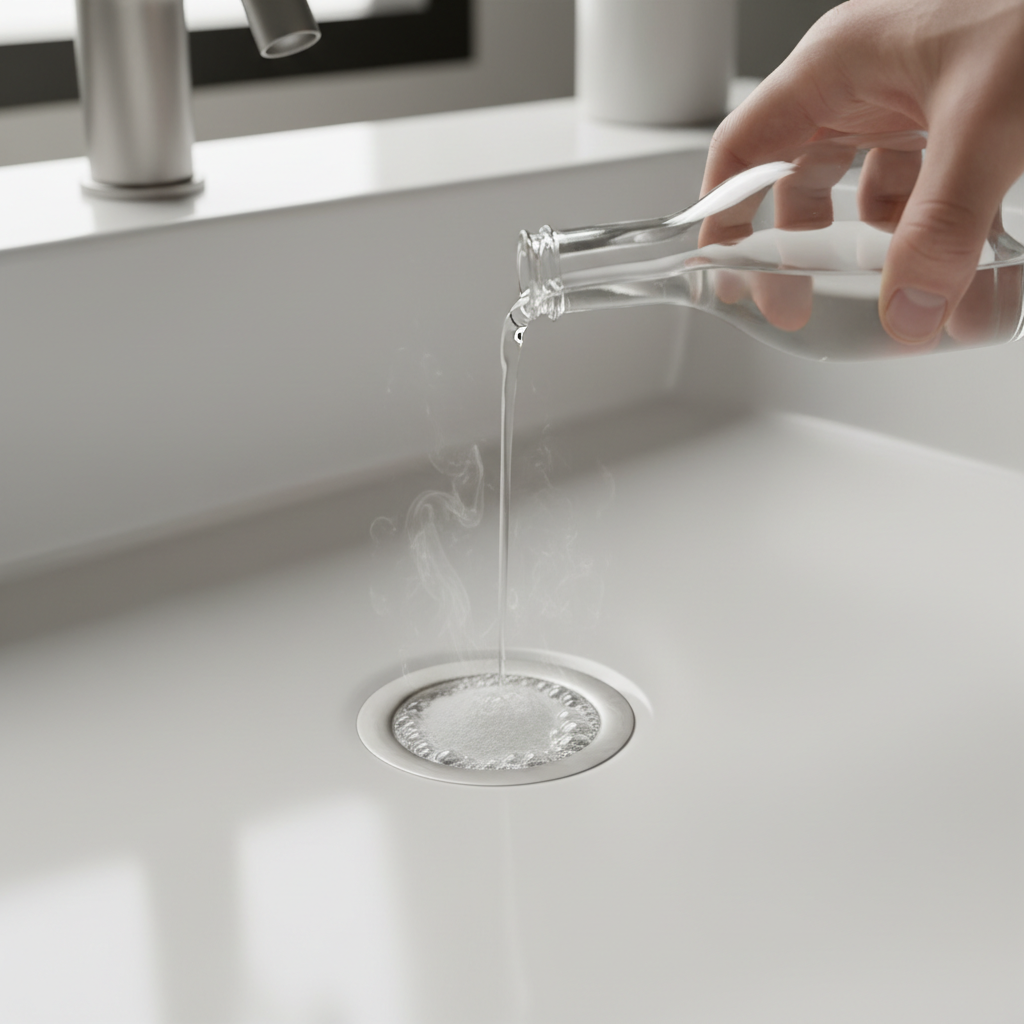
- Pour 1/2 cup of baking soda down the drain.
- Follow immediately with 1 cup of white vinegar.
- Safety Note: Stand back to avoid inhaling the initial fizzing gases. Do not use this method if you've recently poured any commercial chemical drain cleaner down the drain, as mixing chemicals can create dangerous fumes.
- Allow the mixture to sit for 30 minutes to an hour. For very stubborn odors, you can let it sit overnight.
Plumbing · Leak
| Project category | Plumbing |
|---|---|
| Problem type | Leak |
| Trade required | Plumbing |
| Urgency | Emergency — act now |
| Safety risk | High safety risk |
| DIY suitability | DIY for experienced homeowners |
| Cost category | Low cost |
| Typical timeline | Shut water off now; repair usually same or next day |
| Contractor type | Licensed plumber |
Repair option
Isolate at the shutoff, replace the failed component, and dry the cavity fully.
Replacement option
Repipe the run or the branch when corrosion is widespread.
Common causes
- Failed supply line or shutoff valve
- Worn washers, cartridges, or P-trap connections
- Pinhole corrosion in older copper
Relevant tools:emergency checklistdiy or hire a pro
Published May 24, 2026Last updated August 17, 2026
Tools & materials you'll need
Affiliate linksAs an Amazon Associate FixlyGuide earns from qualifying purchases — at no extra cost to you. Prices and availability are accurate as of publication and subject to change.
Quick Answer
A bad smell emanating from your bathroom sink drain is almost always due to the accumulation of a slimy, odor-producing biofilm within the drainpipe and P-trap. This gunk is a mixture of shedding hair, soap scum, toothpaste residue, skin flakes, and bacteria. The most common and effective DIY solution involves clearing this buildup using a combination of baking soda and vinegar, followed by a hot water flush, or by physically cleaning the P-trap if the chemical method isn't sufficient.
The Problem
That unpleasant, often sulfur-like or musty odor wafting from your bathroom sink is more than just annoying; it's a clear indicator of organic decomposition occurring right beneath your basin. Every time you use your sink – washing your face, brushing your teeth, shaving – tiny bits of soap, hair, skin, and oils are washed down the drain. Over time, these particles adhere to the inner walls of your drainpipes, particularly in the P-trap, which is designed to hold a small amount of water to block sewer gases. This accumulation creates a nutrient-rich environment where bacteria flourish, forming a thick, slimy biofilm. As these bacteria break down the organic matter, they release gases that smell distinctly foul, much like rotten eggs or a moldy locker room. The problem isn't usually a major clog affecting drainage, but rather a slow, steady buildup of odor-causing gunk that traditional flushing doesn't eliminate.
How It Works
Your bathroom sink drain system is a marvel of gravity and simple physics, designed to whisk wastewater away while preventing dreaded sewer gases from entering your home. At the heart of this system is the P-trap, a U-shaped pipe section located directly beneath your sink. Its primary function is to hold a small amount of water, creating a barrier that blocks noxious gases from the main sewer line. Without this water seal, your bathroom would constantly smell like a sewer, thanks to hydrogen sulfide and methane gases.
However, this essential P-trap is also where many problems like foul odors originate. As water, soap, hair, toothpaste, and other debris flow down the drain, gravity pulls heavier particles downward. Hair and soap scum are particularly adept at snagging on the rough inner surfaces of the pipe walls and the bends of the P-trap. Over weeks and months, these particles intertwine and accumulate, slowly forming a sticky, nutrient-rich matrix.
This matrix becomes a perfect breeding ground for anaerobic bacteria (bacteria that thrive in low-oxygen environments). These bacteria feed on the organic matter – skin cells, soap residues, hair proteins – and as they digest it, they produce byproducts, primarily sulfur compounds and other volatile organic compounds (VOCs). These compounds are what create the distinctive, often repulsive, odors. The P-trap, with its constantly damp environment and turbulent water flow during use, is a hotspot for this biofilm formation.
The problem isn't always a blocked drain that prevents water from flowing; often, the water flows perfectly fine. The issue is purely the bacterial colony and its smelly waste products accumulating on the interior surfaces of the drain line and P-trap, just above or within the standing water. When water flows, or even during changes in atmospheric pressure, these foul gases are pushed up and out of your sink opening, becoming noticeable to you. Addressing the smell requires not just moving water through the trap, but actively cleaning and removing this stubborn biofilm.
Step-by-Step Fix
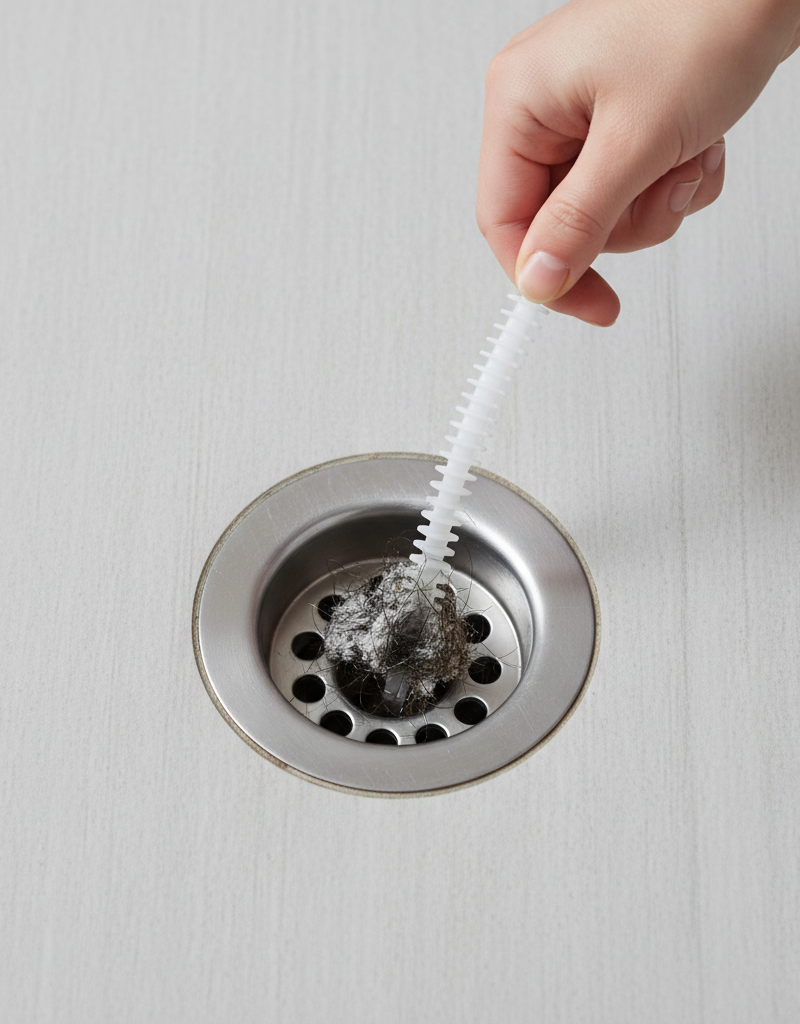
1. Clear the Drain Opening — Remove any visible hair and debris from the drain stopper and opening. This is often the first layer of gunk causing problems.
*   **Tool:** Pliers or tweezers
*   **Tip:** Many pop-up stoppers can be removed by unscrewing or lifting a small pivot rod assembly under the sink.
2. The Baking Soda and Vinegar Cleanse — This classic combination creates a bubbling chemical reaction that can break down organic matter and dislodge biofilm.
*   Pour 1/2 cup of baking soda down the drain.
*   Follow immediately with 1 cup of white vinegar.
*   **Safety Note:** Stand back to avoid inhaling the initial fizzing gases. Do not use this method if you've recently poured any commercial chemical drain cleaner down the drain, as mixing chemicals can create dangerous fumes.
*   Allow the mixture to sit for 30 minutes to an hour. For very stubborn odors, you can let it sit overnight.
3. The Hot Water Flush — After the baking soda and vinegar have worked their magic, a flood of hot water will help rinse away the loosened gunk.
*   Boil 1-2 quarts of water (or use the hottest tap water available if your pipes are older and might not handle boiling water).
*   Carefully pour the hot water down the drain. Repeat a few times if necessary.
*   **If this doesn't work:** If the smell persists or returns quickly, the biofilm might be too stubborn for this method alone, and physical cleaning of the P-trap is the next step.
4. Clean the Overflow Hole — The overflow opening near the top of the sink basin can also harbor mold and bacteria that contribute to odors.
*   Mix a solution of 1/2 bleach and 1/2 water (or white vinegar and water if you prefer to avoid bleach).
*   Pour this solution slowly into the overflow hole. Use a small funnel if needed.
*   Let it sit for 15-20 minutes, then flush with hot water from the tap.
5. Physically Clean the P-trap — If the chemical methods fail, a physical cleaning of the P-trap is often needed to remove stubborn blockages and biofilm.
*   **Safety Note:** Place a bucket directly under the P-trap to catch water and debris. Wear gloves and eye protection.
*   Using channel lock pliers or a basin wrench, carefully loosen the slip nuts on both ends of the P-trap.
*   Remove the P-trap. Be prepared for a rush of standing water and foul-smelling gunk.
*   Use a bottle brush or old toothbrush to thoroughly scrub the inside of the P-trap, removing all visible slime and hair.
*   Inspect the drain tailpiece (the pipe coming down from the sink) and the wall arm (the pipe going into the wall) for any visible buildup. Use a small brush or a rag wrapped around a wire to clean these sections if accessible.
*   Reattach the P-trap, ensuring the slip nuts are hand-tightened, then given a quarter-turn with pliers. Do not overtighten, as this can crack plastic pipes or strip threads.
*   Run water for a few minutes and check for leaks at the P-trap connections.
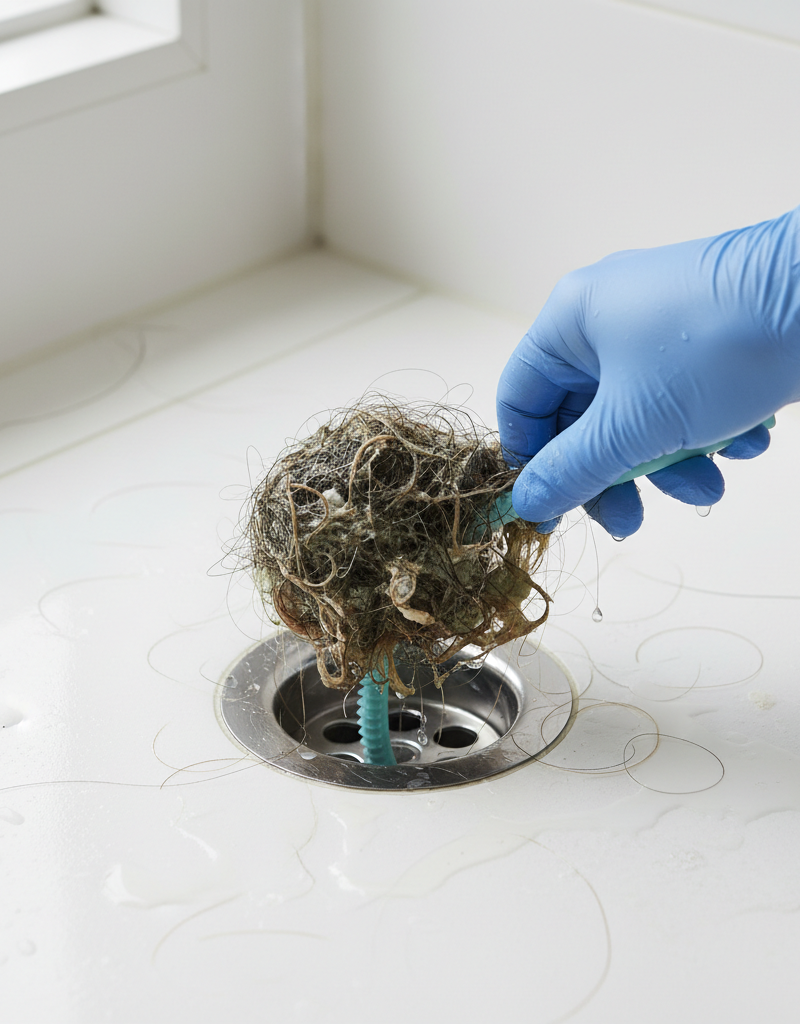
6. Consider a Drain Snake (for persistent issues) — If the smell persists and you suspect a deeper clog or more extensive biofilm beyond the P-trap, a small drain snake can clear it.
*   Insert the auger head of a small hand auger into the drain opening.
*   Feed the snake into the pipe, turning the handle to navigate bends.
*   When you encounter resistance, aggressively rotate the snake to break up or retrieve the clog.
*   Pull the snake out slowly, cleaning it as you go.
*   Flush the drain thoroughly with hot water.
*   **Pro Tip:** Start with the smallest, most flexible snake for bathroom sinks to avoid damaging smaller pipes.
Common Causes
- Biofilm Buildup: The primary culprit. Hair, soap scum, skin cells, and toothpaste combine to create a slimy film inside the drainpipes, especially the P-trap, which becomes a breeding ground for odor-producing bacteria.
- Dry P-trap: If a sink isn't used for a long time, the water in the P-trap can evaporate, allowing sewer gases to enter your home. This is less common for actively used bathroom sinks but can happen in guest bathrooms.
- Vent Pipe Issues: Your plumbing system has vent pipes that allow air into the drain system, preventing a vacuum and allowing gases to escape through the roof. A blocked or improperly installed vent can cause sewer gases to escape through drains inside the house.
- Leaky P-trap or Drain Connections: Even subtle leaks can allow smelly water to dribble onto the cabinet floor or create a damp, moldy environment that contributes to a musty odor.
- Food Debris: While less common in bathroom sinks than kitchen sinks, small amounts of food washed down can contribute to decomposition and odors.
- Sulfur-Reducing Bacteria in Water Heater: Sometimes the
Related Articles
Keep troubleshooting with these hand-picked guides from FixlyGuide:
- The Nasty Truth About Your Smelly Bathroom Sink — And the 2-Ingredient Trick to Fix It — Uncover the hidden reasons behind that foul odor wafting from your bathroom sink drain and learn a simple, two-ingredient solution to banis…
- The Nasty Truth: Is Your Bathroom Sink's Stink Coming From a Hidden Biofilm? — A persistent, foul odor from your bathroom sink drain often signals a hidden biofilm buildup, not just a simple clog, demanding specific cl…
- The Nasty Truth About Your Smelly Bathroom Sink — And the $5 Fix — A persistent foul odor from your bathroom sink drain is often caused by a forgotten gunk buildup that's easy to eliminate with basic househ…
- The #1 Mistake Homeowners Make with a Slow Kitchen Drain (and the Real Fix) — Before you reach for harsh chemicals, learn the right way to fix a slow kitchen sink drain and prevent future clogs.
- The Nasty Truth: 3 Hidden Reasons Your Shower Drain Clogs (Beyond Just Hair) — Learn how to clear a stubborn shower drain clog efficiently and safely using common household tools, without harsh chemicals.
- The #1 Gutter Mistake You're Making (And 3 Hidden Causes of Overflow) — Overflowing gutters in heavy rain are often a sign of a deeper issue than just debris, leading to potential foundation damage and costly re…
Should you do this yourself?
Answer five quick questions before you start. Safety outranks savings every time.
Your experience with work like this
How high do you have to work?
Does the job involve any of these?
Will it need a permit?
Specialty tools
Free and instant. Educational guidance only — not a quote, inspection, or professional diagnosis.
What should this project cost?
Enter your project details for a realistic cost range before you call anyone.
Common repairs run $150–$650; repipes and water-heater replacements reach $1,500–$4,500.
- Regional adjustment
- National average
- Labor share (typical)
- ~$754
- Quotes to collect
- 3 written estimates
Educational estimate based on national averages — not a binding quote. Always confirm with written local estimates.
Fixly Project Decision Box
- DIY difficulty
- Moderate
- Estimated time
- 30 minutes – half a day
- Cost level
- Moderate
Main tools / materials
- Adjustable wrench
- Plunger or drain auger
- Bucket and towels
- Thread tape
When to stop and call a pro
- Water you cannot shut off at the fixture or main
- Sewage backing up into more than one fixture
- Water near electrical panels or outlets
- Gas water heater work beyond relighting a pilot
Need professional help?
Get a Licensed PlumberFrequently asked questions
Why does my bathroom sink smell like rotten eggs?+
A rotten egg smell (hydrogen sulfide) typically indicates a buildup of anaerobic bacteria feeding on organic matter like hair and soap scum within your drainpipes, especially in the P-trap.
Is it safe to pour bleach down my bathroom sink drain?+
While bleach can kill bacteria, it's generally not recommended as a primary drain cleaner. It doesn't effectively break down clogs and can create dangerous fumes if mixed with other chemicals. Baking soda and vinegar are safer and often more effective for odor-causing biofilm.
How often should I clean my bathroom sink drain to prevent odors?+
For active sinks, a monthly flush with hot water and an occasional baking soda/vinegar treatment (every 2-3 months) can prevent most odor issues. If you notice a faint smell, address it immediately to prevent buildup.
Can a dry P-trap cause my sink to smell?+
Yes, if a sink isn't used regularly, the water in the P-trap can evaporate, removing the crucial barrier that blocks sewer gases from entering your home. Running water for a minute or two can often resolve this.

Discussion
Loading comments…