- The 1 Mistake Homeowners Make When Caulking a Bathroom Sink (And How to Fix It) — Discover the most common caulk mistake homeowners make around bathroom sinks and follow simple steps to achieve a lasting, watertight seal.
- The $5 Secret to Silencing That Annoying Dripping Faucet (Single-Handle Fix) — Stop a dripping single-handle faucet with a simple and inexpensive DIY fix by replacing a worn-out o-ring or washer.
- The 5-Minute Trick to Restore Your Kitchen Sink Sprayer's Lost Pressure — Restore your kitchen sink sprayer's low pressure with a quick, simple trick that often takes less than five minutes and requires no special…
- The 1 Mistake Homeowners Make with a Slow Kitchen Drain (and the Real Fix) — Before you reach for harsh chemicals, learn the right way to fix a slow kitchen sink drain and prevent future clogs.
- The 5-Minute Trick to Stop a Dripping Single-Handle Faucet (No Plumber Needed) — A persistent drip from your single-handle faucet is usually caused by a worn-out cartridge, a repair you can typically complete yourself in…
Plumbing · Leak
| Project category | Plumbing |
|---|---|
| Problem type | Leak |
| Trade required | Plumbing |
| Urgency | Emergency — act now |
| Safety risk | High safety risk |
| DIY suitability | DIY for experienced homeowners |
| Cost category | Low cost |
| Typical timeline | Shut water off now; repair usually same or next day |
| Contractor type | Licensed plumber |
Repair option
Isolate at the shutoff, replace the failed component, and dry the cavity fully.
Replacement option
Repipe the run or the branch when corrosion is widespread.
Common causes
- Failed supply line or shutoff valve
- Worn washers, cartridges, or P-trap connections
- Pinhole corrosion in older copper
Relevant tools:emergency checklistdiy or hire a pro
Published June 2, 2026Last updated August 17, 2026
Tools & materials you'll need
Affiliate linksAs an Amazon Associate FixlyGuide earns from qualifying purchases — at no extra cost to you. Prices and availability are accurate as of publication and subject to change.
Quick Answer
Properly caulking a bathroom sink involves meticulous preparation, including the complete removal of old caulk and thorough cleaning, followed by the application of a high-quality, 100% silicone caulk in a steady, even bead. The secret to a professional finish and a long-lasting seal lies in ensuring the surfaces are perfectly dry and free of debris, and smoothing the caulk correctly after application.
The Problem
Many homeowners view caulking as a simple, quick task. However, a poorly applied caulk bead around a bathroom sink is not just an aesthetic issue; it's a significant vulnerability in your bathroom's defense against water damage. Gaps, cracks, or inadequate adhesion allow water to seep underneath the sink rim or behind the backsplash. This hidden moisture can lead to several costly and unhealthy problems: unsightly mold and mildew growth, water damage to your countertop and vanity cabinet (leading to swelling, discoloration, and structural rot), and even pest infestations attracted to damp environments. Skipping steps like thorough cleaning or using the wrong type of caulk almost guarantees a short-lived seal that will crack, peel, or fail prematurely, necessitating frequent re-caulking.
How It Works
Caulk, or more specifically, sealant, serves as a flexible, waterproof barrier between two surfaces that may move independently due to temperature changes or minor settling. Around a bathroom sink, the caulk fills the tiny gap where the sink basin meets the countertop and/or where the countertop meets the backsplash. This gap, typically less than 1/4 inch wide, is almost impossible to make perfectly watertight without a sealant. Water, being relentless, will exploit any opening. When you turn on the faucet, wash your hands, or splash water, gravity and surface tension will draw minuscule amounts of water into these gaps if they aren't sealed. Over time, even small amounts of moisture can accumulate.
Modern caulks, especially 100% silicone formulations, work by adhering strongly to both surfaces and then curing into a flexible, rubber-like material. This flexibility is crucial because countertops, sinks, and even walls expand and contract slightly with temperature and humidity fluctuations. A rigid material would crack under these stresses, breaking the waterproof seal. Silicone caulk maintains its elasticity, allowing it to "give" with these minor movements while remaining bonded. The adhesion is created at a molecular level, where the caulk forms strong bonds with the clean, dry substrate. If the surface isn't clean (e.g., old caulk, soap scum, grease), these bonds cannot form properly, leading to poor adhesion and early failure. Similarly, if the surface is wet, the water molecules interfere with the caulk's ability to bond, resulting in a weak, unreliable seal that will likely peel or shrink.
Step-by-Step Fix
1. Clear the Area and Prepare for Work — Remove everything from the countertop and ensure good lighting.
Before you start, take everything off your bathroom countertop. This gives you ample space to work and prevents accidental damage or caulk stains on your personal items. Open windows or turn on the exhaust fan to ensure adequate ventilation, especially when working with caulk removers or sealants, which can have strong odors.
2. Remove All Old Caulk — This is the most critical step for a lasting seal.
Start by scraping away old caulk. Use a utility knife or a specialized caulk removal tool. Angle the blade slightly to get underneath the caulk without scratching the sink or countertop. For stubborn caulk, particularly silicone, a chemical caulk remover can be immensely helpful. Apply the remover according to the manufacturer's instructions, let it dwell for the recommended time, and then scrape away the softened caulk. Be patient; getting every last bit off is crucial. Even small remnants can prevent new caulk from adhering properly.
- Tool Tip: A plastic caulk removal tool might be safer on delicate surfaces than a metal utility knife.
- Safety Note: Always wear gloves and eye protection when using chemical caulk removers. Ensure good ventilation.
3. Clean and Degrease the Surfaces — A clean surface is essential for proper adhesion.
After removing old caulk, clean the joint thoroughly. Use a stiff brush or an old toothbrush to scrub away any lingering residue, mold, mildew, or soap scum. A mixture of equal parts rubbing alcohol and water, or a specialized caulk prep cleaner, works wonders for degreasing. Wipe the area several times with clean cloths until no dirt or residue appears on the cloth. This step removes invisible contaminants that would otherwise compromise the new caulk's adhesion.
- If you see mold: Use a bleach solution (1 part bleach, 10 parts water) or a commercial mold killer. Let it sit for 10-15 minutes, then scrub and rinse thoroughly.
4. Dry the Area Completely — Moisture is the enemy of a strong caulk bond.
This step cannot be overemphasized. Any moisture trapped under the new caulk will lead to mold, mildew, and premature failure. Use a hairdryer on a cool setting or simply allow ample time for the area to air dry completely. For best results, let the joint air dry for several hours, or even overnight, after cleaning. You can also use a fan to accelerate drying. Test the dryness by pressing a clean paper towel into the joint – if it picks up any moisture, continue drying.
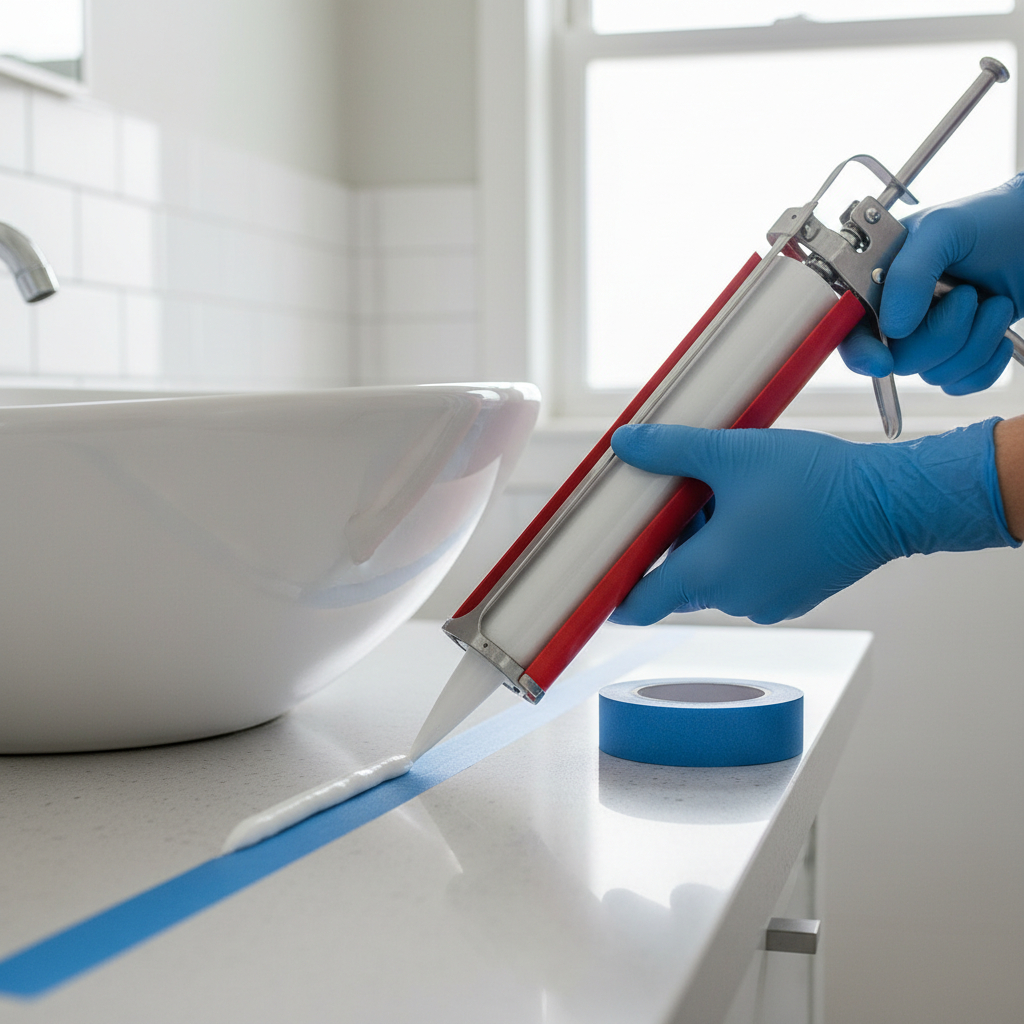
5. Apply Painter's Tape (Optional, but Recommended for a Crisp Line) — Create clean lines and make cleanup easier.
For a truly professional finish, apply painter's tape along both sides of the joint where the caulk will be applied. Place the tape about 1/8 to 1/4 inch away from the joint edge, creating a perfectly straight, consistent gap for your caulk bead. This not only ensures a straight line but also minimizes mess and makes smoothing easier.
6. Prepare the Caulk Cartridge — Cut the nozzle correctly for the ideal bead size.
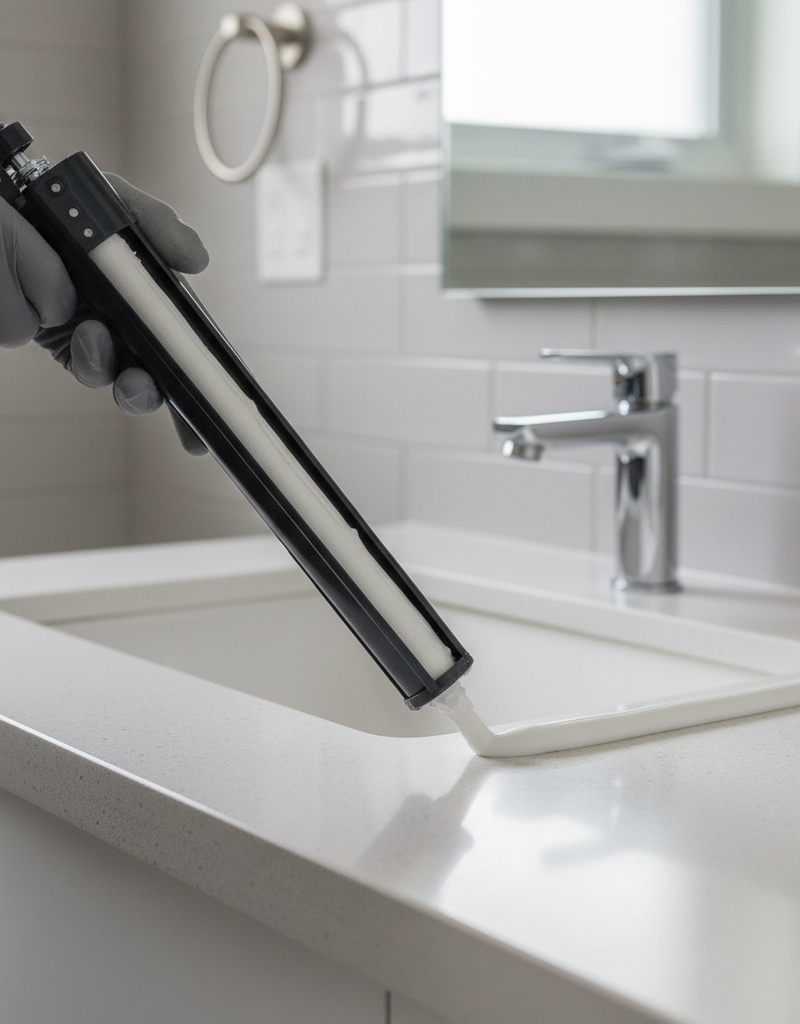
Cut the tip of the caulk tube nozzle at a 45-degree angle, making a small opening. Start with a smaller hole; you can always cut it larger if needed. The size of the opening should be slightly smaller than the size of the bead you want to apply, typically around 1/8 to 3/16 inch for a bathroom sink. Puncture the inner seal of the cartridge using the attached wire on most caulk guns or a long nail.
7. Apply the Caulk Bead — Steady hand, consistent pressure, continuous motion.
Load the cartridge into a caulk gun. Position the tip of the nozzle at the beginning of your joint. Apply steady, even pressure to the caulk gun trigger while moving the gun slowly and smoothly along the joint. Aim for one continuous bead of caulk without stopping. Try to push the caulk into the joint rather than just laying it on top. Consistency in pressure and speed is key to a uniform bead. Work in sections if the joint is very long, overlapping slightly at the start of each new section.
8. Smooth the Caulk Bead — Achieve a professional, watertight finish.
Immediately after applying the caulk, begin smoothing it. This is where many DIYers make mistakes. Use a wet finger (wearing a latex glove is recommended), a caulk tool, or an ice cube. Draw the tool or finger along the caulk bead in one continuous motion, applying light, even pressure to create a smooth, concave surface that forces the caulk into the joint and creates a good seal. The goal is to remove excess caulk and create a neat, waterproof finish. Have a damp cloth handy to wipe away excess caulk from your finger or tool.
9. Remove Painter's Tape (If Used) — Pull it immediately for a sharp edge.
If you used painter's tape, remove it immediately after smoothing the caulk, before the caulk begins to skin over. Pull the tape at a 45-degree angle away from the caulk bead. This will leave a perfectly crisp, clean line. If you wait too long, the caulk can dry onto the tape, and removing it will pull up parts of your fresh bead.
10. Allow Caulk to Cure Fully — Patience prevents premature failure.
Read the caulk manufacturer's instructions for drying and curing times. While many caulks are
Related Articles
Keep troubleshooting with these hand-picked guides from FixlyGuide:
- The #1 Mistake Homeowners Make When Caulking a Bathroom Sink (And How to Fix It) — Discover the most common caulk mistake homeowners make around bathroom sinks and follow simple steps to achieve a lasting, watertight seal.
- The $5 Secret to Silencing That Annoying Dripping Faucet (Single-Handle Fix) — Stop a dripping single-handle faucet with a simple and inexpensive DIY fix by replacing a worn-out o-ring or washer.
- The 5-Minute Trick to Restore Your Kitchen Sink Sprayer's Lost Pressure — Restore your kitchen sink sprayer's low pressure with a quick, simple trick that often takes less than five minutes and requires no special…
- The #1 Mistake Homeowners Make with a Slow Kitchen Drain (and the Real Fix) — Before you reach for harsh chemicals, learn the right way to fix a slow kitchen sink drain and prevent future clogs.
- The 5-Minute Trick to Stop a Dripping Single-Handle Faucet (No Plumber Needed) — A persistent drip from your single-handle faucet is usually caused by a worn-out cartridge, a repair you can typically complete yourself in…
- The #1 Caulk Mistake That Leads to Mold (And How to Fix It Right) — Discover the most common caulk mistake that causes frustrating mold growth around your bathtub and learn the simple, effective way to recau…
Should you do this yourself?
Answer five quick questions before you start. Safety outranks savings every time.
Your experience with work like this
How high do you have to work?
Does the job involve any of these?
Will it need a permit?
Specialty tools
Free and instant. Educational guidance only — not a quote, inspection, or professional diagnosis.
What should this project cost?
Enter your project details for a realistic cost range before you call anyone.
Common repairs run $150–$650; repipes and water-heater replacements reach $1,500–$4,500.
- Regional adjustment
- National average
- Labor share (typical)
- ~$754
- Quotes to collect
- 3 written estimates
Educational estimate based on national averages — not a binding quote. Always confirm with written local estimates.
Before you start
Check the difficulty, permits, and safety risk — then decide whether to call a pro.
- Estimate this projectGet a cost range for your scope and ZIP before you call anyone.Open
- Get local estimatesSend one request and compare written estimates from vetted pros.Open
Free, no signup required. Estimates are educational guidance, not a quote or an inspection.
Frequently asked questions
How often should I recaulk my bathroom sink?+
You should recaulk your bathroom sink every 3-5 years, or sooner if you notice any signs of cracking, peeling, mold growth, or water penetration. Humid environments or heavy use might necessitate more frequent recaulking.
What type of caulk is best for a bathroom sink?+
100% silicone caulk is generally the best choice for bathroom sinks due to its superior flexibility, waterproof properties, and resistance to mold and mildew. Look for formulations specifically designed for kitchens and bathrooms with mildewcide.
Can I caulk over old caulk?+
No, you should never caulk over old caulk. This is one of the most common mistakes. New caulk will not adhere properly to old caulk, leading to a weak, short-lived seal that will quickly fail. Always remove all old caulk before applying new.
How long does caulk need to dry before I can use the sink?+
Most silicone caulks are 'tack-free' in 30-60 minutes, meaning they are dry to the touch. However, they are not fully cured and waterproof. You should wait at least 24 hours before exposing the caulk to water, and sometimes 48-72 hours for a full cure, depending on humidity and product specifications. Always check the manufacturer's instructions.
Why does my bathroom sink caulk keep molding?+
Caulk molds for several reasons, including improper surface preparation (leaving mold spores behind), insufficient drying time before use, poor ventilation in the bathroom, or using a caulk that isn't formulated with mildewcides. Using 100% silicone caulk and ensuring the area is completely clean and dry before application are key to preventing mold.
Discussion
Loading comments…