- Tools: Shallow pan, old towels, small brush (optional)
- Safety: Expect water to drain; protect your flooring.
- If this doesn't work: The pump itself might be faulty or the issue lies elsewhere.
Plumbing · Clog
| Project category | Plumbing |
|---|---|
| Problem type | Clog |
| Trade required | Plumbing |
| Urgency | Soon — within weeks |
| Safety risk | Low safety risk |
| DIY suitability | DIY friendly |
| Cost category | Low cost |
| Typical timeline | Same-day DIY attempt; pro visit within a day or two |
| Contractor type | Licensed plumber |
Repair option
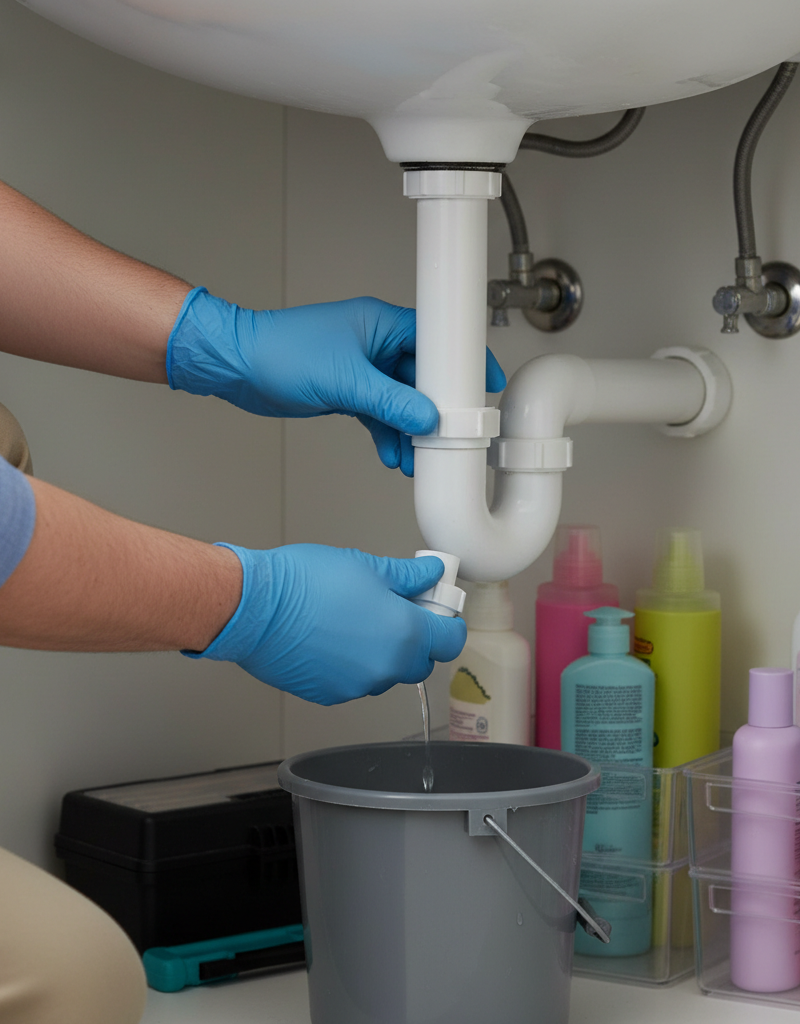
Plunger, hand auger, or trap cleanout before chemicals.
Replacement option
Line replacement when clogs return in the same spot repeatedly.
Common causes
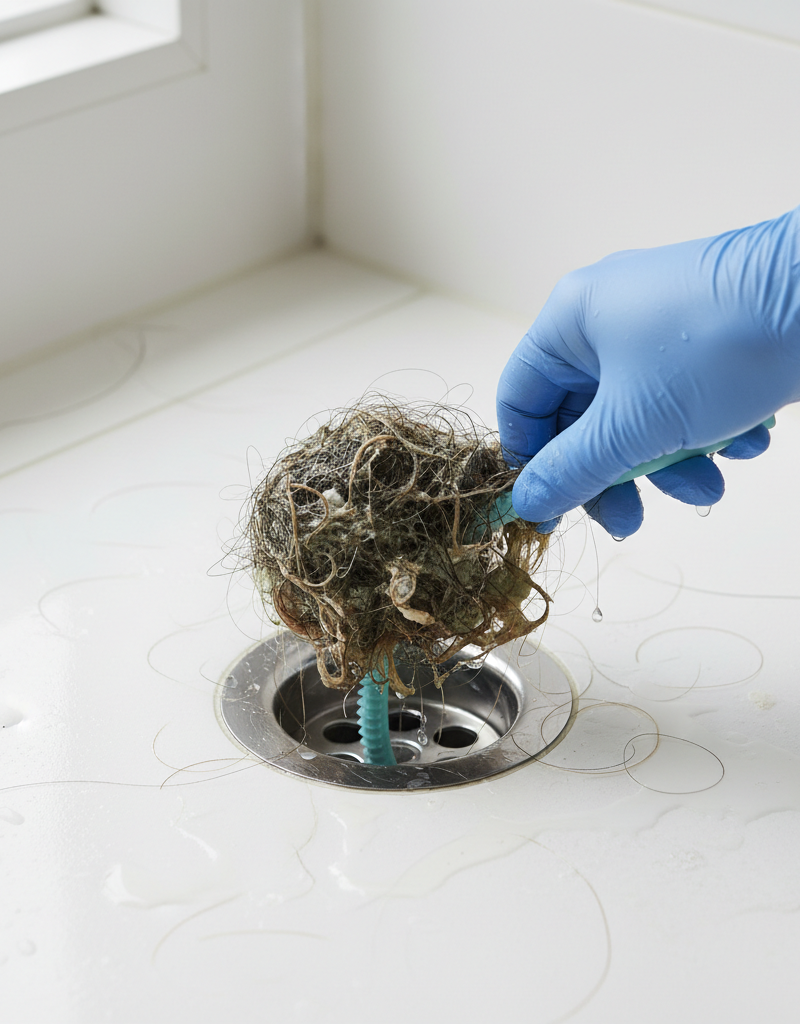
- Hair and soap buildup in the trap
- Grease cooling in the branch line
- Flushed wipes or foreign objects
Relevant tools:diy difficultydiy or hire a pro
Published June 1, 2026Last updated August 17, 2026
Tools & materials you'll need
Affiliate links- AmazonOld towelsseveral
As an Amazon Associate FixlyGuide earns from qualifying purchases — at no extra cost to you. Prices and availability are accurate as of publication and subject to change.
Quick Answer
When a washing machine refuses to spin or drain, preventing it from completing its cycle, the issue often stems from a surprisingly simple blockage or a minor component failure. Most frequently, this is due to an obstructed drain pump filter, a kinked or clogged drain hose, or a faulty lid switch. With a few basic tools and a bit of patience, many homeowners can diagnose and fix these common problems, saving time and money on a professional service call. However, it's crucial to understand the underlying mechanisms and safety precautions before attempting any repairs.
The Problem
You've finished a load of laundry, but instead of fresh, damp clothes, you open your washing machine to find a tub full of stagnant, soapy water. The machine didn't spin, meaning the water was never extracted, and now your clothes are heavier, dirtier, and dripping. This frustrating scenario not only leaves you with unusable laundry but can also indicate a potential problem that could escalate if not addressed. Beyond the immediate inconvenience, standing water in the drum can lead to mold and mildew growth, creating unpleasant odors and potentially damaging your machine over time.
How It Works
To understand why your washing machine isn't spinning or draining, it helps to know how these functions are supposed to work.
During a wash cycle, once the agitation phase is complete and the dirty water needs to be removed, the washing machine's control board activates the drain pump. This electric pump has an impeller that rapidly spins, creating suction to pull the water from the bottom of the wash tub, through a filter (if present), and then push it out through the drain hose into your utility sink, standpipe, or household drain system.
Once the water has been sufficiently drained, the machine transitions to the spin cycle. The motor, often connected to the wash drum via a drive belt or directly (direct drive models), dramatically increases its speed. This high-speed rotation creates centrifugal force, pushing the water out of the clothes and through the perforations in the inner wash drum. The extracted water then collects in the outer tub and is directed back to the drain pump to be expelled.
Crucially, many washing machines are equipped with safety interlocks. A common one is the lid switch (or door latch on front-loaders). This switch detects if the lid or door is securely closed. If the machine senses the lid is open, it will prevent the spin cycle from engaging to avoid injury from the rapidly rotating drum. Some models will also pause or prevent draining if certain conditions aren't met, though this is less common than the spin interlock. Understanding this sequence reveals that if water isn't draining, the spin cycle cannot properly engage, as the heavy, water-filled clothes would put excessive strain on the motor and potentially cause damage.
Step-by-Step Fix
1. Safety First — Unplug the machine and shut off water.
Before touching any component, pull the washing machine away from the wall and unplug it from the electrical outlet. Additionally, turn off the hot and cold water supply valves located behind the machine. This prevents accidental electrocution or flooding.
- Tools: None
- Safety: Always verify the machine is unplugged before proceeding.
2. Inspect the Drain Hose — Check for kinks, clogs, or blockages.
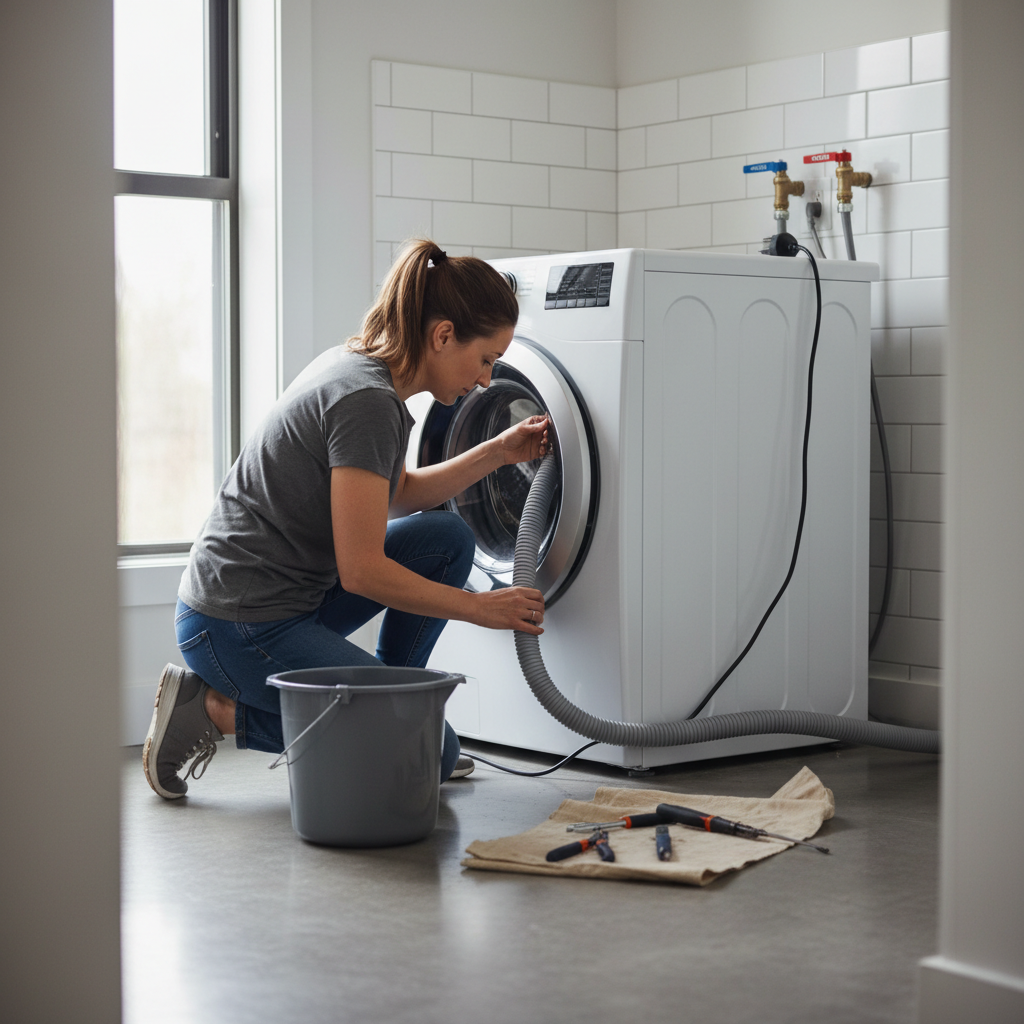
Locate the large corrugated or smooth drain hose typically exiting the back of the machine. First, look for any obvious kinks or bends that could restrict water flow. Straighten any kinks you find. If the hose appears clear externally, carefully remove it from the standpipe or utility sink. Place the end into a bucket. If a rush of water comes out, the blockage was likely in the standpipe or sink drain itself. If little or no water comes out, the clog is either in the hose or the machine. You can try to snake a plumber's auger (snake) through the hose to clear any internal blockages.
- Tools: Bucket, small adjustable wrench (if hose clamp is tight)
- If this doesn't work: The clog is likely further into the machine's pump or internal plumbing.
3. Clean the Drain Pump Filter — Access and clear the debris filter.
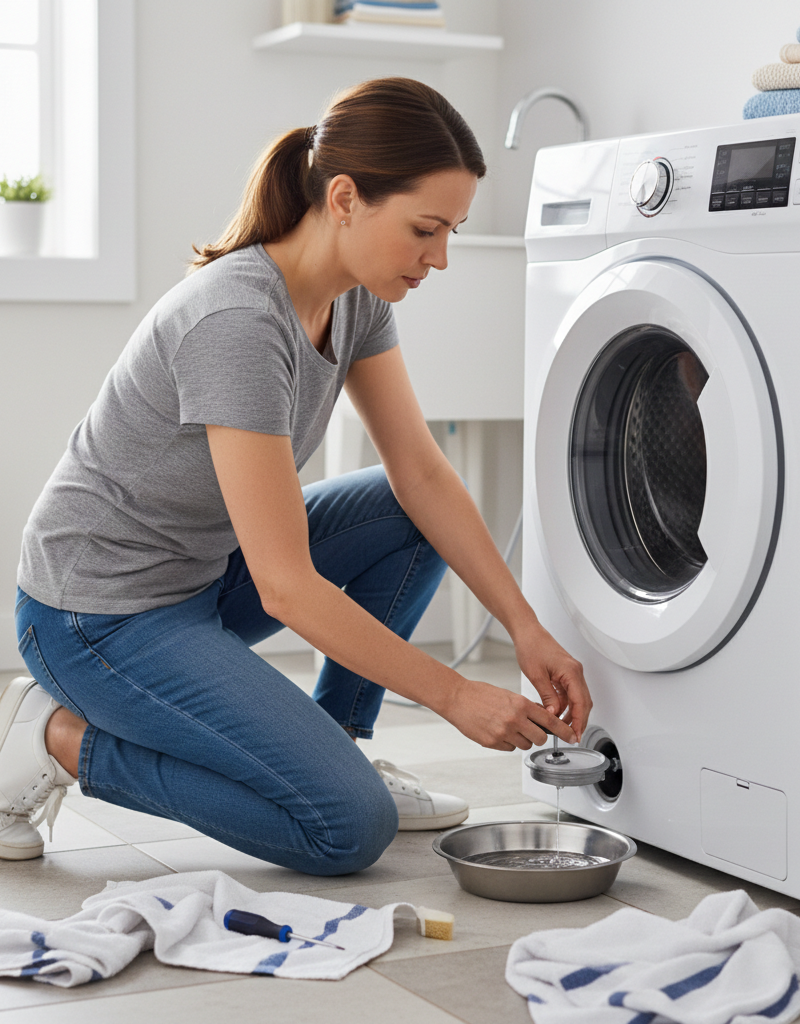
Many modern washing machines have a drain pump filter designed to catch lint, coins, buttons, and other small items before they reach and damage the pump. This filter is often located behind a small access panel at the bottom front of the machine. Consult your owner's manual for its exact location and removal instructions. Before unscrewing the filter cap, place a shallow pan or old towels underneath to catch residual water. Slowly unscrew the cap; water will likely spill out. Once removed, meticulously clean any lint, hair, or debris from the filter. Inspect the housing cavity for any stuck objects.
- Tools: Shallow pan, old towels, small brush (optional)
- Safety: Expect water to drain; protect your flooring.
- If this doesn't work: The pump itself might be faulty or the issue lies elsewhere.
4. Test the Lid Switch/Door Latch — Bypass or inspect the safety mechanism.
For top-loading machines, the lid switch is crucial. It's usually located under the main top, near the lid hinge, with a small plastic lever or plunger that gets depressed when the lid closes. If this switch is faulty or broken, the machine won't spin (and sometimes won't drain). You can often test it with a multimeter for continuity, or as a temporary diagnostic, you might be able to manually depress the switch plunger with a finger and try to start the drain/spin cycle (do NOT put your hand into a spinning machine). For front-loaders, the door latch mechanism performs a similar function.
- Tools: Screwdriver (for access panels), multimeter (optional)
- Safety: Never bypass a lid switch permanently; it's a critical safety feature. Do not allow the machine to spin with an open lid.
- If the switch is faulty: Replace the lid switch.
5. Inspect the Drive Belt (Belt-Driven Models) — Check for wear, breakage, or slippage.
On belt-driven washing machines (common on older models and some top-loaders), a rubber belt connects the motor to the transmission or wash basket. If this belt is broken, stretched, or slipped off its pulley, the drum won't spin. You'll need to access the motor and transmission area, usually by tilting the machine back or removing a service panel. Visually inspect the belt. If it's loose, cracked, or broken, it needs replacement.
- Tools: Screwdriver or nut driver, potentially a helper to tilt the machine
- Safety: Be careful when tilting heavy appliances.
- If this doesn't work: Consider a faulty motor or transmission.
6. Check the Drain Pump Impeller — Verify free movement and absence of foreign objects.
After cleaning the filter, sometimes debris can still get past and jam the impeller inside the drain pump. With the machine unplugged, you can sometimes reach into the pump housing (after removing the filter) and carefully attempt to rotate the impeller with your finger. It should turn freely. If it's stiff or jammed, there might be a foreign object (like a bra underwire or button) stuck in it. Use needle-nose pliers or tweezers to carefully remove any obstruction.
- Tools: Needle-nose pliers or tweezers, flashlight
- Safety: Ensure machine is unplugged. Wear gloves if desired.
- If it's still stuck or broken: The drain pump likely needs replacement.
7. Reset the Machine — Cycles often benefit from a hard reset.
Like many modern appliances, washing machines can sometimes benefit from a simple
Related Articles
Keep troubleshooting with these hand-picked guides from FixlyGuide:
- The Secret Culprit Behind Your Washing Machine's Spin & Drain Failure (It's Not Always Clogs) — Discover the most overlooked reasons why your washing machine refuses to spin or drain, and how to fix them with simple tools.
- The Secret Culprit When Your Washer Won't Spin Or Drain (It's Not Always A Clog) — Discover the hidden reasons your washing machine refuses to spin or drain, and learn the DIY fixes that can save you a service call.
- The Secret Culprit Behind Your Washing Machine's Spin-Drain Failure (It's Not Always Clogs) — Discover the hidden reasons your washing machine won't spin or drain and learn how to fix the most common culprits yourself.
- The Secret Culprit Behind Your Leaking Washer (It's Not Always the Hose) — A washing machine leaking water from the bottom can often be traced to common, easily fixable issues like loose hoses or a clogged drain pu…
- The Secret Culprit Behind Your Leaky Washer (It's Not Always the Hose!) — Discover the often-overlooked parts causing your washing machine to leak from the bottom and follow our guide to fix it yourself.
- The #1 Washing Machine Killer (It's Not Overloading!) — And How to Prevent It — Discover the surprising culprit behind premature washing machine failure and learn simple, actionable steps to extend its lifespan and keep…
Should you do this yourself?
Answer five quick questions before you start. Safety outranks savings every time.
Your experience with work like this
How high do you have to work?
Does the job involve any of these?
Will it need a permit?
Specialty tools
Free and instant. Educational guidance only — not a quote, inspection, or professional diagnosis.
What should this project cost?
Enter your project details for a realistic cost range before you call anyone.
Common repairs run $150–$650; repipes and water-heater replacements reach $1,500–$4,500.
- Regional adjustment
- National average
- Labor share (typical)
- ~$754
- Quotes to collect
- 3 written estimates
Educational estimate based on national averages — not a binding quote. Always confirm with written local estimates.
Fixly Project Decision Box
- DIY difficulty
- Moderate
- Estimated time
- 30 minutes – half a day
- Cost level
- Moderate
Main tools / materials
- Adjustable wrench
- Plunger or drain auger
- Bucket and towels
- Thread tape
When to stop and call a pro
- Water you cannot shut off at the fixture or main
- Sewage backing up into more than one fixture
- Water near electrical panels or outlets
- Gas water heater work beyond relighting a pilot
Need professional help?
Get a Licensed PlumberBefore you start
Check the difficulty, permits, and safety risk — then decide whether to call a pro.
- Estimate this projectGet a cost range for your scope and ZIP before you call anyone.Open
- Get local estimatesSend one request and compare written estimates from vetted pros.Open
Free, no signup required. Estimates are educational guidance, not a quote or an inspection.
Frequently asked questions
Why would my washing machine fill but not drain or spin?+
This common issue often points to a clogged drain pump filter, a kinked or blocked drain hose, or a faulty lid switch that prevents the spin cycle from engaging.
Can I manually drain my washing machine?+
Yes, most washing machines can be manually drained. You'll typically need to locate the drain pump filter access panel at the bottom front, place a shallow pan underneath, and slowly unscrew the filter cap to allow the water to flow out.
How do I know if my washing machine drain pump is bad?+
Signs of a bad drain pump include the machine making a humming noise but no water draining, or complete silence when it should be draining. After checking for clogs, if the pump still fails to move water, it likely needs replacement.
Is it worth fixing a washing machine that won't drain?+
For common issues like clogged filters or hoses, or a faulty lid switch, DIY repair is usually cost-effective. If the problem is a motor or transmission, professional repair might cost more than a new entry-level machine, making replacement a better option.
How often should I clean my washing machine drain filter?+
It's recommended to clean your washing machine's drain pump filter every 3-6 months, or more frequently if you wash items with a lot of lint (like pet blankets) or frequently find small items in your laundry.
Discussion
Loading comments…