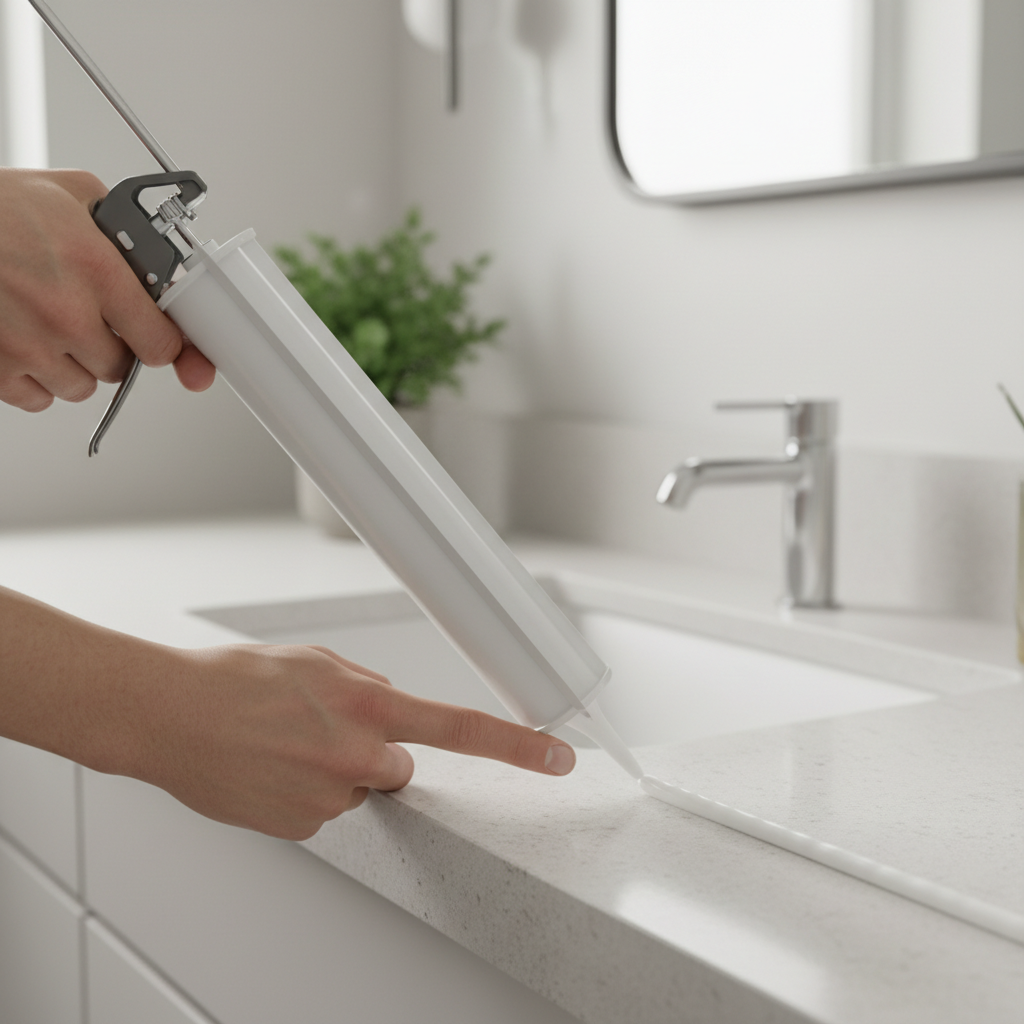
- Cutting the nozzle too large: A large opening leads to a wide, messy bead of caulk that's hard to tool effectively and wastes material. Start with a small cut (1/8 inch at a 45-degree angle) and enlarge it if necessary.
- Applying caulk too thick: A thick caulk bead might seem more robust, but it's actually more prone to cracking as it cures and is much harder to tool neatly. A thinner, consistent bead is more flexible and durable.
- Forgetting to release the caulk gun pressure: Many homeowners forget to pull back the plunger or rotate the release rod on the gun after each application. This causes caulk to continue oozing out, creating messes and wasting material.
Plumbing · Leak
| Project category | Plumbing |
|---|---|
| Problem type | Leak |
| Trade required | Plumbing |
| Urgency | Emergency — act now |
| Safety risk | High safety risk |
| DIY suitability | DIY for experienced homeowners |
| Cost category | Low cost |
| Typical timeline | Shut water off now; repair usually same or next day |
| Contractor type | Licensed plumber |
Repair option
Isolate at the shutoff, replace the failed component, and dry the cavity fully.
Replacement option
Repipe the run or the branch when corrosion is widespread.
Common causes
- Failed supply line or shutoff valve
- Worn washers, cartridges, or P-trap connections
- Pinhole corrosion in older copper
Relevant tools:emergency checklistdiy or hire a pro
Published May 25, 2026Last updated August 18, 2026
Tools & materials you'll need
Affiliate linksAs an Amazon Associate FixlyGuide earns from qualifying purchases — at no extra cost to you. Prices and availability are accurate as of publication and subject to change.
Quick Answer
The most common mistake homeowners make when caulking a bathroom sink is failing to properly clean and dry the surface before application, leading to poor adhesion and premature failure. To caulk properly, completely remove old caulk, clean all residue with denatured alcohol, allow it to dry thoroughly, then apply a continuous bead of mildew-resistant silicone caulk. This ensures a waterproof, long-lasting seal that prevents water intrusion and mold growth.
The Problem
Is your bathroom sink's caulk looking tired, cracked, or worse—black with mildew? This isn't just an aesthetic issue; it's a direct pathway for water to seep beneath your sink, into your vanity, and potentially down to your subfloor. This hidden moisture can lead to serious problems like wood rot, crumbling drywall, and persistent mold growth that can affect indoor air quality. Many homeowners apply new caulk right over old, dirty surfaces, or they use the wrong type of caulk, creating a temporary fix that quickly fails. The goal isn't just to make it look good for a few months; it's to create a durable, waterproof barrier that protects your home from water damage for years.
Imagine the scenario: every time you wash your hands, brush your teeth, or splash water from the faucet, tiny amounts of moisture creep into those gaps. Over time, this constant dampness turns your vanity into a prime breeding ground for mold and mildew. Beyond the visible nastiness, this can compromise the structural integrity of your cabinetry and even lead to expensive repairs down the line. A correctly caulked sink doesn't just look clean; it actively defends your bathroom against these costly and unhealthy invaders.
How It Works
Caulk works by creating a flexible, watertight seal between two different surfaces, typically the rim of the bathroom sink and the countertop or wall. Historically, plumbers putty was used for setting sinks, but caulk provides a more durable and flexible barrier against water intrusion once the sink is mounted. Modern silicone caulks are especially effective because of their inherent flexibility, adhesion properties to non-porous surfaces like porcelain and laminate, and resistance to water and temperature fluctuations. Unlike acrylic latex caulks, which are paintable but less resistant to continuous moisture, 100% silicone caulk maintains its elasticity and waterproofing even in persistently wet environments like a bathroom.
When applied correctly, a continuous bead of caulk forms a physical barrier that prevents water from flowing into the joint. The caulk adheres to both surfaces, creating a bond that moves slightly with the natural expansion and contraction of materials, preventing cracks. It's crucial that this bond is made to a clean, dry surface for maximum adhesion. Any residual dirt, soap scum, or old caulk will prevent the new caulk from bonding properly, leading to micro-fissures where water can penetrate. Mildew-resistant additives in bathroom-specific silicones work by releasing fungicides that inhibit mold and mildew spores from growing on the caulk's surface, keeping it cleaner and more sanitary for longer durations.
Step-by-Step Fix
1. Clear the Area — Remove everything from your sink and countertop.
Make sure you have a completely clear workspace. This isn't just for convenience; it prevents you from accidentally covering items with caulk and gives you the room to apply a steady, continuous bead without obstruction. Lay down some old towels or newspaper to protect the vanity surface from any drips.
2. Slice and Pry Existing Caulk — Carefully remove all old caulk with a utility knife and caulk removal tool.
Using a sharp utility knife, score along both edges of the old caulk bead. Hold the knife at a shallow angle to avoid scratching the sink or countertop. Once scored, use a dedicated caulk removal tool or a stiff putty knife to scrape and pry out the old caulk. Be thorough; even small remnants can compromise the new seal.
- Safety Note: Always cut away from your body when using a utility knife. Wear cut-resistant gloves if available.
3. Scrape and Scrub Residue — Eliminate stubborn caulk and mildew with a scraper and brush, then clean with denatured alcohol.
After removing the bulk, you'll likely find stubborn bits and mildew stains. Use a plastic scraper (to avoid scratching) or a wire brush (for tough spots on ceramic) to lift these. Follow up with a rag soaked in denatured alcohol, acetone, or mineral spirits to wipe down the entire joint. This removes oils, soap scum, and microscopic caulk residue, which are critical for new caulk adhesion. Allow the area to air dry completely, which may take 30-60 minutes.
- If you see crumbling grout: If the joint is exceptionally wide or you see crumbling grout (if between tile and sink), you may need to fill the larger gaps with a backer rod before caulking. This provides a stable surface for the caulk.
4. Prepare the Caulk Tube — Cut the nozzle to the correct size and puncture the inner seal.
Take your tube of 100% silicone mildew-resistant caulk. Using a utility knife, cut the nozzle at a 45-degree angle, about 1/8 to 1/4 inch from the tip. Start smaller; you can always cut more. The opening should be slightly smaller than the gap you're filling. Insert a long nail or the built-in puncture tool on your caulk gun into the tip of the nozzle to break the inner seal of the caulk tube.
5. Load the Caulk Gun — Insert the tube and apply pressure.
Pull the plunger of your caulk gun all the way back, insert the caulk tube, and then push the plunger forward until it engages with the back of the tube. Squeeze the trigger a few times until a small bead of caulk emerges, indicating it's ready. Release the pressure on the plunger after each squeeze to prevent caulk from continually oozing out.
6. Apply a Continuous Bead — Run a smooth, even line of caulk along the joint.
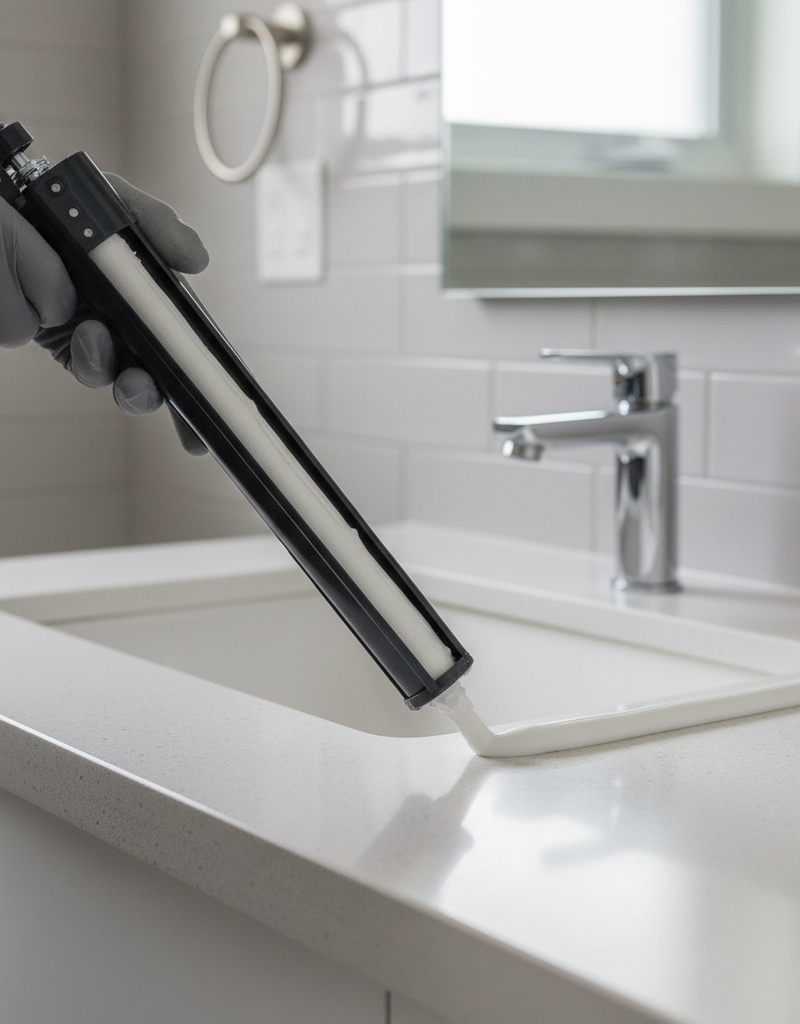
Starting at one end, position the caulk gun nozzle firmly against the joint where the sink meets the countertop or wall. Squeeze the trigger steadily and pull the gun smoothly and continuously along the joint. Aim for a single, unbroken bead. Consistency is key here; avoid stopping and starting as much as possible.
- Trick: Practice on a piece of cardboard first to get a feel for pressure and speed. Maintain the 45-degree angle. If the bead breaks, wipe it clean and restart that section.
7. Tool the Caulk Bead — Smooth the caulk with a caulk tool or gloved finger within 5-10 minutes.
Immediately after applying the bead (within 5-10 minutes, before it skins over), use a specialized caulk tooling tool or a gloved finger (lightly moistened with mineral spirits for silicone caulk) to smooth the bead. Run the tool or finger firmly and evenly along the caulk line, pushing the caulk into the gap and creating a concave shape. This ensures good adhesion and a professional finish. Wipe excess caulk onto a paper towel as you go.
8. Clean Up Excess — Promptly remove any stray caulk before it cures.
Use paper towels dampened with mineral spirits (for silicone) to wipe away any excess caulk from the sink or countertop. Do this immediately, as cured silicone caulk is very difficult to remove. Change paper towels frequently to avoid spreading the caulk around. Small errors can often be cleaned with a cotton swab.
9. Allow Proper Curing Time — Wait at least 24 hours before exposing the caulk to water.
Read the caulk manufacturer's instructions for specific curing times, but generally, silicone caulk needs at least 24 hours to fully cure before it can be exposed to water. For optimal results, some manufacturers recommend waiting up to 48-72 hours. Avoid using the sink or splashing water during this period to ensure the caulk sets properly and forms a strong, waterproof seal.
Common Causes
- Improper Surface Preparation: The most frequent culprit. Applying new caulk over old caulk, dirt, soap scum, or a wet surface will prevent proper adhesion, leading to premature cracking and peeling. The caulk needs a clean, dry, and oil-free surface to bond effectively.
- Using the Wrong Caulk: Using acrylic latex caulk in a persistently wet bathroom environment is a recipe for failure. While easier to clean up, it's not as water-resistant or flexible as 100% silicone, leading to cracking and mildew quickly. Paintable latex caulk is fine for areas that don't see direct water contact, but not around a sink or tub.
- Poor Application Technique: Applying a thin, broken, or uneven bead, or failing to properly tool the caulk, can create weak points where water can penetrate. Air bubbles trapped in the caulk bead during application also create vulnerabilities.
- No Cure Time: Exposing caulk to water too soon after application prevents it from curing properly and forming a strong, durable seal. This significantly reduces its lifespan and effectiveness.
- Expansion and Contraction: Over time, natural expansion and contraction of the sink and countertop materials (due to temperature changes) can stress and eventually crack even well-applied caulk, especially if the caulk isn't flexible enough.
- Harsh Cleaners: Abrasive or chemical-heavy cleaners can degrade caulk over time, accelerating its breakdown and causing it to lose its waterproofing properties.
Common Mistakes
- Not removing all old caulk: Many DIYers simply caulk over the existing, failing caulk. This creates a surface that new caulk cannot properly adhere to, leading to a seal that fails even faster than the original. Always start with a completely clean slate.
- Skipping the cleaning step: Wiping down with just water isn't enough. Residual soap, oils, and invisible mildew spores prevent new caulk from bonding properly. Denatured alcohol or acetone is crucial for a truly clean, adhesion-ready surface.
- Using painter's caulk: Painter's caulk (acrylic latex) is designed for sealing gaps before painting and is not suitable for high-momoisture areas like bathroom sinks. It will break down quickly and become a breeding ground for mold. Always choose 100% silicone caulk for bathrooms.
- Cutting the nozzle too large: A large opening leads to a wide, messy bead of caulk that's hard to tool effectively and wastes material. Start with a small cut (1/8 inch at a 45-degree angle) and enlarge it if necessary.
- Applying caulk too thick: A thick caulk bead might seem more robust, but it's actually more prone to cracking as it cures and is much harder to tool neatly. A thinner, consistent bead is more flexible and durable.
- Forgetting to release the caulk gun pressure: Many homeowners forget to pull back the plunger or rotate the release rod on the gun after each application. This causes caulk to continue oozing out, creating messes and wasting material.
Cost & Time Breakdown
| Task | DIY Cost | Pro Cost | Time |
|---|---|---|---|
| Caulk removal | $0 | $30–$50 | 15–30 min |
| Surface cleaning | $5–$10 | Included | 15–30 min |
| Caulk application | $0 | $50–$100 | 15–30 min |
| Material (caulk/tools) | $15–$30 | $10–$20 | N/A |
| Total | $20–$40 | $90–$170 | ~1–2 hours |
Tips & Prevention
- Choose 100% Silicone: Always use 100% silicone caulk, specifically labeled as
Related Articles
Keep troubleshooting with these hand-picked guides from FixlyGuide:
- The #1 Mistake Homeowners Make When Caulking a Bathroom Sink (And How to Fix It) — Discover the most common caulk mistake homeowners make around bathroom sinks and follow simple steps to achieve a lasting, watertight seal.
- The 5-Minute Trick to Restore Your Kitchen Sink Sprayer's Lost Pressure — Restore your kitchen sink sprayer's low pressure with a quick, simple trick that often takes less than five minutes and requires no special…
- The #1 Mistake Homeowners Make with a Slow Kitchen Drain (and the Real Fix) — Before you reach for harsh chemicals, learn the right way to fix a slow kitchen sink drain and prevent future clogs.
- The $5 Secret to Silencing That Annoying Dripping Faucet (Single-Handle Fix) — Stop a dripping single-handle faucet with a simple and inexpensive DIY fix by replacing a worn-out o-ring or washer.
- The Nasty Truth: Is Your Bathroom Sink's Stink Coming From a Hidden Biofilm? — A persistent, foul odor from your bathroom sink drain often signals a hidden biofilm buildup, not just a simple clog, demanding specific cl…
- The Tiny Gap That Destroys Your Bathtub's Structure (and How to Seal It) — Recaulking your bathtub correctly is crucial to prevent water damage, mold growth, and structural issues in your bathroom.
What should this project cost?
Enter your project details for a realistic cost range before you call anyone.
Common repairs run $150–$650; repipes and water-heater replacements reach $1,500–$4,500.
- Regional adjustment
- National average
- Labor share (typical)
- ~$754
- Quotes to collect
- 3 written estimates
Educational estimate based on national averages — not a binding quote. Always confirm with written local estimates.
Frequently asked questions
How often should I recaulk around my bathroom sink?+
The lifespan of caulk varies, but generally, you should inspect it annually and plan to recaulk every 3-5 years, or sooner if you notice cracking, peeling, or mildew growth.
Can I use acrylic caulk around my bathroom sink?+
No, it is strongly recommended to use 100% silicone caulk for bathroom sinks. Acrylic latex caulk is not as water-resistant or flexible and will likely fail prematurely in a high-moisture environment.
What's the best way to remove old caulk?+
The best way to remove old caulk is by scoring both sides with a utility knife and then using a dedicated caulk removal tool or stiff putty knife. For stubborn residue, use denatured alcohol, acetone, or mineral spirits.
How long does silicone caulk take to dry before I can use the sink?+
While silicone caulk may be tack-free in a few hours, it typically requires a minimum of 24 hours to fully cure and form a waterproof seal. For optimal results, wait 48-72 hours before exposing it to water.
Discussion
Loading comments…