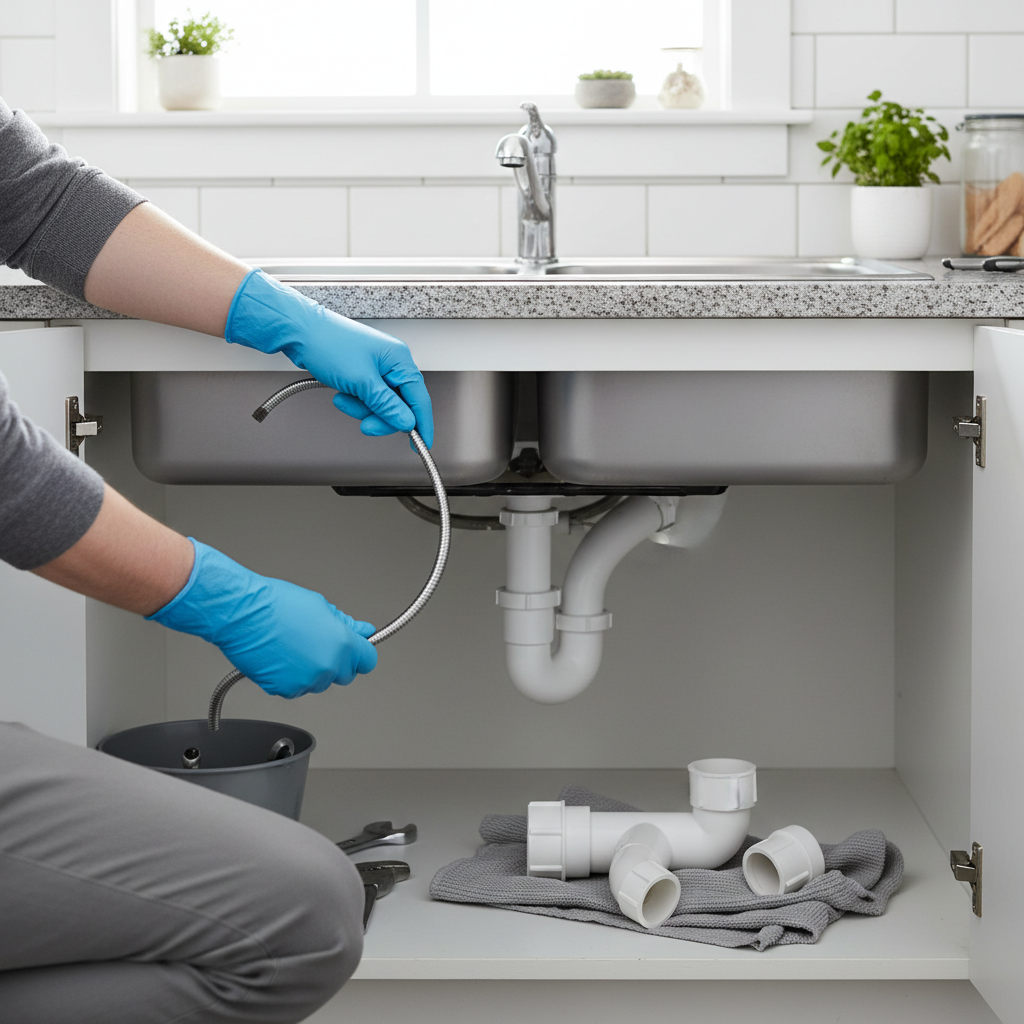
- P-Trap Cleanout – The Gutsy Move — If the steps above don’t get it, now we’re getting our hands dirty. This is where most kitchen sink clogs live.
- Loosen Nuts: Most P-traps are held on with slip nuts — big threaded plastic or metal rings. Loosen them by hand, or carefully with channel-lock pliers. And don’t overtighten when you put it back together, or you’ll crack it.
- Remove P-Trap: Ease the P-trap off. Water and gunk will come out, so keep that bucket right where it is.
- Clean It Up: Use an old toothbrush, a wire brush, or even a small stick to scrape the junk out of the trap. Shine a flashlight up into the drainpipe going into the wall — sometimes the clog’s just past the P-trap.
- Test: Run hot water for a couple of minutes and watch for leaks around the P-trap connections.
Plumbing · Clog
| Project category | Plumbing |
|---|---|
| Problem type | Clog |
| Trade required | Plumbing |
| Urgency | Soon — within weeks |
| Safety risk | Low safety risk |
| DIY suitability | DIY friendly |
| Cost category | Low cost |
| Typical timeline | Same-day DIY attempt; pro visit within a day or two |
| Contractor type | Licensed plumber |
Repair option
Plunger, hand auger, or trap cleanout before chemicals.
Replacement option
Line replacement when clogs return in the same spot repeatedly.
Common causes
- Hair and soap buildup in the trap
- Grease cooling in the branch line
- Flushed wipes or foreign objects
Relevant tools:diy difficultydiy or hire a pro
Published July 27, 2026Last updated August 17, 2026
Tools & materials you'll need
Affiliate linksAs an Amazon Associate FixlyGuide earns from qualifying purchases — at no extra cost to you. Prices and availability are accurate as of publication and subject to change.
Quick Answer
That sluggish kitchen sink drain? Nine times out of ten, it’s a clog building up from grease, food scraps, and soap scum. The good news: you can usually knock it out yourself. Start with a solid plunger. If that doesn’t do the trick, grab a drain snake. Sometimes you’ve gotta get under the sink and clean out the P-trap. And whatever you do, stay away from those harsh chemical drain cleaners — they’re rough on your pipes and they’ll chew up your wallet later.
The Problem
Look, I’ve seen this a thousand times: a homeowner calls me, irritated because the kitchen sink just doesn’t drain like it used to. It’s not dead-stopped, but the water hangs around for a spell, like it’s thinking about it. That’s your slow-drain warning, plain and simple, and it’s not going to fix itself. Ignore it long enough and that slow drain turns into a full blockage. Now you’ve got a real headache.
Usually, it’s a mix of cooking grease, coffee grounds, little food bits, and even soap residue making that nasty mess. Over time, it coats the inside of the drainpipe and narrows the通道 until water can barely squeeze through. It’s like plaque in arteries — just for your house. Ugly stuff.
I always tell folks, don’t wait until you’re staring at a foot of dishwater in the sink. If you catch it early, you can often fix it with hardly any fuss and no pro needed. Drag your feet, though, and you’re looking at a tougher job, maybe even pulling pipes apart or calling somebody in.
How It Works
To figure out why your kitchen sink is slowing down, you’ve gotta know how the drain system actually works. It’s not fancy. Water leaves the sink, goes through the drain opening, past the strainer, and into the tailpiece. Then it drops into the P-trap. That’s the U-shaped bend under the sink. Its main job isn’t catching clogs, though it sure does that a lot — it holds a little water to block sewer gases from wafting back up into the house. That P-trap’s usually where the worst junk starts collecting because it’s the natural low spot for heavier debris.
After the P-trap, water moves horizontally through a branch drain line, then it ties into the main house drain and heads out to the sewer or septic system. All those lines depend on gravity and the right slope to keep wastewater moving. There’s also a vent system hooked into your plumbing. That vent lets air into the drain lines so you don’t create a vacuum that slows everything down. If the vent’s partially blocked — not super common at a kitchen sink, but it happens — you can get slow draining because the air can’t get in and help the water move.
But for most slow kitchen drains, I’d bet the clog’s right there in the P-trap or the first few feet past it. Almost always a physical blockage. Not some weird venting mystery.
Step-by-Step Fix
Alright, let’s get that drain moving again. Here’s how I’d walk a homeowner through it.
-
Safety First! — Before you stick your hand or any tool down that drain, put on gloves. Kitchen drains can be ugly — old food, grease, and sometimes sharp broken glass. Protect your hands. If you’ve already used chemical drain cleaner, stop right there. Those things are caustic and can burn you bad. Don’t mix them with anything else either. If you did use one, let the sink sit for several hours, maybe overnight, with the faucet running a tiny trickle to help flush it out before you start messing around. And for God’s sake, if you smell gas anywhere near the plumbing, get out and call the gas company or fire department immediately. This isn’t the job for bravado.
-
Clear the Area — Empty the sink completely. Dishes, sponges, dish rack — all of it. You want a clear workspace. Toss some old rags or towels on the cabinet floor, too. Trust me, things get messy fast.
-
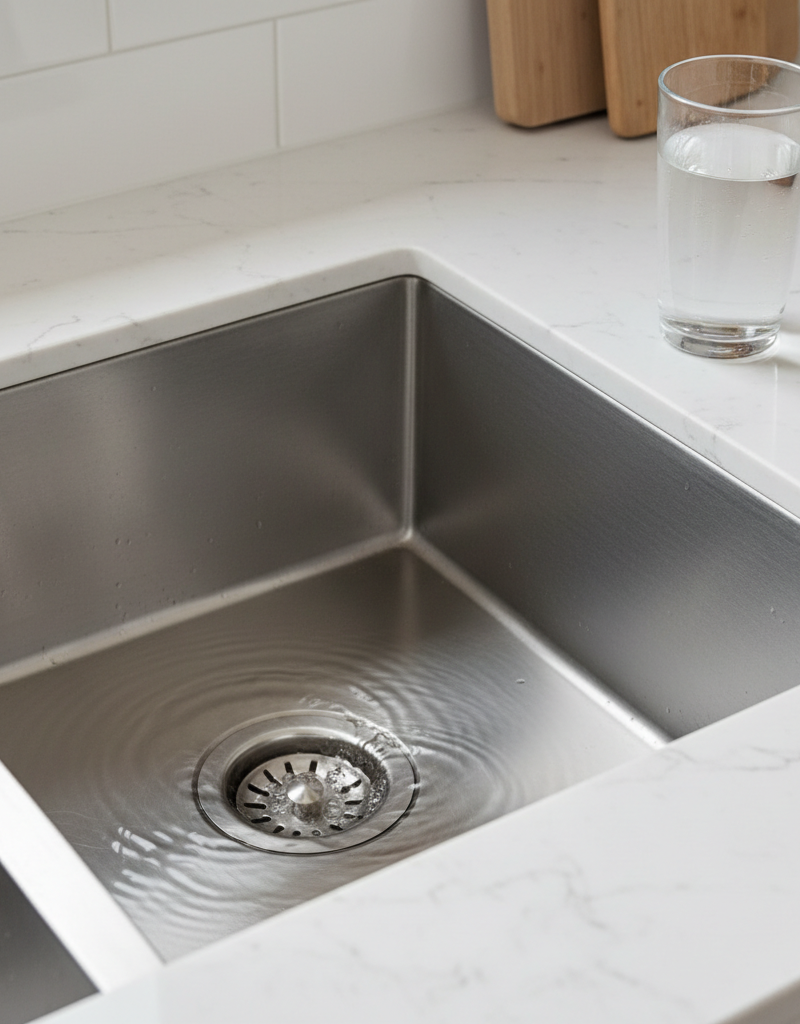
The Plunger Attack — This is your first shot, and it works a lot of the time on partial clogs. If you’ve got a double sink, plug the other drain tight with a wet rag or have somebody hold it down. Fill the sink with about 2-3 inches of hot water — enough to cover the plunger cup. Set the plunger square over the drain and plunge hard for 20-30 seconds. You’re trying to make a good seal and really shove that water around. Yank the plunger up quick and see if the drain speeds up. Do it again if you need to. If you hear gurgling or see a whirlpool, you might be in business.
-
Boiling Water Flush — If plunging helped a little but didn’t clear it, or if this feels like grease buildup, try this next. Boil a large pot of water (about 1 gallon). CAREFULLY pour the boiling water down the drain in a few stages, waiting a minute or two between pours. The heat can loosen up greasy sludge. Follow that with a solid flush of hot tap water for a few minutes. Don’t do this if you’ve got PVC pipes and think they’re old and brittle, or if you recently used chemical drain cleaners, because that combo can cause pipe damage or dangerous fumes. Metal pipes usually handle it better.
-
Baking Soda and Vinegar Power-Up — This isn’t magic, but it can help with small clogs, especially if you pair it with the hot water method. Pour ½ cup of baking soda down the drain, then ½ cup of white vinegar. You’ll hear fizzing — that’s fine. It’s a mild acid-base reaction. Plug the drain quick so the reaction stays in the pipe. Let it sit for 20-30 minutes. Then flush with a gallon of boiling hot water (again, be careful with old PVC). That foaming action can break loose some gunk.
-
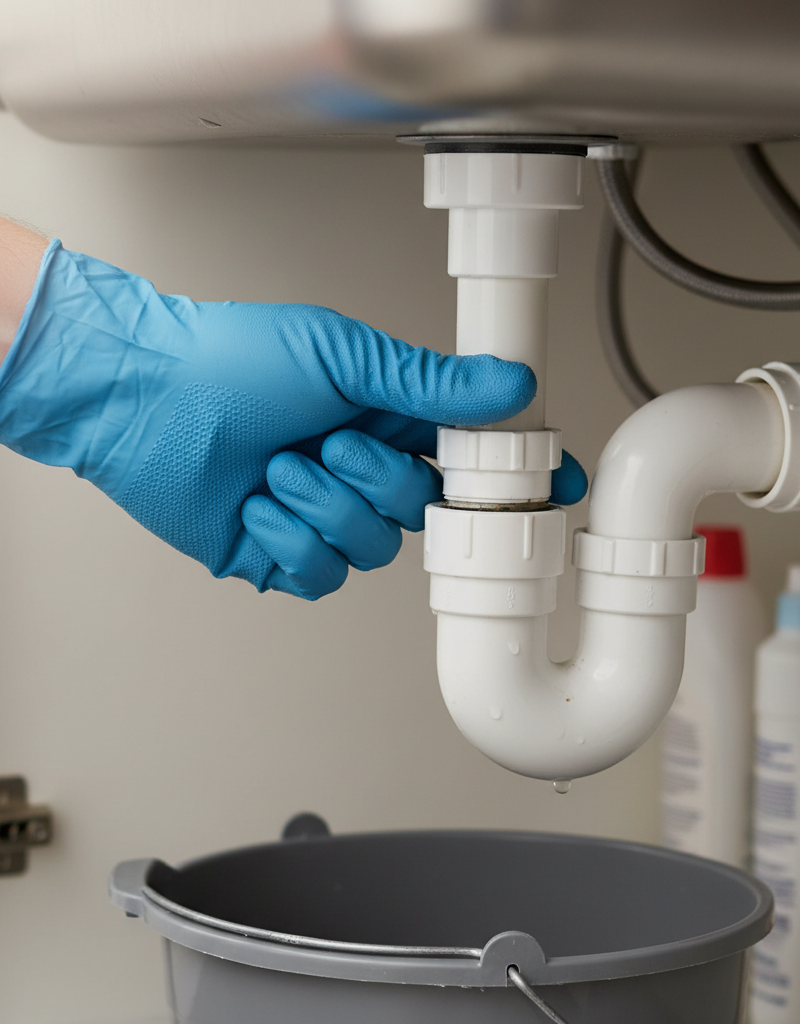
P-Trap Cleanout – The Gutsy Move — If the steps above don’t get it, now we’re getting our hands dirty. This is where most kitchen sink clogs live.
- Preparation: Set a bucket (a 2-gallon bucket is usually plenty) right under the P-trap to catch standing water and debris. Don’t skip the bucket. I pulled a water heater in Frisco last month that had exactly this kind of “I’ll just wing it” attitude around a sink line, and the guy ended up with nasty water all over his cabinet floor. No dice.
- Loosen Nuts: Most P-traps are held on with slip nuts — big threaded plastic or metal rings. Loosen them by hand, or carefully with channel-lock pliers. And don’t overtighten when you put it back together, or you’ll crack it.
- Remove P-Trap: Ease the P-trap off. Water and gunk will come out, so keep that bucket right where it is.
- Clean It Up: Use an old toothbrush, a wire brush, or even a small stick to scrape the junk out of the trap. Shine a flashlight up into the drainpipe going into the wall — sometimes the clog’s just past the P-trap.
- Inspect and Reassemble: Check the old washers and slip nuts. If they’re cracked or worn out, replace them. Wipe any grit off the sealing surfaces. Put the P-trap back together, snug the slip nuts by hand, then give them a quarter-turn more with your pliers. Don’t crank down too hard, especially on plastic.
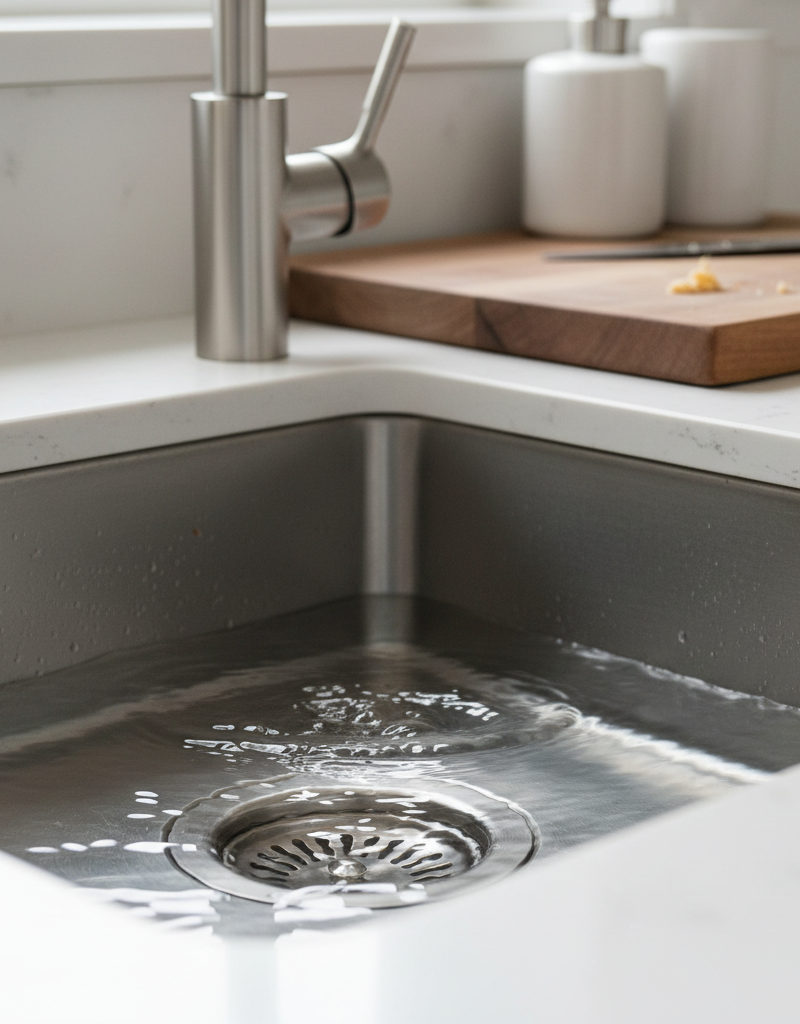
- Test: Run hot water for a couple of minutes and watch for leaks around the P-trap connections.
-
Drain Snake / Hand Auger — If the clog isn’t in the P-trap, or cleaning it didn’t help, then it’s farther down the line. That’s when you grab your trusted hand auger, or
Related Articles
Keep troubleshooting with these hand-picked guides from FixlyGuide:
- The #1 Mistake Homeowners Make with a Slow Kitchen Drain (And the Easy Fix) — A slow kitchen sink drain is frustrating, but often it's a simple fix homeowners overlook by focusing on the wrong culprits.
- The #1 Mistake Homeowners Make with a Slow Kitchen Drain (and How to Undo It) — A slow kitchen sink drain is a common and frustrating problem, but often stems from a single preventable mistake that's easily fixed with t…
- The #1 Mistake Homeowners Make with a Slow Kitchen Drain (And the Simple Fix) — A slow kitchen sink drain is frustrating, but often an easy fix if you avoid common mistakes and know where to look first.
- The Secret Culprit Behind Your Slow Sink Drain (It's Not Always Hair) — Uncover the surprising reasons your kitchen sink drains slowly and learn actionable steps to fix common clogs yourself.
- The #1 Mistake Homeowners Make with a Slow Kitchen Drain (and the Real Fix) — Before you reach for harsh chemicals, learn the right way to fix a slow kitchen sink drain and prevent future clogs.
- Your Refrigerator's Loud Hum? The Fix Most People Miss — A constant, loud refrigerator hum is more than annoying—it's a warning sign. Before you call a pro, discover the #1 most overlooked cause a…
Should you do this yourself?
Answer five quick questions before you start. Safety outranks savings every time.
Your experience with work like this
How high do you have to work?
Does the job involve any of these?
Will it need a permit?
Specialty tools
Free and instant. Educational guidance only — not a quote, inspection, or professional diagnosis.
What should this project cost?
Enter your project details for a realistic cost range before you call anyone.
Common repairs run $150–$650; repipes and water-heater replacements reach $1,500–$4,500.
- Regional adjustment
- National average
- Labor share (typical)
- ~$754
- Quotes to collect
- 3 written estimates
Educational estimate based on national averages — not a binding quote. Always confirm with written local estimates.
Fixly Project Decision Box
- DIY difficulty
- Moderate
- Estimated time
- 30 minutes – half a day
- Cost level
- Moderate
Main tools / materials
- Adjustable wrench
- Plunger or drain auger
- Bucket and towels
- Thread tape
When to stop and call a pro
- Water you cannot shut off at the fixture or main
- Sewage backing up into more than one fixture
- Water near electrical panels or outlets
- Gas water heater work beyond relighting a pilot
Need professional help?
Get a Licensed PlumberBefore you start
Check the difficulty, permits, and safety risk — then decide whether to call a pro.
- Estimate this projectGet a cost range for your scope and ZIP before you call anyone.Open
- Get local estimatesSend one request and compare written estimates from vetted pros.Open
Free, no signup required. Estimates are educational guidance, not a quote or an inspection.
Get the print-ready PDF of this guide
A clean, ad-free, printable version you can keep on your phone or pin to the workshop wall. Free with a FixlyGuide account.
- Print-optimized layout
- Tools, materials & every step included
- Saved to your account
Frequently asked questions
Why is my kitchen sink draining slowly?+
The most common culprit is a buildup of grease, food particles, and soap scum that accumulates over time, narrowing the drainpipe. This gunk usually collects in the P-trap or the first few feet of the drain line past the sink.
Can I use chemical drain cleaners for a slow kitchen drain?+
I strongly advise against it. Chemical drain cleaners are caustic, can damage pipes (especially older ones or PVC), and pose safety risks. They often only create a partial path through the clog, allowing it to re-form quickly, and can make professional clogs harder and more dangerous to clear.
What's the best way to prevent kitchen sink clogs?+
The best prevention is to be mindful of what goes down the drain. Scrape plates thoroughly before washing, avoid pouring grease or oil down the sink, and use a sink strainer to catch food particles. Occasionally flushing with hot water can also help.
How often should I clean my P-trap?+
There's no set schedule; it depends on your usage. If you notice persistent slow draining even after plunging or using home remedies, inspecting and cleaning the P-trap is a good next step. For preventative maintenance, every 1-2 years isn't a bad idea, especially if you cook a lot.
My double sink is slow. Do I treat both drains?+
If water is slow in both, the clog is likely further down the main drain line after the two sinks connect. When plunging one side, make sure to plug the other drain opening tightly to create proper suction. Cleaning the P-trap on one side might help, but you may need a drain snake for a shared clog.
Is a slow drain a sign of a bigger plumbing problem?+
Usually, for a kitchen sink, it's just a local clog. However, if multiple drains in your house are slow simultaneously (e.g., bathroom sink and shower), it could indicate a clog in your main sewer line, which definitely warrants a professional plumber.
How do I know if the clog is past the P-trap?+
If you've cleaned the P-trap thoroughly and the drain is still slow, the clog is almost certainly further down the horizontal drainpipe. That's when a drain snake becomes your best friend. You'll feed it into the pipe leading into the wall after removing the P-trap.
Can I use a wet/dry vac to clear a slow drain?+
Yes, for some clogs, a wet/dry vac can be surprisingly effective. Create a tight seal around the drain opening with a plunger cup or a damp rag, and set the vacuum to its highest suction. It can sometimes pull out lighter clogs that plunging can't push through. Just make sure it's a shop vac designed for wet pickup!
Discussion
Loading comments…