- Remove the Drain Cover – Most shower drain covers are either screwed in or just pop off. If it's screwed down, grab your screwdriver. If not, a flathead screwdriver or putty knife can help you lift it gently. Set it aside.
- Tools: Screwdriver (Phillips or flathead) or putty knife.
- Note: Some drains have a push-pull stopper; you might need to unscrew or unclip the linkage rod before you can remove it entirely. Check from underneath the tub if you have access.
Plumbing · Clog
| Project category | Plumbing |
|---|---|
| Problem type | Clog |
| Trade required | Plumbing |
| Urgency | Soon — within weeks |
| Safety risk | Low safety risk |
| DIY suitability | DIY friendly |
| Cost category | Low cost |
| Typical timeline | Same-day DIY attempt; pro visit within a day or two |
| Contractor type | Licensed plumber |
Repair option
Plunger, hand auger, or trap cleanout before chemicals.
Replacement option
Line replacement when clogs return in the same spot repeatedly.
Common causes
- Hair and soap buildup in the trap
- Grease cooling in the branch line
- Flushed wipes or foreign objects
Relevant tools:diy difficultydiy or hire a pro
Published August 15, 2026Last updated August 17, 2026
Tools & materials you'll need
Affiliate linksAs an Amazon Associate FixlyGuide earns from qualifying purchases — at no extra cost to you. Prices and availability are accurate as of publication and subject to change.
Quick Answer
Standing in a pool of water every time you shower? Odds are you've got a clog, and it probably ain't as mysterious as it looks. Most shower drain blockages are a nasty mash-up of hair, soap scum, and body oils hanging up on some little rough spot inside the pipe. Good news is, you can usually handle this yourself with a couple basic tools and without dumping harsh chemicals down the drain — which, trust me, is usually a lousy move. We're talking about pulling the gunk out, not just hoping it melts away or gets shoved farther down the line.
The Problem
Let's be real, nobody enjoys a slow drain. It's not just annoying; it's your shower waving a little red flag. That standing water is basically a science experiment, and it's telling you something — usually a gross hairball or a stubborn lump of soap scum — is choking the pipe. At first, the water just lags. Then it starts hanging around like it owns the place. Sometimes you'll get a stink coming back up too. If you ignore it, that clog gets tougher, bigger, and before long it can push water back up, spill over, or mess up the seals around the drain and lead to leaks you definitely don't need. It sneaks up on folks. One day it's fine, next day you're standing there wondering why the shower's ankle-deep.
How It Works
Your shower drain system isn't rocket science, but knowing the layout helps a lot. When you pull the plug, water drops through the drain opening, past the strainer, and into the trap. That trap — usually a P-trap or S-trap — is a curved section of pipe that holds a little water. That water makes a seal so sewer gas doesn't stink up the bathroom. From there, the pipe keeps going down and ties into the main waste line. Pretty simple. Gravity does the heavy lifting.
So where do clogs show up? Almost always in that first stretch or right in the trap itself. Hair is the big culprit, especially if there's long hair in the house. It grabs onto anything rough, any pipe joint, or just the inside wall of the pipe. Then shampoo, conditioner, and body wash — especially the creamy, moisturizing stuff — bring oils and fats into the mix. Toss in shed skin cells and you've got a sticky, greasy mess. It coats the hair and turns into a solid wad. It's basically glue for hair. Over time, that hair-and-scum pile gets tighter and tighter, shrinking the pipe opening until water can't move through like it should. Think plaque in an artery. Doesn't happen overnight, but once it gets going, things slow down fast. Most shower drains are built with cross-hairs or simple grates to catch the big stuff, but hair and small junk still slip through and do their dirty work farther down. That's why chemicals seem easy but usually just burn a tunnel through the middle of the clog. Water might move for a bit, but the ring of crud is still there, ready to build right back up. You want the whole mess gone.
Step-by-Step Fix
Ready to get your hands dirty? Not glamorous work, sure, but there's something satisfying about watching that water finally spin down like it's supposed to. Before you start, lay down some old towels around the drain. Trust me — you're gonna pull out some ugly stuff.
-
Remove the Drain Cover – Most shower drain covers are either screwed in or just pop off. If it's screwed down, grab your screwdriver. If not, a flathead screwdriver or putty knife can help you lift it gently. Set it aside.
- Tools: Screwdriver (Phillips or flathead) or putty knife.
- Note: Some drains have a push-pull stopper; you might need to unscrew or unclip the linkage rod before you can remove it entirely. Check from underneath the tub if you have access.
-
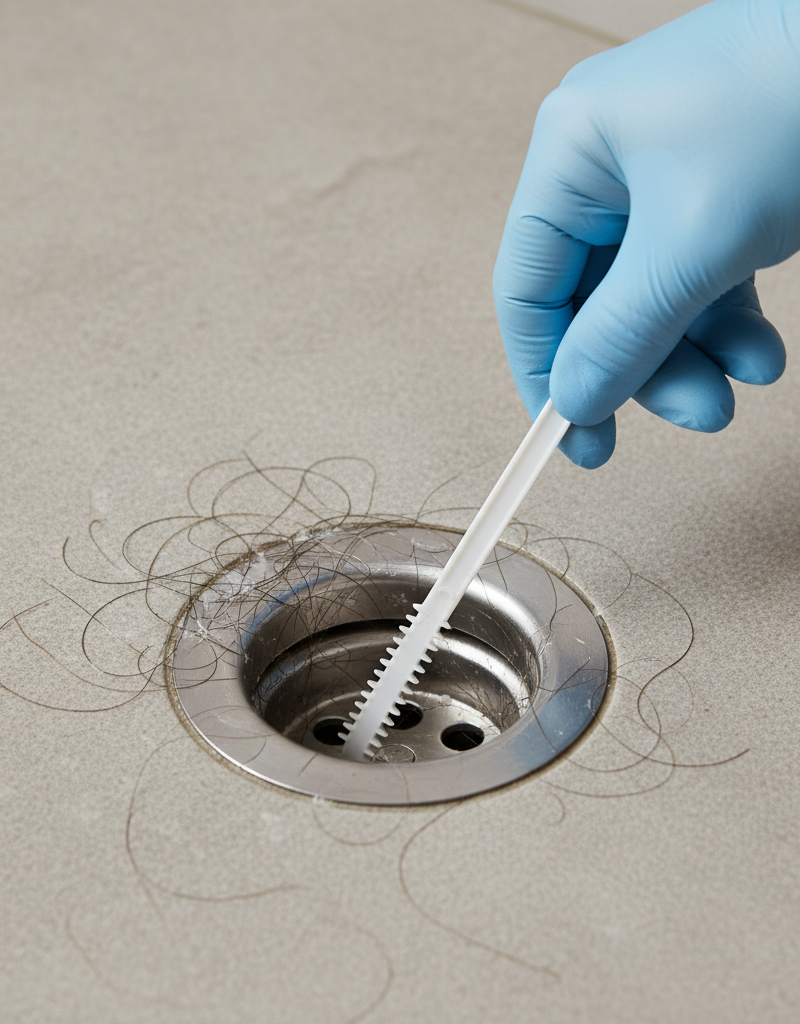
Clear Surface Hair & Debris – Look down into the drain. You'll probably see hair and goo right there, staring back at you. Use pliers, tweezers, or even gloved fingers to pull out whatever you can reach. Get as much of the top stuff as you can.
- Safety: Wear rubber gloves. This stuff is nasty.
- Tip: A bent coat hanger can help if you can't quite reach.
-
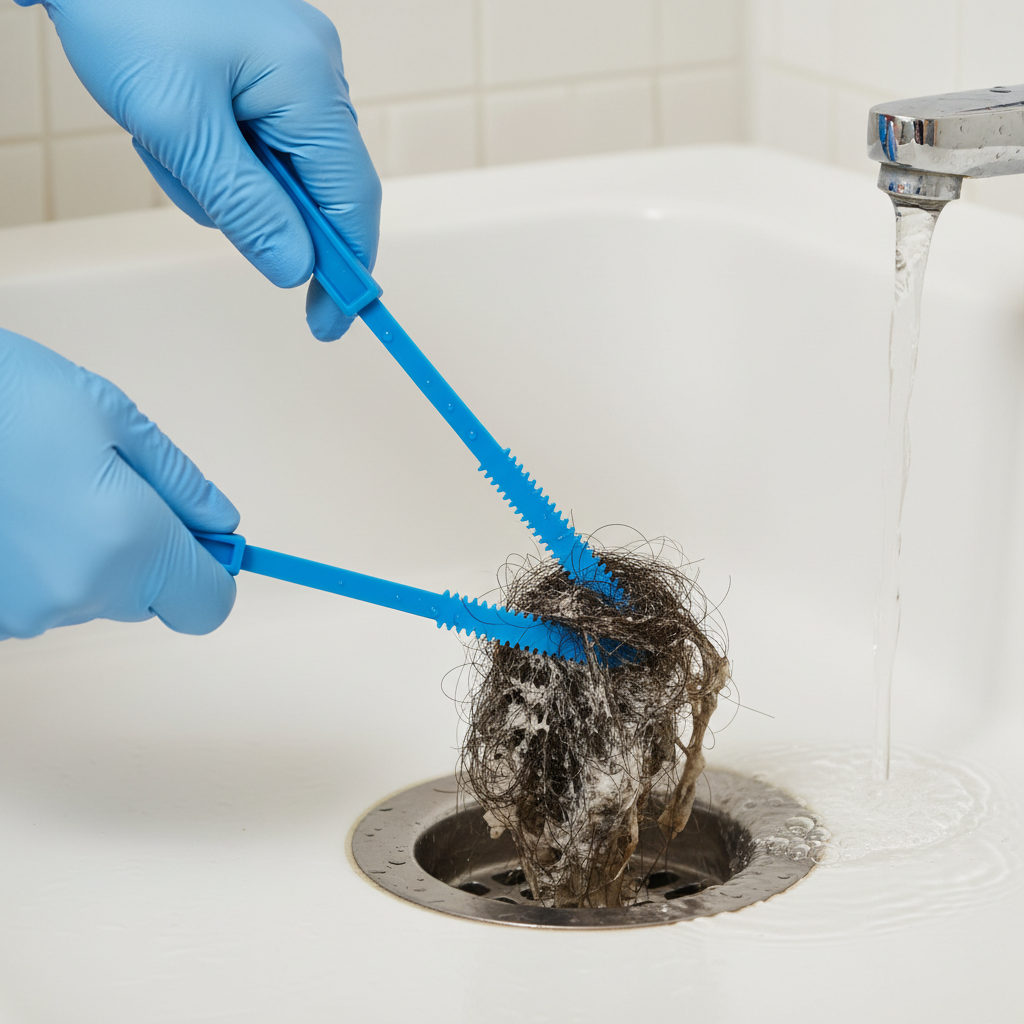
Insert the Drain Snake/Zip-It – Uncoil your drain snake or grab your Zip-It tool. Push it slowly down into the drain opening. You'll feel resistance as it works past the trap. Keep pushing and twisting. When you hit the clog, you'll know it — it'll feel like a packed-up wall.
- Tools: Plastic drain snake (Zip-It style) or small hand auger.
- Technique: For a snake, twist the handle as you push to help it bore into the clog. For a Zip-It, push until you feel resistance, then slowly pull it back up.
-
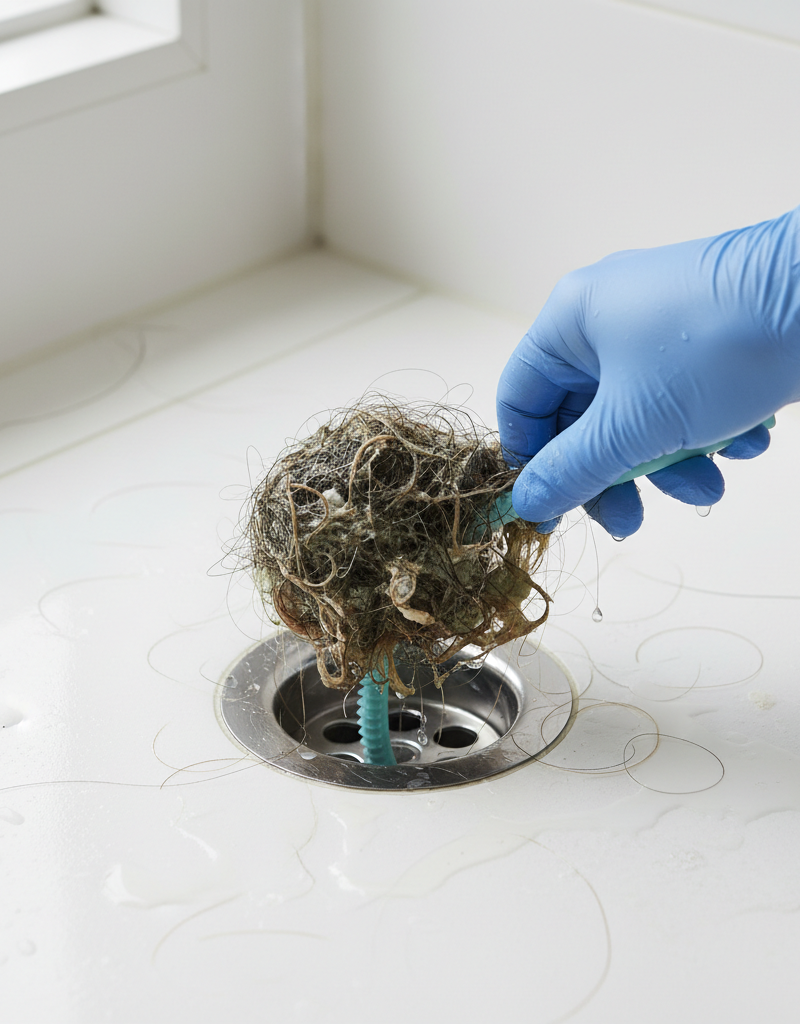
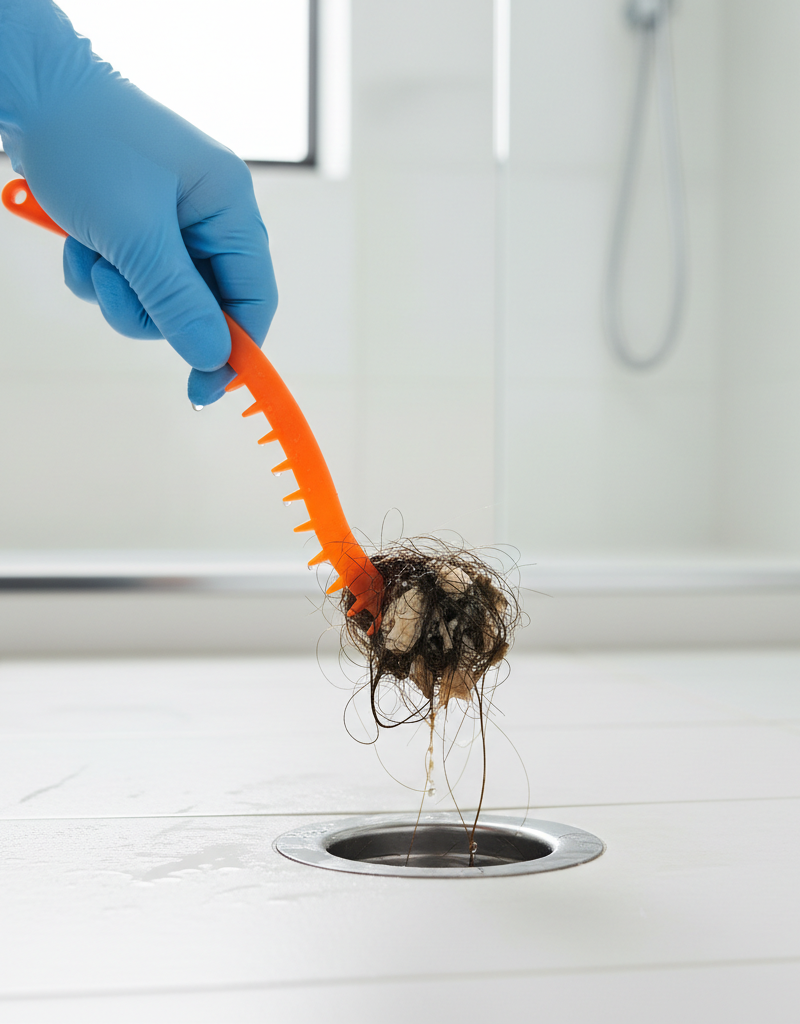
Extract the Clog – Once the tool's got hold of the mess, pull it back out slow. You'll probably drag up a disgusting wad of hair, soap scum, and a few mystery bits you don't want to think too hard about. This is the part where you know you're winning — you're actually removing the problem.
- Expectation: It's almost never pretty. Have a small trash bag or old newspaper ready for disposal.
-
Repeat as Necessary – Don't quit after the first pull. Run steps 3 and 4 a few times. You want to get as much of that junk as possible. Toss a little water in between passes so you can see if the drain's opening up. Sometimes the clog is bigger than it looked and needs a few rounds.
- Patience: It might take 3-4 tries to really clear it out. Don't rush it.
-
Flush with Hot Water – Once you think you've got it, run the hottest water from the shower for about 5-10 minutes. That helps flush loose debris and soften any leftover grease or soap film hanging on in the pipe. I usually tell folks to keep it going until the water runs clear and fast.
- Caution: Don't use boiling water if you have PVC pipes; extremely hot water can sometimes soften or damage them. Hot tap water is fine.
-
Consider a Vinegar & Baking Soda Rinse (Optional) – If the drain still feels a little sluggish or you just want to freshen things up, pour 1 cup of baking soda down the drain, then 1 cup of white vinegar. Let it fizz and sit for 30 minutes to an hour. Then flush again with hot water.
- Science: The reaction makes foam that can help loosen minor residue, but it won't chew through a solid hair clog. It's more for maintenance.
-
Clean and Reinstall Drain Cover – While everything's draining, clean off the drain cover and put it back where it belongs. Shower's ready to go again.
- Maintenance: Consider installing a hair catcher if you don't have one. Best cheap insurance you'll ever buy.
Common Causes
After all these years on the job, I can tell you the causes are usually the same. It's not some big mystery; it's just gravity and junk that never should've gone down the drain in the first place:
- Hair: This is the champ, no contest. Every shower sheds hair. Long, short — doesn't matter. It goes down, tangles up, and forms a net that catches everything else.
- Soap Scum & Body Oils: You've seen that white, chalky buildup on shower walls. That's soap scum, and it's a mix of minerals in your water and fatty acids from soap. It sticks to pipe walls and acts like a binder, gluing hair and debris into a solid mess. Those moisturizing body washes? Yeah, they help make it worse.
- Hard Water Minerals: If you live where the water's hard, minerals like calcium and magnesium build up inside the pipes and leave rough surfaces. Hair and soap scum grab onto that roughness a lot easier.
- Small Objects: Dropped an earring? Tiny toy? Shampoo cap? Anything that's not water can get hung up and become the seed for a bigger clog. I pulled a kid's LEGO brick out of a shower trap in a house out in [specific suburb, e.g., Maplewood] last month, and the homeowner couldn't figure out why the shower backed up every few days. That little brick was the anchor for a hairball the size of a small rat!
- Improper Pipe Installation: Not the usual cause for a fresh clog, but if a pipe has a belly — a dip where water sits — or a rough joint, it's a prime place for buildup over time. Not much you can do yourself, but it's good to know.
Common Mistakes
I've seen homeowners make the same handful of mistakes over and over when they're fighting a slow shower drain. Here's what to avoid:
- Pouring Caustic Chemicals Down the Drain: Look, those harsh drain cleaners might seem like an easy fix, but they usually do more harm than good. They can eat at older pipes, especially PVC or galvanized steel, and if they don't clear the clog all the way, you're left with a pipe full of nasty chemicals that make future plumbing work a whole lot riskier. And they're rough on the environment too.
- Ignoring the Problem: A slow drain isn't gonna fix itself. If you let it sit, that little clog turns into a hard, ugly blockage that's way tougher to pull out and may need a pro.
- Using the Wrong Tool: Trying to fish out a clog with a straightened wire hanger might grab some surface junk, but a lot of times it just shoves the blockage farther down where it's harder to reach. Buy a proper drain snake or Zip-It tool.
- Not Fully Removing the Clog: A lot of DIYers get the water flowing again and call it a day. Problem is, if you leave a chunk of the blockage behind, it'll build right back up, sometimes within a few weeks. You gotta get it all.
- Over-Tightening Drain Covers: If your drain cover screws in, don't reef on it with all you've got. You can strip the screws, damage the drain body, or crack the surrounding tile. Snug is enough.
- Forgetting Prevention: Once the drain's clear, don't just forget about it until the next backup. Put in a hair catcher — they're cheap and save a pile of grief.
Cost & Time Breakdown
Here's what you're looking at if you do it yourself versus hiring a pro. Sometimes the DIY route saves you money. Sometimes it's just smarter to hand it off.
| Task | DIY Cost | Pro Cost | Time (Hands-on) |
|---|---|---|---|
| Drain Snake/Zip-It | $5 – $15 | $0 (included) | 15 – 30 minutes |
| Pliers/Screwdriver | $0 (likely owned) | $0 (included) | 5 minutes |
| Baking Soda/Vinegar | $2 – $5 | $0 (optional for pro) | 30 – 60 minutes (wait) |
| Hair Catcher | $5 – $10 | $5 – $10 (optional install) | 1 minute |
| Professional Service | $0 | $150 – $350 | 30 – 60 minutes |
Tips & Prevention
Once you've got that drain running free, you'll want to keep it that way. An ounce of prevention really is worth a pound of cure — or, in this case, a disgusting hairball:
- Install a Hair Catcher: This is my number one recommendation. A simple silicone or mesh strainer that sits over or in your drain opening will catch most of the hair before it ever gets into the pipe. They cost less than ten bucks and save you a pile of work. Clean it out after every shower.
- Regular Hot Water Flushes: Once a week, let hot water run in the shower for 5-10 minutes. That helps melt and flush away small grease or soap film before it turns into trouble.
- Baking Soda and Vinegar Maintenance: Every month or two, do that baking soda and vinegar rinse again (1 cup baking soda, 1 cup white vinegar, let sit 30-60 minutes, then flush with hot water). It's a gentle way to keep things moving without chemicals.
- Avoid Bar Soap Buildup: Think about switching to liquid body wash if you're a heavy bar soap user, especially if you've got hard water. Bar soap usually makes more scum.
- Trim Long Hair Before Showering: If you've got really long hair, a quick trim before you hop in the shower can cut down the amount that heads for the drain.
- Know Your Pipes: If you've got older pipes, especially galvanized steel, they're more likely to corrode inside and collect buildup, which means they're more prone to clogs. Stay on top of it.
When to Call a Professional
Look, I'm all for homeowners getting their hands dirty, but there are times when you need to set the tools down and call in a plumber. If you've snaked the drain multiple times with no luck — meaning the water still isn't moving freely after 3-4 attempts — it's time. That can mean the clog's too far down the line, too packed for a hand snake, or it's a sign of a bigger problem in the main drain. Also, if more than one drain in the house is slow or backing up (like a toilet or sink near the shower), that's a red flag for a main line blockage, and that's a job for a licensed plumber with bigger gear like a power auger or hydro-jetter. Don't play games with main line problems; you'll just make it worse and spend more money later. And if you're not comfortable with any part of this, there's no shame in calling somebody who does this every day.
Related Articles
Keep troubleshooting with these hand-picked guides from FixlyGuide:
- The Nasty Truth: 3 Hidden Reasons Your Shower Drain Clogs (Beyond Just Hair) — Learn how to clear a stubborn shower drain clog efficiently and safely using common household tools, without harsh chemicals.
- The #1 Mistake Homeowners Make Unclogging a Shower Drain (and 5 Better Ways) — Learn the safest and most effective ways to clear a clogged shower drain using common household tools and avoiding harsh chemicals.
- The 90-Second Trick to Unclogging Any Shower Drain (No Chemicals Needed) — Learn how to quickly and safely clear a clogged shower drain using simple tools and household items, avoiding harsh chemicals.
- The #1 Mistake Homeowners Make Unclogging a Shower Drain (and 5 Better Fixes) — Shower drains get clogged with hair and soap scum, but harsh chemicals often worsen the problem; learn safe, effective DIY methods.
- The Nasty Truth About Your Slow Shower Drain (And the DIY Fix) — A slow shower drain is more than an annoyance; it's often a sign of a blockage that chemical solutions can worsen. Learn how to clear it sa…
- The #1 Mistake Killing Your Lawn (And How to Eradicate Clover Safely) — Discover the secret to a clover-free lawn without resorting to harsh chemicals that harm your grass, focusing on a common pH imbalance.
Should you do this yourself?
Answer five quick questions before you start. Safety outranks savings every time.
Your experience with work like this
How high do you have to work?
Does the job involve any of these?
Will it need a permit?
Specialty tools
Free and instant. Educational guidance only — not a quote, inspection, or professional diagnosis.
What should this project cost?
Enter your project details for a realistic cost range before you call anyone.
Common repairs run $150–$650; repipes and water-heater replacements reach $1,500–$4,500.
- Regional adjustment
- National average
- Labor share (typical)
- ~$754
- Quotes to collect
- 3 written estimates
Educational estimate based on national averages — not a binding quote. Always confirm with written local estimates.
Fixly Project Decision Box
- DIY difficulty
- Moderate
- Estimated time
- 30 minutes – half a day
- Cost level
- Moderate
Main tools / materials
- Adjustable wrench
- Plunger or drain auger
- Bucket and towels
- Thread tape
When to stop and call a pro
- Water you cannot shut off at the fixture or main
- Sewage backing up into more than one fixture
- Water near electrical panels or outlets
- Gas water heater work beyond relighting a pilot
Need professional help?
Get a Licensed PlumberBefore you start
Check the difficulty, permits, and safety risk — then decide whether to call a pro.
- Estimate this projectGet a cost range for your scope and ZIP before you call anyone.Open
- Get local estimatesSend one request and compare written estimates from vetted pros.Open
Free, no signup required. Estimates are educational guidance, not a quote or an inspection.
Get the print-ready PDF of this guide
A clean, ad-free, printable version you can keep on your phone or pin to the workshop wall. Free with a FixlyGuide account.
- Print-optimized layout
- Tools, materials & every step included
- Saved to your account
Frequently asked questions
Why shouldn't I use chemical drain cleaners?+
Chemical drain cleaners often contain harsh, corrosive substances that can damage your pipes, especially older PVC or galvanized steel. They're also dangerous to handle and can leave toxic residues if the clog isn't fully cleared, making future plumbing work hazardous.
How often should I clean my shower drain to prevent clogs?+
Ideally, you should clear any visible hair from your drain cover after every shower. For a deeper clean, consider flushing with hot water weekly and doing a baking soda and vinegar rinse monthly or every other month. This regular maintenance drastically reduces clog formation.
What's the best tool for a hair clog?+
A plastic drain snake, often called a Zip-It tool, is incredibly effective for hair clogs. Its barbed edges grab onto hair and pull it out, rather than just pushing it further down. They're inexpensive and easy to use.
Can boiling water clear a clog?+
While hot tap water is good for flushing grease and soap scum, boiling water can be too hot for PVC pipes and may soften or warp them. Stick to hot water from your faucet for flushing, not water directly from a kettle.
My shower drain smells bad even after it's draining. What's wrong?+
A bad smell often means there's still some organic matter clinging to the pipe walls, decomposing and releasing odors. It can also indicate that the P-trap has dried out (allowing sewer gases in) or that the vent pipe is blocked. Try the baking soda and vinegar rinse, and make sure to run water regularly.
What if the clog is too far down?+
If your hand-held drain snake isn't reaching the clog, it might be further down your main line. That's usually a sign to call a professional plumber. They have longer, more powerful augers and cameras to locate and clear deep-seated blockages.
Will a hair catcher really prevent all clogs?+
While a hair catcher won't prevent 100% of all clogs (some fine particles and soap scum still get through), it's the single most effective preventive measure you can take against the vast majority of shower drain blockages. It significantly reduces the amount of hair entering your pipes.
Is it possible for tree roots to clog a shower drain?+
It's highly unlikely for tree roots to directly clog a shower drain in your bathroom plumbing. Tree root intrusions typically affect main sewer lines outdoors. However, if your main line is severely blocked by roots, it could cause backups in all your household drains, including your shower.
Discussion
Loading comments…