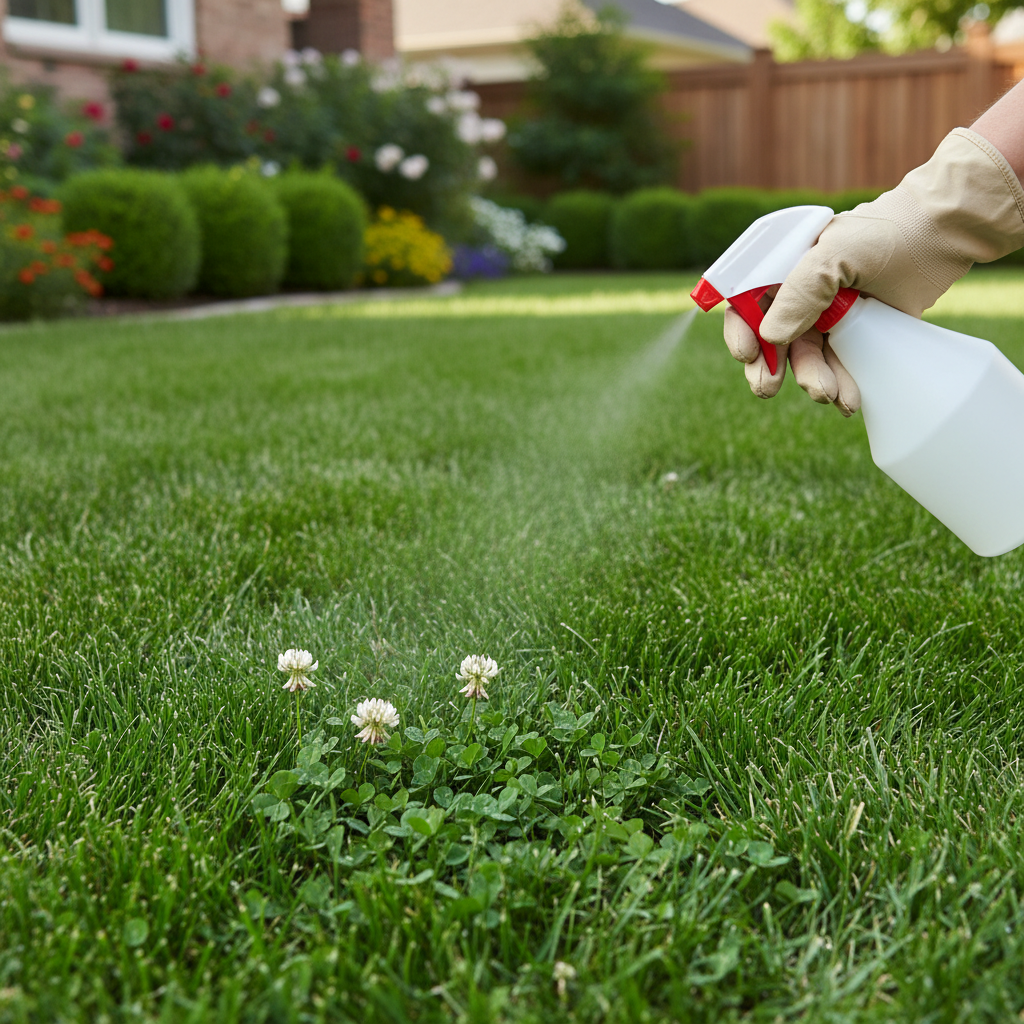
- Spot Treatment: For scattered clover, use a pump sprayer to apply a diluted solution directly to clover patches. This minimizes chemical use and reduces the risk to surrounding grass.
- Broadcast Application: For widespread infestations, a broadcast sprayer or hose-end sprayer might be necessary. Ensure even coverage.
- If it doesn't work: Re-application may be necessary after 2-3 weeks, but always consult the product label for specific reapplication intervals.
Landscaping · Deck or fence project
| Project category | Landscaping |
|---|---|
| Problem type | Deck or fence project |
| Trade required | Landscaping |
| Urgency | Planned project |
| Safety risk | Moderate safety risk |
| DIY suitability | DIY for experienced homeowners |
| Cost category | High cost |
| Typical timeline | Most builds 3–10 days depending on size |
| Contractor type | Landscaping contractor |
Repair option
Replace failed boards, posts, and hardware; reseal the surface.
Replacement option
Rebuild when framing or the ledger connection is unsafe.
Common causes
- Rot at posts and ledger
- Storm damage
- Adding outdoor living space
Relevant tools:home improvement material pricesproject cost estimator
Published April 25, 2026Last updated August 17, 2026
Tools & materials you'll need
Affiliate linksAs an Amazon Associate FixlyGuide earns from qualifying purchases — at no extra cost to you. Prices and availability are accurate as of publication and subject to change.
Quick Answer
Killing clover without harming your grass requires a targeted approach, primarily focusing on creating a healthy, dense lawn that naturally outcompetes clover, along with judicious use of selective herbicides and organic methods. The key is understanding clover's weaknesses and leveraging them to your advantage, ensuring your grass remains vibrant while the clover diminishes.
The Problem
Clover, scientifically known as Trifolium repens, can rapidly spread through a lawn, outcompeting desirable grass species for nutrients, water, and sunlight. While some homeowners appreciate clover for its nitrogen-fixing properties and its ability to stay green in drought, many find its presence undesirable due to its uneven growth, attractiveness to bees (a concern for families with allergies), and its tendency to create a patchy, less manicured look. The common dilemma is how to eradicate clover without causing collateral damage to the surrounding turfgrass, a mistake many DIYers make by using non-selective products or incorrect application methods.
How It Works
Clover thrives in lean soil, particularly those low in nitrogen, where it has a competitive advantage over many grass types. This is because clover is a legume and forms a symbiotic relationship with Rhizobium bacteria in its root nodules, allowing it to fix atmospheric nitrogen directly into the soil. Grass, on the other hand, relies on nitrogen from the soil or applied fertilizers. When soil is nitrogen-deficient, clover flourishes, while grass struggles, creating an ideal environment for clover to take over.
Most common broadleaf herbicides work by targeting plants with broad leaves, disrupting their growth hormones and ultimately killing them. Grasses, being monocots with narrow leaves, are generally unaffected by these selective herbicides when applied correctly. However, improper application, such as overspraying, applying on windy days, or using incorrect concentrations, can lead to damage to your prized turf. Organic methods, like increasing nitrogen in the soil or manually removing clover, work by either favoring grass growth or physically eliminating the weed, respectively. Understanding this distinction is crucial for successful clover control.
Step-by-Step Fix
Step 1: Assess Your Lawn's Health — Before you attack the clover, understand why it's there.
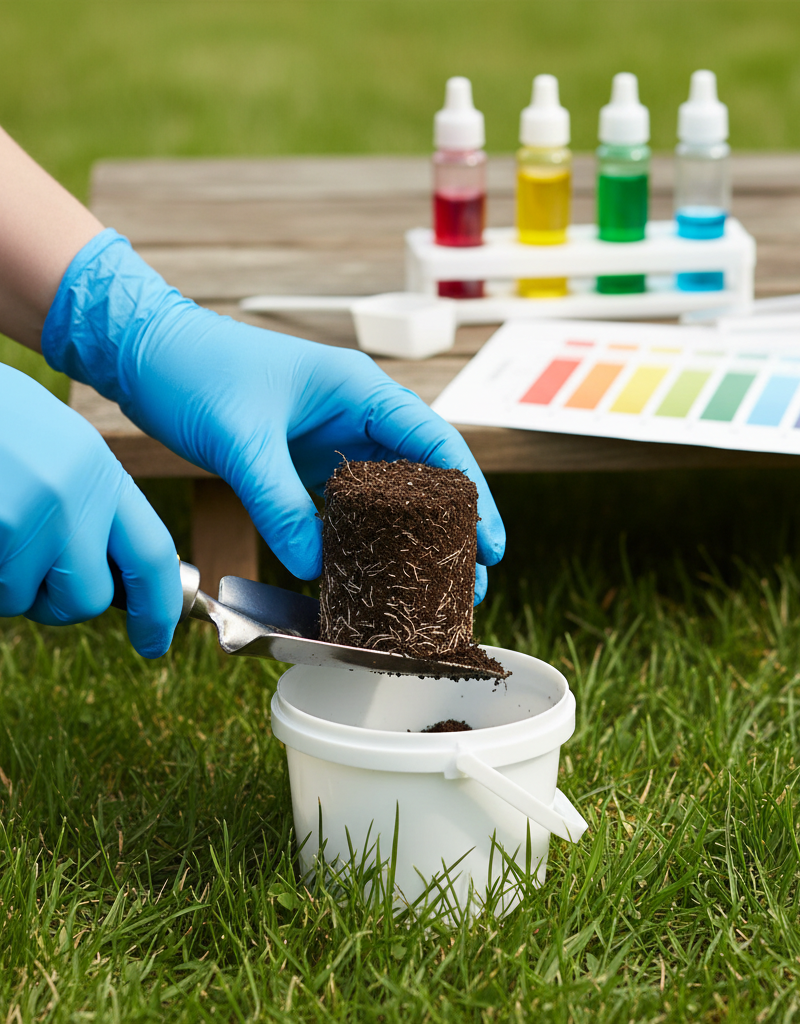
Clover often indicates underlying issues in your lawn's health, typically low nitrogen levels or compacted soil. A soil test will reveal nutrient deficiencies and pH imbalances. You can purchase a DIY soil test kit from most garden centers or send a sample to your local extension office for a more detailed analysis. Addressing these underlying problems will make your clover removal efforts more effective long-term.
- If your soil test indicates low nitrogen: Consider a slow-release, nitrogen-rich fertilizer. (See Step 2)
- If your soil is compacted: Aerate your lawn in the spring or fall. (See Step 3)
Step 2: Optimize Soil Nitrogen — Starve the clover while feeding your grass.
Since clover thrives in low-nitrogen environments, increasing the nitrogen available to your grass will give it a competitive edge. Apply a granular, slow-release lawn fertilizer with a higher nitrogen (N) content (the first number in the NPK ratio, e.g., 20-0-10 or higher). Follow the product's instructions carefully for application rates. Aim for a target nitrogen application of 0.75-1 lb of actual nitrogen per 1,000 sq ft every 6-8 weeks during the growing season. This promotes dense, vigorous grass growth that naturally shades out and outcompetes clover.
- Safety Note: Always wear gloves and eye protection when handling fertilizers. Avoid over-fertilizing, as this can burn your lawn and harm beneficial soil microorganisms.
Step 3: Mow High — Let your grass do the work of shading out clover.
Adjust your mower deck to its highest setting, typically 3 inches or more for most cool-season grasses, and 2-3 inches for warm-season grasses. Taller grass blades create more shade, depriving clover of the sunlight it needs to thrive. This simple cultural practice is one of the most effective long-term strategies for weed control. Mow regularly to maintain this height, but avoid removing more than one-third of the grass blade's height at any single mowing.
Step 4: Manual Removal for Small Patches — Get hands-on for targeted eradication.
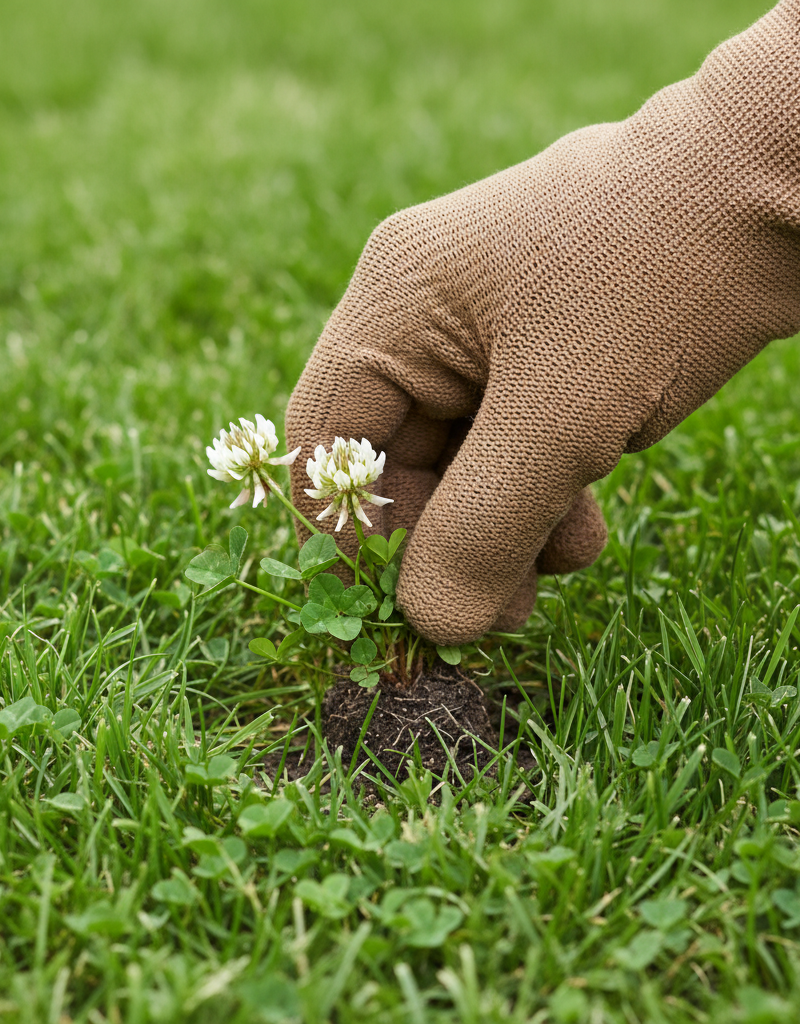
For small, isolated patches of clover, manual removal can be very effective. Use a weeding tool or a garden fork to dig out clover plants, ensuring you remove as much of the root system as possible. Clover has a shallow but extensive root system, with nodes along its stolons (above-ground stems) that can re-root if left behind. Aim to remove a small plug of soil around each plant to ensure complete eradication. This method is labor-intensive but chemical-free.
- Tools: A dandelion weeder or a hori-hori knife can make this task easier.
- Best Time: After a rain or thorough watering, when the soil is soft.
Step 5: Targeted Herbicide Application — When other methods aren't enough, use selective chemicals responsibly.
Safety Note: Always read and follow the manufacturer's instructions for any herbicide product. Wear appropriate personal protective equipment, including gloves, long sleeves, pants, closed-toe shoes, and eye protection. Avoid applying on windy days to prevent drift, and steer clear of bodies of water or sensitive plants.
Choose a selective broadleaf herbicide specifically labeled for clover control in lawns. Look for active ingredients like triclopyr, quinclorac, or MCPP (mecoprop). These herbicides target broadleaf weeds without harming most turfgrasses. Apply when clover is actively growing (typically spring or early fall) and when temperatures are between 50-85°F (10-30°C). Avoid application during extreme heat or drought conditions, as this can stress both the clover and the grass.
- Spot Treatment: For scattered clover, use a pump sprayer to apply a diluted solution directly to clover patches. This minimizes chemical use and reduces the risk to surrounding grass.
- Broadcast Application: For widespread infestations, a broadcast sprayer or hose-end sprayer might be necessary. Ensure even coverage.
- If it doesn't work: Re-application may be necessary after 2-3 weeks, but always consult the product label for specific reapplication intervals.
Step 6: Organic Spot Treatments — Household alternatives for minimal chemical exposure.
For those seeking non-chemical solutions, some household items can act as effective spot treatments for clover. A mixture of horticultural vinegar (20% acetic acid, NOT household vinegar) and dish soap can be sprayed directly onto clover. The vinegar acts as a desiccant, drying out the plant, while the soap helps it stick. Another option is boiling water, carefully poured directly onto clover patches. Both methods are non-selective, so extreme caution must be exercised to avoid contact with desired grass. These are best for very small, isolated clover spots away from valuable turf.
- Caution: Horticultural vinegar is much stronger than household vinegar and can cause skin irritation. Wear gloves and eye protection. Boiling water can scald skin and should be handled with extreme care.
Step 7: Overseeding — Fill in the gaps with strong grass.
After removing clover, overseed any bare or thin patches in your lawn. This helps establish dense turf that can outcompete any new clover seedlings. Choose a grass seed variety appropriate for your region and existing lawn type. Apply seed according to package directions, ensuring good seed-to-soil contact, and keep the area consistently moist until germination. Overseeding is best done in early fall or early spring.
Common Causes
- Low Soil Nitrogen: Clover, being a nitrogen-fixer, thrives when synthetic nitrogen fertilizers are scarce, giving it a competitive advantage over grass.
- Compacted Soil: Clover can tolerate compacted soil better than many desirable turfgrasses, making it prevalent in high-traffic areas.
- Mowing Too Short: Mowing your lawn too short reduces the grass's ability to shade out clover and can weaken the turf, inviting weed invasion.
- Infrequent Watering: Shallow, infrequent watering encourages shallow-rooted weeds like clover, while deep, infrequent watering promotes deep grass roots.
- Improper pH: Clover prefers a slightly acidic to neutral soil pH (6.0-7.0), but can tolerate a wider range than many turfgrasses.
Common Mistakes
- Using Non-Selective Herbicides: Accidentally using a product like glyphosate (Roundup) that kills all plants, not just clover, will leave you with dead patches in your lawn.
- Applying Herbicides Incorrectly: Not following label instructions regarding concentration, application rate, or environmental conditions (e.g., applying on a hot, sunny day) can damage your grass or be ineffective against clover.
- Ignoring Soil Health: Focusing solely on killing clover without addressing underlying issues like low nitrogen or compacted soil ensures the problem will return.
- Mowing Too Low: Perpetually scalping your lawn weakens the grass and gives clover the sunlight it needs to flourish.
- Treating Only the Visible Clover: If you don't remove the entire root system or address the stolons that can re-root, the clover will quickly regrow from existing plant parts.
- Not Protecting Desirable Plants: Spraying herbicides without protecting nearby flowers, shrubs, or trees can lead to unintended damage due to drift or runoff.
Cost & Time Breakdown
| Task | DIY Cost | Pro Cost | Time |
|---|---|---|---|
| Soil Test | $15–$30 | $50–$150 | 15 mins |
| Fertilizer Application | $20–$50 | $75–$150 | 30–60 mins |
| Manual Weeding | $0–$10 | N/A | 30 mins–2 hrs |
| Herbicide Application | $25–$60 | $100–$300 | 20–45 mins |
| Overseeding | $30–$70 | $150–$400 | 1–2 hours |
Tips & Prevention
- Regular Soil Testing: Test your soil every 2-3 years to monitor nutrient levels and pH, adjusting as needed to favor grass over clover.
- Fertilize Appropriately: Maintain a consistent fertilization schedule with a nitrogen-rich fertilizer to keep your grass dense and healthy.
- Water Deeply and Infrequently: Encourage deep root growth in turfgrass by watering deeply (1 inch per week) and less often, rather than frequent shallow watering.
- Mow High: Always aim to mow at the highest recommended height for your grass type (usually 3 inches or more).
- Promptly Address Bare Spots: Overseed thin areas quickly to prevent weeds like clover from establishing a foothold.
- Mulch Flower Beds: Use mulch in adjacent garden beds to prevent clover from spreading into those areas and then migrating to your lawn.
When to Call a Professional
While tackling clover can often be a DIY project, there are times when a professional lawn care service or arborist is the wisest choice. If your clover infestation is extensive, covering more than 50% of your lawn, or if you've tried multiple DIY methods without success, a professional can offer more targeted and effective solutions. They have access to commercial-grade herbicides and equipment that are not available to homeowners, and they possess the expertise to accurately diagnose underlying soil issues and create a comprehensive treatment plan that considers your specific grass type and regional climate. Additionally, if you're uncomfortable handling chemical herbicides or have a particularly sensitive lawn or surrounding landscape, a professional can ensure safe and precise application, minimizing risk to your family, pets, and desirable plants.
Related Articles
Keep troubleshooting with these hand-picked guides from FixlyGuide:
- The #1 Mistake Killing Your Lawn's Clover—And 3 Secrets to Get Rid of It for Good — Discover the common mistake homeowners make when trying to eliminate clover and learn three effective, grass-safe strategies to remove it p…
- The #1 Dandelion Mistake Almost Every Homeowner Makes (and How to Fix It) — Many homeowners accidentally make dandelions worse. Learn the most common mistake and how to truly eliminate these persistent weeds for goo…
- The #1 Mowing Mistake That Invites Weeds (And How to Fix It in 15 Minutes) — Discover the secret to a thriving lawn and banish weeds by avoiding the most common mowing error homeowners make, improving grass health dr…
- How to Kill Crabgrass Without Killing Your Lawn: A Homeowner's Guide — Crabgrass can quickly take over a lawn, but with the right approach, you can eliminate it effectively without harming your desirable grass.
- The #1 Lawn Aeration Mistake Most Homeowners Make (And How to Fix It) — Timing is everything when it comes to lawn aeration, and doing it at the wrong time can do more harm than good for your grass.
- The #1 Mistake Homeowners Make When Their AC Drain Clogs (And The $5 Fix) — Discover the most common error homeowners make when tackling a clogged AC drain line and learn a simple, inexpensive solution to prevent co…
Should you do this yourself?
Answer five quick questions before you start. Safety outranks savings every time.
Your experience with work like this
How high do you have to work?
Does the job involve any of these?
Will it need a permit?
Specialty tools
Free and instant. Educational guidance only — not a quote, inspection, or professional diagnosis.
Frequently asked questions
What kills clover but not grass?+
Selective broadleaf herbicides with active ingredients like triclopyr, quinclorac, or MCPP (mecoprop) are designed to kill clover and other broadleaf weeds without harming most turfgrasses when applied correctly. Organic methods like horticultural vinegar can also work as a spot treatment, but must be applied with extreme caution to avoid grass.
Why does clover grow so well in my lawn?+
Clover often thrives in lawns that are low in nitrogen, have compacted soil, are mowed too short, or are watered infrequently. It's a nitrogen-fixing plant, giving it an advantage over grass in nutrient-poor conditions.
Can I get rid of clover naturally?+
Yes, natural methods include manually pulling clover, increasing your lawn's nitrogen levels through fertilization, mowing your grass at a higher setting to shade out clover, and improving soil compaction through aeration. These methods promote a healthier lawn that naturally outcompetes weeds.
How long does it take for clover to die after spraying?+
Clover typically begins to show signs of wilting and discoloration within a few days to a week after being sprayed with a selective broadleaf herbicide. Complete death can take anywhere from 2 to 4 weeks, depending on the product, application, and environmental conditions. Some products may require a second application.
Discussion
Loading comments…