- Clogged Fuel Filter: A small, often overlooked filter in the fuel line can become clogged with debris or rust from the fuel tank, starving the carburetor of fuel.
- Restricted Fuel Line: Kinks, cracks, or hardened fuel lines can prevent proper fuel flow to the carburetor.
- Dirty Air Filter: While not directly a carburetor issue, a severely clogged air filter restricts air intake, creating an excessively rich fuel mixture that makes starting difficult or impossible.
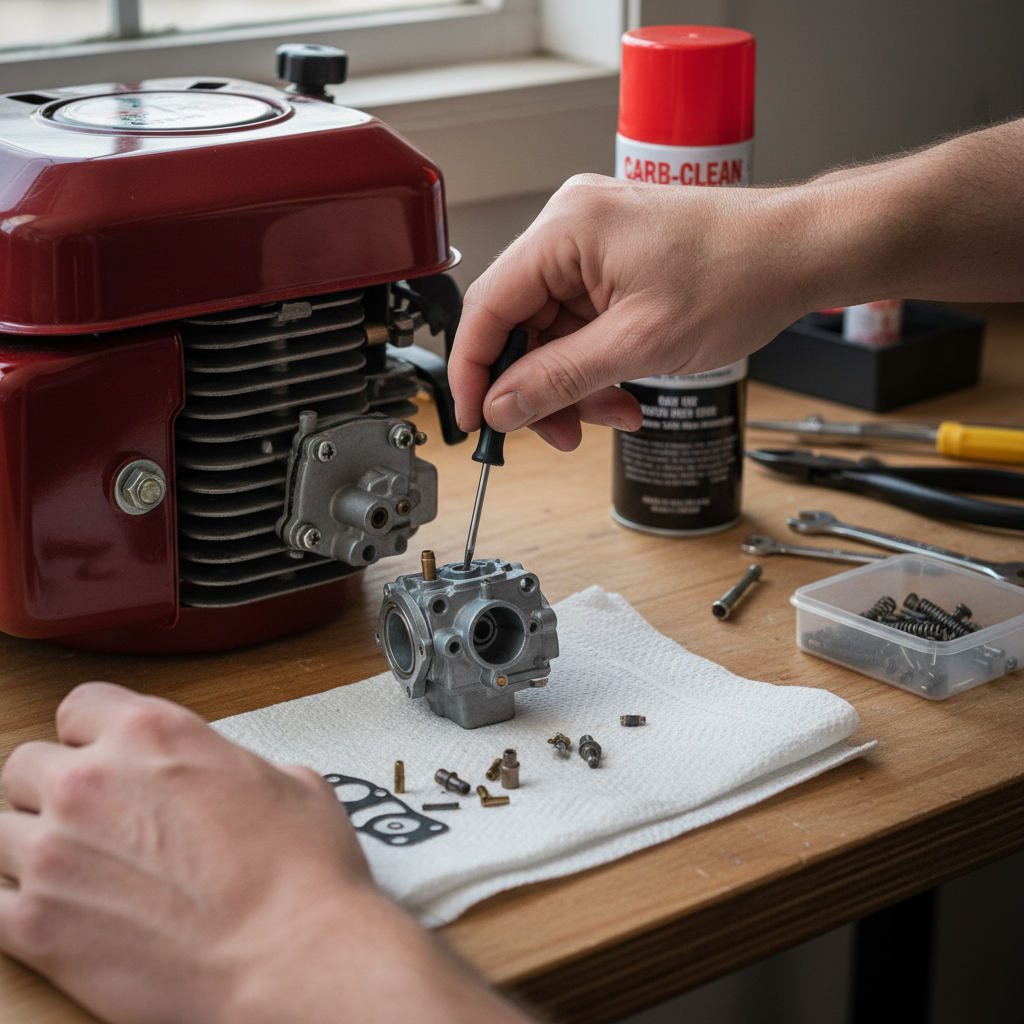
- Clogged Jets: These tiny orifices are the most common points of obstruction within the carburetor, particularly the main jet at the bottom of the float bowl. They are easily blocked by varnish and sediment from old fuel.
Landscaping · Deck or fence project
| Project category | Landscaping |
|---|---|
| Problem type | Deck or fence project |
| Trade required | Landscaping |
| Urgency | Planned project |
| Safety risk | Moderate safety risk |
| DIY suitability | DIY for experienced homeowners |
| Cost category | High cost |
| Typical timeline | Most builds 3–10 days depending on size |
| Contractor type | Landscaping contractor |
Repair option
Replace failed boards, posts, and hardware; reseal the surface.
Replacement option
Rebuild when framing or the ledger connection is unsafe.
Common causes
- Rot at posts and ledger
- Storm damage
- Adding outdoor living space
Relevant tools:home improvement material pricesproject cost estimator
Published May 20, 2026Last updated August 17, 2026
Tools & materials you'll need
Affiliate links- AmazonSocket wrench set1 · For removing carburetor bolts and air filter housing
- AmazonScrewdriver set1 · Phillips and flathead for various fasteners
- AmazonSafety glasses1 pair
- AmazonDrain pan1 · For catching fuel
- AmazonThin wire or jet cleaning tool1 · Very fine wire, like from a twist tie, or a specialized tool
As an Amazon Associate FixlyGuide earns from qualifying purchases — at no extra cost to you. Prices and availability are accurate as of publication and subject to change.
Quick Answer
If your lawn mower cranks but refuses to start, or starts and immediately dies, a dirty or improperly adjusted carburetor is often the primary suspect. Most homeowners overlook this critical component, assuming larger, more complex engine issues. However, with a few basic tools and about 10–30 minutes, you can diagnose and often rectify common carburetor problems, restoring your mower's ability to fire up reliably.
The Problem
It's a familiar scenario: Spring arrives, you pull out the lawn mower, eager for that first cut, and it just sits there, stubbornly refusing to start. Or perhaps it sputters to life for a few seconds only to choke and die. After checking the fuel level and spark plug, many homeowners throw their hands up in frustration. The real issue is frequently internal to the carburetor, the unsung hero (or villain) of small engines. Over time, especially if fuel is left in the tank for extended periods, ethanol in modern gasoline can attract moisture and break down, leaving behind a sticky, varnish-like residue. This gunk clogs the tiny, precisely engineered passages within the carburetor, starving the engine of the correct fuel-air mixture it needs to ignite.
Without a properly atomized fuel supply, your engine can't achieve combustion. This isn't just an inconvenience; it can lead to frustrating hours pulling a starter cord, wasted fuel, and even expensive professional repairs if left unaddressed. Understanding how a carburetor functions is the key to diagnosing and fixing this pervasive problem.
How It Works
At its core, a lawn mower's carburetor is a sophisticated mixing device designed to blend precise amounts of fuel and air before sending them to the engine's combustion chamber. When you pull the starter cord, the piston moves, creating a vacuum that pulls air through the carburetor's venturi – a constricted passage that increases air velocity and lowers pressure.
Simultaneously, fuel is drawn from the fuel tank, typically through a fuel filter, and into the carburetor's float bowl. Inside the float bowl, a float mechanism (similar to a toilet tank float) regulates the fuel level, ensuring it remains constant. As air rushes through the venturi, the pressure difference draws fuel from the float bowl through tiny openings called jets (main jet, pilot jet). These jets are precisely sized to deliver the correct amount of fuel, which then atomizes into a fine mist and mixes with the incoming air.
This fuel-air mixture travels through the intake manifold and into the cylinder, where it's compressed by the piston and ignited by the spark plug. If any of these passages – the fuel line, the float needle, the jets, or even the air intake – become obstructed or misaligned, the engine won't receive the balanced ratio of fuel and air it needs for efficient combustion. A common issue is a clogged main jet; if partially blocked, the engine might start but run poorly or die under load. A completely blocked jet, or a stuck float needle (preventing fuel entry), will result in a no-start condition.
Step-by-Step Fix
Safety First— Always ensure the engine is cool and the spark plug wire is disconnected to prevent accidental starting.
-
Check Fuel & Fuel Filter—Ensure fresh, clean gasoline is in the tank. Old or contaminated fuel is a common culprit. If your mower still won't start, or if the fuel looks murky, drain the tank and refill with fresh, stabilized fuel. Inspect the in-line fuel filter (if present); a clogged filter will starve the carburetor. Replace if dirty or discolored.
- If fuel looks good: Proceed to the next step.
- If fuel is old/murky: Drain and replace. Consider a fuel stabilizer for future storage.
-
Inspect the Primer Bulb—Many mowers have a primer bulb. Push it a few times. Do you see fuel flowing into the carburetor? If not, the bulb or its associated fuel lines might be cracked or disconnected. Replace if visibly damaged.
- If no fuel movement: Check connection to carburetor; replace primer bulb if cracked.
-
Locate the Carburetor—The carburetor is usually a metallic component mounted to the engine, often covered by an air filter housing. Carefully remove the air filter cover and the air filter itself. Take a photo before disassembly to aid reassembly.
- Tools: Screwdriver or nut driver.
-
Remove the Carburetor Bowl (If Applicable)—On many older or simpler carburetors, there's a float bowl at the bottom, held by a single bolt. Place a drain pan underneath to catch any gasoline. Carefully remove this bolt and gently tap the bowl to loosen it. The float bowl will contain residual fuel and potentially sediment.
- Safety: Wear safety glasses. Work in a well-ventilated area.
-
Clean the Float Bowl & Main Jet—Once the bowl is removed, inspect its interior for varnish, sediment, or water. Clean it thoroughly with carburetor cleaner and a rag. The bolt you removed often doubles as the main jet and will have a tiny hole at its tip and along its shaft. Spray carburetor cleaner through these holes and clear any debris with a thin wire or a specialized jet cleaning tool (very carefully!).
- Do NOT enlarge any holes: The jet's size is critical for proper fuel delivery.
- If main jet is inaccessible: The carburetor may need to be fully removed and disassembled.
-
Check the Float & Needle Valve—Inside the carburetor, above where the bowl was, you'll see a float (plastic or brass) attached to a pivot. The float is connected to a small rubber-tipped needle valve. Gently move the float up and down to ensure it moves freely and the needle valve seats properly. If the needle valve is worn, stiff, or has a distinct groove, it needs replacement as it can cause fuel starvation or overflowing.
- Condition check: Ensure the float is not saturated (water inside indicates a leak), which would cause it to sink and flood the engine.
-
Clean Other Passages (Spraying Method)—With the air filter housing still off, disconnect the fuel line from the carburetor (pinch off the fuel line first to prevent spills). Spray liberal amounts of carburetor cleaner into all visible openings within the carburetor – especially the small holes around the throttle plate and choke plate. Allow it to soak for a few minutes. You might see dislodged gunk drip out.
- Safety: Avoid getting cleaner on painted surfaces or rubber components if possible.
-
Reassemble the Carburetor—Carefully reassemble the float bowl, ensuring the O-ring or gasket is in good condition and properly seated to prevent leaks. Tighten the bowl bolt firmly but do not overtighten, as this can strip threads or crack the bowl. Reattach the fuel line and primer bulb lines if disconnected.
-
Replace Air Filter—While you have access, replace a dirty air filter. A clogged air filter restricts airflow, leading to an overly rich fuel-air mixture and poor starting/running.
- Cost savings: Clean reusable filters, replace paper ones.
-
Test the Mower—Reconnect the spark plug wire. Attempt to start the mower. If it doesn't start immediately, try priming a few extra times. Allow the carburetor cleaner to cycle through the system. It may take a few pulls for fresh fuel to reach the engine and for the cleaner to dissipate.
- If still no start: Consider a fresh spark plug if the old one is fouled or very old.
Common Causes
- Stale Fuel: Gasoline breaks down over time, especially when exposed to air and temperature fluctuations. Ethanol in fuel attracts water, leading to rust and gumming up carburetor components. Using fuel older than 30 days is a primary cause of no-start issues.
- Clogged Fuel Filter: A small, often overlooked filter in the fuel line can become clogged with debris or rust from the fuel tank, starving the carburetor of fuel.
- Restricted Fuel Line: Kinks, cracks, or hardened fuel lines can prevent proper fuel flow to the carburetor.
- Dirty Air Filter: While not directly a carburetor issue, a severely clogged air filter restricts air intake, creating an excessively rich fuel mixture that makes starting difficult or impossible.
- Stuck or Damaged Carburetor Float/Needle: If the float is stuck in the 'up' position, it prevents fuel from entering the bowl. If the needle valve is worn, it may not seal properly, leading to flooding, or not open enough, leading to starvation.
- Clogged Jets: These tiny orifices are the most common points of obstruction within the carburetor, particularly the main jet at the bottom of the float bowl. They are easily blocked by varnish and sediment from old fuel.
Common Mistakes
- Using Old Fuel: The single biggest mistake. Always drain fuel or use a stabilizer for storage periods longer than a month. Fresh fuel is paramount.
- Not Disconnecting Spark Plug: Failing to disconnect the spark plug wire before working on the engine creates a serious safety hazard of accidental starting.
- Overtightening Carburetor Bolts: Carburetor components are often aluminum or plastic. Overtightening can strip threads, crack housing, or deform sealing surfaces, leading to fuel leaks or air leaks.
- Ignoring the Air Filter: A dirty air filter gets blamed less often than the carburetor, but it can significantly impact starting and running performance. Always check and clean/replace it.
- Forgetting Gaskets/O-rings: When reassembling, forgetting to properly seat or replacing worn gaskets and O-rings around the float bowl or between the carburetor and engine can lead to air leaks (causing lean mixture and poor running) or fuel leaks.
- **Attempting to
Related Articles
Keep troubleshooting with these hand-picked guides from FixlyGuide:
- The #1 Mistake Homeowners Make When a Lawn Mower Won't Start (And the Easy Fix) — Before you despair, discover the most common culprit behind a non-starting lawn mower and how to fix it in minutes.
- The #1 Mistake Killing Your Lawn (and How to Remove Clover Without Chemicals) — Discover the most common mistake homeowners make when battling clover and learn effective, organic methods to eliminate it without harming…
- The #1 Mistake Killing Your Compost Pile (and How to Fix It in 10 Minutes) — Discover the most common error homeowners make with compost piles and a simple 10-minute fix to get yours thriving.
- The #1 Mistake Killing Your Lawn's Grass (and How to Fix Patchy Spots) — Discover the most common reason for patchy grass and learn how to revive your lawn with targeted, easy-to-follow steps.
- The #1 Summer Lawn Mistake Turning Your Grass Yellow (and How to Fix It) — Discover the most common summer lawn mistake that causes yellowing grass and learn the simple steps to revive your lawn.
- The #1 Mistake That Makes Deck Boards Warp (And the Easy Fix) — Discover the most common reason deck boards warp and how a simple, proactive fix can restore your deck's appearance and longevity.
Should you do this yourself?
Answer five quick questions before you start. Safety outranks savings every time.
Your experience with work like this
How high do you have to work?
Does the job involve any of these?
Will it need a permit?
Specialty tools
Free and instant. Educational guidance only — not a quote, inspection, or professional diagnosis.
What should this project cost?
Enter your project details for a realistic cost range before you call anyone.
Cost depends heavily on which system turns out to be the source.
- Regional adjustment
- National average
- Labor share (typical)
- ~$1,620
- Quotes to collect
- 3 written estimates
Educational estimate based on national averages — not a binding quote. Always confirm with written local estimates.
Get the print-ready PDF of this guide
A clean, ad-free, printable version you can keep on your phone or pin to the workshop wall. Free with a FixlyGuide account.
- Print-optimized layout
- Tools, materials & every step included
- Saved to your account
Frequently asked questions
Why won't my lawn mower start after winter storage?+
The most common reason is stale fuel oxidizing and leaving sticky residues that clog the carburetor's tiny passages. This prevents the correct fuel-air mixture from reaching the engine.
Can I use car gasoline in my lawn mower?+
Yes, but it's crucial to use fresh, unleaded gasoline with an octane rating of 87-89. Avoid high-ethanol fuels (E15 or E85) as ethanol can damage small engine components and attract moisture. Always add a fuel stabilizer if storing fuel for more than a month.
How often should I clean my lawn mower carburetor?+
Ideally, you shouldn't need to clean it frequently if you consistently use fresh, stabilized fuel. However, if you experience starting issues or rough running, a cleaning might be necessary. A preventative measure is to run the engine dry of fuel before extended storage.
What are the signs of a clogged carburetor vs. a bad spark plug?+
A clogged carburetor often results in the engine cranking but not starting, or starting and quickly dying, especially if the primer bulb doesn't show fuel movement. A bad spark plug might cause no ignition at all, or a very weak, inconsistent spark. Checking for spark with a spark tester is the best way to rule out the plug.
Is it safe to clean a carburetor myself?+
Yes, for most homeowners, cleaning a carburetor on a lawn mower is a manageable DIY task, provided you follow safety precautions like disconnecting the spark plug and working in a well-ventilated area. If you're uncomfortable with small engine components or suspect deeper issues, consult a professional.


Discussion
Loading comments…