- Soil Type: Clay-rich soils or heavily compacted soils can retain moisture longer, creating a more suitable environment for newly hatched grubs. While not a direct cause, it exacerbates the moisture problem.
- Proximity to Beetle Habitats: If your property borders wooded areas, fields, or neighboring lawns with severe grub infestations, your lawn is at a higher risk as adult beetles will simply fly over and lay eggs in your turf.
- Warm, Mild Winters: Milder winters allow more grubs to survive underground, leading to larger populations emerging and continuing their life cycle in the spring and summer.
Landscaping · Deck or fence project
| Project category | Landscaping |
|---|---|
| Problem type | Deck or fence project |
| Trade required | Landscaping |
| Urgency | Planned project |
| Safety risk | Moderate safety risk |
| DIY suitability | DIY for experienced homeowners |
| Cost category | High cost |
| Typical timeline | Most builds 3–10 days depending on size |
| Contractor type | Landscaping contractor |
Repair option
Replace failed boards, posts, and hardware; reseal the surface.
Replacement option
Rebuild when framing or the ledger connection is unsafe.
Common causes
- Rot at posts and ledger
- Storm damage
- Adding outdoor living space
Relevant tools:home improvement material pricesproject cost estimator
Published May 18, 2026Last updated August 17, 2026
Tools & materials you'll need
Affiliate linksAs an Amazon Associate FixlyGuide earns from qualifying purchases — at no extra cost to you. Prices and availability are accurate as of publication and subject to change.
Quick Answer
Grubs often infest lawns not just because their parents (beetles) happened to lay eggs there, but because the underlying conditions of your lawn are a perfect habitat. The quick answer to getting rid of grubs involves accurately identifying the grub species, understanding their life cycle, and applying a targeted control method—either chemical or biological—at the optimal time. But more importantly, true, long-lasting grub control comes from addressing the environmental factors that are making your lawn so inviting to them in the first place.
The Problem
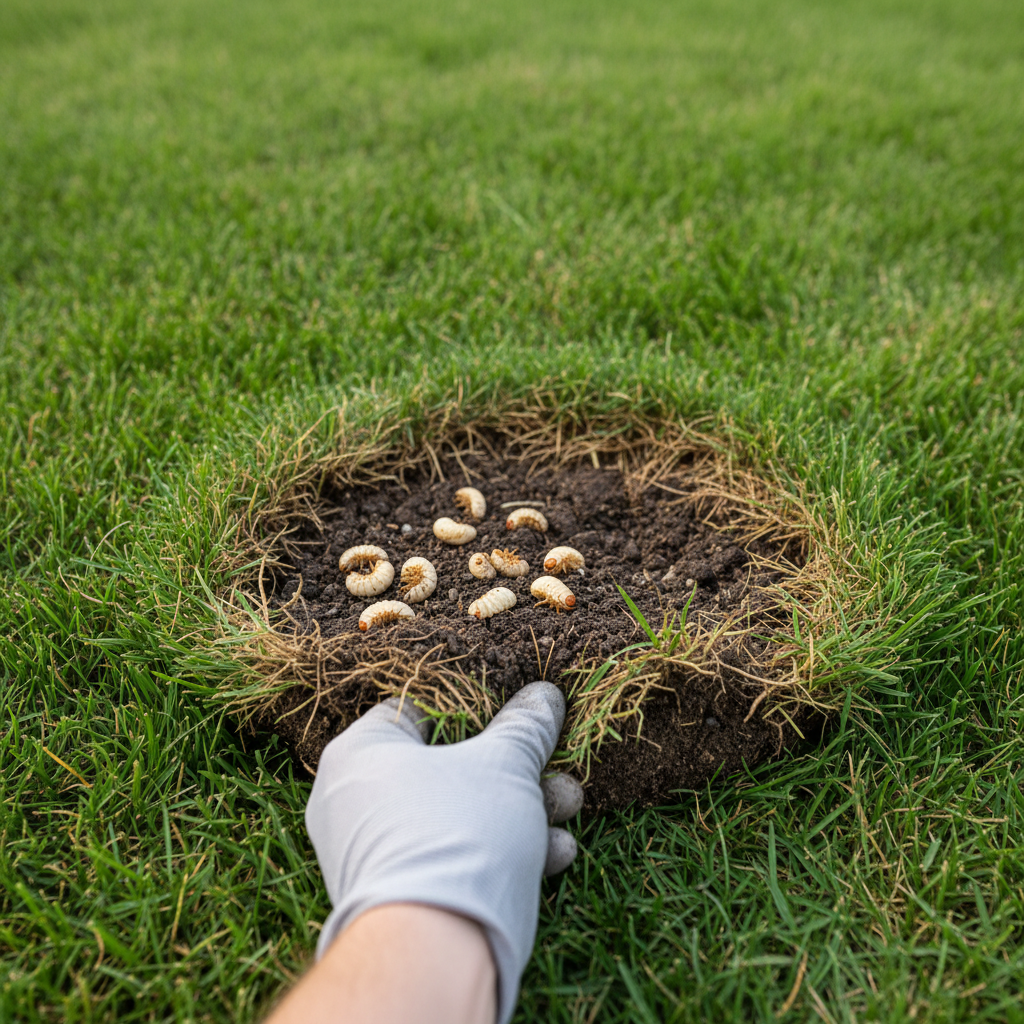
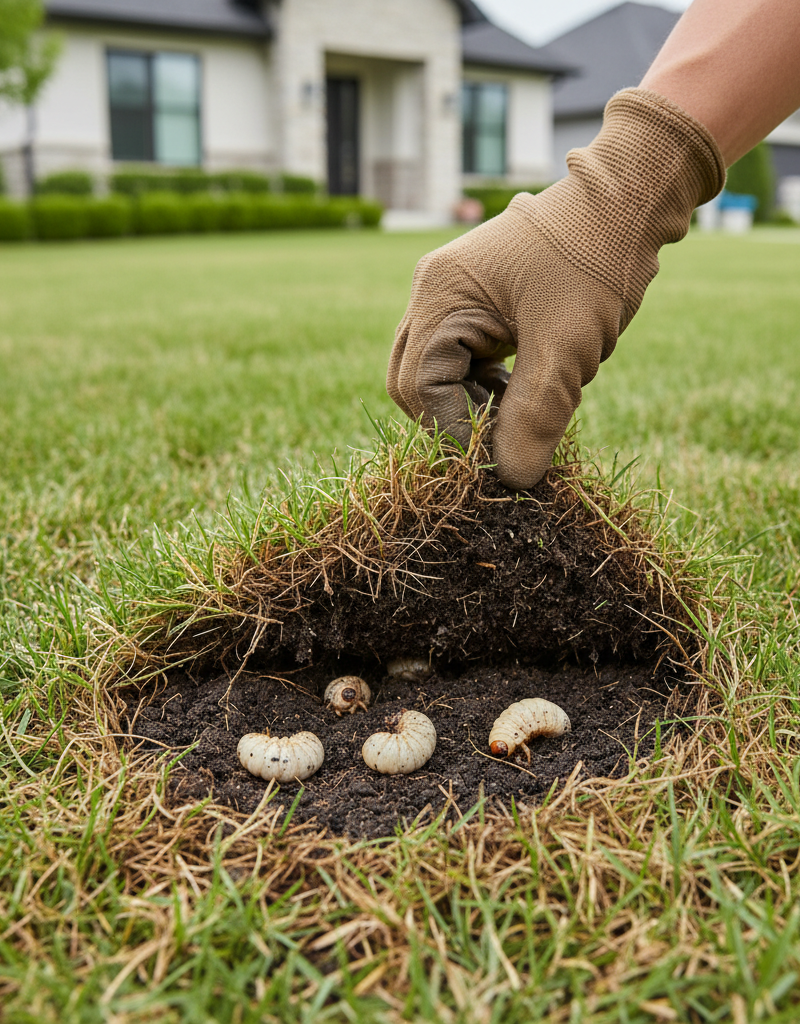
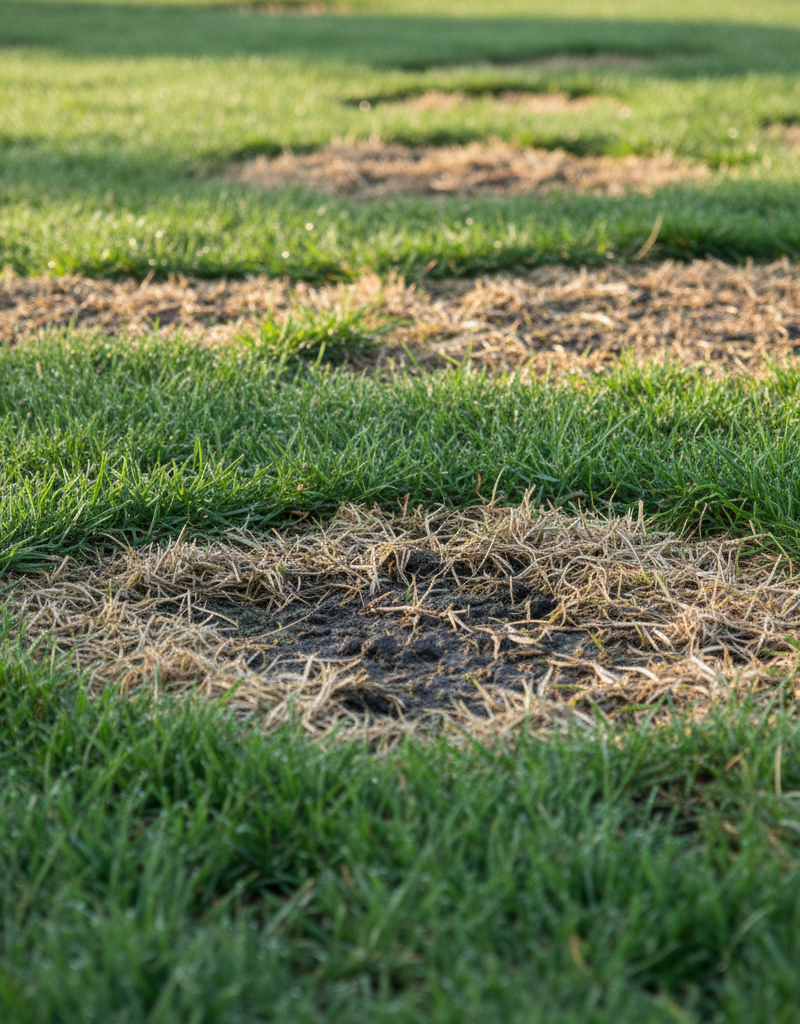
You've noticed your lawn looking less than its best – ब्राउन,スポンジ状, and maybe you can even pull back sections of turf like a carpet. If you dig a small test patch, you might find C-shaped, creamy-white larvae with brown heads wriggling in the soil just beneath the surface. These are grubs, the larval stage of various beetles, including Japanese beetles, May/June beetles, and Chinch bugs. These hungry pests feed on the roots of your grass, severing them from the blades and causing widespread damage that can quickly kill large sections of your lawn. Ignoring a grub problem can lead to extensive turf loss, requiring costly reseeding or sodding to repair. But the real problem isn't just the grubs themselves; it's understanding why they chose your lawn over your neighbor's.
How It Works
Grub control isn't a one-time spray-and-forget deal; it requires understanding the grub's life cycle. Most destructive lawn grubs in North America (like those of the Japanese beetle or June beetle) have a one-year life cycle, while others (like the European chafer) can have longer cycles. Adult beetles emerge from the soil in early summer (typically late May to early July), mate, and then lay their eggs in the turf. These eggs hatch into tiny grubs about two weeks later, usually in late July or early August. These young grubs are the most destructive, as they feed voraciously on grass roots throughout the late summer and early fall, growing larger and causing visible damage.
As temperatures drop in late fall, the grubs burrow deeper into the soil (6 to 12 inches) to overwinter. In spring, as the soil warms, they migrate back up to feed on roots for a short period before pupating, typically in May or early June. The adult beetles then emerge, restarting the cycle. The critical window for effective treatment is when the grubs are young and actively feeding near the surface, usually late July through September. Targeting them during their overwintering period or as pupae is largely ineffective. Biological controls like beneficial nematodes work by parasitizing grubs, while chemical insecticides disrupt their nervous system or inhibit chitin synthesis, crucial for their exoskeleton development. The effectiveness of any treatment is directly tied to accurate timing and understanding the grub's vulnerabilities at that specific stage.
Step-by-Step Fix
1. Confirm Grub Infestation — Don't treat what isn't there. * Dig a 1-foot by 1-foot section of turf about 2-4 inches deep in a damaged area. Gently pull back the sod. If you see 6 or more grubs per square foot, treatment is recommended. Fewer than 5 grubs per square foot usually doesn't warrant intervention, as a healthy lawn can tolerate some grub presence. * If you see no grubs but have brown patches: Your problem might be drought stress, fungal disease, or chinch bugs. Look for signs specific to those issues.
2. Identify the Grub Species (If Possible) — Different grubs, different timing. * While many grub treatments are broad-spectrum, identifying the specific beetle can help refine your treatment timing. Japanese beetle grubs are typically smaller and fatter, whereas June beetle grubs are larger. If unsure, assume a common grub like the Japanese beetle, whose lifecycle is well understood for treatment scheduling. * Consider contacting your local extension office: They can often help identify pest samples and provide region-specific advice.
3. Choose Your Control Method — Chemical vs. Biological. * Chemical Insecticides (e.g., Imidacloprid, Trichlorfon): These offer quick knockdown. Systemic options like Imidacloprid are best applied preventatively in late spring/early summer to kill newly hatched grubs. Contact insecticides like Trichlorfon are better for curative control in late summer/early fall when grubs are actively feeding and visible. Always read and follow product labels carefully. * Safety Note: Always wear gloves, eye protection, and long sleeves when handling chemicals. Keep children and pets off treated areas until dry. * Biological Controls (e.g., Milky Spore, Beneficial Nematodes): Milky Spore (Bacillus popilliae) is specific to Japanese beetle grubs and can take years to establish but offers long-term control. Beneficial nematodes (Heterorhabditis bacteriophora) are microscopic worms that parasitize grubs; they are most effective when applied to moist soil in late summer/early fall when grubs are young and near the surface. Nematodes are sensitive to UV light, so apply on a cloudy day or in the evening and water them in. * If choosing nematodes: Purchase from a reputable supplier and apply immediately upon arrival. Store according to package directions if not using within 24 hours.
4. Prepare Your Lawn — Optimizing for absorption. * Mow your lawn to its normal height. Rake up any excessive thatch (dead grass between the green blades and soil) if it's thicker than ½ inch. Thatch can prevent treatments from reaching the grubs. * Water your lawn deeply the day before applying granular insecticides or nematodes. Moist soil helps active ingredients penetrate and aids nematode movement.
5. Apply the Treatment — Precision is key. * Granular Products: Use a broadcast spreader for even distribution. Calibrate your spreader according to the product label to ensure proper application rate. Over-application can harm your lawn or the environment; under-application will be ineffective. Lightly water the lawn immediately after application to move the granules into the soil. * Liquid Products/Nematodes: Mix according to label directions. Use a hose-end sprayer or backpack sprayer for even coverage. Water immediately after application, but avoid overwatering, which can wash away the product or dilute nematodes too much.
6. Post-Treatment Care — Maintain a healthy environment. * After application, continue proper lawn care. Water deeply and infrequently to encourage deep root growth, making grass more resilient to future grub damage. Avoid overwatering, which creates perpetually moist conditions favored by beetles for egg-laying. Wait at least 24-48 hours before mowing after a liquid application.
7. Monitor and Re-evaluate — Grub control is ongoing. * Check treated areas for new damage or continued grub presence a few weeks after application and again the following season. If damage persists, reconsider your timing, product choice, or application method. It might take more than one season to achieve full control, especially with biological methods.
Common Causes
- Overwatering or Poor Drainage: Grubs and their parent beetles are attracted to consistently moist soil for laying eggs and larval development. Lawns that are overwatered, have compacted soil, or poor drainage create the ideal perpetually damp environment that beetles seek out. This is a common and often overlooked cause.
- Excessive Thatch Layer: A thick layer of thatch (over ½ inch) provides an ideal protective and moist environment for grubs to thrive, shielding them from predators and drought, and making insecticide penetration difficult. Beetles also prefer to lay eggs in areas with ample thatch.
- Soil Type: Clay-rich soils or heavily compacted soils can retain moisture longer, creating a more suitable environment for newly hatched grubs. While not a direct cause, it exacerbates the moisture problem.
- Proximity to Beetle Habitats: If your property borders wooded areas, fields, or neighboring lawns with severe grub infestations, your lawn is at a higher risk as adult beetles will simply fly over and lay eggs in your turf.
- Lack of Natural Predators: A monoculture lawn with little biological diversity might lack natural predators like parasitic wasps, ground beetles, birds (robins, starlings), and moles that help keep grub populations in check. Overuse of broad-spectrum pesticides can also eliminate beneficial insects.
- Warm, Mild Winters: Milder winters allow more grubs to survive underground, leading to larger populations emerging and continuing their life cycle in the spring and summer.
Common Mistakes
- Waiting Until You See Extensive Damage: By the time significant brown patches appear and you can pull back sod, much of the damage is already done, and the grubs are larger and harder to kill. Treat preventatively or at the first signs of turf thinning.
- Applying at the Wrong Time: This is the biggest mistake. Applying grub killers in spring when mature grubs are pupating or in winter when they are deep underground is largely ineffective. The best time for curative treatment is late summer/early fall (August/September) when grubs are young and feeding near the surface. Preventative treatments (systemic insecticides) are applied in late spring/early summer (May/June).
- Not Watering After Application: Many granular or liquid grub control products require watering after application to move the active ingredient from the grass blades down into the soil where the grubs are feeding. Skipping this step significantly reduces efficacy.
- Using the Wrong Product: Not all
Related Articles
Keep troubleshooting with these hand-picked guides from FixlyGuide:
- The #1 Mistake Homeowners Make When Fighting Lawn Grubs (And How to Fix It) — Discover the crucial mistake homeowners often make when treating lawn grubs and learn the most effective, timing-sensitive strategies to el…
- The #1 Mistake Homeowners Make When Battling Lawn Grubs (And a Simple Fix) — Discover the common mistake homeowners make when treating grubs and learn a simple, effective solution for a healthier lawn.
- The 3 Hidden Reasons Your Tree Leaves Turn Brown (and the Easy Fixes) — Discover the often-overlooked environmental stressors and specific diseases that cause tree leaves to brown, and learn simple, actionable s…
- The 3 Hidden Reasons Your Sprinkler Head Won't Pop Up (And How to Fix It FAST) — Discover the most common reasons your sprinkler head isn't popping up and follow our step-by-step guide to quickly diagnose and fix the iss…
- The 3 Hidden Reasons Your Lush Summer Lawn Fades to Yellow (It’s Not Always Drought!) — Uncover the surprising culprits behind a yellowing lawn in summer, from nutrient deficiencies to compacted soil, and learn actionable steps…
- The 3 Hidden Reasons Your Gas Burner Won't Light (Beyond a Clog) — Before you call a technician, discover the most common culprits behind a gas stove burner that refuses to ignite and learn how to fix them…
What should this project cost?
Enter your project details for a realistic cost range before you call anyone.
Cost depends heavily on which system turns out to be the source.
- Regional adjustment
- National average
- Labor share (typical)
- ~$1,620
- Quotes to collect
- 3 written estimates
Educational estimate based on national averages — not a binding quote. Always confirm with written local estimates.
Frequently asked questions
How do I know if I have grubs?+
Look for brown, spongy patches in your lawn that pull back easily like a carpet. Dig a 1-foot square, 2-4 inches deep, and check for C-shaped, creamy-white larvae. Six or more grubs per square foot indicates a significant infestation.
When is the best time to apply grub killer?+
For curative control, apply in late summer to early fall (August-September) when grubs are young and actively feeding near the surface. For preventative control, apply systemic insecticides in late spring to early summer (May-July) to kill newly hatched grubs.
Can grubs kill my entire lawn?+
Yes, if left untreated, a severe grub infestation can damage and kill large sections of your lawn by feeding on its roots. This can lead to costly repairs like reseeding or resodding.
Are grub killers safe for pets and children?+
Many chemical grub killers can be harmful if ingested. Always read product labels carefully for specific safety instructions. Keep children and pets off treated areas until the product has dried completely, usually 24-48 hours. Biological controls like beneficial nematodes are generally safe for pets and wildlife.
What's the difference between preventative and curative grub control?+
Preventative treatments are applied before a grub problem emerges, typically in spring or early summer, to stop eggs from hatching or young grubs from developing. Curative treatments are applied in late summer or early fall once damage is visible and grubs are actively feeding, to kill existing infestations.
Discussion
Loading comments…