Tools & materials you'll need
Affiliate linksAs an Amazon Associate FixlyGuide earns from qualifying purchases — at no extra cost to you. Prices and availability are accurate as of publication and subject to change.
Quick Answer
Many non-starting lawn mowers baffle homeowners, but the prime suspect is almost always related to the fuel system or ignition. Old, stale gasoline can gum up the carburetor and foul the spark plug. A methodical approach, starting with fresh fuel and checking the spark plug, air filter, and then the carburetor, will resolve the vast majority of 'no-start' issues. Don't rush to drain the oil or disassemble the engine; the simplest solutions are often the most effective.
The Problem
You pull the starter cord, or turn the key, and... nothing. Maybe a weak sputter, maybe just the sound of the engine turning over without catching. This is a frustratingly common scenario for countless homeowners, especially after a mower has sat idle for weeks or months. The problem isn't usually catastrophic engine failure, but rather a disruption in the fundamental tango of fuel, air, and spark required for combustion. Over 80% of lawn mower starting problems boil down to one of these three elements being compromised.
The consequence of ignoring these common issues ranges from inconvenient delays in yard maintenance to expensive professional repairs if the underlying cause (like old fuel) is left to wreak further havoc on engine components. Understanding the basics of how your mower works will empower you to pinpoint the problem quickly and efficiently.
How It Works
At its core, a small gasoline engine in a lawn mower operates on the same principles as a car engine: it needs fuel, air, and a spark to create the controlled explosion that drives the piston and turns the blade. Let's break down the pathway:
1. Fuel System: Gasoline is stored in the fuel tank. From there, it flows through a fuel line, often past a small fuel filter, and into the carburetor. The carburetor's job is crucial: it precisely mixes the gasoline with air in the correct ratio (around 14.7 parts air to 1 part fuel) and atomizes it into a fine mist. This fuel-air mixture is then drawn into the combustion chamber.
2. Air Intake: Air is drawn into the engine through an air filter, which prevents dust and debris from entering and damaging internal components. This clean air then mixes with the fuel in the carburetor.
3. Ignition System: The spark plug, located in the cylinder head, is the component that ignites the fuel-air mixture. It receives a high-voltage electrical pulse from the ignition coil (triggered by the flywheel's magnets when the engine turns). This pulse creates an arc of electricity across the spark plug's electrodes, generating the spark that ignites the compressed fuel-air mixture.
4. Combustion: Once ignited, the expanding gases from the combustion push the piston downwards. This linear motion is converted into rotational motion by the crankshaft, which in turn spins the mower blade. The exhaust gases are then expelled through the muffler.
If any one of these essential steps – fuel delivery, proper air/fuel mixture, or a strong spark – is interrupted or compromised, your lawn mower simply won't start. Old fuel is a notorious culprit because it can break down, leave sticky residues that clog the tiny passages in the carburetor, and even attract moisture, which doesn't burn.
Step-by-Step Fix
1. Safety First – *Disconnect the spark plug wire.
Always disconnect the spark plug wire before performing any maintenance on your lawn mower. This prevents accidental starting, which could lead to severe injury. Additionally, wear work gloves to protect your hands.
- Tools: Work gloves
- Safety: Engine can unexpectedly start
2. Check the Fuel – *Assess the age and level of the gasoline.
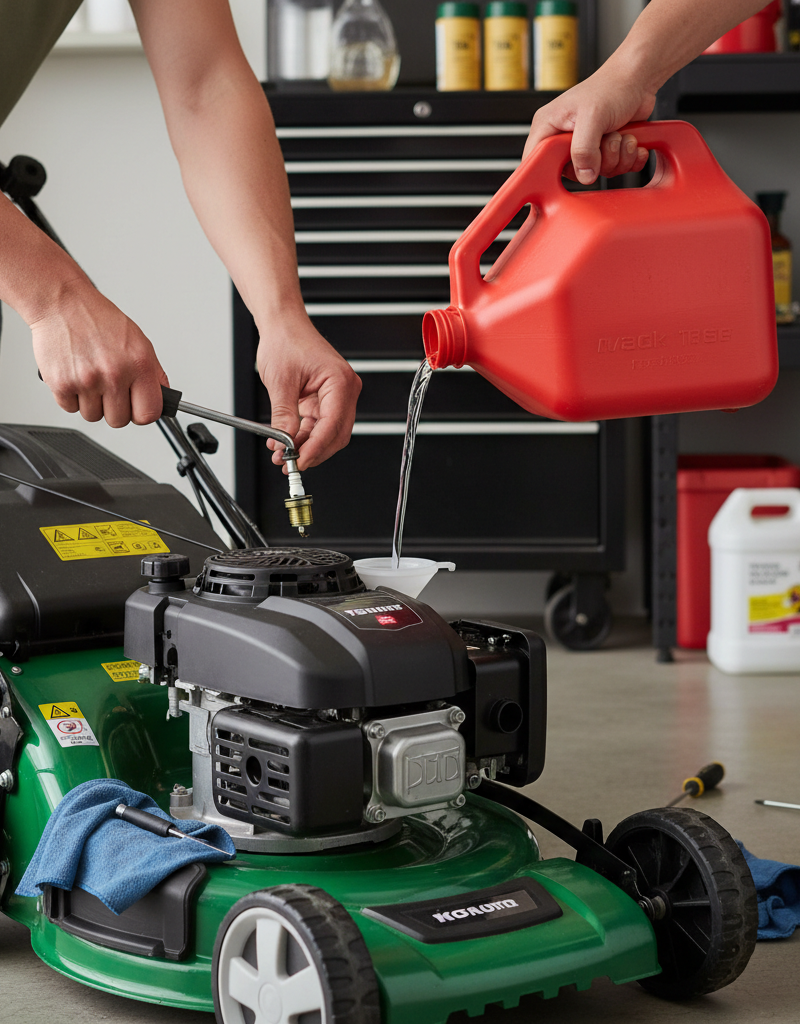
Fresh fuel is paramount. If the fuel in the tank is more than 30 days old, it's likely stale and has begun to degrade. Siphon out or carefully drain the old fuel into an approved container. Refill the tank with fresh, 87-octane gasoline. For 2-stroke engines, ensure you are using the correct fuel-to-oil mixture as specified by your manufacturer.
- If this doesn't work: Check the fuel filter (if accessible) for clogs.
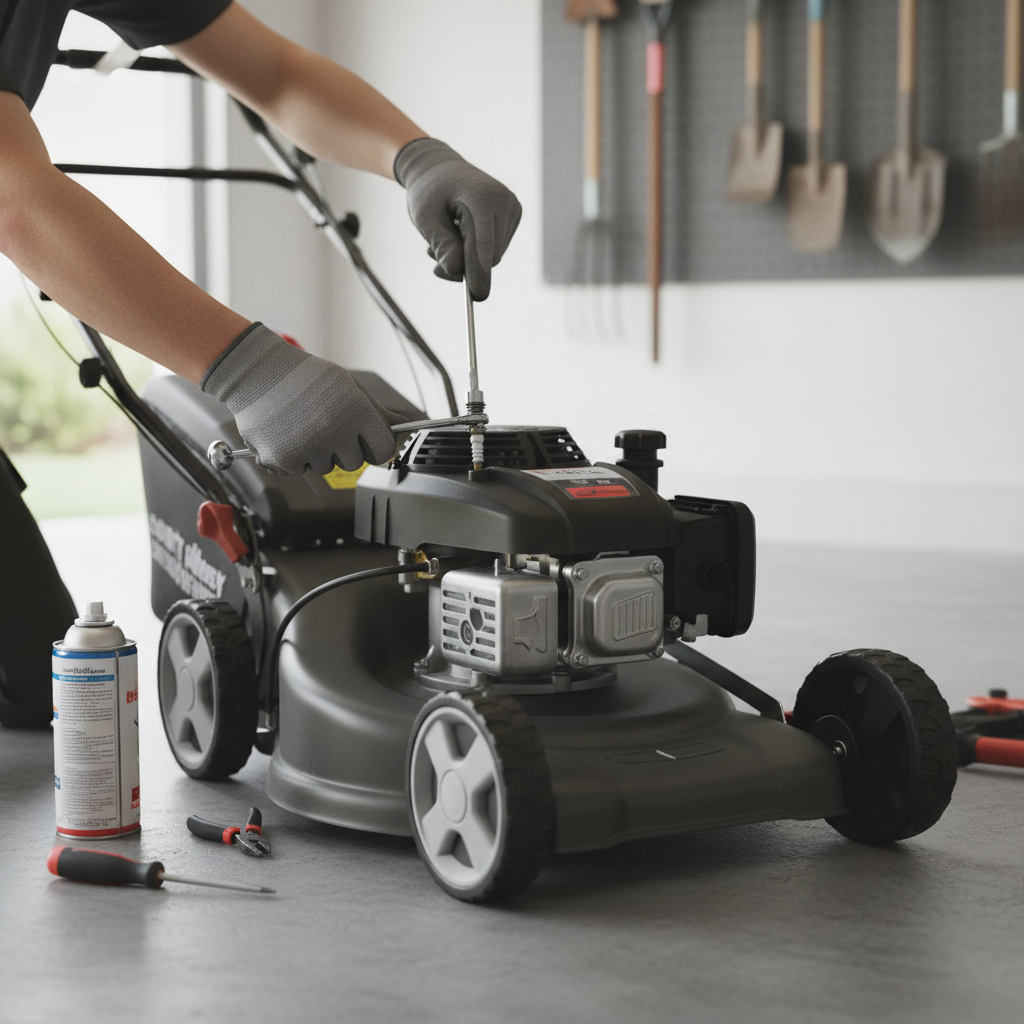
3. Inspect the Spark Plug – *Clean or replace the spark plug for a strong spark.
Remove the spark plug using a spark plug wrench. Inspect the electrode for deposits (black, oily, or crusty buildup) or damage. If it's just dirty, you can clean it gently with a wire brush or sandpaper. Check the gap with a feeler gauge, adjusting if necessary according to your mower's manual. If the plug looks corroded, cracked, or excessively fouled, replace it with a new one of the correct type. Reconnect the spark plug wire firmly after installation.
- Tools: Spark plug wrench, wire brush, feeler gauge, new spark plug (if needed)
- Tip: A spark plug tester can confirm if the coil is generating a spark.
4. Examine the Air Filter – *Ensure proper airflow for combustion.
Locate the air filter housing, usually a plastic cover near the carburetor. Remove the cover and inspect the filter element. If it's heavily clogged with grass clippings, dirt, or oil, replace it. A paper filter cannot be effectively cleaned, but some foam filters can be washed with soapy water, rinsed, and thoroughly dried before re-oiling slightly.
- Tools: Screwdriver (for cover), new air filter (if needed).
5. Prime the Engine (if applicable) – *Provide an initial fuel boost.
Some mowers have a primer bulb (a small red or black rubber bulb usually on the side of the engine). Press it 3-5 times to squirt a small amount of fuel directly into the carburetor, assisting with the initial start. Don't over-prime, as this can flood the engine.
- If this doesn't work: Check for cracks in the primer bulb or disconnected lines.
6. Check for Obstructions – *Remove any debris impeding blade rotation.
Tilt the mower on its side (with the carburetor facing up to prevent fuel leakage). Inspect underneath the deck for any compacted grass, sticks, or other debris wrapped around the blade or crankshaft. Clear any obstructions with a stick or scraper. Ensure the spark plug wire is disconnected!
7. Clean the Carburetor – *Address clogs preventing fuel flow.
This is often the trickiest step, but crucial if old fuel has left deposits. You'll need to remove the bowl at the bottom of the carburetor. Use a carburetor cleaner spray to clear out any gummed-up fuel or varnish. Pay special attention to the small brass jets and passages. If the main jet is clogged (often a small screw at the bottom of the bowl), carefully remove and clean it. Reassemble carefully, ensuring all gaskets are in place.
- Tools: Screwdrivers, socket set, carburetor cleaner, possibly new carburetor gaskets.
- Safety: Carburetor cleaner is highly flammable. Work in a well-ventilated area.
- If this doesn't work: Consider a carburetor rebuild kit or full replacement.
8. Check Fuel Lines and Filter – *Ensure unimpeded fuel delivery.
Trace the fuel line from the tank to the carburetor. Look for kinks, cracks, or signs of blockage. If your mower has an inline fuel filter, it will be a small transparent or opaque cylinder in the fuel line. If it looks dirty or clogged, replace it. Use fuel line clamps to stop fuel flow before cutting lines for replacement.
- Tools: Pliers, fuel line clamps, replacement fuel line/filter (if needed).
Common Causes
- Stale or Contaminated Fuel: This is the most prevalent cause. Gasoline degrades over time, especially if ethanol-blended, leading to water absorption and gummy deposits that clog fuel lines and carburetors. Fuel older than 30 days can be problematic.
- Fouled or Damaged Spark Plug: A spark plug covered in carbon, oil, or fuel residue, or one with an incorrect gap, cannot generate a strong enough spark to ignite the fuel-air mixture.
- Clogged Air Filter: A dirty air filter restricts airflow to the carburetor, making the fuel-air mixture too rich and preventing combustion.
- Clogged Carburetor Jets: Deposits from old fuel commonly clog the very fine passages (jets) within the carburetor, preventing proper fuel atomization and delivery.
- Empty Fuel Tank: While seemingly obvious, it's a mistake even experienced homeowners make, assuming there's fuel when there isn't enough to start.
- Loose or Damaged Spark Plug Wire: If the wire isn't securely attached or is damaged, the spark won't reach the plug.
- Sheared Flywheel Key: This is less common but can occur if the blade hits a hard object. The key ensures the flywheel is correctly timed with the crankshaft. If sheared, the spark timing will be off, and the mower won't start.
Common Mistakes
- Using Old Fuel: The biggest mistake! Always drain old fuel at the end of the season or use a fuel stabilizer if storing the mower for more than a month. Fresh fuel is critical.
- Ignoring the Air Filter: A dirty air filter starves the engine of air, leading to hard starting or poor performance. It's an easy and inexpensive item to check and replace.
- Over-Priming: Repeatedly pushing the primer bulb too many times can flood the engine, making it even harder to start. Follow the manufacturer's recommended presses (usually 3-5).
- Not Disconnecting the Spark Plug: Skipping this crucial safety step before working on the blade or underside can lead to severe injury if the engine accidentally kicks over.
- Adjusting Carburetor Screws Arbitrarily: Modern small engine carburetors are often factory-set and don't require routine adjustment. Randomly turning mixture screws can worsen the problem.
- Assuming the Worst Immediately: Don't jump to conclusions about major engine failure. Most issues are minor and fixable with basic troubleshooting steps.
Cost & Time Breakdown
| Task | DIY Cost | Pro Cost | Time |
|---|---|---|---|
| Fresh Fuel | $5–$10 | N/A | 5 minutes |
| Spark Plug Replacement | $5–$15 | $20–$40 | 10 minutes |
| Air Filter Replacement | $10–$25 | $20–$40 | 5 minutes |
| Carburetor Cleaning | $10–$20 | $80–$150 | 30–60 minutes |
| Fuel Line/Filter | $10–$25 | $30–$60 | 15–30 minutes |
| Pro Diagnostics | N/A | $60–$100 | 30 minutes |
Tips & Prevention
- Use Fuel Stabilizer: Add a high-quality fuel stabilizer to your gasoline, especially if you store fuel or use the mower intermittently. This prevents fuel degradation and gumming up the carburetor.
- Drain Fuel for Storage: For long-term storage (over 2-3 months), it's best to either run the engine until the fuel tank is empty and the engine stalls or drain the fuel completely from the tank and carburetor.
- Regular Spark Plug Checks: Inspect your spark plug once a season or every 25 operating hours. Clean or replace it as needed.
- Clean/Replace Air Filter Annually: A clean air filter is vital for engine health and easy starting. Replace paper filters annually and clean foam filters as instructed.
- Keep Fuel Tank Full (short term): If storing for shorter periods (a few weeks), keeping the tank full of stabilized fuel can reduce condensation build-up.
- Check Oil Levels: While not directly related to starting, maintaining the correct oil level and changing it regularly (as per manufacturer's guidelines) ensures overall engine health and prevents other issues.
When to Call a Professional
While many starting issues are DIY-friendly, there are specific situations where calling a licensed small engine repair professional is the smartest and safest option. If you've systematically worked through all the troubleshooting steps, including checking fuel, spark, and air, and your mower still refuses to start, it's time to seek expert help. Professionals have specialized diagnostic tools to check ignition coil function, compression, valve timing, and can identify internal engine damage that's beyond the scope of home repair. Additionally, if you're uncomfortable disassembling the carburetor, suspect a serious electrical issue, or hear unusual grinding noises during attempted starts, a pro can prevent further damage and ensure your mower is repaired safely and correctly. Never attempt repairs on a gas-powered engine if you are not fully confident in your abilities, especially concerning the fuel system or any component that could cause injury if improperly handled.
Related Articles
Keep troubleshooting with these hand-picked guides from FixlyGuide:
- The #1 Watering Mistake Homeowners Make (And How to Fix It in Minutes) — Discover the most common lawn watering mistake homeowners make and how adjusting your technique can lead to a healthier, greener lawn.
- The 3 Hidden Reasons Your Sprinkler Head Won't Pop Up (And How to Fix It FAST) — Discover the most common reasons your sprinkler head isn't popping up and follow our step-by-step guide to quickly diagnose and fix the iss…
- The #1 Mistake Killing Your Lawn's Clover—and the Easy fix That Spares Your Grass — Discover the most common mistake homeowners make when trying to eliminate clover, and learn how to remove it effectively without harming yo…
- The #1 Mistake Homeowners Make with Landscape Edging (and How to Fix It) — Discover the most common error in landscape edging installation that leads to weeds and an uneven look, and learn the easy fix for a clean,…
- The #1 Summer Lawn Mistake Turning Your Grass Yellow (and How to Fix It) — Discover the most common summer lawn mistake that causes yellowing grass and learn the simple steps to revive your lawn.
- The #1 Mistake Homeowners Make When a Gas Burner Won't Light (And the Easy Fix) — Before you call a technician, discover the most common, overlooked reason your gas stove burner isn't lighting and how to fix it yourself i…
Should you do this yourself?
Answer five quick questions before you start. Safety outranks savings every time.
Your experience with work like this
How high do you have to work?
Does the job involve any of these?
Will it need a permit?
Specialty tools
Free and instant. Educational guidance only — not a quote, inspection, or professional diagnosis.
Frequently asked questions
How do you start a lawn mower that won't start after winter?+
After winter storage, the most common issue is stale fuel. Drain any old gasoline and refill with fresh fuel. Then, clean or replace the spark plug and check the air filter. You may also need to clean the carburetor if fuel deposits have built up.
Why would a lawn mower crank but not start?+
If your lawn mower cranks but doesn't start, it indicates the engine is turning over but isn't achieving combustion. This usually points to a lack of spark, an improper fuel-air mixture, or a timing issue. Check your spark plug, fuel quality, air filter, and ensure the carburetor isn't clogged.
Can a bad air filter stop a lawn mower from starting?+
Yes, a heavily clogged air filter can absolutely prevent a lawn mower from starting. If the air filter is too dirty, it restricts the airflow into the engine, leading to an overly rich fuel-air mixture that won't ignite properly. Replace or clean the air filter as part of your troubleshooting.
How much does it cost to get a lawn mower fixed if it won't start?+
The cost to fix a non-starting lawn mower can vary widely depending on the issue. Simple fixes like a spark plug or air filter replacement might cost $40-$80 at a shop, while a carburetor cleaning or replacement could range from $80-$180 or more. Major engine issues would be significantly higher.
How long can gasoline sit in a lawn mower before it goes bad?+
Untreated gasoline can start to degrade in as little as 30 days, especially if it contains ethanol. For optimal performance, always use fresh gasoline. If storing your mower for more than a month, use a fuel stabilizer or drain the fuel completely.


Discussion
Loading comments…