- The 1 Mistake Killing Your Lawn (And How to Eradicate Clover, The RIGHT Way) — Discover how to eliminate stubborn clover from your lawn effectively without harming your grass, using targeted strategies and proper lawn…
- The 1 Mistake Homeowners Make When Fighting Dandelions (And The Weeds Still Win) — Learn the surprising reason dandelions continue to plague your lawn and the effective, long-term strategies to reclaim your turf without en…
- The 3 Weeds That Look Like Dandelions (And How to Kill Them All) — Kill dandelions and similar weeds in your lawn using proper identification and effective removal strategies, ensuring a healthier yard.
- The 1 Mistake Killing Your Garden: Why Weeds Keep Coming Back (And How to Stop Them) — Discover the secret to permanently removing weeds from your garden by understanding their root causes and implementing sustainable solution…
- The Eternal Weed Battle: Why They Always Come Back (And How to Actually Win) — Stop the cycle of endless weeding by understanding why weeds persist and how to implement long-term control strategies.
Landscaping · Deck or fence project
| Project category | Landscaping |
|---|---|
| Problem type | Deck or fence project |
| Trade required | Landscaping |
| Urgency | Planned project |
| Safety risk | Moderate safety risk |
| DIY suitability | DIY for experienced homeowners |
| Cost category | High cost |
| Typical timeline | Most builds 3–10 days depending on size |
| Contractor type | Landscaping contractor |
Repair option
Replace failed boards, posts, and hardware; reseal the surface.
Replacement option
Rebuild when framing or the ledger connection is unsafe.
Common causes
- Rot at posts and ledger
- Storm damage
- Adding outdoor living space
Relevant tools:home improvement material pricesproject cost estimator
Published May 12, 2026Last updated August 17, 2026
Tools & materials you'll need
Affiliate linksAs an Amazon Associate FixlyGuide earns from qualifying purchases — at no extra cost to you. Prices and availability are accurate as of publication and subject to change.
Quick Answer
Persistent dandelions are a common headache for homeowners, often signaling a deeper issue than just surface-level weed growth. The quick answer to breaking the cycle of their return lies in understanding their biology: you must remove the entire taproot to prevent regrowth. Beyond that, improving your lawn's overall health — specifically its density and soil vitality — creates a natural defense against future incursions. Neglecting these fundamental steps means you'll be locked in a frustrating, never-ending battle with these yellow invaders.
The Problem
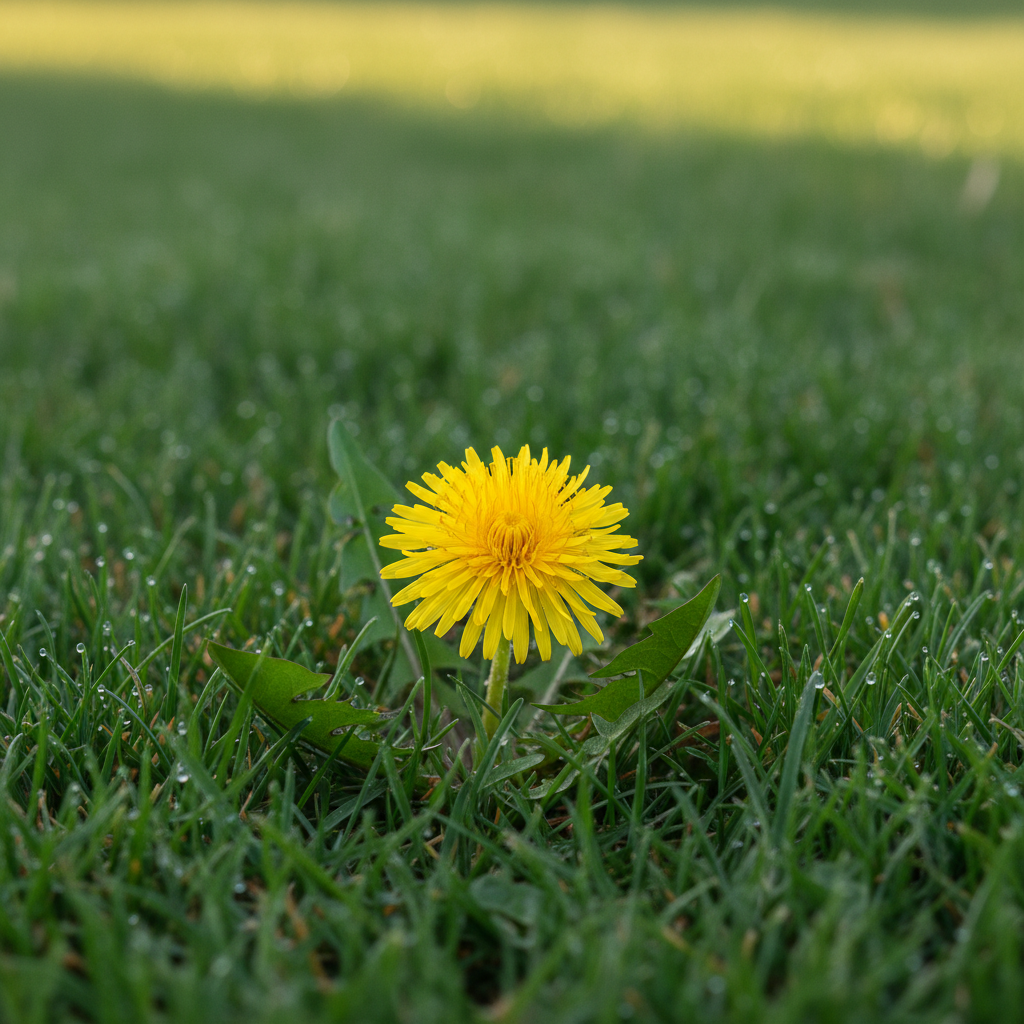
You've plucked, you've sprayed, you've cursed, and yet, those cheerful, uninvited yellow blooms of dandelions seem to mock your efforts, returning with a vengeance year after year. The problem isn't just that dandelions are unsightly; they're formidable competitors for your lawn's precious resources, stealing water, nutrients, and sunlight from your desired turfgrass. This constant struggle leaves many homeowners feeling defeated, convinced that their lawn is destined to be a dandelion haven. The core issue is often a misunderstanding of the dandelion's survival tactics and an over-reliance on superficial solutions that fail to address the root, literally and figuratively, of the problem.
How It Works
Dandelions (Taraxacum officinale) are remarkably successful perennial weeds, meaning they return year after year from the same root system. Their secret weapon is a thick, fleshy taproot that can extend deep into the soil, sometimes more than 10 to 15 inches. This taproot acts as a robust energy storage unit, allowing the plant to survive harsh conditions, regenerate even after its top growth is removed, and quickly sprout new leaves and flowers. If even a small segment of this taproot remains in the soil, the dandelion can regenerate. This is why simply pulling the leaves off or mowing over them provides only temporary relief; the plant simply draws upon its stored energy to send up new growth.
Furthermore, dandelions are prolific seed producers. Each yellow flower matures into a puffball containing hundreds of seeds, which are then carried far and wide by the wind. These seeds can remain viable in the soil for several years, forming a 'seed bank' that ensures a continuous supply of new dandelion plants. They thrive in compacted, nutrient-poor, or thin lawns because these conditions stress turfgrass, creating open spaces and less competition for the dandelion seedlings to establish. Understanding this two-pronged attack — deep taproots and widespread seed dispersal — is critical to developing an effective long-term strategy for their eradication and prevention.
Step-by-Step Fix
1. Identify Infestation & Timing – Target dandelions when young or actively growing.
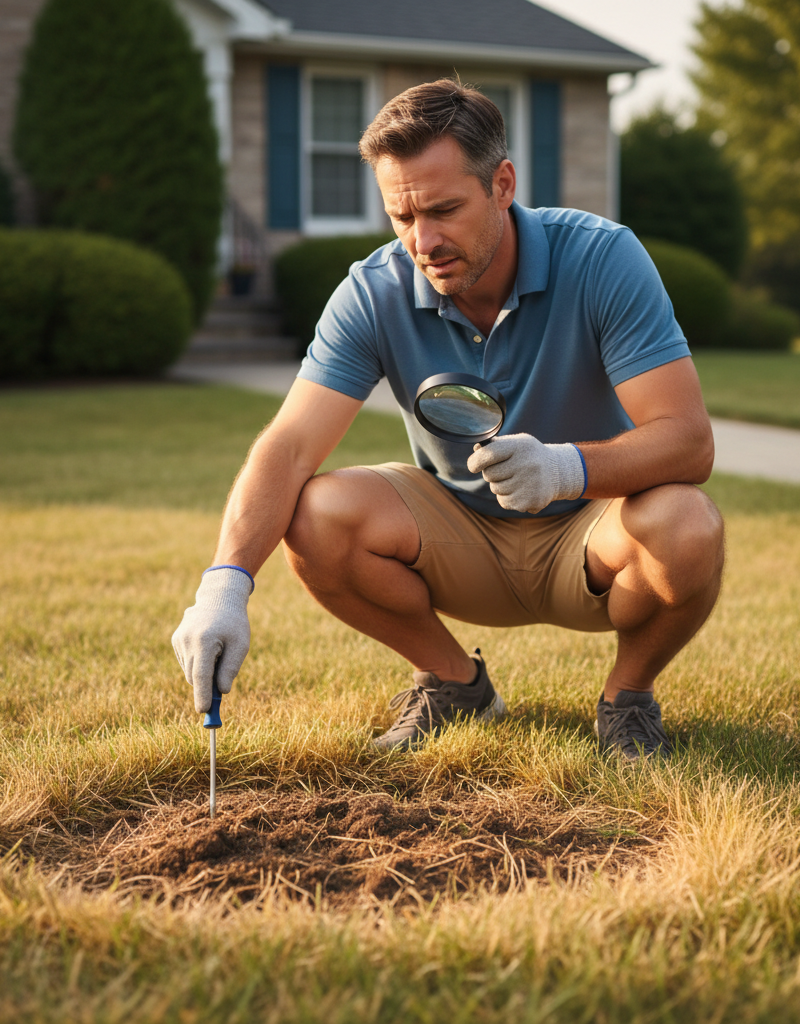
Inspect your lawn regularly for dandelions, especially in spring and fall. Young dandelions with smaller taproots are easier to remove entirely. For chemical treatment, avoid windy days and temperatures above 85°F (29°C), as herbicides can drift or evaporate quickly. Apply when dandelions are actively growing but not stressed by drought.
- Tools: None
- Safety: Read all herbicide labels if considering chemical options.
2. Manual Removal: The Deep Dive – Extract the entire taproot to prevent regrowth.
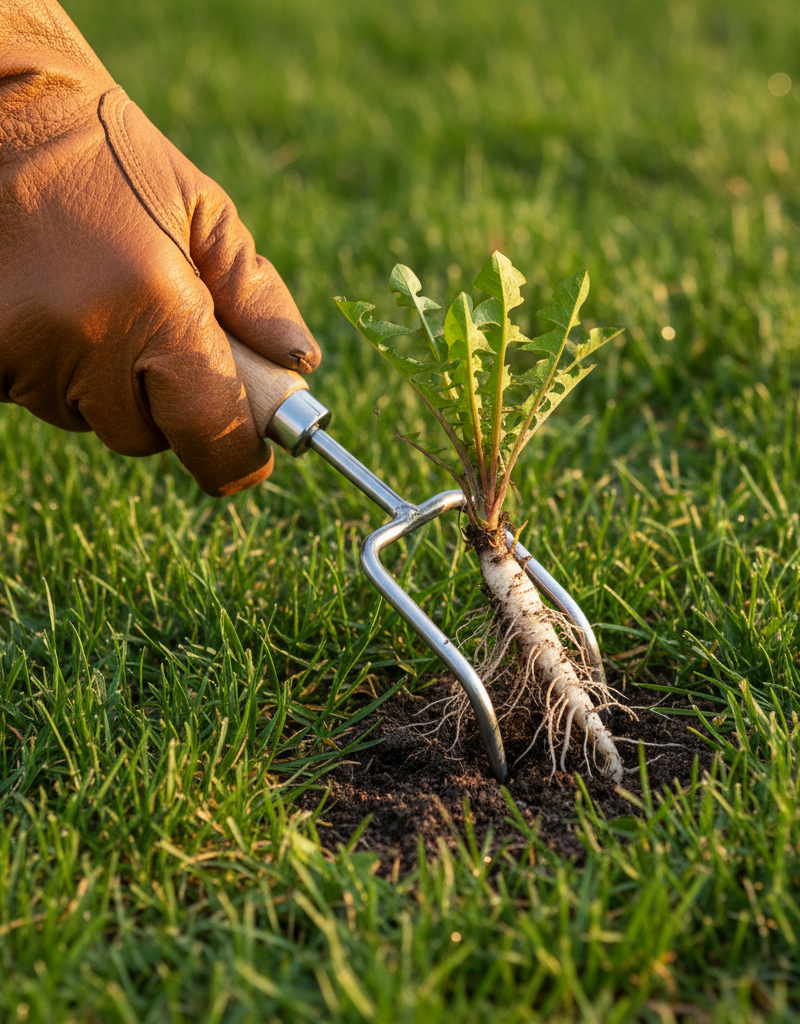
For scattered dandelions or an eco-friendly approach, manual removal is highly effective, but only if done correctly. Use a dandelion digging tool, weeding fork, or a sturdy flat-head screwdriver. Insert the tool next to the plant, angling it to follow the taproot as deep as possible. Gently pry upward, loosening the soil around the root. Grab the crown of the dandelion firmly and pull straight up, ensuring the entire taproot, especially the crown, comes out. A snapped root will likely regenerate.
- Tools: Dandelion digging tool, weeding fork, garden gloves
- If this doesn't work: If the root breaks repeatedly, try watering the area thoroughly the day before – moist soil makes extraction easier.
3. Strategic Chemical Application (If Necessary) – Use spot treatment for pervasive issues.
For widespread infestations, a selective broadleaf herbicide (containing 2,4-D, MCPP, or dicamba) can be effective. Always read and follow label instructions precisely. Apply directly to the dandelion leaves, ensuring good coverage. These herbicides are absorbed by the leaves and translocated to the root system, killing the entire plant. Avoid applying to desirable plants or on windy days to prevent drift.
- Tools: Handheld pump sprayer, personal protective equipment (gloves, eye protection)
- Safety: Wear appropriate PPE. Do not apply near water sources or food gardens. Keep pets and children off treated areas until dry.
4. Post-Removal Repair – Fill bare spots to prevent new weed growth.
After removing dandelions, especially if you've extracted many or used a granular herbicide, you'll be left with bare patches. These open areas are prime real estate for new weed seeds. Rake the soil smooth, apply a thin layer of topsoil, and reseed with an appropriate turfgrass variety for your region. Keep the reseeded areas consistently moist until germination and establishment.
- Materials: Topsoil, grass seed (appropriate for your climate)
- Timing: Spring or early fall are ideal for reseeding.
5. Improve Lawn Density – Thick turf chokes out dandelions.
A dense, healthy lawn is your best defense against dandelions. Overseed your lawn annually or biannually to maintain optimal turf density. A thick canopy of grass leaves shades the soil, making it difficult for dandelion seeds to germinate and for seedlings to compete for light.
- Materials: Grass seed, soil amendment (optional, for poor soil)
- Tip: Core aeration before overseeding can improve seed-to-soil contact and water/nutrient penetration.
6. Proper Mowing Practices – Raise your mower deck to shade the soil.
Mow your lawn at the highest recommended height for your grass type, typically 2.5 to 3 inches or taller. Taller grass blades shade the soil, keeping it cooler and suppressing weed seed germination, including dandelions. Never remove more than one-third of the grass blade height in a single mowing.
- Tools: Mower with adjustable deck height
- Mistake to avoid: Mowing too short stresses the grass and leaves soil exposed.
7. Optimal Watering – Encourage deep root growth for competitive grass.
Water your lawn deeply and infrequently, aiming for 1 inch of water once or twice a week (depending on climate and soil type), rather than frequent, shallow watering. Deep watering promotes deep root growth in turfgrass, making it more resilient and competitive against weeds like dandelions, which have naturally deep taproots.
- Tools: Rain gauge or can to measure water output
- Sign of under-watering: Grass blades curl or have a bluish-gray tint.
8. Fertilize Smartly – Feed your lawn, not the weeds.
Regular, balanced fertilization at the correct times of year (typically spring and fall) fuels healthy turf growth, helping it outcompete weeds. A soil test every 3-5 years can provide specific nutrient recommendations. Avoid over-fertilizing, which can promote excessive top growth at the expense of root development.
- Materials: Balanced lawn fertilizer (following soil test recommendations)
- Note: Some
Related Articles
Keep troubleshooting with these hand-picked guides from FixlyGuide:
- The #1 Mistake Killing Your Lawn (And How to Eradicate Clover, The RIGHT Way) — Discover how to eliminate stubborn clover from your lawn effectively without harming your grass, using targeted strategies and proper lawn…
- The #1 Mistake Homeowners Make When Fighting Dandelions (And The Weeds Still Win) — Learn the surprising reason dandelions continue to plague your lawn and the effective, long-term strategies to reclaim your turf without en…
- The 3 Weeds That Look Like Dandelions (And How to Kill Them All) — Kill dandelions and similar weeds in your lawn using proper identification and effective removal strategies, ensuring a healthier yard.
- The #1 Mistake Killing Your Garden: Why Weeds Keep Coming Back (And How to Stop Them) — Discover the secret to permanently removing weeds from your garden by understanding their root causes and implementing sustainable solution…
- The Eternal Weed Battle: Why They Always Come Back (And How to Actually Win) — Stop the cycle of endless weeding by understanding why weeds persist and how to implement long-term control strategies.
- Is Your Gutter Sagging After Every Storm? The Hidden Flaw Most Homeowners Miss — Discover the overlooked reason your gutters sag after every storm and learn the lasting fix that most homeowners miss.
What should this project cost?
Enter your project details for a realistic cost range before you call anyone.
Cost depends heavily on which system turns out to be the source.
- Regional adjustment
- National average
- Labor share (typical)
- ~$1,620
- Quotes to collect
- 3 written estimates
Educational estimate based on national averages — not a binding quote. Always confirm with written local estimates.
Frequently asked questions
Why do dandelions keep growing back after I pull them?+
Dandelions regrow because their deep taproots can extend over a foot into the soil. If even a small piece of the taproot remains after pulling, the plant can regenerate. You must remove the entire taproot to prevent regrowth.
Is it better to pull dandelions or use a chemical killer?+
For scattered dandelions, manual pulling (ensuring the entire taproot is removed) is an eco-friendly and effective method. For widespread infestations, a selective broadleaf herbicide can be more practical, but always follow label instructions carefully and consider environmental impact.
How can I prevent dandelions from coming back in my lawn?+
Prevention is key. Maintain a dense, healthy lawn by overseeding regularly, mowing at a taller height (2.5-3 inches), watering deeply and infrequently, and fertilizing appropriately. A thick turf shades the soil, making it harder for dandelion seeds to germinate and establish.
When is the best time to treat dandelions?+
Dandelions are easiest to control when they are young and actively growing. Spring is ideal for early removal, and fall is crucial for treating perennial weeds as they are storing energy in their roots, making them more susceptible to herbicides.
Can cultural practices alone get rid of dandelions?+
While cultural practices like proper mowing, watering, and fertilization won't eliminate existing dandelions instantly, they are critical for long-term prevention. A healthy, dense lawn is the best defense against new dandelion infestations and reduces the need for constant removal.
Discussion
Loading comments…