- Mowing Too Short (Scalping): The most prevalent mistake, removing too much of the grass blade at once, starves the plant and stresses the root system.
- Dull Mower Blades: Tearing grass blades rather than cleanly cutting them, leading to brown tips and increased disease susceptibility.
- Infrequent Mowing: Allowing grass to grow excessively long between cuts, which then forces you to remove more than one-third of the blade, causing shock.
- Mowing in the Same Direction: Leads to soil compaction, rutting, and uneven grass growth.
- Ignoring Grass Type: Different grass types have different ideal cutting heights. Mowing a cool-season grass like fescue at a height suited for Bermuda grass will cause damage.
Landscaping · Deck or fence project
| Project category | Landscaping |
|---|---|
| Problem type | Deck or fence project |
| Trade required | Landscaping |
| Urgency | Planned project |
| Safety risk | Moderate safety risk |
| DIY suitability | DIY for experienced homeowners |
| Cost category | High cost |
| Typical timeline | Most builds 3–10 days depending on size |
| Contractor type | Landscaping contractor |
Repair option
Replace failed boards, posts, and hardware; reseal the surface.
Replacement option
Rebuild when framing or the ledger connection is unsafe.
Common causes
- Rot at posts and ledger
- Storm damage
- Adding outdoor living space
Relevant tools:home improvement material pricesproject cost estimator
Published May 12, 2026Last updated August 17, 2026
Tools & materials you'll need
Affiliate linksAs an Amazon Associate FixlyGuide earns from qualifying purchases — at no extra cost to you. Prices and availability are accurate as of publication and subject to change.
Quick Answer
The most common mistake homeowners make is cutting their grass too short, especially during hot weather. This "scalping" stresses the turf, leading to shallow roots, increased weed growth, and susceptibility to disease. Adjusting your mower height to remove no more than one-third of the blade length at a time promotes deeper root growth and a healthier, more resilient lawn.
The Problem
Many homeowners believe that mowing their lawn as short as possible will reduce the frequency of mowing. While seemingly logical, this approach is severely detrimental to the health and appearance of your turf. The visible blade of grass is only one part of the plant; beneath the surface, a complex root system is working to absorb water and nutrients. When you cut too much of the grass blade, you're essentially removing a significant portion of the plant's photosynthetic capacity—its ability to convert sunlight into energy. This shock forces the plant to divert energy from root growth to leaf regeneration, leading to shallower, weaker roots that are less able to withstand drought, heat, and disease. The result is often a patchy, brown, and weed-infested lawn that struggles to thrive, despite your best efforts. Beyond the immediate aesthetic issues, a weakened lawn becomes an open invitation for pests and diseases, requiring more intensive and costly interventions down the line. Understanding the delicate balance between leaf and root, and how your mowing habits impact it, is the first step toward cultivating a truly healthy and resilient lawn.
How It Works
Grass plants, like all plants, rely on photosynthesis to create food for growth and energy. The leaves (what we see as grass blades) are the primary sites for this process. Within each grass blade are chlorophyll-filled cells that capture sunlight, converting it into sugars. These sugars are then transported throughout the plant, fueling everything from new blade growth to root development. A healthy grass plant maintains a dynamic equilibrium between its top growth and its root system. Taller grass blades mean more surface area for photosynthesis, which in turn allows the plant to produce more energy. This excess energy can then be directed towards developing a deeper, more extensive root system. Deep roots are crucial for several reasons: they enable the plant to access water and nutrients from deeper soil layers, provide better anchorage, and make the grass more tolerant to drought and heat stress. Conversely, when grass is cut too short, this delicate balance is disrupted. The plant's ability to photosynthesize is severely reduced, forcing it to expend stored energy reserves just to regrow its leaves. This leaves little to no energy for root development, resulting in a shallow, weak root system. Shallow roots are less efficient at absorbing water and nutrients, making the lawn more susceptible to drying out and nutrient deficiencies. Furthermore, shorter grass blades offer less shade to the soil surface, leading to higher soil temperatures and increased water evaporation. This creates an ideal environment for weeds, which often thrive in these stressed conditions, further competing with your grass for resources. The "one-third rule" isn't just an arbitrary guideline; it's based on this fundamental understanding of grass physiology, ensuring enough photosynthetic material remains for the plant to recover quickly and continue to invest in vital root growth.
Step-by-Step Fix
1. Assess Your Current Mower Height — *Before you even start the engine, visually inspect your mower’s deck height. Most mowers have levers or pins on each wheel or a central lever to adjust the cutting height. Consult your mower’s manual if you're unsure how to change it. Your goal is to ensure it's not set to the lowest possible setting.
-
- If you have clumpy grass after mowing: This often means your blade is dull or your deck is set too low for the grass height you're cutting. Raise the deck and sharpen your blade.
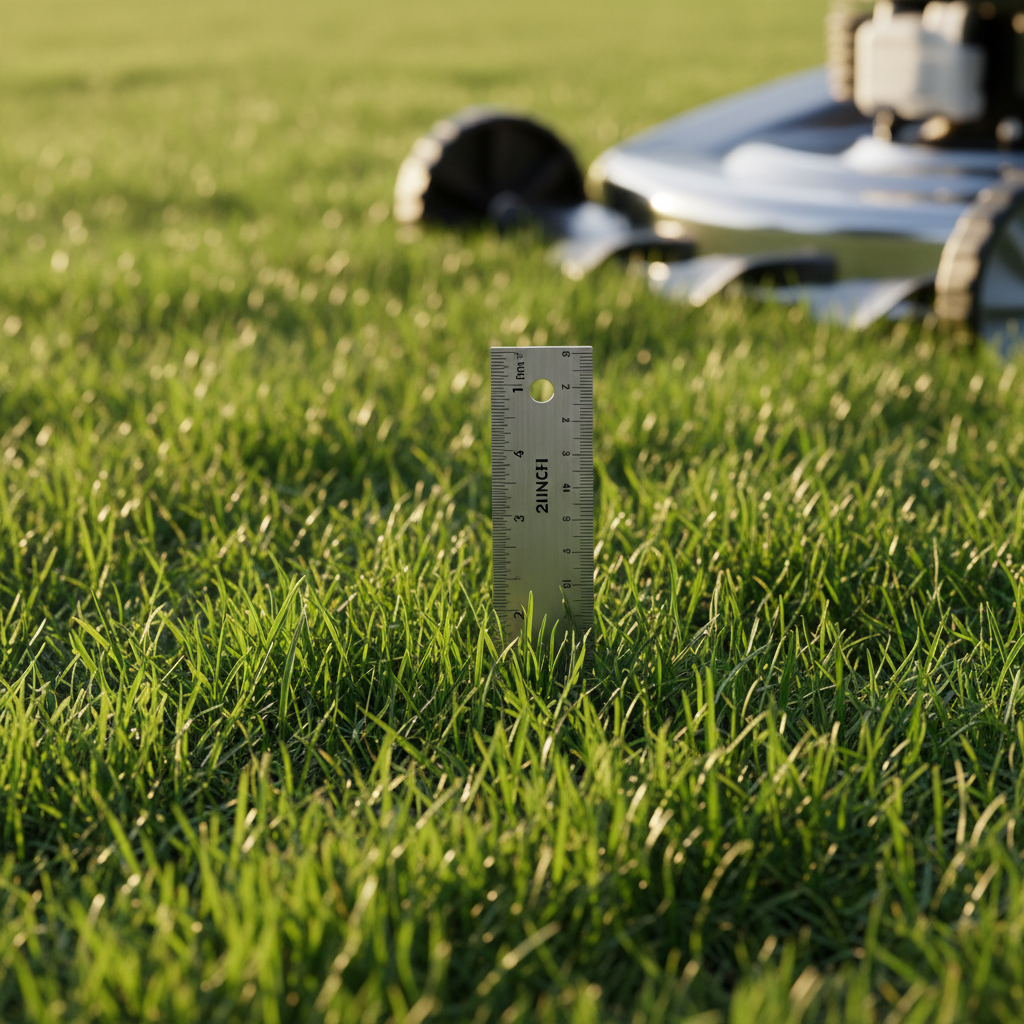
2. Implement the One-Third Rule — *This is the golden rule of mowing: never remove more than one-third of the grass blade's total height in a single mowing session. For example, if you want your grass to be 3 inches tall, let it grow to 4.5 inches before mowing it back down to 3 inches. This allows the grass to maintain enough leaf surface for photosynthesis and minimizes stress.
-
- Safety Note: Always wear appropriate footwear and eye protection when mowing. Never attempt to adjust mower blades or troubleshoot with the engine running.
3. Measure Your Grass Height Before Mowing — *Before each mow, take a simple ruler or tape measure and check the average height of your grass. This will help you determine the appropriate cutting height to adhere to the one-third rule. For most cool-season grasses (like fescue, rye, bluegrass), an ideal cut height is 2.5–3.5 inches. For warm-season grasses (like Bermuda, zoysia, St. Augustine), 1.5–2.5 inches is often suitable, but still, never remove more than one-third.
4. Adjust Your Mower Deck Accordingly — *Based on your current grass height and the one-third rule, adjust your mower deck. It’s better to err on the side of cutting less rather than more. If your grass is exceptionally long (e.g., after a vacation), you might need to mow it in stages over a couple of days, raising the deck for the first cut and then lowering it for the second, or simply accepting a slightly taller cut for that week.
5. Practice Proper Mowing Frequency — *Mowing frequency should be dictated by grass growth, not a rigid schedule. During peak growing seasons (spring, early summer), you might need to mow every 4-5 days. During slower growth periods (late summer, fall, drought), you might only need to mow every 7-10 days, or even less. The key is to consistently adhere to the one-third rule.
6. Maintain Sharp Mower Blades — *Dull blades tear rather than cut grass, leaving jagged edges that turn brown and are more susceptible to disease. Sharpen your mower blade at least once per season, or more frequently if you notice ragged cuts or if you mow over obstacles like rocks.
-
- If your lawn looks torn and frayed: This is a clear sign of a dull blade. Remove the blade (ensure the spark plug is disconnected!) and either sharpen it yourself with a file or grinder, or take it to a small engine repair shop.
7. Vary Your Mowing Pattern — *Mowing in the same direction every time can compact the soil and cause the grass blades to lean in one direction, making them more difficult to cut evenly. Vary your pattern each time you mow (e.g., north-south one week, east-west the next, then diagonally). This promotes upright growth and reduces rutting.
8. Leave Grass Clippings (Mulching) — *Unless the clippings are excessively long and clumpy, leave them on the lawn. They act as a natural fertilizer, returning valuable nutrients (especially nitrogen) and organic matter to the soil. Ensure your mower has a mulching option or attachment. If clippings are too thick, rake them or bag them to prevent smothering the grass.
9. Water Deeply and Infrequently — *Complement proper mowing with correct watering. Instead of frequent, shallow watering, aim for deep, infrequent watering (about 1 inch of water per week, including rainfall). This encourages roots to grow deeper, making the grass more resilient. Water early in the morning to reduce evaporation and fungal diseases.
Common Causes
- Mowing Too Short (Scalping): The most prevalent mistake, removing too much of the grass blade at once, starves the plant and stresses the root system.
- Dull Mower Blades: Tearing grass blades rather than cleanly cutting them, leading to brown tips and increased disease susceptibility.
- Infrequent Mowing: Allowing grass to grow excessively long between cuts, which then forces you to remove more than one-third of the blade, causing shock.
- Mowing in the Same Direction: Leads to soil compaction, rutting, and uneven grass growth.
- Ignoring Grass Type: Different grass types have different ideal cutting heights. Mowing a cool-season grass like fescue at a height suited for Bermuda grass will cause damage.
- Poor Soil Health: Compacted soil or nutrient-deficient soil exacerbates mowing stress, making it harder for grass to recover.
Common Mistakes
- Cutting Grass Like Hair: Thinking of your lawn like a haircut you want to last longer. Grass is a plant and needs its leaves for energy, unlike hair.
- Mowing When Wet: Mowing wet grass leads to uneven cuts, clumping of clippings, and can spread fungal diseases. Wait for the lawn to dry.
- Fertilizing Heavily Before Mowing: This encourages rapid top growth, making it harder to obey the one-third rule and increasing stress on the plant immediately after feeding.
- Setting It and Forgetting It: Leaving your mower height at one setting all season. Grass growth rates fluctuate with temperature and rainfall, so adjust your mowing height and frequency accordingly.
- Mowing Too Fast: Rushing through the job can lead to missed spots, uneven cuts, and can be dangerous. Take your time for a thorough and safe cut.
- Bagging All Clippings: While sometimes necessary, consistently bagging all clippings removes valuable nutrients and organic matter that could benefit your soil.
Cost & Time Breakdown
| Task | DIY cost | Pro cost | Time |
|---|---|---|---|
| Mower blade sharpening | $0–$15 | $15–$30 | 15–30 mins |
| Adjusting mower height | $0 | $0 (part of service) | 1–2 mins |
| Consistent mowing (per mow) | $0 (fuel/oil) | $40–$80 | 30–90 mins |
| Soil test kit (optional) | $15–$30 | $100–$200+ | 5 mins (application) |
| Reseeding patchy areas (materials) | $20–$50 | $100–$300+ | 1–2 hours |
Tips & Prevention
- Know Your Grass Type: Research the specific type of grass in your lawn to understand its ideal cutting height and growth habits. This knowledge is fundamental.
- Regular Blade Maintenance: Check your mower blade for sharpness before each season and after every few cuts. A sharp blade is the single best investment in a healthy cut.
- Observe Your Lawn: Pay attention to how your lawn reacts after mowing. Are the tips browning? Does it look thin? These are clues that your mowing practices might need tweaking.
- Soil Test Annually: A soil test every 1-2 years can reveal nutrient deficiencies or pH imbalances that make your grass more susceptible to stress, regardless of mowing practices. Adjust nutrients based on results.
- Edge Strategically: Use an edger or string trimmer to create clean lines after mowing, but be careful not to scalp the edges or create divots.
- Integrated Lawn Care: Remember that mowing is just one part of total lawn health. Proper watering, fertilization, and pest/weed control all work together for a thriving lawn.
When to Call a Professional
While proper mowing seems straightforward, sometimes a lawn's issues run deeper than just cutting height. If you've diligently followed the one-third rule, maintained sharp blades, and adjusted your watering, but still experience persistent browning, widespread patchiness, or a sudden proliferation of diseases or pests, it's time to consult a professional. Lawn care experts can perform comprehensive soil analyses to diagnose nutrient deficiencies, identify specific fungal diseases or insect infestations, and recommend targeted treatments that go beyond general DIY solutions. They can safely apply specialized herbicides or fungicides that might not be available to homeowners or require specific training for effective and safe application. Additionally, if your lawn's overall health seems to be declining despite your best efforts, a professional can provide tailored advice on aeration, overseeding, or even consider if your grass type is truly suited for your climate and soil conditions. Don't hesitate to call if you suspect a deeper underlying problem that affects the entire lawn's ecosystem.
Related Articles
Keep troubleshooting with these hand-picked guides from FixlyGuide:
- The #1 Mowing Mistake That Starves Your Lawn (And How to Fix It in Minutes) — Learn the surprising reason your lawn might be struggling despite regular mowing and how a simple adjustment can lead to healthier, more vi…
- The #1 Mistake Killing Your Lawn's Crabgrass Defense (And the Easy Fix) — Discover why common crabgrass removal methods fail and how to naturally eliminate this stubborn weed for a healthier lawn.
- The 3 Lawn Mowing Mistakes Killing Your Grass (and How to Fix Them) — Discover the three most common lawn mowing mistakes homeowners make that damage their grass, and learn simple, actionable steps to correct…
- The #1 Watering Mistake That Kills Lawns (And How to Fix Yours in 10 Minutes) — Discover the most common watering mistake homeowners make and how to adjust your watering routine for a healthier, more resilient lawn.
- The #1 Summer Lawn Mistake Turning Your Grass Yellow (It's Not Overwatering) — Discover the most common, often overlooked reason your summer lawn is turning yellow despite your best efforts, and learn how to fix it.
- Is Your Gutter Sagging After Every Storm? The Hidden Flaw Most Homeowners Miss — Discover the overlooked reason your gutters sag after every storm and learn the lasting fix that most homeowners miss.
What should this project cost?
Enter your project details for a realistic cost range before you call anyone.
Cost depends heavily on which system turns out to be the source.
- Regional adjustment
- National average
- Labor share (typical)
- ~$1,620
- Quotes to collect
- 3 written estimates
Educational estimate based on national averages — not a binding quote. Always confirm with written local estimates.
Frequently asked questions
How short should I cut my grass?+
The ideal cutting height for your grass depends on its type, but a general rule is to keep it between 2.5 and 3.5 inches for cool-season grasses and 1.5 to 2.5 inches for warm-season grasses. Crucially, never remove more than one-third of the grass blade's total height in any single mowing session to avoid stressing the plant.
Why do the tips of my grass turn brown after mowing?+
Brown tips after mowing usually indicate that your mower blades are dull. Dull blades tear and fray the grass instead of cutting it cleanly, leaving damaged ends that turn brown and are more susceptible to disease. Sharpening your blades regularly will ensure a clean cut.
Can mowing too often hurt my lawn?+
Mowing too often isn't necessarily harmful if you're consistently adhering to the one-third rule. However, if 'mowing too often' means you're constantly cutting the grass very short, it will stress the plant and lead to a less healthy lawn. Focus on removing only a small portion of the blade when it reaches the appropriate height, rather than sticking to a rigid calendar schedule.
Should I leave grass clippings on my lawn?+
Yes, in most cases, you should leave grass clippings on your lawn. They decompose quickly, returning valuable nutrients and organic matter to the soil, which acts as a natural fertilizer. This practice, known as mulching, reduces the need for synthetic fertilizers and improves soil health. Only bag clippings if they are excessively thick and risk smothering the grass.
How often should I sharpen my mower blade?+
You should sharpen your mower blade at least once per mowing season. If you mow frequently, have a large lawn, or often hit unseen obstacles, consider sharpening it more often, perhaps two to three times per season. A good indicator is if your grass tips start to look frayed or brown after mowing.
Discussion
Loading comments…