Tools & materials you'll need
Affiliate linksAs an Amazon Associate FixlyGuide earns from qualifying purchases — at no extra cost to you. Prices and availability are accurate as of publication and subject to change.
Quick Answer
Many homeowners struggle with dandelions because they misidentify the weed's life cycle or apply treatments at the wrong time. To effectively combat dandelions, you need a multi-pronged approach: manually remove young, isolated weeds, apply pre-emergent herbicides in early spring and fall to prevent seed germination, and most critically, cultivate a thick, healthy lawn through proper mowing, watering, and fertilization. A dense turf is the best natural defense against dandelions and other broadleaf weeds.
The Problem
Dandelions are the bane of many homeowners' existence. These persistent weeds, with their bright yellow flowers and fluffy seed heads, seem to pop up overnight, quickly spreading across an otherwise pristine lawn. Their deep taproots make them notoriously difficult to remove completely, and if even a small piece of the root remains, the plant can regenerate. The problem isn't just aesthetic; dandelions compete with desirable turfgrass for water, nutrients, and sunlight, weakening your lawn over time and making it more susceptible to other stressors.
Homeowners often feel stuck in a losing battle, pulling weeds by hand only to see more appear days later, or applying herbicides that seem to have little long-term effect. The core issue often lies in a misunderstanding of the dandelion's growth cycle and the most effective times to intervene. Without a strategic approach, your efforts become reactive and exhaustive, rather than proactive and sustainable.
How It Works
Dandelions (Taraxacum officinale) are perennial broadleaf weeds, meaning they come back year after year from the same root system. Their success lies in several key biological traits. Each plant develops a strong, thick taproot that can extend 6-18 inches deep into the soil, making them resilient to drought and difficult to pull out entirely. This taproot stores carbohydrates, allowing the plant to survive harsh conditions and regrow even after the top foliage is removed.
Reproduction occurs primarily through seeds. Each yellow flower head can produce hundreds of seeds, which are then dispersed by wind, often traveling significant distances. These seeds can remain viable in the soil for several years, waiting for ideal conditions to germinate. Dandelions are cool-season weeds, thriving in temperatures between 50°F and 75°F. They generally germinate in early spring and fall when soil temperatures are ideal. Once established, they can flower multiple times throughout the growing season, from early spring through late fall.
Their broad leaves form a low-growing rosette that effectively shades out and outcompetes surrounding turfgrass for sunlight and moisture. When you mow, the dandelion's growth point remains close to the ground, mostly unaffected, while the turfgrass is cut back. This gives the dandelion a competitive advantage. Herbicides work by being absorbed through the leaves (post-emergent) or by preventing seed germination in the soil (pre-emergent). Understanding this life cycle is crucial for timing your control methods effectively.
Step-by-Step Fix
Fixing a dandelion-infested lawn requires patience and a combination of strategies. Here's a proven approach:
-
Assess the Infestation – Count the number of dandelions and gauge the density. If you have only a few scattered plants, manual removal is often sufficient. For widespread infestations, you'll need a broader approach.
- If you have fewer than 10-15 dandelions in a small area, consider hand-pulling a viable strategy.
- If your lawn is more than 10% covered by dandelions, a combination of manual removal and herbicide application is likely necessary.
-
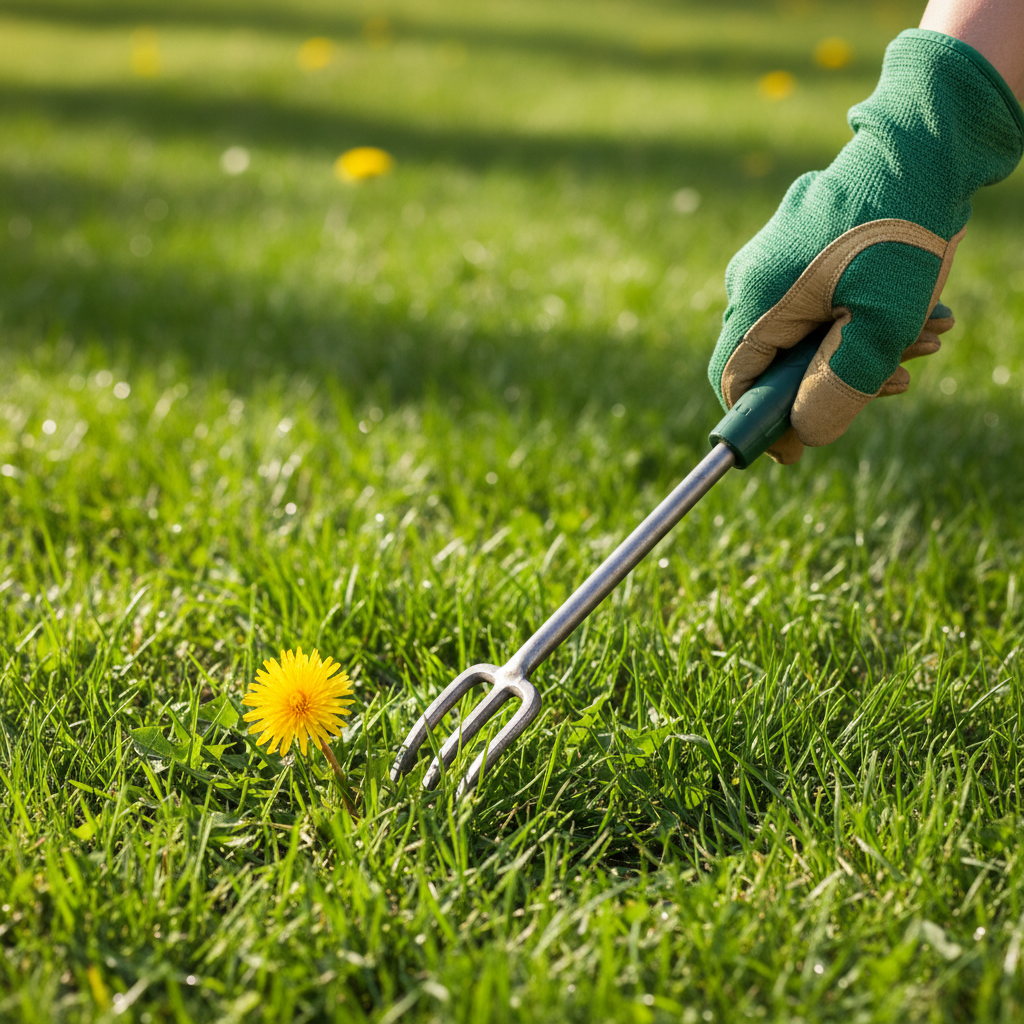
Manual Removal (for young or sparse dandelions) – Early intervention is key. Dandelions are easiest to remove when the soil is moist (after rain or watering) as the taproot comes out more easily.
- Tools: Dandelion weeder or a sturdy garden fork.
- Technique: Insert the tool deep next to the plant, aiming to get below the taproot. Pry upward, trying to extract the entire root. Even a small piece of root left behind can regrow.
- Safety: Wear gardening gloves to protect your hands.
- If this doesn't work: If the root breaks and the plant regrows, try again sooner, or spot-treat the regrowth with a post-emergent herbicide.
-
Correct Mowing Practices – Mowing too short stresses your lawn and gives dandelions more sunlight. Raise your mower blade.
- Height: Mow turfgrass at least 3 inches tall, ideally 3.5-4 inches. Taller grass shades the soil, making it less hospitable for dandelion seeds to germinate and compete.
- Frequency: Mow regularly enough so you're only removing about one-third of the grass blade length at a time.
-
Strategic Watering – Deep, infrequent watering encourages deep root growth in your turfgrass, making it more resilient to weeds.
- Schedule: Water deeply (to saturate the top 6-8 inches of soil) 1-2 times per week, rather than shallowly every day.
- Time of day: Water in the early morning to minimize evaporation and reduce fungal issues.
-
Targeted Fertilization – A well-fed lawn is a dense lawn, which naturally chokes out weeds.
- Timing: Fertilize in early spring and early fall. A late fall application can be particularly effective for promoting root growth and winter hardiness.
- Nutrients: Use a balanced lawn fertilizer designed for your grass type. Soil tests can help you determine specific nutrient deficiencies.
-
Pre-Emergent Herbicide Application (Preventative) – This is your first line of defense against new dandelions from seed.
- Timing: Apply in early spring (when soil temperatures reach 50-55°F for several consecutive days, typically when forsythia bushes bloom) and again in early fall (late August to mid-September) to target different germination cycles.
- Product: Choose a pre-emergent specifically labeled for broadleaf weeds like dandelions. Read and follow all label instructions carefully.
- Application: Apply uniformly across the lawn. Water lightly after application to activate the herbicide and move it into the soil where it can form a barrier.
- If you plan to reseed: Do NOT apply pre-emergent if you plan to overseed within the next 8-12 weeks, as it will prevent grass seeds from germinating too.
-
Post-Emergent Herbicide Application (Curative) – For existing dandelions that manual removal isn't practical for.
- Timing: Apply when dandelions are actively growing, but before they go to seed. Early fall is often the most effective time as the plants are moving carbohydrates to their roots, pulling the herbicide deep into the taproot.
- Temperature: Apply when temperatures are between 60°F and 85°F. Avoid applying on very hot days (>90°F) or if rain is expected within 24 hours.
- Product: Select a broadleaf herbicide that specifically targets dandelions without harming your grass (e.g., those containing 2,4-D, MCPP, or dicamba). Always read the label thoroughly.
- Application: Spot-treat individual dandelions or broadcast spray for widespread issues. Spray the leaves until they are wet, but not dripping.
- Safety: Always wear appropriate personal protective equipment (gloves, eye protection) and follow all manufacturer warnings.
- Note: Do not mow your lawn for 2-3 days before or after applying post-emergent herbicides to allow maximum leaf surface for absorption and prevent it from being cut off.
Common Causes
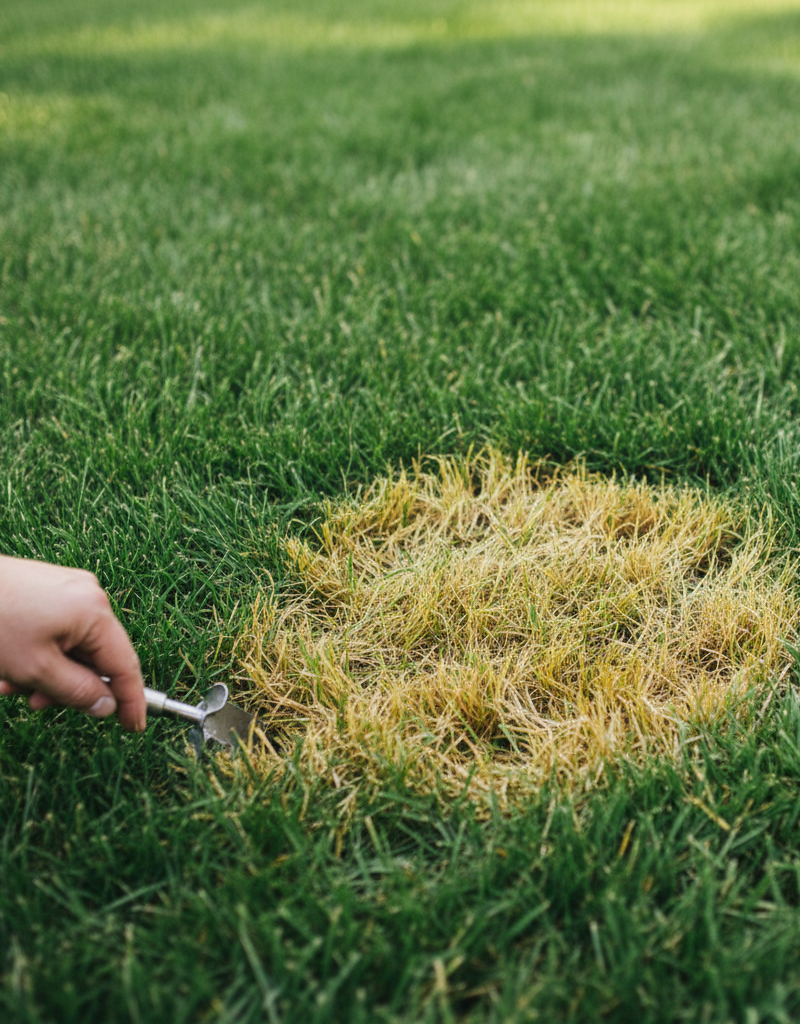
- Sparse or Weak Turf: Thin lawns with bare spots provide ample opportunity for dandelion seeds to germinate and thrive without competition. Proper fertilization, watering, and mowing are key to a dense lawn.
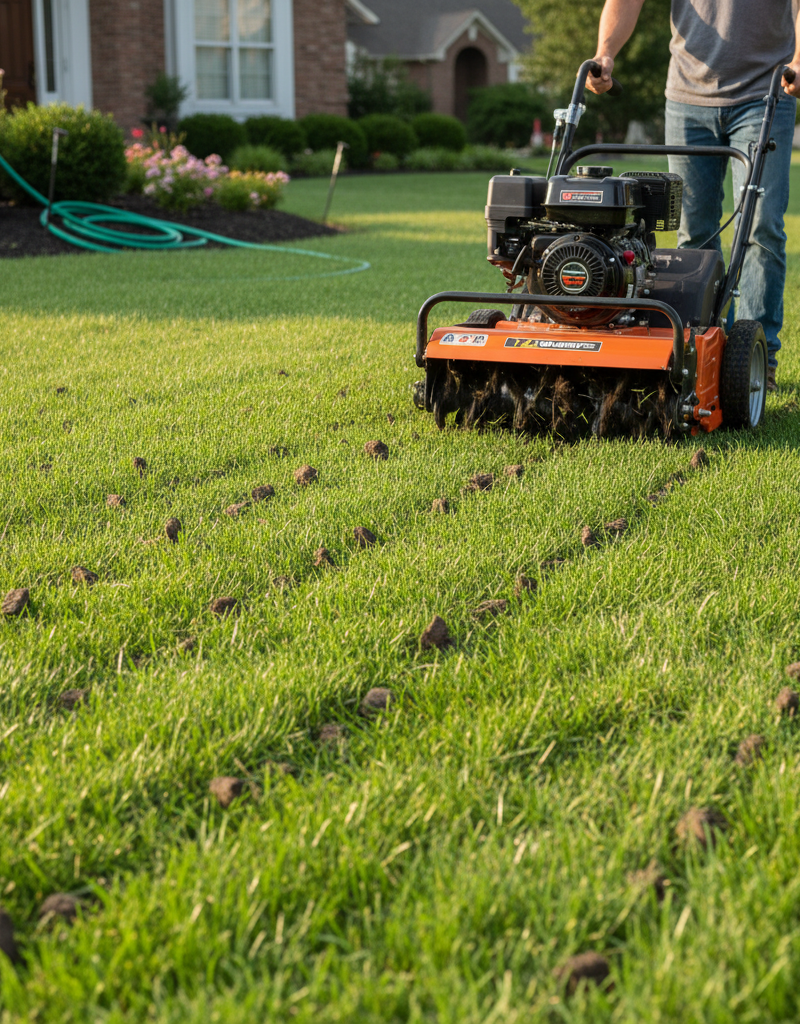
- Compacted Soil: Dandelions, with their strong taproots, can penetrate compacted soils more easily than many desirable turfgrasses. Aeration can help improve soil structure and allow grass roots to grow deeper, making the area less hospitable for dandelions.
- Improper Mowing Height: Mowing your lawn too short stresses the grass, reducing its ability to photosynthesize and compete. Taller grass shades the soil, keeping it cooler and suppressing weed seed germination.
- Overwatering or Underwatering: Inconsistent watering habits can stress turfgrass, creating an environment where resilient weeds like dandelions can gain an advantage. Deep, infrequent watering promotes strong grass roots.
- Incorrect Herbicide Timing: Applying pre-emergent too late after germination begins, or post-emergent when dandelions are dormant or stressed, significantly reduces effectiveness. Understanding the dandelion life cycle is crucial.
- Leaving Dandelions to Go to Seed: Allowing even a few dandelions to mature and release their seeds will perpetuate the problem, as hundreds of new seeds are dispersed, ready to germinate.
Common Mistakes
- Mowing Dandelions Without Bagging Clippings: If dandelions have gone to seed (the white fluffy stage), mowing without a bagger will spread hundreds of seeds across your lawn, actually worsening the problem. Always bag dandelions that have seeded.
- Applying Herbicides on Windy Days: Drift from herbicides can damage desirable plants, shrubs, and flowers in your landscape. Apply on calm days with no wind.
- Using Pre-Emergent When You Plan to Overseed: Pre-emergent herbicides prevent all seeds from germinating – including grass seed. If you're planning to overseed your lawn, ensure there's at least a 2-3 month gap after pre-emergent application or choose a product specifically designed for use with new grass seed.
- Applying Post-Emergent Herbicides When Temperatures Are Too High or Low: Herbicides are most effective within a specific temperature range. Too hot, and they can volatilize and damage turf. Too cold, and the plants aren't actively growing and won't absorb the chemical effectively. Always check the product label for temperature guidelines.
- Not Calibrating Your Spreader: Incorrect spreader settings lead to uneven application – either too much (risking lawn damage) or too little (resulting in ineffective weed control). Calibrate your spreader according to product instructions.
- Ignoring Soil Health: A healthy soil ecosystem supports robust grass growth. Neglecting soil pH, nutrient levels, and organic matter can weaken your lawn's natural defenses against weeds. Consider a soil test every few years.
Cost & Time Breakdown
| Task | DIY Cost | Pro Cost | Time |
|---|---|---|---|
| Manual Weeding (Light) | $0–$15 (tool) | N/A | 30 mins – 1 hour |
| Pre-Emergent Application | $20–$50 (product) | $100–$250 (per application) | 1–2 hours |
| Post-Emergent Spot Treatment | $15–$30 (product) | N/A | 15–30 minutes |
| Post-Emergent Broadcast Spray | $30–$70 (product) | $100–$250 (per application) | 1–2 hours |
| Lawn Fertilization | $30–$80 (per bag) | $75–$150 (per application) | 30 mins – 1 hour |
| Aeration (DIY) | $0–$80 (rental) | N/A | 2–4 hours |
Tips & Prevention
- Promote a Dense Lawn: The single best defense against dandelions is a thick, healthy lawn. Follow proper mowing, watering, and fertilization schedules. Aim for a dense turf that shades out weed seeds and competes for resources.
- Overseed Regularly: Bare spots are an open invitation for weeds. Overseeding in the fall helps fill in thin areas, preventing dandelions and other unwanted plants from taking root.
- Mulch Landscape Beds: Apply a 2-3 inch layer of mulch to garden beds and around trees and shrubs to suppress dandelion growth in these areas, preventing them from spreading to your lawn.
- Inspect and Clean Equipment: If you've mowed an area with dandelions, clean your mower deck and blades before moving to a weed-free section of your lawn to avoid spreading seeds.
- Consider a Soil Test: Every 2-3 years, conduct a soil test to understand your lawn's specific nutrient needs and pH levels. Correcting imbalances can significantly improve turf health and weed resistance.
- Act Early: Address dandelions as soon as you see them, especially when they are small and before they produce seeds. Early manual removal is far more effective than trying to manage a widespread infestation.
When to Call a Professional
If your lawn is severely infested with dandelions, you're struggling to identify the specific weeds, or you're uncomfortable using herbicides, it's wise to consult a professional lawn care service. They can perform a comprehensive assessment, recommend tailored treatments, and apply professional-grade products safely and effectively. Additionally, if your lawn health issues extend beyond dandelions to persistent fungal diseases, insect infestations, or mysterious yellowing, a pro can properly diagnose and treat the underlying problems that may be weakening your turf and inviting weeds. Professionals have the training and equipment to handle widespread issues efficiently and without harming your desirable plants. They can also offer services like core aeration and overseeding to improve overall lawn health sustainably. If you're dealing with extensive crabgrass, nutsedge, or other particularly stubborn weeds alongside dandelions, a professional eye can identify the optimal products and timings for complete eradication.
Related Articles
Keep troubleshooting with these hand-picked guides from FixlyGuide:
- The #1 Mistake Killing Your Garden (And 5 Permanent Weed Fixes) — Discover the secret to truly permanent weed removal and stop making the common mistake that allows weeds to relentlessly return, reclaiming…
- The #1 Mistake Killing Your Lawn (and the Simple Grub Fix) — Grub worms can covertly destroy a beautiful lawn, but specific biological and chemical treatments applied at the right time can eliminate t…
- The #1 Mistake Killing Your Thin Lawn (and How to Fix It in a Weekend) — Overseeding a thin lawn is crucial for a lush yard, but a common mistake can ruin your efforts before they even begin. Learn how to diagnos…
- The #1 Mistake Killing Your Lawn's Crabgrass Defense (And the Easy Fix) — Discover why common crabgrass removal methods fail and how to naturally eliminate this stubborn weed for a healthier lawn.
- The #1 Mistake Homeowners Make When Fighting Dandelions (And The Weeds Still Win) — Learn the surprising reason dandelions continue to plague your lawn and the effective, long-term strategies to reclaim your turf without en…
- The #1 Mistake Homeowners Make When a Gas Burner Won't Light (And the Easy Fix) — Before you call a technician, discover the most common, overlooked reason your gas stove burner isn't lighting and how to fix it yourself i…
Should you do this yourself?
Answer five quick questions before you start. Safety outranks savings every time.
Your experience with work like this
How high do you have to work?
Does the job involve any of these?
Will it need a permit?
Specialty tools
Free and instant. Educational guidance only — not a quote, inspection, or professional diagnosis.
Get the print-ready PDF of this guide
A clean, ad-free, printable version you can keep on your phone or pin to the workshop wall. Free with a FixlyGuide account.
- Print-optimized layout
- Tools, materials & every step included
- Saved to your account
Frequently asked questions
What is the best time to apply pre-emergent for dandelions?+
The best times to apply pre-emergent herbicides for dandelions are in early spring (when soil temperatures consistently reach 50-55°F, typically when forsythia blooms) and again in early fall (late August to mid-September) to target different germination cycles of new seeds.
Can I just pull dandelions by hand?+
Yes, manual pulling is effective for young or sparse dandelions, especially when the soil is moist. However, you must remove the entire taproot; any pieces left behind can regrow. For widespread infestations, manual pulling alone is often insufficient for long-term control.
Why do dandelions keep coming back?+
Dandelions keep coming back because their deep taproots allow them to regenerate even if the top is removed. Additionally, each plant produces hundreds of wind-dispersed seeds that can remain viable in the soil for years, leading to continuous re-infestation if not properly managed with preventative measures.
Does mowing dandelions spread them?+
Mowing dandelions that have already gone to seed (the white fluffy stage) will absolutely spread hundreds of seeds across your lawn, furthering the infestation. If dandelions have seeded, always bag your clippings when mowing to contain and remove the seeds.
What common mistake makes dandelion control harder?+
The most common mistake is improper timing of control methods. Applying pre-emergent too late after seeds have germinated, or post-emergent when dandelions aren't actively growing, significantly reduces effectiveness. Also, mowing too short weakens your grass, giving dandelions an advantage.

Discussion
Loading comments…