- Soil Composition: While raised beds often have custom soil mixes designed for drainage, this can also mean they dry out much faster than dense, in-ground soil, requiring more frequent watering.
- Exposure to Elements: Raised beds are more exposed to sun and wind on all sides, significantly increasing evaporation rates compared to in-ground gardens.
- Inconsistent Manual Watering: Relying on a garden hose or watering can leads to human error – forgetting to water, uneven application, and variations in water volume each time.
- Lack of Targeted Delivery: Overhead sprinklers or wide sprays primarily wet foliage and the soil surface, leading to high evaporation and less water reaching the root zone where it's most needed.
- Ignoring Weather Changes: Without a smart system, manual watering schedules don't adapt to rainfall or exceptionally hot, dry days, resulting in unnecessary watering or insufficient hydration.
Published May 6, 2026Last updated August 17, 2026
Tools & materials you'll need
Affiliate linksAs an Amazon Associate FixlyGuide earns from qualifying purchases — at no extra cost to you. Prices and availability are accurate as of publication and subject to change.
Quick Answer
Optimizing watering for raised garden beds involves more than just regular hydration; it's about precision. Smart irrigation systems deliver water directly to the root zone, often adjusting schedules based on soil moisture and weather forecasts. This targeted approach prevents common issues like overwatering, underwatering, and fungal diseases, leading to more vigorous plant growth, higher yields, and significant water conservation. Furthermore, automating this essential task saves homeowners valuable time and effort, allowing them to enjoy their garden without the daily chore of manual watering.
The Problem
Raised garden beds offer numerous advantages, including better drainage, warmer soil, and easier access for cultivation. However, their unique characteristics also present specific watering challenges. Because the soil in raised beds is elevated and often more porous, it tends to dry out faster than in-ground gardens. This rapid drying necessitates more frequent watering, but inconsistent or inefficient methods can lead to a host of problems. Manual watering often results in uneven distribution, with some areas receiving too much water and others not enough. Overwatering can lead to root rot, nutrient leaching, and fungal diseases, while underwatering stunts growth, causes wilting, and reduces overall plant productivity. Traditional sprinkler systems can waste significant amounts of water through evaporation and runoff, especially on windy days or when watering during the hottest parts of the day. Furthermore, the daily commitment to manual watering can be a significant time drain, particularly for larger gardens or during busy periods. Homeowners need an efficient, precise, and adaptive watering solution that addresses these challenges, conserves water, and supports robust plant health without constant supervision.
How It Works
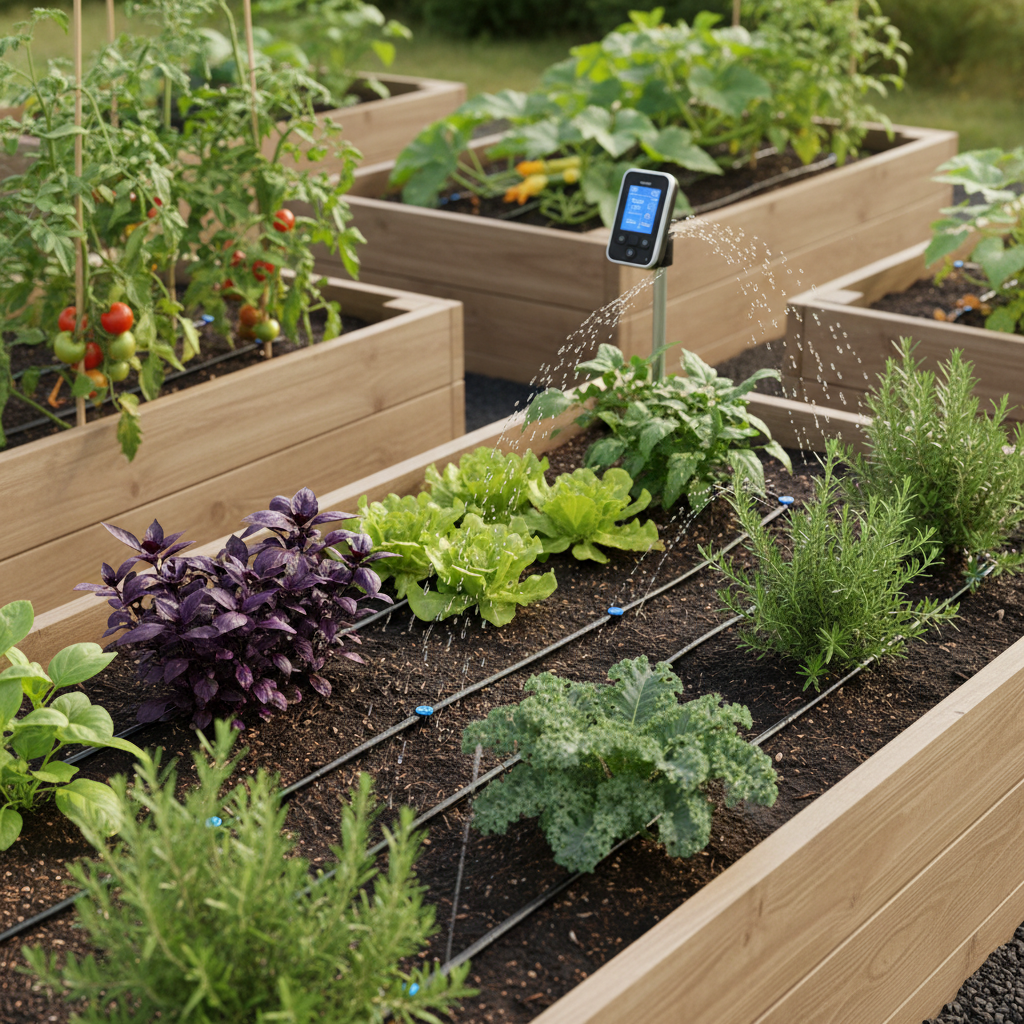
Smart watering systems for raised beds operate on principles of efficiency and precision, contrasting sharply with traditional methods. At their core, these systems consist of a water source connection, a control unit, and a network of emitters. Water is typically supplied via a standard garden hose connection. The control unit, often equipped with a timer and sometimes integrated with a smart app, dictates when and for how long watering occurs. More advanced systems incorporate sensors, such as soil moisture sensors or rain sensors, which communicate with the control unit. A soil moisture sensor, for instance, measures the volumetric water content in the soil. If the soil is sufficiently moist, the sensor signals the controller to skip or delay a scheduled watering cycle. Conversely, if the soil is too dry, it prompts an immediate or accelerated watering. Rain sensors work similarly, detecting rainfall and temporarily shutting off the system to prevent overwatering and conserve water. This integration allows the system to adapt to real-time environmental conditions, delivering water only when and where it's needed. The water then travels through a network of small-diameter drip lines or soaker hoses placed directly on the soil surface or slightly buried near the base of the plants. These lines have emitters or pores that release water slowly and directly into the root zone. This drip irrigation method minimizes evaporation and runoff, ensuring that nearly all the water applied reaches the plants' roots. Some systems even allow for zone-specific watering, meaning different raised beds or sections can receive varying amounts of water based on the specific needs of the plants within them. The result is a highly efficient, customizable, and water-conserving irrigation solution that promotes healthy plant growth without manual intervention.
Step-by-Step Fix
1. Plan Your Layout — Before you buy any components, sketch out your raised beds. Measure their dimensions and note the desired location for each plant type. Identify your water source (usually an outdoor spigot) and plan the most direct route for your main water line to reach all beds. Consider sunlight exposure and plant water needs (e.g., tomatoes need more water than herbs).
- Gather Info: Note the GPH (gallons per hour) ratings of different emitters for various plants.
- Tools: Measuring tape, pen, paper.
2. Assemble the Main Line — Connect your smart controller to your outdoor spigot. Most controllers simply thread onto a standard hose bib. Then, attach your primary water supply tubing (often 1/2-inch or 3/4-inch poly tubing) to the controller's output.
- Safety Note: Ensure tight connections to prevent leaks. Use plumber's tape on threaded connections if necessary.
- If this doesn't work: If the controller won't thread on, check the spigot's thread size – you might need an adapter.
3. Install Distribution Lines — Lay out your primary distribution lines (larger diameter tubing) along the edges or center of your raised beds, according to your plan. Use tubing stakes to secure the lines and prevent kinks.
- Tip: Leave a little slack in the tubing to allow for expansion and contraction with temperature changes.
4. Add Emitters and Drip Lines — Using a punch tool, create small holes in your distribution lines where you want to branch off to individual plants. Insert barbed connectors and attach smaller diameter drip lines (1/4-inch tubing) or individual drip emitters. Position these emitters directly at the base of your plants.
- Tools: Tubing cutter, hole punch tool, barbed connectors, drip emitters.
- Materials: 1/4-inch drip tubing.
5. Install Sensors (If Applicable) — If your system includes soil moisture sensors, gently push them into the soil near the root zone of a representative plant in each bed. Connect them to your smart controller according to the manufacturer's instructions. For rain sensors, mount them in an open area where they can accurately detect rainfall.
- Placement Tip: Bury soil sensors deep enough to accurately assess root-level moisture, not just surface dampness.
6. Flush the System — Before adding end caps, briefly turn on the water to flush out any debris from the lines. This prevents clogs in your emitters.
- Important: Watch for any immediate leaks at connections during flushing.
7. Cap the Lines — Once the system is flushed, install end caps on all main and branch lines. Tighten them securely to maintain pressure.
8. Program the Controller — Access your smart controller's app or onboard interface. Set your initial watering schedule, frequency, and duration. If using sensors, enable their functionality and set desired moisture thresholds or rain delay sensitivity.
- Starting Point: Begin with shorter, more frequent cycles and adjust as needed. For new plantings, more frequent, shallower watering might be beneficial initially.
9. Test and Monitor — Run a test cycle and visually inspect all emitters to ensure they are working correctly and delivering water where intended. Over the next few days and weeks, observe your plants and soil. Adjust watering schedules or emitter flow rates as necessary based on plant health and soil moisture.
- Observation: Wilting leaves can indicate underwatering, while yellowing leaves can signal overwatering.
Common Causes
Several factors contribute to inefficient watering in raised garden beds, often leading to either over or under-watering:
- Soil Composition: While raised beds often have custom soil mixes designed for drainage, this can also mean they dry out much faster than dense, in-ground soil, requiring more frequent watering.
- Exposure to Elements: Raised beds are more exposed to sun and wind on all sides, significantly increasing evaporation rates compared to in-ground gardens.
- Inconsistent Manual Watering: Relying on a garden hose or watering can leads to human error – forgetting to water, uneven application, and variations in water volume each time.
- Lack of Targeted Delivery: Overhead sprinklers or wide sprays primarily wet foliage and the soil surface, leading to high evaporation and less water reaching the root zone where it's most needed.
- Ignoring Weather Changes: Without a smart system, manual watering schedules don't adapt to rainfall or exceptionally hot, dry days, resulting in unnecessary watering or insufficient hydration.
- Plant-Specific Needs Unaddressed: Different plants have different water requirements. A uniform watering approach fails to meet the individual needs of varied crops in the same bed.
Common Mistakes
DIY watering system setup can go wrong in several ways. Avoid these common blunders:
- Underestimating Water Pressure Needs: Many drip systems require adequate water pressure to function correctly. Don't assume your outdoor spigot provides enough pressure without checking, or add a pressure regulator if needed.
- Incorrect Emitter Placement: Placing emitters too far from the plant's base, or using emitters with too high a flow rate for smaller plants, can lead to wasted water or inadequate saturation of the root zone.
- Ignoring Soil Type: Installing a drip system without considering how quickly your raised bed soil absorbs and retains water can lead to runoff or insufficient deep watering. Sandy soils need different approaches than loamy soils.
- Failing to Flush Lines: Skipping the initial flushing step allows dirt and debris into the system, leading to clogged emitters and system inefficiency from day one.
- Over-reliance on Default Schedules: While smart controllers offer default settings, every garden is unique. Not adjusting the watering schedule based on actual plant performance, soil moisture, and local weather patterns is a missed opportunity for optimization.
- No Seasonal Adjustments: Leaving the same watering schedule active year-round fails to account for changes in temperature, humidity, and plant growth stages, leading to either underwatering in peak summer or overwatering in cooler months.
Cost & Time Breakdown
| Task | DIY Cost | Pro Cost | Time |
|---|---|---|---|
| Initial System Components | $100–$400 | N/A | N/A |
| Installation (DIY) | $0 | $300–$800+ | 2–4 hours |
| Soil Moisture Sensors (optional) | $30–$80 each | N/A | N/A |
| Ongoing Water Savings | N/A | N/A | Significant |
| System Maintenance (DIY) | $0–$20/year | N/A | 1–2 hours/year |
Tips & Prevention
- Mulch Heavily: Apply 2-4 inches of organic mulch (straw, wood chips, shredded leaves) around your plants. Mulch significantly reduces evaporation, moderates soil temperature, and suppresses weeds, leading to more efficient watering.
- Group Plants Strategically: When planning your raised beds, group plants with similar water needs together. This allows for more targeted watering and prevents over or under-watering neighboring plants.
- Regular System Checks: Once a month, especially during peak growing season, inspect all drip lines and emitters for clogs, leaks, or damage. Ensure water is still flowing consistently and reaching the desired areas.
- Adjust Seasonally: Don't set and forget your smart controller. As seasons change, adjust watering duration and frequency. Plants generally need less water in cooler, cloudier weather and significantly more during hot, sunny, windy periods.
- Consider a Rain Barrel: If feasible, connect your smart watering system to a rain barrel for a sustainable and cost-effective water source, especially for non-potable irrigation.
- Monitor Plant Health: Your plants are the best indicators of whether your watering schedule is accurate. Wilting, yellowing leaves, or stunted growth are signs that adjustments are needed.
When to Call a Professional
While installing a smart watering system for raised beds is a satisfying DIY project, there are specific situations where professional help is warranted. If your home has extremely low or high water pressure that requires specialized regulators or pumps beyond a simple inline device, a professional irrigation specialist can diagnose and integrate the necessary components without damaging your existing plumbing. Similarly, if you plan to extend irrigation beyond raised beds to cover large areas of your landscape, requiring complex zone planning, trenching, and integration with a main water line, a pro can ensure optimal pressure, coverage, and adherence to local codes. If you're dealing with persistent leaks you can't trace, or if your smart controller consistently malfunctions despite troubleshooting, a licensed plumber or irrigation expert can provide advanced diagnostics and repairs, ensuring your system operates efficiently and prevents costly water damage or waste.
Related Articles
Keep troubleshooting with these hand-picked guides from FixlyGuide:
- The Hidden Reason Your GFCI Trips (It's Not Always a Faulty Outlet) — A continuously tripping GFCI outlet is a critical safety warning, often indicating moisture, a faulty appliance, or a wiring problem that r…
- The 5 Essential Tools Every New Gardener Needs (And 3 You Can Skip) — Starting a garden doesn't require a huge investment in tools; savvy new gardeners can thrive with just a few key items and save money by kn…
- The Hidden Reason Your GFCI Trips (It’s Not Always a Bad Outlet) — A tripping GFCI outlet is a safety mechanism doing its job, often indicating a problem like moisture, a faulty appliance, or a wiring issue…
- The 6 Cleaning Secrets Hiding in Your Power Drill (Plus Attachments to Master) — Your power drill isn't just for DIY projects; with the right attachments, it's a powerful and efficient cleaning tool for tackling tough gr…
- The Secret Power Tool Hiding in Your Garage for a Speedier Clean — Unlock the hidden potential of your cordless drill to tackle stubborn household grime, soap scum, and dirt with specialized cleaning attach…
- Is Your Gutter Sagging After Every Storm? The Hidden Flaw Most Homeowners Miss — Discover the overlooked reason your gutters sag after every storm and learn the lasting fix that most homeowners miss.
What should this project cost?
Enter your project details for a realistic cost range before you call anyone.
Cost depends heavily on which system turns out to be the source.
- Regional adjustment
- National average
- Labor share (typical)
- ~$1,620
- Quotes to collect
- 3 written estimates
Educational estimate based on national averages — not a binding quote. Always confirm with written local estimates.
This article was independently written by FixlyGuide based on the source topic.
Frequently asked questions
How often should I water raised garden beds?+
The ideal frequency for watering raised garden beds depends on several factors, including the type of plants, soil composition, current weather, and the size of your plants. Generally, raised beds dry out faster than in-ground gardens. Smart watering systems with soil moisture sensors can provide the most accurate frequency, but a good starting point is often daily or every other day during hot, dry periods, and less frequently during cooler or rainy weather. The goal is to keep the soil consistently moist but never waterlogged, ensuring water penetrates deeply to encourage strong root growth.
Can I use a regular garden hose for smart watering?+
While a regular garden hose is essential for connecting your smart watering system to your outdoor spigot, it's not the primary method for delivering water to plants in a smart system. Smart watering systems for raised beds typically utilize smaller drip lines or soaker hoses and specialized emitters that deliver water slowly and precisely to the root zone. This targeted approach is far more efficient than broadcasting water with a traditional hose, which leads to significant waste through evaporation and runoff.
What's the benefit of a soil moisture sensor?+
A soil moisture sensor is a key component of an advanced smart watering system. Its primary benefit is to provide real-time data on the actual water content in your garden's soil. This allows your irrigation system to water only when necessary, preventing both overwatering and underwatering. By adapting to the soil's moisture level, these sensors conserve water, reduce the risk of common plant diseases like root rot, and ensure your plants receive optimal hydration for healthy growth, even if you forget to adjust schedules manually.


Discussion
Loading comments…