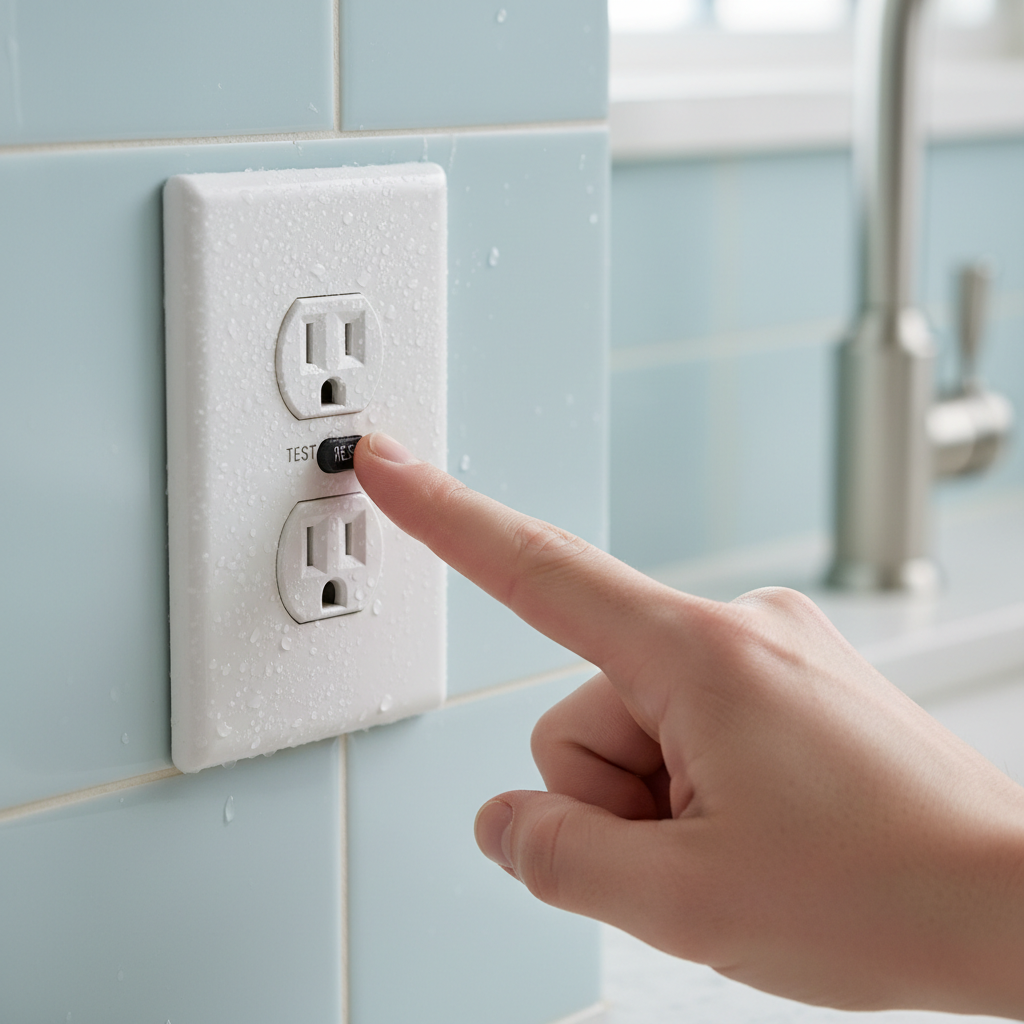
- Safety First: Turn off the power to the circuit at the main electrical panel before attempting any electrical work.
- Using a voltage tester, confirm the power is off before touching any wires.
- Carefully remove the old GFCI, noting how the wires are connected (LINE vs. LOAD). Install the new GFCI, strictly following the manufacturer's instructions and local electrical codes. If you're unsure, consult a licensed electrician.
- Tools: Screwdriver set, voltage tester.
- Materials: New GFCI outlet.
Electrical · Breaker keeps tripping
| Project category | Electrical |
|---|---|
| Problem type | Breaker keeps tripping |
| Trade required | Electrical |
| Urgency | Urgent — within days |
| Safety risk | High safety risk |
| DIY suitability | Pro recommended |
| Cost category | Low cost |
| Typical timeline | Diagnosis in a single visit |
| Contractor type | Licensed electrician |
Repair option
Isolate the load, then repair the fault or replace the breaker.
Replacement option
New dedicated circuit when the load simply exceeds what the circuit was built for.
Common causes
- Genuine overload on a shared circuit
- Ground fault from moisture in an exterior box
- Failing breaker or a damaged appliance cord
Relevant tools:diy or hire a prodiy difficulty
Published May 2, 2026Last updated August 17, 2026
Tools & materials you'll need
Affiliate links- AmazonGFCI outlet1 · If replacement is needed
As an Amazon Associate FixlyGuide earns from qualifying purchases — at no extra cost to you. Prices and availability are accurate as of publication and subject to change.
Quick Answer
When a Ground Fault Circuit Interrupter (GFCI) outlet trips, it's not merely an annoyance; it's a critical safety feature activating to prevent electrical shock. This usually signals an imbalance in the electrical current, known as a ground fault. The most common culprits are moisture intrusion, a connected appliance with an internal fault, or an issue within the outlet's wiring or the GFCI unit itself. Understanding this fundamental principle is the first step toward a safe and effective diagnostic process.
The Problem
Imagine you're enjoying your morning coffee, and suddenly the GFCI outlet in your kitchen or bathroom goes dead, tripping seemingly without reason. This common household frustration can range from a minor inconvenience to a sign of a potentially dangerous electrical problem. The core issue is that the GFCI senses a discrepancy in the electrical current flowing through it. In a properly functioning circuit, the current flowing from the 'hot' wire should exactly match the current returning through the 'neutral' wire. Even a tiny imbalance, as little as 4-5 milliamps, indicates that electricity is escaping the circuit—potentially through a human body. When this happens, the GFCI trips, cutting power almost instantly to prevent electrocution.
While a tripping GFCI is a safety net doing its job, chronic or unexplained trips can be maddening. It forces a homeowner to become an amateur detective, sifting through possibilities that can range from a splash of water to a deeply hidden wiring fault. Ignoring these persistent trips or simply resetting the outlet without investigation is a significant safety risk, as it bypasses the very protection the GFCI is designed to provide.
How It Works
Understanding how a GFCI operates is key to diagnosing why it might be tripping. At its heart, a GFCI outlet (or breaker) contains a sophisticated current transformer. This transformer constantly monitors the electrical current traveling through the 'hot' (black) wire and the 'neutral' (white) wire. Both of these wires pass through a magnetic coil within the GFCI. Under normal operating conditions, the magnetic fields generated by the current in the hot and neutral wires are equal and opposite, effectively canceling each other out. This means the net magnetic field detected by the GFCI's sensor is zero.
However, if a ground fault occurs—meaning current leaks out of the circuit through an unintended path, such as water or a person—the current returning through the neutral wire will be less than the current leaving through the hot wire. This creates an imbalance in the magnetic fields inside the GFCI's transformer. Even a minuscule difference, typically 4 to 6 milliamperes (mA), is enough to induce a small current in a sensing coil within the GFCI. This induced current triggers a solenoid, which in turn trips a set of contacts, instantly cutting off power to the outlet and anything connected to it. This entire process happens incredibly fast, often within 1/40th of a second, which is quicker than the human body's reaction time to a fatal shock. This rapid response is what makes GFCIs so effective at preventing electrocution, particularly in environments where water is present, like kitchens, bathrooms, garages, and outdoors. The internal test button on a GFCI works by creating a small, intentional ground fault, simulating a dangerous leak to ensure the tripping mechanism is functional.
Step-by-Step Fix
1. Unplug Everything — Disconnect all appliances and devices from the GFCI outlet and any other outlets downstream that it protects. This is the crucial first step to isolate the problem.
- Safety First: Always ensure your hands are dry before touching outlets or plugs.
- Note if the GFCI controls more than one outlet, especially in bathrooms or kitchens. Find all protected outlets.
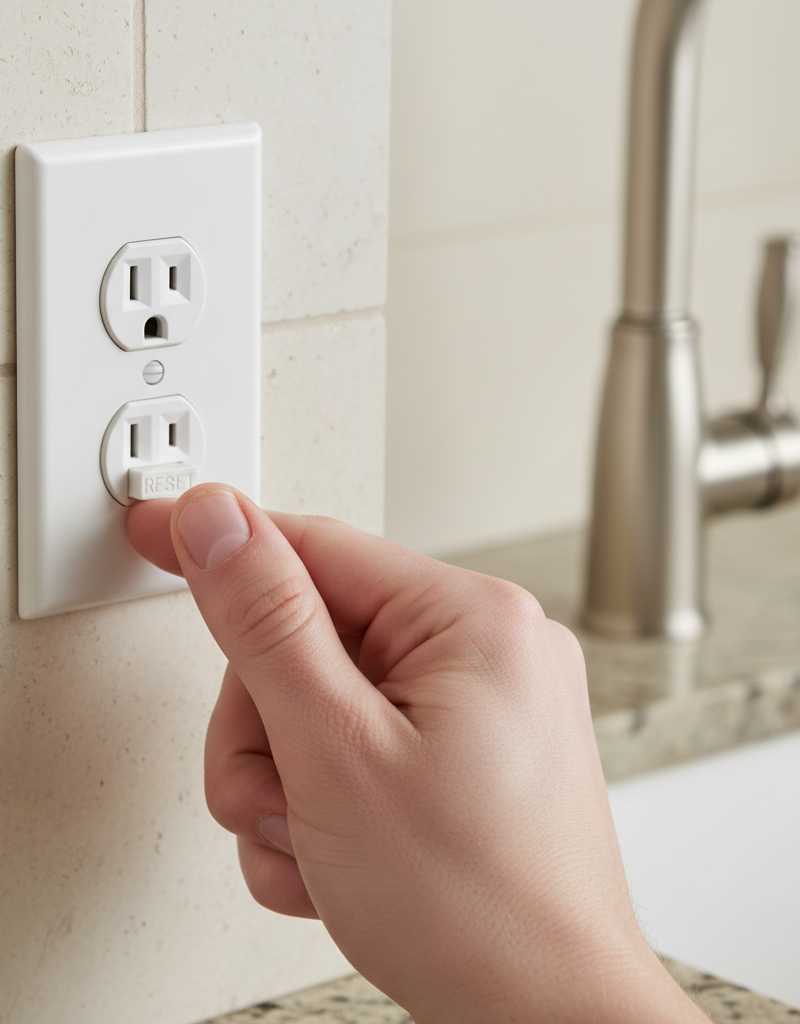
2. Reset the GFCI — Firmly press the 'RESET' button on the GFCI outlet. You should hear a click and see the indicator light (if present) illuminate, signaling power restoration.
- If it resets successfully, proceed to the next step.
- If it immediately trips again, even with nothing plugged in, the problem likely lies with the GFCI outlet itself or the wiring within the wall, requiring a professional. Go to the 'When to Call a Professional' section.
3. Test Each Appliance — Plug in each appliance or device that was connected to the GFCI circuit, one at a time. After plugging in each item, wait a moment to see if the GFCI trips.
- If an appliance immediately trips the GFCI, you've found the faulty item. The appliance likely has an internal shortor faulty wiring, and should be repaired by a qualified technician or replaced.
- If all appliances operate without tripping after individual testing, proceed to the next step.
4. Check for Moisture — Examine the GFCI outlet and any connected devices for any signs of moisture. Even a small splash of water can cause a ground fault.
- Pay close attention to outdoor outlets, bathroom outlets near sinks, and kitchen outlets around the sink or dishwasher.
- If moisture is present, ensure the area is completely dry before attempting to use the outlet again. Consider weatherproofing covers for outdoor GFCIs to prevent future issues.
5. Inspect for Overload — While GFCIs primarily protect against ground faults, an overloaded circuit can sometimes manifest as intermittent tripping, though a circuit breaker is typically designed for this.
- Assess if too many high-draw appliances (e.g., hairdryer and curling iron) are plugged into a single circuit.
- If you suspect an overload, redistribute appliances to different circuits if possible or use them sequentially.
6. Replace the GFCI Outlet — If the GFCI continues to trip with nothing plugged in, and you've ruled out moisture and faulty appliances, the GFCI outlet itself might be defective.
- Safety First: Turn off the power to the circuit at the main electrical panel before attempting any electrical work.
- Using a voltage tester, confirm the power is off before touching any wires.
- Carefully remove the old GFCI, noting how the wires are connected (LINE vs. LOAD). Install the new GFCI, strictly following the manufacturer's instructions and local electrical codes. If you're unsure, consult a licensed electrician.
- Tools: Screwdriver set, voltage tester.
- Materials: New GFCI outlet.
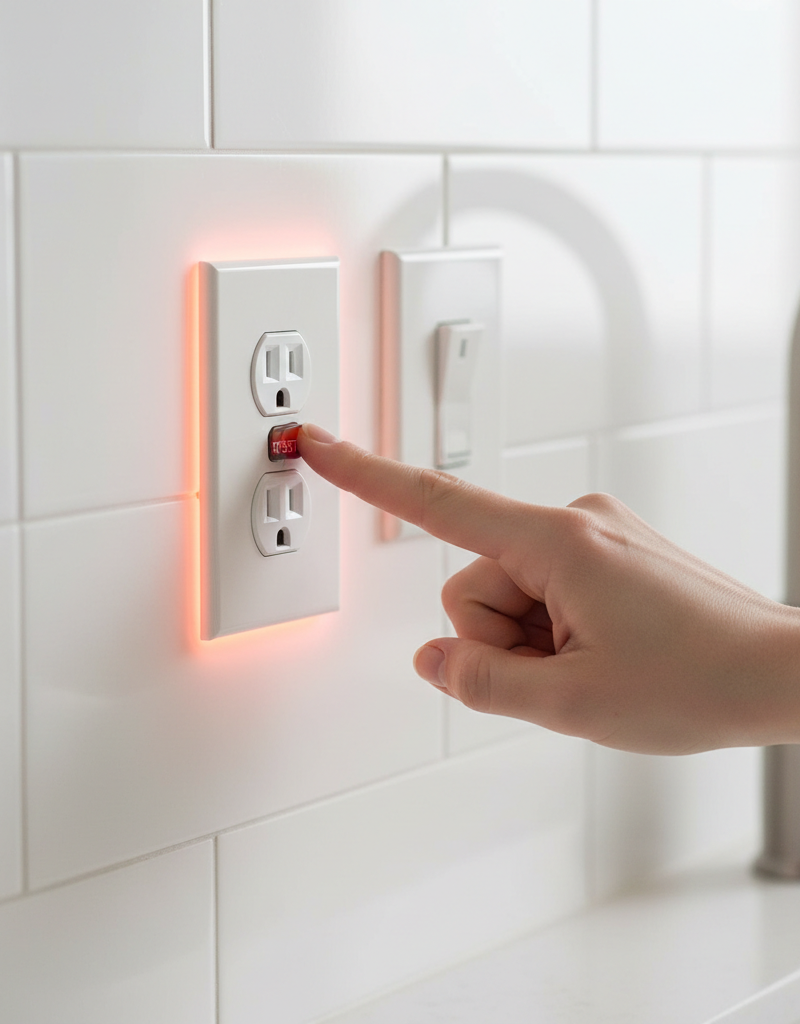
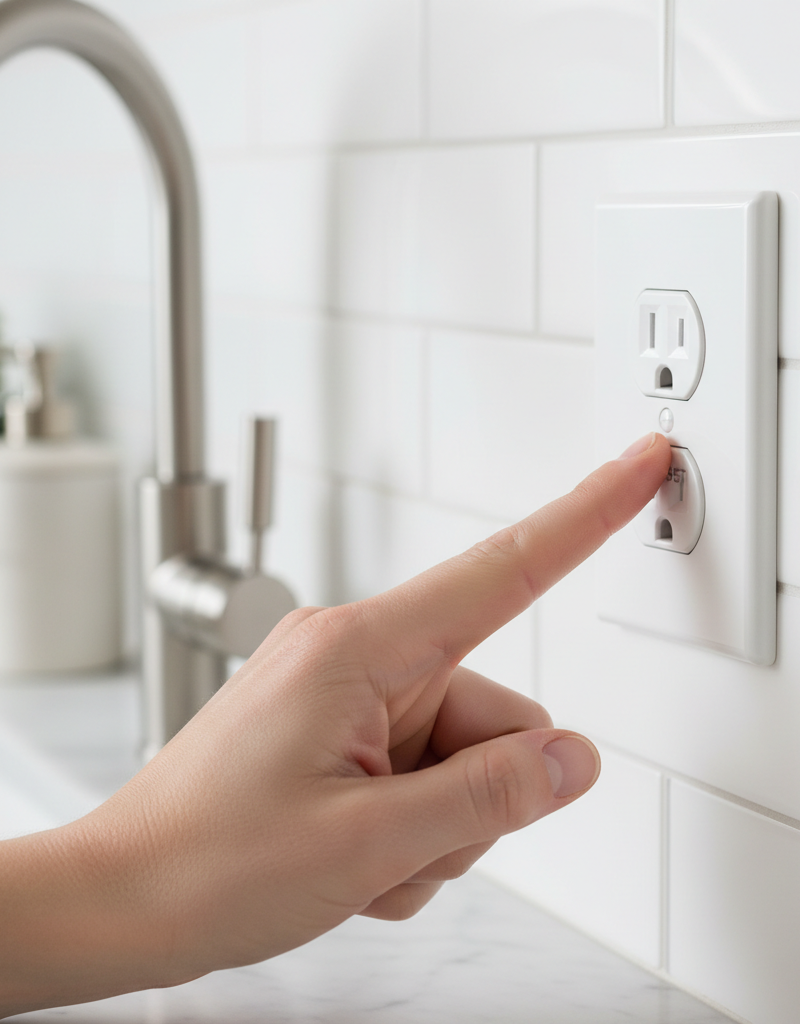
7. Test Downstream Outlets — After replacing the GFCI, press the 'TEST' button, then the 'RESET' button. Then, test all other outlets in the circuit that are protected by this GFCI using a GFCI outlet tester.
- This ensures that the new GFCI is properly installed and providing protection to all intended areas. It's common for one GFCI to protect several 'downstream' outlets.
Common Causes
- Moisture Intrusion: The most frequent culprit. Even a small amount of water or high humidity near the outlet or an appliance can create a path for current to leak to the ground, triggering the GFCI. This is especially common in bathrooms, kitchens, basements, and outdoor locations.
- Faulty Appliance: An appliance with damaged insulation, a defective heating element, or internal wiring issues can create a ground fault. When plugged into a GFCI circuit, even a subtle internal fault can cause a trip.
- Damaged Wiring: Frayed wires, loose connections, or insulation rubbed bare within the walls, inside an outlet box, or in an appliance cord can allow current to escape to ground.
- Overloaded Circuit (Indirect): While a GFCI's primary role isn't overload protection (that's the circuit breaker's job), an overloaded circuit can sometimes exacerbate or reveal a latent ground fault in wiring or an appliance, leading to a trip.
- Aging or Faulty GFCI Unit: Like any electrical component, GFCIs can wear out over time, especially after repeatedly tripping. Internal components can degrade, leading to nuisance trips even when no actual ground fault exists.
- Improper Wiring: Incorrect installation, particularly confusing the 'LINE' (incoming power) and 'LOAD' (outgoing to protected outlets) terminals, will cause a GFCI to trip immediately or not function correctly.
Common Mistakes
- Ignoring the Trips: Continuously resetting a GFCI without investigating the cause is extremely dangerous. It means you're bypassing the safety mechanism and potentially leaving a critical defect unaddressed, risking electrocution.
- Blaming the GFCI First: While a faulty GFCI is possible, it's often the last thing to fail. Starting with testing appliances and checking for moisture is more efficient and usually reveals the true problem.
- Not Unplugging Everything: Failing to unplug all devices on the circuit before resetting prevents accurate diagnosis. The GFCI may reset momentarily only to trip again once the faulty appliance is re-energized.
- Confusing LINE and LOAD Wires: When replacing a GFCI, homeowners sometimes miswire the incoming power (LINE) and the outgoing protected circuit (LOAD). This can prevent the GFCI from functioning correctly or cause it to trip immediately.
- Assuming One GFCI Protects Only Itself: A single GFCI outlet can protect several conventional outlets downstream from it. Failing to check all outlets in a circuit for problems can lead to misdiagnosis.
- Using a GFCI as a Regular Outlet: If an existing GFCI is tripping, replacing it with a standard outlet removes critical safety protection, making the circuit dangerously unsafe, especially in wet areas.
Cost & Time Breakdown
| Task | DIY cost | Pro cost | Time (DIY) |
|---|---|---|---|
| Diagnose cause (DIY) | $0 | N/A | 15–45 minutes |
| Replace faulty appliance | $20–$500+ | N/A | 5–10 minutes |
| Replace GFCI outlet | $15–$30 | $100–$250 | 30–60 minutes |
| Repair minor wiring | $5–$20 | $150–$400+ | 1–2 hours |
| Troubleshoot complex issues | N/A | $150–$500+ | N/A |
Tips & Prevention
- Routine Testing: Make it a habit to test your GFCIs monthly by pressing the 'TEST' button, then the 'RESET' button. This confirms they are functioning correctly.
- Weather Protection: For outdoor GFCIs, ensure they have proper 'in-use' weatherproof covers that enclose cords even when plugged in. This is crucial for preventing moisture intrusion.
- Appliance Inspection: Periodically inspect appliance cords and plugs for damage (frays, cracks, exposed wires). Replace or repair damaged appliances promptly.
- Keep Water Away: Be mindful of water sources around GFCI-protected outlets. Always dry hands thoroughly before handling plugs and outlets in bathrooms and kitchens.
- Avoid Overloading: While GFCIs protect against ground faults, avoiding overloading circuits generally reduces stress on your electrical system and can prevent issues that might lead to a fault.
- Professional Inspection: If you experience frequent, unexplained GFCI trips or have older electrical wiring, consider a professional electrical inspection to identify underlying issues before they become major problems.
When to Call a Professional
You should call a licensed electrician immediately if a GFCI outlet continuously trips even after you've unplugged all devices and checked for obvious moisture issues. This indicates a potentially serious wiring fault within the walls, an internal short in the GFCI unit that you're unable to replace safely, or a more complex electrical problem that could pose a fire or shock hazard. Never attempt to diagnose or repair extensive wiring issues yourself if you lack the proper training and tools, as this can lead to severe injury or further damage. Additionally, if you're uncomfortable identifying or replacing a GFCI outlet, or if you encounter situations like burnt smells, scorching around outlets, or humming noises, it's always best to err on the side of caution and contact a qualified professional. They have the expertise to safely diagnose and rectify complex electrical issues, ensuring your home's electrical system is up to code and safe for your family.
Related Articles
Keep troubleshooting with these hand-picked guides from FixlyGuide:
- The Hidden Reason Your GFCI Trips (It's Not Always a Faulty Outlet) — A continuously tripping GFCI outlet is a critical safety warning, often indicating moisture, a faulty appliance, or a wiring problem that r…
- The Hidden Reason Your GFCI Trips (and Why Most Homeowners Miss It) — A continuously tripping GFCI outlet is a safety warning, often signaling common but overlooked issues like moisture intrusion, appliance fa…
- The Surprising Reason Your House Ticks and Pops At Night (And What It Means) — That unsettling ticking or popping sound in your house at night is usually normal thermal expansion and contraction, but sometimes it signa…
- 7 Hidden Equity Drains Costing You Thousands Annually — Your home is an asset, but silent problems like minor leaks, poor insulation, and deferred maintenance can drain its value. Discover the se…
- 7 Closing Cost Surprises First-Time Buyers Never See Coming — First-time home buyer? That final cash-to-close figure is often shockingly higher than expected. Uncover the hidden fees and closing cost s…
- GFCI Outlet Won't Reset? Fix It With These Simple Steps — A GFCI outlet that won't reset usually indicates a tripped circuit, a ground fault, or a faulty outlet. Learn how to diagnose and fix the p…
Should you do this yourself?
Answer five quick questions before you start. Safety outranks savings every time.
Your experience with work like this
How high do you have to work?
Does the job involve any of these?
Will it need a permit?
Specialty tools
Free and instant. Educational guidance only — not a quote, inspection, or professional diagnosis.
What should this project cost?
Enter your project details for a realistic cost range before you call anyone.
Outlet and switch work usually $150–$400; panel upgrades commonly $1,800–$4,200.
- Regional adjustment
- National average
- Labor share (typical)
- ~$709
- Quotes to collect
- 3 written estimates
Educational estimate based on national averages — not a binding quote. Always confirm with written local estimates.
Fixly Project Decision Box
- DIY difficulty
- Professional Recommended
- Estimated time
- Diagnosis 1–2 hours
- Cost level
- Moderate
Main tools / materials
- Non-contact voltage tester
- Outlet tester
- Flashlight
When to stop and call a pro
- Burning smell, scorch marks, or a warm outlet or switch plate
- A breaker that trips again right after being reset
- Any work inside the service panel
- Aluminum wiring or cloth-insulated wiring
Need professional help?
Talk to a Licensed ElectricianBefore you start
Check the difficulty, permits, and safety risk — then decide whether to call a pro.
- Estimate this projectGet a cost range for your scope and ZIP before you call anyone.Open
- Get local estimatesSend one request and compare written estimates from vetted pros.Open
Free, no signup required. Estimates are educational guidance, not a quote or an inspection.
This article was independently written by FixlyGuide based on the source topic.
Frequently asked questions
How do I know if my GFCI outlet is bad?+
If your GFCI outlet trips immediately after you reset it, even with nothing plugged into it, or if it fails to reset at all, it's a strong indicator that the GFCI unit itself is faulty and needs replacement. Also, if the 'TEST' button doesn't trip the outlet, it's likely bad.
Can a faulty appliance cause a GFCI to trip?+
Yes, a faulty appliance is one of the most common reasons a GFCI trips. If an appliance has damaged internal wiring or a component that allows current to leak to ground, the GFCI will detect this imbalance and trip to prevent shock. Unplugging appliances one by one helps pinpoint the culprit.
What's the difference between a GFCI and a circuit breaker?+
A GFCI (Ground Fault Circuit Interrupter) protects against ground faults, preventing electrocution by detecting crucial current imbalances. A standard circuit breaker protects against overcurrents (like overloads and short circuits) to prevent wiring damage and fires. They serve different but complementary safety functions.
Where are GFCI outlets required in a home?+
GFCI outlets are required by electrical code in areas where water sources are common, such as bathrooms, kitchens (within six feet of a sink), garages, unfinished basements, crawl spaces, and all outdoor outlets. They are also often found near laundry areas and wet bars to enhance safety.
Discussion
Loading comments…