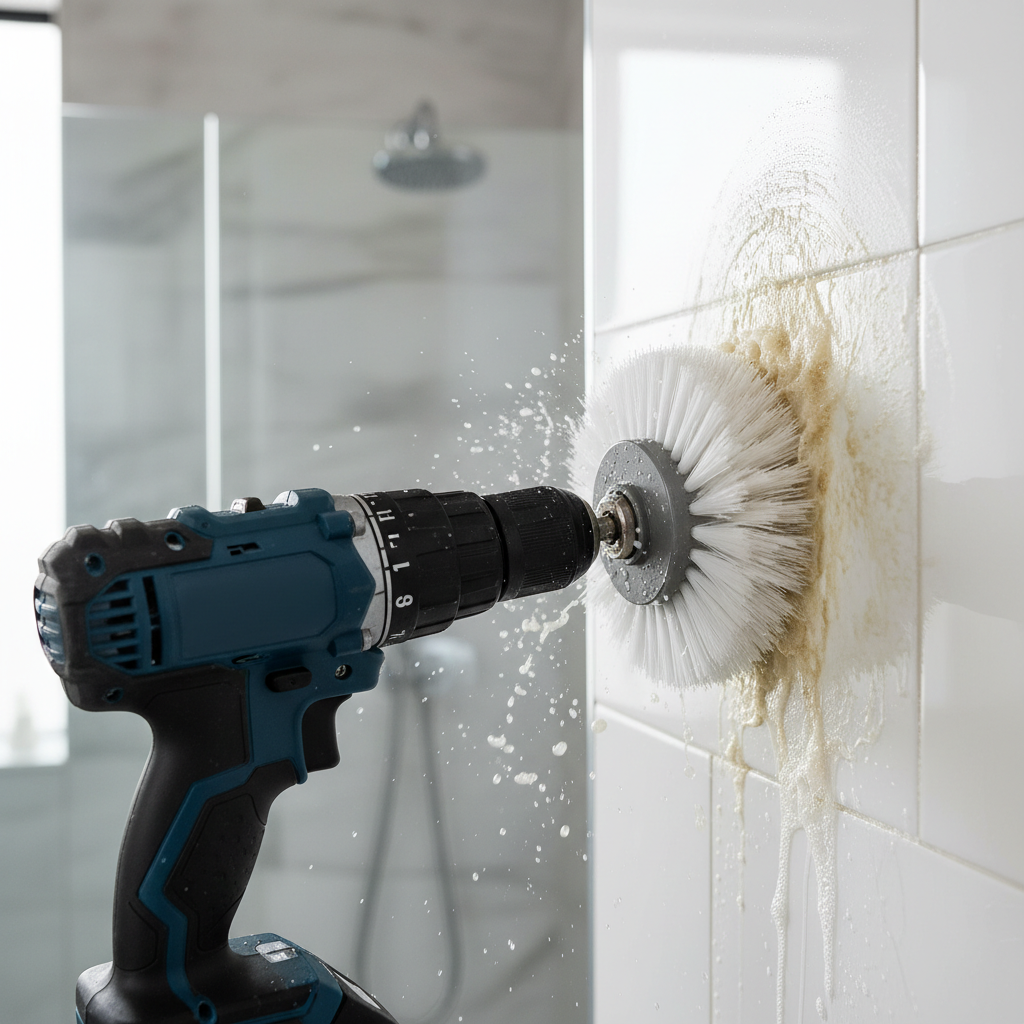
- Prep Your Area & Gear — Before you start, clear the area of any delicate items and ensure good ventilation.
- Pro Tip: Lay down old towels or tarps to protect surrounding surfaces from splashes and cleaning solutions. Wear appropriate personal protective equipment (PPE).
- Safety Note: Always wear eye protection to shield against splatter and debris. Wear gloves to protect your hands from harsh chemicals.
Published May 3, 2026Last updated August 17, 2026
Tools & materials you'll need
Affiliate links- AmazonDrill brush setNylon brushes of various stiffness (soft, medium, stiff) and shapes (flat, cone, detail).
- AmazonScrubbing pad attachment setHook-and-loop backing plate with various abrasive pads (white, blue, green, brown).
- AmazonAll-purpose household cleanerAppropriate cleaner for the surface you're treating (e.g., grout cleaner, bathroom descaler, dish soap)
- AmazonClean rags or microfiber clothsFor wiping away residue and drying.
As an Amazon Associate FixlyGuide earns from qualifying purchases — at no extra cost to you. Prices and availability are accurate as of publication and subject to change.
Quick Answer
Your trusty cordless drill, typically reserved for hanging pictures or assembling furniture, possesses a secret superpower for household cleaning when paired with specialized attachments. From effortlessly scrubbing years of built-up soap scum in the shower to buffing away stubborn water stains on glass, these drill-powered tools can cut through grime in a fraction of the time and with significantly less effort than manual scrubbing, making quick work of even the most dreaded cleaning tasks.
The Problem
Many homeowners face the tedious and often back-breaking chore of manually scrubbing persistent dirt, grime, and mold from various surfaces around the house. Whether it's the stained grout lines in the kitchen, the murky film on shower doors, or the oxidized patio furniture, traditional cleaning methods require immense physical exertion and often yield unsatisfactory results. This leads to frustration, wasted time, and surfaces that never quite look truly clean. The core problem is the sheer amount of friction and scrubbing power needed to truly dislodge embedded dirt, a power that human arms simply cannot sustain or deliver consistently.
How It Works
Understanding how a drill enhances cleaning involves recognizing the role of rotational force and specialized abrasive surfaces. A cordless drill operates by converting electrical energy from its battery into mechanical rotational energy, spinning a chuck at high revolutions per minute (RPM). When a cleaning attachment—be it a nylon brush, a scrubbing pad, or a polishing cone—is secured in this chuck, the drill transmits that powerful rotational motion directly to the cleaning surface.
Instead of applying numerous small, inconsistent strokes by hand, the drill provides a continuous, high-speed scrubbing action. For instance, a drill brush with stiff nylon bristles spins rapidly, creating a centrifugal force that, combined with the bristle action and a cleaning solution, effectively agitates and lifts dirt from porous surfaces like grout or textured tile. For smoother surfaces, scrubbing pads made of various abrasive materials (from mild to aggressive) can be attached via a hook-and-loop system to a drill-powered backing plate. As the drill spins, the pad rapidly scours the surface, breaking down and removing tough stains, soap scum, and mineral deposits. The key is the mechanical advantage: the drill does the repetitive, high-force work, allowing the cleaning agent to penetrate more effectively and the abrasive material to lift and carry away the debris. This sustained, powerful agitation is what manual scrubbing simply cannot replicate, leading to deeper cleaning and far less physical strain on the user.
Step-by-Step Fix
Here's how to harness your drill for some of the toughest cleaning challenges:
-
Prep Your Area & Gear — Before you start, clear the area of any delicate items and ensure good ventilation.
- Pro Tip: Lay down old towels or tarps to protect surrounding surfaces from splashes and cleaning solutions. Wear appropriate personal protective equipment (PPE).
- Safety Note: Always wear eye protection to shield against splatter and debris. Wear gloves to protect your hands from harsh chemicals.
-
Choose the Right Attachment — Select the appropriate brush or pad for the task and surface.
- Drill Brushes: Typically made of nylon, these come in various stiffness levels and shapes (flat, cone, spherical). Stiffer bristles are for grout, concrete, or extremely stubborn grime, while softer bristles are for upholstery or delicate surfaces.
- Scrubbing Pads: These attach to a hook-and-loop backing plate and come in different abrasiveness levels, often color-coded (e.g., white for light cleaning, blue/green for general scrubbing, brown/black for heavy-duty stripping).
- If this doesn't work: If the attachment feels too aggressive or doesn't clean effectively, try a different bristle stiffness or pad abrasive level. Always test in an inconspicuous area first.
-
Apply Your Cleaning Solution — Don't rely solely on the drill; a good cleaner is essential.
- Spray your chosen cleaning product directly onto the surface you intend to clean. Let it sit for a few minutes (check product instructions) to break down dirt and grime. This is crucial for loosening deposits before the drill even starts.
- For Grout: A bleach-based grout cleaner or a paste of baking soda and hydrogen peroxide often works wonders.
- For Soap Scum/Hard Water: Vinegar-based cleaners, specialty shower cleaners, or even a mixture of dish soap and vinegar are effective.
-
Attach to Your Drill & Test Speed — Securely insert the attachment into your drill's chuck and tighten it firmly.
- Start your drill on a low speed setting. This helps assess the proper pressure and prevents splatter, especially when first engaging the surface.
- Pressure: Let the drill do the work. You shouldn't need to press down with excessive force; light to moderate pressure is usually sufficient. Too much pressure can damage surfaces or wear out the drill/attachment faster.
-
Begin Scrubbing Systematically — Work in small, manageable sections.
- Move the drillattachment steadily over the pre-treated surface, allowing the bristles or pad to do the work. Overlap your passes to ensure even cleaning.
- For Grout: Focus on the grout lines, letting the brush spin directly into them.
- For Large Surfaces (Tile/Shower Walls): Use a flat brush or pad, moving in consistent, overlapping patterns.
-
Rinse and Wipe Away Residue — After scrubbing, thoroughly rinse the cleaned area.
- Use clean water and a sponge or cloth to wipe away loosened grime and cleaning solution. Repeat rinsing until all traces of cleaner and dirt are gone.
- Check for Missed Spots: Inspect the area for any missed spots or areas needing a second pass. Reapply cleaner and repeat scrubbing if necessary.
-
Clean and Store Attachments — Don't forget to maintain your tools.
- Rinse drill brushes and pads immediately after use to remove cleaning chemicals and dirt. Allow them to air dry completely before storing to prevent mold and mildew growth.
- Preventive Care: Store attachments in a dry place, away from direct sunlight, to extend their lifespan.
Common Causes
Many common household cleaning headaches stem from the simple accumulation of everyday life and the struggle against persistent natural elements. Understanding these causes helps in more effective cleaning and prevention:
- Soap Scum: Primarily caused by the reaction of minerals in hard water with fatty acids from soap. This creates an insoluble film that adheres to shower walls, tubs, and glass. The harder your water, the faster and thicker this scum builds up.
- Grout Discoloration: Grout is porous, meaning it easily absorbs dirt, spills, mildew, and dyes from cleaning products or foot traffic. Over time, this absorbed grime darkens and stains the grout lines.
- Hard Water Stains: These white, chalky mineral deposits (limescale) result from water evaporating and leaving behind dissolved minerals like calcium and magnesium. They're common around faucets, showerheads, glass, and toilet bowls.
- Mold and Mildew: Thrive in damp, warm, and poorly ventilated environments (bathrooms, basements). They feed on organic matter (like soap residue or dust) and appear as black, green, or pinkish organic growth.
- Exterior Grime: Patios, decks, and outdoor furniture accumulate dirt, algae, pollen, and environmental fallout from rain, wind, and vegetation.
- Kitchen Grease & Food Stains: Cooking often leaves behind splatters and sticky residues on backsplashes, countertops, and stove hoods, which can become baked on over time.
Common Mistakes
Even with the right tools, missteps can lead to poor results or damage. Here are common mistakes to avoid when cleaning with your drill:
- Using the Wrong Attachment for the Surface: A stiff-bristle brush on fiberglass could scratch it; a soft brush on concrete won't do much. Always match the attachment's aggressiveness to the surface's durability.
- Skipping the Pre-Soak/Cleaner: Thinking the drill alone will magically remove years of grime is a rookie error. The drill provides agitation, but a good cleaner breaks down the dirt's bond with the surface. Always pre-treat.
- Applying Too Much Pressure: Pressing down excessively strains your drill, wears out the attachment faster, and can damage delicate surfaces. Let the drill's RPM do the heavy lifting with light to moderate, consistent pressure.
- Forgetting Eye Protection: Cleaning solutions, dislodged grime, and even bristles can splatter unpredictably. Safety glasses are non-negotiable.
- Not Testing in an Inconspicuous Area: Before tackling a prominent spot, always test your chosen attachment and cleaner on a hidden patch to ensure it won't scratch or discolor the surface.
- Neglecting Post-Cleaning Attachment Care: Leaving brushes caked with grime and cleaner residue shortens their lifespan and can spread dirt on the next use. Rinse thoroughly and air dry after every job.
Cost & Time Breakdown
| Task | DIY cost | Pro cost | Time |
|---|---|---|---|
| Drill brush set (multi-size) | $15–$30 | N/A | 0 (initial buy) |
| Grout cleaning (avg. bathroom) | $0 (w/ drill) | $150–$300 | 30–60 mins |
| Shower/tub cleaning | $0 (w/ drill) | $75–$150 | 20–40 mins |
| Wheel cleaning (car) | $0 (w/ drill) | $50–$100 (detail) | 15–30 mins |
| Patio furniture scrubbing | $0 (w/ drill) | $100–$250 (power) | 45–90 mins |
| Upholstery Spot Cleaning | $0 (w/ drill) | $75–$175 (per item) | 10–20 mins |
Tips & Prevention
- Regular Light Cleaning: Don't wait for grime to build up. Weekly wipedowns of showers and counters with a mild cleaner significantly reduce the need for deep scrubbing.
- Invest in Quality Attachments: A good set of drill brushes and pads with varying stiffness levels will last longer and perform better. Consider those specifically designed for bathroom or kitchen use.
- Ventilate Bathrooms: Use exhaust fans during and after showers to reduce humidity, which prevents mold and mildew growth and slows soap scum accumulation.
- Squeegee Shower Doors: A quick squeegee after each shower dramatically reduces hard water stains and soap scum buildup on glass.
- Seal Grout: Every 1-2 years, apply a grout sealer to porous grout lines. This creates a barrier against dirt and moisture, making cleaning much easier.
- Clean Outdoor Items Seasonally: For patio furniture or grills, a thorough drill-powered cleaning at the beginning and end of the outdoor season can prevent year-long build-up.
When to Call a Professional
While drill attachments are fantastic for many cleaning tasks, some situations warrant a professional. If you're dealing with extensive mold growth that covers large areas or penetrates drywall, a professional mold remediation service is essential due to health risks and the specialized equipment required. For delicate surfaces like antique furniture, natural stone (marble, granite) with intricate finishes, or fine fabrics, a professional cleaner experienced with those specific materials can prevent irreversible damage. Additionally, if you have very large areas of heavily stained concrete or extremely high ceilings with stubborn grime, the time and effort involved might justify hiring a cleaning service with industrial-grade equipment to ensure a thorough and safe job without damaging surfaces or risking injury from ladders. Professionals also have access to more potent, restricted cleaning agents and sophisticated extraction tools that can handle deep-seated stains that DIY methods struggle with.
Related Articles
Keep troubleshooting with these hand-picked guides from FixlyGuide:
- The 6-Minute Secret to a Sparkling Bathroom (It’s Not What You Think) — Unleash the hidden power of your cordless drill to tackle stubborn household grime, from tile grout to dryer vents, with specialized attach…
- The 6 Cleaning Secrets Hiding in Your Power Drill (Plus Attachments to Master) — Your power drill isn't just for DIY projects; with the right attachments, it's a powerful and efficient cleaning tool for tackling tough gr…
- How to Clean and Maintain Your Outdoor Grill: A Complete Guide — Regular cleaning and maintenance of your outdoor grill is essential for safe operation, optimal performance, and extending its lifespan.
- The One Schedule That Saves Homeowners $2,500 a Year — A disciplined seasonal home maintenance schedule is your best defense against catastrophic repair bills. Learn which tasks to tackle each s…
- The Surprising Yard Tool That Vaporizes Weeds (No Chemicals Needed) — A weed torch offers an efficient, chemical-free method for removing unwanted plants from hardscaped areas like driveways, patios, and grave…
- Your 'Clean' Dishes Are Still Dirty? The Culprit Is Hiding — Frustrated by gritty, food-flecked dishes after a full wash cycle? The problem isn't your detergent. Your dishwasher is making dishes dirti…
Should you do this yourself?
Answer five quick questions before you start. Safety outranks savings every time.
Your experience with work like this
How high do you have to work?
Does the job involve any of these?
Will it need a permit?
Specialty tools
Free and instant. Educational guidance only — not a quote, inspection, or professional diagnosis.
What should this project cost?
Enter your project details for a realistic cost range before you call anyone.
Cost depends heavily on which system turns out to be the source.
- Regional adjustment
- National average
- Labor share (typical)
- ~$1,620
- Quotes to collect
- 3 written estimates
Educational estimate based on national averages — not a binding quote. Always confirm with written local estimates.
Before you start
Check the difficulty, permits, and safety risk — then decide whether to call a pro.
- Estimate this projectGet a cost range for your scope and ZIP before you call anyone.Open
- Get local estimatesSend one request and compare written estimates from vetted pros.Open
Free, no signup required. Estimates are educational guidance, not a quote or an inspection.
Get the print-ready PDF of this guide
A clean, ad-free, printable version you can keep on your phone or pin to the workshop wall. Free with a FixlyGuide account.
- Print-optimized layout
- Tools, materials & every step included
- Saved to your account
This article was independently written by FixlyGuide based on the source topic.
Frequently asked questions
Can I use any cordless drill for cleaning?+
Yes, most standard cordless drills will work. A drill with adjustable speed settings is ideal, allowing you to control the scrubbing intensity for different surfaces. Ensure the chuck can firmly hold the attachment.
Will drill brushes scratch my surfaces?+
It depends on the brush's stiffness and the surface's material. Always choose a brush appropriate for the surface (e.g., soft nylon for upholstery, medium for tile, stiff for concrete). Always test in an inconspicuous area first to prevent damage.
What cleaning solutions should I use with drill attachments?+
Use your preferred household cleaners, such as all-purpose cleaner, bathroom descaler, grout cleaner, or a vinegar/baking soda solution. The drill provides the scrubbing action, but the cleaner does the chemical work.
How do I clean and maintain my drill cleaning attachments?+
After each use, rinse the brushes and pads thoroughly with clean water to remove any dirt and cleaning solution residue. Allow them to air dry completely before storing to prevent mildew and extend their lifespan.

Discussion
Loading comments…