- Tools: Hose-end sprayer (non-chemical, dedicated for nematodes), watering can, garden hose
- Safety: While generally safe, avoid inhaling the spray. Wear gloves.
- Storage: Nematodes are live organisms; use them immediately upon arrival or store as directed (usually refrigerated for a short period).
Landscaping · Deck or fence project
| Project category | Landscaping |
|---|---|
| Problem type | Deck or fence project |
| Trade required | Landscaping |
| Urgency | Planned project |
| Safety risk | Moderate safety risk |
| DIY suitability | DIY for experienced homeowners |
| Cost category | High cost |
| Typical timeline | Most builds 3–10 days depending on size |
| Contractor type | Landscaping contractor |
Repair option
Replace failed boards, posts, and hardware; reseal the surface.
Replacement option
Rebuild when framing or the ledger connection is unsafe.
Common causes
- Rot at posts and ledger
- Storm damage
- Adding outdoor living space
Relevant tools:home improvement material pricesproject cost estimator
Published May 19, 2026Last updated August 17, 2026
Tools & materials you'll need
Affiliate links- AmazonGarden gloves1 pair
- AmazonBeneficial nematodes (Heterorhabditis bacteriophora or Steinernema carpocapsae)sufficient for lawn size · Ensure fresh, viable product; check expiration date.
- AmazonMilky Spore powder (Bacillus popilliae)sufficient for lawn size · If targeting Japanese beetle grubs specifically.
As an Amazon Associate FixlyGuide earns from qualifying purchases — at no extra cost to you. Prices and availability are accurate as of publication and subject to change.
Quick Answer
Many homeowners rush to treat lawn grubs with insecticides at the first sign of damage, but precise timing and choosing the right method are crucial. The most effective strategy involves understanding the grubs' life cycle to apply treatments like beneficial nematodes or milky spore when they are young and most vulnerable, typically in late summer to early fall. This prevents extensive damage and creates a healthier, more resilient lawn naturally.
The Problem
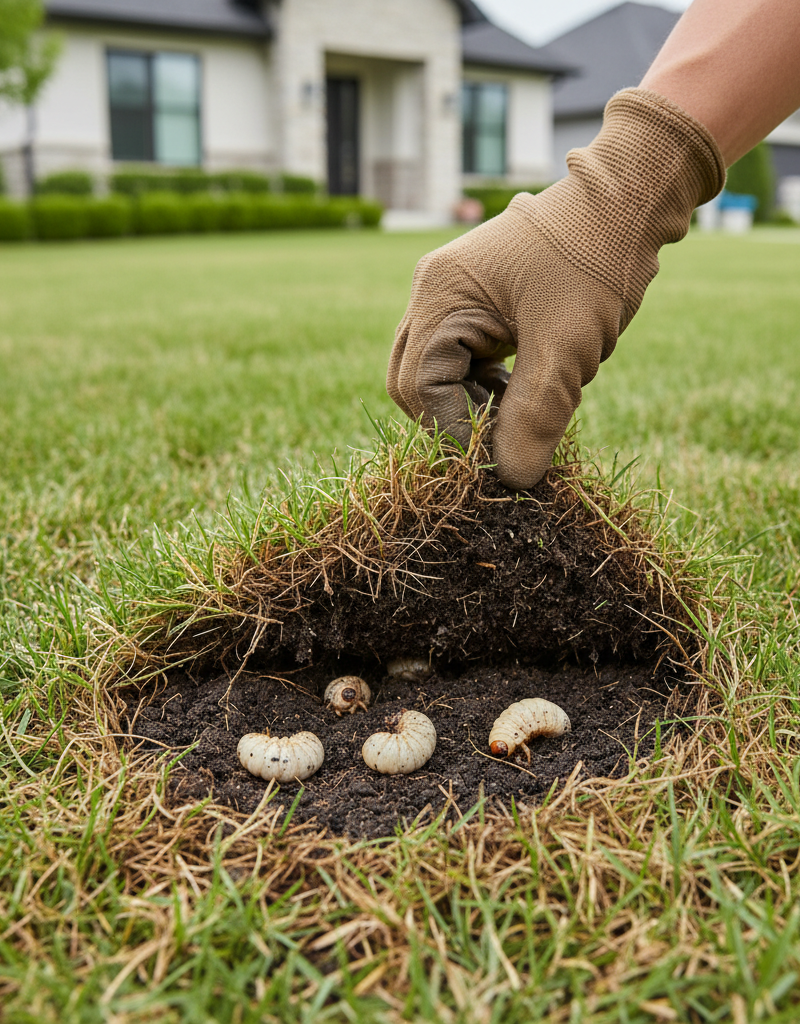
Brown, spongy patches of lawn that peel back like carpet, along with increased critter activity (like raccoons or birds digging), are classic signs of a grub infestation. These plump, C-shaped larvae, often the offspring of Japanese beetles, Chafers, or May/June bugs, live just beneath the soil surface, feasting on the roots of your prized turf. Left unchecked, they can completely sever the root system, killing large sections of grass and inviting secondary damage from animals foraging for a tasty grub meal. The frustration for many homeowners is that quick-fix chemical treatments often miss the mark, either failing to kill the grubs effectively or harming beneficial soil organisms, leading to a recurring problem each year.
How It Works
To truly defeat lawn grubs, you need to understand their annual life cycle. Most common lawn grubs (Japanese beetles, European chafers, etc.) have a one-year life cycle, though some, like May/June beetles, can take up to three years. Adult beetles emerge from the soil in late spring to early summer (typically June and July), mate, and then lay their eggs in the turf. These eggs hatch into tiny larvae, or grubs, usually in mid-to-late summer (August and September). This is their most vulnerable stage. The young grubs immediately begin feeding on grass roots, growing rapidly as they prepare for winter. As temperatures drop in late fall, they burrow deeper into the soil to overwinter. In spring, as soil temperatures rise, they migrate back up to feed on roots for a short period before pupating in late spring. The cycle then repeats with new adult beetles emerging.
Chemical insecticides often work best on very young grubs, but their efficacy can be limited if applied too late or if rainfall washes them away. Organic controls, like beneficial nematodes or milky spore, offer a more targeted and environmentally friendly approach. Beneficial nematodes are microscopic parasitic worms that seek out and infect grub larvae, releasing bacteria that kill them. Milky spore (Paenibacillus popilliae) is a bacterium that specifically targets Japanese beetle grubs, causing a disease that spreads through the grub population over several years, offering long-term control. Both of these biological controls are most effective when grubs are actively feeding near the surface in late summer/early fall.
Step-by-Step Fix
1. Confirm the Culprit – Don't guess, investigate.
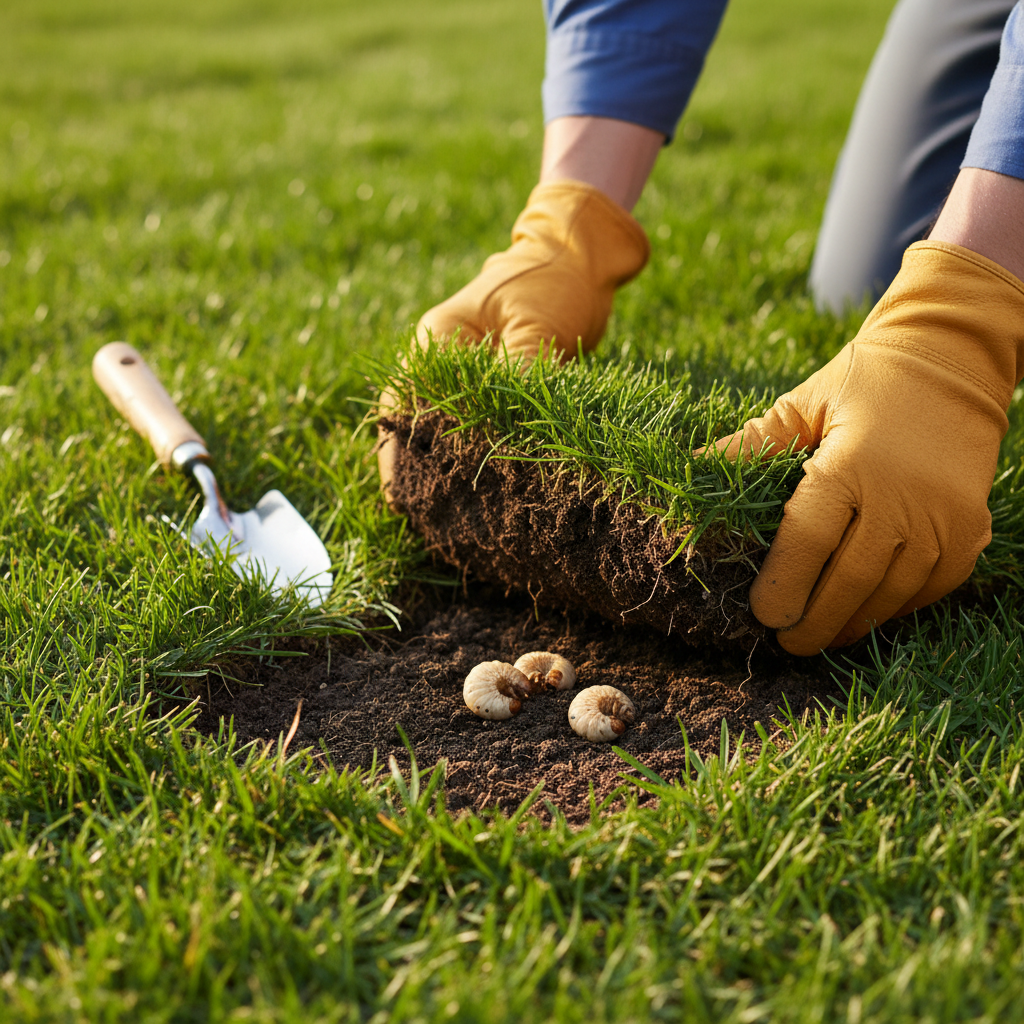
Before launching any treatment, confirm you actually have a grub problem. Brown patches can be caused by drought, fungal diseases, or other pests. To check for grubs, cut a 1-foot by 1-foot square flap of turf about 2-3 inches deep with a shovel in a damaged or stressed area. Peel back the sod. If you see 6 or more grubs per square foot, treatment is warranted. Examine the grubs: common lawn grubs are C-shaped, white or off-white with brown heads, and have six legs near their heads. Note if you see other insects, as their presence might indicate a different issue.
- Tool: Sharp shovel or spade
- Tip: Check several spots, especially near the edge of affected areas where grubs are actively feeding.
2. Identify the Grub (If Possible) – Timing is everything.
While not always easy, identifying the specific type of grub (e.g., Japanese beetle, European chafer) can help fine-tune your treatment timing, especially if using a highly specific biological control like milky spore. Japanese beetle grubs are quite common. Young grubs are harder to identify, but mature grubs can sometimes be distinguished by their raster pattern (hair arrangement on their underside). Resources from local university extension offices often have identification guides.
- Resource: Local Cooperative Extension office websites for identification charts.
3. Choose Your Weapon: Organic or Chemical – Evaluate your priorities.
For most homeowners, especially those with pets or children, organic controls are preferred. They are safer for the environment and promote long-term soil health. Chemical insecticides offer a quicker knock-down but can be less precise and have off-target effects. For this guide, we'll focus on the most effective organic options.
- Organic Options: Beneficial nematodes (Heterorhabditis bacteriophora or Steinernema carpocapsae for various grubs) or Milky Spore (Bacillus popilliae, specifically for Japanese beetle grubs).
- Note: If choosing a chemical insecticide, always read and follow label directions precisely, wear appropriate PPE, and be aware of re-entry intervals for pets and children.
4. Time Your Attack (Crucial!) – Hit them when they're weak.
This is the single most critical step. For most grubs, the ideal time for treatment is late summer to early fall (typically August to September in most regions) when eggs have hatched, and grubs are young, actively feeding near the soil surface, and most vulnerable. Applying too early (spring) means you're targeting older grubs that are less susceptible and may do little feeding, or applying before eggs have hatched. Applying too late in fall means grubs have burrowed deep for winter.
- Check: Local university extension websites often provide region-specific timing calendars for grub treatment.
- If this doesn't work: Re-evaluate your timing next year. A mis-timed application is the number one reason for failure.
5. Prepare the Lawn for Nematicide or Milky Spore – Create a welcoming environment.
For beneficial nematodes to be effective, the soil needs to be moist, and the nematodes need to be protected from direct sunlight. Water your lawn thoroughly the day before application. Plan to apply on a cloudy day, in the evening, or just before rain.
- Tool: Garden hose or sprinkler system
- Tip: Do NOT apply nematodes or milky spore in direct, hot sunlight; UV radiation can kill them.
6. Apply Beneficial Nematodes – Follow package instructions precisely.
Nematodes typically come in a sponge or powder form mixed with water. Follow the package instructions carefully for mixing ratios. Use a hose-end sprayer or a watering can to distribute them evenly over the affected areas and slightly beyond. Water immediately after application to wash the nematodes off the grass blades and into the soil, where they can begin their work.
- Tools: Hose-end sprayer (non-chemical, dedicated for nematodes), watering can, garden hose
- Safety: While generally safe, avoid inhaling the spray. Wear gloves.
- Storage: Nematodes are live organisms; use them immediately upon arrival or store as directed (usually refrigerated for a short period).
7. Apply Milky Spore (Specific) – Long-term Japanese beetle control.
Milky Spore is applied as a dry powder. You can use a drop spreader for even distribution or apply by hand directly to the soil, often in 4-foot grids. Water in thoroughly after application. Remember, milky spore takes time (months to a year) to establish its presence in the soil and build up effective levels, but it provides many years of continuous Japanese beetle grub control once established.
- Tools: Drop spreader, garden hose
- Tip: Consistent application over several years can build higher concentrations and improve efficacy.
8. Maintain Soil Moisture – Keep the good guys working.
For about 7-10 days after applying beneficial nematodes, keep the soil consistently moist. This helps the nematodes move through the soil profile and locate grubs. Avoid letting the lawn dry out completely.
- Tool: Sprinkler or garden hose
- Frequency: Light watering daily or every other day, depending on weather.
Common Causes
- Adult Beetle Activity: High populations of adult beetles (Japanese beetles, chafers) in the spring and early summer lead directly to more egg-laying and thus more grubs. They are attracted to healthy, green lawns. (Source: Purdue University Extension)
- Consistent Watering: Irrigated lawns, especially in dry periods, provide ideal conditions for adult beetles to lay eggs and for grub eggs to hatch and survive, compared to dormant or dry lawns.
- Lawn Type: Some grass types, particularly Kentucky bluegrass and perennial ryegrass, can be more susceptible to grub damage due to their dense root systems and appeal to egg-laying beetles.
- Previous Infestations: If you've had grubs before, you're more likely to have them again, as beetles tend to return to favorable breeding grounds.
- Lack of Natural Predators: Healthy soil ecosystems include natural predators like ground beetles, parasitic wasps, and birds that can help keep grub populations in check. Pesticide use can harm these beneficial organisms, leading to an imbalance.
Common Mistakes
- Treating at the Wrong Time: Applying insecticides in spring targets mostly mature grubs that are less susceptible and about to pupate, or even worse, before eggs have hatched. This is the biggest error homeowners make. Instead: Focus on late summer/early fall when grubs are young and actively feeding near the surface.
- Applying Too Little/Too Much Product: Not following label instructions can result in ineffective treatment or, conversely, harm to your lawn or the environment. Instead: Always measure carefully and calibrate your spreader or sprayer.
- Ignoring Soil Conditions: Applying products to dry, compacted, or hot soil can reduce their effectiveness, especially for biological controls like nematodes. Instead: Water before application, treat on cloudy days or in the evening, and ensure good soil moisture post-application.
- Assuming a Chemical-Only Solution: Relying solely on harsh chemical insecticides without addressing the underlying soil health or understanding the grub lifecycle can lead to a cycle of repeated infestations and damage to beneficial soil organisms. Instead: Consider integrated pest management, incorporating organic controls and improving turf health.
- Not Confirming Grubs: Treating for grubs when the problem is actually drought stress, a fungal disease, or another pest leads to wasted effort and money. Instead: Always perform a grub check by peeling back a section of turf.
- Using Non-Specific Products: Some broad-spectrum insecticides can kill beneficial insects, including those that might naturally prey on grubs, worsening the problem in the long run. Instead: Choose targeted treatments or organic options that are less harmful to non-target organisms.
Cost & Time Breakdown
| Task | DIY Cost | Pro Cost | Time |
|---|---|---|---|
| Grub Confirmation & Prep | $0–$10 | N/A | 15–30 minutes |
| Beneficial Nematodes (1000 sq ft) | $20–$40 | N/A | 20–45 minutes |
| Milky Spore (1000 sq ft) | $30–$60 | N/A | 20–45 minutes |
| Chemical Grub Treatment (1000 sq ft) | $20–$50 | $100–$300+ | 20–45 minutes |
| Post-Application Watering | $0 (water bill) | N/A | 30 mins/day x 7 |
Tips & Prevention
- Mow High: Keep your grass at least 3 inches tall. Longer grass blades help shade the soil, making it less attractive for adult beetles to lay eggs. It also encourages deeper root growth, making the lawn more resilient to grub feeding.
- Promote Lawn Health: A healthy, vigorous lawn is more tolerant of some grub feeding. Regular aeration, proper fertilization, and overseeding help maintain dense turf and strong root systems.
- Water Wisely: Deep, infrequent watering encourages deeper root growth. Avoid light, daily watering, which keeps the topsoil moist and attractive for egg-laying beetles.
- Consider Traps (with Caution): Japanese beetle traps can catch adult beetles, but they often attract more beetles to your yard than they catch, potentially increasing egg-laying. Use them far away from your prized plants if you must, or avoid them entirely.
- Attract Natural Predators: Encourage birds (robins, starlings), moles, skunks, and beneficial insects (ground beetles, parasitic wasps) by providing a diverse landscape and avoiding broad-spectrum pesticides.
- Dethatch and Aerate Annually: Reduces thatch buildup where grubs can hide, and improves air and water penetration, promoting a healthier root system that can better withstand grub damage.
When to Call a Professional
If you've consistently applied treatments at the correct time and still face severe, recurring grub damage year after year, it might be time to call a professional lawn care service. They have access to commercial-grade products and often use advanced diagnostic tools to identify specific grub species and other contributing factors. Furthermore, if you suspect your lawn damage is due to other, more complex issues like widespread disease, persistent soil imbalances, or irrigation problems beyond simple grub infestation, a professional can provide a comprehensive diagnosis and tailored treatment plan that goes beyond DIY capabilities. They can also advise on long-term preventative measures to integrate into your lawn care regimen.
Related Articles
Keep troubleshooting with these hand-picked guides from FixlyGuide:
- The Undigested Secret in Your Lawn: Why Grubs Devour Roots (And the Simple Fix) — Grubs are the hidden menace beneath your lawn, turning lush green into patchy brown. Understanding their lifecycle is key to reclaiming you…
- The #1 Mistake Killing Your Lawn's Thickness (and 5 Steps to a Lush Comeback) — Discover the crucial error most homeowners make when trying to thicken a thin lawn and follow five simple steps to revive it.
- The #1 Pre-Emergent Mistake Wrecking Your Weed Control (And How to Fix It) — Applying pre-emergent at the wrong time is the most common mistake, leading to ineffective weed control and wasted effort for homeowners.
- The #1 Lawn Aeration Mistake Most Homeowners Make (And When to REALLY Do It) — Discover the crucial mistake many homeowners make with lawn aeration and learn the optimal timing for a thriving, healthy lawn.
- The #1 Lawn Aeration Mistake Most Homeowners Make (And When to REALLY Do It) — Discover the crucial mistake many homeowners make with lawn aeration and learn the optimal timing for a healthier, more vibrant lawn.
- The Secret to Lush Raised Beds? It's Not Just About How You Water — Smart irrigation for raised garden beds isn't just about automation; it's about delivering the right amount of water precisely when your pl…
Should you do this yourself?
Answer five quick questions before you start. Safety outranks savings every time.
Your experience with work like this
How high do you have to work?
Does the job involve any of these?
Will it need a permit?
Specialty tools
Free and instant. Educational guidance only — not a quote, inspection, or professional diagnosis.
What should this project cost?
Enter your project details for a realistic cost range before you call anyone.
Cost depends heavily on which system turns out to be the source.
- Regional adjustment
- National average
- Labor share (typical)
- ~$1,620
- Quotes to collect
- 3 written estimates
Educational estimate based on national averages — not a binding quote. Always confirm with written local estimates.
Before you start
Check the difficulty, permits, and safety risk — then decide whether to call a pro.
- Estimate this projectGet a cost range for your scope and ZIP before you call anyone.Open
- Get local estimatesSend one request and compare written estimates from vetted pros.Open
Free, no signup required. Estimates are educational guidance, not a quote or an inspection.
Frequently asked questions
What kills grubs in a lawn naturally?+
Beneficial nematodes (microscopic worms that prey on grubs) and milky spore (a bacteria specific to Japanese beetle grubs) are two of the most effective natural solutions for killing grubs in your lawn. They are safe for pets and children and promote long-term soil health.
When is the best time to apply grub killer?+
The best time to apply grub killer, particularly organic options like nematodes or milky spore, is in late summer to early fall (typically August to September). This is when grubs are young, actively feeding near the soil surface, and most vulnerable to treatments.
How do you tell if you have grubs in your lawn?+
To check for grubs, cut a 1-foot by 1-foot square patch of turf with a shovel and peel it back. If you find 6 or more C-shaped, white grubs with brown heads per square foot, you have a grub infestation that warrants treatment.
Can my lawn recover from grub damage?+
Yes, lawns can often recover from grub damage, especially if the infestation is caught early and treated effectively. After eliminating the grubs, overseeding and proper lawn care (watering, fertilizing) can help the affected areas fill back in. For severe damage, some reseeding may be necessary.
How long does it take for grubs to die after treatment?+
For beneficial nematodes, grubs typically start dying within 1-2 weeks, with full effects seen over 3-4 weeks. Milky spore takes longer, often several months to a year to establish effective control, but then provides multi-year protection specifically against Japanese beetle grubs.

Discussion
Loading comments…