- Pour in baking soda: Dump about half a cup to a full cup of baking soda straight down the drain.
- Follow with vinegar: Right after that, pour an equal amount (half to a full cup) of white vinegar down after the baking soda.
- Let it fizz: You’ll hear it bubbling up—that’s the reaction breaking down organic material. Let it sit for 20-30 minutes.
- Flush again: Follow that with plenty of hot water, just like in step 3, for another 5 minutes.
Plumbing · Leak
| Project category | Plumbing |
|---|---|
| Problem type | Leak |
| Trade required | Plumbing |
| Urgency | Emergency — act now |
| Safety risk | High safety risk |
| DIY suitability | DIY for experienced homeowners |
| Cost category | Low cost |
| Typical timeline | Shut water off now; repair usually same or next day |
| Contractor type | Licensed plumber |
Repair option
Isolate at the shutoff, replace the failed component, and dry the cavity fully.
Replacement option
Repipe the run or the branch when corrosion is widespread.
Common causes
- Failed supply line or shutoff valve
- Worn washers, cartridges, or P-trap connections
- Pinhole corrosion in older copper
Relevant tools:emergency checklistdiy or hire a pro
Published August 2, 2026Last updated August 17, 2026
Tools & materials you'll need
Affiliate linksAs an Amazon Associate FixlyGuide earns from qualifying purchases — at no extra cost to you. Prices and availability are accurate as of publication and subject to change.
Quick Answer
That lingering stink from your bathroom sink? It’s usually not some deep, system-wide plumbing disaster. Most of the time, it’s a nasty mess of soap scum, hair, toothpaste, and bacteria that’s built up in the P-trap or, more often, the overflow channel. Clean those spots out, flush everything well, and you’ll usually knock that smell down in about 30 minutes.
The Problem
I’ve been doing this for over 25 years, and I can tell you a smelly bathroom sink is one of the most common calls I get. Folks always think it’s sewer gas or some big clog buried way down the line. Most times, they’re dead wrong. The real trouble is usually a lot closer to home—right under your nose, actually. That foul odor, whether you’d call it sulfurous, moldy, or just plain rotten, is usually biofilm. Fancy word, sure. It’s really just slimy bacteria gunk that loves to set up shop in your drain.
This isn’t only about what goes down the drain. It’s about what sticks around on the sides, especially in the P-trap (that U-shaped pipe under the sink) and, more often than people think, the overflow channel. The overflow is that little hole near the top of the sink basin. It’s there so you don’t flood the counter, but it’s also dark, damp, and hardly ever cleaned. Perfect little stink factory. When water splashes in there or humidity hangs around, that biofilm starts smelling awful. I pulled a bathroom sink apart in Frisco last month that had exactly this leak-smell complaint, and the overflow passage was packed with black slime. Cleaned it out, and that was the end of it. No drama. It’s almost always the simple stuff.
How It Works
Let’s talk through how your sink drain actually works and why it gets stinky. When you wash your hands, brush your teeth, or shave, a mix of stuff heads down that drain: water, soap, toothpaste, skin cells, and hair. Most of the water keeps moving, but bits of everything else—especially soap scum and hair—cling to the pipe walls. Give it enough time and that organic crud turns into a buffet for bacteria. They multiply, leave behind a slimy film, and there you go. Biofilm.
The main players in this smelly little circus are:
- The Sink Stopper Assembly: That’s the pop-up stopper itself and the connecting rod. Hair and grime love hanging up on moving parts, especially the pivot rod that sticks into the drain pipe. If it’s never been cleaned, odds are it’s got a nasty little coat on it.
- The P-Trap: That U-shaped bend under the sink holds a bit of water on purpose. That water seal keeps sewer gases from coming back up into your house. But the trap also catches heavier junk like hair, grit, and hardened soap scum. If the water dries out—say, in a guest bath nobody uses much—that seal disappears, and then you’ll get the real sewer gas smell. Even when it’s full, the gunk in there can stink on its own.
- The Overflow Channel: This one gets ignored all the time. It’s a small internal passage that runs from the overflow hole in the sink basin down to the drainpipe below the stopper. Water barely moves through it, if at all, so it’s a quiet little hideout for biofilm. Moisture gets trapped, organic junk sits there, and the odor just cooks in place.
Once you understand those spots, you can clean the right places instead of guessing. We’re not usually dealing with some giant clog in the main stack. We’re dealing with localized crud that needs to be physically removed.
Step-by-Step Fix
Alright, let’s get rid of that stink. This isn’t a complicated job, but you do have to do it right. Don’t just dump something chemical down there and call it a day; we’re getting in there and cleaning the actual problem.
1. Clear the Pop-Up Stopper — Remove the easy gunk first.
Start with the visible nastiness. Pull the pop-up stopper straight out of the drain. Most modern stoppers just lift right out. If yours uses a horizontal pivot rod—you’ll see a small nut on the back of the drain pipe under the sink—you’ll need to loosen that nut and slide the rod out a bit to free the stopper. I always keep old needle-nose pliers around for grabbing hair wrapped around the pivot rod. Wipe the stopper and rod down with a paper towel, then scrub off the slime and hair with an old toothbrush and some cleaning spray or dish soap. Give it a hot-water rinse before you put it back.
2. Clean the Overflow Channel — This is often the main culprit.
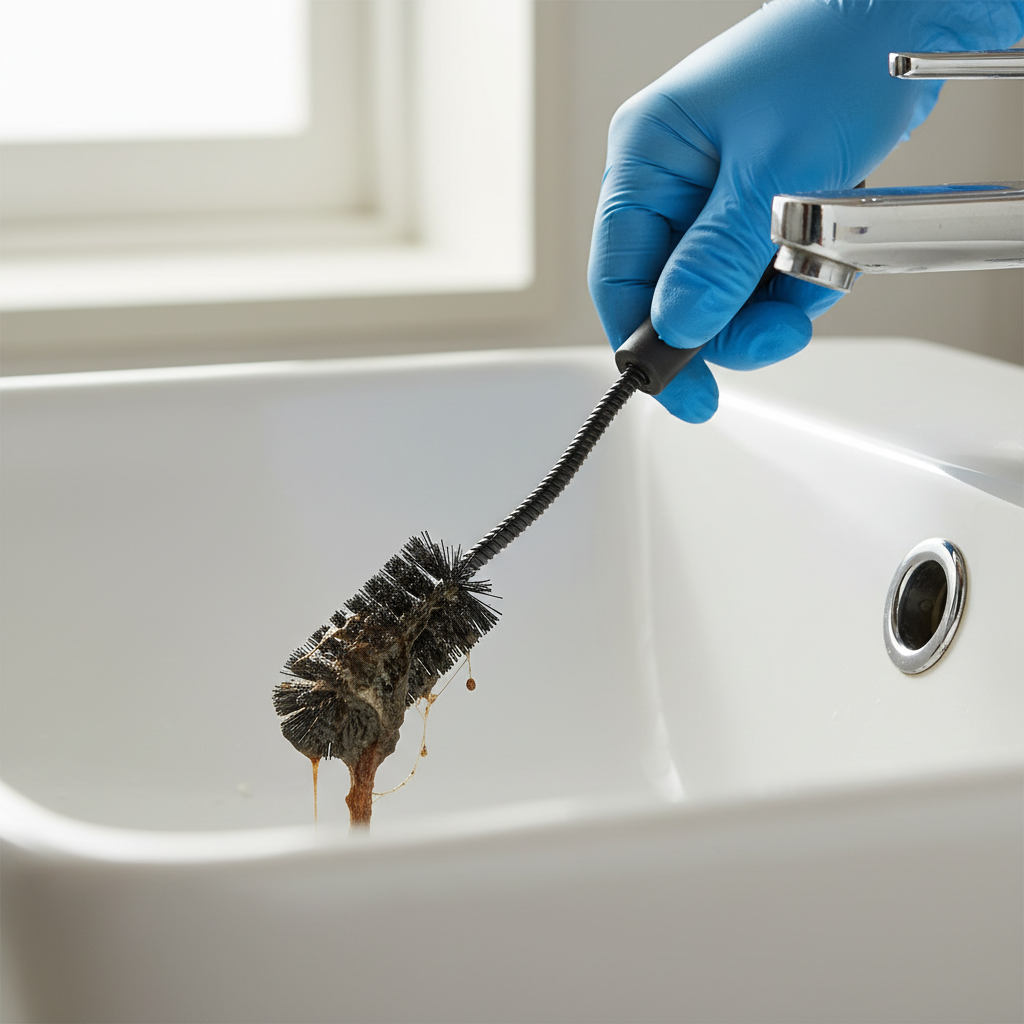
This is where a lot of DIY cleanups fall flat. You’ll want a flexible brush for this—bottle brush, overflow brush, whatever you’ve got that’ll fit. I’ve even used a long zip tie with little barbs cut into it when I was in a pinch.
*   **Find the overflow hole:** That’s the small opening near the top of the sink basin.
*   **Spray it down:** Put some all-purpose cleaner or a bleach solution (1 part bleach to 10 parts water) into the overflow hole. Let it sit a few minutes.
*   **Scrub:** Work your flexible brush as far as it’ll go into the overflow channel. Twist it, scrub it, make some noise. You’ll probably pull out black or brown gunk that looks downright nasty. Keep at it and flush with hot water until the brush comes out clean. This step matters. I can’t count how many times somebody told me they had sewer gas, and it was just this channel loaded with biofilm.
3. Flush the Drain with Hot Water — Simple but effective.
After you’ve cleaned the stopper and the overflow, run the hottest tap water you can for 5-10 minutes straight. That helps wash out loosened debris and any leftover cleaner. I like to add a few drops of dish soap or a cup of white vinegar while the water’s running to help cut through grease and grime.
4. Baking Soda and Vinegar Treatment — The classic natural cleaner.
Old-school, but it still works pretty well for freshening a drain.
*   **Pour in baking soda:** Dump about half a cup to a full cup of baking soda straight down the drain.
*   **Follow with vinegar:** Right after that, pour an equal amount (half to a full cup) of white vinegar down after the baking soda.
*   **Let it fizz:** You’ll hear it bubbling up—that’s the reaction breaking down organic material. Let it sit for 20-30 minutes.
*   **Flush again:** Follow that with plenty of hot water, just like in step 3, for another 5 minutes.
5. Consider Cleaning the P-Trap (Optional but Recommended) — For persistent smells.
If the smell’s still hanging around after all that, or if the sink drains slow, the P-trap is your next suspect. This means getting under the sink.
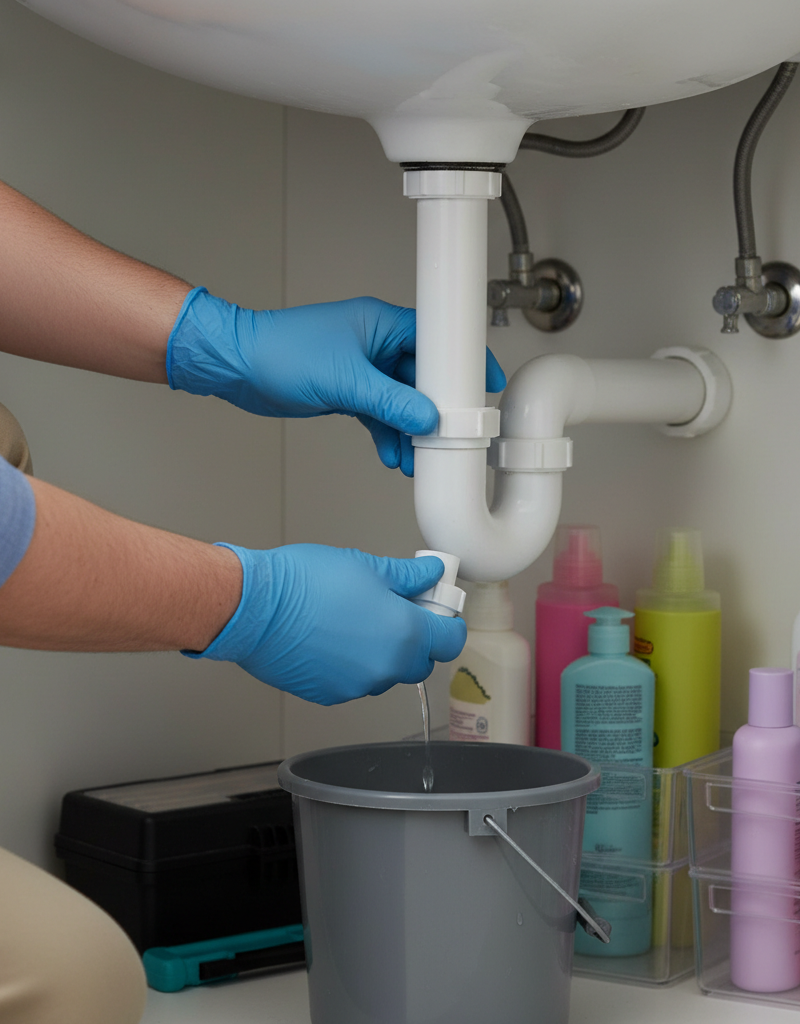
*   **Safety First:** Turn off the water supply to the sink at the shut-off valves. Set a bucket and an old towel right under the P-trap.
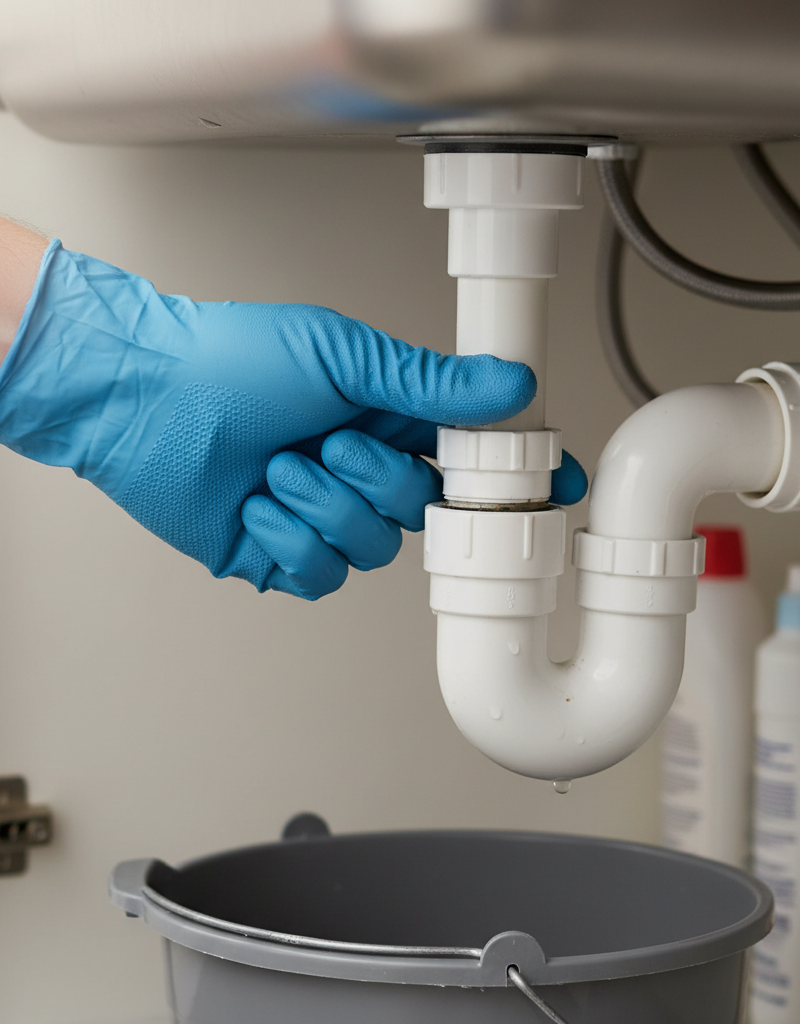
*   **Loosen nuts:** Use channel locks or an adjustable wrench to loosen the slip nuts on both sides of the P-trap. They’re usually plastic and can be hand-tightened, but sometimes they need a little persuasion.
*   **Remove and empty:** Carefully take the P-trap off and dump the contents into the bucket. You’ll likely find hair, sludge, and maybe a small item or two that fell down the drain.
*   **Clean:** Use a stiff brush—one of those bottle brushes works great—and hot soapy water to scrub the inside of the P-trap. Get it clean. Really clean.
*   **Reassemble:** Put the P-trap back together, make sure the slip nuts are hand-tightened, then give them another quarter turn with your wrench. Don’t overtighten; you can crack plastic pipes if you get too aggressive.
*   **Check for leaks:** Turn the water supply back on and run water for several minutes, watching closely for leaks around the slip nuts. Tighten a little if you need to.
6. Enzyme Drain Cleaner (If all else fails) — A biological approach.
If you’ve done everything above and there’s still a faint smell, an enzyme drain cleaner might help. These aren’t harsh chemical drain openers. They use helpful bacteria to eat organic matter. They work slow, usually overnight, but they’re safe for your pipes and septic systems. Follow the product directions closely. I’ve had decent luck with Bio-Clean or Zep’s enzyme products for maintenance.
Common Causes
Here’s what usually causes that nasty smell coming from your bathroom sink:
- Biofilm Buildup: This is the big one. Hair, soap scum, toothpaste, and skin cells team up and make a perfect little breeding ground for bacteria in the drain and overflow. As the bacteria break that stuff down, they give off gases, and those gases smell terrible.
- Dry P-Trap: If a sink doesn’t get used much—like in a guest bathroom—the water in the P-trap can evaporate. Once that water seal is gone, sewer gases can come right up into the bathroom. You’ll know it’s sewer gas. Rotten egg smell, plain and simple.
- Debris in the P-Trap: Even with water in the trap, a big pile of hair, dental floss, or other junk can hold onto foul-smelling water and create odors, kind of like a tiny compost pile under your sink.
- Vent Pipe Issues: Not as common for one sink, but if your plumbing vent stack is blocked or installed wrong, it can create negative pressure that sucks water out of your P-trap and lets sewer gas in. That usually affects more than one fixture, though—not just a single sink.
- Leaky Drain/Loose Connections: Sometimes a small leak under the sink or a loose fitting will let drain water drip out, sit in the cabinet, and grow mold or mildew. That smell can fool you into thinking it’s coming from the drain itself.
Common Mistakes
I’ve seen homeowners make these mistakes more times than I can count. Skip ’em:
- Ignoring the Overflow: This is the biggest miss. Everybody goes after the main drain, but that overflow channel is a straight shot for stink. Clean it. Seriously. It’s often the real problem.
- Using Harsh Chemical Drain Cleaners Regularly: Those caustic chemicals can chew up your pipes, especially older ones, and they don’t always strip out the biofilm anyway. They’re rough on the environment too. Stick with mechanical cleaning or enzyme treatments.
- Not Disassembling the Pop-Up Stopper: Just yanking it out isn’t enough if it’s got a pivot rod. That rod is a hair magnet. Take it apart and clean every piece.
- Not Flushing Thoroughly: After cleaning, or even just for maintenance, hot water helps. It carries away loosened debris and cuts down lingering odors.
- Overtightening P-Trap Nuts: If you do take apart the P-trap, go easy putting it back together. Plastic nuts crack fast if you crank on them with a wrench. Hand-tight plus a quarter turn is usually plenty.
- Confusing Sewer Gas with Biofilm Smell: They both stink, but they’re not the same. Sewer gas smells like rotten eggs or sewage. Biofilm is more musty, moldy, or just plain putrid. Knowing the difference helps you zero in on the fix.
Cost & Time Breakdown
Here’s what you can expect for time and money on this kind of job:
| Task | DIY Cost | Pro Cost | Time |
|---|---|---|---|
| Clean Pop-Up Stopper | $0 | N/A | 5-10 minutes |
| Clean Overflow Channel | $5–$15 | N/A | 15-30 minutes |
| Baking Soda/Vinegar Flush | $5–$10 | N/A | 30-45 minutes |
| Remove & Clean P-Trap | $0–$10 | $100–$250 | 30-60 minutes |
| Enzyme Drain Treatment | $15–$30 | $150–$300 | 2-8 hours (passive) |
| Total DIY (worst case) | $50–$65 | N/A | 1–2 hours |
Tips & Prevention
- Regular Flushing: Once a week, run hot water down the drain for a minute or two, maybe with a squeeze of dish soap. That helps keep buildup from getting started. If it’s a guest bathroom, run the water for a minute or two once a month so the P-trap doesn’t dry out.
- Hair Traps: Put a simple mesh hair trap in the drain. It only costs a few bucks and saves you a pile of hassle by catching hair before it goes down. Clean it after every use.
- Baking Soda & Vinegar Maintenance: A monthly baking soda and vinegar flush—half a cup of each, let it sit 20 minutes, then flush with hot water—is a solid preventive move against odors and minor clogs.
- Clean the Stopper Regularly: Every few weeks, pull the pop-up stopper and wipe it down. Takes maybe 30 seconds, and it keeps a lot of gunk from building up.
- Vent Pipe Check: If the smell is coming from all over the place and not just one sink, make sure the roof vent isn’t blocked. Leaves and even bird nests can clog it up and cause sewer gas problems. That’s usually a job for a pro to check safely.
- Don't Pour Grease Down the Drain: Even small amounts of grease from rinsing dishes can harden in your pipes and turn into a magnet for other debris, which leads to clogs and smells. Scrape plates into the trash instead.
When to Call a Professional
Look, most smelly sink problems are DIY-friendly. But there are times when you need to step back and call a licensed plumber. If you’ve gone through all the steps above—especially cleaning the overflow and the P-trap—and the smell still won’t quit, especially if it’s a strong, steady rotten egg or sewage smell, you might be dealing with something bigger like a damaged vent pipe, a deeper main line clog, or even a dry floor drain somewhere else in the house. If you think it’s sewer gas, don’t fool around; call a pro. Same goes if you’re not comfortable working under the sink, messing with drain pipes, or you create a leak you can’t stop. That’s when you bring in the cavalry. A licensed plumber’s got the tools and experience to find and fix the tougher stuff safely and usually pretty fast, often within an hour or two.
Related Articles
Keep troubleshooting with these hand-picked guides from FixlyGuide:
- The Nasty Truth About Your Smelly Bathroom Sink — And the 2-Ingredient Trick to Fix It — Uncover the hidden reasons behind that foul odor wafting from your bathroom sink drain and learn a simple, two-ingredient solution to banis…
- The Nasty Truth: Is Your Bathroom Sink's Stink Coming From a Hidden Biofilm? — A persistent, foul odor from your bathroom sink drain often signals a hidden biofilm buildup, not just a simple clog, demanding specific cl…
- The Nasty Truth: Your Bathroom Sink Smells Bad (And It's Not the Drainpipe) — A foul odor wafting from your bathroom sink often signals an issue beyond a simple clog, usually stemming from biofilm or a dry P-trap.
- The Nasty Truth: 3 Hidden Reasons Your Bathroom Sink Stinks (and the Easy Fix) — Unpleasant odors from your bathroom sink drain are often caused by common household culprits that are simple to identify and fix.
- The 5-Minute Trick to Clear Any Shower Drain Clog (Without Nasty Chemicals) — Learn how to quickly and safely clear a shower drain clog using simple tools and techniques, avoiding harsh chemical drain cleaners.
- The #1 Reason Your Gutters Overflow (It's Not Clogging) — Discover the surprising true cause of overflowing gutters during heavy rain and how a simple fix can prevent costly water damage to your ho…
Should you do this yourself?
Answer five quick questions before you start. Safety outranks savings every time.
Your experience with work like this
How high do you have to work?
Does the job involve any of these?
Will it need a permit?
Specialty tools
Free and instant. Educational guidance only — not a quote, inspection, or professional diagnosis.
What should this project cost?
Enter your project details for a realistic cost range before you call anyone.
Common repairs run $150–$650; repipes and water-heater replacements reach $1,500–$4,500.
- Regional adjustment
- National average
- Labor share (typical)
- ~$754
- Quotes to collect
- 3 written estimates
Educational estimate based on national averages — not a binding quote. Always confirm with written local estimates.
Fixly Project Decision Box
- DIY difficulty
- Moderate
- Estimated time
- 30 minutes – half a day
- Cost level
- Moderate
Main tools / materials
- Adjustable wrench
- Plunger or drain auger
- Bucket and towels
- Thread tape
When to stop and call a pro
- Water you cannot shut off at the fixture or main
- Sewage backing up into more than one fixture
- Water near electrical panels or outlets
- Gas water heater work beyond relighting a pilot
Need professional help?
Get a Licensed PlumberFrequently asked questions
Why does my bathroom sink smell bad even after cleaning?+
If you've cleaned the main drain, the most common reason for a persistent smell is uncleaned biofilm in the overflow channel. This hidden passage, running from the overflow hole to the drain pipe, is a prime spot for gunk to accumulate and fester. A flexible brush is usually needed to clean it thoroughly.
Is a bad sink smell dangerous?+
While the smell of biofilm from organic decomposition is unpleasant but generally not dangerous, a strong, persistent rotten-egg smell (sulfur) could indicate sewer gas. Sewer gas can contain methane and hydrogen sulfide, which are toxic in high concentrations and can pose health risks. If you suspect sewer gas, ventilate the area and call a plumber promptly.
How often should I clean my bathroom sink drain?+
For preventative maintenance, a quick flush with hot water and dish soap weekly, and a baking soda/vinegar treatment monthly, can keep odors at bay. A thorough cleaning of the pop-up stopper and overflow channel every 3-6 months is a good practice, especially in frequently used sinks.
Can a dry P-trap cause a bad smell?+
Yes, absolutely. The P-trap is designed to hold water, creating a seal against sewer gases. If a sink isn't used for a long time, the water can evaporate, breaking this seal and allowing sewer gas (which smells like rotten eggs) to enter your home. Running water for a minute or two will refill the trap.
Can I use chemical drain cleaner to get rid of the smell?+
I don't recommend regular use of harsh chemical drain cleaners. They can damage pipes over time, particularly older ones, and often just burn through a partial clog without fully removing the source of the odor. Mechanical cleaning and enzyme-based cleaners are much safer and more effective for persistent smells.
What tools do I need to clean a smelly sink drain?+
You'll primarily need an old toothbrush, paper towels, an all-purpose cleaner, a flexible brush (like a bottle brush or specialized overflow brush), baking soda, white vinegar, and plenty of hot water. If cleaning the P-trap, you'll also need a bucket, old towels, and channel locks or an adjustable wrench.
How do I prevent hair from causing drain smells?+
The best prevention is a simple hair catcher or mesh screen placed over the drain. These inexpensive devices catch most hair before it can enter the drain, significantly reducing buildup. Regular cleaning of the pop-up stopper also helps, as hair loves to snag on its mechanisms.
My sink drains slowly AND smells bad. Are they related?+
Yes, absolutely. A slow drain usually indicates a partial clog or significant buildup of hair and soap scum. This accumulation not only restricts water flow but also provides ample organic material for bacteria to feast on, leading to those foul odors. Addressing the clog will often resolve the smell simultaneously.
What's the difference between a drain smell and sewer gas?+
A drain smell from biofilm typically has a musty, moldy, or generally putrid odor. Sewer gas, on the other hand, usually smells distinctly like rotten eggs or raw sewage. If the smell is consistent and strong like rotten eggs, it's more likely sewer gas and warrants a professional's attention.
Can my garbage disposal cause a bathroom sink smell?+
Your bathroom sink won't have a garbage disposal. However, if you have a smelly kitchen sink with a disposal, the issue is often food particles trapped in the disposal's grinding chamber or splash guard. Cleaning these components thoroughly can eliminate the odor.

Discussion
Loading comments…