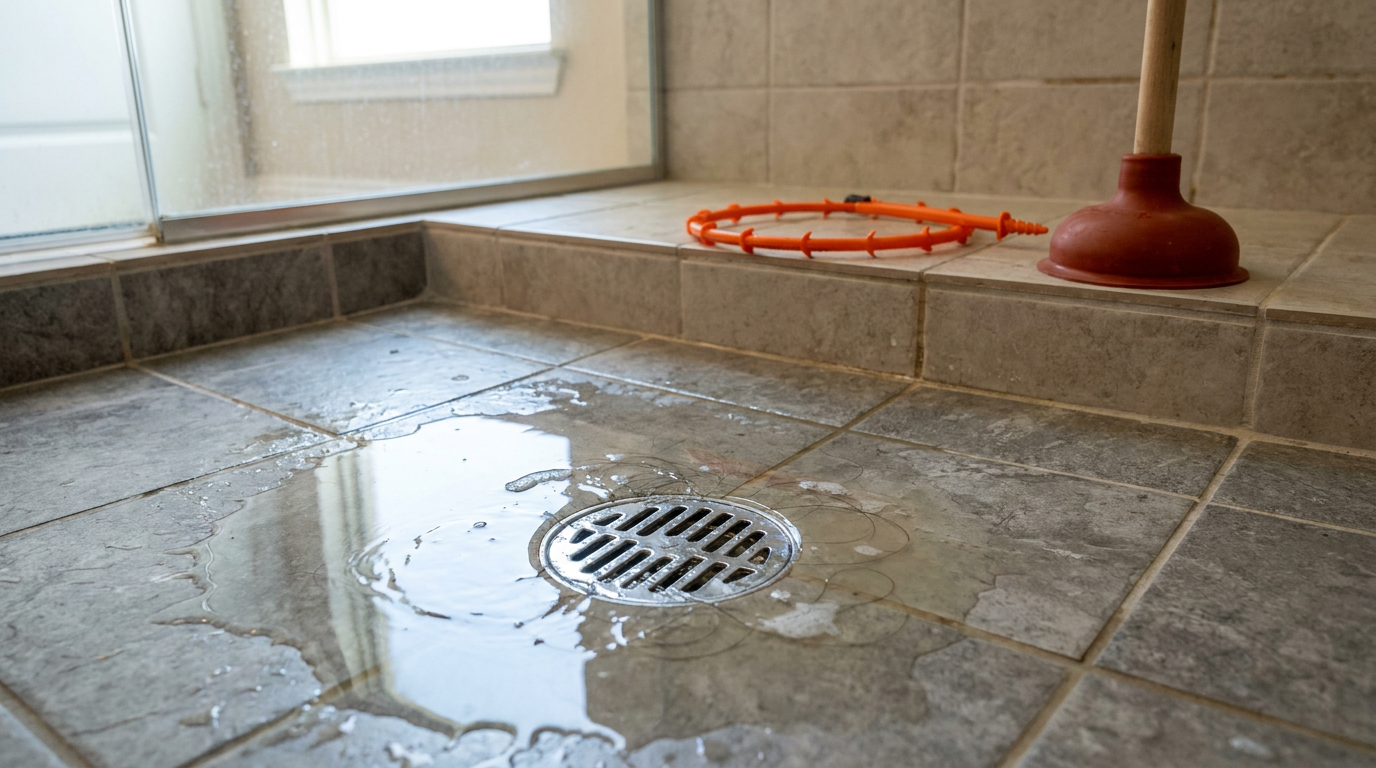
- Long and shedding hair fibers — Hair’s tough, it doesn’t break down easily, and it’s got microscopic scales that hook onto rough PVC seams, tailpiece threads, and drain grates.
- Tallow and fat-based bar soaps — Old-school bar soaps contain animal fats and fatty acids that bind with calcium ions in your municipal water, making an insoluble sticky mess called soap curd or lime soap.
- Deep-conditioning treatments and heavy oils — Hair masks, coconut oil washes, and silicone-based styling conditioners can solidify at room temperature (under 75°F), which leaves a waxy film inside uninsulated under-floor pipes.
- Mineral scale buildup — Hard water with high calcium and magnesium coats the inside of 2-inch drain lines, shrinks the flow path, and gives fibers a rough surface to hang onto.
- Foreign debris and wash-off grime — Sand, pet fur from dog baths, label stickers from new bottles, and little plastic bottle caps get into the drain opening when grates are removed or broken.
Plumbing · Clog
| Project category | Plumbing |
|---|---|
| Problem type | Clog |
| Trade required | Plumbing |
| Urgency | Soon — within weeks |
| Safety risk | Low safety risk |
| DIY suitability | DIY friendly |
| Cost category | Low cost |
| Typical timeline | Same-day DIY attempt; pro visit within a day or two |
| Contractor type | Licensed plumber |
Repair option
Plunger, hand auger, or trap cleanout before chemicals.
Replacement option
Line replacement when clogs return in the same spot repeatedly.
Common causes
- Hair and soap buildup in the trap
- Grease cooling in the branch line
- Flushed wipes or foreign objects
Relevant tools:diy difficultydiy or hire a pro
Published November 16, 2026Last updated November 16, 2026
Tools & materials you'll need
Affiliate linksAs an Amazon Associate FixlyGuide earns from qualifying purchases — at no extra cost to you. Prices and availability are accurate as of publication and subject to change.
Quick Answer
To unclog a shower drain without chemicals, I’d start by pulling the drain grate and grabbing whatever hair I can reach with a plastic barbed drain snake or even a bent wire coat hanger. If the clog’s deeper, I seal the overflow plate and hit it with a standard cup plunger over 2 inches of standing water. For the ugly stuff — soap scum mixed with hair mats — I run a 1/4-inch manual drum auger 3 to 6 feet down through the P-trap, turning clockwise while I feed it past the bends.
The Problem
You’re standing in three inches of dirty, lukewarm suds before you’ve even finished lathering up. Not fun. A shower drain ought to clear 5 to 7 gallons per minute, but hair from every wash catches on crossbars, screws, and rough pipe edges under the strainer. Then over the next few weeks, body oils, conditioner, bar soap tallow, and microscopic mineral flakes from hard water glue themselves to those loose strands.
What you end up with is basically a felt filter inside your plumbing. Water slows to a sluggish swirl, and you get that dirty scum ring around the tub or tile floor. Worse, the gunk sitting in there starts breaking down and sends a swampy, sour sewer-gas smell back up through the opening. Sure, you could reach for a bottle of caustic lye or acid — but I wouldn’t. Those chemicals kick off a nasty exothermic reaction, they can soften PVC joints, chew up older galvanized metal, and they still don’t usually finish off dense hair clogs. Mechanical extraction gets after the restriction right away without wrecking your pipes.
How It Works
Beneath your shower floor sits a 1.5-inch or 2-inch drain assembly tied into a vertical drop pipe known as the tailpiece. Just below that drop sits the P-trap — a curved, U-shaped fitting that holds roughly 2 to 4 inches of standing water. That water seal keeps sewer gases from sneaking back into your bathroom.
[ Shower Floor / Strainer Grate ]
                 |
          [ Tailpiece Drop ] (Clod & hair catch on crossbars)
                 |
            ___/   \___  <-- [ P-Trap ] (Standing water seals sewer gas)
           \___________/
                 |
                 +-----> [ Drain Branch Line to Main Stack ]
Water has to change direction twice to get through that U-bend, so flow slows down right at the bottom of the curve. That’s where heavy solids, long hair strands, and sticky soap curds settle out. When you use a barbed plastic strip, a cup plunger, or a drum snake, you’re attacking that settling zone directly. Plunging uses hydraulic pressure — water doesn’t compress, so your force goes straight into the blockage and pops it loose. Snaking does the dirty work by grabbing the woven hair fibers so you can pull the whole mess back out through the tailpiece instead of shoving it farther downstream into your home’s 3-inch or 4-inch main sewer branch line.
Step-by-Step Fix
Work through these in order. Start simple. Save the auger for when the easy stuff doesn’t do the trick.
-
Clear the shower floor and inspect the grate — Pull away bath mats, shampoo bottles, and razor holders so you’ve got room to work. Shine a bright flashlight straight down through the drain openings and see whether the clog’s tangled right across the visible crossbars or buried deeper in the trap.
- Tools: High-lumen flashlight or headlamp.
- Safety: Put on heavy nitrile or rubber gloves; shower grime carries plenty of bacteria and skin debris.
-
Remove the drain cover or stopper mechanism — Most shower grates either pop out if you pry gently under the rim with a flathead screwdriver, or they come off after you back out two small stainless steel screws. If you’ve got a tub-shower combo with a lift-and-turn or push-pull stopper, hold the shaft with slip-joint pliers and unscrew the top cap counterclockwise.
- Tools: Small flathead screwdriver, #2 Phillips screwdriver, slip-joint pliers.
- Watch out: Toss a rag over the drain hole while you remove screws so you don’t lose hardware straight into the trap.
-
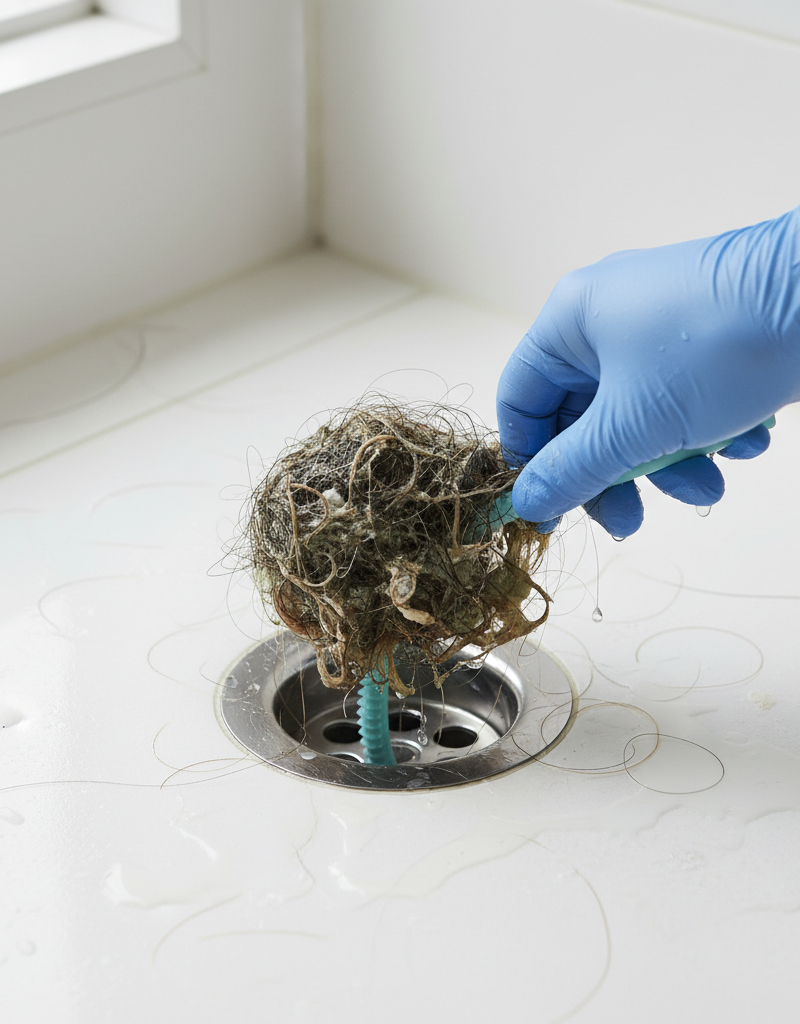
Deploy a plastic barbed drain snake — Feed a flexible 18-to-24-inch barbed plastic strip straight down past the drain crossbars until you feel that spongy resistance. Spin the tool 360 degrees two or three times so the hair wraps around the outward-facing plastic barbs, then pull it back slowly.
- Tools: 20-inch plastic barbed drain snake (zip-it style).
- Pro tip: Keep a grocery bag or small trash can right beside the drain so you can dump the dripping hair clump right away instead of smearing crud all over the tub surround.
-
Fabricate a wire retrieval hook for stubborn surface clumps — If the plastic tool slips past the clog or snaps, straighten out a regular wire coat hanger and leave yourself a tight 1/4-inch "J" hook at the tip with needle-nose pliers. Run the wire down along the pipe wall to get around the center of the clog, twist 180 degrees, and pull up to snag the stubborn roots of hair wedged on installation burrs.
- Tools: Wire coat hanger, needle-nose pliers, wire cutters.
- If this doesn't work: If the wire comes back clean but the water still won’t drain, the obstruction’s inside or past the P-trap curve; move to hydraulic pressure.
-
Seal the tub overflow opening (tub-shower combos only) — If you’re working on a bathtub-shower combo, plunging just pushes air and dirty water in and out of the overflow plate on the tub wall instead of forcing pressure into the drain line. Remove the overflow faceplate, pull the linkage assembly out, and pack a wet washcloth firmly into the opening while you hold it in place with your hand.
- Tools: Damp cotton washcloth, flathead or Phillips screwdriver.
- Standalone showers: Skip this step; walk-in shower pans don’t have an overflow port.
-
Establish an airtight plunger seal — Smear a thin layer of petroleum jelly around the rim of a standard flat-bottom rubber cup plunger so it seals better against the smooth acrylic or tile base. Add enough warm tap water to the pan to cover the plunger’s rubber dome by at least 1 to 2 inches.
- Tools: Standard rubber cup plunger (not an accordion or flanged toilet plunger), petroleum jelly.
- Key check: Submerging the rubber cup keeps air pockets from stealing your force.
-
Execute rhythmic hydraulic plunging strokes — Center the plunger cup squarely over the drain hole, push down gently to burp out trapped air, then plunge hard up and down 15 to 20 times in quick succession. Keep the rim sealed to the floor pan so the pressure keeps switching between pushing down and pulling up.
- Action: Pull up sharply on the final stroke so the debris comes back into the shower base instead of getting shoved deeper.
- Cleanup: Scoop up dislodged hair and gunk right away with paper towels; don’t wash those clumps back down the pipe.
-
Feed a manual drum auger through the P-trap — If plunging doesn’t move it, loosen the thumbscrew on a 1/4-inch hand auger, pull out 12 inches of steel cable, and slide the bulb head into the drain pipe. When you hit resistance around 8 to 14 inches down, you’ve reached the first bend of the P-trap.
- Tools: 25-foot by 1/4-inch manual drum auger, leather work gloves.
- Safety: Don’t use thin mechanics' gloves or bare hands; coiled steel cable will pinch and twist skin under load.
-
Navigate past the trap bends — Tighten the drum collar thumbscrew about 4 inches away from the drain opening. Turn the crank handle clockwise with steady forward pressure while you feed the cable into the line. The head will climb up and over the trap’s weir.
- Technique: If the cable binds or bows outward, don’t muscle it. Back off two turns counterclockwise, pull the cable back 2 inches, tighten down, and crank forward again so the corkscrew head can lead the way.
-
Retrieve the clog and verify line clearance — Once you punch through the blockage (usually between 3 and 5 feet down), push the cable another 12 inches while cranking to catch the stragglers. Loosen the lock screw and pull the cable back by hand, wiping the wet steel with an old rag as it re-enters the drum canister.
- Tools: Shop rags, bucket.
- Action: Pull hair bundles off the corkscrew tip and dump them in the trash.
-
Flush the line with rolling-hot water — Reinstall the drain grate and snug the screws down until they’re finger-tight plus 1/4 turn — don’t overtighten and crack plastic pans. Run the shower hot water wide open for 3 to 5 minutes to move leftover soap residue through the main branch.
- Temperature check: Standard water heater output (120°F to 125°F) is plenty hot to loosen conditioner residue without damaging PVC schedule 40 pipe joints or wax seals below.
Common Causes
- Long and shedding hair fibers — Hair’s tough, it doesn’t break down easily, and it’s got microscopic scales that hook onto rough PVC seams, tailpiece threads, and drain grates.
- Tallow and fat-based bar soaps — Old-school bar soaps contain animal fats and fatty acids that bind with calcium ions in your municipal water, making an insoluble sticky mess called soap curd or lime soap.
- Deep-conditioning treatments and heavy oils — Hair masks, coconut oil washes, and silicone-based styling conditioners can solidify at room temperature (under 75°F), which leaves a waxy film inside uninsulated under-floor pipes.
- Mineral scale buildup — Hard water with high calcium and magnesium coats the inside of 2-inch drain lines, shrinks the flow path, and gives fibers a rough surface to hang onto.
- Foreign debris and wash-off grime — Sand, pet fur from dog baths, label stickers from new bottles, and little plastic bottle caps get into the drain opening when grates are removed or broken.
Common Mistakes
- Pouring boiling water into acrylic or PVC setups — Bringing water to a rolling boil (212°F) on the stove and dumping it into a shower drain can warp thin-walled schedule 40 PVC, soften rubber slip-joint washers, or thermal-shock and crack acrylic or fiberglass shower pans. Keep flush water down around tap-hot temperatures, around 120°F to 130°F.
- Reaching for liquid caustic lye or acid mixtures — Chemical drain cleaners just sit on top of standing clogs. They eat chrome drain finishes, throw off nasty fumes in tight shower stalls, and make life miserable for whoever has to pull the trap apart or snake the line later.
- Using an oversized 1/2-inch plumbing snake — Heavy sewer snakes made for main lines or 3-inch cleanouts are way too stiff for the sharp radius of a 1.5-inch or 2-inch shower P-trap. If you force an oversized cable, you can punch through thin plastic trap elbows or get it wedged for good. Stick with a flexible 1/4-inch cable.
- Plunging without plugging the overflow — On bathtub-shower combos, plunging the floor drain without an airtight seal on the overflow just moves air back and forth. You get zero hydraulic force at the clog point and end up splashing dirty water up the tub walls.
- Pushing clogs deeper instead of retrieving them — If you shove blindly down the pipe with a broomstick or stiff rod, you’ll compact the hair nest into a rock-hard plug in the horizontal run and turn a simple 5-minute trap cleaning into a multi-hour snaking job. Hook it and pull it out.
Cost & Time Breakdown
| Task | DIY Cost | Pro Cost | Time |
|---|---|---|---|
| Grate removal & barbed tool extraction | $5–$10 | $150–$225 | 10–15 mins |
| Overflow sealing & hydraulic plunging | $10–$15 | $175–$250 | 15–25 mins |
| Manual drum auger snaking (up to 6 ft) | $25–$45 | $200–$350 | 30–45 mins |
| Enzyme maintenance flush | $12–$20 | $75–$120 | 5 mins (plus overnight wait) |
Tips & Prevention
- Install a secondary silicone hair catcher — Set a dome-style silicone hair trap or a drop-in stainless steel mesh basket over your shower grate. Clean it after every single shower so loose hair never makes it into the plumbing drop.
- Flush drains weekly with tap-hot water — At the end of your cleaning routine, run the shower on full hot (120°F) for two full minutes. That steady heat helps soften conditioner buildup before it hardens on the pipe walls.
- Treat pipes monthly with natural bacterial enzymes — Pour 4 to 8 ounces of liquid enzyme drain maintainer down the shower drain once a month before bed. Those living cultures eat organic hair and soap scum over an 8-hour period without making heat or damaging pipe walls.
- Never wash construction dust or pet fur unchecked — Drywall mud, grout residue, and heavy pet fur settle like cement inside wet P-traps. Bathe shedding pets with a dedicated mesh filter in place, and rinse drywall tools outdoors with a garden hose.
- Check drain grate screws twice a year — Vibration from walking on fiberglass pans can loosen drain hardware. Keep the grate screws snug so hair can’t work its way under the perimeter lip.
When to Call a Professional
Most shower clogs clear pretty fast with a barbed strip, a plunger, or a light 1/4-inch hand auger. But if you’ve run a snake out past 10 feet and the water still backs up right away, the problem isn’t in the shower trap — it’s out in the secondary branch or the main building drain.
Back off and call a licensed plumber if you see water backing up into your shower pan whenever somebody flushes a nearby toilet or runs the washing machine. That’s a classic sign of a bad main sewer stack, a broken underground lateral, or tree-root intrusion outside the house. I pulled a water heater in Frisco last month that had exactly this kind of backup trail, and sure enough, the line was packed with roots before it ever reached the street.
If you live on a slab foundation and smell raw sewage around the baseboards, or if your auger cable comes back with dirt and gravel stuck to the head, stop right there. That points to a collapsed drain line, a cracked P-trap under the concrete, or disconnected sub-floor fittings that need sewer cameras, hydro-jetting, or full-on pipe excavation.
Related Articles
Keep troubleshooting with these hand-picked guides from FixlyGuide:
- The Secret Hairball Fix Plumbers Don't Want You to Know — Tired of standing in ankle-deep water? Most shower clogs are a gnarly mix of hair and soap scum, and you can clear them yourself without ha…
- The 90-Second Trick to Unclogging Any Shower Drain (No Chemicals Needed) — Learn how to quickly and safely clear a clogged shower drain using simple tools and household items, avoiding harsh chemicals.
- The Slow Drain Mystery: Why Your Garbage Disposal Backs Up (and the One Simple Tool That Saves the Day) — If your garbage disposal is draining slowly or backing up into your sink, it's likely a stubborn clog that you can tackle with a few basic…
- The Quiet Drip: Why Your Pipes Freeze & How to Thaw Them Without a Flood — Don't panic if you've got a frozen pipe; I'll show you how to safely thaw it out before it bursts, using tools you likely already own.
- Dishwasher Backing Up into Sink? 5 Causes and the Step-by-Step Fix — Is dirty water backing up into your sink when the dishwasher runs? Learn how to clear clogged disposal inlets, fix hose routing, and stop b…
- Your Roses Have Aphids? The Secret Soap Spray That Saves Them — Tiny green or black bugs sucking the life out of your prize-winning roses? A simple homemade insecticidal soap spray can banish aphids with…
What should this project cost?
Enter your project details for a realistic cost range before you call anyone.
Common repairs run $150–$650; repipes and water-heater replacements reach $1,500–$4,500.
- Regional adjustment
- National average
- Labor share (typical)
- ~$754
- Quotes to collect
- 3 written estimates
Educational estimate based on national averages — not a binding quote. Always confirm with written local estimates.
Fixly Project Decision Box
- DIY difficulty
- Moderate
- Estimated time
- 30 minutes – half a day
- Cost level
- Moderate
Main tools / materials
- Adjustable wrench
- Plunger or drain auger
- Bucket and towels
- Thread tape
When to stop and call a pro
- Water you cannot shut off at the fixture or main
- Sewage backing up into more than one fixture
- Water near electrical panels or outlets
- Gas water heater work beyond relighting a pilot
Need professional help?
Get a Licensed PlumberGet the print-ready PDF of this guide
A clean, ad-free, printable version you can keep on your phone or pin to the workshop wall. Free with a FixlyGuide account.
- Print-optimized layout
- Tools, materials & every step included
- Saved to your account
Frequently asked questions
Does baking soda and vinegar actually dissolve hair clogs?+
Yes, baking soda and vinegar can fizz away light grease and freshen bad odors, but they lack the mechanical force to dissolve dense mats of woven hair and hardened soap curd. You will almost always need to extract the physical hair clog mechanically using a barbed plastic tool, a wire hook, or an auger.
Is it safe to pour boiling water down a PVC shower drain?+
No, you should never pour boiling water (212°F) down shower drains. Boiling water can warp thin-walled schedule 40 PVC joints, compromise rubber slip washers, and cause thermal stress cracks in acrylic or fiberglass shower pans. Stick to standard hot tap water (around 120°F to 125°F) for safe line flushing.
What type of plunger works best on a shower drain?+
A flat rubber cup plunger works best for walk-in showers and tub basins. Flanged plungers and accordion-style designs are engineered specifically to seal against the curved discharge holes inside toilet bowls, whereas flat cup plungers make airtight perimeter contact against smooth tile, acrylic, and tub bottoms.
How do I unclog a shower drain with a fixed grate that doesn't come off?+
Remove the screws holding the grate down using a screwdriver, or gently pry up a snap-in cover with a flathead screwdriver. If hair remains trapped around fixed crossbars that do not come off, insert a flexible barbed plastic drain snake or a bent coat hanger through the grate slots to pull the clog through.
Why shouldn't I use chemical drain cleaners to unclog my shower?+
Chemical drain cleaners generate high heat (exothermic reactions) that softens and deforms PVC pipe joints, rots older cast-iron lines, and corrodes finished drain metal. If they fail to clear the blockage, they leave your shower basin filled with toxic, caustic water that risks burning your skin during manual clearing.
How far down the pipe does a typical shower clog sit?+
Most standard shower P-traps sit between 8 and 18 inches directly below the finished floor drain opening. For tub-and-shower combinations, the trap sits slightly offset, directly below the overflow and tub waste shoe assembly.
Why does my shower drain make a gurgling sound when draining?+
If you hear gurgling sounds, the drain is struggling for air because the pipe is choked off or the plumbing vent stack is blocked. As water pushes past an obstruction, it creates negative pressure that pulls air through the trap water, creating a bubbling or sucking noise that indicates a developing backup.
Is plunging or snaking better for clearing shower drains?+
Plunging can clear clogs held together by soap scum, loose sludge, and standing water pressure, but it often only shifts massive hair clogs rather than pulling them out. Snaking physically binds to and removes the hair mass entirely, making it far more reliable for long-term flow restoration.
Discussion
Loading comments…