- Forgetting to Unplug the Unit: This is the most critical and dangerous mistake. It risks electric shock and can damage the refrigerator's electronic controls.
- Using Water to Clean Coils: Never spray water or liquid cleaners on the condenser coils or any other electronic/mechanical parts. This can cause short circuits and promote rust.
- Bending the Coil Fins: The thin aluminum fins on some condenser units are extremely delicate. Using too much force or a sharp tool can bend them, which restricts airflow and reduces efficiency just as much as dust does.
- Not Checking the Fan: Many people clean the coils but fail to check if the condenser fan spins freely. A seized fan will cause the problem to return immediately as the compressor overheats.
- Pushing the Fridge Flush Against the Wall: After cleaning, homeowners often push the unit all the way back, choking off the airflow the coils need to dissipate heat. Always leave at least one inch of clearance.
HVAC · High energy usage
| Project category | HVAC |
|---|---|
| Problem type | High energy usage |
| Trade required | HVAC |
| Urgency | Planned project |
| Safety risk | Low safety risk |
| DIY suitability | DIY for experienced homeowners |
| Cost category | High cost |
| Typical timeline | Assessment within weeks; replacement planned off-season |
| Contractor type | Licensed HVAC technician |
Repair option
Duct sealing, insulation, and a tune-up before touching the equipment.
Replacement option
High-efficiency replacement sized by a load calculation, not a rule of thumb.
Common causes
- Aging, low-efficiency equipment
- Leaking ducts losing conditioned air
- Insufficient attic insulation
- Oversized system short-cycling
Relevant tools:project cost estimatorrepair or replace
Published May 2, 2026Last updated August 17, 2026
Tools & materials you'll need
Affiliate links- AmazonVacuum Cleaner with AttachmentsA crevice tool or brush attachment is essential.
- AmazonCondenser Coil BrushA long, flexible brush designed for this task a worthwhile investment.
- AmazonScrewdriver or Nut DriverTo remove the rear access panel.
- AmazonFlashlightTo see into the dark coil compartment.
- AmazonGlovesTo keep your hands clean from the heavy dust.
As an Amazon Associate FixlyGuide earns from qualifying purchases — at no extra cost to you. Prices and availability are accurate as of publication and subject to change.
Quick Answer
If your refrigerator is making a loud humming noise, the most common and often-missed cause is dirty condenser coils. These coils, located on the back or bottom of the fridge, release heat. When they're covered in dust and pet hair, the compressor has to work harder and longer, creating a loud hum. Cleaning them with a brush and vacuum is a simple fix that usually resolves the noise.
The Problem
It starts subtly. A low, resonant hum that seems to blend into the background noise of your home. But then it gets louder, more persistent. Soon, your kitchen sounds less like a place for cooking and more like a small-scale power plant. This constant, refrigerator humming loud noise isn't just a minor annoyance; it’s your appliance sending out a distress signal. The sound can be disruptive to conversations, distracting when you're trying to work from home, and downright maddening in an otherwise quiet house. Many homeowners either try to ignore it, assuming it’s just the "normal" sound of an aging fridge, or they immediately fear the worst—a catastrophic compressor failure that will cost a fortune to repair. The truth, however, is often much simpler and far less expensive. That loud hum is a clear symptom of a problem, usually one of inefficiency and strain. Your refrigerator is working too hard to do its job, and the noise is the audible result of that extra effort. Ignoring it not only affects your peace and quiet but also drives up your energy bills and can significantly shorten the lifespan of the appliance.
How It Works
The quiet operation of your refrigerator depends on a surprisingly elegant thermodynamic process called the refrigeration cycle. This closed-loop system is designed to move heat from inside the refrigerator to the outside air. The main players are the compressor, condenser coils, evaporator coils, and refrigerant.
It all starts with the compressor, which is essentially the heart of the system. This powerful motor pressurizes the refrigerant gas, raising its temperature significantly. This hot, high-pressure gas is then pushed into the condenser coils. These are the thin, serpentine tubes you often see on the back of older fridges or located underneath newer models, paired with a small fan. The purpose of these coils is to act as a radiator, dissipating the heat from the refrigerant into the ambient air of your kitchen. As the gas cools, it condenses into a high-pressure liquid.
Next, this liquid flows through an expansion valve (or capillary tube), which causes its pressure to drop dramatically. This rapid depressurization makes the liquid vaporize and become intensely cold inside the evaporator coils (the ones hidden within your freezer). A fan blows air across these frosty coils, chilling the air that circulates through the freezer and refrigerator compartments. By absorbing the heat from inside the fridge, the cold refrigerant gas warms up and flows back to the compressor to start the entire cycle over again.
When the condenser coils are caked in dust, pet hair, and grime, they can't release heat effectively. The system loses its efficiency, forcing the compressor to run longer and harder to achieve the same cooling effect. This prolonged, high-stress operation is the primary source of that persistent, loud refrigerator hum.
Step-by-Step Fix
This guide focuses on the most common fix: cleaning the condenser coils and checking the condenser fan. This procedure resolves the vast majority of refrigerator humming loud issues.
-
Safety First: Unplug the Refrigerator — Before you do any work, pull the refrigerator straight out from the wall and unplug it from the power outlet. This is non-negotiable for your safety. Pulling it out also gives you the necessary space to work.
-
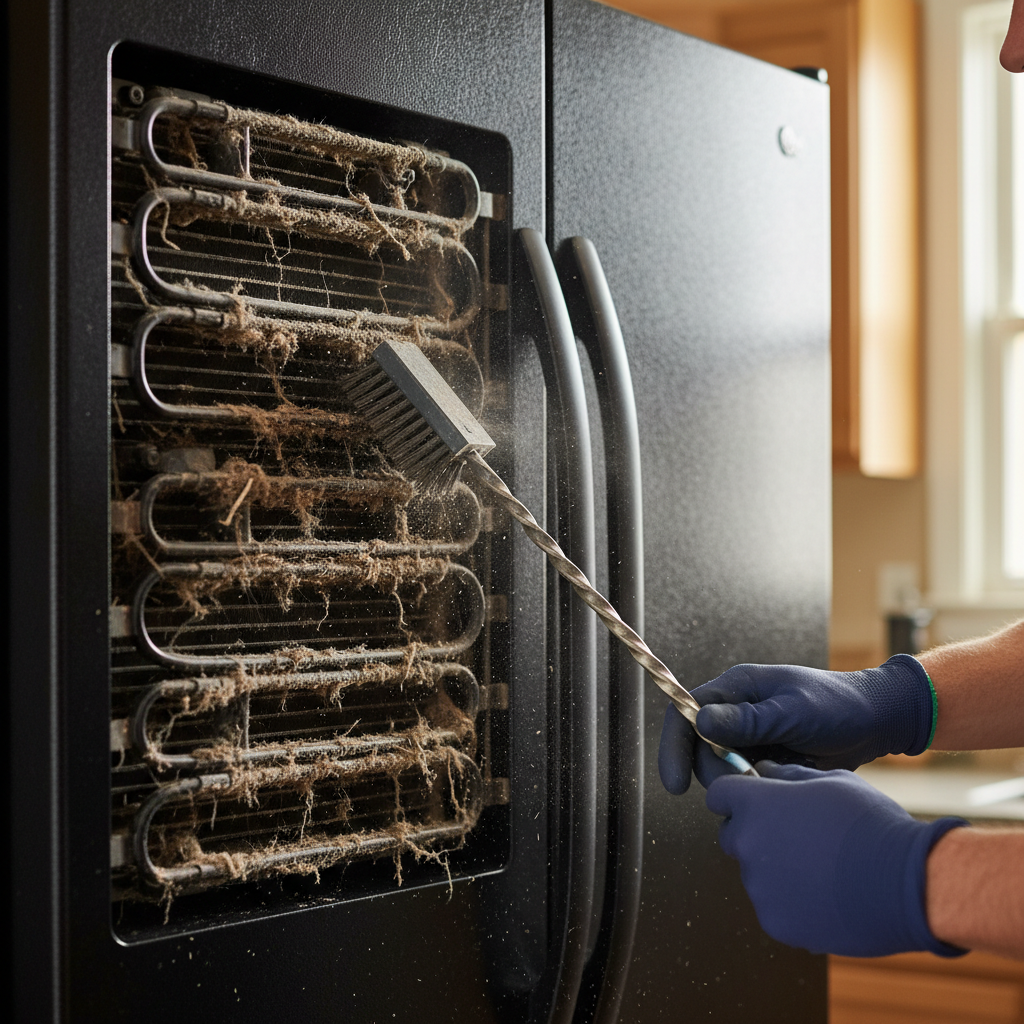
Locate the Condenser Coils — There are two primary locations. On many older models, the coils are exposed on the back of the unit—you can't miss them. On most newer refrigerators, they are located underneath, behind a lower back access panel or a front grille.
-
Remove the Access Panel — If your coils are underneath, you'll need to remove the cover. This is typically a thin piece of fiberboard or metal held in place by several hex-head or Phillips-head screws. Use your screwdriver to remove them and set the panel and screws aside safely.
-
Initial Visual Inspection — Shine a flashlight on the coils. You will likely see a thick blanket of dust, lint, and pet hair. You’ll also see the condenser fan, which is a small fan responsible for blowing air across the coils. Check for any obvious obstructions, like a stray piece of plastic or a child’s toy, that might be hitting the fan blades.
-
The First Pass: The Brush — Take your long, flexible condenser coil brush. Gently insert it between the coils and use back-and-forth motions to break up and dislodge the thickest layers of grime. Work your way across the entire set of coils, pushing the dust into areas where your vacuum can reach it.
-
The Second Pass: The Vacuum — Using your vacuum cleaner with a narrow crevice tool or brush attachment, carefully suction up all the dust you just loosened. Go over the coils, the fan blades, the compressor housing, and the entire floor of the compartment. The goal is to remove as much debris as possible.
-
Check the Condenser Fan Manually — With the power still off, gently spin the condenser fan blade with your finger (if accessible). It should spin freely and smoothly for a few rotations. If it feels stiff, gritty, or won't move at all, the fan motor may be failing and could be the source of the hum.
-
Address Fan Obstructions — If the fan is blocked, carefully remove the debris. If the fan motor itself seems to be the issue (stiff to turn), it will likely need to be replaced. This is a common point of failure that causes a loud refrigerator hum as the compressor overheats.
-
Clean the Removed Panel and Surrounding Area — Before reinstalling, take a moment to wipe down the access panel you removed. Also, vacuum the floor where the refrigerator normally sits. This reduces the amount of new dust that gets pulled in immediately.
-
Reassemble and Reposition — Screw the access panel back into place. Carefully push the refrigerator back against the wall, making sure to leave about 1-2 inches of clearance for proper airflow. This space is critical for the coils to dissipate heat effectively.
-
Power Up and Listen — Plug the refrigerator back in. The compressor and fans will likely start up immediately. It may take a few hours for the system to stabilize, but you should notice a significant reduction in the humming noise almost right away. A quiet, low hum is normal; a loud, vibrating hum is not.
Common Causes
While dirty coils are the #1 culprit, other issues can cause a refrigerator humming loud noise:
- Failing Condenser Fan Motor: If the fan that cools the coils and compressor is seized or failing, it can produce a distinct humming or buzzing noise. The compressor may also get hotter than usual, causing it to hum more loudly as it struggles.
- Bad Evaporator Fan Motor: This fan circulates cold air inside the freezer and fridge. When its motor starts to fail, it can create a high-pitched hum or squeal, which is often loudest inside the freezer compartment. If the noise stops when you open the freezer door, it's almost certainly the evaporator fan.
- Malfunctioning Icemaker: The icemaker assembly can create a humming noise when it's trying to fill with water but the water line is shut off or blocked. This hum will typically occur in cycles, lasting for a few seconds every hour or so, as the icemaker tries and fails to draw water.
- Vibrating Drain Pan: Underneath the fridge, a shallow drain pan collects water from the defrost cycle. If the pan becomes loose or shifts to touch the side of the compartment or the compressor, it can vibrate and create a resonant humming or rattling sound.
- Unlevel Refrigerator: If the refrigerator isn't sitting perfectly level on the floor, the entire chassis can vibrate when the compressor kicks on. This can amplify the normal operating hum into a much louder and more noticeable noise. Check by gently rocking the unit; it shouldn't wobble.
- Compressor Overload: This is the root of the dirty coil problem but can have other causes. If the door seals are leaking, warm air is constantly entering the fridge, forcing the compressor to run continuously and creating a non-stop, loud refrigerator hum.
Common Mistakes
Ambitious DIYers often make these simple mistakes. Avoid them to ensure your fix is effective and safe.
- Forgetting to Unplug the Unit: This is the most critical and dangerous mistake. It risks electric shock and can damage the refrigerator's electronic controls.
- Using Water to Clean Coils: Never spray water or liquid cleaners on the condenser coils or any other electronic/mechanical parts. This can cause short circuits and promote rust.
- Bending the Coil Fins: The thin aluminum fins on some condenser units are extremely delicate. Using too much force or a sharp tool can bend them, which restricts airflow and reduces efficiency just as much as dust does.
- Not Checking the Fan: Many people clean the coils but fail to check if the condenser fan spins freely. A seized fan will cause the problem to return immediately as the compressor overheats.
- Pushing the Fridge Flush Against the Wall: After cleaning, homeowners often push the unit all the way back, choking off the airflow the coils need to dissipate heat. Always leave at least one inch of clearance.
- Misdiagnosing Normal Sounds: Refrigerators make a variety of normal noises, including humming, gurgling, and clicking. The key differentiator is volume. A soft, gentle hum is normal; a refrigerator humming loud enough to be intrusive is a sign of a problem.
Cost & Time Breakdown
Here’s a realistic look at what it takes in time and money to solve that humming noise, comparing a DIY approach to hiring a professional.
| Task | DIY Cost | Pro Cost | Time Estimate |
|---|---|---|---|
| Condenser Coil & Fan Cleaning | $0 - $20 (for a brush) | $125 - $225 | 30-45 Minutes |
| Condenser Fan Motor Replacement | $50 - $100 (for the part) | $200 - $350 | 1-2 Hours |
| Evaporator Fan Motor Replacement | $40 - $90 (for the part) | $250 - $400 | 2-3 Hours |
| Icemaker Assembly Replacement | $75 - $150 (for the part) | $250 - $450 | 1 Hour |
| Leveling the Refrigerator | $0 | $100 - $150 (service call) | 10 Minutes |
| Compressor Replacement | Not a DIY job | $500 - $1,000+ | 3-5 Hours |
Tips & Prevention
Keep your refrigerator running quietly and efficiently for years to come with these simple habits.
- Schedule Biannual Coil Cleaning: Make it a habit. Set a calendar reminder to clean your refrigerator’s condenser coils every six months. If you have pets that shed, do it every three months.
- Check for Level: Every time you sweep your kitchen, give the fridge a gentle push. If it wobbles, take a few minutes to adjust the feet until it’s stable. A level fridge is a quiet fridge.
- Verify Door Seals: Once a month, close the refrigerator door on a dollar bill. If you can pull the bill out with no resistance, your door seals (gaskets) are worn and leaking cold air, making the compressor work harder.
- Ensure Proper Airflow: Don't overpack your refrigerator or freezer. Cold air needs to circulate. Similarly, ensure there's at least an inch of space behind and above the unit for heat to escape.
- Listen to Your Appliance: Pay attention to new sounds. A sudden change from a low hum to a loud buzz is an early warning sign you can often fix before it becomes a major problem.
When to Call a Professional
While cleaning the coils is an easy DIY fix, certain symptoms warrant an immediate call to a qualified appliance repair technician. If you’ve thoroughly cleaned the condenser coils and fan area and the refrigerator humming loud noise persists, it’s time for an expert. You should also call a pro if you notice a sharp, electrical or "hot" smell accompanying the hum, as this could indicate a failing compressor or wiring issue, which is a fire hazard. Other red flags include grinding, squealing, or chirping sounds, which point to failing motors or bearings that are beyond a simple cleaning. Furthermore, if the humming is accompanied by a lack of cooling—your food isn't staying cold—the problem is more severe, potentially involving a sealed system refrigerant leak or a completely failed compressor. Attempting to fix these complex issues yourself without proper training and tools can lead to further damage or personal injury. A professional can accurately diagnose the root cause and advise whether a repair is cost-effective compared to replacing the unit.
Related Articles
Keep troubleshooting with these hand-picked guides from FixlyGuide:
- The #1 Mistake Homeowners Make When Their Ice Maker Stops (And the Easy Fix) — Before you call for service, learn the most common and easily fixable reason your refrigerator's ice maker isn't producing ice.
- The #1 Reason Your Ice Maker Stopped (It's Not Clogged!) — Discover the most overlooked culprit behind a non-working ice maker and how a simple fix can restore fresh ice to your freezer.
- Is Your Refrigerator Buzzing Loudly in the Quiet of Night? — A loud buzzing from your fridge at night often points to the icemaker, a dirty fan, or a vibrating component, many of which are simple home…
- The #1 Mistake Homeowners Make When Their Dryer Isnt Drying (And How to Fix It Free) — Most homeowners assume a slow dryer means a broken dryer, but the most common culprit is a simple, often overlooked maintenance issue that'…
- The #1 Mistake Homeowners Make When Their Dishwasher Stops Cleaning (And the Simple Fix) — Discover the most common reason your dishwasher isn't cleaning dishes and learn a simple, effective fix you can do yourself in minutes.
- The Secret Culprit Behind Your Leaky Refrigerator (It’s Not Always the Water Line) — Discover the most common, often overlooked, reasons your refrigerator is leaking water and how to fix them with simple DIY steps.
Should you do this yourself?
Answer five quick questions before you start. Safety outranks savings every time.
Your experience with work like this
How high do you have to work?
Does the job involve any of these?
Will it need a permit?
Specialty tools
Free and instant. Educational guidance only — not a quote, inspection, or professional diagnosis.
What should this project cost?
Enter your project details for a realistic cost range before you call anyone.
Cost depends heavily on which system turns out to be the source.
- Regional adjustment
- National average
- Labor share (typical)
- ~$1,620
- Quotes to collect
- 3 written estimates
Educational estimate based on national averages — not a binding quote. Always confirm with written local estimates.
Get the print-ready PDF of this guide
A clean, ad-free, printable version you can keep on your phone or pin to the workshop wall. Free with a FixlyGuide account.
- Print-optimized layout
- Tools, materials & every step included
- Saved to your account
Frequently asked questions
Is it normal for a new refrigerator to hum loudly?+
Yes, it's normal for a new refrigerator to hum more loudly for the first 24-48 hours. The system is working hard to stabilize its internal temperature. However, if the loud humming continues beyond a few days, you should check if it's level and that there's enough clearance for airflow.
Can a loud hum mean the refrigerator is about to die?+
Not necessarily. In most cases, a loud hum is simply a sign of dirty condenser coils, which is an easy fix. However, if the hum is accompanied by clicking, grinding, or a lack of cooling, it can be a symptom of a failing compressor, which is a major, often terminal, issue.
How do I know if the hum is the compressor or a fan?+
Try to pinpoint the sound's location. A hum from the very bottom or back of the fridge is likely the compressor or condenser fan. A hum or whirring sound from inside the freezer compartment, which stops when you open the freezer door, is the evaporator fan. A periodic hum every hour or two may be the icemaker.
Will cleaning the coils lower my electric bill?+
Yes, absolutely. Clean coils allow the refrigerator to cool more efficiently, which means the compressor runs for shorter periods. This directly translates into lower energy consumption, potentially saving you $5-$10 per month on your electricity bill.


Discussion
Loading comments…