- The Secret Culprit Behind Your Leaking Washer (It's Not Always the Hose) — A washing machine leaking water from the bottom can often be traced to common, easily fixable issues like loose hoses or a clogged drain pu…
- Dishwasher Not Draining? Easy Fixes for a Clogged Drain — A dishwasher that won't drain at the end of a cycle is a common problem, often caused by simple clogs or blockages that homeowners can fix…
- Is your washer leaking? 3 culprits you can fix today. — A washing machine leaking water from the bottom typically indicates a loose hose connection, a clogged drain hose, or a failing water pump…
- Refrigerator Leaking Water? Easy Fixes for Common Causes — A refrigerator leaking water on the floor is a common household problem often caused by a clogged defrost drain or a misaligned drain pan,…
- The Secret Culprit Behind Your Dishwasher Not Draining (It's Not Always a Clog) — Your dishwasher not draining can stem from simple fixes to more complex issues, often involving the air gap, drain hose, or filter.
Plumbing · Clog
| Project category | Plumbing |
|---|---|
| Problem type | Clog |
| Trade required | Plumbing |
| Urgency | Soon — within weeks |
| Safety risk | Low safety risk |
| DIY suitability | DIY friendly |
| Cost category | Low cost |
| Typical timeline | Same-day DIY attempt; pro visit within a day or two |
| Contractor type | Licensed plumber |
Repair option
Plunger, hand auger, or trap cleanout before chemicals.
Replacement option
Line replacement when clogs return in the same spot repeatedly.
Common causes
- Hair and soap buildup in the trap
- Grease cooling in the branch line
- Flushed wipes or foreign objects
Relevant tools:diy difficultydiy or hire a pro
Published April 17, 2026Last updated August 17, 2026
How it works
A modern washing machine's drain and spin cycle is a sequenced process governed by sensors and a central control unit. When the wash or rinse portion of a cycle completes, the main control board sends a 120-volt AC signal to the drain pump. This small motor, typically located at the lowest point of the machine, drives an impeller that forces water out of the tub. The water travels through a corrugated internal hose from the tub bottom to the pump inlet, then is pushed out through the external drain hose into your home's standpipe or utility sink.
Critically, the machine does not simply run the pump for a set time. It monitors the process using a water level pressure switch. This sensor is connected to an air dome at the bottom of the tub via a thin vinyl or rubber tube. As the tub fills, water pressure compresses the air in the tube, which activates a diaphragm in the switch. As the pump removes water, the air pressure decreases. Only when the switch signals to the control board that the air pressure has returned to its "empty" state will the machine proceed. This empty signal is the prerequisite for initiating the high-speed spin cycle. The control board will not engage the main drive motor for a spin if it believes water is still present, as this would cause excessive splashing and an ineffective spin. This same logic, alongside safety interlocks like the lid/door switch and imbalance sensors, prevents the spin cycle and is the root of most "won't spin or drain" issues.
Step-by-Step Fix
Follow these steps in order, from the simplest external checks to more involved internal inspections. Do not skip steps, as the most common faults are the easiest to access.
1. Disconnect Power and Water — Before any inspection, unplug the washing machine from its electrical outlet to eliminate the risk of electric shock. For added safety and to manage potential water spills, turn off the hot and cold water supply valves, which are typically located on the wall behind the machine.
- Tools: None.
- Safety: This is the most critical step. Never work on a plugged-in appliance. Have towels and a shallow basin ready to catch water during subsequent steps.
2. Check for Displayed Error Codes — If your machine has a digital display, do not ignore any error codes. These codes are a direct diagnostic from the machine's control board and can pinpoint the problem area.
- Action: Note the code (e.g., "F21," "E1," "ND") and consult your owner's manual or the manufacturer's website to interpret its meaning. An "ND" (No Drain) code confirms a drainage issue, while an "UB" (Unbalanced) code points to a load problem. This information can help you focus your troubleshooting efforts.
3. Inspect and Rebalance the Load — An unevenly distributed load of laundry is a frequent cause for a spin cycle failure. The machine's internal sensors will prevent a high-speed spin to avoid violent shaking and damage.
- Action: Open the lid or door. If all the heavy items (jeans, towels, blankets) are clumped on one side, the load is unbalanced. Manually redistribute the items evenly around the drum. Remove any excessively large or single absorbent items, like a single bath mat, that may have been washed alone. Close the lid and attempt to run a "Drain & Spin" or "Rinse & Spin" cycle to test the fix.
4. Examine the External Drain Hose — The path water takes out of the machine is often the source of the blockage. A simple kink or clog here will stop drainage completely.
- Action: Carefully pull the washer away from the wall to access the back. Inspect the full length of the corrugated drain hose for any sharp kinks or bends. Ensure it is not pushed more than 4-6 inches into the wall standpipe; inserting it too far can create a siphon that confuses the machine's water level sensor. With a bucket ready, detach the hose from the standpipe and lower it into the bucket to see if water flows out via gravity. If little or no water comes out, the clog is likely further inside the machine.
5. Clean the Drain Pump Filter — This is the single most common cause for a washer that won't drain. The filter is designed to catch foreign objects before they can damage the drain pump impeller.
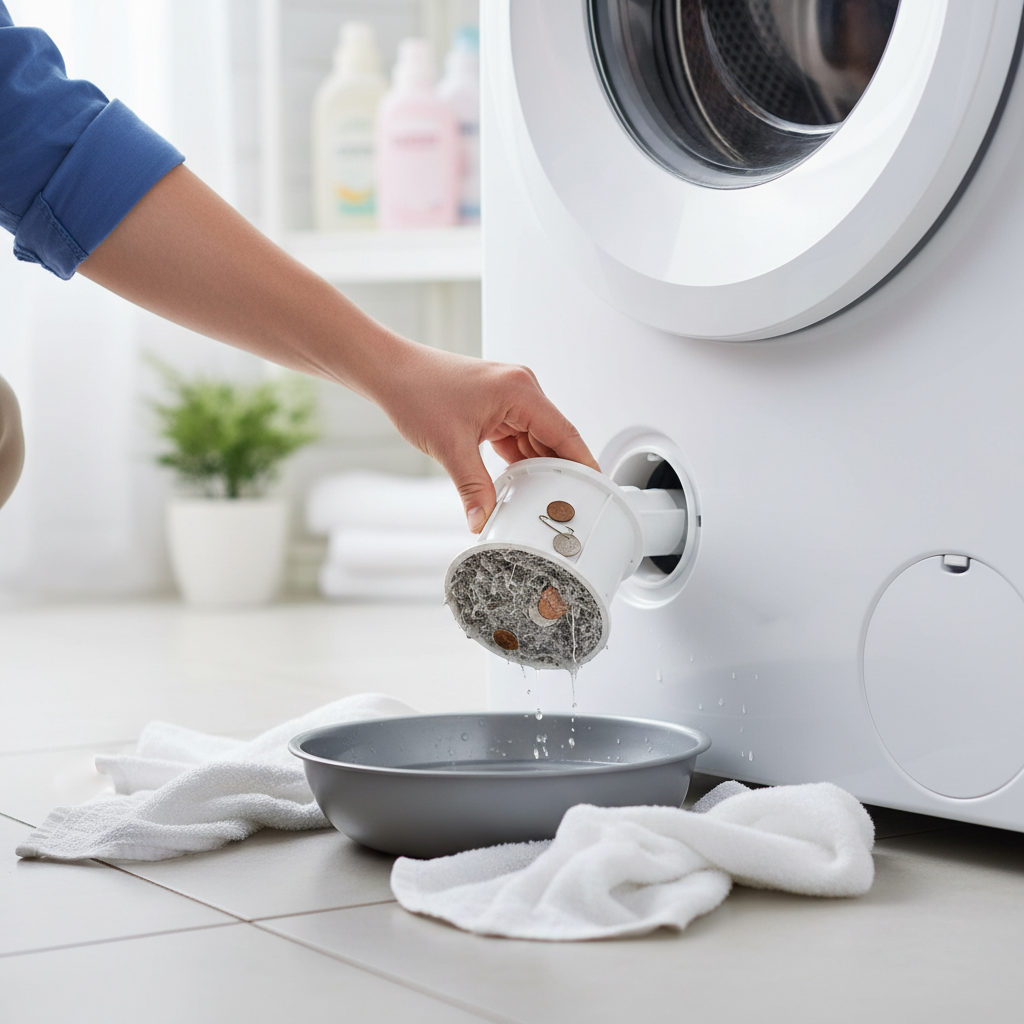
- Action: Locate the small access panel, usually on the bottom-front corner of the machine (primarily on front-loaders). Place a shallow pan and towels directly in front of it. Open the panel. You will see a round, screw-in cap. Slowly turn the cap counter-clockwise. Water will begin to drain out; let it flow into your pan until it stops. Once the flow stops, fully unscrew and remove the filter. Clean it thoroughly under running water, removing all lint, hair, coins, buttons, and other debris. Before reinstalling, use your finger or a flashlight to check inside the filter housing for any remaining obstructions. Screw the filter back in securely until it is tight.
- If this doesn't work: If the filter was clean, the clog is elsewhere. Proceed to the next step.
6. Inspect the Drain Pump Impeller — With the pump filter still removed, you can check if the pump itself is jammed. A small object like a hairpin or coin can get past the filter and lock the impeller.
- Action: Reach into the empty pump filter housing. You should be able to feel the small plastic impeller. It should have some "play," meaning you can move it slightly with your finger. It will often move in small, distinct steps due to the magnets in the motor. If it is completely stuck and will not move, or if it spins freely with no resistance, the pump is likely faulty and needs replacement. If it's just stuck, try to carefully dislodge the visible obstruction.
7. Test the Lid or Door Lock Switch — For safety, a washer will not spin if it thinks the lid or door is open. A faulty switch will incorrectly signal that the door is ajar, preventing the spin cycle.
- Action: Close the door and start a spin cycle. For front-loaders, you should hear a distinct "click" as the door lock mechanism engages. If you don't hear this, or if the door lock light flashes, the assembly is suspect. For top-loaders, the switch is usually a small plastic plunger or a magnetic sensor near the lid hinge. Ensure the plastic strike on the lid is not broken and properly engages the switch. For advanced users, you can unplug the machine, access the switch, and test its continuity with a multimeter when it is depressed versus when it is open.
8. Check the Internal Tub-to-Pump Hose — A blockage can occur in the internal hose that connects the bottom of the wash tub to the inlet of the drain pump. This is a common place for missing socks to end up.
- Action: Unplug the machine. You will likely need to remove the front or back panel of the washer to access this hose. It is a short, wide, corrugated hose. Place a bucket underneath and use pliers to loosen the spring clamps at both the tub and pump ends. Be prepared for a significant amount of trapped water to be released. Once detached, visually inspect the hose for obstructions and clear any you find.
9. Clear the Water Level Sensor Tube — A less common but possible issue is a blockage in the thin air tube that runs from the tub to the water level pressure switch. If clogged with soap scum or lint, it can trap air and trick the machine into thinking it's still full of water.
- Action: Unplug the machine and remove the top panel. Locate the pressure switch (a small, round component with a few wires and a thin tube attached). Carefully detach the tube from the switch. Gently blow through the tube towards the tub. You should be able to blow freely; if there is significant resistance, the tube or the air dome it connects to is clogged. Squeezing the tube while blowing can sometimes help break up the obstruction.
10. Test the Drain Pump Motor — If you've confirmed there are no blockages and the pump is not running at all (no humming or vibration) during the drain cycle, the pump motor may have failed electrically.
- Action: This requires a multimeter and comfort with live voltage testing. Access the pump terminals and, with the machine plugged in and set to a drain cycle, carefully test for 120V AC across the two wires. If 120V is present but the pump is not running, the pump motor is dead and must be replaced.
- Alternative (Safer) Test: Unplug the machine, disconnect the wires from the pump, and set your multimeter to test for resistance (Ohms). A good pump motor will typically show a resistance reading between 5 and 20 Ohms. A reading of infinity (O.L.) indicates a broken internal winding, while a reading of zero indicates a short. In either case, the pump needs replacement.
Common mistakes
Diagnosing a drainage issue is often straightforward, but several common missteps can complicate the process, cause damage, or lead to an incorrect conclusion.
- Forgetting to Disconnect Power: This is the most dangerous mistake. Washing machines use 120V AC, which can cause serious injury or death. Always unplug the appliance from the wall outlet before moving it or opening any access panels.
- Opening the Pump Filter Too Quickly: The drain pump is the lowest point in the system and can hold 1-2 gallons of water. Unscrewing the filter cap rapidly will result in this water flooding your floor. Instead, turn the cap slowly and have a shallow pan and towels ready to manage the controlled release of water.
- Inserting the Drain Hose Too Deeply into the Standpipe: Pushing the hose down into the water at the bottom of the standpipe's P-trap can create a siphon effect. This can either cause drain water to be sucked back into the machine or confuse the water level sensor, leading to drain errors even when no clog exists. The hose end should terminate in the air gap above the water level, secured so it cannot pop out.
- Assuming the Most Expensive Part Failed First: Many DIYers immediately suspect a failed motor or control board. These components are relatively durable and expensive. Over 90% of drain and spin issues are caused by simple clogs in the pump filter or drain hose. Always perform the simple, no-cost checks first.
- Ignoring a Jammed Impeller: After cleaning the filter, it's crucial to reach into the housing and check the impeller. A clean filter is irrelevant if the pump mechanism itself is physically jammed by a hairpin or screw that slipped past. Failing to check this can lead you down a rabbit hole of unnecessary parts replacement.
- Prying Panels with Metal Tools: Using a flathead screwdriver to pry open the pump access panel or main service panels will likely scratch, dent, or crack the plastic and painted metal. Use a flexible plastic putty knife or a dedicated trim removal tool to safely release the clips without causing cosmetic damage.
Cost & time breakdown
The cost and time involved vary significantly depending on whether the issue is a simple clog or a failed component.
| Task | DIY Cost | Pro Cost | Time |
|---|---|---|---|
| Inspect & Clear Blockages | $0 | $125 - $200 | 20-45 minutes |
| Replace Lid/Door Lock Switch | $25 - $75 | $200 - $350 | 30-60 minutes |
| Replace External Drain Hose | $15 - $40 | $150 - $250 | 20 minutes |
| Replace Drain Pump Assembly | $40 - $110 | $225 - $400 | 45-90 minutes |
| Replace Main Control Board | $150 - $400 | $450 - $800+ | 30-60 minutes |
Note: Pro costs are estimates including a service call fee, parts markup, and labor. DIY costs are for parts only. Time estimates are for individuals with basic mechanical aptitude and the proper tools.
When to call a pro
While many drain and spin issues are manageable for a DIYer, certain symptoms indicate a more complex or dangerous problem that warrants a professional service call.
Contact a qualified appliance repair technician if you encounter any of the following:
- Loud Grinding, Screeching, or Banging: If the machine makes violent mechanical noises when it attempts to spin, this is not a clog. It points to a catastrophic failure of the drum bearings, the transmission (gearcase), or the spider bracket that supports the drum. These are complex and expensive repairs.
- Burning Smell or Visible Sparks: A strong electrical burning odor or seeing sparks from the motor area underneath the machine are critical safety warnings. Unplug the machine immediately and do not use it. This signifies a severe electrical short in the motor windings, wiring harness, or control board.
- All Simple Fixes Fail: If you have thoroughly checked and cleared the entire drain path (hoses, filter) and tested the door switch, but the problem persists, the fault likely lies in a failed component that requires electronic diagnosis, such as the control board, motor capacitor, or a faulty sensor.
- Appliance is Under Warranty: If your washing machine is still covered by the manufacturer's or an extended warranty, do not perform any internal repairs. Opening panels or replacing parts yourself will almost certainly void the warranty coverage.
- Discomfort with Electrical Testing: If you are not completely comfortable and knowledgeable about using a multimeter to safely test for live AC voltage or resistance, do not attempt to diagnose the pump motor or other electrical components.
Prevention & maintenance
Proactive maintenance is the most effective way to prevent future drain and spin problems. Integrating these simple habits into your laundry routine will keep your machine running reliably.
- Clean the Pump Filter Quarterly: Mark a recurring date on your calendar to inspect and clean the drain pump filter. In households with pets, children, or frequent washing, checking it every two months is even better. This 15-minute task is the single best preventative measure.
- Empty All Pockets Before Washing: Make it a strict rule to check every pocket of every garment. Coins, keys, screws, lip balm tubes, and tissues are the primary source of debris that clogs pump filters and jams impellers.
- Utilize Mesh Laundry Bags: For small items like baby socks, reusable face masks, and delicate undergarments with hooks or wires, always place them inside a zippered mesh laundry bag. This physically prevents them from being drawn into the gap between the inner and outer tub and entering the drain system.
- Load the Machine Correctly: Avoid overloading the drum, as this puts stress on the motor and suspension and increases the likelihood of an unbalanced load fault. Mix large and small items to promote balance. When washing a single, heavy, absorbent item like a bath rug or comforter, add a few towels to help it balance during the spin cycle.
- Run a Monthly Cleaning Cycle: Once a month, run an empty, hot-water cycle with a dedicated washing machine cleaner tablet (e.g., Affresh, Tide) or two cups of white vinegar. This helps dissolve soap scum, body oils, and lint buildup within the tub, hoses, and pump, keeping the entire water path clear.
- Inspect Hoses Annually: At least once a year, pull the washer out from the wall and inspect the rubber fill hoses and the plastic drain hose. Look for any bulges, cracks, brittleness, or signs of leaking at the connections. Replace any hose that shows signs of wear to prevent a catastrophic flood.
Related Articles
Keep troubleshooting with these hand-picked guides from FixlyGuide:
- The Secret Culprit Behind Your Leaking Washer (It's Not Always the Hose) — A washing machine leaking water from the bottom can often be traced to common, easily fixable issues like loose hoses or a clogged drain pu…
- Dishwasher Not Draining? Easy Fixes for a Clogged Drain — A dishwasher that won't drain at the end of a cycle is a common problem, often caused by simple clogs or blockages that homeowners can fix…
- Is your washer leaking? 3 culprits you can fix today. — A washing machine leaking water from the bottom typically indicates a loose hose connection, a clogged drain hose, or a failing water pump…
- Refrigerator Leaking Water? Easy Fixes for Common Causes — A refrigerator leaking water on the floor is a common household problem often caused by a clogged defrost drain or a misaligned drain pan,…
- The Secret Culprit Behind Your Dishwasher Not Draining (It's Not Always a Clog) — Your dishwasher not draining can stem from simple fixes to more complex issues, often involving the air gap, drain hose, or filter.
- Why Your AC is Blowing Warm Air: Troubleshooting and Fixes — If your AC is blowing warm air, it's often due to a clogged air filter, dirty condenser coils, or a tripped circuit breaker, all of which y…
What should this project cost?
Enter your project details for a realistic cost range before you call anyone.
Common repairs run $150–$650; repipes and water-heater replacements reach $1,500–$4,500.
- Regional adjustment
- National average
- Labor share (typical)
- ~$754
- Quotes to collect
- 3 written estimates
Educational estimate based on national averages — not a binding quote. Always confirm with written local estimates.
Fixly Project Decision Box
- DIY difficulty
- Moderate
- Estimated time
- 30 minutes – half a day
- Cost level
- Moderate
Main tools / materials
- Adjustable wrench
- Plunger or drain auger
- Bucket and towels
- Thread tape
When to stop and call a pro
- Water you cannot shut off at the fixture or main
- Sewage backing up into more than one fixture
- Water near electrical panels or outlets
- Gas water heater work beyond relighting a pilot
Need professional help?
Get a Licensed Plumber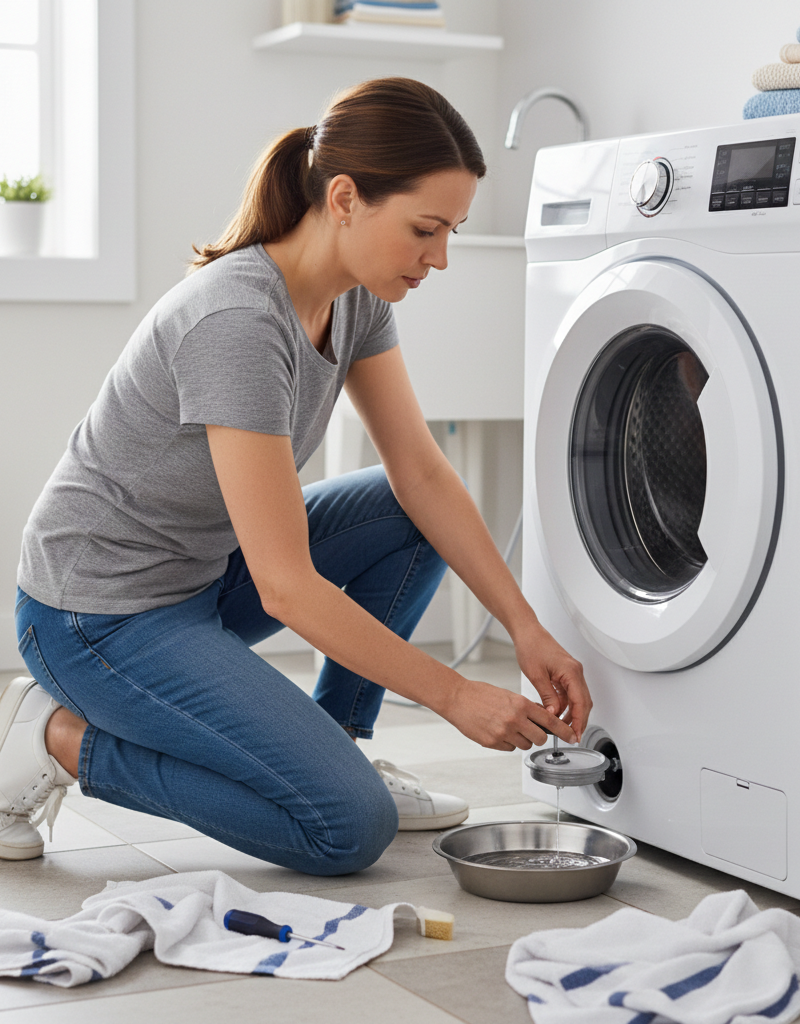
Discussion
Loading comments…