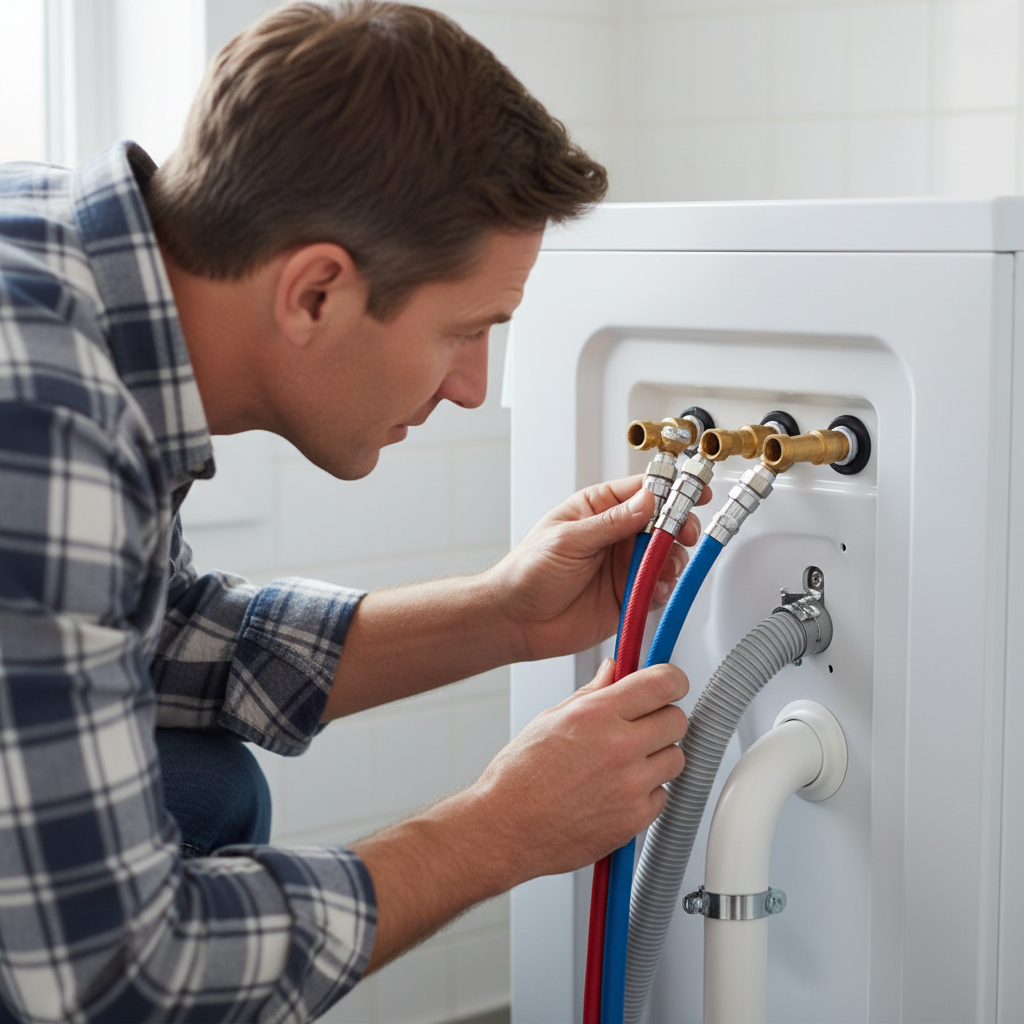
- Visually inspect the entire length of both hoses for cracks, blisters, or visible wear. Feel the connections at both the wall and the back of the washer for moisture.
- Check the hose coupling's rubber washer. Over time, these washers compress, harden, and crack. If a connection is dripping, unscrew the hose, remove the old washer with a small flathead screwdriver, and insert a new one before retightening.
- Tools: Channel-lock pliers, replacement hose washers.
Plumbing · Clog
| Project category | Plumbing |
|---|---|
| Problem type | Clog |
| Trade required | Plumbing |
| Urgency | Soon — within weeks |
| Safety risk | Low safety risk |
| DIY suitability | DIY friendly |
| Cost category | Low cost |
| Typical timeline | Same-day DIY attempt; pro visit within a day or two |
| Contractor type | Licensed plumber |
Repair option
Plunger, hand auger, or trap cleanout before chemicals.
Replacement option
Line replacement when clogs return in the same spot repeatedly.
Common causes
- Hair and soap buildup in the trap
- Grease cooling in the branch line
- Flushed wipes or foreign objects
Relevant tools:diy difficultydiy or hire a pro
Published April 22, 2026Last updated August 17, 2026
Tools & materials you'll need
Affiliate linksAs an Amazon Associate FixlyGuide earns from qualifying purchases — at no extra cost to you. Prices and availability are accurate as of publication and subject to change.
How it works
A washing machine's water system operates in two distinct phases: filling and draining. Understanding this flow is critical for diagnosing leaks. For the fill cycle, water from your home's hot and cold supply lines flows through flexible fill hoses into the machine's water inlet valve, typically located at the top rear. This valve is a set of electronically controlled solenoids that open and close based on signals from the machine's control board, blending hot and cold water as needed. From the valve, water is directed—often through a dispenser tray—into the main wash tub. A pressure switch or sensor monitors the rising water level and signals the control board to shut off the inlet valve when the tub is full.
For the drain phase, a powerful drain pump, located at the machine's lowest point, activates. It draws water from the bottom of the tub through a thick, corrugated tub-to-pump hose. This hose often passes through a filter or trap designed to catch debris like coins, buttons, and lint. The pump then expels the water under pressure through the external drain hose, pushing it up and out into your home's standpipe or a utility sink drain. Any failure in this sealed path—a cracked hose, loose clamp, failed pump seal, or even a blocked filter—creates an opportunity for water to escape, typically pooling on the floor beneath the machine.
Step-by-Step Fix
Before beginning any diagnosis or repair, prioritize safety. A leaking appliance involves both water and electricity, a hazardous combination.
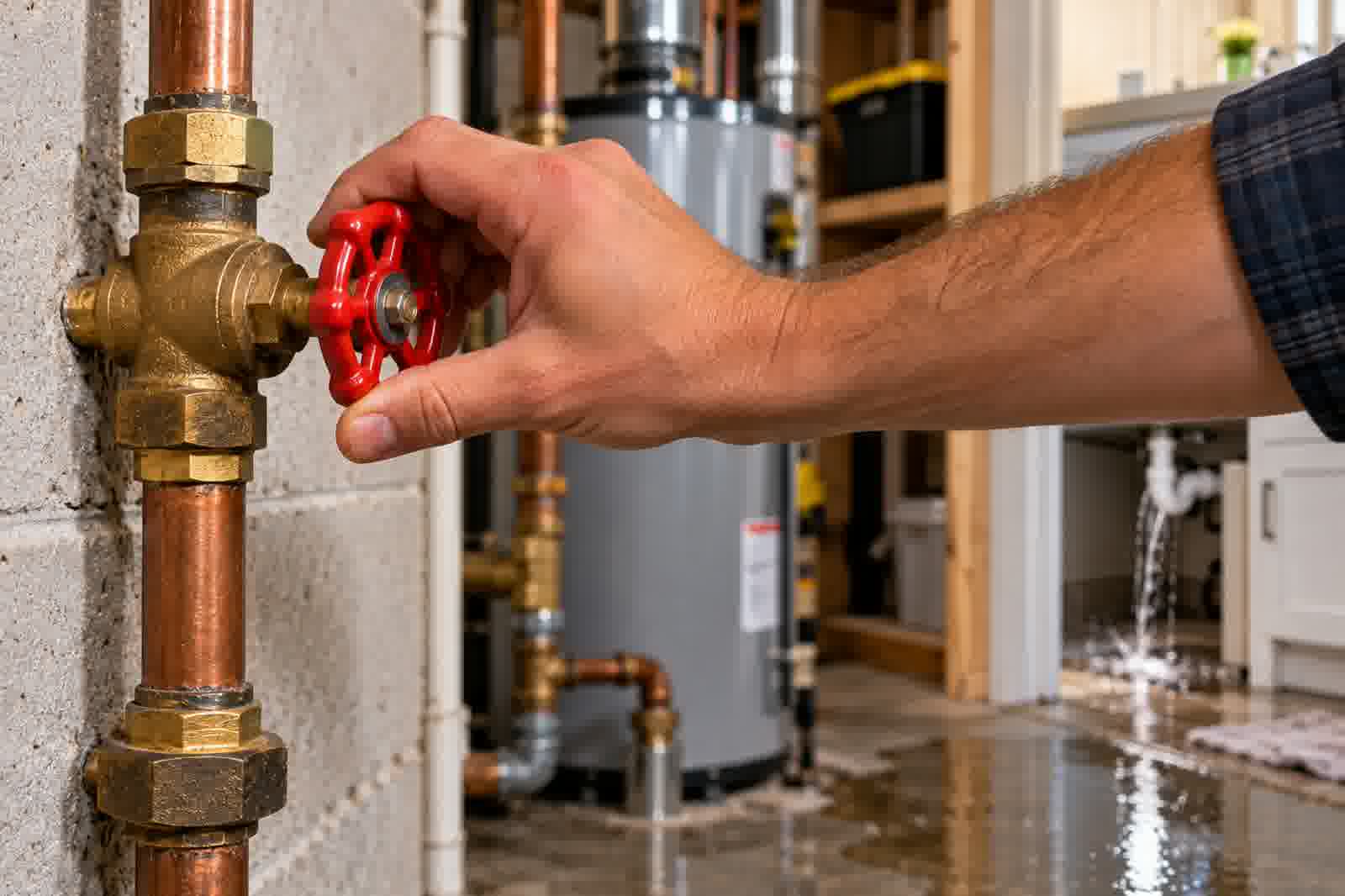
- Safety First: Disconnect the washing machine from the electrical outlet. Turn off both the hot and cold water supply valves, which are typically located on the wall behind the unit. Place towels around the base of the machine to absorb any standing water.
1. Isolate the Leak's Timing — Observe precisely when the leak occurs during a cycle. This single clue is your most powerful diagnostic tool. A leak that appears immediately when the machine is turned on points to the fill system, while a leak during the spin or drain cycle suggests a problem with the pump or drain lines.
- If the machine leaks while off, the water inlet valve is almost certainly the culprit, as it is failing to fully close against the constant pressure from your home's supply lines.
- To test, place a large, dry piece of cardboard under the machine. Run a small wash cycle and check the cardboard after each phase: filling, agitating, draining, and spinning. The location and timing of the first drip will guide your next steps.
2. Inspect External Supply Hoses — Carefully pull the washer away from the wall to access the back. The two hoses connected to the wall faucets (one for hot, one for cold) are the most common source of leaks.
- Visually inspect the entire length of both hoses for cracks, blisters, or visible wear. Feel the connections at both the wall and the back of the washer for moisture.
- Check the hose coupling's rubber washer. Over time, these washers compress, harden, and crack. If a connection is dripping, unscrew the hose, remove the old washer with a small flathead screwdriver, and insert a new one before retightening.
- Tools: Channel-lock pliers, replacement hose washers.
3. Examine the External Drain Hose — While behind the machine, trace the larger, corrugated drain hose from its connection on the washer to where it empties into a wall standpipe or utility sink.
- Ensure the clamp securing the hose to the washer's drain outlet is tight and not corroded. Wiggle the connection to see if it drips.
- Verify the drain hose isn't pushed too far into the standpipe. It should be inserted only 6-8 inches; any deeper can create a siphon that causes the standpipe to overflow. Also, ensure there is an air gap at the top and the standpipe itself is not clogged with lint.
- Tools: Screwdriver or nut driver (for clamp), small bucket.
4. Access and Clean the Drain Pump Filter — Most modern front-load washers and some top-loaders have a filter (also called a "coin trap") to protect the drain pump. A clogged or improperly sealed filter is a primary cause of leaks that appear during the drain cycle.
- Consult your manual to locate the small access door, usually on the front bottom corner of the machine. Place a shallow pan and a thick towel underneath it before opening.
- Slowly unscrew the filter cap. Water will begin to drain out; let it empty into the pan. Once drained, remove the filter completely and clean it of all debris—lint, hair, coins, and buttons are common finds. Check the filter housing for any remaining obstructions.
- Before reinstalling, inspect the O-ring or gasket on the filter cap for damage. Screw the filter back in firmly until it is fully seated and tight. A loose cap will always leak.
5. Inspect the Door Boot Seal (Front-Loaders) — The large, flexible rubber gasket between the door and the drum can develop leaks, especially at the bottom.
- Open the door and carefully peel back the folds of the seal, running your fingers along the entire circumference. Check for trapped debris, mold, punctures, or tears. Small items like hairpins or bra underwires can cause tiny holes that only leak under pressure.
- Pay close attention to the bottom of the seal, as this is where water pools and debris collects. If you find a tear or hole, the boot seal must be replaced. This is a moderately difficult DIY job requiring patience.
6. Examine the Water Inlet Valve — If you found drips while the machine was filling or even when idle, the issue may be the valve itself.
- With the machine unplugged and water on, shine a bright flashlight on the valve where the supply hoses connect. Look for moisture or active drips coming from the plastic body of the valve, not just the hose connections.
- The valve body can crack with age, or the internal diaphragms can fail, causing a slow leak that runs down the back of the machine. If the valve body is wet, it needs to be replaced.
- Tools: Flashlight, nut driver or screwdriver to remove the top or back panel for better access.
7. Inspect the Tub-to-Pump Hose — This internal hose connects the bottom of the outer tub to the inlet of the drain pump. It is constantly exposed to water and vibration, making it a common failure point.
- Unplug the machine. You will likely need to tip the washer back against a wall or lay it on its front (place thick towels down to protect the finish and controls). Secure it so it cannot fall.
- Locate the hose running between the tub and pump. Squeeze it to check for soft, spongy spots or hardening and brittleness. Check the spring-style or screw-style clamps at both ends. These can loosen over time or corrode. Look for white or rusty residue around the connections, indicating a slow leak.
- Tools: Pliers (for spring clamps) or a screwdriver/nut driver (for screw clamps).
8. Check the Detergent Dispenser and Hoses — A clogged dispenser, particularly in a front-loader, can cause water to back up and overflow, leaking either down the front or inside the machine cabinet.
- Remove the dispenser drawer completely. Clean it thoroughly in a sink with hot water and a brush to remove all built-up detergent and fabric softener.
- Use a flashlight to look into the dispenser housing. Check for clogs in the small nozzles where water sprays into the drawer. A clogged nozzle can redirect the water stream, causing an overflow. Check the hose that runs from the dispenser housing to the tub for cracks or loose connections.
9. Investigate the Drain Pump Body — If the pump filter is clean but leaks persist during the drain cycle, the pump itself may have failed.
- With the machine tilted back and the pump visible, look for drips coming directly from the pump's housing, especially from the seam where the motor joins the plastic volute (the snail-shaped part).
- Fine cracks can develop in the plastic housing due to vibration or from freezing if the machine was stored improperly. A failed internal seal will allow water to drip from the motor shaft area. Any moisture originating from the pump body itself warrants a full pump replacement.
10. Assess the Center Tub Seal (Top-Loaders) — This is the most serious type of leak. A leak originating from the direct center of the machine's base signifies a failure of the main tub seal and likely the transmission bearing.
- Shine a flashlight under the machine toward the absolute center, where the transmission enters the bottom of the tub. Look for a tell-tale trail of oily, sooty water.
- If you see drips here, the repair involves a complete disassembly of the machine's core components. This is a very advanced and costly repair that often means it is more economical to replace the entire washing machine.
Common mistakes
Diagnosing a leak can be straightforward, but simple errors can complicate the repair or cause further damage. Avoid these common pitfalls.
- Over-tightening Hose Connections. The threaded fittings on a washer's water inlet valve are plastic. Using excessive force with pliers to tighten the metal supply hose couplings can easily crack these plastic threads, turning a simple drip into a required valve replacement. The connections should be hand-tightened, then given a final quarter-turn with pliers to seal the rubber washer.
- Using Teflon Tape on Supply Hoses. Washing machine supply hoses do not require plumber's tape or pipe dope. The seal is made by the rubber washer inside the hose coupling being compressed against the fitting. Adding tape can prevent the coupling from seating correctly and may even cause a leak. Only use Teflon tape on tapered pipe threads (NPT), which are not used for this connection.
- Misdiagnosing a Standpipe Clog. If water backs up and spills from the wall drainpipe during the drain cycle, the problem is often a clog in your home's plumbing, not the washer's pump. Before replacing the pump, remove the drain hose and slowly pour a gallon of water down the standpipe. If it backs up, the clog is in the wall and needs to be snaked out by a plumber.
- Laying the Machine on the Wrong Side. When you need to access the bottom of a washer, always consult the owner's manual for the correct procedure. Laying a machine on its side can allow trapped water to run onto sensitive electronics, like the control board or motor controller, causing a catastrophic failure. Typically, laying it on its front or back is safer, but always check the manufacturer's recommendation.
- Forgetting to Prime the New Pump. If you replace the drain pump, it's wise to pour a cup or two of water into the drum before starting a test cycle. This ensures the new pump is lubricated with water and not running dry on its first start, which can damage the new seals and impeller.
Cost & time breakdown
Costs can vary based on your machine's brand and age. Part prices are for DIY purchase from online appliance part retailers. Professional costs include the part and typical labor charges ($100-$200/hour).
| Task | DIY Cost | Pro Cost | Time |
|---|---|---|---|
| Replace Fill Hoses | $20 - $40 (for braided steel pair) | $150 - $225 | 15 minutes |
| Clean Drain Pump Filter | $0 | $100 - $175 (service call) | 20 minutes |
| Replace Water Inlet Valve | $30 - $85 | $200 - $350 | 1 hour |
| Replace Front-Loader Door Boot Seal | $70 - $200 | $300 - $550 | 2 - 4 hours |
| Replace Drain Pump | $50 - $150 | $250 - $450 | 1 - 2 hours |
| Replace Main Tub Seal/Bearing | $100 - $250 (parts only) | $500 - $800+ (often not recommended) | 4 - 8 hours |
When to call a pro
While many washer leaks are fixable, certain symptoms indicate a problem that is either too complex, dangerous, or costly for a typical DIY repair. It's time to call a qualified appliance repair technician if you encounter any of the following:
- Leaks from the center of the machine base. As noted, this almost always points to a failed tub seal and transmission bearing. This repair is labor-intensive, requires specialized tools like a spanner wrench and seal drivers, and often costs more than half the price of a new machine.
- Water on or near the main control board or wiring harness. If you open an access panel and see evidence of water dripping onto electronics, stop immediately. Attempting to diagnose or run the machine can cause a dangerous short circuit or permanently destroy the expensive control board.
- An intermittent leak you cannot reproduce. If the machine leaks unpredictably and you've already confirmed all external hoses and visible internal components are sound, a professional has the experience to identify obscure causes, like a hairline crack in the tub that only opens under a specific load weight or spin speed.
- The machine makes loud grinding or clunking noises along with the leak. This combination signals a major mechanical failure, such as a broken tub support (spider arm) or a failing transmission, which are not practical DIY repairs.
Prevention & maintenance
A few routine checks can prevent most common washing machine leaks and extend the life of your appliance.
- Upgrade and Inspect Hoses. Replace standard black rubber fill hoses every five years, regardless of their appearance. For superior protection, install braided stainless steel hoses, which are far more resistant to bursting. Every six months, check that the hose connections are snug and inspect the hoses for any bulging or kinking.
- Clean the Drain Pump Filter Quarterly. Mark your calendar to clean the pump filter every three to four months. This single action prevents clogs that can cause water to back up, put strain on the pump motor, and lead to leaks from the filter seal.
- Use the Right Detergent, and the Right Amount. For all high-efficiency (HE) washers, use only HE detergent. Using regular detergent creates excessive suds that can confuse the pressure sensor, leading to overfilling. Using too much of any detergent can also cause a suds-lock that forces water out of overflow vents.
- Clean and Dry the Door Boot Seal. After your last load of the day, wipe the front-loader door seal and glass dry with a towel. Leave the door ajar to allow air to circulate, which prevents mold growth that can compromise the seal and cause musty odors.
- Ensure the Machine is Level. An off-balance machine vibrates excessively during the spin cycle. This constant shaking puts immense stress on every hose, clamp, and seal, and can even crack internal components over time. Use a level to check the machine front-to-back and side-to-side, adjusting the feet as needed until it's perfectly stable.
Related Articles
Keep troubleshooting with these hand-picked guides from FixlyGuide:
- The Secret Culprit Behind Your Leaking Washer (It's Not Always the Hose) — A washing machine leaking water from the bottom can often be traced to common, easily fixable issues like loose hoses or a clogged drain pu…
- Washing Machine Won't Spin or Drain? Easy Fixes for Common Problems — If your washing machine isn’t spinning or draining, it’s usually due to a clogged pump filter, a kinked drain hose, or an overloaded machin…
- Refrigerator Leaking Water? Easy Fixes for Common Causes — A refrigerator leaking water on the floor is a common household problem often caused by a clogged defrost drain or a misaligned drain pan,…
- The Secret Culprit Behind Your Leaky Refrigerator (It’s Not Always a Hose) — Discover the hidden causes of your refrigerator leaking water and how to fix them with our comprehensive troubleshooting guide.
- The $5 Secret to Fixing a Clogged AC Drain Line (and Avoiding a Costly Flood) — A clogged AC drain line can lead to water damage and mold, but a simple, inexpensive DIY fix can prevent costly repairs.
- Washing Machine Not Draining? Fix It in 5 Simple Steps — A washing machine that won’t drain leaves you with a tub full of soggy clothes. Often, this common problem has a simple DIY fix.
Should you do this yourself?
Answer five quick questions before you start. Safety outranks savings every time.
Your experience with work like this
How high do you have to work?
Does the job involve any of these?
Will it need a permit?
Specialty tools
Free and instant. Educational guidance only — not a quote, inspection, or professional diagnosis.
Questions to ask before you sign
Ask every contractor the same questions and the cheapest bid stops looking cheapest. Check them off as you go — your progress is saved on this device.
Free, no signup. Bring this to every walkthrough so you compare bids on the same terms.
What should this project cost?
Enter your project details for a realistic cost range before you call anyone.
Common repairs run $150–$650; repipes and water-heater replacements reach $1,500–$4,500.
- Regional adjustment
- National average
- Labor share (typical)
- ~$754
- Quotes to collect
- 3 written estimates
Educational estimate based on national averages — not a binding quote. Always confirm with written local estimates.
Fixly Project Decision Box
- DIY difficulty
- Moderate
- Estimated time
- 30 minutes – half a day
- Cost level
- Moderate
Main tools / materials
- Adjustable wrench
- Plunger or drain auger
- Bucket and towels
- Thread tape
When to stop and call a pro
- Water you cannot shut off at the fixture or main
- Sewage backing up into more than one fixture
- Water near electrical panels or outlets
- Gas water heater work beyond relighting a pilot
Need professional help?
Get a Licensed PlumberHandle this before it gets worse
First steps that limit damage, then a way to reach a qualified pro.
- Emergency repair checklistThe first steps that limit damage before a pro arrives.Open
- Get local estimatesSend one request and compare written estimates from vetted pros.Open
- Estimate this projectGet a cost range for your scope and ZIP before you call anyone.Open
Free, no signup required. Estimates are educational guidance, not a quote or an inspection.
Frequently asked questions
Why is my washing machine leaking water from the bottom?+
The most common reasons for a washing machine to leak from the bottom include loose or damaged supply hoses, a clogged or improperly seated drain hose, or a failing water pump or its seals. Internal hose clamps can also loosen over time.
Can I fix a washing machine leak myself?+
Many common washing machine leaks, especially those from external hoses or a clogged drain, can be fixed by a homeowner with basic tools. More complex internal issues, like a faulty pump or tub seal, often require a professional.
How often should I replace washing machine hoses?+
It's recommended to inspect your washing machine hoses annually and replace standard rubber hoses with new ones or braided stainless steel hoses every 3-5 years, even if they show no visible signs of wear, to prevent unexpected leaks.
Discussion
Loading comments…