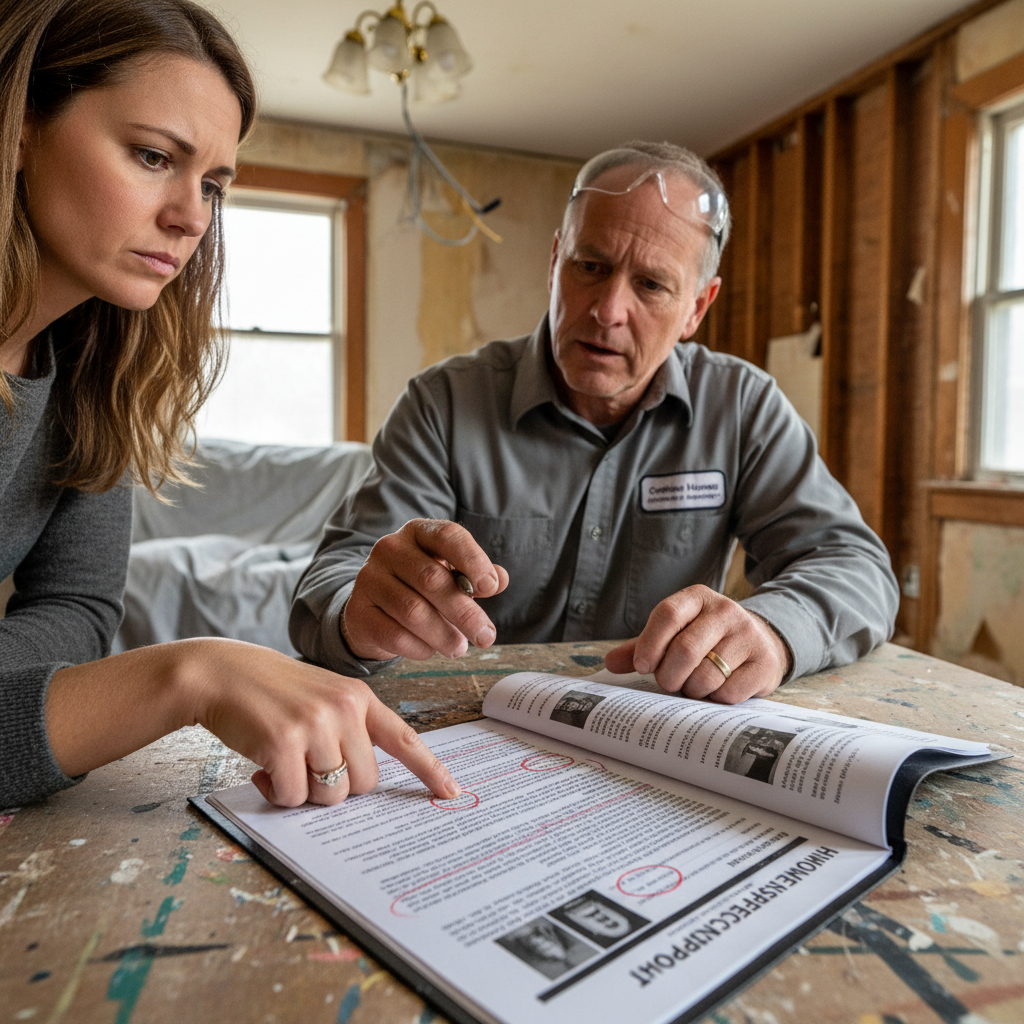
- Not Attending the Inspection: This is the single biggest mistake. Reading the report is not a substitute for seeing the issues with your own eyes and being able to ask the inspector questions in context.
- Ignoring the "Further Evaluation" Advice: Buyers often dismiss this as the inspector just covering their bases. It is not. It is a direct warning: "I see smoke, you need to hire a firefighter to see if the house is burning down."
- Underestimating Repair Costs: A report might say "leaky faucet." A buyer thinks, "$50 in parts." But if that leak has been happening for years, the real cost might be $4,000 to replace the rotted subfloor and vanity.
- Trusting the Seller’s Disclosures Completely: While sellers are legally required to disclose known issues, their memory can be selective. The inspection is your tool for verification, not a formality.
Published May 2, 2026Last updated August 17, 2026
Tools & materials you'll need
Affiliate links- AmazonHigh-Lumen Flashlight1 · For looking into dark corners of basements, attics, and under sinks.
- AmazonSmartphone or Digital Camera1 · To take your own photos and videos of potential issues.
- AmazonNotepad and Pen or Digital App1 · To write down questions for the inspector and notes on what you see.
As an Amazon Associate FixlyGuide earns from qualifying purchases — at no extra cost to you. Prices and availability are accurate as of publication and subject to change.
Quick Answer
The most costly home inspection red flags buyers miss involve the core systems of a house. These include subtle foundation cracks suggesting structural issues, outdated or hazardous electrical panels (like FPE or Zinsco), evidence of water intrusion in basements or attics, low water pressure signaling plumbing problems, and an HVAC system or roof nearing the end of its life, all of which can lead to repairs costing tens of thousands of dollars.
The Problem
You’ve found it. The perfect house. It has the right number of bedrooms, a beautiful kitchen, and a backyard that’s perfect for summer barbecues. You’ve made an offer, it’s been accepted, and now there’s just one hurdle left: the home inspection. You hire a certified inspector, and a few days later, a 50-page report lands in your inbox. You skim the summary, which notes a few "minor defects" and "items to monitor." Breathing a sigh of relief, you proceed with the purchase.
Six months later, you’re staring at a $22,000 estimate from a foundation repair company. That "minor hairline crack" the report mentioned and you barely noticed has evolved, and a structural engineer confirms your foundation is unstable due to hydrostatic pressure. The inspector didn’t lie, but the bland, technical language of the report failed to convey the massive financial risk. This scenario is shockingly common. Homebuyers, blinded by emotion and unfamiliar with construction jargon, often overlook critical home inspection red flags. They trust the inspection is a guarantee, but it’s merely a snapshot in time. The true cost of a home isn’t just the purchase price—it’s the price plus the five-figure repair bills that were hiding in plain sight.
How It Works
A standard home inspection, as defined by organizations like the American Society of Home Inspectors (ASHI), is a non-invasive, visual examination of a home's major systems. Think of the inspector as a general medical practitioner, not a surgical specialist. They will walk through the property for 2-4 hours, turning on faucets, flipping switches, opening windows, and visually scanning the roof, foundation, and attic. Their job is to identify material defects—things that are significantly deficient or near the end of their service life.
However, the limitations are immense. An inspector will not dig up your yard to check the sewer line, drill holes in the wall to look for hidden mold, or perform a load calculation on your HVAC system. They report on what they can see and touch on that specific day. Their report is filled with carefully worded phrases designed to limit their liability, such as "further evaluation by a qualified professional is recommended" or "system appears to be at the end of its serviceable life." These are not light suggestions; they are giant, flashing home inspection red flags indicating potential for massive expense. "End of serviceable life" for a 25-year-old furnace doesn't mean it will work for another year; it means you should budget $6,000-$12,000 for its imminent failure. "Further evaluation recommended" for a set of flickering lights could be a loose wire or it could be a $15,000 whole-house rewire. Understanding this gap between the inspector's general report and a specialist's detailed diagnosis is the key to avoiding catastrophic financial mistakes.
Step-by-Step Fix
The "fix" isn't a repair—it's the process of proactively identifying these costly red flags during your inspection period. This is your due diligence.
-
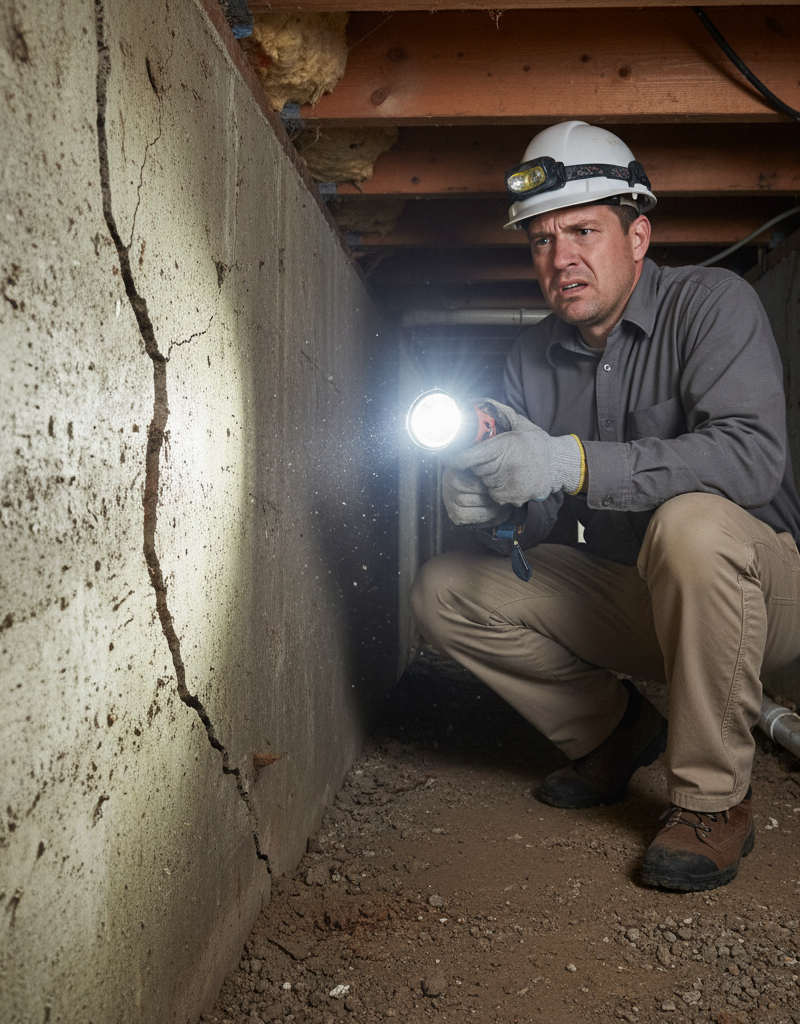
Walk the Perimeter Before the Inspector Arrives — Look for grading that slopes toward the foundation instead of away. Check for standing water, cracks in the foundation wall (even small ones), and trees with large root systems close to the house. This gives you a baseline before the official inspection begins.
-
Shadow Your Inspector and Ask Questions — Don't just let them work in peace. Follow them, observe where they spend the most time, and ask pointed questions. If they say a window is "sticky," ask if it could be a sign of the foundation settling. If they note an old water heater, ask for its typical life expectancy.
-
Scrutinize the Electrical Panel Like a Pro — This is one of the biggest home inspection red flags. Open the panel door. If you see the name "Federal Pacific Electric (FPE)," "Zinsco," or "Sylvania," you are looking at a known fire hazard. These panels are notorious for failing to trip during an overcurrent event. Replacement is not optional and can cost $2,500 to $5,000 for the panel alone, and often reveals other wiring issues.
-
Look for Water’s Subtle Footprints — Water is the enemy of a house. Look for faint, yellowish-brown stains on ceilings, bubbling or peeling paint near the base of walls, and a musty smell in the basement or crawlspace. These signal past or present leaks, which could stem from a faulty roof ($8,000-$20,000 replacement), failing plumbing, or poor grading ($2,000-$10,000 for a French drain).
-
Test the Plumbing Under Pressure — Turn on every shower and sink in the house simultaneously. Does the water pressure drop to a trickle? This can indicate galvanized steel pipes that are corroded from the inside out. A whole-house repipe can easily cost $10,000 to $25,000.
-
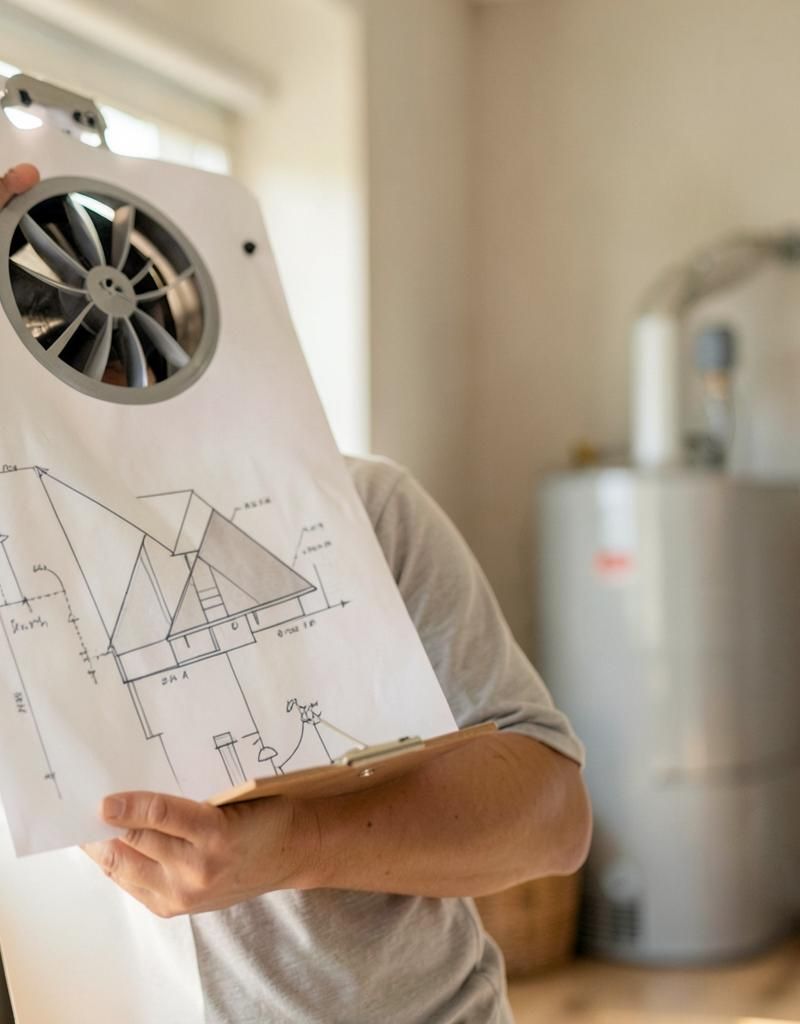
Analyze the Big-Ticket Appliances — Find the manufacturing date on the furnace, air conditioner, and water heater. The typical lifespan is 15-20 years for a furnace, 10-15 for an AC, and 8-12 for a water heater. If they are older, they are not a "bonus"—they are a looming expense you must budget for immediately.
-
Read the Report for Code Words — When you get the report, use a highlighter. Anything that says "monitor," "further evaluation," "end of life," "marginal," or "serviceable" is a red flag. These are the inspector’s way of saying, "This is a potential problem that I am not qualified to diagnose fully."
-
Get a Sewer Scope, No Matter What — A standard inspection does not look inside your main sewer line. A blockage is an inconvenience; a collapsed or root-filled line is a $5,000 to $30,000+ excavation and replacement project. A $400 sewer scope inspection is the best money you can possibly spend during due diligence.
-
Look for DIY Disasters — Keep an eye out for shoddy-looking work. This includes things like decks that aren't properly bolted to the house, exposed electrical junctions in the attic, or mismatched plumbing pipes under a sink. Where there is one bad DIY repair, there are likely dozens you can't see.
-
Calculate the True Cost Before Closing — For every "further evaluation recommended" item, get a real quote from a licensed specialist before your inspection contingency period ends. Don't guess. The roofer, plumber, or electrician will give you the hard numbers you need to either negotiate with the seller or walk away from the deal.
Common Causes
These expensive, often-missed problems don’t appear overnight. They are typically the result of long-term issues that a motivated buyer can learn to spot.
- Systemic Deferred Maintenance: The previous owner didn’t want to spend $15,000 on a new roof, so they patched it for $500. They didn’t want to fix the leaky shower valve, leading to a slow-growing mold colony in the wall. You are inheriting a decade of their financial decisions.
- Outdated Building Materials: That charming 1960s home may come with a bundle of asbestos-wrapped pipes, lead paint, or an ungrounded knob-and-tube electrical system. Modernization is not a simple "update"; it’s a gut-wrenching, wallet-draining remediation project.
- Destructive Water Intrusion: Nearly every major home problem can be traced back to water. Poor grading, clogged gutters, roof leaks, or plumbing failures can rot sheathing, destabilize foundations, and create toxic mold that requires expensive remediation ($3,000-$10,000 on average).
- Poor Initial Construction: In some cases, especially with homes built during a housing boom, builders cut corners. Improperly compacted soil can lead to foundation settlement years later. Insufficient attic ventilation can fry your roof shingles in the summer heat, halving their lifespan.
- The "Handyman Special": Unlicensed, unpermitted work is a giant home inspection red flag. That beautifully finished basement might have illegal wiring that poses a fire risk or lack a proper egress window, making it a death trap. Bringing this work up to code can cost more than the initial installation.
Common Mistakes
Avoiding a five-figure mistake often comes down to avoiding these common buyer behaviors during the inspection process.
- Not Attending the Inspection: This is the single biggest mistake. Reading the report is not a substitute for seeing the issues with your own eyes and being able to ask the inspector questions in context.
- Hiring the Cheapest Inspector: A quality home inspection costs $500-$900 for a reason. An experienced inspector with better tools and training is more likely to spot subtle but serious issues. Saving $200 on an inspector could cost you $20,000 later.
- Ignoring the "Further Evaluation" Advice: Buyers often dismiss this as the inspector just covering their bases. It is not. It is a direct warning: "I see smoke, you need to hire a firefighter to see if the house is burning down."
- Letting Emotion Cloud Judgment: You’ve already pictured your life in this house. This emotional investment can cause you to downplay serious issues, a phenomenon known as "deal heat." You want the house to be okay, so you convince yourself it is.
- Underestimating Repair Costs: A report might say "leaky faucet." A buyer thinks, "$50 in parts." But if that leak has been happening for years, the real cost might be $4,000 to replace the rotted subfloor and vanity.
- Trusting the Seller’s Disclosures Completely: While sellers are legally required to disclose known issues, their memory can be selective. The inspection is your tool for verification, not a formality.
Cost & Time Breakdown
Your primary "DIY cost" during inspection is your time and attention. The real costs are in the professional evaluations, which are investments to protect you from catastrophic repair bills. The table below shows the cost of a specialist visit versus the potential cost of the problem they might discover. This is why you never skip the follow-up.
| Task | DIY Cost | Pro Cost | Time | Potential Hidden Cost |
|---|---|---|---|---|
| Structural Engineer Evaluation | $0 | $500 - $1,200 | 2-4 hours | $10,000 - $100,000+ |
| Sewer Line Scope Inspection | $0 | $250 - $600 | 1-2 hours | $5,000 - $30,000+ |
| Master Electrician Panel/Wiring Eval | $0 | $200 - $500 | 1-3 hours | $2,500 - $15,000 |
| Level 2 Chimney Inspection | $0 | $400 - $1,000 | 1-3 hours | $3,000 - $15,000 |
| Certified Roof Inspection | $0 | $200 - $500 | 1-2 hours | $8,000 - $25,000 |
| Mold & Air Quality Testing | $0 | $300 - $1,000 | 2-4 hours | $3,000 - $10,000+ |
Tips & Prevention
Empower yourself with a proactive strategy for the home inspection phase.
- Vet Your Inspector: Don’t just use the one your agent recommends. Check for certifications (ASHI, InterNACHI), read online reviews, and most importantly, ask to see a sample report they have completed. Is it detailed and photo-rich, or vague and generic?
- Schedule a Long Inspection Period: In a competitive market, buyers are tempted to shortchange their inspection contingency. Fight for at least 10-14 days so you have time to schedule specialist follow-ups without being rushed.
- Come Prepared: Bring a powerful flashlight, your phone for taking pictures/videos, a notepad, and even a simple outlet tester ($5 at any hardware store) to spot-check outlets the inspector might miss.
- Research the Property’s Age and Type: If you’re buying a 1920s craftsman, research common issues like knob-and-tube wiring or plaster wall cracks. If it’s a 1990s tract home, research builder-grade window failures.
- Budget for the Unforeseen: Even if the inspection report comes back relatively clean, you should have a home repair fund of at least 1-3% of the purchase price set aside for first-year surprises. A $400,000 house needs a $4,000-$12,000 buffer, at minimum.
- Accept that Perfection Doesn’t Exist: The goal of an inspection is not to find a perfect home—it’s to understand exactly what you are buying. Every home has flaws. Your job is to decide whether you are financially and emotionally prepared to handle them.
When to Call a Professional
A general home inspector is your first line of defense, but they are not a specialist. You must call a professional specialist the moment a generalist flags a potential issue in a high-stakes system. Think of it this way: you wouldn’t ask your family doctor to perform open-heart surgery. Any mention of the following in an inspection report warrants an immediate call to a licensed, insured specialist:
- Foundation/Structural issues: Any horizontal cracks, stair-step cracks in brick, or mentions of "settlement" require a structural engineer. This is non-negotiable.
- Electrical Hazards: The presence of an FPE or Zinsco panel, evidence of scorching, or widespread ungrounded outlets requires a master electrician.
- Roofing: If the inspector notes multiple layers of shingles, active leaks, or states the roof is past its life expectancy, get a certified roofer to walk the roof and give a real assessment and replacement quote.
- Plumbing: Low pressure, slow drains throughout the house, or a water heater on its last legs all warrant a visit from a licensed plumber, preferably one with a sewer scope camera.
Spending $1,500 on a few specialist evaluations may feel painful when you’re already hemorrhaging cash for a down payment. But it is an investment that can save you from a $50,000 financial catastrophe and a world of homeowner regret. The inspection report is not the final word; it is your roadmap for where to dig deeper.
Related Articles
Keep troubleshooting with these hand-picked guides from FixlyGuide:
- The 12 Checks That Prevent 80% of Costly Home Repairs — Don't wait for a disaster. Our comprehensive monthly home maintenance checklist reveals the surprising, simple tasks that catch small issue…
- Your Home's Secret To-Do List: Are You Missing It? — Most new homeowners focus on decorating, but ignoring a basic home maintenance checklist can lead to thousands in unexpected repairs. Learn…
- 7 Smart Upgrades That Boost Home Value (And 5 That Don’t) — Don't waste money on smart home gadgets that buyers don't care about. We reveal the smart home upgrades for resale value that provide real…
- 7 Hidden Equity Drains Costing You Thousands Annually — Your home is an asset, but silent problems like minor leaks, poor insulation, and deferred maintenance can drain its value. Discover the se…
- 7 Insurance Claim Mistakes That Get Your Payout Denied — Paid your premiums but got your claim denied? Uncover the critical homeowner insurance claim mistakes that can jeopardize your payout and l…
- The 7 Critical Home Inspection Mistakes Most Homeowners Make (and How to Spot Them) — Discover the crucial home inspection mistakes homeowners commonly overlook and learn how to identify potential problems before they become…
What should this project cost?
Enter your project details for a realistic cost range before you call anyone.
Outlet and switch work usually $150–$400; panel upgrades commonly $1,800–$4,200.
- Regional adjustment
- National average
- Labor share (typical)
- ~$709
- Quotes to collect
- 3 written estimates
Educational estimate based on national averages — not a binding quote. Always confirm with written local estimates.
Fixly Project Decision Box
- DIY difficulty
- Professional Recommended
- Estimated time
- Inspection 1–2 hours · repairs 1–3 days
- Cost level
- High
Main tools / materials
- Binoculars for a ground-level look
- Flashlight for attic checks
- Moisture meter
- Roofing cement (temporary patch only)
When to stop and call a pro
- Active leak near lights, fans, or any wiring
- Sagging, bulging, or water-filled ceiling
- Steep, wet, or two-story roof — do not climb it
- Storm or hail damage you plan to claim on insurance
Need professional help?
Free roof assessment first — no phone calls until you ask for them.
Get Local Roofing HelpDecide what your roof needs
Two minutes of questions turns "something is wrong up there" into a clear next step.
- Repair or replace your roof?Answer 10 questions about age, leaks, and damage to get a clear next step.Open
- Compare contractor quotesScore up to four bids on price, warranty, licensing, and timeline.Open
- Get local estimatesSend one request and compare written estimates from vetted pros.Open
Free, no signup required. Estimates are educational guidance, not a quote or an inspection.
Get the print-ready PDF of this guide
A clean, ad-free, printable version you can keep on your phone or pin to the workshop wall. Free with a FixlyGuide account.
- Print-optimized layout
- Tools, materials & every step included
- Saved to your account
Frequently asked questions
Can a house fail a home inspection?+
No, a house cannot 'fail' a home inspection. Inspectors do not issue a passing or failing grade. Their job is to objectively report on the physical condition of the property and its systems, identifying material defects. It is up to the buyer to decide whether to accept the home's condition, negotiate repairs, or walk away from the purchase.
What are the biggest deal-breakers in a home inspection?+
The most significant deal-breakers usually involve incredibly high-cost or safety-related issues. These include severe foundation or structural problems, widespread mold or water damage, outdated and hazardous electrical systems (like knob-and-tube or FPE panels), a collapsed sewer line, or the immediate need for a new roof on a home where the price does not reflect that expense.
How much do specialist home inspections cost?+
Specialist inspections vary by trade and location, but you can expect to pay between $250 to $600 for a sewer line scope, $500 to $1,200 for a structural engineer to evaluate a foundation, $200 to $500 for a master electrician to assess a service panel and wiring, and $400 to $1,000 for a Level 2 chimney inspection.
Is it a red flag if the seller is present during the inspection?+
It can be. While not always a sign of deceit, a seller who hovers during the inspection can make both the buyer and the inspector uncomfortable. It may prevent the inspector from being fully candid or keep the buyer from looking closely at perceived flaws. It's generally better if the seller is not present to allow for a more open and thorough evaluation.

Discussion
Loading comments…