
- Seal Air Leaks in the Building Envelope — Focus first on the largest gaps found in your audit. Basements, crawlspaces, and attics are the most critical areas.
- For gaps 1/4 inch wide or smaller around stationary components like window trim and non-moving parts of door frames, apply a high-quality acrylic latex or siliconized acrylic caulk.
- For larger gaps around plumbing pipes, vents, or electrical conduits, use low-expansion polyurethane spray foam.
- Tools: Caulk gun, caulk, low-expansion spray foam, utility knife, gloves.
- Safety: Wear gloves and eye protection when working with spray foam, as it is extremely sticky and difficult to remove from skin. Ensure adequate ventilation.
Published April 17, 2026Last updated August 17, 2026
How it works
A home heating system's primary function is to replace the heat your home constantly loses to the colder outdoors. Understanding the physics of this heat loss is the key to reducing your heating bills. Heat moves in three ways: conduction, convection, and radiation.
Conduction is heat transfer through solid materials. Heat from your living room conducts through drywall, insulation, studs, and sheathing to the exterior. The effectiveness of materials in resisting this flow is measured by their R-value; higher R-values mean better insulation and less conductive heat loss.
Convection is heat transfer through the movement of air. Warm air is less dense than cold air, so it naturally rises. In a poorly sealed home, this creates a "stack effect": warm air leaks out through gaps in the attic and upper floors, while cold air is pulled in through cracks in the foundation, windows, and doors on lower levels. These air leaks, or drafts, are a primary driver of high heating costs.
Radiation is heat transfer via infrared waves. Warm objects, including you, radiate heat to colder objects, like a chilly window pane, making you feel cold even in a well-heated room. Conversely, sunlight radiates heat into your home, providing passive warmth.
Your furnace or boiler works to counteract the combined effects of this constant heat loss. The more effective your home's "thermal envelope" (the combination of insulation and air sealing) is at slowing these processes, the less your heating system has to run, directly lowering your energy consumption and bills.
Step-by-Step Fix
Follow these steps to systematically locate and eliminate sources of heat loss, improve system efficiency, and reduce energy consumption.
-
Conduct a DIY Energy Audit — Before fixing leaks, you must find them. An audit pinpoints the worst offenders. On a cold, windy day, close all windows and turn off your furnace and any fans. Light an incense stick and hold it near common leak points: window and door frames, electrical outlets on exterior walls, attic hatches, and where pipes or wires enter the house. If the smoke wavers or is blown sideways, you have found an air leak.
- Tools: Incense stick or smoke pen.
- Pro Tip: For a more comprehensive view, consider renting an infrared camera. It will visually display cold spots on walls, ceilings, and floors where insulation is missing or air is infiltrating.
-
Seal Air Leaks in the Building Envelope — Focus first on the largest gaps found in your audit. Basements, crawlspaces, and attics are the most critical areas.
- For gaps 1/4 inch wide or smaller around stationary components like window trim and non-moving parts of door frames, apply a high-quality acrylic latex or siliconized acrylic caulk.
- For larger gaps around plumbing pipes, vents, or electrical conduits, use low-expansion polyurethane spray foam.
- Tools: Caulk gun, caulk, low-expansion spray foam, utility knife, gloves.
- Safety: Wear gloves and eye protection when working with spray foam, as it is extremely sticky and difficult to remove from skin. Ensure adequate ventilation.
-
Seal and Insulate the Attic Hatch — An unsealed attic hatch is a massive hole in your ceiling. Apply self-adhesive foam weatherstripping to the top edge of the hatch opening or the underside of the hatch itself to create an airtight seal when closed. Then, insulate the back of the hatch by gluing layers of rigid foam insulation board to it, aiming for an R-value of at least R-30.
- Tools: Tape measure, utility knife, adhesive, rigid foam board, foam weatherstripping.
- Check: Ensure your insulation doesn't interfere with the latching mechanism. You may need to install taller pull-down hardware.
-
Boost Attic Insulation — Heat rises, making the attic the single most important place to insulate. First, check your existing insulation depth. Use an online calculator from the Department of Energy to find the recommended R-value for your climate zone (typically R-49 to R-60 for most cold climates). If your insulation is below this level, adding more is a high-impact upgrade.
- Tools: Tape measure, protective suit, gloves, dust mask or respirator, insulation batts or rented blower for loose-fill.
- Safety: Before starting, look for signs of moisture (stains, mold), which indicate a roof leak or ventilation problem that must be fixed first. Ensure you do not cover or block soffit vents; install ventilation baffles to maintain airflow from the soffits to the attic ridge.
-
Seal and Insulate the Rim Joist — In basements and crawlspaces, the rim joist (or band joist) is the wooden framing that sits atop the foundation wall. This area is a notorious source of air leakage and heat loss. Carefully cut pieces of rigid foam insulation board to fit snugly into each joist bay. Use spray foam or acoustical sealant to air-seal the edges of the foam board against the wood framing.
- Tools: Tape measure, utility knife or saw, caulk gun, sealant or spray foam, rigid foam board (XPS or polyisocyanurate).
- If This Doesn't Work: If the rim joist area is full of complex wiring and plumbing, spraying the entire cavity with 2-3 inches of closed-cell spray foam (often a professional job) is a more effective but costly alternative.
-
Upgrade to a Smart Thermostat — A programmable or Wi-Fi-enabled smart thermostat automates energy savings. These devices allow you to create a heating schedule that automatically lowers the temperature when you are asleep or away from home. Lowering the setpoint by 7-10°F for eight hours a day can save up to 10% on your heating bill.
- Tools: Screwdriver, wire strippers, smartphone for setup.
- Safety: Always turn off power to your HVAC system at the circuit breaker before removing your old thermostat or installing a new one. Take a picture of the existing wiring to ensure you connect the new unit correctly.
-
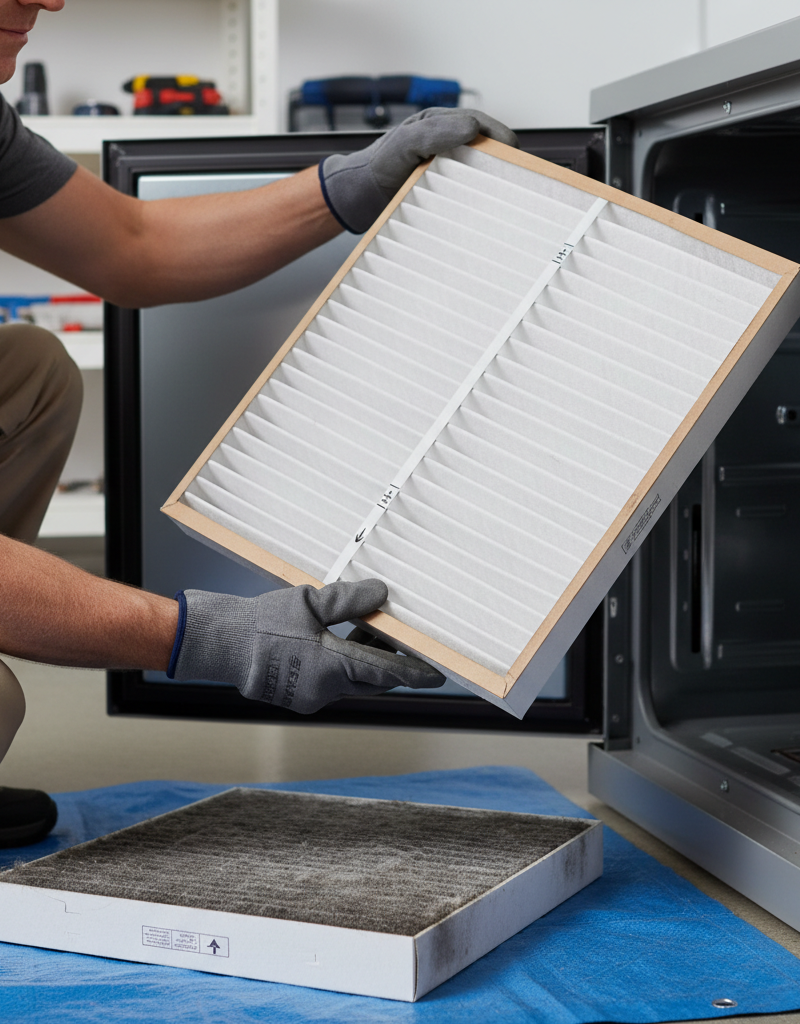
Service Your Heating System — An efficient home is only half the battle; the heating system itself must operate efficiently. The most critical DIY task is changing the furnace filter. A clogged filter restricts airflow, forcing the system's blower motor to work harder and reducing heating effectiveness.
- Check the filter monthly during the heating season and replace it if it appears gray or clogged with dust. Use a filter with the MERV rating recommended by your furnace manufacturer.
- Keep registers and radiators clear of furniture, rugs, and drapes to ensure proper air circulation.
-
Seal Leaky Ductwork — Leaks in ductwork, especially in unconditioned spaces like attics or crawlspaces, can account for 20-30% of heating energy loss. Inspect accessible duct joints for leaks. You can feel for air movement when the system is running. Seal all seams and connections with foil-backed tape or, for a more durable seal, with water-based duct mastic applied with a cheap paintbrush.
- Tools: Duct mastic or foil tape, paintbrush, gloves.
- Note: Do not use standard "duct tape." The cloth-backed, rubber-adhesive tape is not durable enough for this application and will fail quickly under temperature changes.
-
Insulate Electrical Outlets on Exterior Walls — Small gaps around electrical boxes create numerous small air leaks. Turn off the power at the breaker, remove the cover plate, and install a pre-cut foam gasket over the outlet or switch. Replace the cover plate. This simple, inexpensive fix can significantly reduce cumulative drafts.
- Tools: Screwdriver, foam gaskets.
- Safety: Always confirm the power is off using a non-contact voltage tester before touching any wires or components.
-
Manage Window Treatments Strategically — Use your windows to your advantage. Install tight-fitting thermal curtains or cellular shades, which create an insulating air pocket against the glass. On sunny days, open the curtains on south-facing windows to allow passive solar heating. Close all curtains and shades at night to minimize radiative heat loss to the cold glass.
Common mistakes
-
Blocking Attic Ventilation: When adding insulation to an attic, a common error is covering the soffit vents at the eaves. This blocks crucial airflow needed to keep the attic dry and prevent moisture buildup, which can lead to mold and rot in the roof structure. Always install ventilation baffles to maintain a clear channel for air before adding insulation.
-
Using the Wrong Sealant: Applying interior-grade caulk to exterior gaps or using standard duct tape on HVAC ducts are frequent mistakes. Use a high-quality, exterior-grade elastomeric or siliconized acrylic caulk for outdoor applications that can handle temperature fluctuations. For ductwork, always use foil-backed tape or water-based duct mastic, as standard duct tape will quickly dry out and fail.
-
Sealing the House Too Tightly: While air sealing is critical, making a home completely airtight without providing mechanical ventilation can lead to poor indoor air quality. Pollutants like VOCs, radon, and excess humidity can become trapped. If you perform extensive air sealing, consider having your home's air exchange rate tested or installing a heat recovery ventilator (HRV) or energy recovery ventilator (ERV).
-
Ignoring Duct Leaks: Many homeowners focus exclusively on windows, doors, and attic insulation while ignoring leaky ductwork in a basement or crawlspace. If these ducts run through unconditioned areas, they can lose a massive amount of heated air before it ever reaches your rooms. Sealing ducts should be a high priority, not an afterthought.
-
Setting the Thermostat Impractically: Cranking a thermostat up to 80°F will not make the house heat up any faster than setting it to 70°F. The furnace produces heat at a constant rate regardless of the setpoint. This action only forces the system to run longer to reach that unnecessarily high temperature, wasting energy. Use a steady, reasonable setpoint.
Cost & time breakdown
Costs are estimates and can vary by location and the extent of the project. Professional costs include labor and materials.
| Task | DIY Cost | Pro Cost | Time |
|---|---|---|---|
| Air Sealing (Caulk & Weatherstrip) | $50 - $150 | $400 - $1,200 | 4 - 10 hours |
| Attic Insulation Top-Up (to R-49) | $600 - $1,800 | $2,000 - $4,000 | 1 - 2 days |
| Rim Joist Insulation (150 linear ft) | $250 - $500 | $800 - $2,000 | 1 day |
| Programmable/Smart Thermostat Install | $50 - $250 | $150 - $450 | 1 hour |
| DIY Duct Sealing (Accessible ducts) | $40 - $100 | $500 - $1,500+ | 4 - 8 hours |
| Annual Professional HVAC Tune-Up | N/A | $100 - $300 | 1 - 2 hours |
When to call a pro
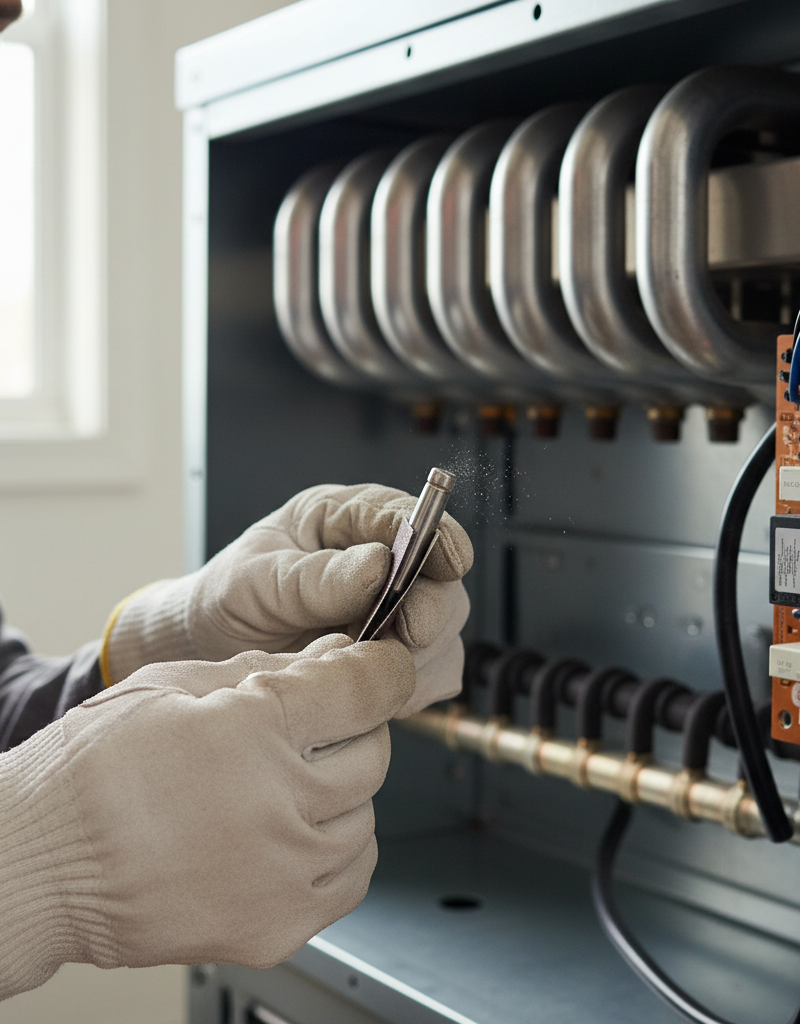
While many energy-saving tasks are suitable for DIYers, certain jobs require professional expertise for safety and effectiveness. Call a certified technician for any work that involves the internal components of your furnace, boiler, or heat pump. This includes any adjustments to gas lines, burners, refrigerant levels, or high-voltage electrical connections.
A professional energy audit is also highly recommended. An auditor uses specialized equipment like a blower door to depressurize the house and an infrared camera to provide a scientific assessment of your home's air leakage and insulation weak points, which is far more accurate than DIY methods.
For insulation, hire a professional if you need to remove old insulation, especially if it may contain asbestos or vermiculite (which can be contaminated with asbestos). Installing spray foam insulation is also a job for trained professionals due to the specific equipment and safety protocols required. Finally, if you are unsure about thermostat wiring or your system is complex (e.g., multi-zone, dual-fuel), it is safer and more effective to have an HVAC technician handle the installation.
Prevention & maintenance
Consistent maintenance is essential for preserving energy efficiency and preventing costly repairs.
- Monthly (Heating Season): Inspect your furnace or air handler filter. If it is visibly dirty or opaque when held up to a light, replace it. A clean filter is the most important factor for maintaining airflow and efficiency.
- Annually (Before Winter): Schedule a professional tune-up for your heating system. A technician will clean and inspect burners, check for safe operation, test safety controls, and measure combustion efficiency. This service ensures your system is safe, reliable, and operating at peak performance.
- Annually: Test all carbon monoxide detectors in your home and replace batteries. Clean all heating registers, baseboard heaters, and radiators to remove dust that can impede airflow and create odors when heated.
- Every 1-2 Years: Inspect the weatherstripping around all exterior doors and operable windows. If it is compressed, cracked, or peeling, replace it. Walk the perimeter of your home and inspect caulk seals around windows, siding, and utility penetrations, reapplying caulk where it has failed.
- Every 5 Years: Visually inspect your attic insulation for signs of settling, moisture, or pest infestation. Insulation that is compressed or wet loses its R-value. Have your HVAC ducts professionally inspected and cleaned if you notice a significant drop in performance or an increase in household dust.
Related Articles
Keep troubleshooting with these hand-picked guides from FixlyGuide:
- The One Schedule That Saves Homeowners $2,500 a Year — A disciplined seasonal home maintenance schedule is your best defense against catastrophic repair bills. Learn which tasks to tackle each s…
- The 12 Checks That Prevent 80% of Costly Home Repairs — Don't wait for a disaster. Our comprehensive monthly home maintenance checklist reveals the surprising, simple tasks that catch small issue…
- The Surprising Trick to Cutting Your Dryer Bill By $100 Per Year — Installing a clothesline can significantly reduce your energy bills and add a fresh scent to your laundry. This guide covers how to choose…
- 7 Inspection Red Flags That Secretly Signal a $20,000 Bill — Don't let your dream home become a money pit. Many buyers and even some inspectors overlook subtle home inspection red flags that lead to f…
- Your Home's Secret To-Do List: Are You Missing It? — Most new homeowners focus on decorating, but ignoring a basic home maintenance checklist can lead to thousands in unexpected repairs. Learn…
- The #1 HVAC Mistake That Costs Homeowners $500 Every Year — Discover the crucial HVAC maintenance step homeowners often overlook, leading to higher energy bills, frequent repairs, and premature syste…
Should you do this yourself?
Answer five quick questions before you start. Safety outranks savings every time.
Your experience with work like this
How high do you have to work?
Does the job involve any of these?
Will it need a permit?
Specialty tools
Free and instant. Educational guidance only — not a quote, inspection, or professional diagnosis.
Estimate your own project cost
National averages are a starting point. Enter your details for a range that fits your house.
HVAC replacement cost
- Equipment$2,200 – $3,800
- Installation labor$1,200 – $2,500
Always insist on a Manual J load calculation — sq-ft sizing is only a rough check. Federal heat-pump rebates may reduce cost significantly.
Educational estimate only — always confirm with written local bids.
What should this project cost?
Enter your project details for a realistic cost range before you call anyone.
Spot repairs commonly run $400–$1,800; full replacement typically $9,000–$18,000 for an average home.
- Regional adjustment
- National average
- Labor share (typical)
- ~$2,948
- Quotes to collect
- 3 written estimates
Educational estimate based on national averages — not a binding quote. Always confirm with written local estimates.
Before you start
Check the difficulty, permits, and safety risk — then decide whether to call a pro.
Free, no signup required. Estimates are educational guidance, not a quote or an inspection.
Get the print-ready PDF of this guide
A clean, ad-free, printable version you can keep on your phone or pin to the workshop wall. Free with a FixlyGuide account.
- Print-optimized layout
- Tools, materials & every step included
- Saved to your account
This article was independently written by FixlyGuide based on the source topic.
Frequently asked questions
How much can I save by lowering my thermostat?+
You can save roughly 1% on your heating bill for every degree you lower your thermostat over an eight-hour period. Adjusting your thermostat by 7-10 degrees Fahrenheit for 8 hours a day can save you up to 10% on your heating costs annually.
Is it better to keep the heat on low all day or turn it off?+
Generally, it's more energy-efficient to lower your thermostat when you're away or asleep rather than keeping it at a constant temperature. Completely turning it off can allow your home to get too cold, requiring a lot of energy to reheat from scratch. A smart thermostat can optimize this for you.
How often should I change my furnace filter?+
It's recommended to check your furnace filter monthly and replace it every 1 to 3 months, especially during peak heating season or if you have pets or allergies. A dirty filter restricts airflow and reduces efficiency.
Discussion
Loading comments…