- Your Home's Secret To-Do List: Are You Missing It? — Most new homeowners focus on decorating, but ignoring a basic home maintenance checklist can lead to thousands in unexpected repairs. Learn…
- The Secret Power Tool Hiding in Your Garage for a Speedier Clean — Unlock the hidden potential of your cordless drill to tackle stubborn household grime, soap scum, and dirt with specialized cleaning attach…
- The One Schedule That Saves Homeowners $2,500 a Year — A disciplined seasonal home maintenance schedule is your best defense against catastrophic repair bills. Learn which tasks to tackle each s…
- The 12 Checks That Prevent 80% of Costly Home Repairs — Don't wait for a disaster. Our comprehensive monthly home maintenance checklist reveals the surprising, simple tasks that catch small issue…
- The 6 Cleaning Secrets Hiding in Your Power Drill (Plus Attachments to Master) — Your power drill isn't just for DIY projects; with the right attachments, it's a powerful and efficient cleaning tool for tackling tough gr…
Published April 20, 2026Last updated August 17, 2026
Tools & materials you'll need
Affiliate linksAs an Amazon Associate FixlyGuide earns from qualifying purchases — at no extra cost to you. Prices and availability are accurate as of publication and subject to change.
How it works
An outdoor grill operates on the principles of controlled combustion and heat transfer. The specific mechanism varies by fuel type, but the goal is the same: to generate and manage high heat for cooking.
In a gas grill, the most common type, liquid propane from a tank (or natural gas from a home line) flows through a regulator that reduces its pressure to a safe, usable level. From the regulator, the gas travels into a manifold, a pipe that distributes it to each burner. When you turn a control knob, a valve opens, allowing gas to flow into a venturi tube. Here, the gas mixes with oxygen from the air, creating a combustible fuel-air mixture. This mixture flows into the burner tube and exits through a series of small holes, or ports. An igniter creates a spark, igniting the mixture and producing a flame. Above the burners, "heat plates" or "flavorizer bars" serve a dual purpose: they protect the burners from dripping grease and vaporize those drippings to create smoke that flavors the food. Finally, heat radiates and convects upward to the cooking grates.
Charcoal grills use a simpler system based on airflow. Charcoal briquettes or lump wood are the fuel source. Air enters through a vent at the bottom of the grill, feeding oxygen to the lit coals. The amount of oxygen, controlled by the vent opening, dictates the heat of the fire. Heat radiates directly from the coals to the food. A lid and a top vent allow for convection cooking and smoke control, with the top vent acting as an exhaust to draw heat and smoke through the cooking chamber.
Electric grills use a high-wattage resistive heating element, similar to an oven's broiler element, positioned directly beneath the cooking grate. When plugged in and turned on, electricity flows through the element, causing it to glow and generate intense radiant heat. A built-in thermostat or digital controller regulates the flow of electricity to maintain a set temperature.
Step-by-Step Fix
-
Safety Shutdown and Cooldown — Before any cleaning, safety is paramount. For gas grills, turn off the control knobs, then close the valve on the propane tank completely. Disconnect the regulator hose from the tank. For natural gas grills, shut off the gas supply at the main valve. For electric grills, unplug the power cord. Ensure the grill is entirely cool to the touch, which can take over an hour after use.
- Tools: None.
- Safety: Never work on a hot or warm grill. Never work on a grill that is still connected to its fuel or power source.
-
Remove and Soak Internal Components — Open the grill lid and remove the warming rack, cooking grates, and the heat plates (also called flavorizer bars or flame tamers). Place these components in a large utility sink, plastic tub, or on a tarp. Fill the tub with hot water and add a generous amount of a strong degreasing dish soap. Let the parts soak for at least 30-60 minutes to dissolve baked-on grease and carbon.
- Tools: Work gloves.
- Pro-Tip: If you have porcelain-coated cast iron grates, minimize soaking time to 30 minutes to reduce the risk of water penetrating any chips and causing rust.
-
Scrape the Cook Box Interior — With the internal components removed, you have clear access to the cook box (the main body of the grill). Use a plastic putty knife or a dedicated grill scraper to scrape carbon flakes and grease from the inside of the lid and the interior walls. Work from top to bottom, pushing all the dislodged gunk down through the opening into the main grease tray below.
- Tools: Plastic putty knife, grill scraper.
- Safety: Avoid using sharp metal tools or wire brushes on porcelain-coated interiors, as scratching the enamel will create a point for rust to form.
-
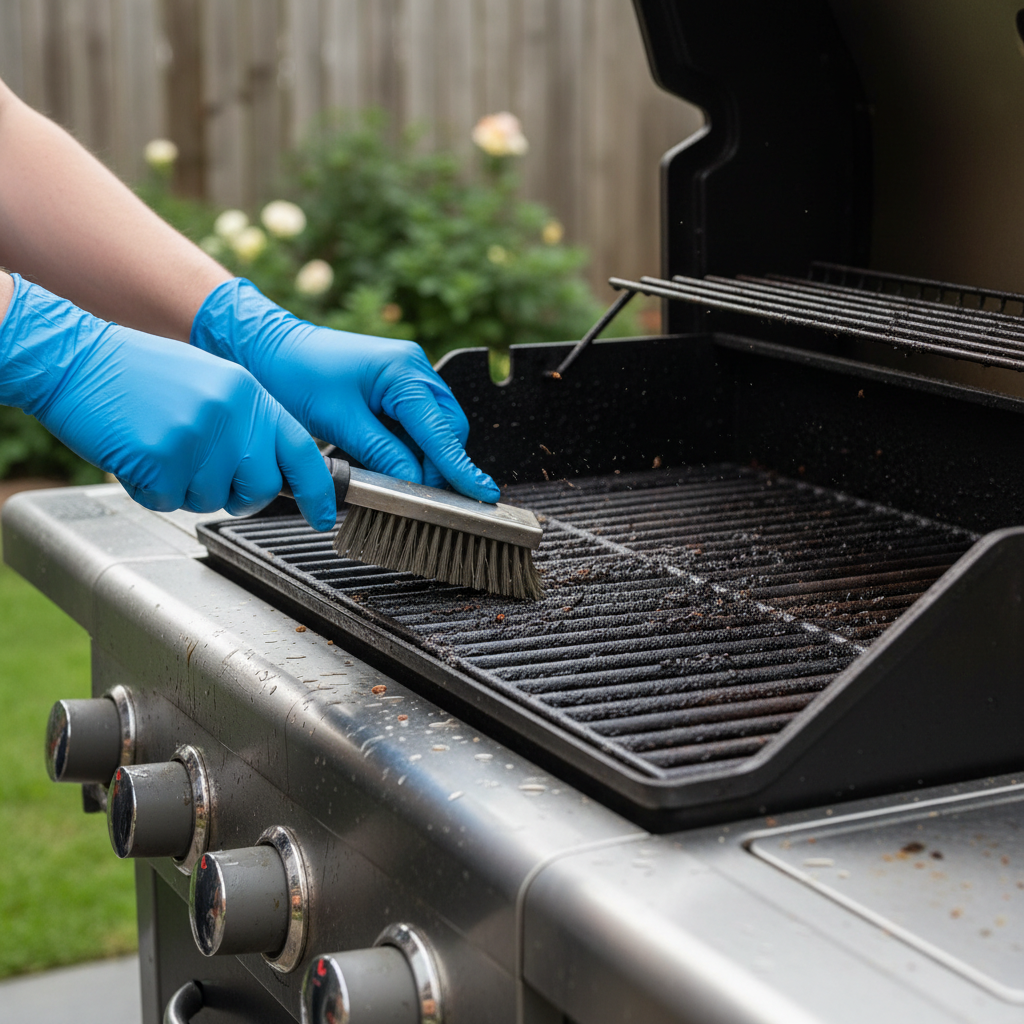
Clean the Burner Assemblies — Inspect the burner tubes. Use a stainless steel grill brush to clean the exterior, brushing across the ports (side-to-side), not lengthwise, to avoid pushing debris into them. For clogged ports, use a straightened paperclip or a specialized port cleaning tool to clear each individual hole. Then, disconnect the burners if possible and use a long, flexible venturi brush to clean out the inside of the tubes, removing any spider webs or blockages that could cause dangerous flashbacks.
- Tools: Stainless steel grill brush, paperclip or port cleaning tool, venturi brush.
- If this doesn't work: If flames are still yellow or uneven after cleaning, or if the burners are severely corroded or have cracks, they must be replaced.
-
Clean the Ignition System — Locate the igniter electrode(s), which are small ceramic-encased metal points situated next to a burner. Gently wipe the metal tip and the ceramic insulator with a cloth dampened with rubbing alcohol to remove any grease or carbon buildup that could be preventing a strong spark. Check that the wire is securely connected and that the electrode is positioned correctly, typically 1/8 to 1/4 inch away from the burner.
-
Scrub the Soaked Components — Return to the grates and heat plates that have been soaking. Use a stiff, non-metallic bristle brush or a stainless steel scouring pad to scrub away all loosened grime. For extremely stubborn carbon deposits, use a grill stone (pumice) or a paste of baking soda and water. Rinse all components thoroughly with fresh water and allow them to air dry completely, or dry them with a towel.
- Cast Iron Care: For non-coated cast iron grates, it's critical to dry them immediately and thoroughly. Apply a thin coat of a high-smoke-point oil (like canola or grapeseed oil) to all surfaces to prevent rust and maintain the seasoning.
-
Service the Grease Management System — Slide out the main grease tray from beneath the cook box. Scrape all the collected debris and old grease into a garbage bag (do not pour grease down a drain). Wash the tray thoroughly with hot, soapy water and dry it. If your grill uses a disposable aluminum drip pan, discard the old one and replace it with a new one. Lining the pan with a fresh layer of foil can make future cleanups easier.
-
Wash and Protect the Exterior — Create a bucket of warm, soapy water. Use a microfiber cloth or soft sponge to wash the lid, side shelves, control panel, and cabinet. Rinse with a clean, damp cloth. For stainless steel surfaces, follow up with a dedicated stainless steel cleaner, applying it with a microfiber cloth and wiping in the direction of the grain to eliminate streaks and add a protective layer.
-
Inspect Gas Lines and Connections — This is a critical safety check. Carefully inspect the entire length of the gas hose for any signs of cracking, brittleness, abrasions, or holes. Check the regulator for damage. Most manufacturers recommend replacing the hose and regulator assembly every 3-5 years, even if it looks visually intact.
-
Reassemble and Perform a Leak Test — Once all components are clean and dry, carefully reassemble the grill. Place the burners, heat plates, grates, and warming rack back in their proper positions. Reconnect the gas hose to the tank, ensuring a tight fit. Prepare a 50/50 solution of dish soap and water. With the grill control knobs in the "off" position, slowly open the valve on the propane tank. Brush the soapy solution on the tank valve, regulator, hose, and all connection points up to the manifold. Watch for growing bubbles, which indicate a gas leak.
- If you find a leak: Immediately turn off the gas at the tank. Tighten the leaking connection and re-test. If the leak persists, the component (often the hose) is faulty and must be replaced before using the grill.
Common mistakes
- Using a wire-bristle brush. Loose metal bristles can break off, stick to the cooking grates, and become embedded in food. If ingested, they can cause serious internal injury. Instead, use a bristle-free alternative like a coiled wire brush, a wooden scraper, a nylon brush (for cool surfaces), or a pumice grill stone.
- Ignoring the venturi tubes. Spiders are notoriously attracted to the smell of gas and often build nests inside the venturi tubes where the air and gas mix. This blocks gas flow, causing poor performance and a risk of "flashback," where gas ignites at the control knob. Instead, make cleaning the venturi tubes with a dedicated long, thin brush a standard part of your deep cleaning routine.
- Using oven cleaner or other harsh chemicals. A grill is not an oven. Harsh chemical cleaners can strip protective coatings, damage stainless steel, corrode aluminum parts, and leave behind toxic residues that can contaminate your food. Instead, rely on heat (burning off residue), mechanical scraping, and simple hot water with degreasing dish soap.
- Power washing the interior. While tempting, using a power washer on the inside of a grill is a bad idea. The high pressure can drive water and debris into sensitive areas like the gas valves and manifold. It can also damage igniter wires and strip paint or porcelain coatings. Instead, use a plastic scraper, a shop vacuum to remove debris, and a bucket of soapy water.
- Forgetting the leak test. After disconnecting and reconnecting gas components, it's easy to assume the connection is secure. Skipping the soapy water leak test is a major gamble. A small, undetected leak can lead to a significant fire or explosion. Instead, make the 2-minute leak test a non-negotiable final step after any maintenance.
- Covering a wet or warm grill. Trapping moisture under a grill cover is the fastest way to cause rust and mildew growth. Similarly, covering a still-warm grill can melt the cover's liner and create a condensation-rich environment. Instead, let the grill cool completely and ensure it is dry before putting on the cover.
Cost & time breakdown
| Task | DIY Cost | Pro Cost | Time |
|---|---|---|---|
| Routine Grate Cleaning (per use) | $0 | N/A | 2-5 minutes |
| Annual Deep Clean & Inspection | $20-$50 (brushes, soap, foil liners, steel polish) | $175 - $300 | 2-4 hours |
| Replace Burner Tube Set | $40-$100 (part dependent on grill model) | $150 - $250 | 30-60 minutes |
| Replace Cooking Grates | $50-$150+ (part dependent on size and material) | $120 - $250 (incl. part) | 5 minutes |
| Replace Hose & Regulator Assembly | $25-$50 (part) | $100 - $160 | 10 minutes |
| Replace Igniter Kit | $15-$40 (part) | $100 - $180 | 20-40 minutes |
When to call a pro
While most grill maintenance is straightforward, certain issues carry significant risk and are best left to a certified gas appliance technician. Call a professional if you encounter any of the following situations.
If you perform a leak test and find bubbles that persist even after tightening the connection, it signifies a deeper problem. Continuously smelling gas around the grill, even when it is not in use, is a red flag for a serious leak. Do not attempt to use the grill; turn off the gas supply and call for service immediately.
The gas manifold pipe and the control valves attached to it are precision components. If you see significant corrosion, cracks, or physical damage on these parts, or if a control knob is stuck, spins freely, or will not completely shut off the gas flow to a burner, it requires professional repair or replacement.
Extensive rust-through on the main cook box, firebox, or structural frame compromises the grill's safety and performance. If there are visible holes or the metal feels soft and flaky, it's beyond a simple cleaning. A professional can assess whether a repair is feasible or if the unit is unsafe and must be retired. For electric grills, any issue beyond a simple heating element replacement—such as the grill repeatedly tripping a breaker, a damaged power cord, or a faulty controller—should be handled by a qualified appliance repair specialist to avoid electrical shock hazards.
Prevention & maintenance
- Burn-Off and Brush After Every Cook: The most effective preventative maintenance takes only five minutes. After you remove your food, turn the burners to high, close the lid, and let the grill run for 10-15 minutes. This incinerates most food residue. Then, turn the grill off and, while the grates are still very hot, use a bristle-free grill brush to scrape them clean.
- Keep It Covered: A quality, weather-resistant cover is essential. It protects your grill from rain and humidity which cause rust, and from sun which can fade finishes and damage hoses. Critically, ensure the grill is completely cool and dry before covering it to avoid trapping moisture and promoting corrosion.
- Monthly Flame Inspection: Make it a habit to look at your burner flames. When operating correctly, they should be a consistent blue color with yellow tips, and the flames should be evenly distributed along the entire length of the burner tube. Large, rolling, all-yellow flames indicate a gas/air mixture problem (likely a blockage in the venturi tube), while an uneven pattern suggests clogged burner ports.
- Inspect the Drip Pan Before Each Use: A grease fire is the most common grilling accident. Before you preheat the grill, quickly glance at the grease tray or disposable pan. If it’s more than half full, take the time to empty or replace it. It's much easier to deal with cool, solidified grease than a burning liquid hazard.
- Annual Gas Hose Inspection and Replacement: At the start of each grilling season, perform the soapy water leak test on all connections. Carefully flex the gas hose and inspect its entire length for cracks, brittleness, or abrasion. Regardless of its appearance, plan to replace the entire hose and regulator assembly every 3-5 years, as the rubber can degrade internally over time.
Related Articles
Keep troubleshooting with these hand-picked guides from FixlyGuide:
- Your Home's Secret To-Do List: Are You Missing It? — Most new homeowners focus on decorating, but ignoring a basic home maintenance checklist can lead to thousands in unexpected repairs. Learn…
- The Secret Power Tool Hiding in Your Garage for a Speedier Clean — Unlock the hidden potential of your cordless drill to tackle stubborn household grime, soap scum, and dirt with specialized cleaning attach…
- The One Schedule That Saves Homeowners $2,500 a Year — A disciplined seasonal home maintenance schedule is your best defense against catastrophic repair bills. Learn which tasks to tackle each s…
- The 12 Checks That Prevent 80% of Costly Home Repairs — Don't wait for a disaster. Our comprehensive monthly home maintenance checklist reveals the surprising, simple tasks that catch small issue…
- The 6 Cleaning Secrets Hiding in Your Power Drill (Plus Attachments to Master) — Your power drill isn't just for DIY projects; with the right attachments, it's a powerful and efficient cleaning tool for tackling tough gr…
- Prevent Roof Damage: Gutter Cleaning & Maintenance for Homeowners — Clogged and neglected gutters can lead to significant roof damage, but regular cleaning and maintenance can prevent costly repairs and prot…
Should you do this yourself?
Answer five quick questions before you start. Safety outranks savings every time.
Your experience with work like this
How high do you have to work?
Does the job involve any of these?
Will it need a permit?
Specialty tools
Free and instant. Educational guidance only — not a quote, inspection, or professional diagnosis.
What should this project cost?
Enter your project details for a realistic cost range before you call anyone.
Cost depends heavily on which system turns out to be the source.
- Regional adjustment
- National average
- Labor share (typical)
- ~$1,620
- Quotes to collect
- 3 written estimates
Educational estimate based on national averages — not a binding quote. Always confirm with written local estimates.
Before you start
Check the difficulty, permits, and safety risk — then decide whether to call a pro.
- Estimate this projectGet a cost range for your scope and ZIP before you call anyone.Open
- Get local estimatesSend one request and compare written estimates from vetted pros.Open
Free, no signup required. Estimates are educational guidance, not a quote or an inspection.
Get the print-ready PDF of this guide
A clean, ad-free, printable version you can keep on your phone or pin to the workshop wall. Free with a FixlyGuide account.
- Print-optimized layout
- Tools, materials & every step included
- Saved to your account
This article was independently written by FixlyGuide based on the source topic.
Frequently asked questions
How often should I clean my grill?+
For optimal performance and safety, clean your grill grates after every use. A deeper clean of the internal components, like burner covers and the firebox, should be done every 5-10 uses, or at least twice a year (at the beginning and end of grilling season).
What should I do if my gas grill smells like gas?+
If you smell gas, immediately turn off the gas supply at the tank. Do not attempt to light the grill. Check all connections for leaks using soapy water. If the smell persists or you can't find the source, ventilate the area and call a licensed gas professional immediately.
Can I use household cleaners on my grill?+
It's best to use mild dish soap and water for most grill cleaning, especially on cooking surfaces and interiors. Harsh chemical cleaners can leave residues that are unsafe for cooking or can damage grill finishes. Always rinse thoroughly.

Discussion
Loading comments…