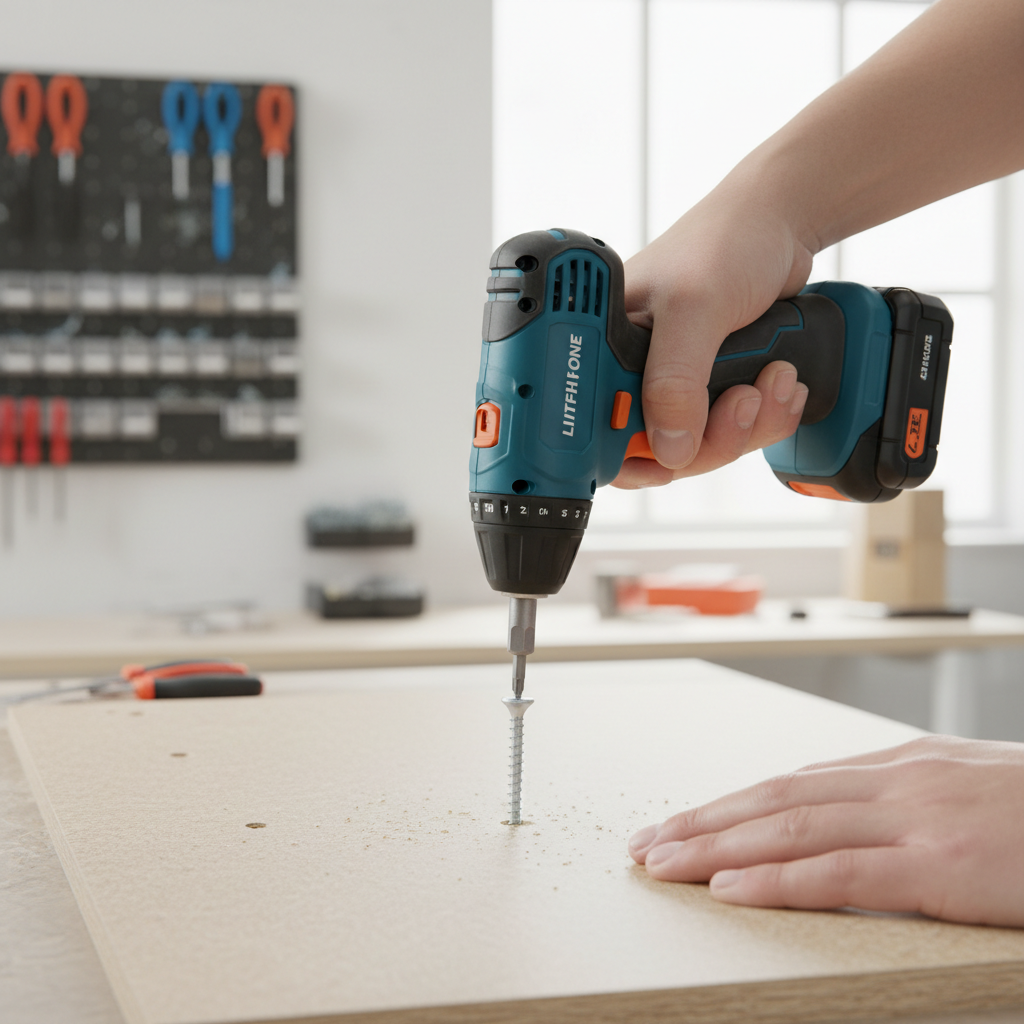
- Charge the Battery — Start here.
- Select the Right Bit — Match the fastener.
- Safety Note: Always wear safety glasses when using power tools, even low-power ones. Bits can break, and screws can launch if something goes sideways.
Published July 24, 2026Last updated August 17, 2026
Tools & materials you'll need
Affiliate linksAs an Amazon Associate FixlyGuide earns from qualifying purchases — at no extra cost to you. Prices and availability are accurate as of publication and subject to change.
Quick Answer
Look, I’ve spent more than my fair share of time with a manual screwdriver in my hand, and my wrist still complains on cold mornings just thinking about it. A good electric screwdriver — not a drill, mind you — is one of those tools that earns its keep fast. It saves you from stripped screws, knocks out assembly jobs in a hurry, and just plain makes DIY less aggravating. I’ve seen plenty of folks fight a simple shelf build for an hour when this little tool would’ve had them done before the coffee went cold. It’s the kind of thing that turns “ugh” into “yeah, that’ll do.”
The Problem
We’ve all been there: you’re putting together a new bookshelf, or maybe just swapping out a light switch cover, and you’re wrestling with a manual screwdriver. You lean into it, the bit slips, and zip! there goes the screw head. Now it’s stripped, you’re annoyed, and that screw isn’t going anywhere. Or maybe you’re just turning screw after screw, and your hand starts cramping, your wrist starts barking. That’s not just annoying. It eats time, and it can flat-out kill a project if you’re already tired and ready to call it a day. A stripped screw also means a bigger headache later when you actually need to back it out.
How It Works
An electric screwdriver — often called a power screwdriver or even a cordless screwdriver — is basically a small, specialized drill. A drill’s built for making holes and sometimes driving screws, but an electric screwdriver is made for driving and removing fasteners. They’re usually smaller and lighter than drills, which makes them a lot easier to wrangle in tight spots, like setting cabinet hinges or working inside a computer case.
The real trick is in the motor and the clutch. Most electric screwdrivers run on a small DC motor, powered by a rechargeable lithium-ion battery that often holds a charge for weeks of intermittent use. That motor spins a chuck, and the chuck holds your screwdriver bit. But unlike a drill, which usually runs pretty wide open or just gives you a basic high/low, an electric screwdriver gives you finer control over speed and torque. A lot of models have a variable speed trigger, so you can creep along or pick up the pace depending on the job. Even better, they usually have an adjustable clutch. That’s the part that lets the tool slip once it hits a certain amount of torque. You’ll hear a little “click-click-click” when it kicks in. What that means for you is simple: set it low for delicate work, like putting together IKEA furniture, and it’ll stop driving before it strips the screw or chews up the material. Need more muscle? Turn the clutch up and keep going.
Some even have forward and reverse indicators, sometimes just a little LED light, so you know which way the bit’s spinning. Handy stuff when you’re bouncing between tightening and loosening and don’t want to fight the tool for no reason. The bits themselves are usually standard hex bits, 1/4-inch mostly, so they’ll play nice with a lot of the bits you already own. Simple tool. Smart design. That’s why it works so well.
Step-by-Step Fix
Okay, “fix” might be a strong word here, because an electric screwdriver isn’t really fixing a problem so much as making the whole job smoother and preventing future headaches. Still, here’s how I’d use one on the kinds of chores homeowners run into all the time.
-
Charge the Battery — Start here.
- Before you do anything else, make sure the battery’s fully juiced. Most decent models come with a wall charger. A full charge can last for hours of intermittent use, or even weeks if you’re only grabbing it for quick jobs. Nothing’s worse than reaching for your tool and finding out it’s dead.
-
Select the Right Bit — Match the fastener.
- This part matters. Pick a bit that fits the screw head exactly — Phillips, flathead, Torx, square drive, whatever you’re dealing with. A sloppy fit is the fastest route to a stripped screw. Push the bit firmly into the magnetic chuck until it snaps in.
- Safety Note: Always wear safety glasses when using power tools, even low-power ones. Bits can break, and screws can launch if something goes sideways.
-
Adjust the Torque/Clutch Setting — This is where the magic is.
- If your electric screwdriver has an adjustable clutch — and most decent ones do — start low. For tiny screws or softer material like particleboard, use the lowest setting. For harder wood or longer screws, you may need a little more muscle. You want it to stop right as the screw head sits flush, not after it’s crushed into the material. You’ll hear that “click-click-click” when it reaches the set torque.
- Pro Tip: Test it on a scrap piece or some hidden spot first so you can find the sweet spot for the job in front of you.
-
Engage Forward or Reverse — Pick the right direction.
- Most electric screwdrivers have a switch or button near the trigger for forward — driving screws in — or reverse, for backing them out. Make sure you’ve got it set right before you start. There’s usually an arrow or an indicator, and it’s worth a quick glance. I pulled a water heater in Frisco last month that had exactly this kind of tiny, stubborn fastener, and one wrong setting would’ve turned a 2-minute job into a mess. Easy to miss. Easy to fix if you catch it early.
Related Articles
Keep troubleshooting with these hand-picked guides from FixlyGuide:
- The Secret Power Tool Hiding in Your Garage for a Speedier Clean — Unlock the hidden potential of your cordless drill to tackle stubborn household grime, soap scum, and dirt with specialized cleaning attach…
- The 3 Crucial Mistakes That Ruin Wall Stripes (And How to Fix Them) — Achieving crisp, professional-looking painted stripes on a wall is a rewarding DIY project, but it's easy to make common mistakes that lead…
- The 7 Critical Household Filters You're Forgetting (And What They Cost You) — Neglected household filters are quietly costing you money, diminishing air quality, and paving the way for expensive repairs. Discover the…
- The 12 Checks That Prevent 80% of Costly Home Repairs — Don't wait for a disaster. Our comprehensive monthly home maintenance checklist reveals the surprising, simple tasks that catch small issue…
- The 6 Cleaning Secrets Hiding in Your Power Drill (Plus Attachments to Master) — Your power drill isn't just for DIY projects; with the right attachments, it's a powerful and efficient cleaning tool for tackling tough gr…
- Hail-Damaged Siding? The Inspection Trick That Saves Thousands (and How to Fix It) — Hail can cause significant, often hidden damage to your home's siding. Learn how to pinpoint the damage and perform DIY repairs to prevent…
What should this project cost?
Enter your project details for a realistic cost range before you call anyone.
Cost depends heavily on which system turns out to be the source.
- Regional adjustment
- National average
- Labor share (typical)
- ~$1,620
- Quotes to collect
- 3 written estimates
Educational estimate based on national averages — not a binding quote. Always confirm with written local estimates.
Get the print-ready PDF of this guide
A clean, ad-free, printable version you can keep on your phone or pin to the workshop wall. Free with a FixlyGuide account.
- Print-optimized layout
- Tools, materials & every step included
- Saved to your account
This article was independently written by FixlyGuide based on the source topic.
Frequently asked questions
What's the difference between an electric screwdriver and a drill?+
An electric screwdriver is primarily designed for driving and removing fasteners, offering precise torque control to reduce stripping. A drill, while it can also drive screws, is optimized for drilling holes and typically has higher speed and torque, making it less ideal for delicate screw work.
Can I use an electric screwdriver for drilling?+
Generally, no. Electric screwdrivers have lower RPMs and significantly less torque than drills, making them ineffective for drilling holes. They're built for screws, not for boring through materials.
How long does an electric screwdriver battery last?+
Most modern lithium-ion batteries in electric screwdrivers hold a charge for a very long time – often weeks or even months of light, intermittent use. For continuous work, you can expect several hours before needing a recharge.
What does the clutch setting do?+
The clutch allows the screwdriver to stop driving the screw once a certain level of resistance (torque) is met. This prevents over-tightening, stripping the screw head, or damaging the material you're screwing into. You adjust it based on the material and screw size.
Why do my screws keep stripping even with an electric screwdriver?+
Most likely, you're using the wrong bit size for the screw head or your clutch setting is too high. Always ensure the bit fits snugly into the screw head, and start with a lower clutch setting, increasing it only if needed.
Are all electric screwdriver bits interchangeable?+
Most electric screwdrivers use standard 1/4-inch hex shank bits, which are widely interchangeable. However, always double-check the specifications of your specific tool and bit set.
Is an electric screwdriver worth it if I already have a drill?+
Absolutely. While a drill can drive screws, an electric screwdriver offers better control, is lighter, more compact, and excels at preventing stripped screws due to its specialized clutch settings. It's a fantastic complementary tool for any DIYer.
How do I choose the right electric screwdriver?+
Look for one with an adjustable clutch, comfortable grip, and a good battery life (lithium-ion is best). Consider the voltage – 4V or 8V models are common for household tasks. Brands like Bosch, DeWalt, and Ryobi offer reliable options.


Discussion
Loading comments…