
- Assemble Tools and Safety Gear — Before you begin, gather all necessary equipment to ensure the job is safe and efficient. Having everything on hand prevents unnecessary trips up and down the ladder.
- Tools: Sturdy extension ladder with a stabilizer/standoff, bucket with a handle hook, small plastic trowel or gutter scoop, heavy-duty work gloves, safety glasses or goggles, garden hose with a high-pressure spray nozzle.
- Safety: Wear non-slip shoes, long sleeves, and long pants. Inform someone you will be working on a ladder. Do not work in wet or windy conditions.
Plumbing · Clog
| Project category | Plumbing |
|---|---|
| Problem type | Clog |
| Trade required | Plumbing |
| Urgency | Soon — within weeks |
| Safety risk | Low safety risk |
| DIY suitability | DIY friendly |
| Cost category | Low cost |
| Typical timeline | Same-day DIY attempt; pro visit within a day or two |
| Contractor type | Licensed plumber |
Repair option
Plunger, hand auger, or trap cleanout before chemicals.
Replacement option
Line replacement when clogs return in the same spot repeatedly.
Common causes
- Hair and soap buildup in the trap
- Grease cooling in the branch line
- Flushed wipes or foreign objects
Relevant tools:diy difficultydiy or hire a pro
Published April 17, 2026Last updated August 17, 2026
How it works
A home's rainwater management system is a critical, gravity-fed network designed to protect the structure from water damage. The system begins with the roof, which acts as a large collection plane. When it rains or snow melts, water flows down the sloped surface into horizontally installed troughs, known as gutters or eavestroughs. These gutters are precisely angled—typically with a slope of 1/4 inch for every 10 feet of length—to guide water towards vertical drainage pipes called downspouts.
This controlled path is essential. Without it, water would cascade off the roof's edge, saturating the ground next to the foundation, leading to soil erosion, basement flooding, and potential foundation cracks. It would also drench the siding, windows, and doors, promoting mold, mildew, and rot.
The gutters themselves are attached to the fascia board, which is the long, straight board that runs along the lower edge of the roof. When gutters become clogged with leaves, twigs, shingle granules, and other debris, water can no longer follow its intended path. Instead, it backs up, filling the gutter and overflowing. This overflow can seep behind the gutter, saturating the fascia and the underlying wooden roof structure (the sheathing and rafters), causing wood rot and compromising structural integrity. In cold climates, trapped water freezes, forming heavy ice dams that can lift shingles, create cracks, and force meltwater into the attic, causing extensive interior damage.
Step-by-Step Fix
Follow these steps to safely and thoroughly clean your gutters and perform essential maintenance checks. Plan to do this in late spring and late fall.
-
Assemble Tools and Safety Gear — Before you begin, gather all necessary equipment to ensure the job is safe and efficient. Having everything on hand prevents unnecessary trips up and down the ladder.
- Tools: Sturdy extension ladder with a stabilizer/standoff, bucket with a handle hook, small plastic trowel or gutter scoop, heavy-duty work gloves, safety glasses or goggles, garden hose with a high-pressure spray nozzle.
- Safety: Wear non-slip shoes, long sleeves, and long pants. Inform someone you will be working on a ladder. Do not work in wet or windy conditions.
-
Position the Ladder Correctly — Ladder safety is paramount and non-negotiable. Improper ladder placement is a leading cause of serious injury for homeowners.
- Place the ladder on firm, level ground. For an extension ladder, use the 4-to-1 rule: for every four feet of height to the point of support, the base of the ladder should be one foot away from the wall.
- Extend the ladder at least three feet above the roofline for stability when stepping on or off, but for gutter cleaning, it's safer to work entirely from the ladder. Attach a ladder stabilizer to span the gutter and rest on the roof, preventing damage to the gutter itself.
-
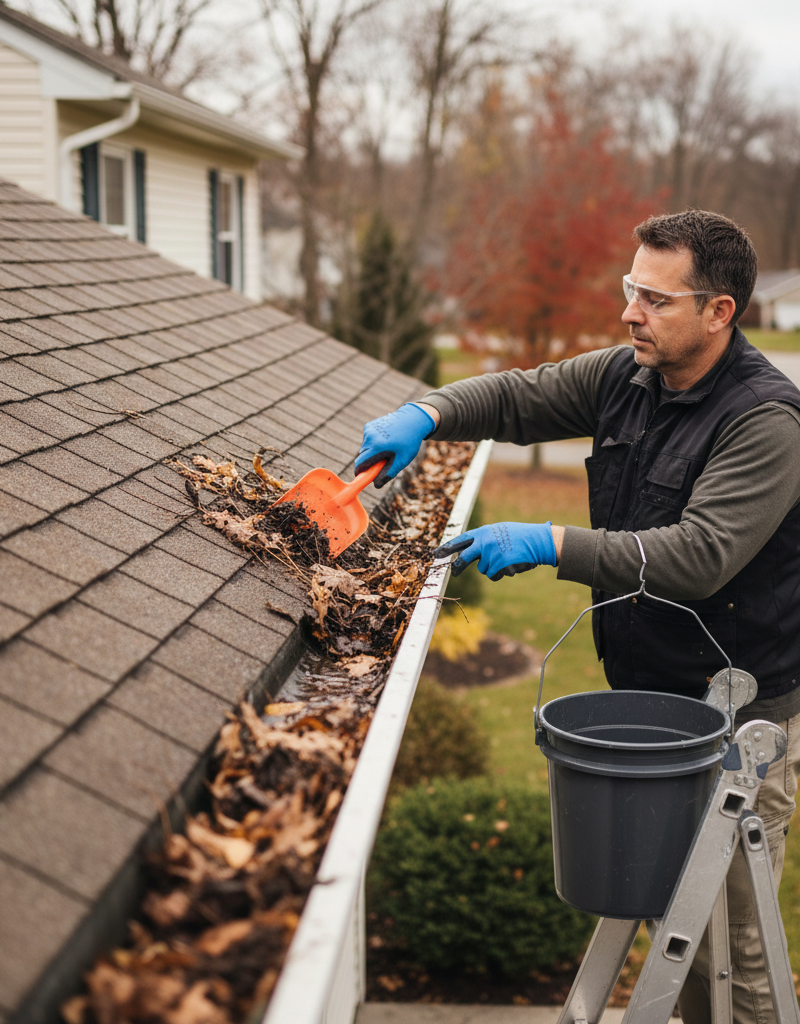
Remove Bulk Debris by Hand — Start near a downspout and work your way along the gutter. Reaching into gutters filled with wet, decomposing material can be unpleasant, but it's the most effective way to clear major blockages.
- With gloved hands or a gutter scoop, remove handfuls of leaves, twigs, and other large debris. Place the debris into the bucket hanging from your ladder.
- Do not throw debris onto the roof, as it will wash back into the gutter with the next rain. Do not overreach; instead, climb down and reposition the ladder every few feet.
-
Scrape Away Compacted Sludge — After removing the loose items, a layer of dense, mud-like sediment often remains. This material, composed of dirt and shingle granules, holds moisture against the gutter and must be removed.
- Use your plastic trowel or scoop to scrape this sludge from the bottom of the gutter. Avoid using sharp metal tools that could gouge, scratch, or puncture aluminum or vinyl gutters, which can lead to premature rust or cracks.
- Work in sections, scooping the sludge into your bucket. This step is messy but critical for allowing water to flow freely and for preventing corrosion.
-
Flush the Gutter Sections — Flushing the gutters with water serves two purposes: it clears out any remaining fine sediment and provides a clear test of your cleaning work.
- Take your garden hose up the ladder and position it at the end of the gutter farthest from the downspout.
- Turn the water on and use a spray nozzle to direct a strong stream of water down the gutter channel. Observe the water flow. It should run freely and cleanly drain into the downspout.
-
Check and Clear the Downspout — A cleared gutter is useless if the downspout is clogged. Water backing up at the top of the downspout during the flush test is a clear sign of a blockage.
- First, try to clear the clog from above. Insert the hose deep into the downspout opening and turn the water on at full pressure. The force of the water may be enough to dislodge the clog.
- If that fails, tap firmly on the sides of the downspout with the handle of a screwdriver, working your way down from the clog. The vibrations can sometimes loosen the compacted debris.
-
Address Stubborn Downspout Clogs — If water pressure and tapping don't work, the clog is likely dense and requires more direct action. This may involve using a tool or minor disassembly.
- Feed a plumber's auger or "snake" down the downspout from the top to break up the clog. Turn the handle as you push it downwards to chew through the obstruction.
- If the clog is near the bottom elbow, you may need to disconnect it. Use a screwdriver or drill to remove the screws holding the elbow and lower straight section to the rest of the downspout, then clear the debris by hand or with the hose.
-
Inspect Gutters for Damage and Leaks — With the gutters clean, you have a perfect opportunity for a detailed inspection. Look for issues that could become major problems if left unaddressed.
- Carefully examine the entire length of the gutters. Look for cracks, holes, or sections of rust on steel gutters. Pay close attention to the seams between gutter sections, as the sealant can degrade over time and cause leaks.
- Check for any signs of peeling paint or a powdery white substance on aluminum, which are signs of oxidation and corrosion.
-
Check Slope and Fastener Integrity — Gutters must be properly sloped and securely fastened to function correctly. Sagging gutters collect standing water, which adds weight, strains fasteners, and provides a breeding ground for mosquitos.
- After flushing, look for any standing water. Puddles indicate a low spot or improper slope. Gutters should slope down towards the downspout at approximately 1/4 inch per 10 feet.
- Physically tug on the gutters to ensure they are secure. Check the hangers or spikes that fasten the gutter to the fascia. If you see gutter spikes pulling out, use a hammer to drive them back in. If they won't hold, you may need to install a new screw-in hanger next to the old spike location.
-
Perform Minor Repairs — Address small issues immediately before they worsen. Most minor repairs can be completed with materials found at any hardware store.
- For small holes (less than 1/2 inch) or leaking seams, first clean the area thoroughly with a wire brush and wipe it dry. Apply a liberal bead of high-quality gutter sealant or silicone caulk rated for exterior use.
- If a gutter section is sagging, you can adjust the slope by repositioning the hangers. For spike-and-ferrule systems, this may mean installing new, more secure screw-in hangers.
Common mistakes
Avoiding these common errors will make your gutter cleaning safer, more effective, and prevent accidental damage to your home.
-
Leaning a Ladder Directly on Gutters. This is a frequent mistake that can easily dent, warp, or crack vinyl and aluminum gutters, creating low spots and impeding water flow. Instead, use a ladder stabilizer (also called a standoff). This accessory rests on the roof surface on either side of the ladder, spanning the gutter so the ladder's weight never touches it.
-
Using a High-Pressure Washer. While it seems like an efficient way to blast away debris, using a pressure washer on your roof is extremely risky. The high-pressure stream can strip protective granules from asphalt shingles, drastically shortening their lifespan. It can also force water up and under the shingles, soaking the roof decking and causing rot. Stick to a standard garden hose with a spray nozzle.
-
Tossing Debris onto the Ground or Roof. Scooping muck out of the gutter and letting it fall onto your landscaping creates a mess to clean up later and can damage delicate plants. Tossing it onto the roof is even worse, as it will simply wash back into the clean gutter during the next storm. Always deposit debris into a bucket or onto a tarp placed directly below your work area.
-
Working From the Roof Surface. Unless you are a professional roofer with the correct safety harnesses, fall protection anchors, and experience, you should never walk on your roof to clean gutters. A roof surface can have unexpected slippery spots, and a fall can be fatal. All work should be performed from a securely positioned ladder.
-
Forgetting to Flush and Test Downspouts. Many people stop after scooping out the main debris, assuming the job is done. Clogs in the tight elbows of downspouts are common and will render your clean gutters useless. Always flush the entire system with a hose to confirm water flows freely from the bottom of the downspout.
-
Ignoring Personal Protective Equipment (PPE). Gutters contain more than just leaves. You may encounter sharp metal edges, stinging insects, bacteria from decomposing organic matter, and animal droppings. Always wear thick, waterproof gloves and safety glasses to protect yourself from cuts, stings, and splashes of dirty water.
Cost & time breakdown
Costs can vary based on home size, height, and regional labor rates. DIY costs assume you already own basic tools like a ladder and hose.
| Task | DIY cost | Pro cost | Time |
|---|---|---|---|
| Gutter Cleaning (1,500 sq ft home) | $10 - $20 (gloves, scoop) | $150 - $250 | 3 - 5 hours |
| Clearing a Single Clogged Downspout | $0 - $25 (plumber's snake) | $100 - $200 (service call) | 30 - 60 minutes |
| Sealing a Leaking Seam or Small Hole | $8 - $15 (gutter sealant) | $75 - $125 (minimum trip charge) | 20 - 30 minutes |
| Replacing a Damaged Gutter Hanger | $5 - $10 (new hanger, screws) | Included in larger repair | 15 - 25 minutes |
| Gutter Guard Installation (per linear ft) | $2 - $5 (materials only) | $8 - $20+ (parts & labor) | 1 full day |
When to call a pro
While regular cleaning is a manageable DIY task for many, certain situations warrant a professional's expertise and equipment. Immediately stop and call a professional gutter or roofing contractor if you encounter any of the following:
-
Excessive Height or Steep Pitches: If your home is three stories or higher, or if the roof has a very steep pitch (greater than 6/12), the risk of falling increases dramatically. Professionals have the specialized ladders, lifts, and safety harnesses required to work safely at height.
-
Widespread or Severe Damage: If you notice gutters are pulling away from the house, entire sections are sagging significantly, or you find multiple large cracks and areas of rust-through, a simple cleaning is not enough. These are signs of systemic failure that require professional replacement or large-scale repairs.
-
Rotted Fascia or Soffit: When you are cleaning, poke the fascia board behind the gutter with a screwdriver. If the wood is soft, spongy, or crumbles, water has been leaking for a long time. This is a structural issue that needs to be addressed by a professional carpenter or roofer before new gutters can be properly installed.
-
Underground Drain Clogs: If water flows freely through the downspout but pools at the base or backs up out of the bottom elbow, the clog is likely in the underground drain pipe (drain tile) that carries water away from your foundation. This requires specialized power augers to clear.
-
Significant Ice Dam Removal: Do not attempt to remove large, established ice dams with blunt force. Hacking at them can severely damage your shingles and gutters. Professionals use low-pressure steamers to melt the ice safely without harming the roof.
Prevention & maintenance
Proactive maintenance is far less costly and time-consuming than reactive repairs. Integrate these habits into your annual home care routine to keep your gutter system functioning properly.
-
Commit to a Biannual Cleaning Schedule. The most effective prevention is consistency. Clean your gutters thoroughly at least twice a year: once in late spring to clear out pollen, seeds, and blossoms, and once in late fall after all the leaves have dropped from surrounding trees. If you live in a heavily wooded area, quarterly cleaning may be necessary.
-
Consider Gutter Guards, But Understand Their Limits. Gutter guards, screens, or covers can be effective at blocking large leaves and twigs, significantly reducing the frequency of scooping debris. However, they are not a "set-it-and-forget-it" solution. Smaller materials like shingle granules and dirt can still get through and form sludge underneath the guards, which must be periodically removed. Research different types (mesh screens, reverse-curve, brushes) to find the best fit for the type of debris your trees produce.
-
Manage Overhanging Trees. The primary source of gutter debris is your roof's canopy. Annually inspect and prune tree branches that extend over your roofline. Keeping branches trimmed back at least 5 to 10 feet from the edge of the roof will dramatically reduce the amount of leaves, needles, and twigs that land on your roof and wash into the gutters.
-
Perform Visual Inspections After Major Storms. After a heavy rain or wind storm, take a walk around your house. Look for any signs of trouble, such as water overflowing the sides of a gutter, watermarks on your fascia boards, or downspouts that have become disconnected from the house or each other. Spotting these issues early allows for a quick fix.
-
Annually Check Fasteners and Slope. Time, weather, and the weight of debris and ice can cause gutters to sag or pull away from the house. Once a year, make a point to check that all gutter spikes or hangers are tight against the fascia. From a ladder, check a few spots to ensure the slope is still directing water toward the downspouts and not allowing it to stand.
Related Articles
Keep troubleshooting with these hand-picked guides from FixlyGuide:
- This 1 mistake destroys countless roofs (hidden in your gutters) — Proper gutter cleaning and maintenance are essential for protecting your home’s roof, foundation, and landscaping from water damage. Learn…
- The Dryer Vent Fire Trap: 3 Hidden Signs Your Home Is at Risk — Learn the critical signs your dryer vent is clogged and how to safely clean it to prevent a dangerous house fire.
- The #1 HVAC Mistake Costing You Money (and How Often to REALLY Change Your Filter) — Your HVAC filter's lifespan isn't one-size-fits-all; discover the real factors and save money, improve air quality, and prevent costly brea…
- Why Your House is Humid Despite AC & How to Fix It — Even with your AC running, high indoor humidity can make your home uncomfortable. Often, common issues like oversized units or clogged filt…
- Stop Wasting 30% on HVAC: Your System's Dirty Secret — Regular HVAC servicing is crucial for efficiency and longevity. Learn when and why to schedule professional maintenance for your heating an…
- Those Gutter Icicles Are a Costly Warning Sign — Discover why the icicles on your gutters are a flashing red light for ice dams, a destructive problem that can lead to costly water damage…
Should you do this yourself?
Answer five quick questions before you start. Safety outranks savings every time.
Your experience with work like this
How high do you have to work?
Does the job involve any of these?
Will it need a permit?
Specialty tools
Free and instant. Educational guidance only — not a quote, inspection, or professional diagnosis.
Questions to ask before you sign
Ask every contractor the same questions and the cheapest bid stops looking cheapest. Check them off as you go — your progress is saved on this device.
Free, no signup. Bring this to every walkthrough so you compare bids on the same terms.
What should this project cost?
Enter your project details for a realistic cost range before you call anyone.
Service calls and common repairs run $150–$900; full system replacement typically $6,000–$12,000.
- Regional adjustment
- National average
- Labor share (typical)
- ~$1,935
- Quotes to collect
- 3 written estimates
Educational estimate based on national averages — not a binding quote. Always confirm with written local estimates.
Fixly Project Decision Box
- DIY difficulty
- Professional Recommended
- Estimated time
- Inspection 1–2 hours · repairs 1–3 days
- Cost level
- High
Main tools / materials
- Binoculars for a ground-level look
- Flashlight for attic checks
- Moisture meter
- Roofing cement (temporary patch only)
When to stop and call a pro
- Active leak near lights, fans, or any wiring
- Sagging, bulging, or water-filled ceiling
- Steep, wet, or two-story roof — do not climb it
- Storm or hail damage you plan to claim on insurance
Need professional help?
Free roof assessment first — no phone calls until you ask for them.
Get Local Roofing HelpGet help with your roof now
Stay off the roof. These free tools help you protect the house and reach the right professional fast.
- Emergency repair checklistThe first steps that limit damage before a pro arrives.Open
- Repair or replace your roof?Answer 10 questions about age, leaks, and damage to get a clear next step.Open
- Get local estimatesSend one request and compare written estimates from vetted pros.Open
Free, no signup required. Estimates are educational guidance, not a quote or an inspection.
Frequently asked questions
How often should I clean my gutters?+
You should clean your gutters at least twice a year: once in late spring after tree pollen and seeds have fallen, and again in late autumn after all leaves have dropped. Homes with many nearby trees may require more frequent cleaning.
What tools do I need to clean gutters?+
Essential tools include a sturdy ladder, work gloves, a small trowel or scoop, a bucket for debris, a garden hose, and safety glasses. Long sleeves are also recommended for protection.
Can clogged gutters really damage my roof?+
Yes, absolutely. Clogged gutters cause water to back up and overflow, which can saturate the roof's edge, fascia, and even seep under shingles, leading to wood rot, leaks, and severe structural damage. In winter, they can contribute to damaging ice dams.
Are gutter guards worth it?+
Gutter guards can significantly reduce the amount of debris entering your gutters, making cleaning less frequent and easier. However, they are not maintenance-free and will still require occasional checks and cleaning to ensure optimal performance.
When should I hire a professional for gutter cleaning?+
You should hire a professional if you are uncomfortable working on a ladder, have multi-story gutters that are difficult to access safely, cannot clear a stubborn downspout clog, or suspect significant damage to your gutters, fascia, or roof.


Discussion
Loading comments…