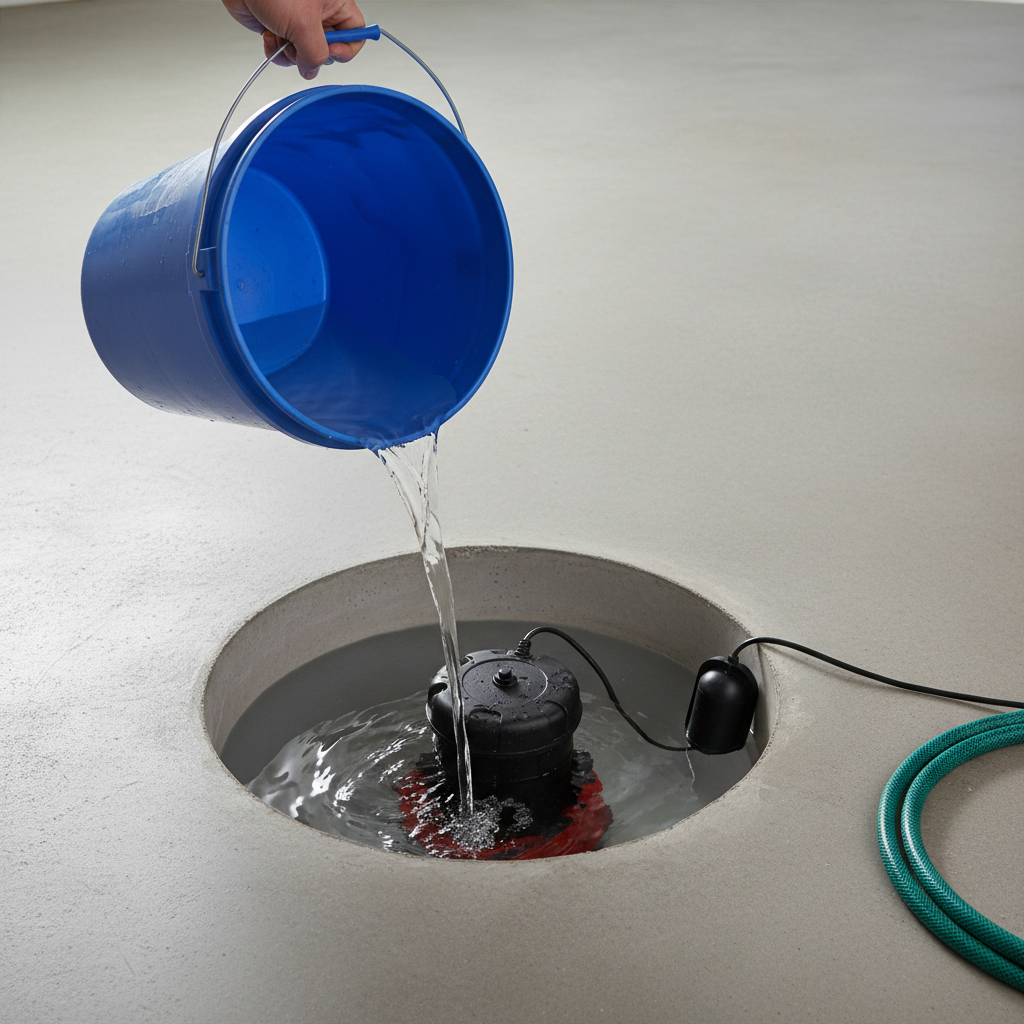
- Plug It Back In: Once the pit is clear and the float is free, plug the sump pump back into its dedicated GFCI outlet.
- Add Water: Using a 5-gallon bucket or a garden hose, slowly fill the sump pit with water. Fill it at a steady pace, mimicking groundwater infiltration.
- Observe Activation: Watch the water level rise. As the water reaches the activation point, the float switch should rise, and the pump should kick on automatically.
- Observe Pumping Action: Once activated, the pump should efficiently and forcefully remove the water from the pit. Listen for any unusual noises (grinding, excessive hum without water movement).
- Observe Shut Off: As the water level drops, the float switch should lower and automatically turn the pump off once the water is removed from the pit to its shut-off level.
General remodeling · Renovation planning
| Project category | General remodeling |
|---|---|
| Problem type | Renovation planning |
| Trade required | General contracting |
| Urgency | Planned project |
| Safety risk | Low safety risk |
| DIY suitability | Pro recommended |
| Cost category | Major investment |
| Typical timeline | Design and permitting often 2–4 months before work starts |
| Contractor type | General contractor |
Repair option
Phase the work and fix the building envelope first.
Replacement option
Full renovation with permits, design, and a general contractor.
Common causes
- Space no longer fits how the household lives
- Resale preparation
- Deferred maintenance stacking up
Relevant tools:project cost estimatorcompare quoteshome improvement material prices
Published April 28, 2026Last updated August 17, 2026
Tools & materials you'll need
Affiliate links- AmazonGloves1 pair · for handling pit debris
As an Amazon Associate FixlyGuide earns from qualifying purchases — at no extra cost to you. Prices and availability are accurate as of publication and subject to change.
Quick Answer
Testing your sump pump is a quick, critical home maintenance task that can prevent thousands of dollars in water damage. The simplest method involves manually filling the sump pit with water to ensure the float switch activates the pump, the pump efficiently removes the water, and the discharge line is clear. This should be done annually, ideally before the heavy rain season, to confirm your system is fully operational.
The Problem
You've just heard the weather forecast: heavy rains are on the way. You glance at your basement, confident that your sump pump, tucked away in its pit, is ready to spring into action. But is it? Many homeowners assume their sump pump, out of sight and out of mind for months, will work flawlessly when needed. This assumption can lead to a disastrous surprise: a flooded basement, ruined belongings, and thousands of dollars in repair costs. A non-functioning sump pump is one of the most common—and preventable—causes of basement flooding. Dirt, debris, power issues, or a seized float switch can render it useless without any warning. The problem isn't just the pump itself; it's the lack of proactive testing that leaves homes vulnerable right when protection is most vital.
How It Works
To understand why testing is crucial, let's quickly review how a sump pump defends your home. Your sump pump system consists of a sump pit, a pump unit (typically submersible), a float switch, and a discharge pipe. The sump pit, usually located at the lowest point of your basement or crawl space, collects groundwater that seeps in from around your foundation. As water fills the pit, it raises a float. This float is connected to a switch – often a tethered or vertical float – which, upon reaching a predetermined height, activates the sump pump. The pump then uses an impeller to create suction, pulling the water from the pit and forcing it up and out through the discharge pipe. This pipe expels the water away from your foundation, usually into a storm drain, a dry well, or a sloped area of your yard. A check valve, typically installed on the discharge pipe just above the pump, prevents water already pumped out from flowing back into the pit when the pump shuts off. The system is designed to be fully automatic, kicking on only when needed and cycling off once the water level drops. Any interruption in this sequence—a stuck float, a clogged discharge line, or a power failure—can lead to immediate system failure and subsequent flooding.
Step-by-Step Fix
1. Prioritize Safety—Unplug the pump if inspecting the pit
- Safety First: Before reaching into the sump pit or making any adjustments, always unplug the sump pump from the electrical outlet. This prevents accidental activation and potential injury. Don't simply rely on a wall switch; pull the plug itself.
2. Clear the Sump Pit—Remove any debris
- Inspection: Shine a flashlight into the sump pit. Look for any debris such as dirt, gravel, small toys, or anything that could obstruct the float switch's movement or clog the pump's intake screen. Over time, sediment can accumulate.
- Remove Obstructions: Carefully remove any found debris using gloves or a small scoop. Ensure the pit walls and bottom are relatively clear.
3. Inspect the Float Switch—Ensure free movement
- Visual Check: Locate the float switch (tethered or vertical). Gently lift and lower it with your hand to ensure it moves freely without catching on the sides of the pit, the pump, or any wiring. It should not be tangled.
- Clearance: There should be ample space (at least a few inches) around the float for unobstructed movement throughout its full range.
4. Check the Discharge Line—Look for obstructions and proper routing
- Interior Inspection: Follow the discharge pipe from the pump up to where it exits your house. Look for any obvious damage, kinks, or signs of leaks.
- Exterior Inspection: Go outside and locate the end of the discharge line. Ensure it's not blocked by leaves, dirt, ice, or other debris. Make sure the water will discharge at least 10-20 feet away from your foundation and ideally onto a downward slope.
- Check Valve: Verify the check valve, typically installed on the vertical section of the discharge pipe, is present and oriented correctly (usually with an arrow indicating flow direction away from the pump).
5. The Manual Test (The 30-Second Flood Prevention)—Simulate a high water event
- Plug It Back In: Once the pit is clear and the float is free, plug the sump pump back into its dedicated GFCI outlet.
- Add Water: Using a 5-gallon bucket or a garden hose, slowly fill the sump pit with water. Fill it at a steady pace, mimicking groundwater infiltration.
- Observe Activation: Watch the water level rise. As the water reaches the activation point, the float switch should rise, and the pump should kick on automatically.
- If the pump doesn't turn on: Unplug it immediately, check the power connection, ensure the float switch isn't stuck, and try manipulating the float manually to see if it engages the switch. If it still doesn't activate, the switch or pump may be bad. Call a professional.
- Observe Pumping Action: Once activated, the pump should efficiently and forcefully remove the water from the pit. Listen for any unusual noises (grinding, excessive hum without water movement).
- Observe Shut Off: As the water level drops, the float switch should lower and automatically turn the pump off once the water is removed from the pit to its shut-off level.
- If the pump runs continuously: This indicates a stuck float switch or a faulty pressure sensor. Unplug the pump and investigate the float's movement. If it's free, the switch or pump is likely faulty. Call a professional.
6. Confirm Check Valve Function—Listen for backflow
- Listen: After the pump shuts off, listen carefully for any water flowing back into the pit from the discharge pipe. A properly functioning check valve will prevent this, resulting in minimal or no backflow.
- Excessive backflow: If you hear a significant amount of water returning, the check valve is likely failing and should be replaced.
7. Clean and Store (If Applicable)—For exterior discharge hoses
- Disconnect: If you use a flexible discharge hose that you store during winter, disconnect it, drain it completely, and clean any sediment before storing it in a dry, protected area.
- Reattach Securely: When reattaching for the rainy season, ensure all connections are tight and leak-free.
Common Causes
- Stuck or Obstructed Float Switch: The most frequent culprit. Debris, wiring, or the pump itself can impede the float's movement, preventing it from activating or deactivating the pump. If the float can't rise, the pump won't turn on. If it can't fall, the pump won't turn off.
- Power Failure or Disconnected Cord: Sump pumps require electricity. A tripped GFCI outlet, a power outage, or simply an unplugged cord (often accidentally during other basement work) will render it useless. Check that it's plugged into a working, dedicated GFCI outlet.
- Clogged Intake Screen: The screen at the base of the pump can get blocked by sediment, gravel, or debris, restricting water flow into the pump and causing it to run inefficiently or overheat.
- Clogged or Frozen Discharge Line: If the pipe that carries water away from your house is blocked (by leaves, ice, dirt, or even tree roots), the pump will run but have nowhere to send the water, leading to a backup.
- Pump Motor Failure: Like any motor, a sump pump's motor can wear out over time. Signs include grinding noises, failure to activate, or running but not pumping water.
- Faulty Check Valve: A damaged or incorrectly installed check valve allows water to flow back into the pit after the pump cycle, causing the pump to run more frequently than necessary and wear out prematurely.
Common Mistakes
- Ignoring Annual Testing: The biggest mistake! Waiting until a major storm hits before confirming your pump works is a gamble with high stakes. Test it annually, and ideally before each rainy season.
- Plugging into a Non-GFCI Outlet: Sump pumps operate in a wet environment. Plugging them into a standard outlet is a serious safety hazard and can also lead to pump damage or failure. Always use a dedicated GFCI (Ground Fault Circuit Interrupter) outlet.
- Skipping the Outlet Check: It's easy to assume the outlet works. A quick test with a voltage tester or another small appliance can confirm power before you blame the pump.
- Allowing Debris in the Pit: A dirty sump pit is a recipe for disaster. Debris can jam the float switch or clog the pump's intake, causing it to fail. Regular cleaning is essential.
- Incorrectly Routing the Discharge Line: Discharging water too close to your foundation, your neighbor's property, or uphill defeats the purpose of the pump. Ensure water flows freely away from your house and doesn't create new drainage problems.
- Ignoring Backup Power: Relying solely on your primary pump without a battery backup or water-powered backup pump leaves you vulnerable during power outages, which are common during severe weather.
Cost & Time Breakdown
| Task | DIY Cost | Pro Cost | Time |
|---|---|---|---|
| Annual Sump Pump Test | $0–$5 | $75–$150 | 15–30 minutes |
| Clear Pit Debris | $0 | Included | 5–10 minutes |
| Replace Failed Float Switch | $25–$80 | $150–$300 | 30–60 minutes |
| Replace Faulty Check Valve | $15–$50 | $100–$250 | 15–30 minutes |
| Full Sump Pump Replacement | $150–$400 | $400–$1,000+ | 1–3 hours |
Tips & Prevention
- Semi-Annual Testing: While annual testing is the minimum, consider testing your pump at least twice a year—once before spring rains and once before fall/winter thaws—especially if you live in a flood-prone area.
- Install a Battery Backup: A battery-powered backup sump pump is a wise investment to protect your basement during power outages. Test the backup system regularly according to the manufacturer's instructions.
- Install a Water Alarm: Place a water sensor alarm in your sump pit or on the basement floor. These devices emit a loud alert if water is present, giving you early warning of a potential failure.
- Regular Pit Cleaning: Every few months, check your sump pit for accumulated sediment, dirt, or debris and clean it out to ensure the pump intake and float switch remain clear.
- Check GFCI Breaker: Routinely press the
Related Articles
Keep troubleshooting with these hand-picked guides from FixlyGuide:
- The #1 Mistake Homeowners Make When Diagnosing Low Water Pressure (It's Not Your Pipes!) — Discover the most overlooked culprit behind low water pressure throughout your entire house and learn how to fix it with simple steps.
- The #1 Mistake Homeowners Make When Diagnosing Low Water Pressure — Discover the most common oversight homeowners make when troubleshooting low water pressure throughout their house and how to fix it with si…
- The $30 Secret to Banishing Ice Dams Without Damaging Your Roof — Discover how a simple, inexpensive trick can safely eliminate dangerous ice dams from your roof and prevent costly damage to your home.
- Showers Gone Cold? One Hidden Culprit Behind Your Missing Hot Water — Discover the most common, often overlooked reason your shower runs cold and how to fix it with simple steps.
- The 7 Fall Chores Most Homeowners SKIP (And Why They'll Cost You Thousands) — Don't let autumn's beauty distract you from these critical home maintenance tasks that can prevent costly damage and ensure a cozy winter.
- The Secret Reason Your Sump Pump Runs When It’s Not Raining — If your sump pump runs constantly even on a dry day, it's not a ghost; it's a sign of a stuck switch, a failed valve, or a surprisingly hig…
What should this project cost?
Enter your project details for a realistic cost range before you call anyone.
Cost depends heavily on which system turns out to be the source.
- Regional adjustment
- National average
- Labor share (typical)
- ~$1,620
- Quotes to collect
- 3 written estimates
Educational estimate based on national averages — not a binding quote. Always confirm with written local estimates.
Recommended for DIYers & woodworkers
Sponsored
The Top 20 Tools for Workshops of Any Budget
No stationary machines or power tools required — plus 3 fundamental tools that can't be bought at any price.
Get the free guide
Ted's Woodworking — The #1 Woodworking Resource
Detailed instructions, dimensioned drawings, materials & cutting lists, and 3D schematics for every skill level.
See the plansSponsored: links above are affiliate links. FixlyGuide may earn a commission on qualifying purchases — at no extra cost to you.
Frequently asked questions
How often should I test my sump pump?+
You should test your sump pump at least once a year, ideally before the heavy spring rainy season. If you live in an area prone to flooding or have an older pump, consider testing it every few months or before any predicted severe weather events.
My sump pump runs but no water is coming out. What's wrong?+
If your sump pump is running but not discharging water, it likely indicates a clog. Common culprits include a blocked intake screen at the bottom of the pump, a clogged discharge pipe, or a faulty impeller. Disconnect power, inspect for debris, and check the discharge line for obstructions.
What if my sump pump doesn't turn off?+
If your sump pump runs continuously without shutting off, the float switch is likely stuck in the 'on' position or has failed. Disconnect power, inspect the float for obstructions or tangles, and ensure it can move freely. If the float is clear but the pump still runs constantly, the switch or pump may need replacement.

Discussion
Loading comments…