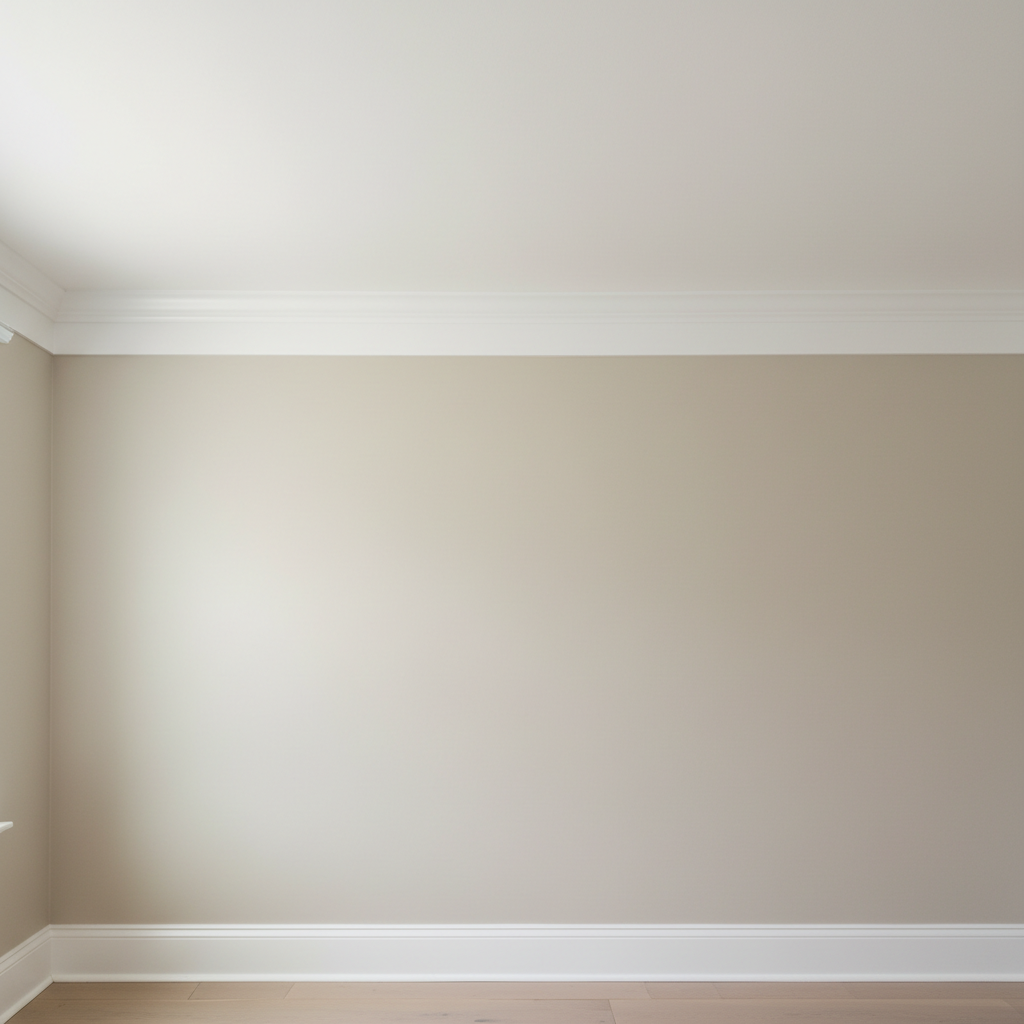
- Ceiling Joist Sag: Over time, the wooden joists that support your ceiling can sag under the weight of the structure, especially in older homes. This creates a noticeable dip in the center of a room's ceiling.
- Uneven Drywall Finishing: The taping and mudding process during drywall installation can leave slight humps or valleys along the seams, particularly in corners where walls meet the ceiling.
- Settling Foundation: As a house settles, it can shift slightly, causing walls and ceilings to move out of square. This is a gradual process but can lead to significant inconsistencies.
- Truss Uplift: In regions with cold winters, roof trusses can arch upwards in the center due to temperature and moisture differentials, lifting the ceiling drywall along with them and creating a gap at the wall edges.
General remodeling · Renovation planning
| Project category | General remodeling |
|---|---|
| Problem type | Renovation planning |
| Trade required | General contracting |
| Urgency | Planned project |
| Safety risk | Low safety risk |
| DIY suitability | Pro recommended |
| Cost category | Major investment |
| Typical timeline | Design and permitting often 2–4 months before work starts |
| Contractor type | General contractor |
Repair option
Phase the work and fix the building envelope first.
Replacement option
Full renovation with permits, design, and a general contractor.
Common causes
- Space no longer fits how the household lives
- Resale preparation
- Deferred maintenance stacking up
Relevant tools:project cost estimatorcompare quoteshome improvement material prices
Published May 5, 2026Last updated August 17, 2026
Tools & materials you'll need
Affiliate links- AmazonSelf-Leveling Laser Level1 · Essential for creating a perfectly straight reference line.
- AmazonTripod for Laser Level1
- Amazon4-foot or 6-foot Level1 · For verifying the molding installation.
- AmazonDripless Caulk Gun1
- AmazonCaulk Smoothing Tool or Damp Rag1
- AmazonPaint Brush1 · A 2-inch angled brush is good for cutting in.
- AmazonHigh-Quality Painter's Tape1-2 rolls · FrogTape or 3M ScotchBlue are recommended.
- AmazonPaintable Acrylic-Latex Caulk1-3 tubes · Choose a product labeled 'flexible' or 'crack-proof'.
- AmazonPrimer1 quart · A quality latex primer for sealing the new caulk.
- AmazonCeiling Paint1 quart · Must match your existing ceiling color and a flat sheen is best.
As an Amazon Associate FixlyGuide earns from qualifying purchases — at no extra cost to you. Prices and availability are accurate as of publication and subject to change.
Quick Answer
Your crown molding can look crooked even when it's perfectly level because of inconsistencies in your ceiling height. The line where the wall meets the ceiling is rarely perfectly flat or straight. When you install a straight piece of molding against this uneven surface, the gap between the top of the molding and the ceiling changes, creating a noticeable and distracting optical illusion. The molding itself is straight, but the uneven "shadow line" above it makes it appear wavy or crooked. Professional installers correct this by using a painter's trick: they create a new, perfectly straight line on the ceiling with painter's tape and then fill the gap above the tape with a flexible, paintable caulk. Once the tape is removed and the caulk is painted the same color as the ceiling, the eye is tricked into seeing a perfectly straight transition, making the crown molding appear flawless.
The Problem
You’ve spent hours meticulously cutting, fitting, and nailing your crown molding. You used a laser level, a bubble level, and every other tool at your disposal to ensure it was installed perfectly straight. Yet, when you step back to admire your work, something is wrong. The molding looks… crooked. It seems to dip and rise in certain spots, and no matter how many times you check it with your level, the bubble is dead center. This frustrating phenomenon is incredibly common and leaves many homeowners scratching their heads. The issue isn't your installation skills; it's your house. Buildings settle over time, drywall finishing can be imperfect, and ceiling joists can sag. This results in a ceiling that isn't a single, flat plane. The distance from the floor to the ceiling can vary by a half-inch or more over the length of a single wall. When you fasten a rigid, straight piece of trim to this undulating surface, you create an uneven gap at the top. This gap is what your eye follows, not the bottom edge of the molding, leading to the illusion that the entire installation is crooked.
How It Works
Crown molding installation is a game of angles and sightlines. The molding bridges the corner between the wall and the ceiling, but because it sits at an angle (typically 38 or 45 degrees), any imperfection in the wall or ceiling plane is magnified. Think of it like a shadow. If you shine a light on a straight object placed against a bumpy surface, the shadow it casts will be distorted and wavy. The line created by the top edge of your crown molding against the ceiling acts just like that shadow. Your brain interprets this wavy line as a defect in the molding itself.
The professional solution doesn’t involve adjusting the level molding—that would create even more problems with an uneven line at the bottom and crooked corners. Instead, pros manipulate the sightline. The trick is to create a new, artificial ceiling line that is perfectly straight. This is achieved not by sanding down the ceiling (a messy, often impractical job) but by using paintable caulk to build up a new, straight edge. By establishing a laser-straight caulk line, you give the eye a perfect line to follow. The varying thickness of the caulk in the gap above is disguised by the paint, making the filler material itself invisible. Your brain registers the straight paint line, assumes the ceiling is flat, and therefore perceives the crown molding as being perfectly installed.
Step-by-Step Fix
-
Confirm Your Molding Is Level: Before you begin, use a 4-foot or 6-foot level to double-check the bottom edge of your crown molding. Verify that it is, in fact, level. This process is about correcting an optical illusion, not a bad installation. If the molding isn’t level, you’ll need to reinstall it first.
-
Shoot a Laser Line: Set up a self-leveling laser level on a tripod in the center of the room. Position the laser so it projects a perfectly straight and level line on the ceiling, about 1/8 to 1/4 inch away from the highest point of the crown molding. This laser line represents your new, perfect "ceiling line."
-
Apply Painter's Tape: Carefully apply high-quality painter's tape (like FrogTape or 3M Blue) along the laser line on the ceiling. The edge of the tape closest to the molding should be perfectly aligned with the laser. Take your time with this step; the straightness of your tape line directly determines the final result.
-
Choose the Right Caulk: Select a high-quality, flexible, and paintable latex or acrylic-latex caulk. Avoid pure silicone caulk, as paint will not adhere to it. A caulk with minimal shrinkage is ideal. Cut the tip of the caulk tube at a 45-degree angle, making the opening about 1/4 inch wide.
-
Apply the Caulk: Puncture the inner seal of the caulk tube and load it into a caulk gun. Carefully apply a continuous bead of caulk into the gap between the top edge of the crown molding and the edge of the painter's tape. Ensure the gap is completely filled.
-
Smooth the Caulk Bead: Wet your finger or a caulk-smoothing tool with a bit of water or a damp rag. Run it along the bead of caulk, applying gentle, consistent pressure. This will tool the caulk into a smooth, even finish, pressing it firmly into the gap.
-
Remove the Tape: This is the most critical step. Remove the painter's tape while the caulk is still wet. Pull it slowly and at a 45-degree angle away from your new caulk line. If you wait for the caulk to dry, it can tear or pull away from the ceiling, ruining your perfect line.
-
Let the Caulk Cure: Allow the caulk to cure completely according to the manufacturer's instructions. This can range from a few hours to a full 24 hours. Do not touch or disturb it during this time.
-
Prime and Paint: Once cured, prime the caulk line with a quality primer. After the primer has dried, paint the caulk line with your ceiling paint. You may need to feather the paint slightly onto the ceiling to ensure a seamless blend.
-
Caulk the Bottom Edge: For a fully professional look, apply a thin, clean bead of caulk to the bottom edge of the molding where it meets the wall. Smooth it and wipe away any excess with a damp cloth.
-
Final Paint Touch-ups: Paint the crown molding itself and perform any final touch-ups to the wall or ceiling paint. Once everything is dry, step back and admire your perfectly straight-looking crown molding.
Common Causes
- Ceiling Joist Sag: Over time, the wooden joists that support your ceiling can sag under the weight of the structure, especially in older homes. This creates a noticeable dip in the center of a room's ceiling.
- Uneven Drywall Finishing: The taping and mudding process during drywall installation can leave slight humps or valleys along the seams, particularly in corners where walls meet the ceiling.
- Settling Foundation: As a house settles, it can shift slightly, causing walls and ceilings to move out of square. This is a gradual process but can lead to significant inconsistencies.
- Truss Uplift: In regions with cold winters, roof trusses can arch upwards in the center due to temperature and moisture differentials, lifting the ceiling drywall along with them and creating a gap at the wall edges.
Common Mistakes
- Installing the Molding to Follow the Ceiling: The number one mistake is trying to force the molding to follow the contour of the crooked ceiling. This results in a truly crooked installation that is impossible to hide.
- Using Low-Quality or Silicone Caulk: Using cheap caulk that shrinks excessively will cause your perfect line to crack and pull away over time. Using non-paintable silicone caulk will be a nightmare to paint, as the paint will bead up and flake off.
- Waiting to Remove the Painter's Tape: Pulling the tape after the caulk has skinned over or dried will result in a jagged, torn edge instead of the crisp, clean line you need.
- Skipping the Laser Level: Trying to "eyeball" the straight line for the tape is a recipe for disaster. The human eye is easily fooled, which is the root of the problem in the first place.
- Over-filling the Gap: Applying too much caulk makes it difficult to tool a smooth surface and creates a bulky, obvious transition rather than a subtle, clean line.
- Not Priming the Caulk: Skipping primer can lead to "flashing," where the painted caulk has a different sheen or texture than the surrounding ceiling paint, making the repair noticeable.
Cost & Time Breakdown
| Item | Type | Quantity | Cost (USD) | Notes |
|---|---|---|---|---|
| Laser Level | Tool | 1 | $50 - $150 | Can be rented from a home improvement store for ~$30/day. |
| Painter's Tape | Material | 1 roll | $5 - $10 | High-quality tape is crucial for sharp lines. |
| Paintable Caulk | Material | 1-2 tubes | $4 - $8 | Per tube; quantity depends on the size of the room and gap. |
| Caulk Gun | Tool | 1 | $10 - $25 | A dripless model is worth the extra cost. |
| Primer & Ceiling Paint | Material | 1 quart ea. | $20 - $40 | Use existing paint if available. |
| Total | $89 - $233 | Cost is significantly lower if you already own/rent tools. |
Time: For a standard 12x12 foot room, expect this project to take 4-6 hours, not including caulk and paint drying time.
Tips & Prevention
- Measure Gaps First: Before installation, use a tape measure and a level line to identify the high and low spots in your ceiling. Knowing where the biggest gaps will be helps you prepare.
- Use Flexible Molding: For very wavy walls or ceilings, consider using a flexible polyurethane molding. It can conform better to slight curves than rigid MDF or wood, though it won't solve severe crookedness on its own.
- Check Your Corners: Ensure the corners of your room are close to 90 degrees before you begin. Out-of-square corners will require complex compound miter cuts and can exacerbate visual crookedness.
- Buy Extra Caulk: Always buy one more tube of caulk than you think you need. Running out mid-bead is incredibly frustrating and can ruin the finish.
- Work in Good Lighting: Use a bright work light to illuminate the ceiling area. Good lighting is essential for spotting imperfections in your tape line and caulk application.
- Practice Your Technique: If you're new to caulking, practice on a scrap piece of wood or cardboard first to get a feel for the required pressure and speed to lay a consistent bead.
When to Call a Professional
While the paint-line trick is manageable for a patient DIYer, there are times when calling a professional finish carpenter is the best course of action. If your ceiling is severely sagging (dips of more than 3/4 inch), this could indicate a structural issue with the joists that needs to be addressed by a general contractor. For homes with very high ceilings (12 feet or more), the risk of working on tall ladders makes hiring an insured professional a much safer choice. Additionally, if the room has numerous complex corners, bay windows, or curved walls, a pro with experience in scribing and advanced joinery will achieve a much cleaner result. If the scope of the project feels overwhelming or you value a flawless, guaranteed finish, investing in a professional’s expertise is well worth the cost, which typically ranges from $8 to $15 per linear foot for installation and finishing.
Related Articles
Keep troubleshooting with these hand-picked guides from FixlyGuide:
- Is Your House Breathing? Why Doors Stick Shut in Summer — Don't just muscle that sticking door shut. It's a sign of a house-wide issue. Learn the surprising reason your doors swell in summer and th…
- Why Your Hardwood Floors Have Gaps in Winter (And When to Worry) — Seeing gaps in your hardwood floors this winter? It's likely caused by low indoor humidity making the wood shrink. Learn what's normal, how…
- The 5-Minute Trick That Often Fixes a Dead Doorbell (No Electrician Needed) — Before you call an electrician for a dead doorbell, learn the surprising common culprit homeowners overlook and how to fix it in minutes.
- That Peeling Paint? Your Bathroom Has a Moisture Secret — Discover the hidden causes behind your peeling bathroom ceiling paint. We reveal why moisture is the main culprit and provide a permanent f…
- The #1 Reason Your Doorbell Suddenly Dies (and the 10-Minute Fix) — A non-functioning doorbell is often caused by a tripped transformer, a simple issue homeowners can usually resolve in minutes.
- The #1 Mistake Homeowners Make Unclogging a Shower Drain (and the 5-Minute Fix) — Learn the surprising reason most DIY shower drain unclogging attempts fail and how to clear even the toughest clogs in minutes without hars…
What should this project cost?
Enter your project details for a realistic cost range before you call anyone.
Cost depends heavily on which system turns out to be the source.
- Regional adjustment
- National average
- Labor share (typical)
- ~$1,620
- Quotes to collect
- 3 written estimates
Educational estimate based on national averages — not a binding quote. Always confirm with written local estimates.
Get the print-ready PDF of this guide
A clean, ad-free, printable version you can keep on your phone or pin to the workshop wall. Free with a FixlyGuide account.
- Print-optimized layout
- Tools, materials & every step included
- Saved to your account
Recommended for DIYers & woodworkers
Sponsored
The Top 20 Tools for Workshops of Any Budget
No stationary machines or power tools required — plus 3 fundamental tools that can't be bought at any price.
Get the free guide
Ted's Woodworking — The #1 Woodworking Resource
Detailed instructions, dimensioned drawings, materials & cutting lists, and 3D schematics for every skill level.
See the plansSponsored: links above are affiliate links. FixlyGuide may earn a commission on qualifying purchases — at no extra cost to you.
Frequently asked questions
Can I just use thicker crown molding to hide the gap?+
Using a taller crown molding might hide a larger gap, but it won't solve the core problem. The top edge of the new, taller molding will still follow the crooked ceiling, creating the same optical illusion, which can sometimes be even more noticeable on a larger piece of trim.
My crown molding is already painted. Do I need to repaint the whole thing?+
Not necessarily. After you have caulked the top and bottom edges, you will need to prime and paint the new caulk lines. You can carefully paint just the caulk line on the ceiling. For the molding itself, you can often get away with just painting the caulk line and feathering it into the existing paint, but for a perfect finish, a fresh coat on the entire molding is recommended.
What if the gap between the molding and ceiling is huge, like over a half-inch?+
For very large gaps, filling the entire void with caulk can be difficult and lead to shrinkage and cracking. In these cases, it's better to first insert a foam backer rod into the gap. This foam rod fills most of the space, providing a surface for you to apply a smaller, more stable bead of caulk against.
Is there a specific type of paint sheen I should use?+
Yes, you should always use a flat or matte finish for ceilings. A flat paint absorbs light and is excellent at hiding imperfections. Using a satin or semi-gloss paint on your ceiling would highlight the very dips and bumps you're trying to conceal with the caulk line.
Discussion
Loading comments…