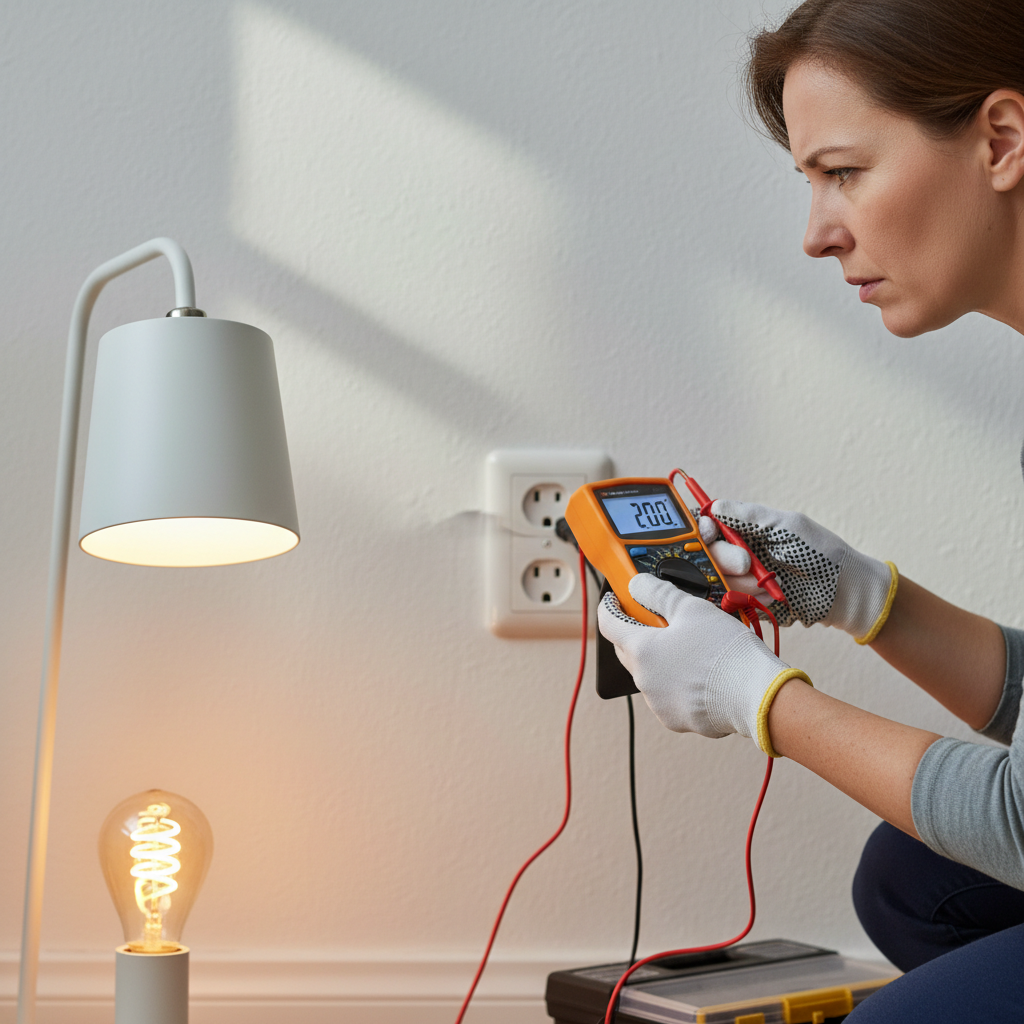
- Widespread or extreme voltage issues. If your multimeter shows readings consistently above 128V or below 110V across multiple, unrelated circuits, the problem lies with your home's main service panel or the utility's supply.
- Systemic flickering. If lights flicker throughout the house, especially when a large appliance turns on, this can indicate a serious loose neutral connection in your main panel or at the weatherhead, which is a major fire hazard.
- Any task beyond your comfort level. Working with electricity can be dangerous. If you feel uncertain at any point in the diagnostic or repair process, the safest course of action is to call a qualified professional.
General remodeling · Renovation planning
| Project category | General remodeling |
|---|---|
| Problem type | Renovation planning |
| Trade required | General contracting |
| Urgency | Planned project |
| Safety risk | Low safety risk |
| DIY suitability | Pro recommended |
| Cost category | Major investment |
| Typical timeline | Design and permitting often 2–4 months before work starts |
| Contractor type | General contractor |
Repair option
Phase the work and fix the building envelope first.
Replacement option
Full renovation with permits, design, and a general contractor.
Common causes
- Space no longer fits how the household lives
- Resale preparation
- Deferred maintenance stacking up
Relevant tools:project cost estimatorcompare quoteshome improvement material prices
Published April 26, 2026Last updated August 18, 2026
Tools & materials you'll need
Affiliate linksAs an Amazon Associate FixlyGuide earns from qualifying purchases — at no extra cost to you. Prices and availability are accurate as of publication and subject to change.
How it works
LED (Light Emitting Diode) bulbs operate on fundamentally different principles than the incandescent bulbs they replace. An incandescent bulb is a simple resistive load; electricity heats a tungsten filament until it glows. An LED is a semiconductor—an electronic component that emits light when a low-voltage direct current (DC) passes through it. This process is highly efficient and generates significantly less heat as a byproduct, which is the basis for the LED's potential for a long lifespan.
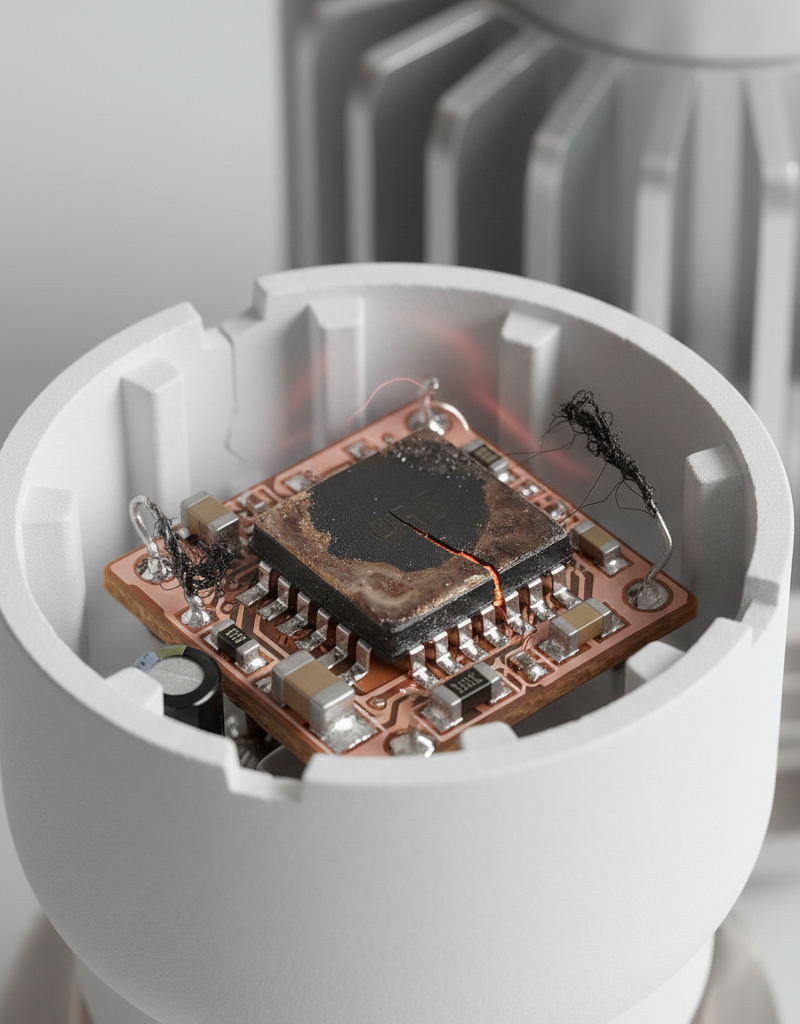
Your home's electrical system, however, supplies approximately 120-volt alternating current (AC). To reconcile this, every LED bulb contains a critical internal component called a driver. The driver is a complex miniature power supply circuit. Its primary functions are to convert the high-voltage AC from your wall socket into the low-voltage DC required by the LEDs, and to precisely regulate the current to prevent the diodes from being overdriven and burning out.
This driver, not the LED chip itself, is the most frequent point of failure. It contains sensitive electronic components, primarily electrolytic capacitors, which are highly vulnerable to damage from three primary sources: excessive heat, voltage instability, and incompatible electrical waveforms from dimmer switches. When a bulb is in an enclosed fixture, the driver's heat cannot dissipate, slowly "cooking" the capacitors and shortening their life. Voltage spikes from the grid or loose wiring can overwhelm the driver's protective circuits. Finally, older dimmers designed for incandescent bulbs rapidly chop the AC power wave, creating electrical distortion that stresses the driver, causing flicker, buzzing, and eventual failure.
Step-by-Step Fix
This diagnostic process will help you isolate the cause of premature LED bulb failure by systematically checking the most common culprits: heat, dimmer incompatibility, and voltage issues.
1. Examine the Failed Bulb and Fixture — Search for evidence of overheating.
Before discarding the burned-out bulb, inspect its plastic base. Look for any yellowing, browning, or a brittle texture, which are clear indicators of prolonged exposure to excessive heat. Next, turn off the power to the light at the switch or breaker, and inspect the interior of the light fixture itself. Check the socket for scorch marks, melted plastic, or discoloration. These signs strongly suggest that heat buildup is the primary problem.
- Tools: None
- Safety: Ensure the light switch is off before touching the inside of the fixture.
2. Verify the Fixture is Correctly Rated — Check for enclosure and insulation warnings.
Look for a manufacturer's label inside the fixture housing. Note two key ratings. First, check if the fixture is "Enclosed" or if it has a warning like "Use in open fixtures only." Many ceiling globes, jelly jar lights, and vapor-tight fixtures are fully enclosed. Second, if it is a recessed can light, check if it is "IC-rated" (Insulation Contact). A non-IC fixture requires at least 3 inches of clearance from any insulation to dissipate heat properly. Using the wrong bulb in these fixtures is a primary cause of failure.
- Tools: Flashlight
3. Select a Bulb Rated for the Application — Match the new bulb to the fixture's requirements.
Read the packaging of your replacement LED bulb carefully. If your fixture is enclosed or IC-rated, you must use a bulb that is explicitly marked "Suitable for enclosed fixtures." These bulbs are engineered with more robust components and superior thermal management to withstand higher operating temperatures. Using a standard, unrated LED in an enclosed fixture will cause its driver to overheat and fail, regardless of the bulb's quality.
- If this doesn't work: If even an enclosed-rated bulb fails, the fixture may have inadequate ventilation or be too small, trapping excessive heat. Consider switching to a lower-wattage-equivalent bulb to generate less heat.
4. Identify the Dimmer Switch Type — Determine if your dimmer is LED-compatible.
If the problematic bulb is on a dimmer circuit, the switch itself is a likely suspect. Turn off power at the breaker, then remove the dimmer's faceplate. The dimmer's brand and model number are typically printed on the metal yoke or a side label. A quick search for this model number online will reveal its specifications. Older dimmers are often "leading-edge" or TRIAC-based, designed for the high-resistance load of incandescent bulbs. Modern, LED-compatible dimmers are typically "trailing-edge" or "CL" (CFL/LED) rated.
- Tools: Screwdriver, non-contact voltage tester
- Safety: Always confirm the power is off with a voltage tester before touching or removing the switch.
5. Replace an Incompatible Dimmer Switch — Install a modern CL-rated dimmer.
If you have an older dimmer, replace it with one specifically designed for LEDs. After turning off the circuit breaker and confirming power is off, follow the instructions included with the new CL dimmer. Typically, you will connect the black "hot" wire, the switched "load" wire, and the green "ground" wire. Some modern dimmers also require a white "neutral" wire for stable operation, which may or may not be present in your switch box. If not, you must choose a CL dimmer model that does not require a neutral.
- Tools: Screwdriver, wire strippers, needle-nose pliers, CL-rated dimmer switch.
- If this doesn't work: If a new CL dimmer and dimmable bulb still flicker, try adjusting the dimmer's low-end trim setting. This is a small dial on the switch that sets the minimum brightness level, which can help stabilize the circuit.
6. Measure the Circuit's Voltage — Check for chronic over-voltage or under-voltage.
Unstable voltage is poison to LED drivers. Set a digital multimeter to the AC Voltage (V~) setting, selecting a range that can accommodate 120V (usually 200V~ or higher). With the power on, carefully insert the multimeter’s probes into the hot (shorter) and neutral (longer) slots of the electrical outlet on the same circuit as the fixture. For a fixture, you can use a socket outlet adapter. A healthy US residential circuit should provide a stable reading between 115V and 125V.
- Tools: Digital multimeter, socket outlet adapter (optional).
- Safety: Hold probes by their insulated grips only. Do not touch the metal tips.
7. Diagnose the Scope of the Voltage Issue — Determine if the problem is local or widespread.
If your initial test revealed abnormal voltage (e.g., consistently above 128V or below 110V), you must determine the scope. Test several other outlets in your home, both on the same circuit and on different circuits. If only one outlet or fixture shows incorrect voltage, the problem is likely a loose wire connection at that specific location. If all outlets on a single circuit are affected, the issue may be at the breaker. If the entire house shows high or low voltage, the problem is at the main panel or with the utility company's service drop and requires a professional.
- Tools: Digital multimeter.
8. Inspect and Tighten Wire Connections — Address the most common cause of localized voltage problems.
Turn off the circuit breaker. Remove the fixture or open the switch box where you suspect a problem. Look for wire nuts connecting same-colored wires (black to black, white to white). A very common failure point is a loose white neutral wire. Gently tug on each individual wire entering a wire nut. If any wire pulls out, the connection was poor. Unscrew the wire nut, ensure the wire ends are straight and clean, twist them together firmly with pliers, and screw on a new wire nut until it is hand-tight and the wires are secure.
- Tools: Screwdriver, pliers, new wire nuts.
- Safety: Always verify power is off with a non-contact tester before opening any electrical box.
9. Upgrade to High-Quality, Certified Bulbs — Recognize that not all LED bulbs are created equal.
If all environmental factors check out, the problem may simply be poor-quality bulbs. Inexpensive, non-certified bulbs often use undersized drivers, low-grade capacitors, and inadequate heat sinks. They are built to a price point, not for longevity. Switch to bulbs from reputable manufacturers and look for the ENERGY STAR logo. This certification ensures the bulb has passed rigorous third-party testing for performance, energy efficiency, and lifespan under standardized conditions.
Common mistakes
- Putting standard bulbs in enclosed fixtures. Many DIYers grab any LED bulb off the shelf and install it in a sealed ceiling fixture or globe light. This traps heat, causing the driver to overheat and fail prematurely. Instead, always read the packaging and purchase bulbs specifically marked "Suitable for enclosed fixtures."
- Ignoring dimmer compatibility. Using a non-dimmable LED bulb in a fixture controlled by a dimmer switch, or using a dimmable LED with an old incandescent-only dimmer. Both scenarios create electrical stress that causes flickering, buzzing, and rapid burnout. Instead, ensure both the bulb and the switch are rated as compatible; use dimmable bulbs with modern CL-rated dimmers.
- Equating "wattage equivalent" with fixture safety. A fixture may be rated for a "maximum 60W bulb." A DIYer might install a "150W equivalent" LED bulb, thinking its actual draw of 18W is safe. However, the fixture's rating is also about its ability to dissipate heat. A high-lumen bulb generates more heat than a low-lumen one, potentially exceeding what the fixture was designed to handle. Instead, respect the fixture's maximum wattage rating as a rough guideline for heat output.
- Serially replacing bulbs without troubleshooting. A common mistake is to assume the first, second, and even third failure are all due to "a bad batch of bulbs." This wastes money and ignores an underlying—and potentially dangerous—electrical problem. Instead, if a replacement bulb fails in the same socket within a few months, stop and begin a systematic diagnosis of the fixture, switch, and circuit.
- Using a cheap multimeter without understanding it. Inexperienced users may set the multimeter to the wrong function (e.g., DC volts or Ohms) or range, resulting in a nonsensical reading. Worse, mishandling the probes can create a short circuit. Instead, read your multimeter's manual. Set it to AC Volts (V~) and the next highest range above 120V (e.g., 200V).
Cost & time breakdown
| Task | DIY cost | Pro cost | Time |
|---|---|---|---|
| Inspecting fixtures and bulbs | $0 | N/A | 15-30 minutes |
| Replacing a single high-quality LED bulb | $8 - $25 | $100 - $175 (includes service call) | 5 minutes |
| Replacing an incompatible dimmer switch | $25 - $50 (switch + basic tools) | $125 - $250 | 30-60 minutes |
| Testing circuit voltage | $20 - $40 (for a multimeter) | $100 - $200 (as part of a diagnostic fee) | 15 minutes |
| Re-securing loose wire connections in one box | $1 - $5 (for wire nuts) | $150 - $300 | 30-90 minutes |
| Installing a whole-home surge protector | Not a DIY job | $400 - $800 | 2-4 hours |
When to call a pro
While many causes of LED failure are fixable, certain symptoms indicate a problem that requires a licensed electrician. Do not attempt to fix these issues yourself.
Call a professional if you observe any of the following:
- Widespread or extreme voltage issues. If your multimeter shows readings consistently above 128V or below 110V across multiple, unrelated circuits, the problem lies with your home's main service panel or the utility's supply.
- Systemic flickering. If lights flicker throughout the house, especially when a large appliance turns on, this can indicate a serious loose neutral connection in your main panel or at the weatherhead, which is a major fire hazard.
- Evidence of arcing or burning. If you find significant scorch marks inside an electrical box, smell burning plastic, or hear a persistent buzzing or crackling from a switch or outlet, turn off the breaker for that circuit immediately and call for service.
- Discovery of aluminum wiring. If your home was built between the mid-1960s and mid-1970s, it may have solid-core aluminum wiring. This wiring requires special connectors and handling techniques to prevent fire hazards; it is not a DIY-friendly material.
- Any task beyond your comfort level. Working with electricity can be dangerous. If you feel uncertain at any point in the diagnostic or repair process, the safest course of action is to call a qualified professional.
Prevention & maintenance
- Standardize on quality, certified bulbs. Exclusively purchase ENERGY STAR certified LED bulbs from established brands (e.g., Philips, Cree, GE, Sylvania). The upfront cost is slightly higher, but they are built with superior components and rigorously tested for longevity, saving money in the long run. Keep the receipts and packaging for warranty claims.
- Match the bulb to the fixture, always. Make it a strict habit to check if a fixture is enclosed or IC-rated before buying a bulb for it. Stocking a few "enclosed fixture" rated bulbs can save a trip to the store for these common applications.
- Perform an annual heat check on key fixtures. Once a year, quickly inspect your most-used enclosed fixtures (e.g., kitchen ceiling light, porch light). Remove the globe or cover and check the base of the LED bulb for any browning or yellowing, which indicates it is running too hot. If you see this, consider dropping to a lower-lumen (and thus cooler) bulb.
- Verify ventilation for recessed lights. If you have non-IC recessed can lights in an insulated attic, visually confirm that the insulation is pulled back at least 3 inches from all sides of the housing. This air gap is critical for preventing heat buildup.
- Label your new dimmer switches. When you install a new CL dimmer, use a permanent marker to write the model number on the back of the plastic faceplate. This makes it easy to look up compatibility specifications years later when a bulb needs replacing.
Related Articles
Keep troubleshooting with these hand-picked guides from FixlyGuide:
- The Secret Cause of Your Constantly Dying LED Bulbs (It's Not Overheating!) — Discover the surprising reasons why your LED bulbs might be failing prematurely, and how simple fixes can save you money and hassle.
- The 4 Hidden Reasons Your Entire Home Has Low Water Pressure (And the Easy Fixes) — Low water pressure throughout your entire home can be a frustrating and often misunderstood problem, with several common culprits. Learn to…
- Your shower sucks? 3 hidden culprits explained. — Low water pressure throughout your house often points to a few common culprits, from a partially closed main shut-off valve to issues with…
- The 7 Critical Inspection Points Most Homeowners Miss (And Your $100 Fixes) — Uncover the hidden annual home inspection points that prevent costly repairs and maintain your home's value, often with simple DIY fixes.
- One Shower Has No Hot Water? The Hidden Mixing Valve Trick — Before you panic about your water heater, discover the simple shower mixing valve issue that often causes a single shower to lose hot water.
- The 3 Hidden Reasons Your Door Won't Latch (And the Easy DIY Fixes) — Frustrated by a door that refuses to latch? Discover the common culprits behind this annoying problem and learn simple, effective DIY fixes…
Should you do this yourself?
Answer five quick questions before you start. Safety outranks savings every time.
Your experience with work like this
How high do you have to work?
Does the job involve any of these?
Will it need a permit?
Specialty tools
Free and instant. Educational guidance only — not a quote, inspection, or professional diagnosis.
What should this project cost?
Enter your project details for a realistic cost range before you call anyone.
Cost depends heavily on which system turns out to be the source.
- Regional adjustment
- National average
- Labor share (typical)
- ~$1,620
- Quotes to collect
- 3 written estimates
Educational estimate based on national averages — not a binding quote. Always confirm with written local estimates.
Fixly Project Decision Box
- DIY difficulty
- Advanced
- Estimated time
- Homeowner checks 20–30 minutes
- Cost level
- Moderate
Main tools / materials
- Clean air filter
- Garden hose for condenser coils
- Shop vac for the condensate line
When to stop and call a pro
- Burning smell, smoke, or a tripping breaker
- Refrigerant lines iced over or hissing
- Any work inside the sealed refrigerant circuit (EPA-licensed only)
- Gas smell near a furnace — leave and call the utility
Need professional help?
Find an HVAC Pro Near YouBefore you start
Check the difficulty, permits, and safety risk — then decide whether to call a pro.
- Estimate this projectGet a cost range for your scope and ZIP before you call anyone.Open
- Get local estimatesSend one request and compare written estimates from vetted pros.Open
Free, no signup required. Estimates are educational guidance, not a quote or an inspection.
Recommended for DIYers & woodworkers
Sponsored
The Top 20 Tools for Workshops of Any Budget
No stationary machines or power tools required — plus 3 fundamental tools that can't be bought at any price.
Get the free guide
Ted's Woodworking — The #1 Woodworking Resource
Detailed instructions, dimensioned drawings, materials & cutting lists, and 3D schematics for every skill level.
See the plansSponsored: links above are affiliate links. FixlyGuide may earn a commission on qualifying purchases — at no extra cost to you.
Frequently asked questions
Why do my new LED bulbs keep burning out?+
New LED bulbs often burn out prematurely due to hidden electrical issues like unstable voltage, incompatible dimmer switches, or overheating in enclosed fixtures, rather than manufacturing defects.
Can voltage fluctuations damage LED bulbs?+
Yes, significant or frequent voltage fluctuations (sags below 110V or spikes above 130V) can severely stress and damage the delicate driver circuit inside LED bulbs, leading to early failure.
How do I know if my dimmer switch is compatible with LEDs?+
An LED-compatible dimmer will typically be labeled as 'LED dimmer' or 'dimmable LED' and is designed to work with the lower wattage and different electrical load characteristics of LED bulbs. Check the dimmer's specifications or consult the manufacturer.
Can an LED bulb overheat?+
Yes, even though LEDs produce less heat than incandescents, they are sensitive to heat. Enclosed light fixtures can trap the heat generated by an LED's driver, causing it to overheat and fail prematurely.
What is the lifespan of an LED bulb?+
Under ideal conditions (stable voltage, proper ventilation, compatible fixtures), a good quality LED bulb is designed to last 25,000 to 50,000 hours. Premature failure indicates an underlying issue.
Discussion
Loading comments…