- The 3 Critical Mistakes Wrecking Your Lawn (And the Liquid Fix) — Unlock the secret to a verdant lawn by learning how to avoid critical fertilization errors and choosing the right liquid solution.
- The Secret to Lush Raised Beds? It's Not Just About How You Water — Smart irrigation for raised garden beds isn't just about automation; it's about delivering the right amount of water precisely when your pl…
- The Secret Power Tool Hiding in Your Garage for a Speedier Clean — Unlock the hidden potential of your cordless drill to tackle stubborn household grime, soap scum, and dirt with specialized cleaning attach…
- The 6-Minute Secret to a Sparkling Bathroom (It’s Not What You Think) — Unleash the hidden power of your cordless drill to tackle stubborn household grime, from tile grout to dryer vents, with specialized attach…
- Your Home's Secret To-Do List: Are You Missing It? — Most new homeowners focus on decorating, but ignoring a basic home maintenance checklist can lead to thousands in unexpected repairs. Learn…
Published May 7, 2026Last updated August 17, 2026
Tools & materials you'll need
Affiliate linksAs an Amazon Associate FixlyGuide earns from qualifying purchases — at no extra cost to you. Prices and availability are accurate as of publication and subject to change.
Quick Answer
Creating a low-maintenance yard fundamentally shifts the focus from constant upkeep to strategic design and plant selection. By embracing native, drought-tolerant species, installing efficient irrigation systems, and incorporating hardscaping, homeowners can drastically cut down on mowing, weeding, and watering, leaving more time to simply enjoy their outdoor space with minimal effort.
The Problem
Many homeowners find themselves trapped in a cycle of endless yard work, spending precious weekends pushing mowers, pulling weeds, and constantly watering thirsty plants. This isn't the dream scenario most envision when they imagine a beautiful backyard. The traditional American lawn, while aesthetically pleasing to some, is often a high-maintenance endeavor requiring significant time, money, and resources. This constant battle against nature can lead to frustration, burnout, and a lack of enjoyment in one's own outdoor haven.
How It Works
A truly low-maintenance yard operates on principles of ecological harmony and thoughtful design, rather than brute-force labor. At its core, it's about minimizing interventions. This begins with xeriscaping principles, which focus on reducing or eliminating the need for supplemental water from irrigation. Instead of demanding water-intensive exotic plants, a low-maintenance yard utilizes native plants that are naturally adapted to the local climate, soil, and rainfall patterns. These plants thrive on existing conditions, rarely needing extra water, fertilizer, or pesticides. Their deep root systems often help with soil stability and water retention.
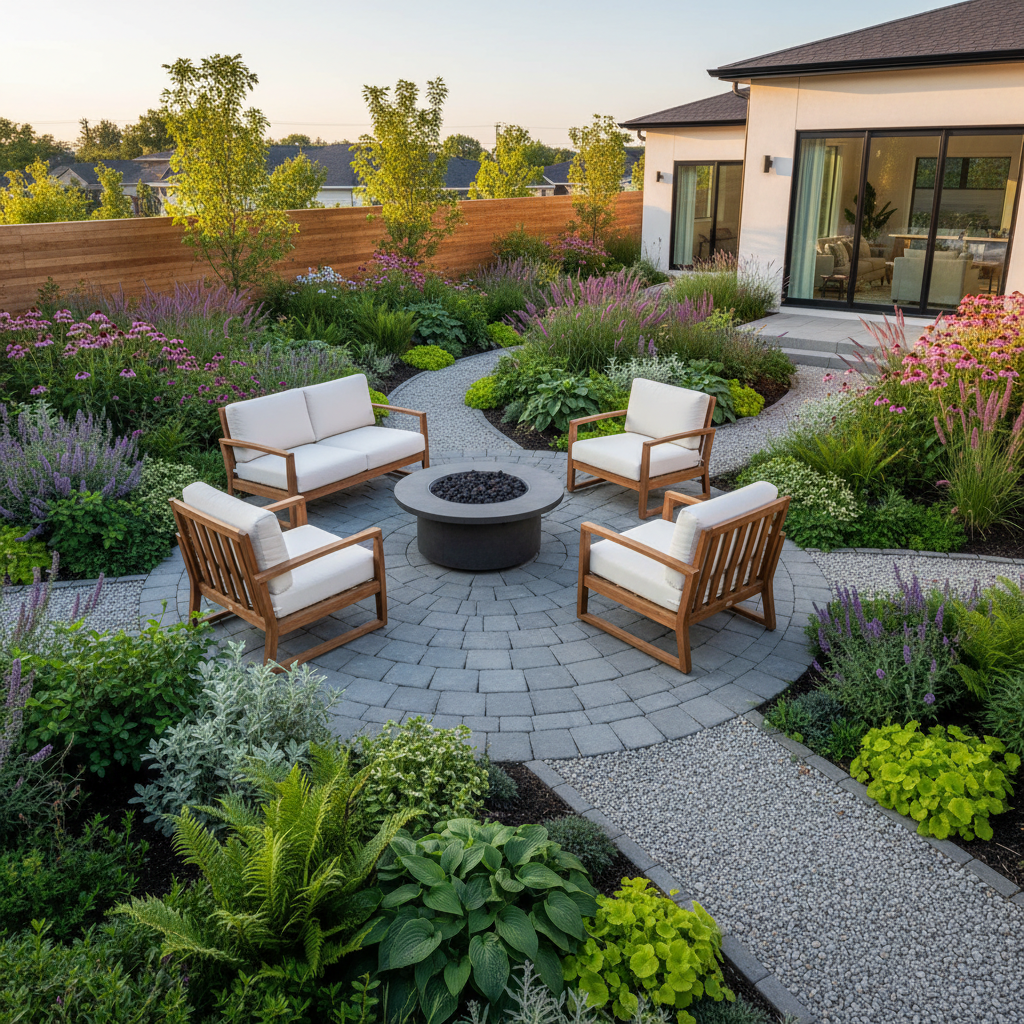
Hardscaping plays a crucial role by replacing high-maintenance elements like grass with durable, attractive, and non-living materials such as pavers, gravel, rocks, and decks. These surfaces require no watering, weeding, or mowing, significantly reducing overall upkeep. When implemented effectively, hardscaping can also create defined spaces, pathways, and focal points that enhance the aesthetic appeal of the yard. For instance, a gravel path through a garden bed eliminates the need to trim around delicate plants, and a paver patio means no grass to edge.
Efficient irrigation systems, primarily drip irrigation, deliver water directly to the plant roots, minimizing evaporation and runoff. This precision watering ensures plants get exactly what they need without waste, leading to healthier plants and less water usage. Smart controllers connected to weather sensors can further automate this process, adjusting watering schedules based on real-time conditions. Finally, mulching acts as a natural weed barrier and conserves soil moisture, reducing the need for both weeding and frequent watering. Organic mulches also slowly break down, enriching the soil over time and further supporting the health of the chosen native plants.
Step-by-Step Fix
Here’s how to transition your current yard into a low-maintenance oasis, step by step:
-
Assess Your Current Landscape — Identify areas that demand the most time and resources.
- Tools/Materials: Pen and paper, camera.
- Walk through your yard at least once a month for a full year to identify areas that are problematic due to sun exposure, drainage, or plant performance. Note what plants are struggling, where weeds are most prevalent, and which areas always seem to need more water. This diagnostic step is crucial for targeted improvements.
-
Define Your Low-Maintenance Vision — Envision what your ideal outdoor space looks like with minimal effort.
- Tool: Sketchpad or landscape design app.
- Consider how you want to use your yard. Do you need a play area for kids, a quiet reading nook, or an entertaining space? Prioritize functionality alongside aesthetics. Research local native plants and hardscaping materials that suit your style and climate. This is where you decide on the balance between planted beds and hard surfaces.
-
Perform a Soil Test — Understand your soil's composition to choose the right plants.
- Material: Soil testing kit (available at garden centers, or send to a local university extension).
- Collect soil samples from various areas of your yard, especially where you plan to plant. The results will tell you about pH, nutrient levels, and soil type (clay, sand, loam). This information is vital for selecting plants that will thrive with minimal intervention. Trying to force plants into unsuitable soil is a recipe for high maintenance.
-
Prioritize Hardscaping — Lay the foundation for reduced upkeep.
- Tools: Shovel, rake, wheelbarrow, tamper, level, string line.
- Install patios, walkways, and seating areas using durable materials like pavers, gravel, or recycled materials. Ensure proper grading for drainage. This eliminates grass areas that require mowing and creates defined, easy-to-maintain zones. For a gravel path, excavate 4-6 inches, lay landscape fabric, pack a 2-inch base of crushed rock, then top with 2-3 inches of decorative gravel.
-
Select Native, Drought-Tolerant Plants — Choose plants that thrive in your specific climate with minimal water.
- Material: Native plant guide for your region, plants from a local nursery.
- Work with your local nursery or extension office to identify plants native to your area. These plants are already adapted to local rainfall and soil conditions, requiring less water, fertilizer, and pest control. Think beyond just flowers; incorporate native shrubs, grasses, and small trees for varied texture and year-round interest. Group plants with similar water needs together (hydrozoning) to optimize irrigation.
-
Install Efficient Irrigation — Automate watering precisely where it's needed.
- Tools/Materials: Drip irrigation kit, smart timer, polyethylene tubing, emitters.
- For plant beds, install drip irrigation or soaker hoses. These systems deliver water directly to the roots, minimizing evaporation and preventing wasteful overspray onto hardscapes. Connect them to a smart timer that can adjust schedules based on weather conditions. For established native plants, a simple handheld hose for occasional deep watering might suffice after their initial establishment period.
-
Apply Organic Mulch Generously — Suppress weeds naturally and conserve moisture.
- Material: Bark mulch, straw, wood chips, shredded leaves.
- After planting, apply a 2-4 inch layer of organic mulch around all plants and in garden beds. This dramatically reduces weed growth, insulates soil, and helps retain moisture, reducing your watering frequency. Avoid piling mulch against plant stems or tree trunks, as this can encourage rot.
-
Zone Your Yard for Use & Maintenance — Designate specific areas for specific purposes.
- Tools: Measuring tape, spray paint.
- Divide your yard into zones: a high-use zone (patio, play area), a low-use zone (native plant beds, wild areas), and transition zones. This helps in allocating resources and attention. For example, a small, highly maintained ornamental bed near the front door might be your
Related Articles
Keep troubleshooting with these hand-picked guides from FixlyGuide:
- The 3 Critical Mistakes Wrecking Your Lawn (And the Liquid Fix) — Unlock the secret to a verdant lawn by learning how to avoid critical fertilization errors and choosing the right liquid solution.
- The Secret to Lush Raised Beds? It's Not Just About How You Water — Smart irrigation for raised garden beds isn't just about automation; it's about delivering the right amount of water precisely when your pl…
- The Secret Power Tool Hiding in Your Garage for a Speedier Clean — Unlock the hidden potential of your cordless drill to tackle stubborn household grime, soap scum, and dirt with specialized cleaning attach…
- The 6-Minute Secret to a Sparkling Bathroom (It’s Not What You Think) — Unleash the hidden power of your cordless drill to tackle stubborn household grime, from tile grout to dryer vents, with specialized attach…
- Your Home's Secret To-Do List: Are You Missing It? — Most new homeowners focus on decorating, but ignoring a basic home maintenance checklist can lead to thousands in unexpected repairs. Learn…
- The 7 Critical Yard Prep Steps Smart Homeowners Never Miss (And Why) — Prepare your yard for a thriving spring with these essential steps, from soil testing to tool maintenance, ensuring a vibrant outdoor space.
What should this project cost?
Enter your project details for a realistic cost range before you call anyone.
Maintenance projects start a few hundred dollars; full redesigns often $6,000–$15,000.
- Regional adjustment
- National average
- Labor share (typical)
- ~$2,453
- Quotes to collect
- 3 written estimates
Educational estimate based on national averages — not a binding quote. Always confirm with written local estimates.
Get the print-ready PDF of this guide
A clean, ad-free, printable version you can keep on your phone or pin to the workshop wall. Free with a FixlyGuide account.
- Print-optimized layout
- Tools, materials & every step included
- Saved to your account
This article was independently written by FixlyGuide based on the source topic.
Frequently asked questions
What is the fastest way to reduce yard work?+
The fastest way to reduce yard work is to convert high-maintenance lawn areas into hardscaping (patios, gravel paths) or plant beds filled with native, drought-tolerant plants covered in a thick layer of mulch. These changes drastically cut down on mowing, weeding, and watering.
How often do I need to water a low-maintenance yard?+
Once established, a truly low-maintenance, native plant yard should require minimal supplemental watering, perhaps once every few weeks during extended dry periods, or even less, depending on your climate and plant choices. Drip irrigation helps for targeted, efficient watering.
Are native plants truly lower maintenance?+
Yes, native plants are inherently lower maintenance because they are adapted to your local climate, soil, and pest conditions. This means they generally require less water, fertilizer, and pesticides compared to exotic species that are not suited to the natural environment.
Can I have a beautiful yard without a lot of grass?+
Absolutely! Many stunning, low-maintenance yards feature minimal or no grass. Instead, they incorporate diverse native plant beds, attractive hardscaping like pavers and gravel, groundcovers, and even small meadow areas, offering texture, color, and ecological benefits without the mowing.
When should I call a professional for low-maintenance landscaping?+
Consider calling a professional if you're undertaking a complete yard overhaul, need complex hardscaping installation, or require assistance with large-scale irrigation design. Professionals can offer expertise in local plant selection, soil amendments, and efficient layout, ensuring your low-maintenance design is effective and long-lasting.


Discussion
Loading comments…