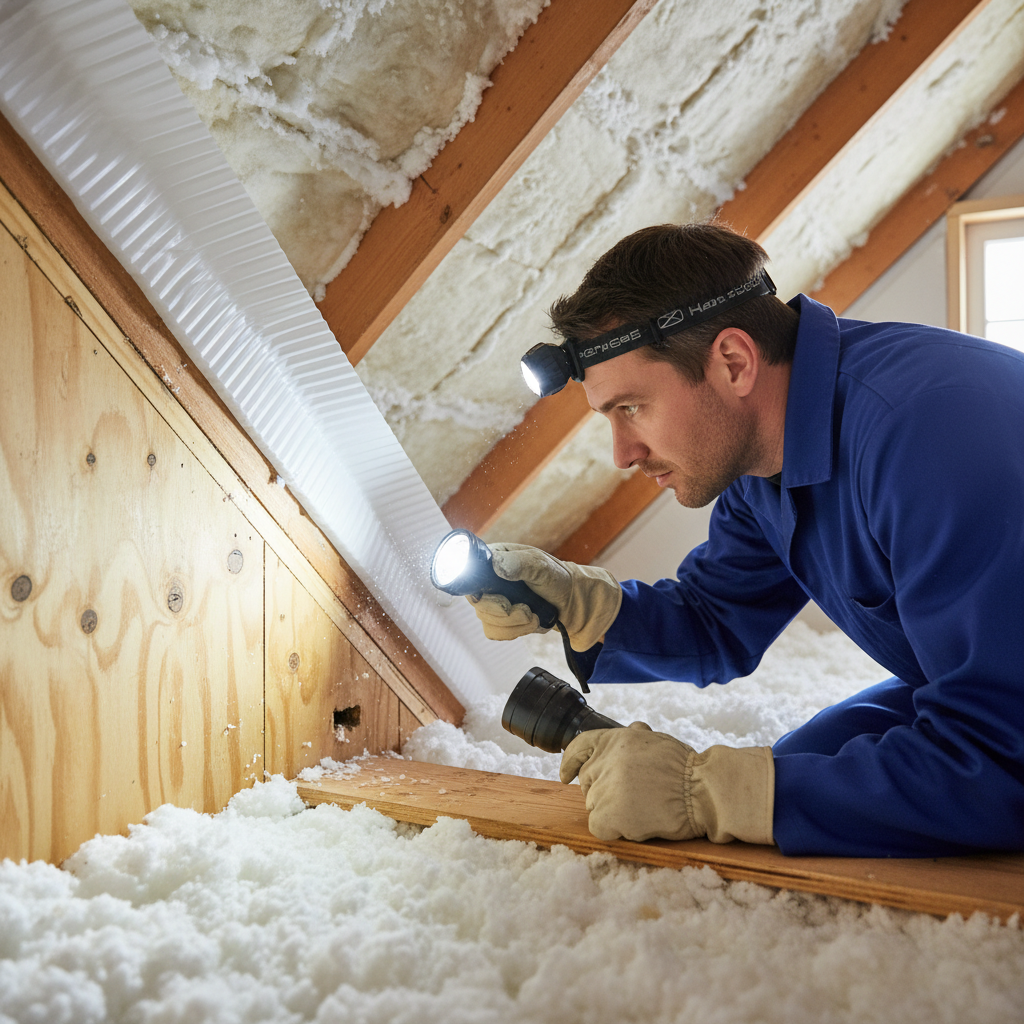
- Look for blocked soffit vents: From inside the attic, ensure insulation isn't blocking the plastic baffles designed to keep soffit vents clear. If they're blocked, gently push insulation back to open the airflow path.
- Check for moisture and mold: Shine your flashlight on roof sheathing, rafters, and the top of insulation. Any dark spots, water stains, or a musty smell indicate moisture issues.
- If you find significant mold or major water ingress: This indicates a roof leak or severe ventilation problem needing professional assessment.
General remodeling · Renovation planning
| Project category | General remodeling |
|---|---|
| Problem type | Renovation planning |
| Trade required | General contracting |
| Urgency | Planned project |
| Safety risk | Low safety risk |
| DIY suitability | Pro recommended |
| Cost category | Major investment |
| Typical timeline | Design and permitting often 2–4 months before work starts |
| Contractor type | General contractor |
Repair option
Phase the work and fix the building envelope first.
Replacement option
Full renovation with permits, design, and a general contractor.
Common causes
- Space no longer fits how the household lives
- Resale preparation
- Deferred maintenance stacking up
Relevant tools:project cost estimatorcompare quoteshome improvement material prices
Published May 4, 2026Last updated August 17, 2026
Tools & materials you'll need
Affiliate links- AmazonStep ladderFor attic access and reaching high points
- AmazonFlashlight or headlampFor proper illumination in dark areas like attic or behind dryer
- AmazonDryer vent cleaning brush kitSpecific brush with extendable handle for cleaning dryer duct
- AmazonGarden hoseFor flushing water heater
- Amazon5-gallon bucketFor T&P valve test and collecting water during flush
- AmazonCaulking gunFor applying exterior caulk
As an Amazon Associate FixlyGuide earns from qualifying purchases — at no extra cost to you. Prices and availability are accurate as of publication and subject to change.
Quick Answer
Many homeowners focus on obvious issues during their annual home inspection, but overlooking critical, less-visible areas can lead to significant and costly problems down the line. Key spots often missed include proper attic ventilation, adequate foundation drainage, the integrity of your dryer vent system, efficient water heater operation, proper GFI/GFCI outlet function, and the condition of exterior caulking and sealants. A diligent annual check of these specific areas will not only save you from surprise repairs but also boost your home's overall safety, efficiency, and longevity.
The Problem
Homeownership is a constant dance between enjoying your space and proactively maintaining it. While most homeowners understand the importance of routine maintenance, the sheer volume of potential issues can be overwhelming. The result? A tendency to focus on what's visible or what's making noise, while critical, hidden problems fester unnoticed. These overlooked issues, ranging from compromised attic airflow to failing foundation grading, don't just reduce your home's comfort and efficiency; they can escalate into major structural damage, water infiltration, electrical hazards, or even fire risks. Without a targeted annual inspection that accounts for these commonly missed areas, you're not just kicking the can down the road – you're allowing minor defects to become catastrophic failures, silently eroding your home's value and your peace of mind.
How It Works
Understanding the 'why' behind these critical inspection points helps frame their importance. Take attic ventilation, for example. Proper ventilation ensures a continuous flow of air, expelling hot, humid air in the summer and preventing moisture buildup in the winter. Without it, your attic can become a breeding ground for mold and mildew, your insulation can lose its R-value, and your roof shingles might prematurely fail due to excessive heat. This isn't just about comfort; it's about preserving the structure and health of your home.
Next, consider foundation drainage. Your home's foundation is its bedrock. If rainwater isn't directed away from the foundation effectively, it can saturate the soil, exert immense hydrostatic pressure on your basement walls, and eventually lead to cracks, leaks, and even structural instability. This is why proper grading and functioning gutters are paramount.
Dryer vents are another unsung hero. They safely expel hot, lint-filled air from your dryer. When clogged, lint accumulates, reducing dryer efficiency and creating a serious fire hazard. The heat and lint are highly flammable, making a blocked dryer vent one of the leading causes of home fires.
Your water heater works tirelessly, but its internal components can deteriorate. Sediment buildup reduces efficiency and can corrode the tank, leading to leaks. The anode rod sacrifices itself to protect the tank, but it eventually needs replacement. Ignoring these mechanisms shortens the lifespan of an expensive appliance.
GFCI/GFI outlets (Ground Fault Circuit Interrupters) are vital safety devices. They constantly monitor the electrical current flowing through a circuit. If they detect an imbalance (which happens when current is escaping through an unintended path, like a person), they trip instantaneously, cutting power and preventing electrocution. These devices, primarily found in wet areas like bathrooms and kitchens, must be tested annually to ensure they're ready to protect you.
Finally, exterior caulking and sealants act as your home's first line of defense against the elements. They seal gaps around windows, doors, and penetrations, preventing water, air, and pests from entering. Over time, UV exposure, temperature fluctuations, and movement cause these materials to crack, shrink, and fail, compromising your home's energy efficiency and inviting water damage.
Step-by-Step Fix
1. Inspect Attic Ventilation & Insulation — Ensure proper airflow and check for moisture signs.
Safety Note: Wear a dust mask, gloves, and protective eyewear. Bring a flashlight and watch your footing on joists to avoid falling through the ceiling.
- Look for blocked soffit vents: From inside the attic, ensure insulation isn't blocking the plastic baffles designed to keep soffit vents clear. If they're blocked, gently push insulation back to open the airflow path.
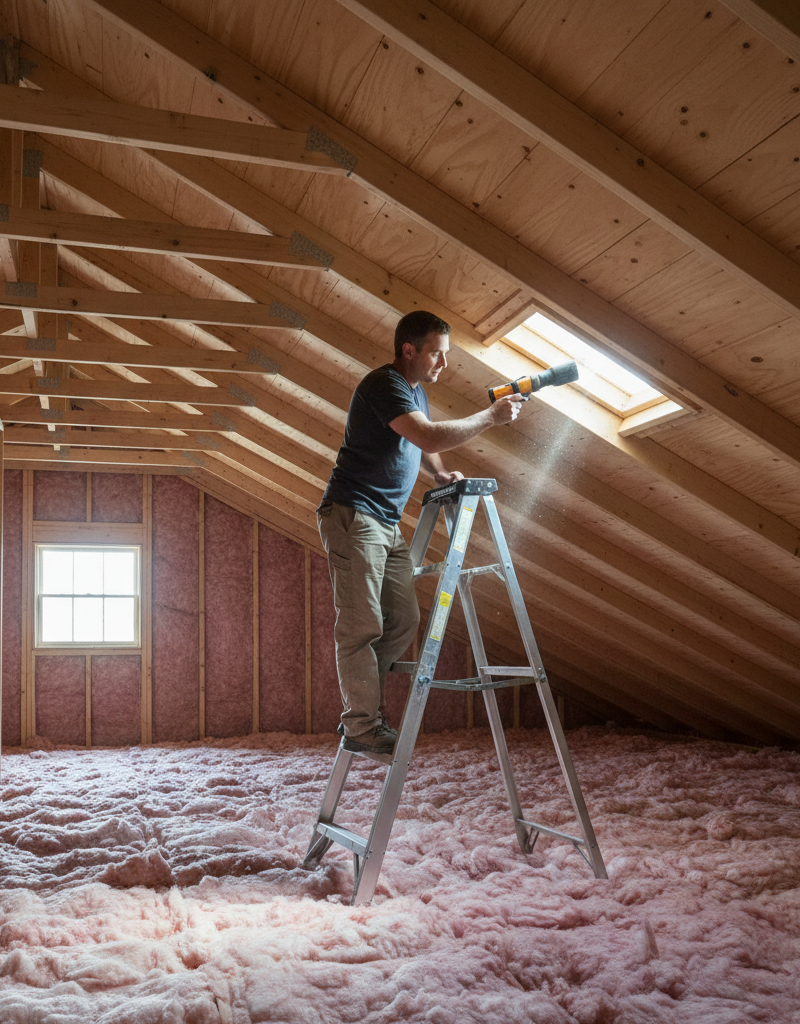
- Check for moisture and mold: Shine your flashlight on roof sheathing, rafters, and the top of insulation. Any dark spots, water stains, or a musty smell indicate moisture issues.
- Assess insulation depth and uniformity: Ensure insulation is evenly distributed and meets recommended R-values for your climate zone (e.g., typically R-38 to R-60 in most US climates). Look for compressed or wet insulation, which loses its effectiveness.
- If you find significant mold or major water ingress: This indicates a roof leak or severe ventilation problem needing professional assessment.
2. Evaluate Foundation Drainage & Grading — Direct water away from your home's base.
- Observe gutter function: During or immediately after a rain shower, check that gutters are clear and downspouts are directing water at least 5-10 feet away from the foundation. Install or extend downspout extensions if needed.
- Inspect soil grading: The soil around your home's foundation should slope away from the house at a minimum grade of 6 inches for the first 10 feet. If the ground slopes towards the house, water will pool against the foundation.
- Look for pooling water: After rain, check for standing water near the foundation. This suggests poor grading or improper drainage.
- Check for foundation cracks: While observing drainage, look for any new or widening cracks in the foundation walls. Hairline cracks are common, but horizontal cracks, stair-step cracks in masonry, or cracks wider than 1/8 inch could signal structural issues.
- If grading is poor or major cracks are present: Consider regrading with additional soil or consulting a foundation specialist.
3. Clean & Inspect Dryer Vent System — Prevent fire hazards and improve efficiency.
Safety Note: Always unplug the dryer before working on it to prevent electric shock.
- Disconnect the vent hose: Pull the dryer away from the wall and carefully disconnect the flexible vent hose from the dryer and the wall duct.
- Remove lint buildup: Use a dryer vent cleaning brush kit (available at hardware stores) to clean out lint from the flexible hose and the rigid wall duct. Push the brush through the entire length of the vent.
- Check exterior vent hood: Go outside and inspect the exterior dryer vent hood. Ensure the flap opens and closes freely and is not clogged with lint, bird nests, or other debris. Clean it thoroughly.
- Reconnect and test: Reconnect both ends of the vent hose, ensuring a tight seal with clamps. Push the dryer back into place, plug it in, and run a short cycle to confirm proper airflow.
- If the vent is damaged or has difficult bends: Replace the crushed or kinked vent hose with a rigid or semi-rigid metal duct, which is safer and more efficient than flexible plastic.
4. Perform Water Heater Maintenance — Extend lifespan and boost efficiency.
Safety Note: If you're uncomfortable working with gas or electricity, or if your water heater is old/corroded, call a professional.
- Test the T&P relief valve: Place a bucket under the discharge pipe. Gently lift the lever on the Temperature and Pressure (T&P) relief valve for a few seconds until water flows out, then release it. If no water comes out or it drips afterward, the valve might be faulty and needs replacement.
- Flush the tank (sediment removal): Turn off the cold water supply to the water heater and turn off the power/gas. Attach a garden hose to the drain valve at the bottom of the tank and direct it to a floor drain or outside. Open the drain valve and let the tank drain completely (this can take 15-30 minutes, depending on tank size). Once empty, open the cold water supply partially to agitate sediment, then let it drain again until water runs clear. Close the drain valve, remove the hose, and reopen the cold water supply fully. Once the tank is full (water flows from a hot water faucet), turn power/gas back on.
- Inspect for leaks or corrosion: Look for any signs of rust, corrosion, or leaks around the tank, pipes, and fittings. Even small drips can indicate a worsening problem.
- Check the anode rod (every 3-5 years): While an annual inspection, homeowners can plan to have the anode rod checked and replaced by a professional every few years, as it's a more involved process.
5. Test GFCI/GFI Outlets — Ensure electrical safety in wet areas.
Safety Note: Always use proper electrical safety. If an outlet sparks or smells burnt, do not attempt to fix it yourself; call an electrician.
- Locate all GFCI outlets: These are typically found in bathrooms, kitchens, garages, basements, and outdoor locations. They have
Related Articles
Keep troubleshooting with these hand-picked guides from FixlyGuide:
- The 7 Critical Home Inspection Checks Most Homeowners Miss (and How to Do Them Yourself) — Discover the essential annual home inspection checks many homeowners overlook and learn how to perform them yourself to prevent costly repa…
- The 7 Critical Inspection Points Most Homeowners Miss (And Your $100 Fixes) — Uncover the hidden annual home inspection points that prevent costly repairs and maintain your home's value, often with simple DIY fixes.
- The 7 Fall Chores Most Homeowners SKIP (And Why They'll Cost You Thousands) — Don't let autumn's beauty distract you from these critical home maintenance tasks that can prevent costly damage and ensure a cozy winter.
- The 7 Critical Home Inspection Mistakes Most Homeowners Make (and How to Spot Them) — Discover the crucial home inspection mistakes homeowners commonly overlook and learn how to identify potential problems before they become…
- The #1 Mistake Homeowners Make When Spotting Soffit Damage — Ignoring early soffit and fascia damage can lead to costly structural repairs, but many homeowners misdiagnose the problem, compounding the…
- The One Schedule That Saves Homeowners $2,500 a Year — A disciplined seasonal home maintenance schedule is your best defense against catastrophic repair bills. Learn which tasks to tackle each s…
Should you do this yourself?
Answer five quick questions before you start. Safety outranks savings every time.
Your experience with work like this
How high do you have to work?
Does the job involve any of these?
Will it need a permit?
Specialty tools
Free and instant. Educational guidance only — not a quote, inspection, or professional diagnosis.
Estimate your own project cost
National averages are a starting point. Enter your details for a range that fits your house.
Water heater replacement cost
- Unit$550 – $1,400
- Installation labor$350 – $900
- Removal & disposal$60 – $150
- Permit & inspection$50 – $200
These estimates reflect typical US installed costs. Get 2–3 written quotes before committing.
Educational estimate only — always confirm with written local bids.
What should this project cost?
Enter your project details for a realistic cost range before you call anyone.
Minor crack sealing $800–$2,500; pier and beam stabilization $10,000–$30,000+.
- Regional adjustment
- National average
- Labor share (typical)
- ~$4,961
- Quotes to collect
- 3 written estimates
Educational estimate based on national averages — not a binding quote. Always confirm with written local estimates.
Decide what your roof needs
Two minutes of questions turns "something is wrong up there" into a clear next step.
- Repair or replace your roof?Answer 10 questions about age, leaks, and damage to get a clear next step.Open
- Compare contractor quotesScore up to four bids on price, warranty, licensing, and timeline.Open
- Get local estimatesSend one request and compare written estimates from vetted pros.Open
Free, no signup required. Estimates are educational guidance, not a quote or an inspection.
Recommended for DIYers & woodworkers
Sponsored
The Top 20 Tools for Workshops of Any Budget
No stationary machines or power tools required — plus 3 fundamental tools that can't be bought at any price.
Get the free guide
Ted's Woodworking — The #1 Woodworking Resource
Detailed instructions, dimensioned drawings, materials & cutting lists, and 3D schematics for every skill level.
See the plansSponsored: links above are affiliate links. FixlyGuide may earn a commission on qualifying purchases — at no extra cost to you.
Frequently asked questions
How often should I inspect my home?+
You should perform a comprehensive annual inspection of your home, ideally in the spring or fall. Additionally, monthly visual checks of critical systems like plumbing, HVAC, and electrical panels can catch minor issues before they escalate. After severe weather events, it's also wise to do an exterior check for damage.
What are the most common overlooked home maintenance tasks?+
Commonly overlooked tasks include cleaning dryer vents, checking attic ventilation, testing GFCI outlets, flushing water heaters, cleaning refrigerator coils, and inspecting exterior caulking and sealants. Neglecting these areas can lead to significant safety hazards, efficiency losses, and expensive repairs.
Can I do a home inspection myself, or do I need a professional?+
Many aspects of a home inspection can be done by a diligent homeowner, especially the preventative maintenance checks outlined in this guide. However, for a comprehensive structural, electrical, and plumbing assessment, especially when buying or selling a home, a licensed home inspector provides an unbiased, expert evaluation that DIY efforts can't fully replicate. For specific major issues (e.g., foundation cracks, persistent leaks), always call a relevant professional.
How can I improve my home's energy efficiency during an inspection?+
During your inspection, focus on areas like insulation in the attic and walls, sealing air leaks around windows and doors with caulk and weatherstripping, and ensuring your HVAC filters are clean. Checking the efficiency of your water heater, making sure your dryer vent is clear, and addressing any drafts will also contribute significantly to energy savings.


Discussion
Loading comments…