- Needle-nose pliers or tweezers
- A stiff wire, paperclip, or pipe cleaner
- An old toothbrush or soft-bristled brush
- White vinegar (optional, for mineral deposits)
- A multimeter (optional, for advanced checks)
HVAC · High energy usage
| Project category | HVAC |
|---|---|
| Problem type | High energy usage |
| Trade required | HVAC |
| Urgency | Planned project |
| Safety risk | Low safety risk |
| DIY suitability | DIY for experienced homeowners |
| Cost category | High cost |
| Typical timeline | Assessment within weeks; replacement planned off-season |
| Contractor type | Licensed HVAC technician |
Repair option
Duct sealing, insulation, and a tune-up before touching the equipment.
Replacement option
High-efficiency replacement sized by a load calculation, not a rule of thumb.
Common causes
- Aging, low-efficiency equipment
- Leaking ducts losing conditioned air
- Insufficient attic insulation
- Oversized system short-cycling
Relevant tools:project cost estimatorrepair or replace
Published April 26, 2026Last updated August 17, 2026
Tools & materials you'll need
Affiliate linksAs an Amazon Associate FixlyGuide earns from qualifying purchases — at no extra cost to you. Prices and availability are accurate as of publication and subject to change.
How it works
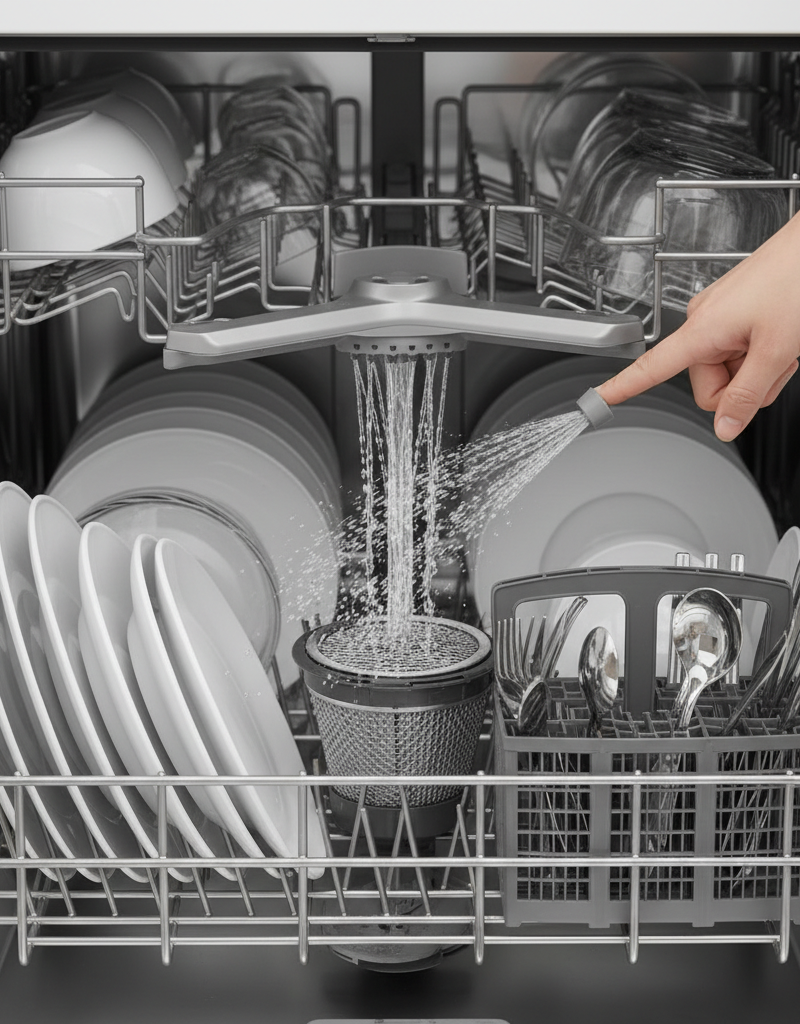
A dishwasher cleans by precisely directing jets of hot, pressurized water. When you start a cycle, the electronically controlled water inlet valve opens, allowing a measured amount of water (typically 2 to 4 gallons) into the tub's base, or sump. A heating element, located either exposed in the tub floor or concealed in-line with the pump, raises this water to a target temperature, usually between 120°F and 150°F. The main circulation pump then draws this heated water from the sump and forces it up into the spray arms.
These arms—typically a lower one and an upper one, with some models including a third rack sprayer—are hollow tubes with angled nozzles. The force of the water exiting these nozzles causes the arms to rotate, creating a 360-degree spray pattern. This is a purely mechanical reaction; there is no separate motor to spin the arms. The high-pressure streams dislodge food, while detergent mixed into the water chemically breaks down grease and starches. After the wash phase, the dirty water is drained by a separate drain pump, and the process repeats with fresh water for one or more rinse cycles. If any part of this system is compromised, especially water flow to or from the spray arms, cleaning performance degrades immediately.
Step-by-Step Fix
This guide addresses the most common causes of poor dishwasher cleaning performance, starting with the simplest fixes. Ensure the dishwasher has completed its cycle and is cool before you begin.
- Tools:
- Needle-nose pliers or tweezers
- A stiff wire, paperclip, or pipe cleaner
- An old toothbrush or soft-bristled brush
- White vinegar (optional, for mineral deposits)
- A multimeter (optional, for advanced checks)
- A meat or candy thermometer
-
Power Down for Safety — Before performing any work, disconnect the dishwasher from its power source. For most installations, this means turning off the corresponding circuit breaker in your home's main electrical panel. If the dishwasher is connected via a plug under the sink, simply unplug it. This eliminates any risk of electrical shock or accidental startup.
-
Access the Lower Assembly — Open the dishwasher door and slide the bottom dish rack completely out. Set it aside. This gives you unobstructed access to the lower spray arm and the filter system located on the floor of the dishwasher tub.
-
Inspect Lower Spray Arm Rotation — Gently spin the lower spray arm with your hand. It should rotate freely and silently for several revolutions without wobbling excessively. If it catches, check for obstructions like a fallen utensil, a piece of plastic, or a large food particle. Also look for anything on the rack itself that may hang down and impede arm movement when the rack is in place, such as a large pan handle.
-
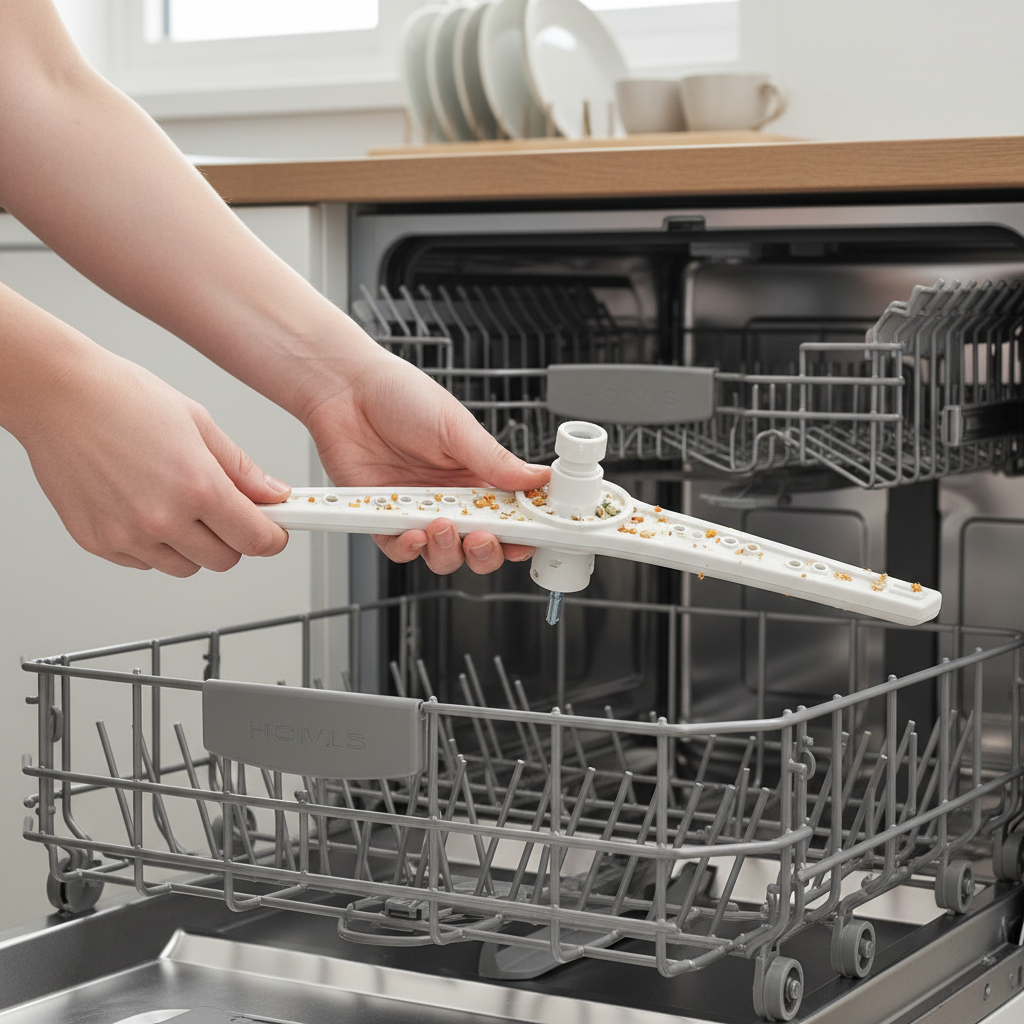
Remove and Clean the Lower Spray Arm — Most lower spray arms are held in place by friction or a simple locking mechanism. To remove it, either pull straight up firmly or unscrew a central plastic locking nut (usually counter-clockwise). Once removed, shake it to listen for trapped debris. Look through the jets to see if they are clogged. Use a paperclip, stiff wire, or the tines of a fork to poke out any visible food particles from the spray holes. For stubborn mineral buildup, submerge the arm in a bath of white vinegar for 30-60 minutes, then rinse thoroughly with hot water before reinstalling.
-
Remove and Clean the Upper/Middle Spray Arm — The upper spray arm is typically attached to the bottom of the top dish rack. It may be secured by a plastic locking collar that you turn to release, or it might simply clip into place. Some models have a water supply tube that docks into the back wall. Carefully detach the arm according to its design. Clean its jets using the same method as the lower arm: clear debris with a wire and use vinegar for mineral deposits. Ensure the docking port at the back of the rack is also free of debris.
-
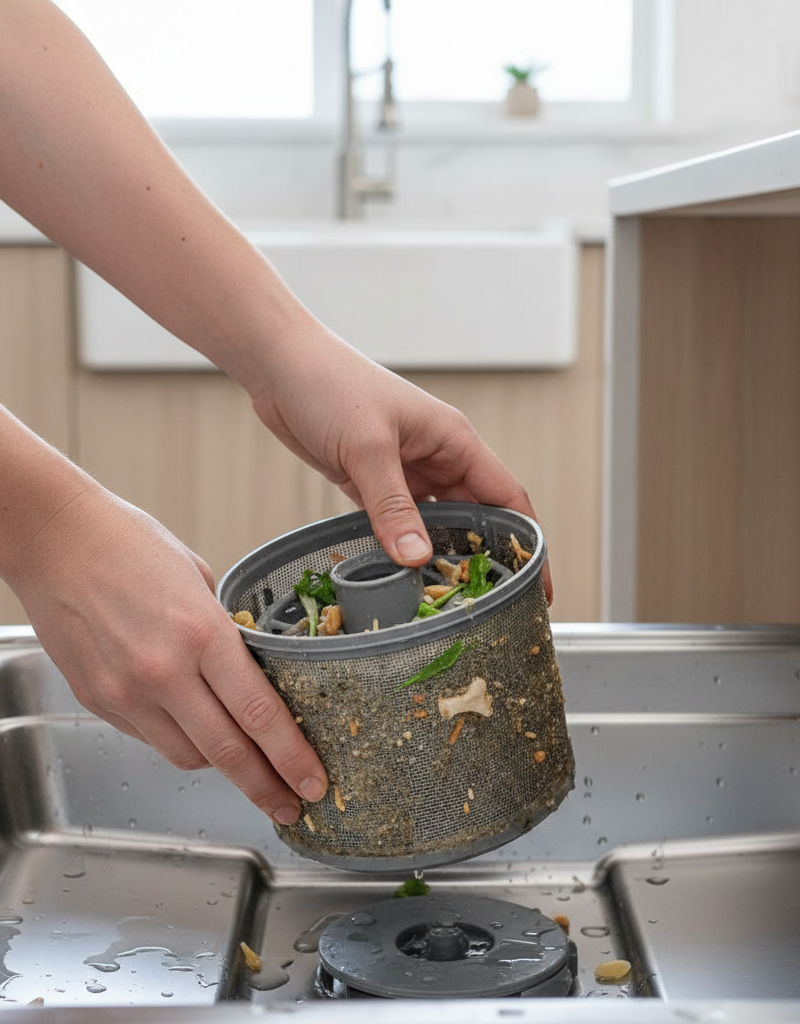
Inspect and Clean the Main Filter — This is a critical step. Almost all modern dishwashers have a multi-part filter system in the sump to prevent debris from being recirculated onto dishes. Locate the cylindrical filter assembly (usually near the base of the lower spray arm). Typically, a quarter-turn counter-clockwise will unlock it. Pull the entire assembly out.
- Separate the fine mesh screen from the coarse filter body.
- Wash both parts under hot running water, using a soft brush to remove greasy film and embedded particles. Do not use a wire brush, as this can damage the fine mesh.
- Check for a flat, secondary screen under where the filter was. If it's removable, take it out and clean it as well. If not, wipe it clean in place.
- Reinstall the filter components, ensuring the assembly locks securely back into place with a clockwise turn. A loose filter can allow debris into the pump.
-
Check the Chopper Screen (If Applicable) — Some dishwashers, particularly older models or some high-end units, have a small food chopper blade and screen near the pump intake. If your filter cleaning reveals no significant blockage but performance is still poor, this may be the issue. Accessing this often requires removing the lower spray arm support and additional covers inside the sump. Check your model's service manual before attempting this more advanced step.
-
Verify Water Supply Temperature — Dishwasher detergents are formulated to activate at high temperatures. To ensure your dishwasher receives water that is hot enough, turn on the hot water tap at the kitchen sink and let it run until the water is at its maximum temperature. Place a thermometer in a glass and fill it. The temperature should be at least 120°F.
- If the water is not hot enough, you may need to adjust the temperature setting on your home's water heater. A setting between 120°F and 125°F is optimal for balancing dishwasher performance and household safety.
-
Confirm Water Inlet Pressure — Low water pressure can prevent the spray arms from spinning effectively. After confirming the main house pressure is adequate, check the small screen filter where the water supply line connects to the dishwasher's inlet valve. Turn off the water supply to the dishwasher (usually an angle stop valve under the sink). Use pliers to carefully disconnect the braided supply line from the dishwasher's inlet valve. Look inside the valve's threaded inlet for a small mesh screen. If it's clogged with sediment, gently clean it with a brush or remove it with needle-nose pliers for a more thorough cleaning.
-
Reassemble and Run a Test Cycle — Reinstall the clean spray arms and filter, and slide the lower rack back into place. Restore power to the unit. Before loading it with dirty dishes, run a short "Rinse Only" or "Express Wash" cycle. Listen carefully. You should hear the distinct sound of water being forcefully sprayed against the tub walls, and if you open the door quickly mid-cycle (be prepared for some water splash), you should see that the arms have moved from their starting position.
Common mistakes
Avoiding these common errors can solve many cleaning issues and prevent unnecessary repairs.
- Only Blaming the Detergent. While using a quality detergent is important, homeowners often waste money trying different brands when the root cause is mechanical. Poor water circulation from clogged spray arms, a dirty filter, or improper loading will defeat even the best detergent. Always check the physical water path first.
- Improper Loading Dynamics. Blocking the path of the spray arms is a primary cause of dirty dishes. Avoid placing large pans, tall cookie sheets, or cutting boards in a way that prevents the arms from spinning freely. Furthermore, don't nest spoons or "shield" bowls by packing them too tightly; water needs a clear path to every surface.
- Scraping Dishes Too Clean. Modern dishwasher detergents contain enzymes that are designed to attach to and break down food particles. If you pre-rinse your dishes until they are spotless, the detergent has nothing to work on. This can be less effective and may even lead to etching on glassware over time as the potent detergents attack the glass itself. Scrape off large solids, but leave the light film and residue.
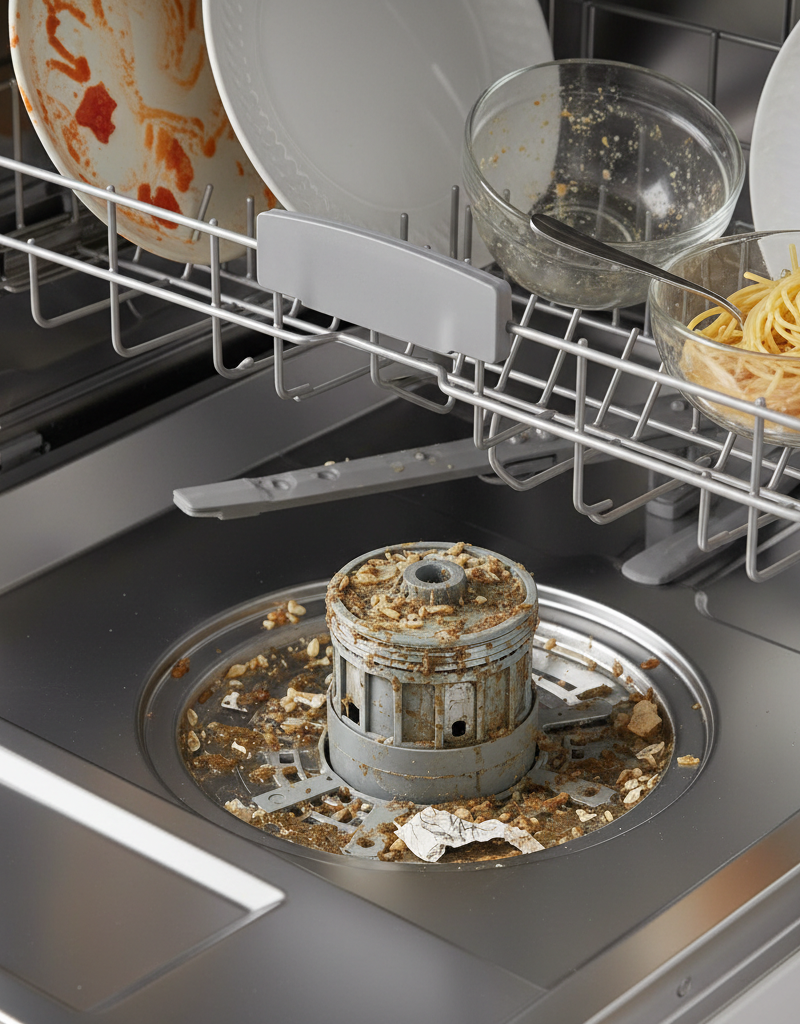
- Neglecting the Filter. Many users are unaware their dishwasher has a user-serviceable filter. They assume it functions like a garbage disposal. This neglect allows the filter to become completely clogged with grease, food particles, and bits of label paper. A clogged filter starves the pump of water, drastically reducing spray pressure and redepositing old food onto your "clean" dishes. Clean the filter at least once a month.
- Using Too Much Detergent. In an effort to get cleaner dishes, it's tempting to double up on detergent pods or powder. However, using too much soap can create an excessive amount of suds. This foam can cushion the impact of the water jets and actually suppress the circulation pump's pressure, leading to worse cleaning performance. Follow the manufacturer's recommendation for your water hardness level.
Cost & time breakdown
This table outlines the typical costs and time commitment for resolving common dishwasher cleaning issues. DIY costs primarily cover cleaning supplies or replacement parts, while pro costs include service call fees and labor.
| Task | DIY cost | Pro cost | Time |
|---|---|---|---|
| Inspect & Clean Spray Arms and Filter | $0 - $10 (for vinegar/brushes) | $125 - $250 | 30-45 minutes |
| Replace a Damaged Spray Arm | $25 - $80 (for the part) | $150 - $300 | 20 minutes |
| Replace Water Inlet Valve | $30 - $90 (for the part) | $200 - $350 | 45-90 minutes |
| Replace Circulation Pump | $80 - $220 (for the part) | $400 - $650+ | 2-4 hours (Advanced) |
When to call a pro
While cleaning spray arms and filters is a straightforward DIY task, certain symptoms indicate a problem that requires professional diagnosis and repair. If you experience any of the following, it is best to contact a qualified appliance technician:
- Loud, persistent humming, grinding, or buzzing noises. If these sounds continue after you have thoroughly cleaned the filter area and chopper screen, it likely points to a failing circulation pump motor or drain pump. Running the unit in this condition can lead to further damage.
- Water does not enter the dishwasher. You've confirmed the water supply is on and the inlet screen is clear, but the tub remains dry. This suggests a failed water inlet valve, a faulty float switch, or a problem with the main control board, all of which involve testing and replacing electrical components.
- The appliance is completely dead. If the dishwasher shows no signs of life—no lights, no response to button presses—and you have confirmed the circuit breaker is on and the outlet (if applicable) has power, the issue lies within the machine's internal wiring, door latch switch, thermal fuse, or main control board.
- Visible leaks from the underside of the machine. Water pooling on the floor indicates a serious problem, such as a cracked pump housing, a failed door gasket, or a leaky hose connection. These repairs often require pulling the unit out and tipping it to access the base, a job best left to a professional to avoid water damage and ensure a proper seal.
Prevention & maintenance
Consistent, simple maintenance is the key to ensuring your dishwasher cleans effectively for years. Integrate these habits into your kitchen routine.
- Clean the Filter Monthly. This is the single most important maintenance task. Once a month, remove and rinse the main filter assembly under hot water to remove trapped food and grease. A clean filter ensures maximum water pressure for the spray arms.
- Run Hot Water at the Sink First. Before starting the dishwasher, run the hot water at your kitchen faucet until it is fully hot. This ensures the dishwasher’s initial fill cycle uses water that is already at an effective cleaning temperature (120°F+), improving detergent activation and overall performance.
- Periodically Run a Cleaning Cycle. Every 1 to 3 months, especially if you have hard water, run an empty cycle with a dedicated dishwasher cleaning product (like Affresh or Finish) or by placing a cup of white vinegar upright in the top rack. This helps dissolve mineral scale and soap scum from the spray arms, heating element, and interior walls.
- Visually Inspect Spray Arms. When loading or unloading, take a quick second to glance at the spray arm nozzles. If you see bits of food, seeds, or shredded cheese lodged in the holes, pull them out. This prevents a small blockage from becoming a major cleaning problem.
- Load Strategically. Consistently load your dishwasher to maximize water flow. Face dirtier surfaces toward the center, avoid nesting utensils, and ensure no items are blocking the rotation of either spray arm.
Related Articles
Keep troubleshooting with these hand-picked guides from FixlyGuide:
- Why Your Dishwasher Leaves Dishes Wet (And How to Fix It) — If your dishwasher leaves dishes wet after a cycle, it's a common and frustrating problem often caused by issues with rinse aid, loading, o…
- That Chalky Film on Your Dishes? It's Not Soap Scum — If your dishwasher is leaving a cloudy white film on your glassware and dishes, the culprit is likely hard water mineral deposits, not left…
- Your Dishwasher Dishes Come Out Cloudy? It's This, Not Soap — Tired of cloudy glasses and spotty plates? The unsightly white residue from your dishwasher is almost always caused by hard water mineral d…
- The #1 Mistake Homeowners Make When Their Dryer Isnt Drying (And How to Fix It Free) — Most homeowners assume a slow dryer means a broken dryer, but the most common culprit is a simple, often overlooked maintenance issue that'…
- Chalky dishes? It’s not always hard water. — If you're seeing a chalky
What should this project cost?
Enter your project details for a realistic cost range before you call anyone.
Cost depends heavily on which system turns out to be the source.
- Regional adjustment
- National average
- Labor share (typical)
- ~$1,620
- Quotes to collect
- 3 written estimates
Educational estimate based on national averages — not a binding quote. Always confirm with written local estimates.
Get the print-ready PDF of this guide
A clean, ad-free, printable version you can keep on your phone or pin to the workshop wall. Free with a FixlyGuide account.
- Print-optimized layout
- Tools, materials & every step included
- Saved to your account
Frequently asked questions
Why are my dishes still dirty after a dishwasher cycle?+
The most common reasons are clogged spray arms, improper loading that obstructs water flow, insufficient water temperature, or using too little (or too much) detergent.
Can I use vinegar to clean my dishwasher spray arms?+
Yes, distilled white vinegar is effective for dissolving mineral deposits. You can soak the spray arms in vinegar or run an empty cycle with a cup of vinegar in a bowl on the top rack.
How often should I clean my dishwasher spray arms?+
It's a good practice to visually inspect them monthly and perform a thorough cleaning every 3-6 months, especially if you have hard water or frequently wash heavily soiled dishes.
Why does my dishwasher leave gritty residue on dishes?+
Gritty residue often indicates food particles are not being properly flushed away. This points to clogged spray arms, a dirty filter, or a failing drain pump. Start by inspecting the spray arms and filter.
What temperature should my water heater be set to for my dishwasher?+
Ideally, your water heater should be set to deliver water at 120-125°F (49-52°C) to the dishwasher. Any lower, and detergent may not activate effectively and dishes won't get sufficiently sanitized.
Discussion
Loading comments…