- Establish a Baseline Pressure Reading — First, find out what your pressure actually is. An objective measurement is crucial for diagnosis.
- Tools: Purchase a water pressure test gauge (about $15) with an integrated high-pressure indicator needle, available at any hardware store.
- Attach the gauge to an outdoor hose spigot or a laundry sink threaded faucet. Ensure no water is running anywhere in the house. Turn the spigot on fully. The reading is your static water pressure. A healthy reading is typically 50-70 PSI.
Plumbing · Low water pressure
| Project category | Plumbing |
|---|---|
| Problem type | Low water pressure |
| Trade required | Plumbing |
| Urgency | Soon — within weeks |
| Safety risk | Low safety risk |
| DIY suitability | DIY friendly |
| Cost category | Low cost |
| Typical timeline | DIY checks in under an hour; PRV replacement a half day |
| Contractor type | Licensed plumber |
Repair option
Clean aerators, then test static pressure before replacing the PRV.
Replacement option
Repipe when scaling in galvanized lines is the cause.
Common causes
- Clogged aerators or fixture screens
- Failing pressure-reducing valve
- Partially closed main shutoff
- Galvanized pipe scaling in older homes
Relevant tools:diy difficulty
Published April 24, 2026Last updated August 17, 2026
Tools & materials you'll need
Affiliate links- AmazonGarden HoseFor flushing water heater.
As an Amazon Associate FixlyGuide earns from qualifying purchases — at no extra cost to you. Prices and availability are accurate as of publication and subject to change.
How it works
Your home's water pressure is governed by a sequence of components that begin at the street and terminate at your faucets. Water enters your property from the municipal main, typically under high pressure (80 to 150 PSI). The first point of control is the city's curb stop valve and water meter, usually located in a box near the curb. From the meter, a single pipe runs underground to your house.
Where this pipe enters your home—often in a basement, crawl space, or utility closet—you will find your main water shut-off valve. This is your primary control for the entire system. Immediately following this valve, most modern homes have a Pressure Reducing Valve (PRV). This bell-shaped brass device is critical; it steps down the high, fluctuating municipal pressure to a safe and stable level for your home's plumbing, typically between 50 and 60 PSI. This prevents damage to your pipes, fixtures, and appliances.
After the PRV, the main line splits. One branch directs cold water to faucets, toilets, and outdoor spigots. The other branch feeds the water heater. Inside the water heater, minerals and sediment from the water supply can settle at the bottom of the tank over time. This sediment can eventually obstruct the hot water outlet pipe, specifically reducing hot water pressure. Therefore, a whole-house pressure problem originates at one of these central choke points: a partially closed main valve, a failing PRV, or a blockage at the water heater outlet.
Step-by-Step Fix
This guide diagnoses whole-house low water pressure in a systematic order, from easiest to most complex. Perform the steps sequentially to avoid unnecessary work.
-
Establish a Baseline Pressure Reading — First, find out what your pressure actually is. An objective measurement is crucial for diagnosis.
- Tools: Purchase a water pressure test gauge (about $15) with an integrated high-pressure indicator needle, available at any hardware store.
- Attach the gauge to an outdoor hose spigot or a laundry sink threaded faucet. Ensure no water is running anywhere in the house. Turn the spigot on fully. The reading is your static water pressure. A healthy reading is typically 50-70 PSI.
-
Confirm the Issue Isn't Municipal — Before tearing into your plumbing, verify the problem is unique to your home.
- Briefly ask your next-door neighbors if they are experiencing similar low pressure.
- Check your local water utility's website or social media for any posted alerts about main breaks or system maintenance in your area. If the problem is external, you've saved yourself hours of work.
-
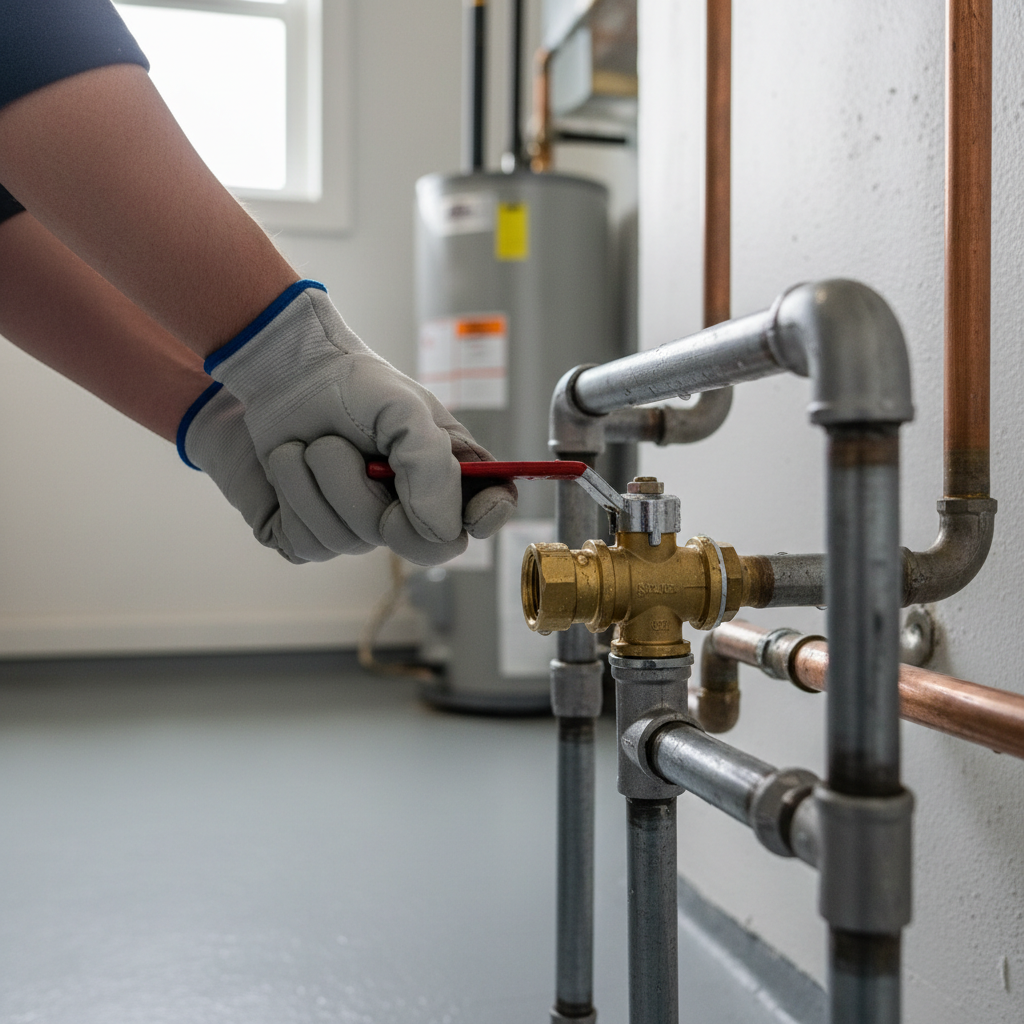
Inspect the Main Water Shut-Off Valve — A partially closed main valve is a common and easily fixed culprit.
- Locate the valve where the main water line enters your house. There are two main types: a multi-turn wheel handle (gate valve) or a single-lever handle (ball valve).
- A ball valve is fully open when the lever is parallel to the pipe. A gate valve is fully open when the handle is turned counter-clockwise as far as it will go without excessive force. Ensure your valve is in the fully open position.
-
Perform a Dynamic Pressure Test — This is the definitive test for a failing Pressure Reducing Valve (PRV).
- With the pressure gauge still attached and no water running, note the static pressure reading from Step 1.
- Go inside and fully open the faucets for a tub or multiple sinks simultaneously to create a large water demand.
- Return to the gauge and check the new reading (the dynamic pressure). If the pressure has dropped by more than 10-15 PSI (e.g., from 60 PSI static to 40 PSI dynamic), your PRV is likely failing and unable to keep up with demand. A smaller drop is normal.
-
Attempt a PRV Adjustment — If the static pressure is simply too low (e.g., 30-40 PSI), you may be able to adjust it.
- Safety: Do not perform this step unless you have a pressure gauge attached to monitor your adjustments in real time. Do not exceed 75 PSI, as this can damage appliances.
- Locate the adjustment screw on top of the bell-shaped PRV. Loosen the locknut below it with a wrench.
- To increase pressure, make a small (quarter-turn) clockwise adjustment to the screw. Watch the gauge. The pressure should rise. Make another small adjustment if needed.
- Once set (50-60 PSI is ideal), tighten the locknut while holding the adjustment screw in place. If adjustments have no effect or cause erratic pressure, the PRV needs replacement.
-
Isolate Hot vs. Cold Water Flow — Differentiate between a systemic problem and a water-heater-specific issue.
- At a sink faucet, turn on only the cold water at full blast and observe the flow rate.
- Turn the cold off and turn on only the hot water at full blast.
- If the cold water flow is strong but the hot water flow is noticeably weaker at all faucets, the problem lies within your water heater system. If both are equally weak, the problem is upstream (likely the PRV or main line).
-
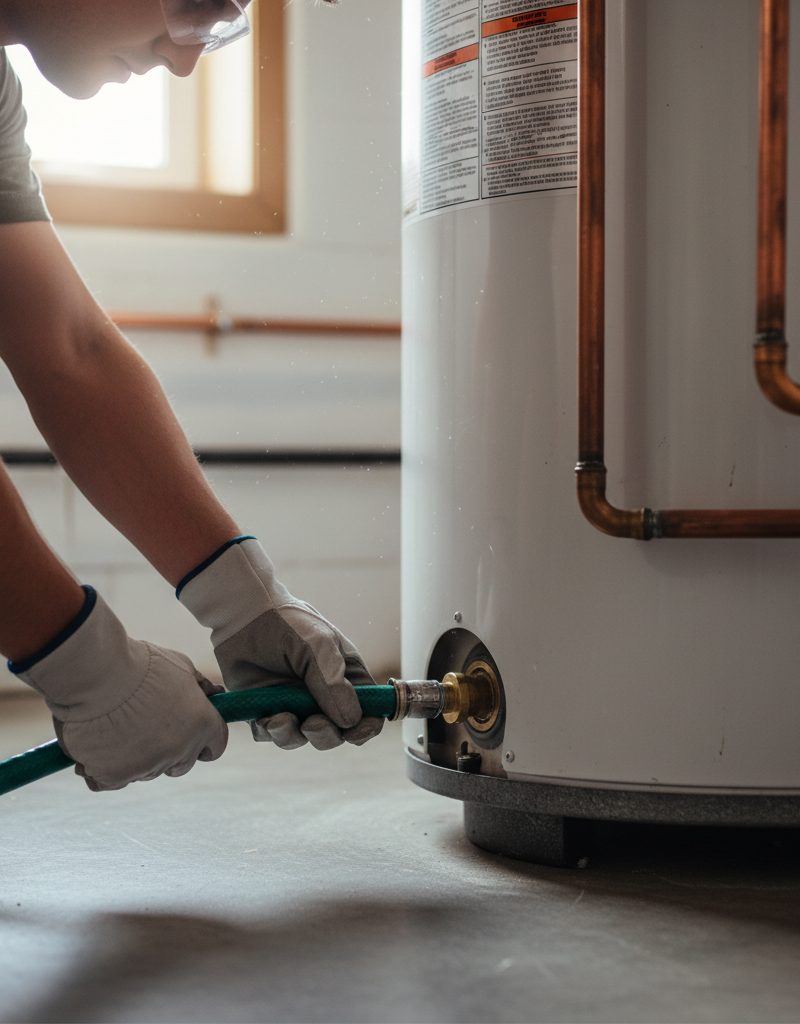
Flush the Water Heater — If you diagnosed low hot water pressure in the previous step, flush sediment from the tank.
- Tools: A garden hose long enough to reach a floor drain or the outdoors.
- Turn off the electricity (at the breaker) or gas (at the control valve) to the water heater.
- Turn off the cold water supply valve leading into the top of the water heater.
- Connect the garden hose to the drain valve at the bottom of the heater tank. Run the other end of the hose to a safe drainage point.
- Open the drain valve. Then, go to a nearby sink and open a hot water tap; this allows air to enter the system and prevents a vacuum lock.
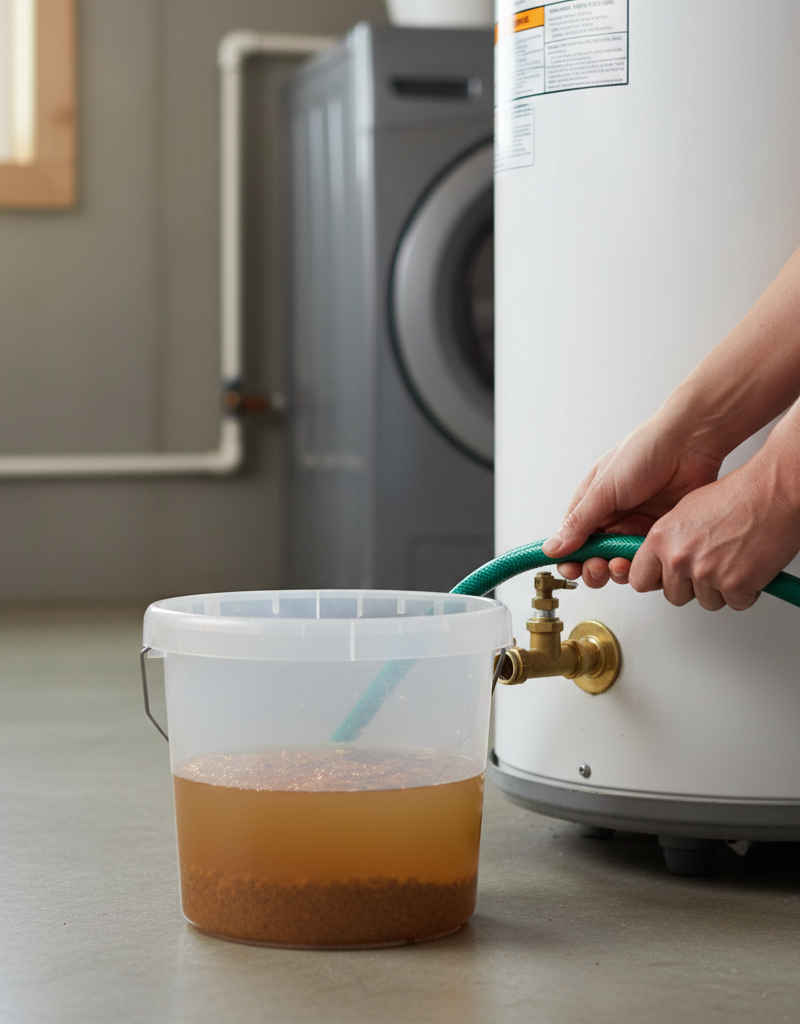
- Let the tank drain. At first, the water may be rusty and full of sediment. Flush until it runs clear. Opening and closing the cold water inlet valve in short bursts can help stir up and flush out more stubborn sediment.
- Close the drain valve, disconnect the hose, and close the hot water tap you opened.
- Fully open the cold water supply valve to refill the tank. Only when you hear that the tank is full (water stops rushing) and water flows normally from a hot tap should you turn the power or gas back on.
-
Inspect Water Heater Connections — Blockages can occur right at the inlet and outlet.
- This is a more advanced step. After turning off power/gas and the water supply, you can inspect the flexible water lines and nipples at the top of the tank.
- Corrosion or sediment can build up in the "dielectric nipples"—the short pipes where the lines connect to the tank. If they are severely clogged, they may need to be replaced.
-
Bypass Your Water Softener — If you have a water softener, it can be a point of restriction.
- Most water softeners are installed with a bypass valve. Engage the bypass, which routes water around the softener tank entirely.
- Turn on a faucet and check the pressure. If it is restored to normal, the issue is within your softener. The resin bed may be clogged or "channeling," or the control head may be malfunctioning, requiring service.
-
Assess for System-Wide Pipe Corrosion — If all else fails, consider the pipes themselves.
- If your home was built before the 1970s and has not been repiped, it may have galvanized steel pipes.
- These pipes corrode from the inside out, and mineral scale builds up over decades, drastically reducing the interior diameter and restricting flow. Signs include discolored water (especially when first turned on) and visible rust on exposed pipe threads. This is not a spot-fix and requires professional evaluation for a repipe.
Common mistakes
- Forcing a Seized Main Valve. Older multi-turn gate valves can seize with corrosion. Applying excessive force with a large wrench can snap the stem, leaving the valve inoperable or causing a major leak. Instead, try gently working it back and forth. If it won't budge, call a plumber to have it replaced professionally.
- Adjusting the PRV Blindly. Cranking the adjustment screw on a Pressure Reducing Valve without a pressure gauge is a recipe for disaster. Setting the pressure too high (over 80 PSI) voids warranties on appliances like dishwashers, can cause water hammer, and puts every joint and seal in your home at risk of a blowout. Always use a gauge and aim for 50-60 PSI.
- Dry-Firing the Water Heater. After flushing the tank, it is critical to ensure it is completely full of water before restoring power or gas. Turning on an electric heating element when it's not submerged in water will cause it to burn out in seconds. Turning on a gas burner under an empty tank can damage the tank itself.
- Replacing the PRV Unnecessarily. Homeowners often assume the PRV is the culprit without proper diagnosis. If the problem is actually widespread mineral buildup in old galvanized pipes, a brand new PRV will not solve the problem. The dynamic pressure test (Step 4) is essential to confirm the PRV is truly at fault.
- Misidentifying Hot vs. Cold Lines. When working on a water heater, ensure you are shutting off the cold water inlet valve, not the hot water outlet. Shutting off the outlet and then draining the tank can create a siphon and damage the tank or fixtures. The inlet is almost always marked blue or connects to the "cold" port.
- Ignoring Municipal Work. Don't spend a weekend troubleshooting your plumbing only to find out the city was flushing hydrants on your street. A quick check of the utility's website or a call to your neighbor can save significant time and frustration.
Cost & time breakdown
Costs are estimates and can vary by location and job complexity. Pro costs include labor and standard parts.
| Task | DIY Cost | Pro Cost | Time |
|---|---|---|---|
| Pressure Gauge Test | $10 - $20 (for the gauge) | $125 - $250 (as part of a diagnostic call) | 15 minutes |
| Flushing Water Heater | $10 - $20 (for a new hose if needed) | $150 - $300 | 1-2 hours |
| Adjusting PRV | Free (if you own wrenches/gauge) | Included in diagnostic fee | 30 minutes |
| Replacing Pressure Reducing Valve (PRV) | $40 - $120 (for the part) | $400 - $650 | 2-4 hours |
| Replacing Main Shut-Off Valve | $30 - $80 (for a ball valve) | $450 - $800+ | 2-5 hours |
| Repiping a Small Section | N/A - Pro job recommended | $500 - $2,000+ | 4-8 hours |
When to call a pro
While many pressure issues are simple to diagnose, certain situations warrant an immediate call to a licensed plumber. If your main shut-off valve is leaking, stuck, or clearly broken, do not attempt a repair. This is a critical component, and a failed repair can cause catastrophic water damage. A professional has the tools, such as pipe freezing equipment, to replace the valve safely without shutting off water to the whole neighborhood.
Similarly, if your diagnosis points to widespread corrosion in old galvanized pipes, this is not a DIY fix. A professional can use diagnostic cameras and experience to assess the extent of the problem and recommend a solution, which could range from a partial to a whole-house repipe.
Any repair that requires soldering copper pipes, especially on a critical line like the main supply, is best left to a professional. Improper soldering can lead to immediate leaks or weak points that fail later under pressure. Finally, if you have meticulously followed all diagnostic steps and are still unable to identify the cause, it's time to call for help. The issue could be a hidden slab leak or an underground leak between the meter and the house, which require specialized electronic listening gear to locate.
Prevention & maintenance
- Annual Water Heater Flush. At least once a year (or twice if you have very hard water), perform a full tank flush as described in Step 7. This prevents the heavy sediment buildup that chokes hot water flow and shortens the life of the heater.
- Exercise Your Valves. Once every six months, gently turn your main shut-off valve, as well as the individual shut-offs under sinks and toilets, all the way off and then back on again. This simple action breaks up mineral deposits and keeps the valves from seizing.
- Install and Monitor a Pressure Gauge. For about $15, you can permanently install a pressure gauge on a laundry sink faucet or outdoor spigot. This allows you to monitor your home's static pressure at a glance. A "tattletale" needle on the gauge will also show you the highest pressure spike the system has experienced, providing an early warning of a failing PRV.
- Test Your PRV Annually. Perform the static vs. dynamic pressure test (Step 4) once a year. If you notice the drop between the two readings is increasing year over year, the PRV is wearing out and you can plan for its replacement before it fails completely.
- Replace Your PRV Proactively. Pressure Reducing Valves are mechanical devices with a finite lifespan, typically 10-15 years. If your PRV is approaching this age, consider replacing it proactively rather than waiting for it to cause problems.
- Consider a Whole-House Sediment Filter. If you live in an area with high sediment content in the water, installing a whole-house sediment filter right after your main shut-off valve can protect your PRV, water heater, and all fixtures and appliances from clogging and premature wear.
Related Articles
Keep troubleshooting with these hand-picked guides from FixlyGuide:
- The #1 Mistake Homeowners Make When Diagnosing Low Water Pressure (It's Not Your Pipes!) — Low water pressure throughout your house often points to a single, easily overlooked culprit: your main water shut-off valve.
- The 4 Hidden Reasons Your Entire Home Has Low Water Pressure (And the Easy Fixes) — Low water pressure throughout your entire home can be a frustrating and often misunderstood problem, with several common culprits. Learn to…
- The #1 Mistake Homeowners Make When Diagnosing Low Water Pressure — Discover the most common oversight homeowners make when troubleshooting low water pressure throughout their house and how to fix it with si…
- The #1 Mistake Homeowners Make When Diagnosing Low Water Pressure (It's Not Your Pipes!) — Discover the most overlooked culprit behind low water pressure throughout your entire house and learn how to fix it with simple steps.
- The #1 Mistake Homeowners Make When Diagnosing Low Water Pressure (and What to Check First) — Before you call a plumber, learn the most common overlooked cause of low water pressure affecting your entire home and how to easily check…
- The Secret Culprit Behind Your Kitchen Sprayer’s Drab Drizzle (It’s Not Clogging!) — Don't replace that kitchen sink sprayer head just yet! Low pressure often stems from a few hidden, easily fixable issues within your faucet…
Should you do this yourself?
Answer five quick questions before you start. Safety outranks savings every time.
Your experience with work like this
How high do you have to work?
Does the job involve any of these?
Will it need a permit?
Specialty tools
Free and instant. Educational guidance only — not a quote, inspection, or professional diagnosis.
Estimate your own project cost
National averages are a starting point. Enter your details for a range that fits your house.
Water heater replacement cost
- Unit$550 – $1,400
- Installation labor$350 – $900
- Removal & disposal$60 – $150
- Permit & inspection$50 – $200
These estimates reflect typical US installed costs. Get 2–3 written quotes before committing.
Educational estimate only — always confirm with written local bids.
What should this project cost?
Enter your project details for a realistic cost range before you call anyone.
Common repairs run $150–$650; repipes and water-heater replacements reach $1,500–$4,500.
- Regional adjustment
- National average
- Labor share (typical)
- ~$754
- Quotes to collect
- 3 written estimates
Educational estimate based on national averages — not a binding quote. Always confirm with written local estimates.
Fixly Project Decision Box
- DIY difficulty
- Moderate
- Estimated time
- 30 minutes – half a day
- Cost level
- Moderate
Main tools / materials
- Adjustable wrench
- Plunger or drain auger
- Bucket and towels
- Thread tape
When to stop and call a pro
- Water you cannot shut off at the fixture or main
- Sewage backing up into more than one fixture
- Water near electrical panels or outlets
- Gas water heater work beyond relighting a pilot
Need professional help?
Get a Licensed PlumberBefore you start
Check the difficulty, permits, and safety risk — then decide whether to call a pro.
Free, no signup required. Estimates are educational guidance, not a quote or an inspection.
Get the print-ready PDF of this guide
A clean, ad-free, printable version you can keep on your phone or pin to the workshop wall. Free with a FixlyGuide account.
- Print-optimized layout
- Tools, materials & every step included
- Saved to your account
Recommended for DIYers & woodworkers
Sponsored
The Top 20 Tools for Workshops of Any Budget
No stationary machines or power tools required — plus 3 fundamental tools that can't be bought at any price.
Get the free guide
Ted's Woodworking — The #1 Woodworking Resource
Detailed instructions, dimensioned drawings, materials & cutting lists, and 3D schematics for every skill level.
See the plansSponsored: links above are affiliate links. FixlyGuide may earn a commission on qualifying purchases — at no extra cost to you.
Frequently asked questions
Why is my water pressure low throughout the entire house?+
Low water pressure throughout your entire house is most often caused by a partially closed main water shut-off valve, a failing water pressure regulator, or sediment buildup in your hot water heater. Less common causes include corroded pipes or issues with your municipal water supply.
How do I check my main water shut-off valve?+
Locate your main water shut-off valve, typically found where the water line enters your home, in the basement, or near the water heater. Ensure the handle is turned fully counter-clockwise or, if it's a lever, that it is parallel to the pipe for maximum water flow.
Can a hot water heater cause low water pressure?+
Yes, a hot water heater can cause low pressure, especially if the problem is more severe with hot water. Sediment buildup at the bottom of the tank can restrict the outflow of hot water. Flushing the tank annually can help prevent this.

Discussion
Loading comments…