
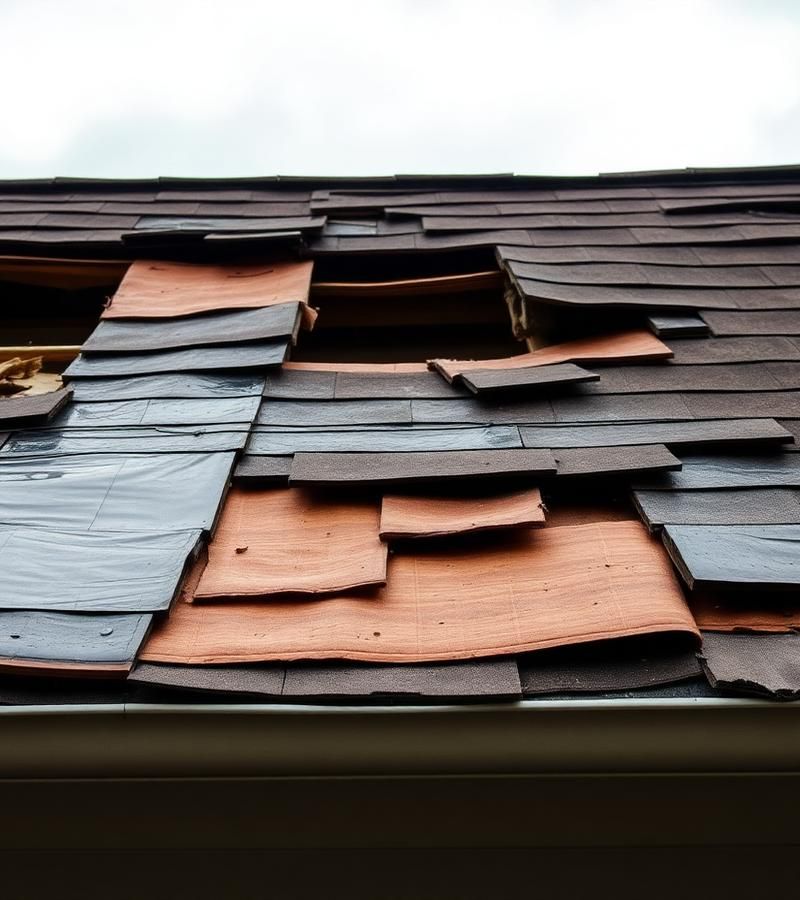
- Missing Shingles: Areas where entire shingles or significant fragments have blown off, exposing the underlayment or decking.
- Cracked or Curled Shingles: Shingles that are visibly cracked, bent, or curling at the edges. This often indicates advanced aging or heat damage.
- Blistered Shingles: Small, raised bubbles on the shingle surface, a sign of manufacturing defects or trapped moisture.
- Discoloration or Dark Patches: These could be algae or moss growth (which retains moisture) or areas where granules have eroded significantly, exposing the dark asphalt beneath. While cosmetic, extensive moss can lift shingles.
Roofing · Missing shingles
| Project category | Roofing |
|---|---|
| Problem type | Missing shingles |
| Trade required | Roofing |
| Urgency | Urgent — within days |
| Safety risk | High safety risk |
| DIY suitability | Pro recommended |
| Cost category | Low cost |
| Typical timeline | Typically a same-visit repair |
| Contractor type | Licensed roofing contractor |
Repair option
Replace the missing shingles and reseal surrounding courses before the next rain.
Replacement option
Replacement when matching is impossible or loss is widespread across slopes.
Common causes
- High wind lifting the sealant strip
- Improper nailing at install
- Brittle shingles past their service life
Relevant tools:repair or replace roofproject cost estimator
Published May 3, 2026Last updated August 17, 2026
Tools & materials you'll need
Affiliate links- AmazonBinoculars1 pair · 8x42 or 10x42 magnification recommended
- AmazonSmartphone or Digital CameraWith good zoom for documentation
- AmazonNotebook and Pen1 each · For recording observations
- AmazonWork GlovesNot strictly necessary for ground inspection, but good to have for incidental debris handling
No materials required.
As an Amazon Associate FixlyGuide earns from qualifying purchases — at no extra cost to you. Prices and availability are accurate as of publication and subject to change.
Quick Answer
Why do many homeowners overlook essential roof problems?
You can effectively inspect your roof for common problems like missing shingles, granule loss, and damaged flashing from the ground. With a good pair of binoculars and a systematic approach, you can identify issues like discoloration, sagging, or debris accumulation. Early detection of these signs can indicate underlying problems, helping you address them before they escalate into more significant and costly repairs. This ground-level inspection method is a safe and practical first step in regular roof maintenance.
The Problem
Your roof is your home's first line of defense against the elements, yet it's often the most neglected component. Many homeowners either assume their roof is fine until a leak appears or they believe a professional inspection is the only way to catch problems. The reality is, significant roof damage can develop subtly over time – from harsh weather, aging materials, or even wildlife – and these issues can be surprisingly visible from the ground if you know what to look for. Ignoring these early warning signs can lead to severe consequences: water intrusion, structural damage, mold growth, diminished energy efficiency, and ultimately, premature roof replacement costing tens of thousands of dollars. The core problem is a lack of awareness and a fear of heights preventing routine, proactive 'eyes-on' inspections.
Catching issues like compromised shingles, clogged gutters, or failing flashing early can save you thousands in repairs and extend the life of your roof. This guide empowers you to perform a thorough, safe, and effective ground-level inspection, identifying critical flaws long before they turn into emergencies.
How It Works
Why is a roof a surprisingly complex system?
Understanding how your roof works is crucial for knowing what to look for during an inspection. A residential roof is more than just shingles; it's a sophisticated system designed to shed water, protect your home from UV radiation, and contribute to your home's insulation and ventilation. At its core, the roof system typically consists of several layers:
- Roof Decking: Usually plywood or OSB (oriented strand board), this forms the structural base, providing a nailing surface for the rest of the roof.
- Underlayment: This felt or synthetic material is applied over the decking, providing an essential secondary barrier against water penetration in case the primary roofing material is compromised.
- Flashing: Critical metal pieces (often aluminum or galvanized steel) used to seal joints, valleys, chimneys, vents, and other penetrations in the roof. Flashing directs water away from vulnerable areas. Without proper flashing, water would easily seep into the home at these junctures.
- Roofing Material: The outermost layer, most commonly asphalt shingles in North America. Shingles are designed to overlap, creating a channel system that directs water downwards and off the roof. Granules on asphalt shingles protect the asphalt from UV degradation and add fire resistance.
- Gutters and Downspouts: While technically separate, these components are integral to the roof's water management system. They collect rainwater runoff from the roof edge and divert it safely away from the foundation. Clogged gutters can cause water to back up, leading to fascia damage, ice dams, and even water intrusion into the attic or walls.
- Soffit and Fascia: The soffit is the underside of your roof's eaves (the part that overhangs the walls), often perforated to allow attic ventilation. The fascia is the board running along the edge of the roof, commonly where gutters are attached. These components protect the rafter tails and provide aesthetic finish.
During a ground inspection, you're essentially looking for visual cues that indicate one or more of these system components are failing or compromised. Granule loss on shingles, for example, suggests the roofing material is losing its UV protection. Bent or missing flashing indicates a direct breach in the water barrier at a critical seam. Sagging sections might point to decking or structural issues. Understanding the function of each part helps you interpret the visual signs you'll observe.
Step-by-Step Fix
Always prioritize safety. Never get on your roof unless you are trained and have proper safety equipment. This guide focuses strictly on ground-level inspection.
1. Gear Up and Set the Scene — Prepare for an effective inspection.
Before you even step out, gather your tools. A good pair of binoculars (8x42 or 10x42 are ideal) will be your most important asset. A digital camera or smartphone with a good zoom is also helpful for documenting specific issues you find. Choose a bright, clear day for your inspection – overcast conditions can obscure shadows and make it harder to spot subtle damage. Ensure your phone is charged for photos. Walk around your home first to get a sense of your property's surroundings.
2. Perform a Perimeter Walk-Around — Look for obvious ground-level clues.
Start your inspection by walking slowly around the entire perimeter of your home. Look at the ground directly beneath the roofline. Are there excessive shingle granules in your gutters or on the ground? This indicates shingle erosion. Are there any pieces of flashing, broken shingle fragments, or other roof debris? Note their location. Also, observe your gutters at this stage — are they sagging, overflowing with debris, or pulling away from the fascia? This can lead to significant water damage.
- If you find many granules: Take a photo. This is a strong indicator that your shingles are nearing the end of their lifespan and losing their UV protection. This doesn't mean immediate replacement, but it signals accelerated aging.
- If you see shingle pieces: Attempt to identify where they might have come from. Even small pieces can indicate larger areas of vulnerability.
3. Scan for Missing or Damaged Shingles — Use binoculars for a close-up view.
Stand at various vantage points around your home and systematically scan your entire roof surface using binoculars. Look for:
-
Missing Shingles: Areas where entire shingles or significant fragments have blown off, exposing the underlayment or decking.
-
Cracked or Curled Shingles: Shingles that are visibly cracked, bent, or curling at the edges. This often indicates advanced aging or heat damage.
-
Blistered Shingles: Small, raised bubbles on the shingle surface, a sign of manufacturing defects or trapped moisture.
-
Discoloration or Dark Patches: These could be algae or moss growth (which retains moisture) or areas where granules have eroded significantly, exposing the dark asphalt beneath. While cosmetic, extensive moss can lift shingles.
-
Tip: Look for abrupt changes in texture or color across the roof surface. A missing shingle often creates a stark contrast against its intact neighbors.
4. Examine the Ridge and Hips — These high-stress areas often show wear first.
The ridge (the peak of your roof) and hips (where two roof planes meet in a sloped line) are particularly vulnerable to wind damage and wear. Use your binoculars to specifically scrutinize the cap shingles along these lines. Look for:
- Loose, Missing, or Misaligned Cap Shingles: These areas are exposed to direct wind and often take the brunt of storms.
- Cracks or Deterioration: The cap shingles here are often thicker and more exposed, so look for signs of cracking or granule loss.
- If you see significant damage here: These areas are primary entry points for water. Document thoroughly and prepare for a professional repair estimate.
5. Inspect All Flashing Points — Critical for preventing leaks at penetrations.
Flashing is arguably the most critical component for preventing leaks, and it's often the first to fail due to expansion, contraction, and direct exposure. Using binoculars, carefully inspect the flashing around:
-
Chimneys: Look for deteriorated mortar, gaps between the flashing and the chimney, or detached counter-flashing.
-
Vent Pipes: Check for cracks in the rubber boots (collar) around plumbing vents, or signs of rust on metal flashing.
-
Skylights: Look for gaps, cracks in the sealant around the frame, or signs of rust.
-
Valleys: These are the V-shaped channels where two roof sections meet. Look for missing or damaged shingles, debris accumulation, or compromised metal flashing within the valley. Valleys are major waterways and must be completely watertight.
-
Warning: Rust on metal flashing is an immediate red flag. It compromises the material and indicates an ongoing moisture problem.
6. Check for Sagging or Uneven Areas — Signs of structural concerns.
Step back from your house and observe the roofline from multiple angles, trying to get a perspective that allows you to see the entire plane. Look for any areas that appear to sag, dip, or are noticeably uneven. While subtle, a significant sag can indicate serious issues like:
-
Damaged or Weakened Rafters/Trusses: Which support the roof structure.
-
Water Damage to the Roof Decking: Heavy water saturation can weaken plywood.
-
Excessive Weight: Such as heavy snow loads, or even significant debris accumulation over time.
-
If you notice a sag: This is a strong indicator for immediate professional assessment. Structural issues can rapidly worsen and pose safety risks.
7. Evaluate Gutters and Downspouts — Crucial for water diversion.
While not strictly part of the roof covering, gutters and downspouts are extensions of its water management system. A malfunctioning gutter system can cause water to back up onto the roof, leading to fascia rot, soffit damage, and even foundation problems. Look for:
-
Clogs: Visible leaves, twigs, or shingle granules overflowing or packed into gutters.
-
Sagging or Detachment: Gutters pulling away from the fascia, indicating loosened fasteners or excessive weight.
-
Rust or Holes: Anywhere in the gutter troughs or downspouts.
-
Improper Downspout Diversion: Downspouts that dump water directly against the foundation rather than diverting it several feet away.
-
Quick Fix: Use a hose on low pressure to test if water flows freely through your gutters and downspouts. If not, they are likely clogged and need cleaning.
8. Document Your Findings — Create a clear record.
As you conduct your inspection, take notes and photos of everything you find – both good and bad. This documentation serves several purposes:
- For Professionals: If you need to call a roofer, clear photos and notes will help them understand the issues before they even arrive, potentially saving you money on the initial assessment.
- For Insurance: In case of a claim, clear documentation of pre-existing conditions or new damage is invaluable.
- For Yourself: It allows you to track wear and tear over time and prioritize repairs. Note the date of inspection and specific locations of observed issues.
Common Causes
- Extreme Weather: High winds (common cause of missing shingles), heavy rain (exacerbates flashing failures), hail (creates dents or pockmarks on shingles), and intense UV radiation all contribute to roof degradation. Hail damage can be hard to spot as it often looks like small, dark bruises.
- Age and Material Degradation: All roofing materials have a lifespan. As asphalt shingles age, they lose their protective granules, become brittle, curl, and crack. Metal flashing can rust, sealants can dry out and crack, and rubber components degrade from UV exposure.
- Poor Installation: Incorrectly installed shingles, insufficient nailing, improperly sealed flashing, or inadequate ventilation can drastically shorten a roof's life and lead to premature failure. This is often harder to detect from the ground but manifests as early, widespread material deterioration.
- Debris Accumulation: Leaves, twigs, and other organic matter accumulating in valleys or gutters can trap moisture, promote moss and algae growth, and accelerate deterioration of shingles and decking beneath. This also obstructs proper water flow.
- Poor Attic Ventilation: Inadequate ventilation leads to heat and moisture buildup in the attic, which can cook shingles from the inside out, causing them to curl, blister, and age prematurely. It also contributes to ice dam formation in colder climates.
- Wildlife Damage: Squirrels, raccoons, and birds can damage vents, soffits, and even chew through shingles or underlayment to gain entry into an attic, creating immediate leak points.
Common Mistakes
- Assuming a young roof is problem-free: Even newer roofs can have manufacturing defects or suffer damage from severe weather shortly after installation. Regular inspection is always warranted.
- Ignoring minor issues: A small crack in a shingle today can be a major leak tomorrow. What seems insignificant can quickly escalate into a substantial repair, especially when multiple small issues combine.
- Only inspecting after a disaster: Waiting for a visible leak inside your home or after a major storm means the damage is likely already extensive. Proactive, routine inspections are key to prevention.
- Neglecting gutters and downspouts: Clogged gutters are one of the most common causes of roof edge damage, fascia rot, and foundation problems, yet they are often overlooked during a
Related Articles
Keep troubleshooting with these hand-picked guides from FixlyGuide:
- The 9 Sneaky Signs Your Roof Is Failing (And How to Spot Them From the Ground) — Learn to spot critical signs of roof damage from the safety of the ground, potentially saving thousands in repairs.
- The 7 Critical Home Inspection Mistakes Most Homeowners Make (and How to Spot Them) — Discover the crucial home inspection mistakes homeowners commonly overlook and learn how to identify potential problems before they become…
- The 7 Sneaky Home Problems Spring Reveals (Before They Cost You Thousands) — Spring weather can expose hidden issues around your home that could lead to costly repairs if not addressed proactively.
- The 3 Hidden Soffit & Fascia Flaws Costing You Thousands — Learn to identify common signs of soffit and fascia damage, perform basic repairs, and implement preventative measures to protect your home…
- The 7 Fall Chores Most Homeowners SKIP (And Why They'll Cost You Thousands) — Don't let autumn's beauty distract you from these critical home maintenance tasks that can prevent costly damage and ensure a cozy winter.
- Is Your Roof Hiding Hail Damage From You? — Hail damage to asphalt shingles is often invisible from the ground. Learn to identify the subtle signs of bruising, granule loss, and fract…
Estimate your own project cost
National averages are a starting point. Enter your details for a range that fits your house.
Roof replacement cost
- Per square (installed)$604 – $866
Add $500–$2,500 if decking is rotten and needs replacement. Storm damage may be covered by insurance.
Educational estimate only — always confirm with written local bids.
Questions to ask before you sign
Ask every contractor the same questions and the cheapest bid stops looking cheapest. Check them off as you go — your progress is saved on this device.
Free, no signup. Bring this to every walkthrough so you compare bids on the same terms.
What should this project cost?
Enter your project details for a realistic cost range before you call anyone.
Spot repairs commonly run $400–$1,800; full replacement typically $9,000–$18,000 for an average home.
- Regional adjustment
- National average
- Labor share (typical)
- ~$2,948
- Quotes to collect
- 3 written estimates
Educational estimate based on national averages — not a binding quote. Always confirm with written local estimates.
Fixly Project Decision Box
- DIY difficulty
- Professional Recommended
- Estimated time
- Inspection 1–2 hours · repairs 1–3 days
- Cost level
- High
Main tools / materials
- Binoculars for a ground-level look
- Flashlight for attic checks
- Moisture meter
- Roofing cement (temporary patch only)
When to stop and call a pro
- Active leak near lights, fans, or any wiring
- Sagging, bulging, or water-filled ceiling
- Steep, wet, or two-story roof — do not climb it
- Storm or hail damage you plan to claim on insurance
Need professional help?
Free roof assessment first — no phone calls until you ask for them.
Get Local Roofing HelpPrice your roof project
Check the numbers in this guide against your own roof and ZIP code.
Free, no signup required. Estimates are educational guidance, not a quote or an inspection.
Recommended for DIYers & woodworkers
Sponsored
The Top 20 Tools for Workshops of Any Budget
No stationary machines or power tools required — plus 3 fundamental tools that can't be bought at any price.
Get the free guide
Ted's Woodworking — The #1 Woodworking Resource
Detailed instructions, dimensioned drawings, materials & cutting lists, and 3D schematics for every skill level.
See the plansSponsored: links above are affiliate links. FixlyGuide may earn a commission on qualifying purchases — at no extra cost to you.
Frequently asked questions
How often should I inspect my roof from the ground?+
You should inspect your roof from the ground at least twice a year, ideally in the spring and fall. Additionally, perform an inspection after any major weather event, such as a severe thunderstorm, high winds, or a heavy hail storm, to check for new damage.
What tools do I need for a ground-level roof inspection?+
The primary tool you'll need is a good pair of binoculars (8x or 10x magnification is ideal). A digital camera or smartphone with a good zoom feature is also recommended for documenting any issues you find. No other specialized tools are usually required for a ground-level check.
Is it safe to get on my roof for a closer look?+
Unless you are a trained professional with proper safety equipment, it is generally NOT safe for a homeowner to get on the roof. Roofs can be slippery, steep, and dangerous. This guide focuses specifically on inspecting your roof from the safety of the ground, which is sufficient for identifying most common problems. If you suspect a serious issue that requires a closer look, always call a licensed roofing professional.
What does 'granule loss' mean and why is it important?+
Granule loss refers to the small, sand-like ceramic particles that shed from asphalt shingles. These granules protect the asphalt from UV rays, which can cause the shingle to dry out and become brittle. Excessive granule loss (often seen in gutters or on the ground) indicates that the shingles are aging, losing their protective qualities, and becoming more vulnerable to weather damage. It's a sign that your roof's lifespan may be nearing its end.
Can moss or algae on my roof cause damage?+
Yes, moss and algae can cause damage. Moss retains moisture against the roof surface, which can lead to moisture saturation of the shingles and even the roof deck. It can also cause shingles to lift and curl, making them vulnerable to wind and water. While algae is primarily cosmetic, severe cases can also indicate a moisture problem. It's best to address significant growth of either to preserve your roof's integrity.


Discussion
Loading comments…