- Poor Attic Insulation: Insufficient insulation in your attic allows heat from your living space to rise and warm the roof deck, melting snow from below.
- Air Leaks into Attic: Gaps around recessed lights, attic hatches, plumbing vents, electrical wiring penetrations, and chimney chases allow warm, moist air to escape directly into the attic, accelerating roof melting.
- Clogged or Frozen Gutters: Gutters packed with leaves, debris, or ice can prevent meltwater from draining, providing an initial dam around which more ice accumulates.
- Sunny, Cold Conditions: A combination of cold ambient temperatures (below freezing) and direct sunlight can cause snow to melt on exposed roof surfaces, then refreeze at the colder eaves.
General remodeling · Renovation planning
| Project category | General remodeling |
|---|---|
| Problem type | Renovation planning |
| Trade required | General contracting |
| Urgency | Planned project |
| Safety risk | Low safety risk |
| DIY suitability | Pro recommended |
| Cost category | Major investment |
| Typical timeline | Design and permitting often 2–4 months before work starts |
| Contractor type | General contractor |
Repair option
Phase the work and fix the building envelope first.
Replacement option
Full renovation with permits, design, and a general contractor.
Common causes
- Space no longer fits how the household lives
- Resale preparation
- Deferred maintenance stacking up
Relevant tools:project cost estimatorcompare quoteshome improvement material prices
Published April 26, 2026Last updated August 17, 2026
Tools & materials you'll need
Affiliate linksAs an Amazon Associate FixlyGuide earns from qualifying purchases — at no extra cost to you. Prices and availability are accurate as of publication and subject to change.
Quick Answer
Ice dams are ridges of ice that form at the edge of your roof, preventing melting snow from draining properly. This trapped water can then back up under your shingles, leading to significant water damage inside your home. The safest and most effective DIY method involves using a calcium chloride-filled sock to melt channels through the dam, allowing water to escape without resorting to harsh impacts or heat that could damage your roof. This approach costs little and can be done with items readily available.
The Problem
That beautiful winter wonderland scene outside your window can quickly turn into a costly nightmare when ice dams form on your roof. These frozen barriers are not just an aesthetic issue; they're a serious threat to your home's structural integrity and interior. When warm air from your attic escapes and heats the underside of your roof, it melts the overlying snow. As this water flows down the roof, it refreezes when it hits the unheated eaves, where temperatures are below freezing. Over time, this creates a thick ridge of ice, an ice 'dam'.
Behind this dam, meltwater from the warmer parts of your roof pools. This standing water, unable to drain over the ice dam, then creeps under your shingles by capillary action. Once beneath the shingles, it can saturate the roof decking, insulation, and eventually leak into your attic, walls, and ceilings. The results include stained plaster, peeling paint, warped floors, ruined insulation, and even structural rot and mold growth. Each season, countless homeowners face thousands of dollars in repairs due to ice dams, making early detection and safe removal crucial.
How It Works
Understanding how ice dams form is key to preventing and removing them. The core issue is uneven roof temperature. Your attic, ideally, should be almost as cold as the outside air. However, if there's insufficient insulation or poor air sealing at the ceiling level, warm conditioned air from your living space will seep into the attic. Additionally, solar radiation can warm the exposed roof surface.
This warmth conducts through the roof decking, melting the snow directly in contact with the shingles. This molten water flows down the roof slope, beneath the blanket of snow. When it reaches the eaves – the parts of the roof that extend beyond the exterior walls – there's no warm attic space beneath them. Here, the roof deck cools to the ambient outdoor temperature, which is often below freezing in winter.
As the meltwater hits this colder surface, it refreezes, forming a small ridge of ice. As more meltwater accumulates and continually refreezes at this cold edge, the ice dam grows larger and thicker. This dam then acts as a barrier, trapping subsequent meltwater higher up on the roof. This trapped water, instead of draining into the gutters, is forced to pool behind the dam. If the dam is thick enough and the water pools sufficiently, it will eventually find its way under the shingles, through nail holes, or compromised seals, leading to leaks.
Gutters play a role here too. If they are filled with ice, they exacerbate the problem by providing an even larger surface for ice to build up. The goal of safe ice dam removal often isn't to remove the entire dam at once, but rather to create channels within it, allowing the trapped water to flow freely off the roof.
Step-by-Step Fix
1. Prioritize Safety – Always Think About Falls
— Before attempting any work on your roof, assess the conditions. Is the roof wet, icy, or covered in fresh snow? If so, the risk of slipping is extremely high. Use a sturdy ladder, ensure it's properly secured, and ideally have someone spot for you. Consider using a roof harness if you have one and are comfortable with it. Never work on a ladder or roof during high winds or heavy precipitation. If the roof slope is steep or the conditions are treacherous, call a professional.
2. Prepare Your Calcium Chloride Sock – The Gentle Melter
— This is the safest and most effective DIY method. Don't use rock salt (sodium chloride) as it can damage shingles, plants, and concrete. Calcium chloride is safe for most roofing and landscaping materials and works at lower temperatures.
- Materials: Old knee-high pantyhose or a long, thin cotton sock, calcium chloride ice melt pellets (available at hardware stores), rubber gloves.
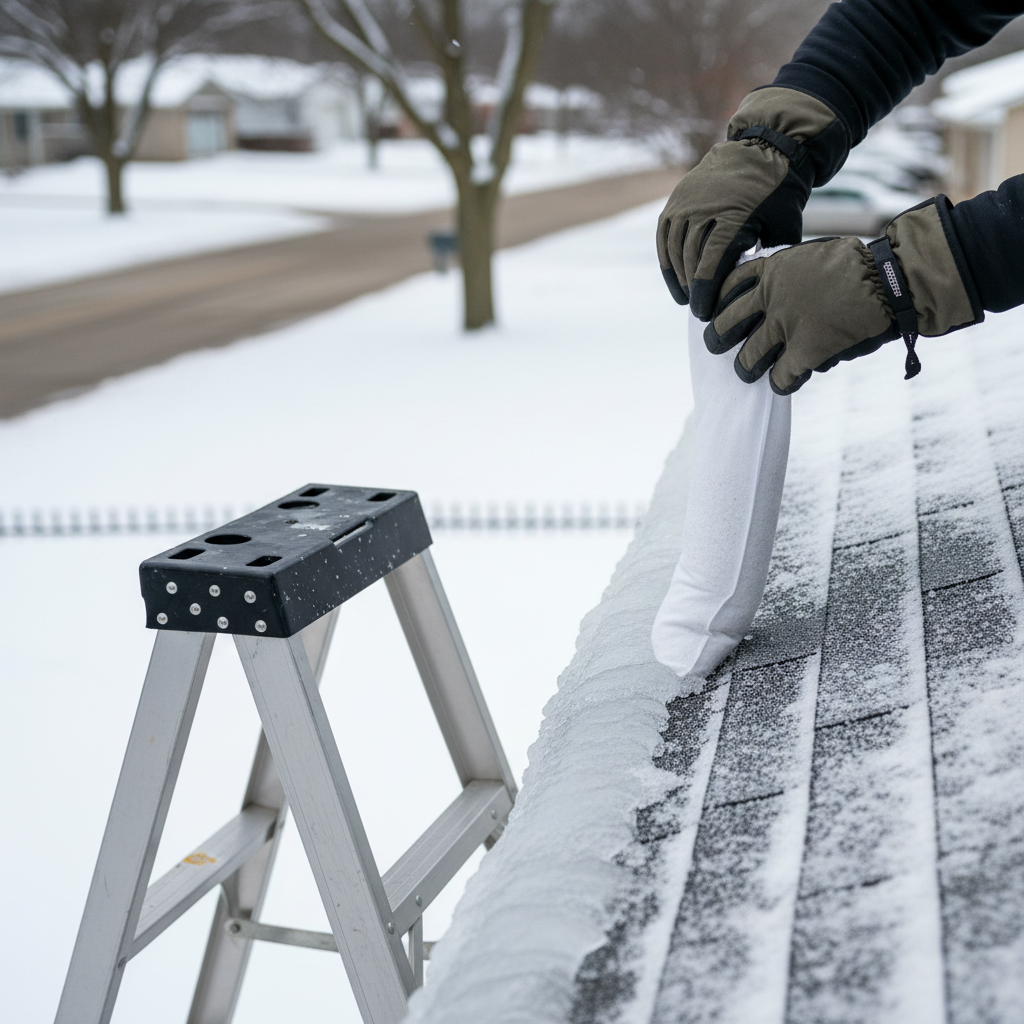
- Process: Put on rubber gloves. Carefully fill the sock or pantyhose with calcium chloride pellets. Don't overfill it; you want it to be flexible enough to conform to the ice dam. Tie a secure knot at the end. Aim for a length of 2-3 feet.
3. Carefully Place the Calcium Chloride Sock – Create Water Channels
— The goal isn't to melt the entire dam, but to create narrow channels for the trapped water to flow off the roof.
- Method: From your ladder, or very carefully on a low-slope roof, gently lay the filled sock across the ice dam, perpendicular to the roof edge. Position it so it spans from above the water-pooling area to the edge of the gutter or just beyond the eave. The calcium chloride will slowly melt a channel through the ice.
- Placement: Place multiple socks parallel to each other, about 2-3 feet apart, to create several drainage paths. Avoid dragging the socks across shingles, which can dislodge granules.
4. Monitor and Adjust – Patience is Key
— Melting won't happen instantly. Depending on the thickness of the ice dam and the ambient temperature, it could take several hours or even a full day for the channels to form.
- Observation: Periodically check the progress from the ground or your ladder. You should see water beginning to drip from the eaves where the channels are forming. If a sock appears stuck or not melting effectively, gently nudge it with a long broom or rake handle from the ground (if safe to do so).
- Replenishment: If the channels aren't deep enough after 24 hours, you may need to replace the calcium chloride sock with fresh material, as the pellets dissolve over time.
5. Remove Loose Ice – Gentle Clearance
— Once channels have formed and the trapped water has drained, some sections of the ice dam may become loosened.
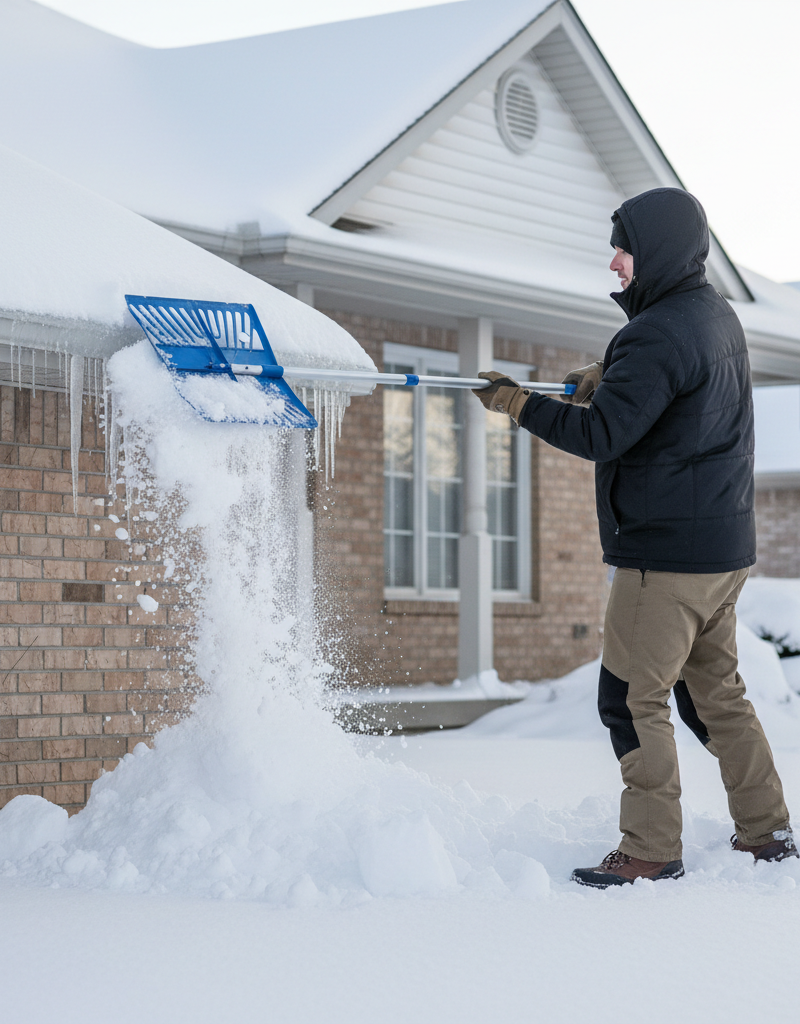
- Tool: Use a roof rake with a long extension handle from the ground. Avoid stepping on the ladder if you can manage from a safe position.
- Technique: Gently push or pull at the loosened sections of ice. Never strike the ice directly with an aggressive chopping motion using a shovel or pickaxe, as this can severely damage shingles, gutters, and even the roof decking. The goal is to encourage natural breakage and slide, not forced removal.
6. Clear Gutters and Downspouts – Ensure Free Flow
— Clogged gutters full of ice and debris contribute significantly to ice dam formation.
- Inspection: Once the ice dam crisis is resolved, or if it's safe to do so during the process, inspect your gutters. If they are still full of ice, the channels you've created might just back up again.
- Gutter De-icing: Consider placing small amounts of calcium chloride (in socks) directly into frozen sections of gutters to help clear them, but be mindful of potential damage to certain gutter materials if left for extended periods.
7. Address the Root Cause – Prevent Future Dams
— Removing the ice dam is a temporary fix. The long-term solution lies in addressing the underlying issues of heat loss and ventilation.
- Inspection: After the snow melts and winter passes, inspect your attic. Look for signs of insufficient insulation, especially in the eaves, and identify any air leaks (e.g., around light fixtures, plumbing vents, or attic hatches) where warm air can escape.
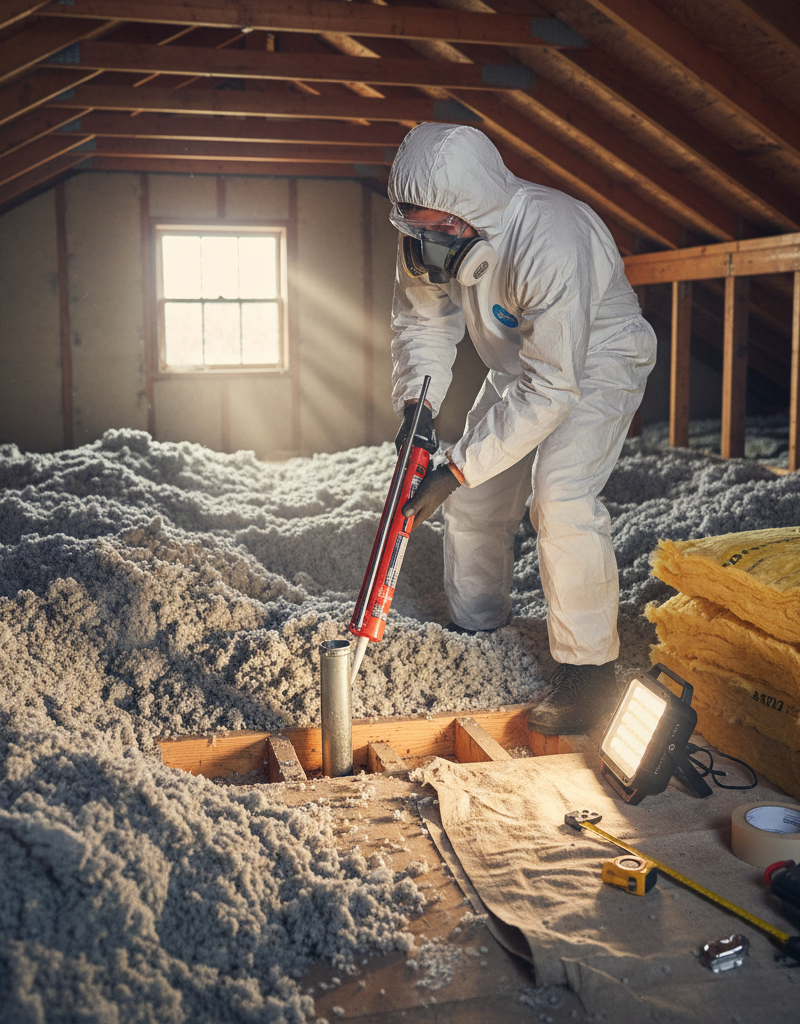
- Improvement: Seal air leaks with caulk or expanding foam, and add insulation to meet recommended R-values for your climate zone. Ensure attic ventilation (soffit and ridge vents) is clear and unobstructed to allow cold air to circulate and keep the roof deck cool.
Common Causes
- Poor Attic Insulation: Insufficient insulation in your attic allows heat from your living space to rise and warm the roof deck, melting snow from below.
- Air Leaks into Attic: Gaps around recessed lights, attic hatches, plumbing vents, electrical wiring penetrations, and chimney chases allow warm, moist air to escape directly into the attic, accelerating roof melting.
- Inadequate Attic Ventilation: Proper attic ventilation (e.g., soffit and ridge vents working together) creates a natural airflow that helps keep the attic space cold, mitigating temperature differences between the upper and lower parts of the roof.
- Clogged or Frozen Gutters: Gutters packed with leaves, debris, or ice can prevent meltwater from draining, providing an initial dam around which more ice accumulates.
- Sunny, Cold Conditions: A combination of cold ambient temperatures (below freezing) and direct sunlight can cause snow to melt on exposed roof surfaces, then refreeze at the colder eaves.
Common Mistakes
- Using a Sledgehammer or Axe: Aggressively striking ice dams with heavy tools is a surefire way to damage shingles, puncture the roof membrane, dent gutters, and risk serious injury. This causes far more damage than the ice dam itself.
- Applying Heat Directly: Using a blowtorch, heat gun, or powerful hot water sprayer directly on the ice is extremely dangerous. It can ignite roofing materials, melt plastic components, warp shingles, and create dangerous slip hazards from rapidly melting water.
- Using Rock Salt (Sodium Chloride): Regular rock salt corrodes metal gutters and downspouts, damages asphalt shingles by delaminating granules, and can harm plants and concrete pathways below as the salty runoff drains.
- Standing on the Damaged Area: Walking directly on the ice dam or on icy parts of the roof is incredibly risky. Falls from roofs and ladders are a leading cause of winter injuries and fatalities.
- Neglecting the Root Cause: Simply removing ice dams without addressing the underlying issues (insulation, ventilation, air sealing) means you'll be fighting the same battle repeatedly, year after year.
- Ignoring Gutter Health: Overlooking clogged gutters before winter or failing to clear them during mild spells significantly contributes to ice dam formation and exacerbates drainage problems.
Cost & Time Breakdown
| Task | DIY cost | Pro cost | Time |
|---|---|---|---|
| Calcium chloride ice melt | $20–$30 | N/A | 15–30 min |
| Ladder (if needed) | $0 (own) / $50-$200 (buy) | N/A | N/A |
| Roof rake (if needed) | $40–$70 | N/A | N/A |
| Active removal (per incident) | $20–$30 | $300–$800+ | 1–4 hours |
| Attic air sealing & insulation | $200–$1,000+ | $1,000–$5,000+ | 8–20 hours |
Tips & Prevention
- Improve Attic Insulation: Ensure your attic has adequate insulation (R-49 to R-60 in most cold climates) to prevent heat transfer to the roof deck. Pay special attention to consistent coverage, avoiding gaps.
- Seal Attic Air Leaks: Caulk and seal around all penetrations into your attic, such as light fixtures, exhaust fan openings, plumbing stacks, and chimney chases. Consider a well-sealed attic hatch.
- Enhance Attic Ventilation: Ensure you have a balanced ventilation system with adequate soffit (intake) and ridge (exhaust) vents. This allows cold air to circulate and keeps the entire roof deck cold.
- Clear Gutters Regularly: Before winter sets in, ensure your gutters are completely free of leaves and debris. This allows for proper drainage of meltwater.
- Use a Roof Rake Proactively: After heavy snowfalls, use a long-handled roof rake from the ground to clear the bottom 3-4 feet of snow from your roof. This removes the
Related Articles
Keep troubleshooting with these hand-picked guides from FixlyGuide:
- That melting ice could cost you $20,000 in water damage — Safely removing ice dams protects your roof and prevents costly water damage to your home.
- One Shower, No Hot Water? The Hidden Mixing Valve Trick Plumbers Use — Discover why only one shower in your home might lack hot water and the simple internal fix for a common mixing valve issue, saving you a pl…
- The 7 Fall Chores Most Homeowners SKIP (And Why They'll Cost You Thousands) — Don't let autumn's beauty distract you from these critical home maintenance tasks that can prevent costly damage and ensure a cozy winter.
- The Secret Cause of Your Constantly Dying LED Bulbs (It's Not Overheating!) — Discover the surprising reasons why your LED bulbs might be failing prematurely, and how simple fixes can save you money and hassle.
- Your Windows Are Crying. Here's What They're Telling You. — Window condensation is more than an annoying fog; it's a clear sign that your home's indoor humidity is too high, a problem that can lead t…
- Those Gutter Icicles Are a Costly Warning Sign — Discover why the icicles on your gutters are a flashing red light for ice dams, a destructive problem that can lead to costly water damage…
What should this project cost?
Enter your project details for a realistic cost range before you call anyone.
Spot repairs commonly run $400–$1,800; full replacement typically $9,000–$18,000 for an average home.
- Regional adjustment
- National average
- Labor share (typical)
- ~$2,948
- Quotes to collect
- 3 written estimates
Educational estimate based on national averages — not a binding quote. Always confirm with written local estimates.
Fixly Project Decision Box
- DIY difficulty
- Professional Recommended
- Estimated time
- Inspection 1–2 hours · repairs 1–3 days
- Cost level
- High
Main tools / materials
- Binoculars for a ground-level look
- Flashlight for attic checks
- Moisture meter
- Roofing cement (temporary patch only)
When to stop and call a pro
- Active leak near lights, fans, or any wiring
- Sagging, bulging, or water-filled ceiling
- Steep, wet, or two-story roof — do not climb it
- Storm or hail damage you plan to claim on insurance
Need professional help?
Free roof assessment first — no phone calls until you ask for them.
Get Local Roofing HelpDecide what your roof needs
Two minutes of questions turns "something is wrong up there" into a clear next step.
- Repair or replace your roof?Answer 10 questions about age, leaks, and damage to get a clear next step.Open
- Compare contractor quotesScore up to four bids on price, warranty, licensing, and timeline.Open
- Get local estimatesSend one request and compare written estimates from vetted pros.Open
Free, no signup required. Estimates are educational guidance, not a quote or an inspection.
Recommended for DIYers & woodworkers
Sponsored
The Top 20 Tools for Workshops of Any Budget
No stationary machines or power tools required — plus 3 fundamental tools that can't be bought at any price.
Get the free guide
Ted's Woodworking — The #1 Woodworking Resource
Detailed instructions, dimensioned drawings, materials & cutting lists, and 3D schematics for every skill level.
See the plansSponsored: links above are affiliate links. FixlyGuide may earn a commission on qualifying purchases — at no extra cost to you.
Frequently asked questions
What causes ice dams to form on a roof?+
Ice dams form when warm air from your attic melts snow on the roof, and this meltwater then refreezes at the colder eaves or gutters, creating a barrier that traps more water.
Is it safe to chip away at an ice dam with a shovel?+
No, it is highly unsafe and can cause severe damage to your roof's shingles, gutters, and even the underlying roof structure. Never use aggressive tools like shovels, axes, or sledgehammers to remove ice dams.
Can I use regular rock salt to melt ice dams?+
It's not recommended. Regular rock salt (sodium chloride) can be corrosive to metal gutters, damage asphalt shingles, and harm plants and concrete when the runoff melts. Always use calcium chloride, which is safer for these materials.
How can I prevent ice dams from forming in the first place?+
The best prevention involves improving attic insulation, sealing air leaks from your living space into the attic, ensuring adequate attic ventilation, and keeping gutters clean before winter.
When should I call a professional for ice dam removal?+
You should call a professional if the ice dam is extensive, your roof has a steep pitch, you don't feel safe working on a ladder and roof, or if you're already seeing signs of water damage inside your home.
Discussion
Loading comments…