- Dead or Weak Batteries: The most frequent reason for a non-functional or chirping smoke detector, easily remedied by replacement.
- Expired Unit: Smoke detectors have a finite lifespan, usually 10 years from the manufactured date. Beyond this, sensors degrade and reliability plummets.
- Dust and Debris Accumulation: Over time, dust, lint, and even small insects can clog the sensing chamber, preventing smoke from entering or causing false alarms.
- Improper Placement: Placing a detector too close to a bathroom (steam), kitchen (cooking fumes), or in a dusty garage can lead to frequent false alarms or reduce sensitivity to actual fires.
- Physical Damage: Accidental knocks, paint splatters, or exposure to excessive moisture can damage the unit's internal components.
Electrical · Panel or service upgrade
| Project category | Electrical |
|---|---|
| Problem type | Panel or service upgrade |
| Trade required | Electrical |
| Urgency | Planned project |
| Safety risk | High safety risk |
| DIY suitability | Licensed pro only |
| Cost category | High cost |
| Typical timeline | Permit plus utility scheduling, commonly 2–6 weeks |
| Contractor type | Licensed electrician |
Repair option
Add a subpanel when the main service is adequate.
Replacement option
Full service upgrade with utility coordination and permits.
Common causes
- Obsolete or recalled panel brands
- Service capacity too small for added loads
- No room for required AFCI/GFCI breakers
Relevant tools:project cost estimatorcompare quotes
Published May 6, 2026Last updated August 17, 2026
Tools & materials you'll need
Affiliate linksAs an Amazon Associate FixlyGuide earns from qualifying purchases — at no extra cost to you. Prices and availability are accurate as of publication and subject to change.
Quick Answer
Your smoke detector might be silently failing due to dead batteries, accumulated dust, or simply old age. Many homeowners mistakenly believe a chirping detector is the only sign of trouble, overlooking the fact that a completely silent, non-responsive unit is often a dead one. The critical fix involves monthly testing, a quick clean, and understanding the unit's often-forgotten expiration date, ensuring it's always ready to alert you when it matters most.
The Problem
Imagine the unthinkable: a fire breaks out in your home, and your smoke alarm, the very device designed to save your life, remains silent. This isn't a rare horror story; it's a genuine risk for countless homeowners. We install smoke detectors, often forget about them, and assume they're working until a low-battery chirp rudely reminds us. However, a far more insidious problem exists: a smoke detector that's completely dead, unresponsive, or so compromised by age or grime that it simply won't detect smoke. This creates a dangerous illusion of safety, leaving your family vulnerable to a fire that could have been prevented.
The core issue is a lack of ongoing vigilance. Smoke detectors aren't 'install and forget' devices. They have a lifespan, internal components that degrade, and sensors that can become obstructed. Without regular, proactive checks, you're essentially gambling with your home's safety, hoping a device you haven't truly verified will perform perfectly in a crisis. This article will help you uncover if your smoke detector is silently failing and empower you with the knowledge to maintain this vital safety equipment.
How It Works
Most residential smoke detectors fall into two main categories: ionization and photoelectric. Each detects smoke in a slightly different way, though many modern units now combine both technologies.
Ionization smoke detectors contain two electrically charged plates and a small piece of radioactive material that ionizes the air between the plates, creating a small, constant current. When smoke enters the chamber, it disrupts this current, triggering the alarm. These detectors are generally more responsive to small, fast-moving fires that produce invisible combustion particles, like those caused by flammable liquids or paper fires.
Photoelectric smoke detectors contain a chamber with a light source (usually an LED) and a photosensor positioned at an angle so that the light beam does not normally hit the sensor. When smoke enters the chamber, it scatters the light beam, deflecting some of it towards the sensor, which then triggers the alarm. Photoelectric detectors are typically more effective at detecting large, smoldering fires that produce visible smoke, such as those from upholstery or electrical wiring.
Regardless of the technology, all smoke detectors rely on internal circuitry, a power source (either household current with battery backup or solely battery power), and an alarm horn. Over time, the radioactive material in ionization detectors diminishes, the light source and sensor in photoelectric detectors can become less sensitive, and electronic components can degrade. Dust, grease, and even insects can accumulate in the sensing chamber, blocking smoke entry or causing false alarms. The battery is crucial for backup in wired units and the sole power source in battery-only models. If the battery dies completely, or if the unit itself has exceeded its operational lifespan, the detector simply cannot perform its life-saving function, leading to a 'lying' alarm – one that's present but useless.
Step-by-Step Fix
Safety Note: Always exercise caution when working with electrical devices. If your detector is hardwired, consider turning off the circuit breaker for that circuit before dismounting the unit, especially if you're uncomfortable working near live wires. Never paint or obstruct any part of a smoke detector.
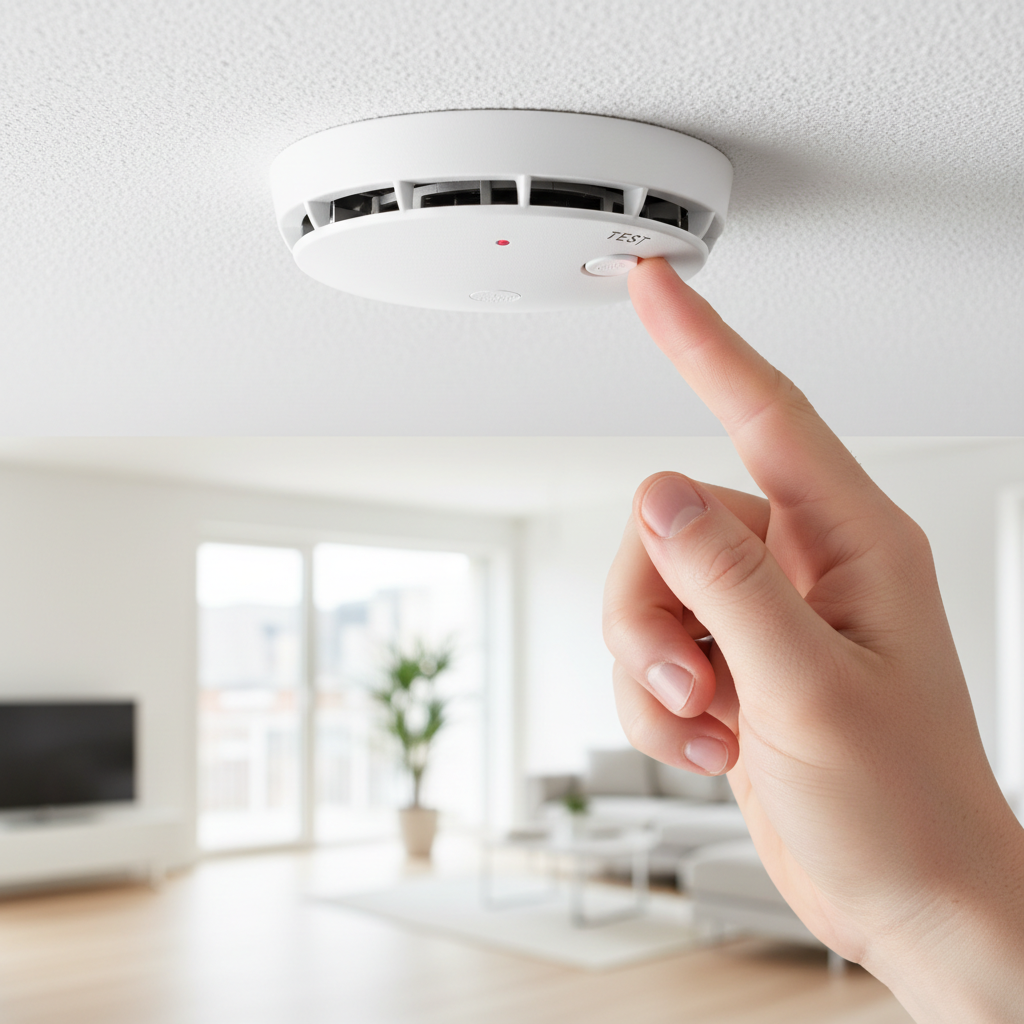
1. Test Your Detector Monthly — The most fundamental check
Press and hold the test button on your smoke detector for several seconds. You should hear a loud, piercing alarm. If it's a combination smoke/CO detector, you might hear distinct patterns for smoke and carbon monoxide. If the alarm is weak, sporadic, or non-existent, proceed to the next steps. Most manufacturers recommend testing weekly or monthly. If you have multiple detectors, test them all.
- Tools: Your finger.
- If this doesn't work: A weak or absent alarm indicates a dead battery, an expired unit, or internal damage.
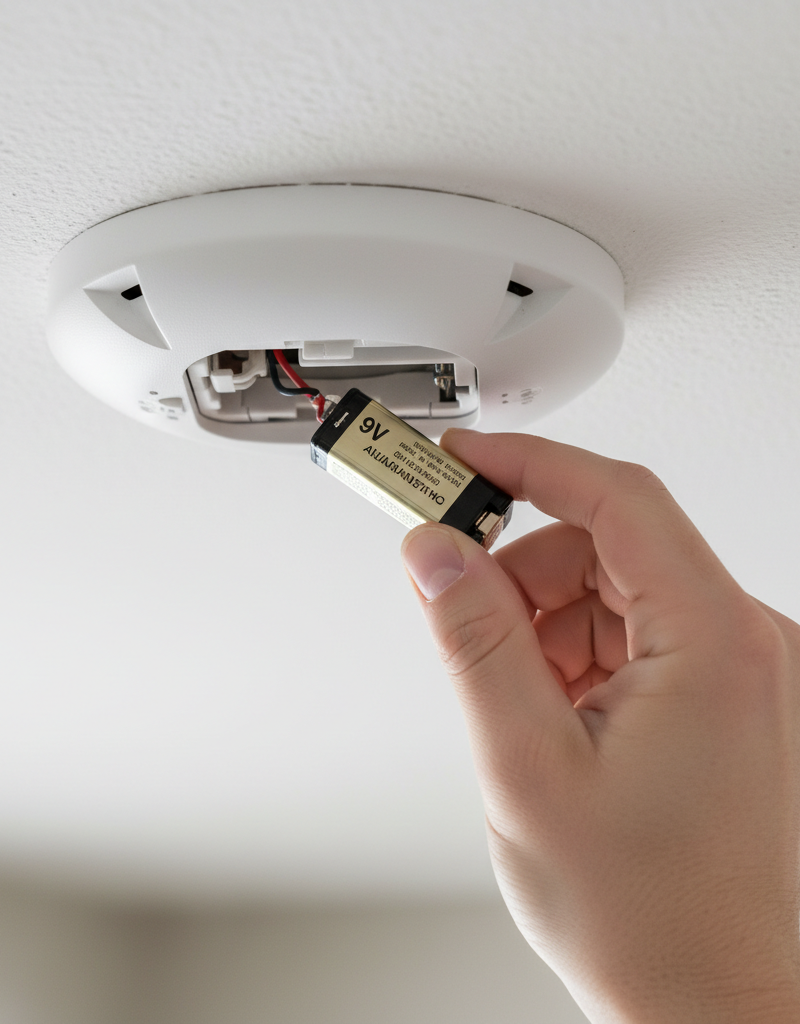
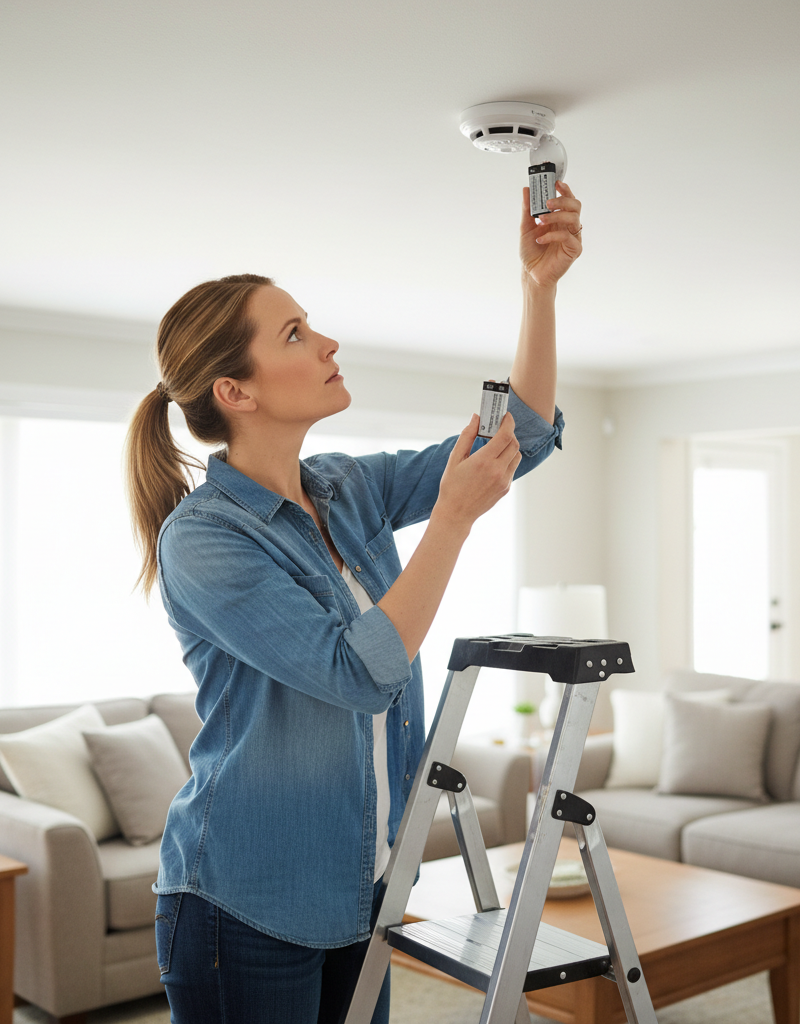
2. Replace Batteries Annually (or as needed) — The common culprit
Even if your detector is hardwired, it likely has a battery backup. For battery-only units, this is its lifeblood. Open the battery compartment (usually a slide-out tray or a twist-off cover), remove the old battery, and insert a fresh alkaline battery (typically 9V, AA, or AAA, depending on the model). Rechargeable batteries are not recommended unless specified by the manufacturer. If your detector chirps after replacing the battery, ensure the battery door is fully closed and the battery is correctly oriented.
- Tools: Screwdriver (if battery compartment is screwed shut), fresh 9V, AA, or AAA batteries.
- Safety: Always use the battery type specified by the manufacturer. Incorrect batteries can damage the unit or reduce its effectiveness.
3. Clean the Sensing Chamber — Removing obstructions
Dust, cobwebs, and even tiny insects can accumulate inside the smoke detector's sensing chamber, interfering with its ability to detect smoke or causing nuisance alarms. Carefully twist the detector counter-clockwise off its mounting bracket (for most models). Use a can of compressed air to gently blow air through the openings around the perimeter. Do not use a vacuum cleaner nozzle directly on the unit, as static electricity can damage electronics. Reattach the unit by twisting clockwise until it clicks into place.
- Tools: Can of compressed air, sturdy step stool.
- Frequency: Clean at least once a year, or more often if your home is particularly dusty or you live in an area with many insects.
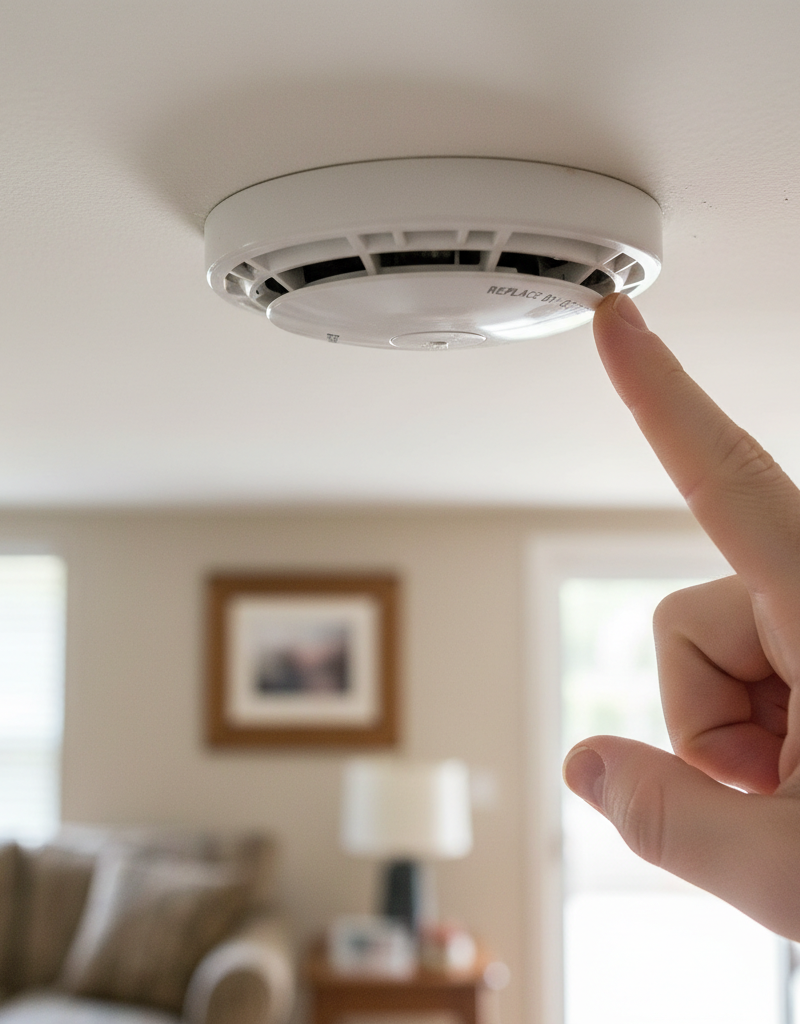
4. Check the Expiration Date — The silent killer
Smoke detectors are not designed to last forever. They have a lifespan, typically 8-10 years from the date of manufacture (not installation). Look for a manufacturing date sticker on the back or side of the unit. If it's more than 10 years old, it needs to be replaced immediately, regardless of whether it seems to be working. The sensors and internal components degrade over time, making older units unreliable.
- Tools: Flashlight (to read small type), your eyes.
- Action: If expired, replace the entire unit. Don't just replace batteries in an expired detector.
5. Verify Interconnectivity (if applicable) — Ensuring whole-home coverage
If you have interconnected smoke detectors (where one alarm triggers all others), test this feature. Press the test button on one detector. After it sounds, listen to see if all other interconnected detectors also sound the alarm. If they don't, there might be a wiring issue (for hardwired units), a faulty unit interrupting the signal, or a programming issue (for wireless interconnected units). Consult your owner's manual for specific troubleshooting steps.
- Tools: Your ears, owner's manual.
- Pro Tip: If you have a specific detector that repeatedly fails to connect, try swapping it with a known good one from another location to see if the problem follows the unit or stays with the location.
6. Replace the Entire Unit if Damaged or Faulty — When all else fails
If, after replacing batteries, cleaning, checking the expiration date, and thorough testing, a smoke detector still fails to alarm, alarms weakly, or constantly gives false alarms, the unit itself is likely faulty or has reached the end of its functional life. It must be replaced with a new one. Choose a model that meets current safety standards (e.g., UL certified) and consider dual-sensor (ionization/photoelectric) or combination smoke/CO detectors for enhanced protection.
- Tools: Screwdriver, new smoke detector unit (matching type for hardwired if possible), wire strippers/nuts (for hardwired replacement).
- Safety: When replacing hardwired units, always shut off power at the breaker first. If you are uncomfortable working with household wiring, call a qualified electrician.
Common Causes
- Dead or Weak Batteries: The most frequent reason for a non-functional or chirping smoke detector, easily remedied by replacement.
- Expired Unit: Smoke detectors have a finite lifespan, usually 10 years from the manufactured date. Beyond this, sensors degrade and reliability plummets.
- Dust and Debris Accumulation: Over time, dust, lint, and even small insects can clog the sensing chamber, preventing smoke from entering or causing false alarms.
- Improper Placement: Placing a detector too close to a bathroom (steam), kitchen (cooking fumes), or in a dusty garage can lead to frequent false alarms or reduce sensitivity to actual fires.
- Physical Damage: Accidental knocks, paint splatters, or exposure to excessive moisture can damage the unit's internal components.
- Electrical Issues (for hardwired units): Loose wiring, a tripped breaker, or a fault in the household current can prevent hardwired detectors from functioning correctly.
Common Mistakes
- Ignoring the Chirp: Many homeowners endure a chirping alarm for days, sometimes even weeks. This usually signifies a low battery; replace it immediately. Leaving it to chirp drains the last bit of power, potentially rendering it useless.
- Not Knowing the Expiration Date: Assuming a detector lasts indefinitely. Always check the manufacturing date! An old detector is a risk, even if it
Related Articles
Keep troubleshooting with these hand-picked guides from FixlyGuide:
- The 7 Head-Scratching Reasons Your Outlet Died (Even With The Breaker On) — Discover the surprising reasons why an electrical outlet might stop working even when its circuit breaker is fully engaged, and how to safe…
- The Hidden Reason Your GFCI Won't Reset (And It's Not Always a Short) — Uncover the mysterious reasons your GFCI outlet refuses to reset and learn the exact steps to diagnose and fix the problem safely, preventi…
- Why Your Extension Cord Keeps Tripping the Breaker (And the Simple Test to Find the Hidden Cause) — Discover why your extension cord keeps tripping the circuit breaker and learn how to safely diagnose and fix the real problem with a simple…
- Why Does Only One Room Have Flickering Lights? The Real Culprit — Flickering lights in a single room often point to a localized electrical issue, most commonly a loose connection within the circuit.
- The Hidden Reason Your Ceiling Fan Wobbles (And 3 Cheap Fixes) — A wobbling ceiling fan isn’t just annoying; it can be a sign of imbalance or loose connections that are simple to fix with the right approa…
- Is Your Gutter Sagging After Every Storm? The Hidden Flaw Most Homeowners Miss — Discover the overlooked reason your gutters sag after every storm and learn the lasting fix that most homeowners miss.
What should this project cost?
Enter your project details for a realistic cost range before you call anyone.
Outlet and switch work usually $150–$400; panel upgrades commonly $1,800–$4,200.
- Regional adjustment
- National average
- Labor share (typical)
- ~$709
- Quotes to collect
- 3 written estimates
Educational estimate based on national averages — not a binding quote. Always confirm with written local estimates.
Frequently asked questions
How often should I test my smoke detector?+
You should test your smoke detectors at least once a month by pressing and holding the test button. This verifies that the battery and alarm are functional.
How often do smoke detectors need to be replaced?+
Smoke detectors, regardless of whether they are battery-powered or hardwired, should be replaced every 10 years from the date of manufacture. The manufacturing date is usually printed on the back or side of the unit.
Why does my smoke detector chirp even after I replace the battery?+
A chirping smoke detector after a battery change often means the battery compartment isn't fully closed, the new battery isn't seated correctly, or the unit needs to be reset (check your manual). It could also indicate the unit itself has expired and needs to be replaced.
Can dust affect my smoke detector?+
Yes, dust, cobwebs, and other debris can accumulate in the sensing chamber of your smoke detector, blocking smoke from entering or causing nuisance alarms. Clean your detectors annually with compressed air.
Should I have both ionization and photoelectric smoke detectors?+
For comprehensive protection, many experts recommend having both types of technology. Dual-sensor units combine both ionization and photoelectric sensors in one device, offering detection for a wider range of fire types. Alternatively, strategically place different types throughout your home.
Discussion
Loading comments…