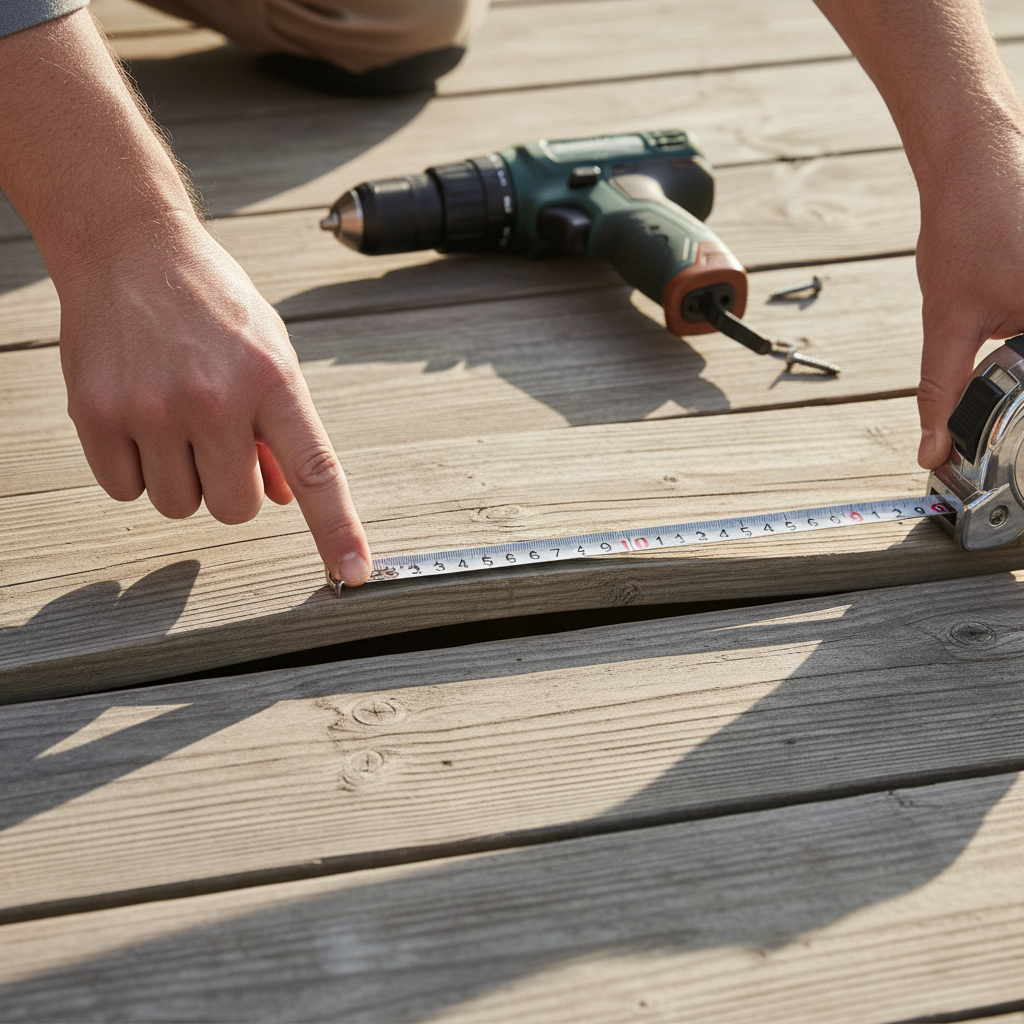
- Gather Tools and Safety Equipment — Prepare the necessary items before you begin. You will need different tools depending on whether you are re-securing or replacing boards.
- Tools for Re-securing: Impact driver or drill, new high-quality deck screws (3-inch coated or stainless steel recommended), tape measure, safety glasses, work gloves.
- Tools for Replacement: The above tools, plus a pry bar, a wood block (to use as a fulcrum), a circular saw or miter saw, an oscillating multi-tool (for stuck fasteners), a putty knife (for cleaning gaps), and a speed square.
Landscaping · Deck or fence project
| Project category | Landscaping |
|---|---|
| Problem type | Deck or fence project |
| Trade required | Landscaping |
| Urgency | Planned project |
| Safety risk | Moderate safety risk |
| DIY suitability | DIY for experienced homeowners |
| Cost category | High cost |
| Typical timeline | Most builds 3–10 days depending on size |
| Contractor type | Landscaping contractor |
Repair option
Replace failed boards, posts, and hardware; reseal the surface.
Replacement option
Rebuild when framing or the ledger connection is unsafe.
Common causes
- Rot at posts and ledger
- Storm damage
- Adding outdoor living space
Relevant tools:home improvement material pricesproject cost estimator
Published April 28, 2026Last updated August 17, 2026
Tools & materials you'll need
Affiliate linksAs an Amazon Associate FixlyGuide earns from qualifying purchases — at no extra cost to you. Prices and availability are accurate as of publication and subject to change.
How it works
Wood is a hygroscopic material, meaning its cellular structure absorbs and releases moisture from the surrounding environment. This fundamental property is the primary driver of deck board warping. Warping occurs when there is a moisture imbalance, or differential, between the top and bottom surfaces of a board.
Imagine the microscopic fibers of a wood board. When they absorb water, they swell and expand. When they lose water and dry out, they shrink and contract. On a deck, the top surface is exposed to direct sun, heat, and wind, causing it to dry out quickly after a rain. The underside, however, is shaded, often positioned just above damp ground, and has limited airflow due to the joists. This keeps the bottom surface cooler and moister for a longer period.
This differential creates immense internal stress. The shrinking fibers on the dry top surface pull inward, while the swollen fibers on the moist bottom surface push outward. The board has no choice but to relieve this stress by bending. This specific type of bending is called cupping, where the edges of the board curl upward, creating a "cup" shape that traps water and debris. Less commonly, crowning can occur if the bottom of the board dries faster than the top. Other forms of warping include bowing (a curve along the length) and twisting. The orientation of the wood's grain and how it was milled significantly influence its tendency to warp, but uneven moisture remains the root cause.
Step-by-Step Fix
Follow these steps to assess, repair, or replace warped deck boards. The method depends on the severity of the warp and the condition of the wood.
-
Assess the Severity of the Warp — Lay a straightedge across the width of the warped board. If the gap at the highest point of the cup is 1/4 inch or less, you may be able to correct it. If the warp is more significant, or the board is cracking, splitting, or showing signs of rot, replacement is the more effective and safer long-term solution.
-
Gather Tools and Safety Equipment — Prepare the necessary items before you begin. You will need different tools depending on whether you are re-securing or replacing boards.
- Tools for Re-securing: Impact driver or drill, new high-quality deck screws (3-inch coated or stainless steel recommended), tape measure, safety glasses, work gloves.
- Tools for Replacement: The above tools, plus a pry bar, a wood block (to use as a fulcrum), a circular saw or miter saw, an oscillating multi-tool (for stuck fasteners), a putty knife (for cleaning gaps), and a speed square.
-
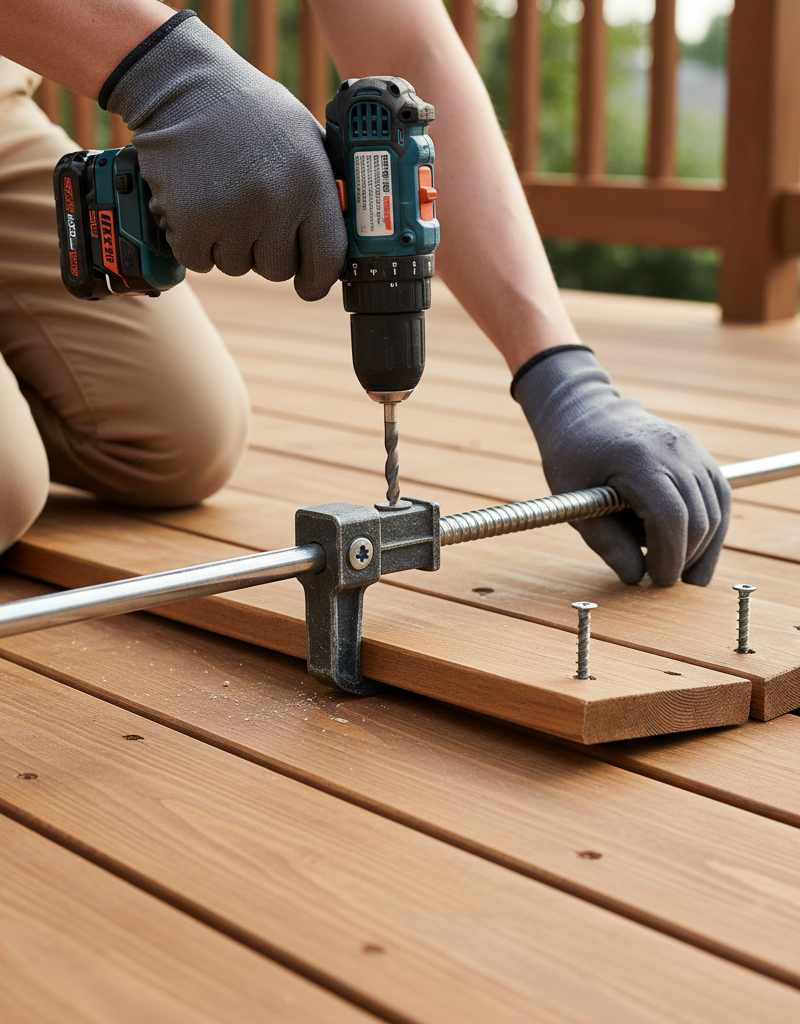
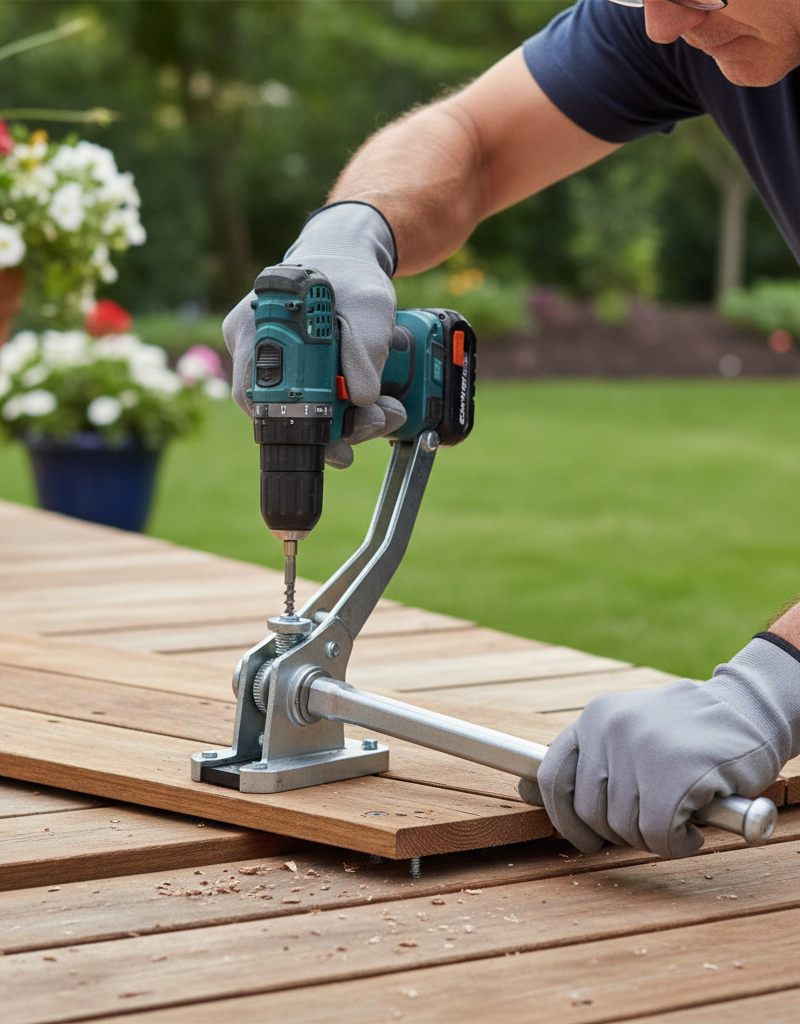
Attempt a "Force-Down" Repair (for Minor Cupping) — This method works only for slight cups in otherwise healthy boards. Position new screws on the outside edges of the board, about 1 inch in from each side. Drive these new screws through the board and into the deck joists below. Apply steady downward pressure on the board as you drive the screw to help flatten it. Add a screw at each joist location to pull the warped edges down.
- If this fails: Do not force it. Over-torquing the screws can split the board or strip the screw head, making future removal more difficult. Proceed to the replacement steps.
-
Remove the Existing Fasteners — To replace a board, first remove all screws holding it in place. Use a drill or impact driver in reverse.
- For stripped screws: Try a screw extractor kit. If that fails, grip the head with locking pliers. As a last resort, use an oscillating multi-tool with a metal-cutting blade to carefully cut the screw shank between the deck board and the joist.
- For nails: Use the claw-end of a hammer or a pry bar to pull them up.
-
Pry Up the Damaged Board — Once all fasteners are removed, slide the blade of a flat pry bar under the board near a joist. Place a scrap piece of 2x4 lumber under the pry bar's fulcrum point to protect the adjacent deck board from being dented. Work your way from one end of the board to the other, gently prying it up at each joist until it comes free.
-
Inspect the Substructure — With the board removed, you have a clear view of the joists and the area beneath the deck. Use this opportunity to diagnose the root cause.
- Check for Rot: Probe the joists with a screwdriver. If the wood is soft, spongy, or crumbles, it indicates rot. This is a structural issue that must be addressed before proceeding.
- Clear Debris: Remove all accumulated leaves, dirt, and plant matter from between the joists. This debris traps moisture and blocks airflow, contributing directly to warping.
-
Select a High-Quality Replacement Board — Purchase a new board that matches the dimensions and species of your existing decking. Look for a straight, high-grade board with minimal knots. To minimize future cupping, inspect the end grain. The curved growth rings should be oriented downward when installed (like a frown). This is known as installing "bark side up" and encourages the board to crown slightly, which sheds water, rather than cup.
- Acclimation: Let the new board acclimate to your local environment for at least 48-72 hours by laying it flat near the deck before installation.
-
Measure and Cut the New Board — Carefully measure the opening left by the old board. Measure at both ends, as the length may vary slightly. Transfer this measurement to the new board and use a speed square to draw a straight, 90-degree cut line. Use a circular saw or miter saw to make the cut. "Measure twice, cut once."
-
Seal the Replacement Board on All Six Sides — This is the single most important step for preventing the new board from warping. Using a high-quality exterior wood sealer and stain, thoroughly coat the top, bottom, sides, and especially the freshly cut ends. The end grain is like a straw and will soak up the most moisture if left unprotected. Allow the sealer to dry completely according to the manufacturer's instructions.
-
Install the New Board — Position the sealed board in the opening. Use a spacer, like a 16d nail or a carpenter's pencil, to ensure a consistent gap (typically 1/8 to 3/16 inch) between the new board and its neighbors. This gap is essential for drainage and airflow.
-
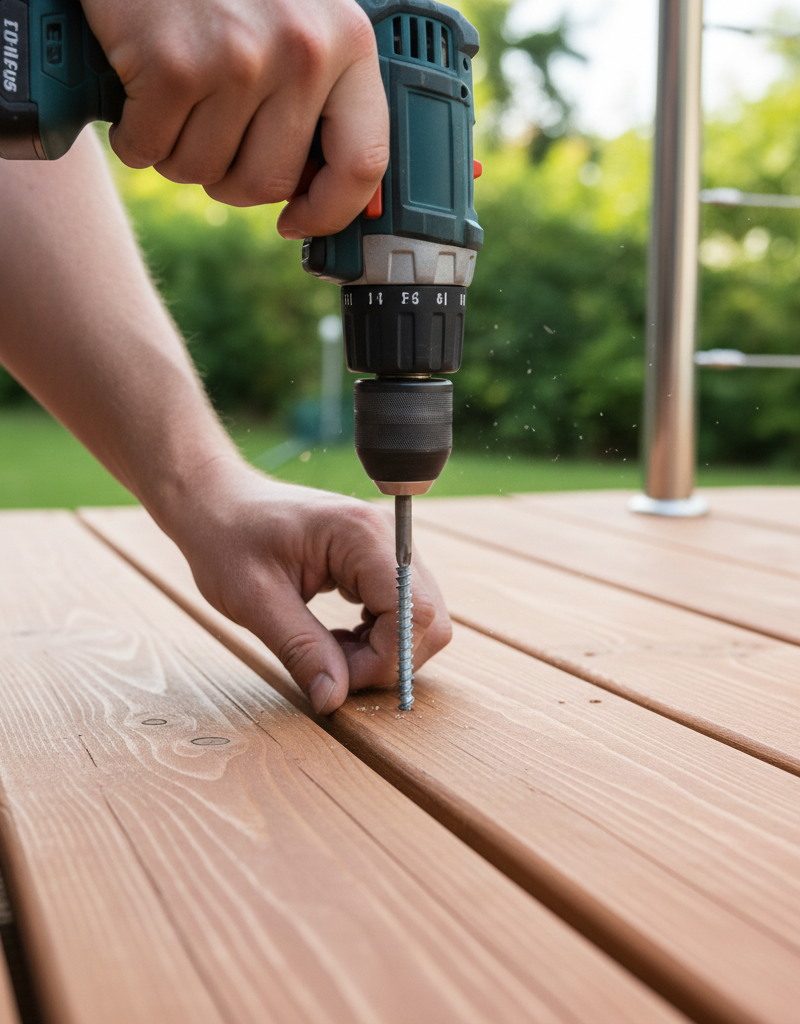
Secure the New Board — Pre-drill pilot holes at each joist location, about 1 inch from each edge of the board. Pre-drilling prevents the wood from splitting, especially near the ends. Drive two 3-inch exterior-grade deck screws through the pre-drilled holes and into each joist. Ensure the screw heads are driven just slightly below the wood surface to create a small divot, which can be sealed.
-
Apply Final Finish — Touch up the screw heads and any scuffs on the new board with your chosen sealer. This completes the weatherproofing and ensures a uniform appearance.
Common mistakes
Avoiding these common errors is as important as following the steps correctly. They often address the root cause of the problem, ensuring a lasting repair.
-
Ignoring the Substructure and Ventilation. Many DIYers replace a warped board without checking what caused the an issue in the first place. If the space under the deck is filled with leaves or the ground doesn't drain, the new board is destined to warp as well. Instead: Always clear debris from between joists and ensure there is adequate airflow under the deck. Regrade the soil if necessary to promote drainage away from the structure.
-
Installing Replacement Boards with Incorrect Grain Orientation. Most common lumber cups away from the bark side of the tree. Installing a board with the grain pattern arcing upwards (like a smile) makes it highly prone to cupping and trapping water. Instead: Always install boards "bark side up," where the end grain pattern arcs downwards (like a frown). This encourages the board to crown slightly if it moves, which helps shed water.
-
Using Improper Fasteners or Spacing. Using interior-grade screws, which will rust and fail, or butting boards tightly together are frequent mistakes. Tight spacing traps water and debris, promoting rot and warping. Instead: Use high-quality, corrosion-resistant deck screws that are long enough to penetrate at least 1.5 inches into the joist. Always use a consistent 1/8-inch gap between boards for drainage.
-
Sealing Only the Top Surface. Wood absorbs moisture from all sides. If you only seal the top, the unprotected bottom and ends will soak up ground moisture, creating the exact moisture differential that causes warping. Instead: Completely seal all six sides of a replacement board before you install it. Pay special attention to the highly absorbent cut ends.
-
Using a Power Washer Incorrectly for Cleaning. Blasting a deck with a high-pressure jet of water can feel satisfying, but it splinters the wood and forces water deep into the grain. This super-saturates the wood, leading to severe warping as it dries unevenly. Instead: Use a designated deck cleaner solution and a gentle scrub brush. If you must use a power washer, use a wide fan-tip nozzle, maintain a distance of at least 12 inches from the surface, and keep the pressure below 1,500 PSI for softwoods like pine and cedar.
Cost & time breakdown
Costs vary based on geographic location and the type of decking material (pressure-treated pine, cedar, composite, etc.). These estimates are for standard wood decking.
| Task | DIY Cost | Pro Cost | Time |
|---|---|---|---|
| Re-securing 1-2 Minorly Warped Boards | $10 - $20 (box of quality deck screws) | $100 - $200 | 30-60 minutes |
| Replacing a Single 12-foot Deck Board | $30 - $90 (board, screws, sealer) | $250 - $450 | 2 - 4 hours |
| Replacing a Small Section (~50 sq ft) | $350 - $800 (lumber and materials) | $900 - $1,800 | 1 - 2 days |
| Annual Deck Cleaning and Resealing | $150 - $400 (cleaner, sealer, equipment) | $600 - $1,200 | 1 weekend |
When to call a pro
While replacing a few boards is a manageable DIY project, certain situations warrant a professional's expertise to ensure safety and prevent further damage.
Call a professional deck builder or carpenter if you encounter any of the following:
- Widespread or Systemic Warping: If more than a quarter of your deck boards show signs of cupping, twisting, or bowing, it points to a fundamental flaw in the deck's design, ventilation, or initial installation. A professional can diagnose the underlying cause, which may involve improving the entire substructure's ventilation or drainage.
- Rot or Damage to the Substructure: When you remove a board and discover the joists are soft, spongy, discolored, or crumbling, this is wood rot. Repairing structural elements like joists, support posts, or the ledger board (where the deck attaches to your house) is critical for safety and is beyond the scope of a simple board replacement.
- Deck Instability: If the entire deck feels bouncy, sways, or sags noticeably when you walk on it, the problem lies with the frame or footings. This is a serious structural hazard that requires immediate professional assessment and repair.
- Complex Deck Designs: Decks with integrated benches, planters, multiple levels, or intricate patterns (like herringbone or diagonal layouts) require precision and experience to repair without compromising the overall design and structural integrity.
Prevention & maintenance
Proactive maintenance is the most effective way to prevent warped deck boards and extend the life of your entire deck.
- Ensure Adequate Under-Deck Ventilation: The #1 cause of warping is moisture trapped under the deck. Ensure the perimeter is clear of shrubs, storage, or solid skirting that blocks airflow. For low-to-ground decks, install vented skirting or lattice panels. The ground beneath the deck should slope away from the house.
- Annual Cleaning and Debris Removal: At least once a year, use a putty knife or a specialized groove tool to clear all leaves, pine needles, and dirt from the gaps between your deck boards. This allows water to drain freely and air to circulate, preventing moisture from being trapped against the sides of the boards.
- Regularly Reapply Water-Repellent Sealer: A quality sealer is your deck's first line of defense. Plan to clean and reseal your deck every 1-3 years, depending on your climate and the sealer manufacturer's recommendation. A simple test: sprinkle some water on the surface. If it beads up, the sealer is working. If it soaks in and darkens the wood, it's time to reseal.
- Manage Water Runoff: Check that your home's gutters and downspouts are clear and directing water well away from the deck and its foundation. Standing water or persistently damp soil near the deck will contribute to a high-moisture environment under the boards.
- Use the Right Materials from the Start: When building or undertaking a major renovation, choose the most stable materials your budget allows. Quarter-sawn lumber is more warp-resistant than plain-sawn. Naturally rot-resistant woods like cedar and redwood, or dense tropical hardwoods like Ipe, are excellent choices. Modern composite and PVC decking materials are virtually immune to warping caused by moisture.
Related Articles
Keep troubleshooting with these hand-picked guides from FixlyGuide:
- The 3 Hidden Reasons Your Deck Boards Warp (and the Easy Fixes) — Deck board warping can ruin your outdoor space, but understanding the root causes and applying simple fixes can restore your deck's beauty.
- The #1 Mistake Homeowners Make When Sealing a Deck (and How to Fix It) — Prevent costly damage and extend your deck's life by avoiding common sealing errors and following a simple, effective resealing process.
- The #1 Mistake That Makes Deck Boards Warp (And the Easy Fix) — Discover the most common reason deck boards warp and how a simple, proactive fix can restore your deck's appearance and longevity.
- The #1 Deck Sealing Mistake Most Homeowners Make (And How to Fix It) — Discover the most common error in deck sealing that leads to premature wear and how to correct it for lasting protection.
- The #1 Deck Sealing Mistake Most Homeowners Make (And How to Fix It) — Many homeowners make a critical error when sealing their decks, leading to premature wear and damage. Learn how to properly reseal your woo…
- The #1 Mistake Killing Your Garden: Why Weeds Keep Coming Back (And How to Stop Them) — Discover the secret to permanently removing weeds from your garden by understanding their root causes and implementing sustainable solution…
Get deck & patio quotes from local pros
Tell us about your project and we'll match you with vetted contractors in your area. Free, no obligation, and we never sell your info.
Should you do this yourself?
Answer five quick questions before you start. Safety outranks savings every time.
Your experience with work like this
How high do you have to work?
Does the job involve any of these?
Will it need a permit?
Specialty tools
Free and instant. Educational guidance only — not a quote, inspection, or professional diagnosis.
What should this project cost?
Enter your project details for a realistic cost range before you call anyone.
Spot repairs commonly run $400–$1,800; full replacement typically $9,000–$18,000 for an average home.
- Regional adjustment
- National average
- Labor share (typical)
- ~$2,948
- Quotes to collect
- 3 written estimates
Educational estimate based on national averages — not a binding quote. Always confirm with written local estimates.
Decide what your roof needs
Two minutes of questions turns "something is wrong up there" into a clear next step.
- Repair or replace your roof?Answer 10 questions about age, leaks, and damage to get a clear next step.Open
- Compare contractor quotesScore up to four bids on price, warranty, licensing, and timeline.Open
- Get local estimatesSend one request and compare written estimates from vetted pros.Open
Free, no signup required. Estimates are educational guidance, not a quote or an inspection.
Get the print-ready PDF of this guide
A clean, ad-free, printable version you can keep on your phone or pin to the workshop wall. Free with a FixlyGuide account.
- Print-optimized layout
- Tools, materials & every step included
- Saved to your account
Frequently asked questions
How do you unwarp a deck board?+
For minor warping, you might try flipping the board so the cupped side faces down, or applying weight to the convex side while securing it. Applying water to the concave side and letting it slowly dry can also sometimes help. However, severely warped boards are very difficult to fully straighten and often require replacement.
What causes deck boards to warp?+
The primary cause is uneven moisture exposure. When one side of a deck board dries out significantly faster than the other, the differential shrinkage and expansion of wood fibers create internal stress, leading to cupping, bowing, or twisting. Lack of proper sealing, inadequate ventilation, and direct sun exposure exacerbate this.
Should I replace a warped deck board?+
It depends on the severity. Minor warps that don't create tripping hazards or compromise the deck's integrity might be manageable with re-securing or slight adjustments. However, severely warped boards that present a safety risk, hold water, or can't be made flush are best replaced to ensure deck longevity and safety.
How do I prevent deck boards from warping?+
Prevention is key. Ensure proper deck board spacing for drainage and air circulation, seal all four sides of new boards before installation, and regularly clean and reseal your deck (every 1-3 years). Use quality fasteners and consider placing boards with the 'growth rings up' or 'bark side up' to minimize cupping.
Discussion
Loading comments…