- The 1 Deck Sealing Mistake Most Homeowners Make (And How to Fix It) — Many homeowners make a critical error when sealing their decks, leading to premature wear and damage. Learn how to properly reseal your woo…
- The 1 Deck Sealing Mistake Most Homeowners Make (And How to Fix It) — Discover the most common error in deck sealing that leads to premature wear and how to correct it for lasting protection.
- The Urgent Truth About Missing Roof Shingles (And Your 3-Step Fix) — High winds can rip shingles off your roof, exposing your home to immediate water damage – here’s how to assess, temporary patch, and plan p…
- Missing Roof Shingles After a Storm? Here's What to Do — Discover how to safely assess and address missing roof shingles after a storm, including temporary fixes and when to call a professional.
Landscaping · Deck or fence project
| Project category | Landscaping |
|---|---|
| Problem type | Deck or fence project |
| Trade required | Landscaping |
| Urgency | Planned project |
| Safety risk | Moderate safety risk |
| DIY suitability | DIY for experienced homeowners |
| Cost category | High cost |
| Typical timeline | Most builds 3–10 days depending on size |
| Contractor type | Landscaping contractor |
Repair option
Replace failed boards, posts, and hardware; reseal the surface.
Replacement option
Rebuild when framing or the ledger connection is unsafe.
Common causes
- Rot at posts and ledger
- Storm damage
- Adding outdoor living space
Relevant tools:home improvement material pricesproject cost estimator
Published April 20, 2026Last updated August 17, 2026
Tools & materials you'll need
Affiliate linksAs an Amazon Associate FixlyGuide earns from qualifying purchases — at no extra cost to you. Prices and availability are accurate as of publication and subject to change.
How it works
A wood deck sealant is a protective barrier that shields the wood from its two primary adversaries: moisture and ultraviolet (UV) radiation. Wood is a hygroscopic material, meaning it naturally absorbs and releases moisture from the environment. Unchecked, this moisture absorption leads to swelling, while subsequent drying causes shrinkage. This constant cycle of expansion and contraction causes wood to crack, warp, and splinter. Furthermore, trapped moisture creates an ideal breeding ground for mold, mildew, and fungi, which cause discoloration and eventually lead to wood rot and structural decay.
UV radiation from the sun poses a different threat. It degrades lignin, the natural polymer that binds wood fibers together. This photodegradation process breaks down the wood's surface, causing it to lose its natural color, turn gray, and become brittle.
Deck sealants combat these forces through two mechanisms. First, they create a water-repellent (hydrophobic) surface. Oil-based penetrating sealants soak into the wood pores, coating the fibers to prevent water absorption from within. Water-based film-forming sealants create a protective layer on the surface that causes water to bead up and run off. Second, most sealants contain pigments and UV inhibitors. These particles act like a sunscreen for your deck, absorbing or reflecting harmful UV rays before they can damage the wood's lignin. The more pigment a sealant has (from semi-transparent to solid stain), the more UV protection it offers, though at the cost of obscuring the natural wood grain.
Step-by-Step Fix
1. Perform a Structural Inspection — Before any cleaning, carefully examine the entire deck structure. Use a flathead screwdriver to probe for soft, spongy spots in the decking, joists, and support posts, which indicate rot. Check for loose or wobbly railings, pushed-up nails or screws, and any boards that are severely split, warped, or cracked.
- Tools: Flathead screwdriver, hammer, drill/driver.
- Action: Hammer down any raised nail heads or, for better holding power, replace them with longer deck screws. Any boards with significant rot or structural damage must be replaced before proceeding.
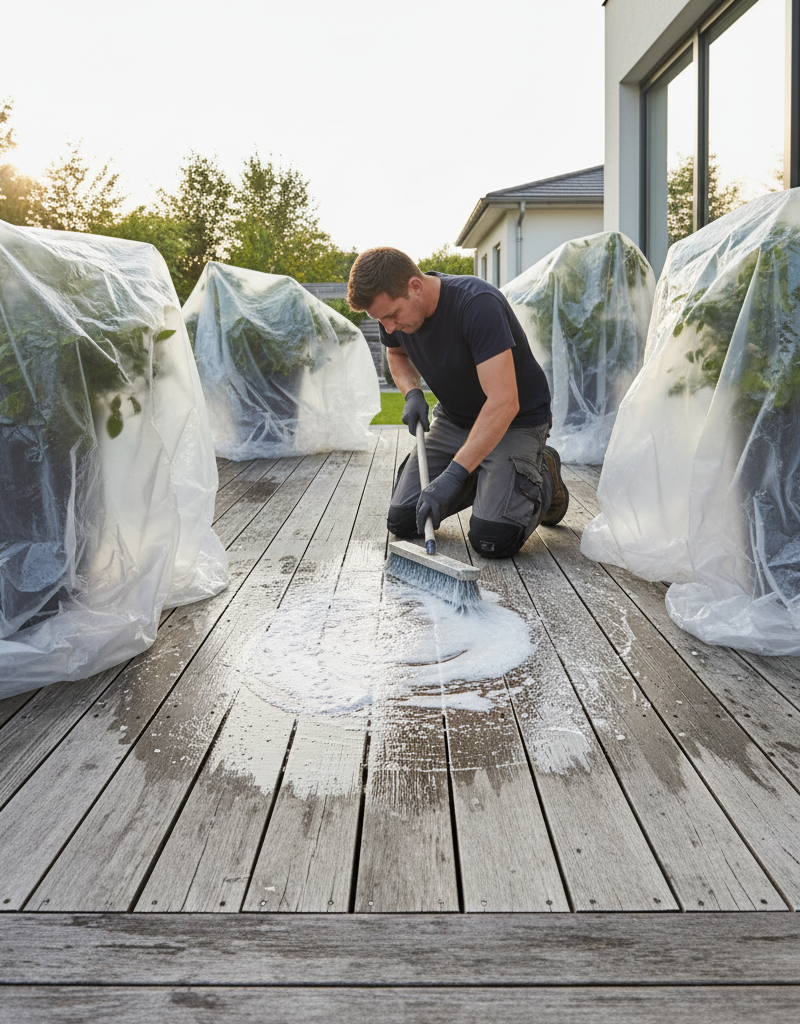
2. Clear and Protect the Area — Remove all furniture, grills, planters, and rugs from the deck surface. Thoroughly sweep away all loose leaves, dirt, and debris. Use painter's tape and plastic sheeting to mask off and protect adjacent house siding, doors, windows, and any nearby plants or landscaping you wish to keep free of cleaner and sealant.
3. Choose and Apply a Deck Cleaner — Select a cleaner appropriate for your deck's condition. For generaldirt and mildew, use an oxygenated bleach-based wood cleaner (e.g., sodium percarbonate). For removing old, failed semi-transparent stain, you will need a more aggressive deck stain stripper.
- Safety: Wear safety glasses, chemical-resistant gloves, and old clothing.
- Application: Following the manufacturer's instructions, dilute the cleaner in a bucket or garden sprayer. Apply the cleaner liberally to a dampened deck, working in small, manageable sections to prevent it from drying prematurely. Let it dwell for 10-15 minutes, lightly misting with water if it starts to dry.
4. Scrub and Rinse the Deck — Using a stiff-bristled brush on a long pole, scrub the entire deck surface to agitate the cleaner and lift embedded dirt and grime. Pay extra attention to mildew spots and high-traffic areas. Rinse thoroughly with a garden hose or a pressure washer.
- Pressure Washer Warning: Use a low-pressure setting, between 1200-1500 PSI. Use a 25-degree or 40-degree fan tip and maintain a consistent distance of 12-18 inches from the wood surface. Keep the wand moving in smooth, sweeping motions along the grain of the wood to prevent gouging or "furring" the wood fibers.
5. Allow the Deck to Dry Completely — This is a critical and often-rushed step. The deck must be bone-dry before any sealant is applied. Allow at least 24-48 hours of warm, dry, low-humidity weather for the wood to dry out. Applying sealant to damp wood will trap moisture, leading to premature peeling and failure.
- Pro Tip: For best results, use a moisture meter. Insert the pins into the wood in several locations; sealing should only begin when the meter reads 15% or less moisture content.
6. Sand the Deck Surface — Once dry, the wood may have a slightly fuzzy or rough texture from cleaning (known as furring). Sanding removes this, opens the wood pores for better sealant absorption, and knocks down any remaining splinters. Use a random orbital sander with 60 or 80-grit sandpaper for the main surfaces and a sanding block for railings and detailed areas.
- Cleanup: After sanding, the deck will be covered in fine dust. Use a leaf blower or a shop vacuum to remove all sanding dust completely. Wiping with a tack cloth can help on smaller surfaces.
7. Prepare the Deck Sealant — Choose your sealant based on your desired look and level of protection (toner, semi-transparent, or solid). Before application, open the can and stir the contents thoroughly with a paint stirrer for 2-3 minutes, scraping the bottom to incorporate all settled pigments. Do not shake the can, as this can introduce air bubbles that will mar the finish.
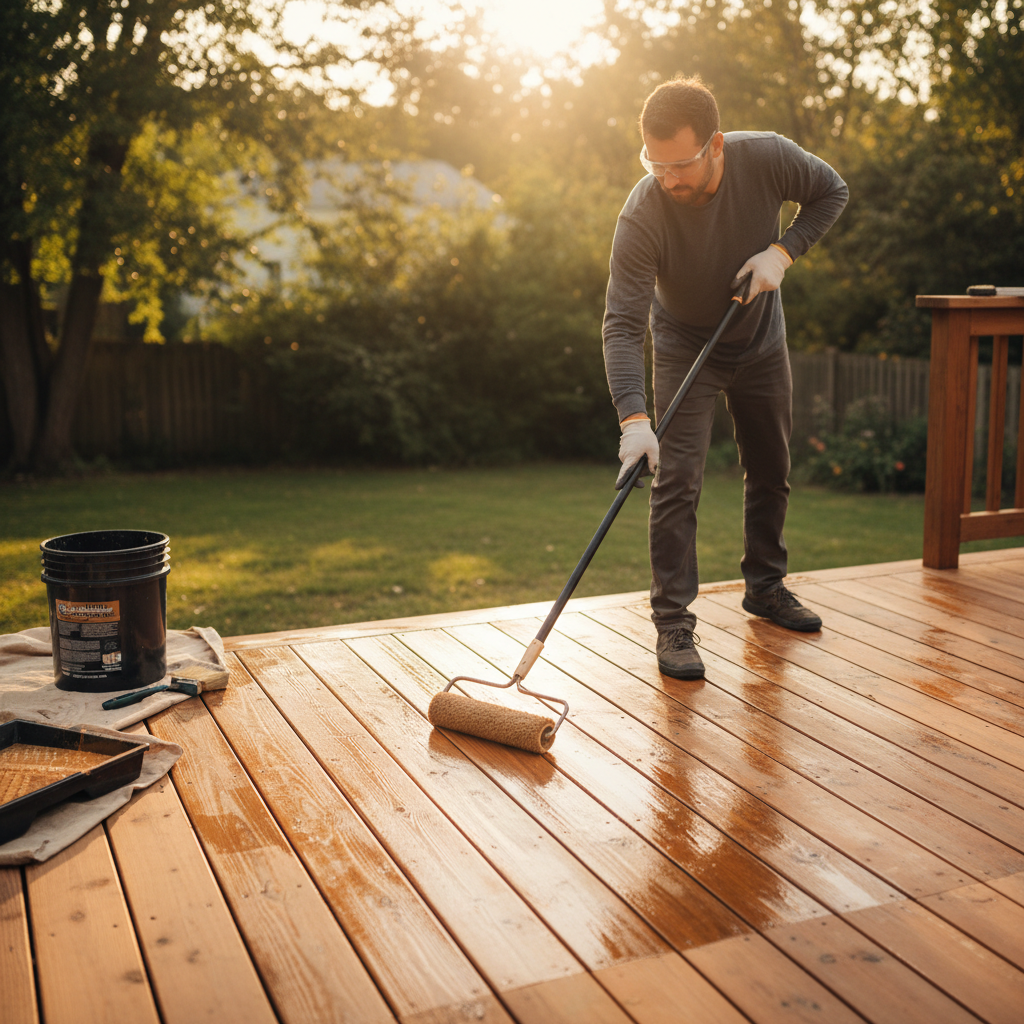
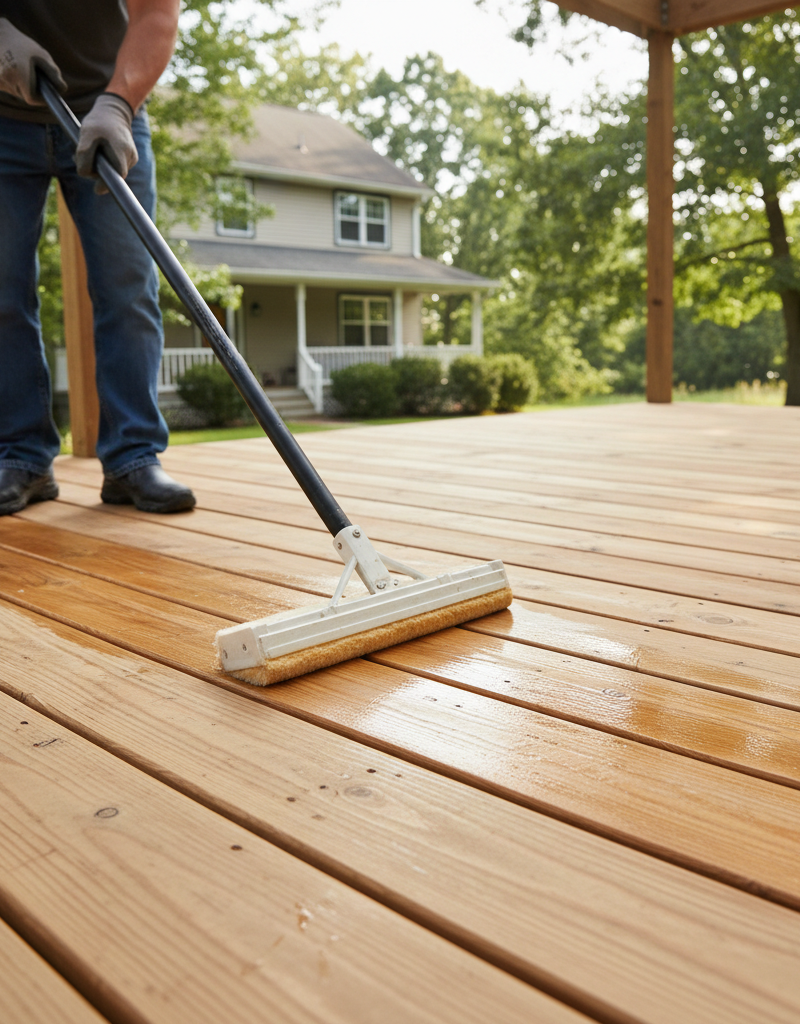
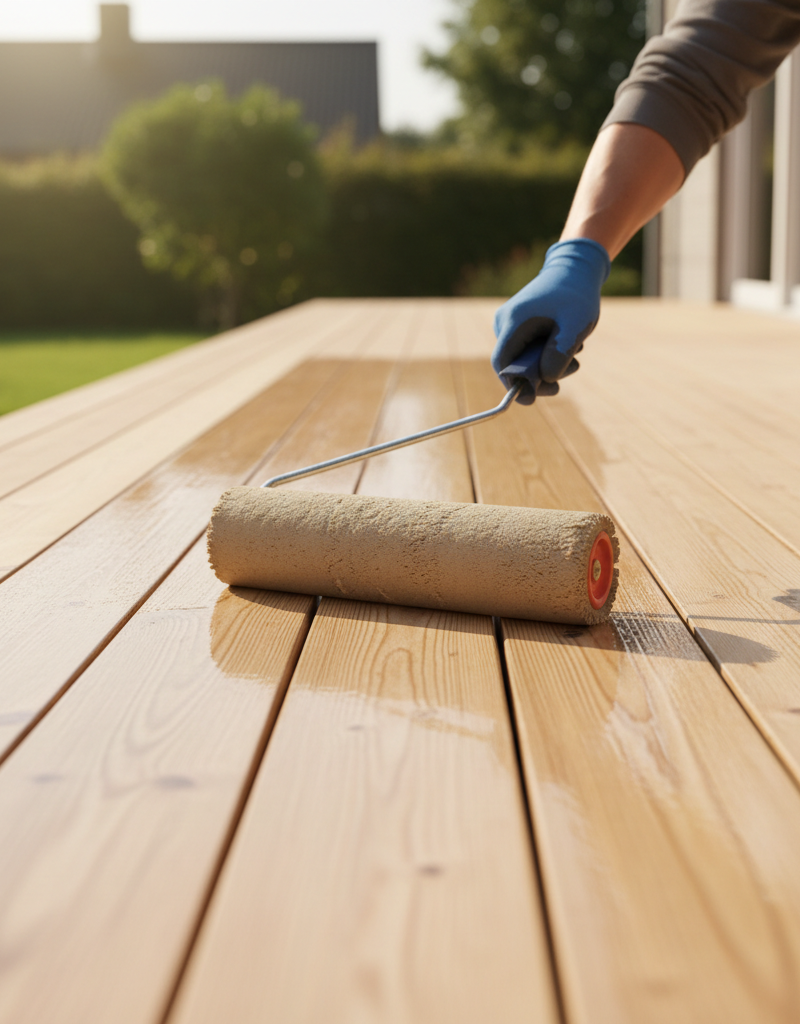
8. Apply the First Coat of Sealant — Work in small sections of 2-3 boards at a time, running the full length of the boards to prevent lap marks. Apply a thin, even coat using a pad applicator, a natural bristle brush (for oil-based), a synthetic brush (for water-based), or a 3/8-inch nap roller. Always apply in the direction of the wood grain.
- Technique: To ensure an even finish, maintain a "wet edge" by blending each new section into the previous one before it begins to dry. After rolling a section, immediately go over it with a brush ("back-brushing") to work the sealant into the grain and remove any puddles.
9. Manage Excess and Apply a Second Coat (If Necessary) — Many penetrating oil-based sealants are single-coat applications. If the product pools on the surface and does not soak in after 15-20 minutes, wipe off the excess with a clean, lint-free rag. Applying too much will result in a sticky, tacky finish. For products that require two coats, follow the manufacturer's directions regarding timing—some require a second coat while the first is still damp ("wet-on-wet"), while others require a 2-4 hour wait.
- Spontaneous Combustion Warning: Rags soaked in oil-based sealant can spontaneously combust as they dry. Always lay them flat on a non-flammable surface like concrete to dry completely, or submerge them in a water-filled metal can with a tight lid before disposal.
10. Allow the Sealant to Cure — Block off access to the deck to prevent foot traffic. While the sealant may be dry to the touch in 4-8 hours, it requires a full 24-72 hours to cure completely, depending on the product, temperature, and humidity. Do not place furniture, rugs, or planters back on the deck until the full cure time has passed.
Common mistakes
- Applying Sealant to a Dirty Deck. Applying new sealant over dirt, mildew, or grayed wood fibers is like painting over rust. The new coat will not adhere properly to the wood itself and will quickly peel, flake, or wear away, wasting your time and money. Always start with a thoroughly cleaned and prepared surface.
- Sealing Damp Wood. Wood pores filled with water cannot absorb sealant. Sealing a damp deck traps moisture beneath the new finish, which accelerates rot from within and causes the sealant to lift and fail as the moisture tries to escape. Wait a minimum of 24-48 hours after washing, and use a moisture meter for certainty (<15% moisture).
- Using Excessive Pressure Washer PSI. Blasting wood with a high-pressure stream or a zero-degree nozzle is the fastest way to cause permanent damage. It shreds the soft wood fibers, creating a fuzzy, splintered surface that absorbs sealant unevenly and ages prematurely. Keep PSI below 1500 and use a wide fan tip.
- Over-Applying the Sealant. The goal is for the sealant to be in the wood, not sit like a thick film on the wood. A heavy topcoat will not cure correctly, remaining sticky for weeks, attracting dirt, and ultimately peeling off in sheets. Apply thin coats and wipe away any product that hasn't penetrated after 15-20 minutes.
- Working in Direct Sun or Poor Weather. Applying sealant on a hot, sunny day causes it to flash-dry on the surface, preventing deep penetration and creating visible lap marks. Applying it just before rain can wash away the uncured finish. Ideal conditions are an overcast day with temperatures between 50°F and 90°F and no rain in the forecast for at least 24 hours.
- Shaking the Sealant Can. Shaking a can of stain or sealant, especially water-based formulas, introduces thousands of tiny air bubbles. These bubbles get transferred to the deck surface during application, creating a rough, pockmarked finish once they pop and dry. Always stir thoroughly with a stick instead.
Cost & time breakdown
This breakdown estimates costs and time for a 12x20 foot (240 sq. ft.) pressure-treated pine deck in average condition. Prices are approximate and will vary by region and product choice.
| Task | DIY Cost | Pro Cost | Time |
|---|---|---|---|
| Deck Inspection & Prep | $0 - $50 (screws, tape) | Included in Labor | 1-2 hours |
| Cleaning & Stripping | $30 - $60 (cleaner) | $200 - $400 | 3-5 hours |
| Sanding (incl. sander rental) | $70 - $120 | $250 - $500 | 4-6 hours |
| Sealing Materials | $100 - $250 (2-3 gal sealant, applicators) | Included in Labor | 3-5 hours |
| Total Project | $200 - $480 | $800 - $1,800+ | 2-3 days (incl. dry time) |
When to call a pro
While resealing a deck is a manageable DIY project, certain situations warrant calling a professional deck refinishing or carpentry company. If your initial inspection reveals widespread rot—not just a single board, but multiple soft deck boards, spongy joists, or decay at the ledger board where the deck attaches to the house—this indicates a structural problem. A professional carpenter is needed to assess the damage and perform safe, code-compliant repairs that go far beyond simple sealing.
The prep work can also be a deciding factor. If the deck has multiple layers of old, peeling solid stain or paint, the stripping process is extremely labor-intensive and often requires powerful chemical strippers and extensive sanding. Professionals have the commercial-grade equipment and safety knowledge to handle these materials efficiently. Similarly, the sheer scale of very large, intricate, or multi-level decks can make achieving a consistent, lap-mark-free finish challenging for a DIYer. If you lack the time for a multi-day project or are not comfortable operating a pressure washer and large sander, hiring a pro ensures a high-quality result without the risk of damaging your deck.
Prevention & maintenance
- Perform an Annual Water Test. Once a year, sprinkle water onto several areas of the deck. If the water beads up, the sealant is still repelling moisture effectively. If it soaks into the wood and darkens it within a few minutes, the protective barrier has worn down and it's time to schedule a reseal.
- Clean Annually. At the beginning of each spring, give your deck a gentle cleaning with a dedicated wood deck cleaner and a soft-bristled brush. This removes accumulated dirt, pollen, and mildew spores before they have a chance to embed in the grain or damage the finish.
- Maintain Sealant on Schedule. Adhere to a regular resealing schedule based on your climate and sealant type. Transparent sealants may require annual application. High-quality semi-transparent stains typically last 2-3 years. Solid stains may last 3-5 years but require significantly more prep work when they eventually fail.
- Keep Debris Clear. Routinely sweep off leaves, pine needles, and dirt. Piles of organic debris trap moisture against the wood surface, creating a perfect environment for mildew, mold, and rot to develop, even on a sealed deck.
- Promote Airflow. Do not place planters, mats, or storage bins directly on the deck surface for long periods. Elevate them using pot feet or deck stands to allow air to circulate underneath and prevent moisture from being trapped against the wood.
- Manage Water Runoff. Ensure your home's gutters and downspouts are clean and direct water away from the deck, not onto it. Constant water exposure from a single point will cause localized, premature wear of the sealant.
Related Articles
Keep troubleshooting with these hand-picked guides from FixlyGuide:
- The #1 Deck Sealing Mistake Most Homeowners Make (And How to Fix It) — Many homeowners make a critical error when sealing their decks, leading to premature wear and damage. Learn how to properly reseal your woo…
- The #1 Deck Sealing Mistake Most Homeowners Make (And How to Fix It) — Discover the most common error in deck sealing that leads to premature wear and how to correct it for lasting protection.
- The Urgent Truth About Missing Roof Shingles (And Your 3-Step Fix) — High winds can rip shingles off your roof, exposing your home to immediate water damage – here’s how to assess, temporary patch, and plan p…
- Missing Roof Shingles After a Storm? Here's What to Do — Discover how to safely assess and address missing roof shingles after a storm, including temporary fixes and when to call a professional.
Should you do this yourself?
Answer five quick questions before you start. Safety outranks savings every time.
Your experience with work like this
How high do you have to work?
Does the job involve any of these?
Will it need a permit?
Specialty tools
Free and instant. Educational guidance only — not a quote, inspection, or professional diagnosis.
What should this project cost?
Enter your project details for a realistic cost range before you call anyone.
Spot repairs commonly run $400–$1,800; full replacement typically $9,000–$18,000 for an average home.
- Regional adjustment
- National average
- Labor share (typical)
- ~$2,948
- Quotes to collect
- 3 written estimates
Educational estimate based on national averages — not a binding quote. Always confirm with written local estimates.
Decide what your roof needs
Two minutes of questions turns "something is wrong up there" into a clear next step.
- Repair or replace your roof?Answer 10 questions about age, leaks, and damage to get a clear next step.Open
- Compare contractor quotesScore up to four bids on price, warranty, licensing, and timeline.Open
- Get local estimatesSend one request and compare written estimates from vetted pros.Open
Free, no signup required. Estimates are educational guidance, not a quote or an inspection.
Frequently asked questions
How often should I reseal my wood deck?+
Most wood decks should be resealed every 1-3 years, depending on your climate, the type of sealant used, and the amount of sun exposure. A simple water test (sprinkle water on the deck; if it soaks in rather than beading up, it's time to reseal) can help you determine the right time.
What is the best type of sealant for a wood deck?+
The best sealant depends on your desired look and protection level. Options include clear water repellents, semi-transparent stains, and solid stains. Water-based sealants are easier to clean up, while oil-based offer deeper penetration and durability. Research products and choose one suitable for your wood type and local climate.
Can I use a pressure washer to clean my deck?+
Yes, but use caution. A pressure washer set to a low PSI (under 1200 PSI) can be effective for cleaning. Using too high a pressure can damage the wood fibers, leading to splintering and an uneven surface. Always hold the nozzle at a consistent distance and angle, and consider practicing on an inconspicuous area first.
How long does deck sealant need to dry before rain?+
Most deck sealants require at least 24-48 hours of dry weather to adequately dry and begin curing. Always check the manufacturer's instructions for specific drying and recoat times, and plan your project around the weather forecast to ensure optimal results.
Discussion
Loading comments…