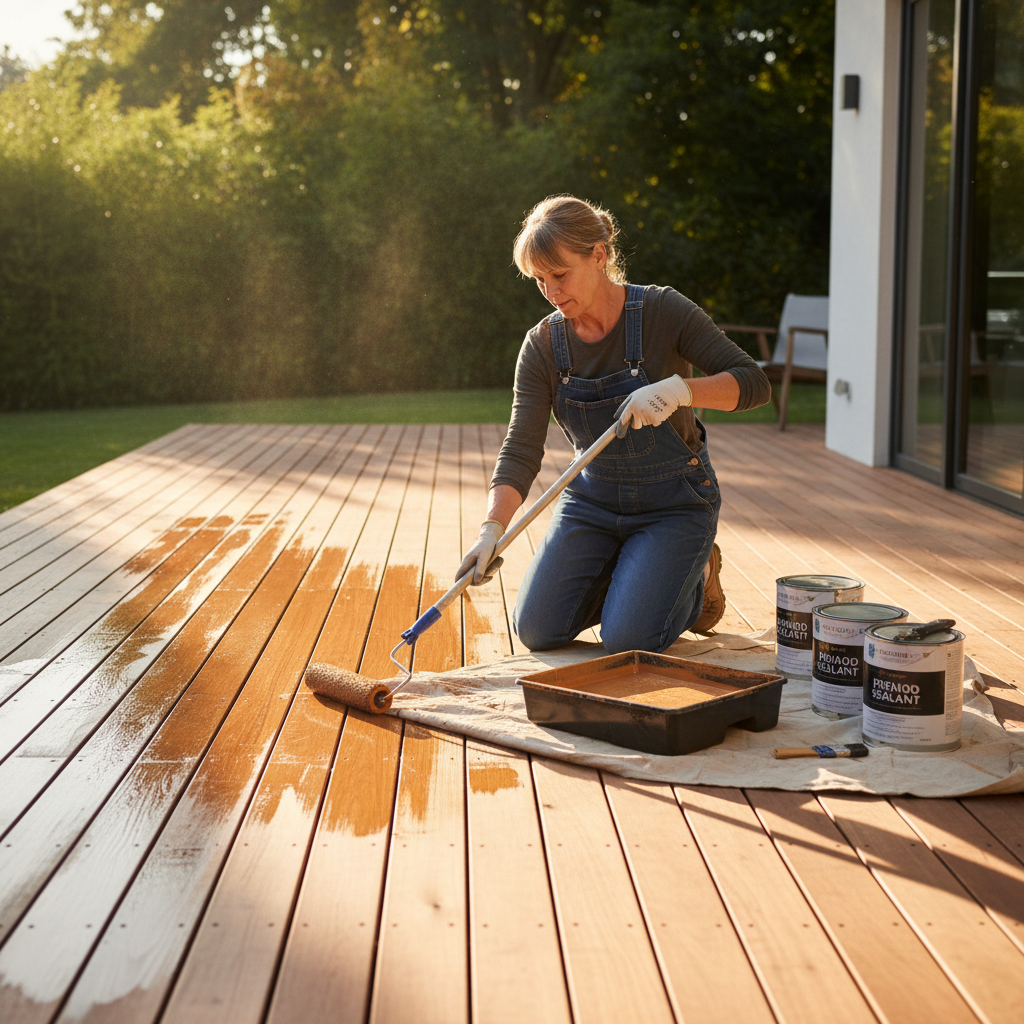
- Select Your Products — Your choice of products depends on the current state of your deck.
- If you have an old, peeling film-forming finish: You will need a chemical deck stripper.
- For all decks: You will need a deck cleaner (look for sodium percarbonate-based products for effective, gentle cleaning) and a wood brightener (oxalic acid-based products are standard for neutralizing cleaners and conditioning the wood).
Landscaping · Deck or fence project
| Project category | Landscaping |
|---|---|
| Problem type | Deck or fence project |
| Trade required | Landscaping |
| Urgency | Planned project |
| Safety risk | Moderate safety risk |
| DIY suitability | DIY for experienced homeowners |
| Cost category | High cost |
| Typical timeline | Most builds 3–10 days depending on size |
| Contractor type | Landscaping contractor |
Repair option
Replace failed boards, posts, and hardware; reseal the surface.
Replacement option
Rebuild when framing or the ledger connection is unsafe.
Common causes
- Rot at posts and ledger
- Storm damage
- Adding outdoor living space
Relevant tools:home improvement material pricesproject cost estimator
Published April 27, 2026Last updated August 17, 2026
Tools & materials you'll need
Affiliate linksAs an Amazon Associate FixlyGuide earns from qualifying purchases — at no extra cost to you. Prices and availability are accurate as of publication and subject to change.
How it works
Wood is a hygroscopic material composed primarily of cellulose fibers held together by a natural polymer called lignin. This structure makes wood susceptible to two primary forms of degradation. First, it absorbs and releases ambient moisture. As water enters the cellulose fibers, the wood swells; as it dries, it shrinks. This constant cycle of expansion and contraction exerts immense stress on the wood, causing it to cup, warp, and crack. It also loosens fasteners like screws and nails, compromising structural integrity. Second, the lignin that binds the wood fibers is vulnerable to ultraviolet (UV) radiation from sunlight. UV rays break down lignin, causing the wood to lose its natural color, turn gray, and become brittle on the surface.
A deck sealant or stain works by creating a protective barrier against these elements. Sealants fall into two main categories: penetrating and film-forming.
- Penetrating sealers, typically oil-based (using linseed, tung, or paraffinic oils), soak deep into the wood's pores. They occupy the space where water would otherwise penetrate, repelling moisture from within. They do not form a surface film, so they cannot peel or flake, but they offer minimal UV protection unless pigmented.
- Film-forming sealers, typically water-based acrylics or urethanes, create a durable, flexible coating on the wood's surface. This film acts as a physical barrier against both liquid water and UV radiation. Pigmented versions, known as solid or semi-solid stains, offer the highest level of UV protection.
The "secret" to long-term deck protection is not a single product, but the systematic preparation that ensures this barrier is applied correctly and can perform its job effectively for its full service life.
Step-by-Step Fix
Proper preparation is the most critical phase of this project and the one most often rushed. The cost of materials for proper prep—cleaner, brightener, and plastic sheeting—is minimal, often under $50, yet it is the key to a professional-grade finish that lasts. Skipping these steps will guarantee premature failure of the new sealant.
-
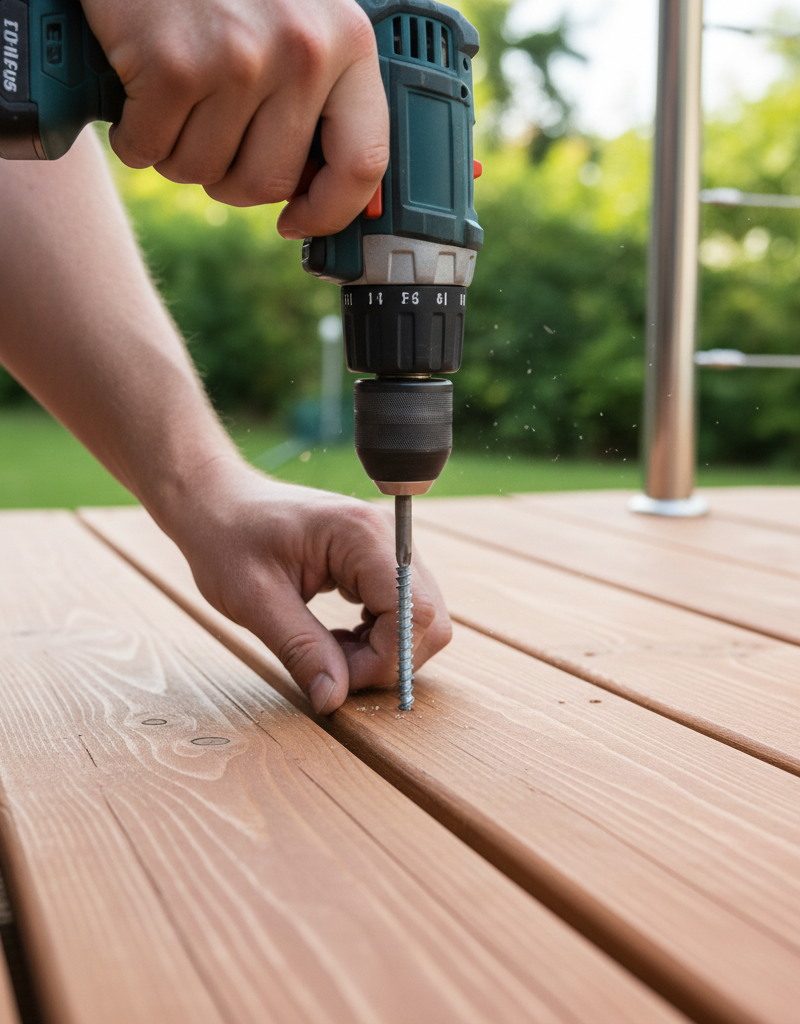
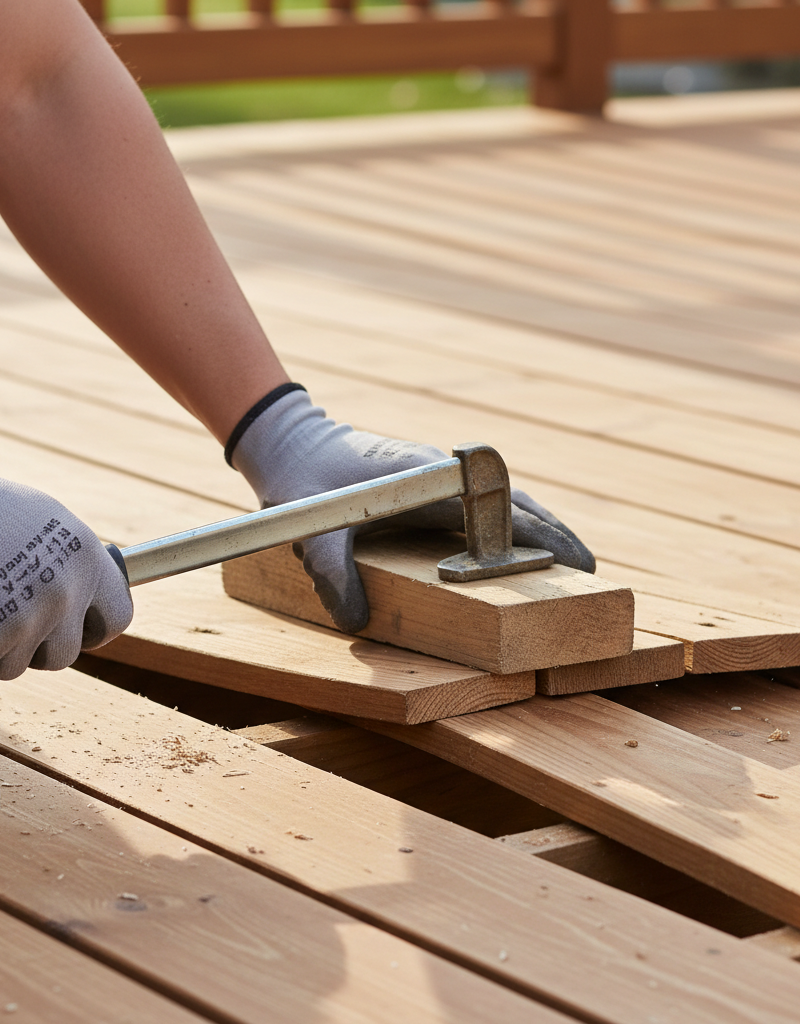
Inspect and Repair — Before applying any chemicals, perform a thorough structural inspection. Use an awl or screwdriver to probe for soft, punky wood, paying close attention to the ledger board (where the deck attaches to the house), support posts (especially near the ground), stair stringers, and railings. Hammer down any popped nails or, better yet, replace them with 2.5-inch or 3-inch deck screws for superior holding power. Replace any split or rotted boards now; it is impossible to properly seal a decaying board.
-
Clear the Deck and Protect Surroundings — Remove all furniture, grills, planters, and mats from the deck surface. Thoroughly sweep away all leaves, pine needles, and loose debris. Use painter's plastic and tape to cover any adjacent siding, windows, doors, and electrical outlets. Cover delicate plants and landscaping at the base of the deck with plastic sheeting to protect them from chemical overspray.
-
Select Your Products — Your choice of products depends on the current state of your deck.
- If you have an old, peeling film-forming finish: You will need a chemical deck stripper.
- For all decks: You will need a deck cleaner (look for sodium percarbonate-based products for effective, gentle cleaning) and a wood brightener (oxalic acid-based products are standard for neutralizing cleaners and conditioning the wood).
- For the final coat: Choose a sealant based on your desired look and maintenance tolerance. A clear penetrating oil offers a natural look but requires yearly reapplication. A semi-transparent stain provides color and UV protection, lasting 2-3 years. A solid stain acts like paint, offering maximum protection for 3-5 years but obscuring the wood grain.
-
Apply Deck Stripper (If Necessary) — If removing an old acrylic or oil-based stain, work in small, manageable sections (e.g., 10x10 feet). Following the manufacturer's directions, apply the stripper generously using a synthetic roller or a pump sprayer. Allow it to dwell for the recommended time, typically 15-45 minutes. Do not let the stripper dry on the surface; mist it with water if it begins to dry out. The old finish should begin to bubble and soften.
-
Remove Old Finish — Once the stripper has worked, use a stiff-bristled brush or a long-handled scraper to scrub the loosened finish away. For larger decks, a pressure washer is more efficient. Use a 25-degree or 40-degree fan tip and keep the nozzle 8-12 inches from the surface. Use a low pressure setting—500 to 800 PSI for softwoods like cedar or pine, and up to 1200 PSI for hardwoods like ipe. Move in long, steady strokes with the grain of the wood to avoid causing damage.
-
Clean the Deck Surface — Whether you stripped the deck or started with bare wood, the next step is a thorough cleaning. Mix the deck cleaner according to the label instructions, typically in a bucket or pump sprayer. Apply it liberally to the entire deck surface and let it sit for 10-15 minutes, again misting to keep it from drying. Use a stiff deck brush to scrub the entire surface, working with the grain to lift embedded dirt, mildew, and grayed wood fibers. Rinse thoroughly with a garden hose or a low-pressure setting on your pressure washer.
-
Apply Wood Brightener — This is a critical, non-negotiable step. Cleaners are typically alkaline and can darken the wood and raise the pH, which hinders sealant absorption. A wood brightener, usually an oxalic acid solution, neutralizes the cleaner, restores the wood's natural pH balance, and opens up the wood pores to accept the new seal. Apply the brightener immediately after rinsing the cleaner, while the deck is still wet. Let it sit for 10-15 minutes, then give the deck a final, thorough rinse with plain water.
-
Allow the Deck to Dry Completely — Sealing damp wood is a primary cause of finish failure. You must allow the deck to dry for at least 24-48 hours of clear, dry weather. In humid conditions, this can take longer. The wood must be visibly dry and feel dry to the touch. For professional results, use a moisture meter; the wood’s moisture content should be below 15% before sealing.
-
Apply the First Coat of Sealant — Check the weather forecast; you need a 24-48 hour window with no rain and moderate temperatures (ideally between 50°F and 90°F). Do not apply sealant in direct, hot sunlight, which causes it to dry too fast. Stir the product thoroughly, but do not shake it, as this can introduce air bubbles.
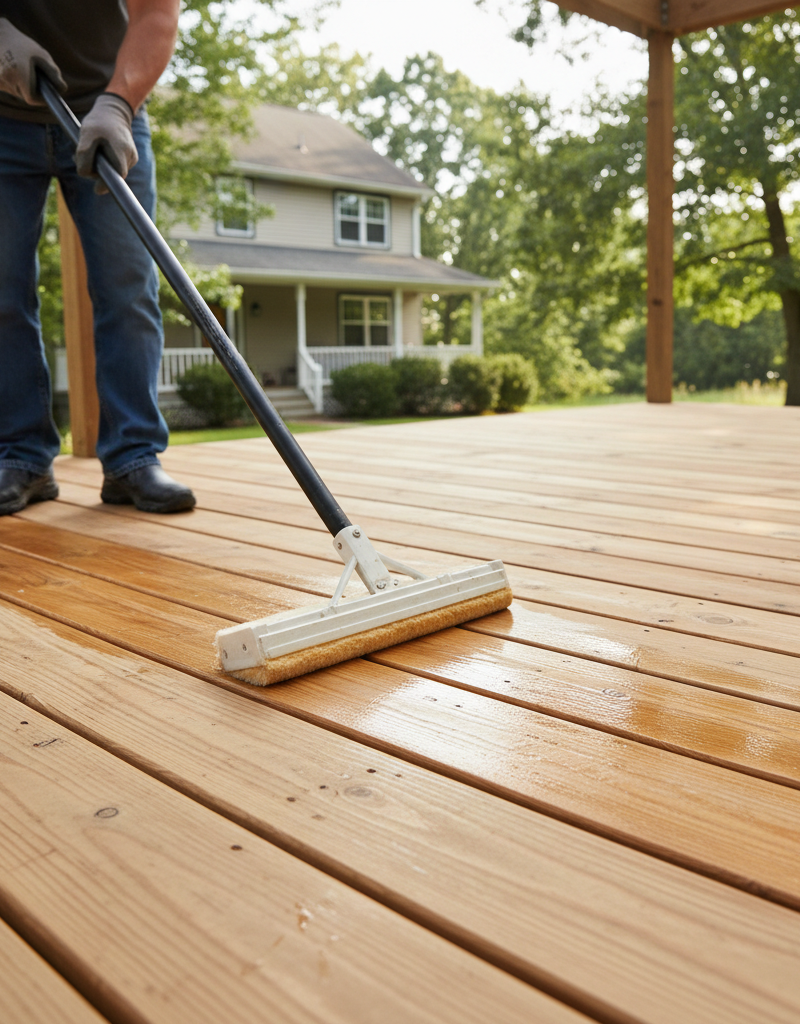
- Application Tools: A stain pad on a pole is often the best choice for floors, as it provides even coverage without drips. A brush is best for railings, spindles, and cut ends. A roller can work but may apply the coat too thickly. A sprayer is fast but requires careful back-brushing to ensure even penetration and avoid puddles.
- Technique: Apply a thin, even coat. Work in small sections, staining a few boards at a time from one end to the other without stopping mid-board to prevent lap marks. Always work with the grain. Pay special attention to the cut ends of boards, as this is where most water absorption occurs.
-
Apply a Second Coat (If Required) — Refer to the product's instructions. Many penetrating oils and some semi-transparent stains call for a second coat to be applied "wet-on-wet" or within a few hours of the first. Film-forming products often require the first coat to dry completely. A second coat can deepen the color and increase protection, but over-application can create a sticky, shiny surface that fails to cure properly. The second coat should always be thinner than the first.
-
Allow for Full Cure Time — Block access to the deck. The sealant may be dry to the touch in a few hours, but it needs time to fully cure. Wait at least 24-48 hours before allowing light foot traffic and 72 hours before returning heavy furniture. Premature use can scuff the finish and compromise its integrity.
-
Clean Up and Dispose of Materials — Clean your tools according to the product's directions (soap and water for water-based products, mineral spirits for oil-based). CRITICAL SAFETY STEP: Rags, brushes, or rollers soaked with oil-based stains can spontaneously combust as they dry. Never throw them in a pile or in the trash. Lay them flat on a non-flammable surface like concrete to dry completely, or soak them in a bucket of water before placing them in a sealed metal can for disposal.
Common mistakes
- Applying Sealant Over an Old, Failed Finish: New sealant cannot adhere properly to a peeling, flaking, or degraded surface. The new coat will fail within months. You must completely remove the old finish down to bare wood using a chemical stripper and/or sanding if the previous coat was a film-forming product.
- Using a Pressure Washer Incorrectly: Using a zero-degree (pencil jet) nozzle or holding the wand too close to the surface will permanently damage the wood. This creates deep gouges and a "fuzzy" texture by shredding the soft wood fibers. Always use a 25 or 40-degree fan tip, maintain a consistent distance of 8-12 inches, and use the lowest effective pressure.
- Skipping the Wood Brightener: After using an alkaline deck cleaner, the wood's pores are closed and its pH is elevated. Applying a sealer at this stage will result in poor absorption and a blotchy, darker-than-expected finish. A wood brightener (oxalic acid) is essential to neutralize the cleaner and properly prepare the wood to receive the new sealer.
- Sealing Damp Wood: Applying any sealant, especially oil-based, to wood with a moisture content above 15% will trap moisture underneath. This prevents the sealant from penetrating and curing correctly, and it creates a perfect environment for mildew and rot to grow beneath the film. Always allow at least 24-48 hours of dry weather after cleaning before you apply the stain.
- Applying in Poor Conditions: Staining in direct, hot sunlight or on a very hot day causes the solvent to evaporate too quickly, preventing the sealer from penetrating the wood. This leads to lap marks and premature surface failure. Ideal conditions are overcast skies with temperatures between 50°F and 90°F.
Cost & time breakdown
This breakdown assumes a 300-square-foot deck that requires stripping, cleaning, and sealing. Costs are estimates and will vary based on product choices and regional labor rates.
| Task | DIY Cost | Pro Cost | Time (DIY) |
|---|---|---|---|
| Inspection & Minor Repairs | $10 - $50 (screws, caulk) | Included in total project bid | 1-2 hours |
| Stripping & Cleaning Materials | $75 - $150 (stripper, cleaner, brightener) | Included in material costs | 4-6 hours |
| Pressure Washer Rental | $50 - $90 per day | Included in labor costs | (Part of cleaning time) |
| Sealing (Materials for 300 sq ft) | $100 - $250 (sealant, pads, brushes) | Included in material costs | 4-5 hours |
| Total Project | $235 - $540 | $900 - $1,800 ($3-$6/sq ft) | 10-13 hours (over 2-3 days) |
When to call a pro
While deck refinishing is a manageable DIY project, certain conditions warrant a professional's expertise to ensure safety and longevity. You should call a professional deck contractor if you discover any significant structural issues during your inspection. This includes widespread rot affecting more than 15-20% of the deck boards, or any rot found in critical support members like posts, joists, beams, or the ledger board that attaches the deck to your house. Any sign of the deck pulling away from the house, or stairs that feel spongy or unstable, are immediate red flags indicating problems beyond a simple refinishing job. If the deck is very old or has a thick, peeling, paint-like coating that is extremely difficult to remove, a professional will have the specialized equipment (like commercial-grade sanders) and experience to tackle the job efficiently. Finally, if you lack the time for a multi-day project or the physical ability to handle a pressure washer and scrubbing, hiring a pro is the safer and more effective choice.
Prevention & maintenance
A newly sealed deck requires routine care to maximize the lifespan of the finish. Proper maintenance can extend the time between major refinishing projects from one year to three or more.
- Perform the "Splash Test" Annually: To check if your sealant is still effective, sprinkle a few drops of water onto several areas of the deck. If the water beads up into tight droplets, the sealant is still repelling water. If the water soaks into the wood within a few minutes, turning it dark, the wood is no longer protected and it is time to clean and re-seal.
- Clean Regularly: Don't let organic debris accumulate. Sweep your deck frequently to remove leaves, dirt, and pine needles. This debris traps moisture against the wood surface, promoting mildew growth and locally accelerating sealant failure. A quick wash with a garden hose and a soft brush once or twice a season is also beneficial.
- Address Spills Immediately: Food, grease, and other spills can stain the wood and degrade the sealant. Clean them as soon as possible with a mild soap and water solution.
- Elevate Planters and Mats: Do not place potted plants directly on the deck surface. Use feet or caddies to elevate them, allowing for air circulation and preventing moisture from being trapped underneath. Similarly, avoid porous doormats that hold water against the wood.
- Manage Water Runoff: Ensure gutters and downspouts near the deck are clean and functioning properly. Redirect downspouts away from the deck supports and surface to prevent constant water exposure in one area.
- Inspect Annually: Once a year, conduct the same detailed inspection you would before a refinishing project. Check for loose railings, popped screws, and any signs of cracking or splintering, addressing these small issues before they become large problems.
Related Articles
Keep troubleshooting with these hand-picked guides from FixlyGuide:
- The #1 Mistake Homeowners Make When Sealing a Deck (and How to Fix It) — Prevent costly damage and extend your deck's life by avoiding common sealing errors and following a simple, effective resealing process.
- The #1 Deck Sealing Mistake Most Homeowners Make (And How to Fix It) — Many homeowners make a critical error when sealing their decks, leading to premature wear and damage. Learn how to properly reseal your woo…
- How to Reseal a Wood Deck: A Step-by-Step Fix — Resealing your wood deck protects it from weather and extends its life. This guide covers how to properly prepare and apply new sealant for…
- The 3 Hidden Reasons Your Deck Boards Warp (and the Easy Fixes) — Deck board warping can ruin your outdoor space, but understanding the root causes and applying simple fixes can restore your deck's beauty.
- The #1 Deck Sealing Mistake Most Homeowners Make (And How to Fix It) — Discover the most common error in deck sealing that leads to premature wear and how to correct it for lasting protection.
- Your Home's Secret To-Do List: Are You Missing It? — Most new homeowners focus on decorating, but ignoring a basic home maintenance checklist can lead to thousands in unexpected repairs. Learn…
Get deck & patio quotes from local pros
Tell us about your project and we'll match you with vetted contractors in your area. Free, no obligation, and we never sell your info.
Repair or replace this system?
Plug in four numbers and see which choice holds up financially.
Free and instant. Educational guidance only — not a quote, inspection, or professional diagnosis.
Questions to ask before you sign
Ask every contractor the same questions and the cheapest bid stops looking cheapest. Check them off as you go — your progress is saved on this device.
Free, no signup. Bring this to every walkthrough so you compare bids on the same terms.
What should this project cost?
Enter your project details for a realistic cost range before you call anyone.
Spot repairs commonly run $400–$1,800; full replacement typically $9,000–$18,000 for an average home.
- Regional adjustment
- National average
- Labor share (typical)
- ~$2,948
- Quotes to collect
- 3 written estimates
Educational estimate based on national averages — not a binding quote. Always confirm with written local estimates.
Decide what your roof needs
Two minutes of questions turns "something is wrong up there" into a clear next step.
- Repair or replace your roof?Answer 10 questions about age, leaks, and damage to get a clear next step.Open
- Get local estimatesSend one request and compare written estimates from vetted pros.Open
Free, no signup required. Estimates are educational guidance, not a quote or an inspection.
Get the print-ready PDF of this guide
A clean, ad-free, printable version you can keep on your phone or pin to the workshop wall. Free with a FixlyGuide account.
- Print-optimized layout
- Tools, materials & every step included
- Saved to your account
Frequently asked questions
How often should I reseal my wood deck?+
Most wood decks need to be resealed every 1-3 years, depending on the type of sealant used, local climate, and the amount of sun and rain exposure. A simple water bead test can help determine if your deck needs resealing: if water soaks in instead of beading up, it's time to reapply.
Discussion
Loading comments…