- The 1 Deck Sealing Mistake Most Homeowners Make (And How to Fix It) — Many homeowners make a critical error when sealing their decks, leading to premature wear and damage. Learn how to properly reseal your woo…
- How to Reseal a Wood Deck: A Step-by-Step Fix — Resealing your wood deck protects it from weather and extends its life. This guide covers how to properly prepare and apply new sealant for…
- Missing Roof Shingles After a Storm? Here's What to Do — Discover how to safely assess and address missing roof shingles after a storm, including temporary fixes and when to call a professional.
- Hail-Damaged Siding: A Homeowner's Guide to Inspection & Repair — Discover how to assess and repair hail damage on your home's siding, ensuring your home remains protected and looks its best.
- The Urgent Truth About Missing Roof Shingles (And Your 3-Step Fix) — High winds can rip shingles off your roof, exposing your home to immediate water damage – here’s how to assess, temporary patch, and plan p…
Landscaping · Deck or fence project
| Project category | Landscaping |
|---|---|
| Problem type | Deck or fence project |
| Trade required | Landscaping |
| Urgency | Planned project |
| Safety risk | Moderate safety risk |
| DIY suitability | DIY for experienced homeowners |
| Cost category | High cost |
| Typical timeline | Most builds 3–10 days depending on size |
| Contractor type | Landscaping contractor |
Repair option
Replace failed boards, posts, and hardware; reseal the surface.
Replacement option
Rebuild when framing or the ledger connection is unsafe.
Common causes
- Rot at posts and ledger
- Storm damage
- Adding outdoor living space
Relevant tools:home improvement material pricesproject cost estimator
Published April 25, 2026Last updated August 18, 2026
Tools & materials you'll need
Affiliate linksAs an Amazon Associate FixlyGuide earns from qualifying purchases — at no extra cost to you. Prices and availability are accurate as of publication and subject to change.
Quick Answer
Many homeowners inadvertently sabotage their deck sealing efforts by neglecting proper surface preparation. Applying new sealant over a dirty, mildewed, or improperly stripped surface is the leading cause of premature peeling and an ineffective seal. The most crucial steps for a lasting finish are thorough cleaning, stripping old finishes, light sanding, and allowing ample drying time before applying a high-quality sealant.
The Problem
Your once beautiful wood deck is looking dull, faded, or even showing signs of mildew and splintering. You've tried sealing it before, perhaps even recently, but the results were disappointing—the finish didn't last, it peeled, or the wood still seems to absorb water. The underlying issue is often not the quality of the sealant itself, but the condition of the surface it was applied to. Think of it like painting a wall without patching holes or cleaning grime; the paint simply won't adhere properly or look its best. For decks, this means the protective barrier fails, leaving your wood vulnerable to sun, rain, and rot, and costing you time and money with recurring maintenance.
How It Works
Wood is a naturally porous material, and its cellular structure acts like a series of tiny straws that can absorb and release moisture. This constant expansion and contraction, known as 'wood movement,' is a primary reason decks weather and deteriorate. When exposed to UV radiation, wood's lignin—the natural polymer that gives wood its rigidity—breaks down, leading to graying and surface degradation. Water penetration, whether from rain or humidity, encourages the growth of mildew, mold, and rot.
A deck sealant works by penetrating the top layers of the wood and forming a protective barrier that repels water and UV rays. This barrier minimizes moisture absorption, reducing wood movement and inhibiting biological growth. Different types of sealants exist: clear sealers primarily offer water repellency and UV protection, while semi-transparent and solid stains contain pigments that further block UV light and add color. For a sealant to perform optimally, it must be able to bond directly with clean, bare, and dry wood fibers. Old sealants, dirt, algae, mildew, and loose wood fibers act as a barrier, preventing proper adhesion. If the new sealant can't penetrate and bond, it will simply sit on the surface, quickly peel, flake, or wear away, leaving the wood exposed and unprotected. This is why thorough preparation—cleaning away contaminants and stripping old finishes—is absolutely critical to the success and longevity of any deck sealing project.
Step-by-Step Fix
1. Clear the Deck – Remove all furniture, planters, and decorative items. Before you can begin any cleaning or treating, ensure the deck surface is completely clear. This will expose every inch of the wood and prevent any chemicals or water from damaging your belongings.
2. Pre-Clean the Surface – Sweep and remove debris. Use a stiff broom or a leaf blower to remove all loose dirt, leaves, and other debris from the deck surface and between cracks. Pay special attention to corners and areas where debris tends to accumulate.
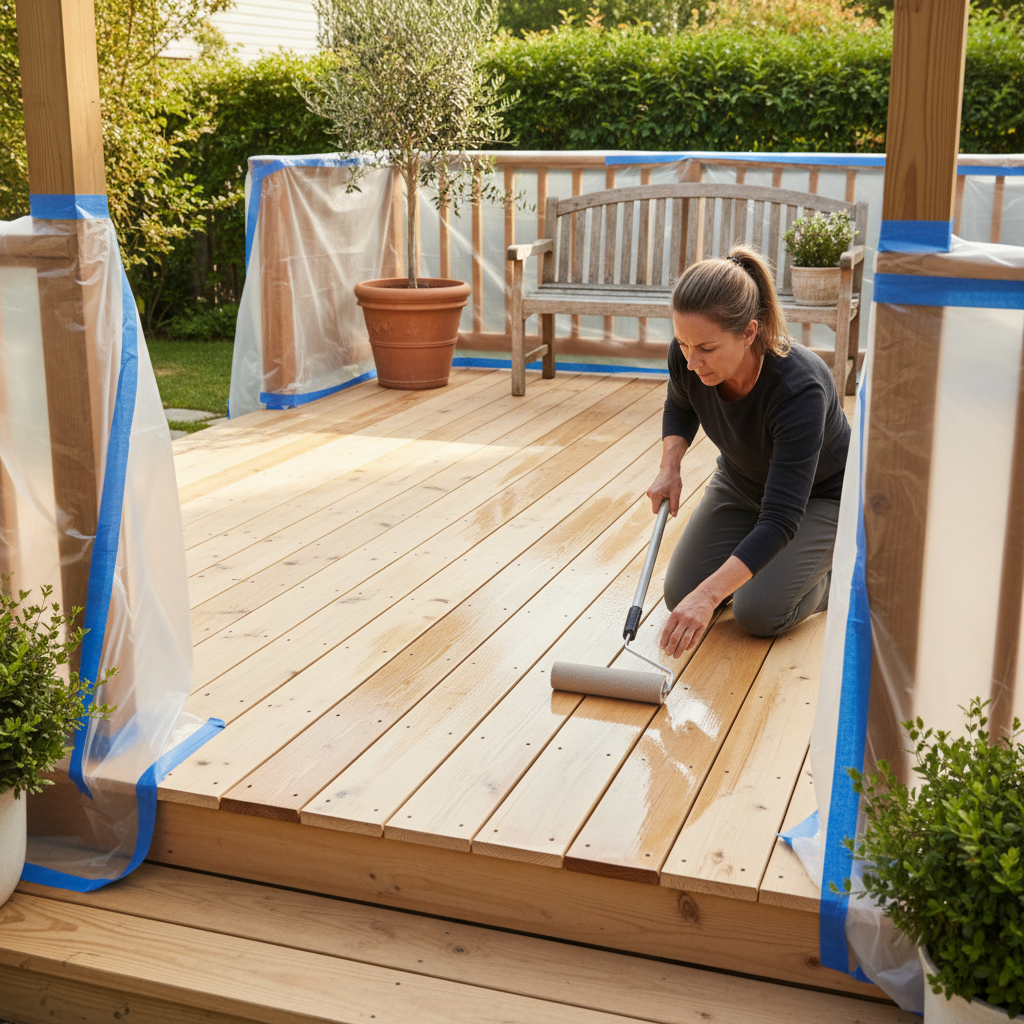
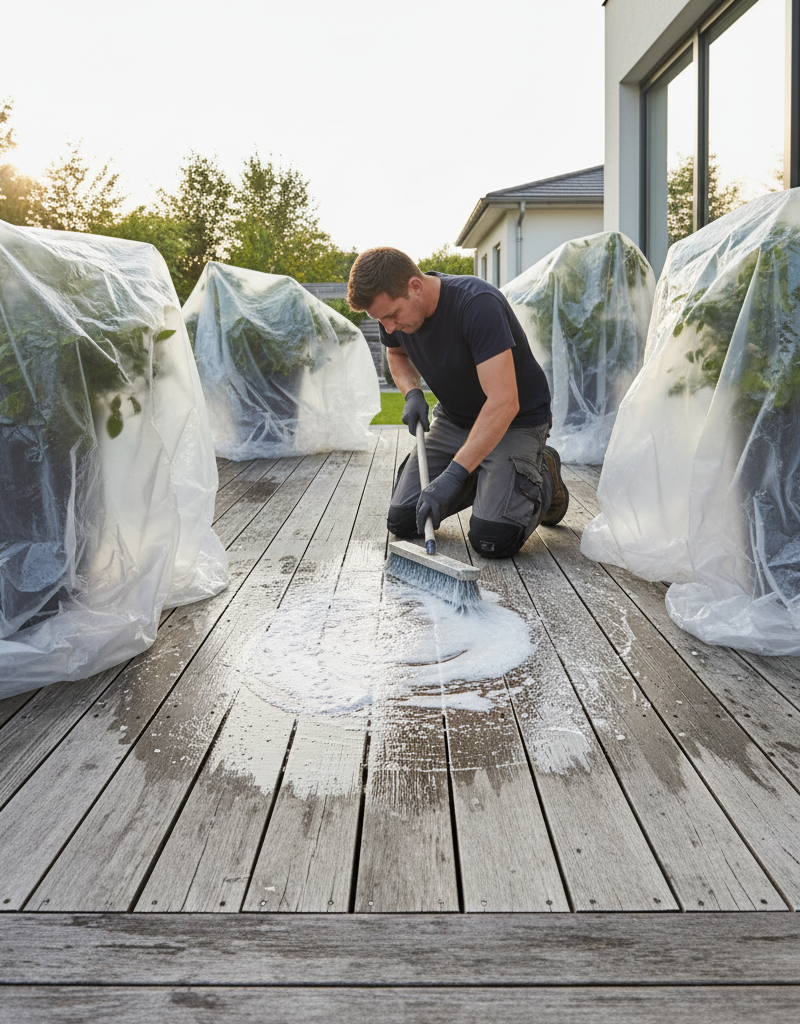
3. Protect Surrounding Areas – Tape off and cover plants, siding, and nearby fences. Safety First: Deck cleaning and stripping products are powerful. Use painter's tape and plastic sheeting to protect house siding, shrubbery, and flower beds from overspray or runoff. Wetting plants thoroughly before applying chemicals can also help dilute any incidental contact.
4. Apply Deck Stripper (If Needed) – Remove old, failing finishes. Tools: Pump sprayer, stiff-bristle brush, old shoes. If your deck has a peeling, flaking, or discolored old finish, you'll need a chemical deck stripper. Apply the stripper evenly with a pump sprayer, following manufacturer instructions precisely regarding dwell time. Do not let it dry on the wood. Work in manageable sections. Scrub stubborn areas with a stiff brush. * If this doesn't work: Some very old or thick finishes might require a second application or more aggressive scrubbing. In extreme cases, light power washing might be necessary, but use the lowest pressure setting to avoid damaging the wood.
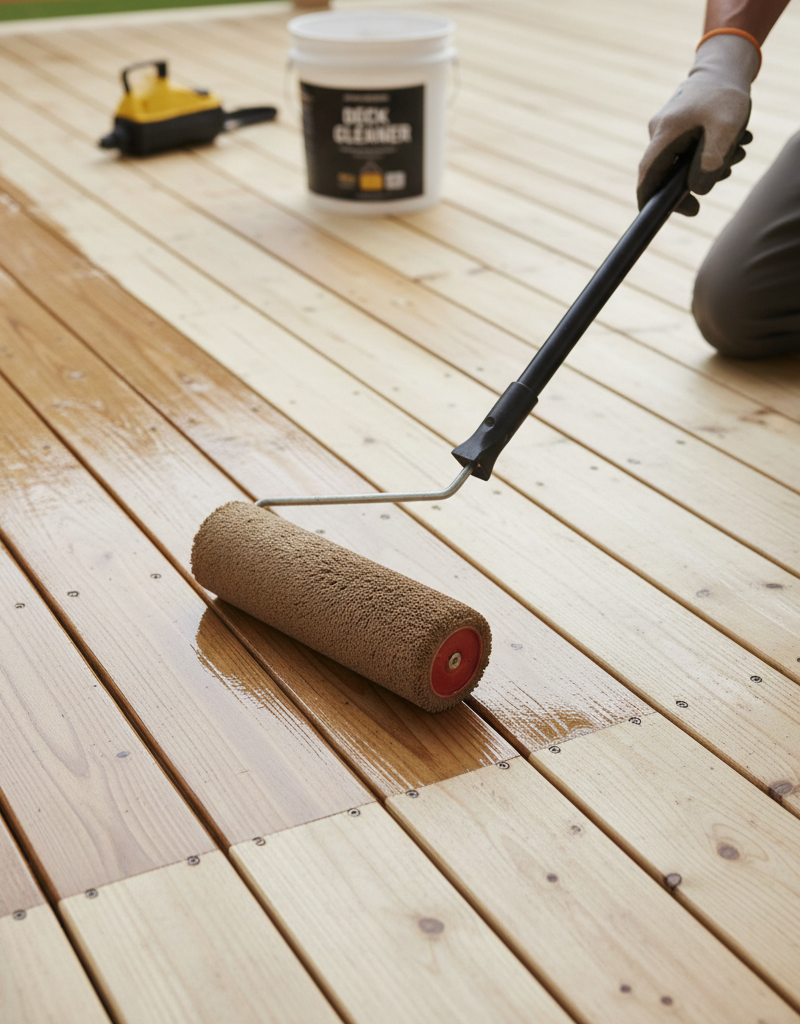
5. Clean and Brighten the Deck – Wash away dirt, mildew, and stripper residue. Safety First: Wear eye protection, gloves, and old clothing. Mix a dedicated deck cleaner/brightener according to instructions. Apply it evenly with a pump sprayer. Agitate with a stiff brush, focusing on areas with mildew or stubborn dirt. Rinse thoroughly with a garden hose or a pressure washer on a low setting (600-1200 PSI) with a fan tip. Ensure all cleaning solution is removed. Brighter will help neutralize the stripper and open up the wood grain for better sealant penetration.
6. Allow for Complete Drying – Crucial for proper sealant adhesion. This is perhaps the most overlooked step. After cleaning and rinsing, the wood must be bone dry before sealing. This can take anywhere from 24 to 72 hours, depending on humidity, temperature, and sunlight. Test by sprinkling a few drops of water; if it beads up, the wood is not ready. Use a moisture meter if you have one; the reading should be 12-15% or less. * Common Mistake: Sealing a damp deck traps moisture, leading to premature peeling and mildew growth under the new finish.
7. Light Sanding (Optional but Recommended) – Smooth out rough spots and open grain. Use an orbital sander with 80-100 grit sandpaper on any areas that feel rough or have raised grain after drying. This creates a smoother finish and helps the sealant penetrate more evenly. Always sand with the wood grain. Remove all sanding dust with a leaf blower, shop vacuum, or by sweeping.
8. Choose Your Sealant Wisely – Read reviews and match to your needs. Deck sealants come in various types: clear water repellents, semi-transparent stains, and solid stains. Clear sealants offer protection while allowing the wood's natural beauty to show through. Semi-transparent adds color but still shows some grain. Solid stains provide the most UV protection and color, obscuring the wood grain. Select a high-quality product suitable for your climate and desired aesthetic.
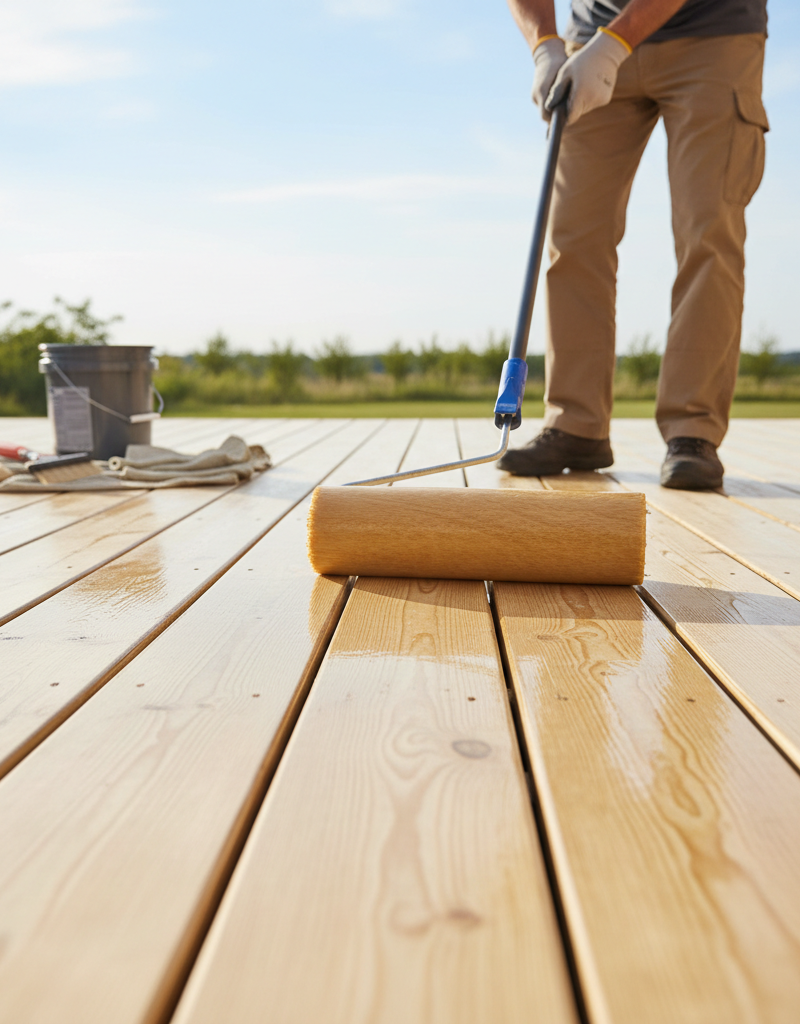
9. Apply the Sealant Evenly – Work in small sections, avoiding puddles. Tools: High-quality brush, roller with extension pole, or pump sprayer. Apply sealant in thin, even coats, working with the wood grain. Avoid over-applying or letting puddles form, as this can lead to a sticky finish or uneven drying. If using a sprayer, back-brush immediately to work the sealant into the wood and ensure even coverage. Many products recommend only one coat for optimal penetration and to avoid a film-forming surface that can peel.
10. Allow for Proper Curing – Let the sealant fully harden before heavy use. Adhere strictly to the manufacturer's recommended drying and curing times. While the surface may feel dry to the touch in a few hours, the sealant often needs 24-48 hours before light foot traffic and several days or even a week before returning furniture or allowing heavy use. Premature use can damage the freshly applied finish.
Common Causes
- Improper Surface Preparation: The most frequent culprit. Applying new sealant over dirt, mildew, old failing finishes, or damp wood prevents proper adhesion and leads to quick failure.
- Neglecting Wood Brightener: After stripping and cleaning, wood fibers can be
Related Articles
Keep troubleshooting with these hand-picked guides from FixlyGuide:
- The #1 Deck Sealing Mistake Most Homeowners Make (And How to Fix It) — Many homeowners make a critical error when sealing their decks, leading to premature wear and damage. Learn how to properly reseal your woo…
- How to Reseal a Wood Deck: A Step-by-Step Fix — Resealing your wood deck protects it from weather and extends its life. This guide covers how to properly prepare and apply new sealant for…
- Missing Roof Shingles After a Storm? Here's What to Do — Discover how to safely assess and address missing roof shingles after a storm, including temporary fixes and when to call a professional.
- Hail-Damaged Siding: A Homeowner's Guide to Inspection & Repair — Discover how to assess and repair hail damage on your home's siding, ensuring your home remains protected and looks its best.
- The Urgent Truth About Missing Roof Shingles (And Your 3-Step Fix) — High winds can rip shingles off your roof, exposing your home to immediate water damage – here’s how to assess, temporary patch, and plan p…
- The #1 Mistake Homeowners Make When Their AC Drain Clogs (And The $5 Fix) — Discover the most common error homeowners make when tackling a clogged AC drain line and learn a simple, inexpensive solution to prevent co…
Get deck & patio quotes from local pros
Tell us about your project and we'll match you with vetted contractors in your area. Free, no obligation, and we never sell your info.
Should you do this yourself?
Answer five quick questions before you start. Safety outranks savings every time.
Your experience with work like this
How high do you have to work?
Does the job involve any of these?
Will it need a permit?
Specialty tools
Free and instant. Educational guidance only — not a quote, inspection, or professional diagnosis.
What should this project cost?
Enter your project details for a realistic cost range before you call anyone.
Spot repairs commonly run $400–$1,800; full replacement typically $9,000–$18,000 for an average home.
- Regional adjustment
- National average
- Labor share (typical)
- ~$2,948
- Quotes to collect
- 3 written estimates
Educational estimate based on national averages — not a binding quote. Always confirm with written local estimates.
Decide what your roof needs
Two minutes of questions turns "something is wrong up there" into a clear next step.
- Repair or replace your roof?Answer 10 questions about age, leaks, and damage to get a clear next step.Open
- Compare contractor quotesScore up to four bids on price, warranty, licensing, and timeline.Open
- Get local estimatesSend one request and compare written estimates from vetted pros.Open
Free, no signup required. Estimates are educational guidance, not a quote or an inspection.
Frequently asked questions
How often should I reseal my wood deck?+
Most wood decks need resealing every 1-3 years, depending on your climate, the type of sealant used, and the amount of sun exposure. A good test is to sprinkle water on the deck; if it soaks in rather than beading up, it's time to reseal.
Can I power wash my deck before sealing?+
Yes, power washing is effective for cleaning a deck, but use it carefully. Maintain a low pressure (600-1200 PSI) and use a wide fan tip to avoid damaging the wood fibers. Always follow power washing with a thorough rinse and allow the deck to dry completely, typically 2-3 days, before sealing.
What's the best time of year to seal a deck?+
The best time to seal a deck is during a dry, mild period, typically spring or early fall. Avoid very hot, humid, or rainy days. Ensure there's no rain in the forecast for at least 24-48 hours after application to allow the sealant to dry and cure properly.
Do I need to strip my deck before reapplying sealant?+
You only need to strip your deck if the old sealant is peeling, flaking, discolored, or if you're changing the type or color of the sealant. If the old finish is in good condition and simply faded, a thorough cleaning and brightening might suffice before applying a fresh coat of the same product.
How do I choose the right deck sealant?+
Consider your desired look and level of protection. Clear sealants highlight natural wood, semi-transparent stains add color while showing some grain, and solid stains offer maximum color and UV protection. Opt for high-quality, penetrating oil-based or water-based products designed for decks and proven to withstand your local climate.
Discussion
Loading comments…