- Partially Closed Main Shut-Off Valve: The most common and easily overlooked cause. Even slightly closed, it can significantly restrict flow.
- Failing Water Pressure Regulator (PRV): These devices have internal components (springs, diaphragms) that wear out, get clogged with sediment, or fail, leading to reduced pressure or erratic fluctuations.
- Clogged Water Meter Screen: Debris from the municipal supply can accumulate in the screen located within or just before your water meter, acting as a filter and restricting flow.
- Corroded Galvanized Pipes: Common in older homes, galvanized steel pipes corrode internally, building up rust and scale that dramatically reduce the pipe's effective diameter.
- Main Line Leaks: A leak in your main supply line, especially underground, can cause a drop in pressure throughout the house as water escapes before reaching your home's internal system.
Plumbing · Low water pressure
| Project category | Plumbing |
|---|---|
| Problem type | Low water pressure |
| Trade required | Plumbing |
| Urgency | Soon — within weeks |
| Safety risk | Low safety risk |
| DIY suitability | DIY friendly |
| Cost category | Low cost |
| Typical timeline | DIY checks in under an hour; PRV replacement a half day |
| Contractor type | Licensed plumber |
Repair option
Clean aerators, then test static pressure before replacing the PRV.
Replacement option
Repipe when scaling in galvanized lines is the cause.
Common causes
- Clogged aerators or fixture screens
- Failing pressure-reducing valve
- Partially closed main shutoff
- Galvanized pipe scaling in older homes
Relevant tools:diy difficulty
Published May 16, 2026Last updated August 17, 2026
Tools & materials you'll need
Affiliate links- AmazonMarkerFor marking PRV settings before adjustment
As an Amazon Associate FixlyGuide earns from qualifying purchases — at no extra cost to you. Prices and availability are accurate as of publication and subject to change.
Quick Answer
Experiencing frustratingly low water pressure throughout your entire home often points to an issue with the main water supply line or components near your water meter, rather than isolated fixture problems. The most frequent culprits are a partially closed main shut-off valve, a failing water pressure regulator (PRV), or sediment buildup within these critical components. Less common but still possible are issues with your water meter itself, pipe corrosion, or shared supply line problems.
The Problem
Imagine stepping into the shower, expecting a invigorating stream, only to be met with a disappointing trickle. Or trying to fill a pot for dinner, watching the water barely dribble from the faucet. This isn't just an minor annoyance; low water pressure throughout your entire home signals a systemic issue in your plumbing system. Unlike localized problems affecting a single faucet or showerhead, a whole-house pressure drop means that the flow of water entering your home is compromised from the start. This can impact everything from showering and flushing toilets to running dishwashers and washing machines, making everyday tasks inefficient and frustrating. Ignoring prolonged low water pressure can also mask larger issues like pinhole leaks or extensive pipe corrosion, which can lead to costly repairs down the line. It's not just about comfort; it's about the health of your home's water supply system.
How It Works
Understanding how water pressure works in your home is key to diagnosing problems. Municipal water systems deliver water to your home under a certain pressure, typically between 40 and 80 pounds per square inch (psi). This pressure is essential for water to travel from your main line, through your home's pipes, and out of your fixtures with adequate flow.
Before water enters your home's internal plumbing, it usually passes through several key components: your main water shut-off valve (often a ball valve or gate valve), your water meter (which measures usage), and often a water pressure regulator (PRV). The PRV is a bell-shaped device, typically found on the main water line where it enters your house, designed to reduce and stabilize incoming municipal water pressure to a safe level for your home's plumbing. High incoming pressure can damage appliances and fittings, so the PRV acts as a safeguard. It contains a diaphragm and spring mechanism that adjusts the water flow to maintain a consistent output pressure. If the PRV fails, it can restrict flow and drop pressure significantly.
From there, water branches out through a network of pipes—typically copper, PEX, or galvanized steel—to supply all your fixtures. Each fixture has its own set of valves and aerators that further control and shape the water flow. When main line components like the shut-off valve or PRV are obstructed or malfunctioning, they bottleneck the entire system, causing a uniform pressure drop across all fixtures because the initial supply to the entire home is reduced. Sediment, rust, or mineral buildup over time can clog these critical points, gradually choking off water flow and leading to the frustrating low pressure you're experiencing.
Step-by-Step Fix
1. Verify the Problem Scope — Confirm it's a whole-house issue, not isolated.
Turn on several faucets and showerheads throughout your house simultaneously. Does the pressure seem low everywhere? Ask neighbors if they're experiencing similar issues. If only one or two fixtures are affected, the problem is likely localized to those fixtures (e.g., clogged aerator, faulty cartridge) and not a whole-house issue. If neighbors also have low pressure, it might be a municipal supply problem.
- If local: Inspect individual faucet aerators, showerheads, or appliance supply lines for clogs.
- If city-wide: Contact your municipal water company to report the issue.
2. Locate the Main Water Shut-Off Valve — Ensure it's fully open.
Your main water shut-off valve is usually located where the water main enters your house, often in the basement, utility closet, or near the outdoor water meter. It can be a gate valve (with a circular handle you turn multiple times) or a ball valve (with a lever handle that rotates 90 degrees). Ensure it is completely open. A gate valve that's not fully open acts like a partial obstruction. A ball valve should have its handle parallel to the pipe when fully open.
- Safety: Do not force a stiff or stuck valve. Old gate valves can break or leak if forced. If it's sticky, consult a plumber.
- How much to open: For gate valves, turn counter-clockwise until it stops. For ball valves, ensure the handle is perfectly aligned with the pipe.
3. Inspect the Water Pressure Regulator (PRV) — Check for signs of failure or adjustment.
Many homes have a bell-shaped or cylindrical water pressure regulator on the main water line after the meter. This device reduces incoming pressure to a safe level for your home. Over time, PRVs can fail or become clogged. Look for adjustment screws on the PRV. Mark the current setting with a marker, then turn it slightly clockwise (to increase pressure) and counter-clockwise (to decrease pressure) to see if it responds. Do not make drastic adjustments without measuring pressure.
- Diagnostic: Listen for humming or rattling from the PRV, which can indicate internal failure. Check for leaks around the PRV.
- If adjusting doesn't help: The PRV might be failing internally due to sediment or wear. Consider professional inspection or replacement.
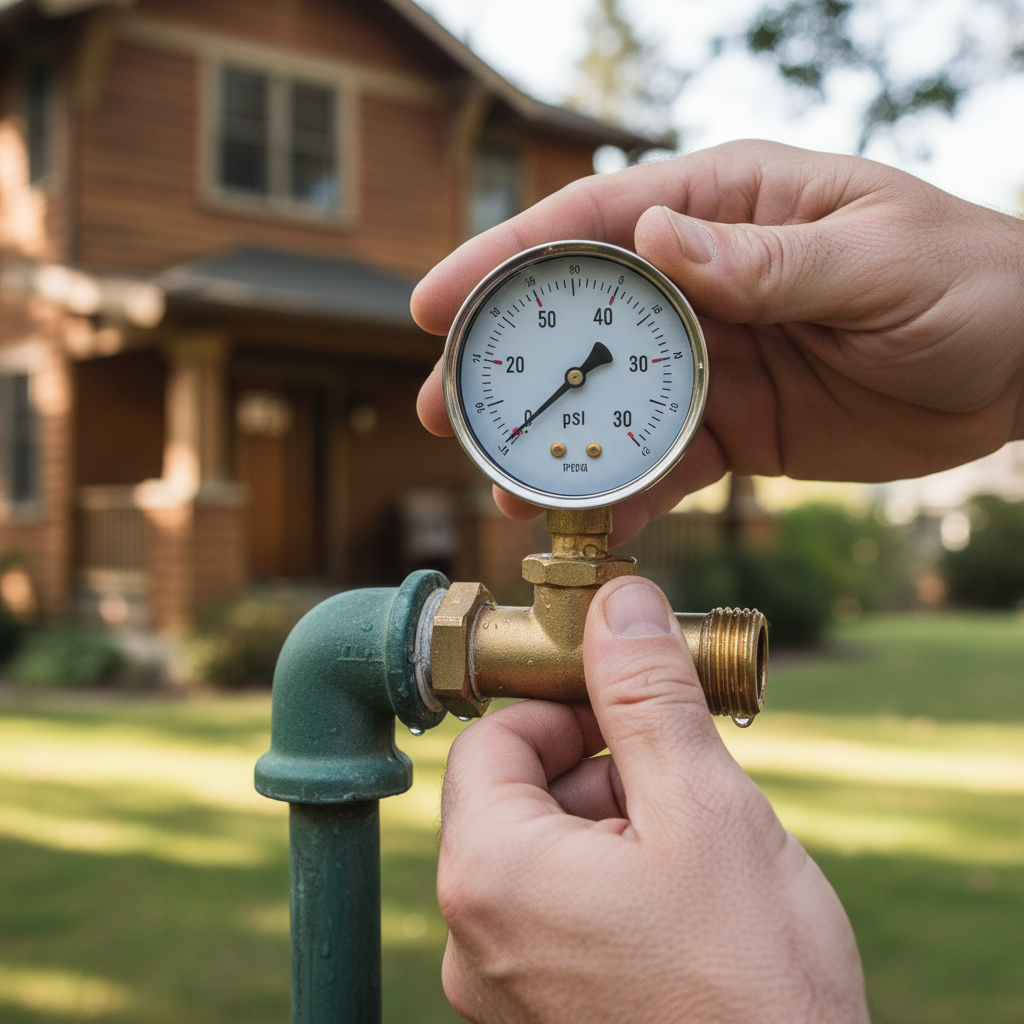
4. Test Water Pressure with a Gauge — Confirm current pressure and diagnose PRV issues.
Purchase an inexpensive water pressure gauge (available at hardware stores) that threads onto any outdoor spigot or laundry tub spigot. Turn off all water consumption inside and outside your home, then attach the gauge. Turn on the spigot fully and read the pressure. A healthy range is typically 40-60 psi. Anything consistently below 40 psi points to a problem. If the pressure fluctuates wildly when water is running, it could indicate a failing PRV or a larger supply issue.
- What to look for: If the pressure is very low (e.g., under 30 psi) and your neighbors have normal pressure, your PRV is highly suspect.
- Comparison: If your pressure at the spigot is significantly higher than your indoor fixtures, you might have specific pipe bottlenecks inside the house, but if it's low here, the PRV is a primary suspect.
5. Check for Clogged Water Meter Screens (Pro Recommended) — Sediment buildup can reduce flow.
Your municipal water meter might have a small screen or filter designed to catch debris before it enters your home. Over time, this screen can become clogged with sediment, rust, or other particles, restricting water flow and causing low pressure. This is usually a job for a professional plumber or your water utility, as it involves working with the main water supply and potentially breaking the utility's seal on the meter.
- Pro Alert: Tampering with the water meter can result in fines or service interruption from your water utility. Always defer to a professional for this step.
6. Consider Age of Plumbing (Galvanized Pipes) — Internal corrosion causes pressure drops.
If your home was built before the 1970s and has original galvanized steel pipes, internal corrosion and mineral buildup are a very common cause of systemic low water pressure. Rust and scale accumulate on the inside of these pipes, narrowing the internal diameter and significantly reducing flow. This is a gradual process and typically manifests as a slow, steady decline in pressure over many years.
- Diagnostic: Look for galvanized pipes (dull gray, magnetic, often joined with threaded connections) in your basement or utility areas. If you have galvanized pipes, a plumber can perform a camera inspection.
- Solution: Repiping with PEX or copper is the long-term solution, which is a major project.
Common Causes
- Partially Closed Main Shut-Off Valve: The most common and easily overlooked cause. Even slightly closed, it can significantly restrict flow.
- Failing Water Pressure Regulator (PRV): These devices have internal components (springs, diaphragms) that wear out, get clogged with sediment, or fail, leading to reduced pressure or erratic fluctuations.
- Clogged Water Meter Screen: Debris from the municipal supply can accumulate in the screen located within or just before your water meter, acting as a filter and restricting flow.
- Corroded Galvanized Pipes: Common in older homes, galvanized steel pipes corrode internally, building up rust and scale that dramatically reduce the pipe's effective diameter.
- Main Line Leaks: A leak in your main supply line, especially underground, can cause a drop in pressure throughout the house as water escapes before reaching your home's internal system.
- Municipal Supply Issues: Less common, but sometimes the problem is with the city's water infrastructure, such as a broken main, work being done in the area, or a temporary pressure reduction.
Common Mistakes
- Assuming it's a City Problem: Many homeowners immediately blame the water utility, when often the issue is within their own property. Always troubleshoot your home's system first.
- Ignoring a Partially Closed Valve: Overlooking the simple check of the main shut-off valve's position. This quick fix is often the solution.
- Adjusting PRV Without a Pressure Gauge: Randomly turning the adjustment screw on a PRV without measuring output pressure can lead to excessively high pressure, which can damage fixtures and appliances.
- Not Checking Neighbor's Pressure: Failing to ask neighbors if they're experiencing similar issues. This simple step can quickly rule out or confirm a city-wide problem.
- Focusing on Individual Fixtures: Spending time cleaning aerators or showerheads when the problem originates much earlier in the supply line to the whole house.
- Attempting DIY Repairs on the Water Meter: The water meter is utility property. Tampering with it can lead to fines and legal issues. Always call a professional or the utility.
Cost & Time Breakdown
| Task | DIY Cost | Pro Cost | Time |
|---|---|---|---|
| Check main shut-off valve | $0 | $0 (if part of call) | 5–10 minutes |
| Pressure gauge test | $15–$25 | $0 (if part of call) | 5–10 minutes |
| PRV adjustment/diagnosis | $0 | $150–$300 | 15–30 minutes |
| PRV Replacement | $70–$200 (part) | $300–$600+ | 1–3 hours |
| Water meter screen clearing | Pro only | $150–$300 | 1–2 hours |
| Galvanized pipe inspection | Pro only | $200–$500 | 1–2 hours |
| Main line leak detection/fix | Pro only | $500–$2000+ | 4 hours – 2 days |
Tips & Prevention
- Regularly Check Main Shut-Off Valve: Periodically turn your main shut-off valve completely off and then fully reopen it. This can prevent it from seizing up and ensures it's always in the correct position if you have an older gate valve.
- Monitor Water Pressure: Use a pressure gauge a couple of times a year to ensure your home's water pressure remains in the optimal 40-60 psi range. This helps catch PRV issues early.
- Flush Water Heater Annually: Sediment buildup in your water heater can sometimes restrict flow to hot water fixtures. While not a whole-house cold water issue, it can affect overall hot water pressure.
- Install a Whole-House Sediment Filter: If you live in an area with hard water or known sediment issues, a whole-house sediment filter installed after your PRV can protect your plumbing and PRV from buildup.
- Know Your Home's Plumbing Age: If you have galvanized pipes, be aware that you are likely to experience pressure issues eventually and plan for potential repiping in the long term.
- Be Mindful of Landscaping Near Main Line: Roots from trees and shrubs can grow around and even crush underground main water lines, leading to leaks and pressure drops.
When to Call a Professional
While some initial troubleshooting steps are homeowner-friendly, several situations warrant calling a licensed plumber. If you suspect your water pressure regulator (PRV) is failing and adjustment doesn't resolve the issue, a professional can properly diagnose and replace it. Any suspected issues with the water meter itself, including a clogged screen or leaks, should always be handled by a licensed professional or your water utility, as unauthorized tampering can lead to fines or service interruption. If you have an older home with galvanized pipes and suspect internal corrosion is the culprit, a plumber can perform camera inspections and discuss the significant undertaking of repiping. Furthermore, if you detect a main water line leak (e.g., unexplained wet spots in your yard, unusually high water bills), a professional is essential for accurate leak detection and repair. Finally, if you've gone through all the basic troubleshooting steps and still can't pinpoint the cause of low pressure, a licensed plumber has the expertise and specialized tools to diagnose complex plumbing issues efficiently and safely.
Related Articles
Keep troubleshooting with these hand-picked guides from FixlyGuide:
- The #1 Mistake Homeowners Make When Diagnosing Low Water Pressure (It's Not Your Pipes) — Discover the most common, overlooked culprit behind low water pressure impacting your entire home and learn how to fix it yourself with bas…
- The Secret Culprit Behind Your Whole-House Low Water Pressure (It's Not Always the City) — Whole-house low water pressure can be a frustrating and complex issue, ranging from simple fixes homeowners can do to signs that require a…
- The 4 Hidden Reasons Your Entire Home Has Low Water Pressure (And the Easy Fixes) — Low water pressure throughout your entire home can be a frustrating and often misunderstood problem, with several common culprits. Learn to…
- The #1 Mistake Homeowners Make When Diagnosing Low Water Pressure (and What to Check First) — Before you call a plumber, learn the most common overlooked cause of low water pressure affecting your entire home and how to easily check…
- The #1 Mistake Homeowners Make When Diagnosing Low Water Pressure (It's Not Your Pipes!) — Discover the most common, often overlooked culprit behind low water pressure impacting your entire home and how to easily fix it.
- The 4 Hidden Reasons Your Toilet Tank Fills Slowly (And How to Fix Them in 30 Minutes) — A slow-filling toilet tank is a common, annoying problem that usually points to issues with the fill valve or water supply and can often be…
What should this project cost?
Enter your project details for a realistic cost range before you call anyone.
Common repairs run $150–$650; repipes and water-heater replacements reach $1,500–$4,500.
- Regional adjustment
- National average
- Labor share (typical)
- ~$754
- Quotes to collect
- 3 written estimates
Educational estimate based on national averages — not a binding quote. Always confirm with written local estimates.
Fixly Project Decision Box
- DIY difficulty
- Moderate
- Estimated time
- 30 minutes – half a day
- Cost level
- Moderate
Main tools / materials
- Adjustable wrench
- Plunger or drain auger
- Bucket and towels
- Thread tape
When to stop and call a pro
- Water you cannot shut off at the fixture or main
- Sewage backing up into more than one fixture
- Water near electrical panels or outlets
- Gas water heater work beyond relighting a pilot
Need professional help?
Get a Licensed PlumberRecommended for DIYers & woodworkers
Sponsored
The Top 20 Tools for Workshops of Any Budget
No stationary machines or power tools required — plus 3 fundamental tools that can't be bought at any price.
Get the free guide
Ted's Woodworking — The #1 Woodworking Resource
Detailed instructions, dimensioned drawings, materials & cutting lists, and 3D schematics for every skill level.
See the plansSponsored: links above are affiliate links. FixlyGuide may earn a commission on qualifying purchases — at no extra cost to you.
Frequently asked questions
How do I know if my water pressure regulator is bad?+
Common signs of a bad water pressure regulator (PRV) include consistently low water pressure throughout the house, sudden fluctuations in pressure, a banging or humming noise coming from the PRV, or leaks around the device. The most definitive test is using a water pressure gauge to measure the pressure, which will often read consistently below 40 psi if the PRV is failing.
Can a partially closed main water valve cause low pressure?+
Yes, absolutely. A main water shut-off valve that is not fully open is one of the most common and easily overlooked causes of low water pressure throughout the entire house. Even a slight closure can significantly restrict the flow of water entering your home, leading to a noticeable drop in pressure at all fixtures.
What PSI is considered low for house water pressure?+
Generally, water pressure below 40 pounds per square inch (psi) is considered low for a residential home. Most homes operate optimally between 40 and 60 psi. While some fixtures might still function with pressure as low as 30 psi, anything consistently below 40 psi will likely result in noticeable performance issues and slow water delivery throughout your house.
How often should a water pressure regulator be replaced?+
Water pressure regulators (PRVs) typically last between 10 to 15 years, though their lifespan can vary depending on water quality and usage. It's a good idea to have your PRV inspected by a plumber every 5-7 years, especially if you notice any changes in water pressure or flow within your home.
Why would my water pressure suddenly drop in the whole house?+
A sudden, significant drop in whole-house water pressure often points to a major event like a main water line leak (especially if you also notice a sudden spike in your water bill or wet spots in your yard), a sudden failure of the water pressure regulator, or a municipal issue such as a water main break or work being performed by your local water utility. Check with neighbors and look for visible signs of leaks first.

Discussion
Loading comments…